Last updated 2026-07-25
TL;DR
For most of the whitetail range, plant clover or a brassica/cereal grain blend (oats, winter wheat, turnips) in late summer for fall/winter attraction, and soybeans or cowpeas in spring for summer growing-season nutrition. The right species depends on your soil pH, planting date, and whether you want tonnage, attraction, or both.
What is a food plot, exactly?
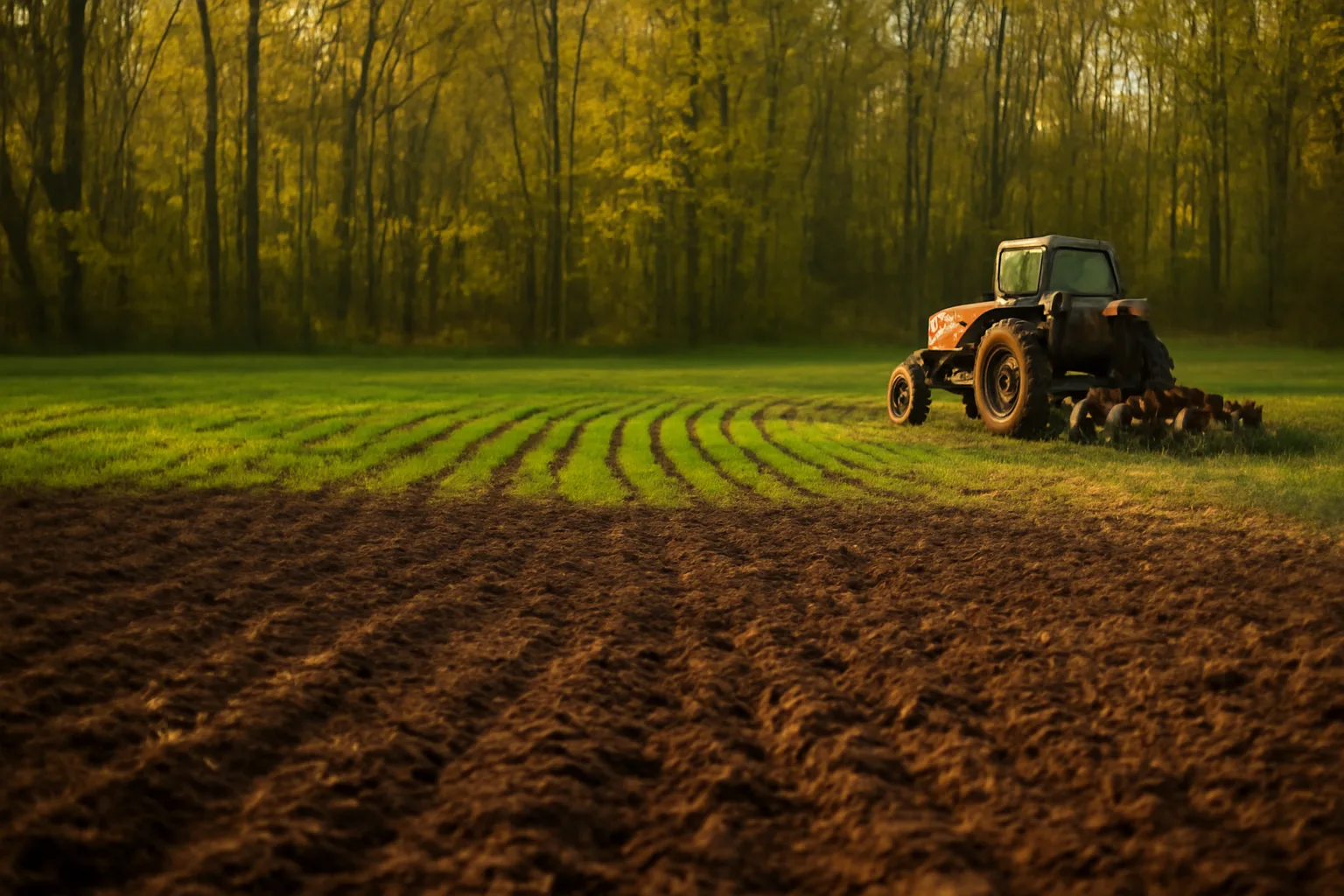
A food plot is a planted area, usually somewhere between a quarter acre and several acres, established specifically to grow forage that deer and other wildlife will eat. It's not the same as a farm field, even though a lot of the same seed gets used. The goal is different: you're managing for attraction, nutrition, or both, not for maximum bushels per acre at harvest. Most food plots fall into two rough categories. Annual plots get planted fresh every year (or twice a year) with things like brassicas, cereal grains, soybeans, or peas. Perennial plots, mostly clover and alfalfa, get established once and then maintained for 3 to 5 years with mowing and fertility touch-ups. State wildlife agencies generally treat food plots differently from bait piles or feeders, but the line varies a lot by state. Some states restrict hunting over standing crops that were planted for wildlife but allow it if the field was planted as part of normal agricultural use. Others don't distinguish at all. Michigan, for example, regulates baiting and feeding of deer through its Wildlife Conservation Order process under the Natural Resources and Environmental Protection Act, and generally treats a standing crop planted and left in place as a normal agricultural practice rather than bait. The Michigan DNR publishes current baiting and feeding rules directly, since the specific order number changes as it gets updated [1]. If you're not sure how your state defines baiting versus a legitimate food plot, check your state wildlife agency's regulations before you plant or hunt near one. A lot of hunters use a Custom Food Plot Plan to match species selection to their soil test and region instead of guessing, since the wrong crop on the wrong soil wastes a season.
When should you plant food plots for deer?
| Deep South (zone 8-9) | March-April | Late Aug-Sept | |
|---|---|---|---|
| Mid-South / Lower Midwest (zone 6-7) | April-May | Aug-early Sept | |
| Upper Midwest / Northeast (zone 4-5) | May-early June | late July-Aug | These are starting points, not gospel. Local extension offices publish county-specific frost dates that are far more reliable than a national chart. For a plan tuned to your actual zip code and soil test, that's exactly what a Custom Food Plot Plan is built to handle. |
Timing splits into two windows almost everywhere in the whitetail range: a spring/early summer planting for warm-season annuals and perennials, and a late summer planting for fall/winter annuals. Which window matters more to you depends on whether you're building summer nutrition or fall hunting attraction. Spring plantings (soybeans, cowpeas, clover, chicory) generally go in after your last frost date, once soil temps hit about 55 to 60 degrees F. In much of the Midwest and Northeast that's late April through May. In the Deep South it can be as early as March. Fall plantings (brassicas, cereal grains, clover) need to go in early enough that plants establish before the first hard frost, but the exact date depends heavily on latitude. A general rule from university extension programs is 60 to 90 days before your average first frost date, though brassicas and cereal grains have different windows within that (more on that below). The USDA's plant hardiness zone map is the standard reference for figuring out your general frost timing by location. Here's a rough regional planting calendar for the two big windows: | Region | Spring annuals | Fall annuals |
Do deer eat clover, and is it their favorite?
Yes. Clover, especially white clover varieties like Ladino, is one of the most consistently used food plot forages and shows up in nearly every regional food plot recommendation from land-grant universities. It's high in protein (often 25 to 30 percent crude protein in good stands) and deer will hit it hard from spring green-up through fall. Is it their absolute favorite? That's hard to say with certainty because deer preference studies are limited and forage choice shifts by season, region, and what else is available. What's true is that clover checks a lot of boxes: it's palatable, it regrows after grazing (unlike a lot of annuals that get grazed out), and it's cheap to maintain once established. Clemson Cooperative Extension notes that white clover stands, when properly limed and mowed, commonly persist 3 to 5 years before needing to be reestablished [2]. The tradeoff is establishment. Clover needs a clean seedbed, correct pH (extension guidance generally targets 6.0 to 6.5), and it's slow to get going the first year. It also won't survive heavy shade or standing water. If your soil test comes back with a pH under 6.0, you'll want lime before you plant, not after. That's true for almost every food plot species, but clover is especially unforgiving about it. For a broader look at how clover stacks up against other perennial and annual options, see food plot whitetail and deer food plot seed.
Do deer eat sorghum?
Yes, deer will eat grain sorghum (milo), but it's not typically planted as a primary food plot forage the way corn, soybeans, or brassicas are. Sorghum shows up more often as a cover crop component or a screening/bedding cover option than as a stand-alone attractant, because deer tend to prefer softer, higher-protein forages when they have a choice. Where sorghum earns its keep is drought tolerance. It handles dry, low-fertility soils better than corn, which makes it a reasonable choice in parts of the southern Plains and drier portions of Texas and Oklahoma where corn struggles without irrigation. Oklahoma State University Extension lists grain sorghum among the warm-season options suited to dry, marginal soils for wildlife plantings, generally recommending it in mixes with legumes rather than as a monoculture [3]. If your main goal is fall/winter attraction, sorghum isn't the first thing to reach for. If you're managing a large-acreage plot for screening cover plus some grain value, it can make sense as part of a mix.
When should you plant oats for deer?
Oats go in as a fall annual, typically 6 to 8 weeks before your first expected frost. That puts most of the Midwest and Upper South planting oats in late August through mid-September, and the Deep South a few weeks later into late September or early October. Oats are one of the fastest-germinating, most palatable cereal grains you can plant for deer, and they green up within days of a good rain. Deer will often hit a fresh oat plot before they touch nearby soybeans or clover, especially right after the first cool nights of early fall. The catch is winter-hardiness: plain oats aren't reliably frost-tolerant much past the mid-20s F, so in northern climates the plot can die back hard after the first real freeze. If you want fall AND winter attraction, pairing oats with winter wheat or cereal rye (which are more cold-hardy) in the same mix is the standard fix, something land-grant extension programs recommend for exactly that reason. The USDA NRCS plant guide for winter wheat notes it tolerates temperatures well below what oats can handle once established, which is the practical basis for blending the two [4]. Oats also do well seeded into a prepared, limed seedbed at roughly 60 to 110 pounds per acre depending on whether they're planted alone or in a blend. Drilling gets better establishment than broadcasting, but broadcasting followed by a light disking or cultipacking works fine on smaller plots.
When should you plant turnips for deer, and do deer actually eat them?
Turnips go in as a late-summer planting, generally 90 to 100 days before your first hard frost, since they need that runway to bulb out before winter. For most of the whitetail range that means late July through August. Plant too late and you'll get leafy top growth but small or nonexistent bulbs. Deer absolutely eat turnips, but the pattern is distinctive and trips up a lot of first-time planters. Early in the season deer mostly ignore the bulbs and browse the leafy tops. It's not until after a hard frost or two, when cold converts the plant's starches to sugars, that deer start digging up and eating the bulbs in earnest. This starch-to-sugar shift after cold exposure is well documented in cool-season brassica physiology and is the reason extension programs across the Midwest and South recommend planting brassicas early enough to hit that frost window rather than right before it. That frost-triggered switch is actually a feature for hunters. A turnip plot planted right can become a magnet in December and January, exactly when a lot of other forage has been grazed out or gone dormant. Plant turnips at roughly 4 to 6 pounds per acre if seeded alone, less if blended with other brassicas or cereal grains. One caution: turnips and other brassicas do best on soil with pH 6.0 or higher and decent fertility, since they're heavy nitrogen users. A soil test before planting will tell you whether you need to add nitrogen mid-season, and that soil test lab is the real authority here, not a seed bag label.
What are deer's favorite foods overall?
There's no single, universally agreed answer, because deer preference shifts by season, region, and what native browse is available, but a few things show up again and again in state agency and extension forage rankings. Acorns (especially white oak acorns, which are lower in tannins than red oak) are consistently ranked as a top natural fall food. Soybeans and clover top most planted-forage preference lists during the growing season. Brassicas and cereal grains take over after frost. Research on deer nutrition has long pointed out that deer are highly selective browsers that will sample dozens of plant species in a season, adjusting for protein needs (higher in spring/summer for lactation and antler growth) versus energy/carbohydrate needs (higher in fall/winter for fat reserves) [5]. So the honest answer is: it depends on the season. In spring and summer, deer are chasing protein, so soybeans, cowpeas, and clover top the list. In fall and winter, they're chasing carbohydrates and sugars, so acorns, corn, and frosted brassicas take over. A food plot plan that only covers one of those windows is only doing half the job, which is why a lot of serious plotters run at least one perennial (clover) and rotate an annual brassica or cereal blend for fall.
Do deer like honey, and does it matter for food plots?
There's no real evidence deer are drawn to honey itself in any meaningful way for food plot purposes, and no state agency or extension publication recommends it as an attractant. The confusion mostly comes from commercial deer attractant products that use sugar, molasses, or apple/persimmon scent, sometimes marketed with "honey" branding, not literal honey. Deer are drawn to sugar and carbohydrates, especially in fall when they're building fat reserves, which is part of why frosted brassicas and mast crops like acorns and apples get hit so hard. If you're trying to replicate that sugar draw in a plot, a frost-sweetened turnip or radish patch does far more than any bottled attractant, and it's legal to hunt over in every state, unlike bait piles, which many states restrict or ban outright. Check your state wildlife agency's baiting and feeding regulations before using any additive, since rules vary widely and violations can carry real penalties.
What should you plant if you're just starting out?
| White clover (Ladino) | Spring or late summer | 6.0-6.5 | Low-moderate | 3-5 years | |
|---|---|---|---|---|---|
| Soybeans | Late spring | 6.0-6.8 | Moderate | 1 season | |
| Oats/winter wheat blend | Late summer | 6.0-7.0 | Low | 1 season | |
| Brassica (turnip/radish) blend | Mid-late summer | 6.0-6.8 | Low-moderate | 1 season | |
| Sorghum (screening/drought areas) | Late spring | 5.8-6.5 | Low | 1 season | A soil test is the one step people skip and shouldn't. Extension offices and private labs both run tests for $10 to $20 that tell you exact lime and fertilizer needs, and that number is far more useful than any generic seed bag recommendation. Your local extension office or state land-grant university lab is the actual authority on your lime and fertilizer rates, not a blog post, so treat that report as the final word for your specific ground. If you want the decision made for you based on your zip code, acreage, and soil test results, that's the whole point of a Custom Food Plot Plan, a one-time $99 planning service that maps species and planting windows to your actual dirt instead of a generic regional average. For more on comparing seed types head-to-head, see deer food plot seed and food plot seed. |
If you've never planted a food plot before, start simple. A clover/chicory perennial blend on one plot and a brassica/cereal grain blend on another gives you both a spring-through-fall food source and a fall/winter attraction plot, without needing specialized equipment. Here's a rough cost and effort comparison across the most common starter options: | Species/Blend | Planting window | Soil pH target | Relative cost/acre | Longevity |
What equipment do you actually need to plant a food plot?
For a small plot (under an acre), you can get by with a hand seeder or ATV broadcast spreader, a disk or drag harrow to work the seedbed, and a cultipacker or ATV tire drag to firm up seed-to-soil contact. Brassica and clover seed is tiny and needs to sit shallow, roughly a quarter inch deep or less, so a light cultipacking pass after broadcasting matters more than people expect. For larger plots, a tractor with a disk, drill, or no-till planter speeds things up a lot and gets more even germination, especially with larger-seeded crops like soybeans and corn that need to go 1 to 1.5 inches deep. No-till drills are worth the rental or co-op fee if you're planting into existing sod or a cover crop residue, since they cut through and place seed without a full tillage pass. Whichever you use, seedbed prep and depth control matter more than the brand of seed. A lot of failed plots aren't a seed problem, they're a "seed planted too deep" or "no rain in the seven days after planting" problem.
How do you decide between annuals and perennials?
Annuals (brassicas, cereal grains, soybeans, sorghum) get replanted every year but let you target a specific season precisely, spring nutrition or fall attraction. Perennials (clover, alfalfa, chicory) cost more effort up front but spread that cost over 3 to 5 years and need less annual labor once established. Most experienced plotters run both: a perennial clover field as the year-round base, plus one or two annual plots rotated seasonally for hunting season timing. If you only have one plot to work with and limited time, clover is usually the safer default because it feeds deer spring through fall and only needs mowing and a fertility touch-up most years rather than a full replant. For a deeper comparison of specific species against each other, deer food plots and domain food plot seed break down attraction, cost, and maintenance side by side.
Frequently asked questions
Do deer eat sorghum?
Yes, though it's more often used as a drought-tolerant screening crop or cover crop component than a primary attractant. Deer generally prefer softer, higher-protein forages like soybeans or clover when they're available, so sorghum works best mixed with legumes rather than planted alone, per Oklahoma State University Extension guidance on wildlife plantings for dry soils [4].
Do deer eat clover?
Yes, clover is one of the most reliable and widely recommended food plot forages, with crude protein often around 25 to 30 percent in a healthy stand. Deer use it from spring green-up through fall, and a well-managed white clover stand can last 3 to 5 years, per Clemson Cooperative Extension [3].
When to plant deer food plots?
Spring annuals (soybeans, cowpeas) go in after last frost when soil hits 55-60 degrees F, usually April-June depending on latitude. Fall annuals (brassicas, cereal grains, clover) go in 60-90 days before first frost, typically late July through September. Exact dates depend on your USDA hardiness zone [2] and local frost history.
Do deer like clover?
Yes, clover ranks among the top planted forages for whitetail deer across nearly every region, valued for its high protein content and ability to regrow after grazing, unlike many annuals. It does need pH 6.0-6.5 and a clean seedbed to establish well, so a soil test before planting matters.
When to plant oats for deer?
Plant oats 6 to 8 weeks before your area's first expected frost, typically late August to mid-September in the Midwest and a few weeks later in the Deep South. Oats germinate fast and deer often hit them immediately, but plain oats aren't very winter-hardy, so pairing with winter wheat extends attraction into winter [5].
When to plant food plots for deer?
There are two main windows: spring (April-June) for warm-season annuals like soybeans, and late summer (late July-September) for fall annuals like brassicas, oats, and clover. The exact dates shift by USDA hardiness zone and your local first-frost date, so check your county extension office for site-specific timing [2].
When to plant turnips for deer?
Plant turnips 90 to 100 days before your first hard frost, generally late July through August across most of the whitetail range. They need that time to bulb out. Deer usually ignore the bulbs until after a frost converts starches to sugars, a well-documented cold-triggered response in cool-season brassicas [6].
What is a food plot?
A food plot is a planted area, typically a quarter acre to several acres, established specifically to grow forage for deer and other wildlife, distinct from a commercial crop field. Plots are either annual (replanted yearly) or perennial (clover, alfalfa, maintained 3-5 years) depending on the goal.
What are deer's favorite foods?
It depends on season. In spring and summer deer favor high-protein forage like soybeans, cowpeas, and clover. In fall and winter they shift to carbohydrate and sugar sources like acorns, corn, and frost-sweetened brassicas. No single species tops every season; forage selection tracks protein versus energy needs across the year [7].
Do deer like honey?
There's no real evidence deer are drawn to literal honey, and no wildlife agency or extension program recommends it as a food plot additive. Deer are drawn to sugar and carbohydrates broadly, which is part of why frost-sweetened turnips and brassicas draw them so heavily in late fall and winter.
How big should a deer food plot be?
There's no fixed rule, but plots from a quarter acre to 2-3 acres are common for hunting-focused plots, while larger fields (5+ acres) lean more toward herd nutrition. Smaller plots concentrate deer in bow range; larger plots spread pressure and support more animals through a season.
Is it legal to hunt over a food plot?
In most states, yes, since a planted, standing crop is generally treated differently from a bait pile, but rules vary significantly by state. Some states restrict hunting over recently disturbed or supplemented plots. Always check your state wildlife agency's specific baiting and feeding regulations before hunting near a plot [1].
Sources
- Michigan Department of Natural Resources, Baiting and Feeding Regulations: States distinguish between baiting/feeding and legitimate food plots, with specific rules varying by state
- Clemson Cooperative Extension, White Clover: Well-managed white clover stands can persist 3 to 5 years with proper mowing and fertility management
- Oklahoma State University Extension, Establishing and Managing Wildlife Food Plots (PSS-2909): Grain sorghum listed among drought-tolerant warm-season wildlife food plot options, usually paired with legumes
- USDA NRCS, Plant Guide: Winter Wheat (Triticum aestivum): Winter wheat's cold tolerance supports blending with oats to extend fall attraction into winter
- Journal of Wildlife Management, seasonal forage selection by white-tailed deer: Deer forage preferences shift seasonally based on protein needs in spring/summer versus energy needs in fall/winter