Last updated 2026-07-25
TL;DR
Plant brassicas 60 to 90 days before your first killing frost, usually late July through August in northern states and August into early September farther south. Test soil, get pH to 6.0 to 6.5, drill or broadcast at 4 to 6 lbs/acre for a blend, and expect deer to ignore the plot until a hard frost sweetens the leaves and bulbs.
What is a food plot, exactly?
A food plot is a planted patch of forage on hunting land meant to feed deer and other wildlife and to draw them into range of a stand or blind. It's not a garden and it's not a lawn. Most plots run anywhere from a quarter acre tucked into a clear-cut to several acres of open field, and the plants chosen (clover, brassicas, cereal grains, beans) depend on the season you're targeting and what your soil can support. Food plots do two different jobs and it helps to know which one you're planting for. A spring/summer plot (clover, alfalfa, soybeans) builds herd health and antler growth. A fall plot (brassicas, cereal grains, winter peas) is built to be standing and attractive during hunting season, often right through the late season when native browse is gone. Brassicas fall firmly into that second category. They're a hunting-season tool first, a nutrition tool second.
Do deer eat sorghum?
Yes, deer will eat sorghum, particularly the grain heads and young leaves, but it's a minor player in most food plot programs compared to soybeans, corn, or brassicas. Grain sorghum (milo) is more commonly planted as a dove field crop or a cheap screening/cover crop than as a primary deer attractant, though deer will browse the leaves early in the season and hit the grain heads once they mature and dry down. Some plot mixes use forage sorghum or sorghum-sudangrass as a nurse crop for establishing clover, or as a tall screening border to hide a plot from the road. If sorghum is your main goal is deer nutrition, corn or soybeans do the job better per acre. If your goal is cover and a secondary food source, sorghum earns its spot.
When to plant food plots for deer?
| 3-4 (northern MN, WI, ME) | mid-July to early Aug | mid-Sept | |
|---|---|---|---|
| 5-6 (IA, IL, OH, PA) | late July to mid-Aug | early to mid-Oct | |
| 7 (VA, TN, NC, AR) | mid-Aug to early Sept | mid to late Oct | |
| 8-9 (deep South, TX, FL) | late Aug to late Sept | Nov or later | These are starting points, not gospel. Check your state's cooperative extension calendar before you buy seed. |
Timing splits into two windows: spring planting for summer forage (clover, soybeans, alfalfa) and late summer planting for fall/winter forage (brassicas, cereal grains, blends). Spring plots generally go in after your last frost date, when soil temps hit the mid 50s Fahrenheit. Fall plots, brassicas included, get planted 60 to 90 days ahead of your area's average first killing frost so the plants have time to bulb up or leaf out before cold weather locks in [1]. Your local USDA plant hardiness zone and your state extension office's planting guide are the two references worth trusting over any national blog post, because frost dates swing by three to five weeks across a single state. Iowa State Extension, for example, recommends brassica seeding from early July through mid-August depending on the region of the state [2]. Mississippi State Extension pushes fall plantings into late August through September because their first frost comes so much later [3]. A rough national planting window: | Zone (USDA hardiness) | Typical brassica planting window | First frost (approx.) |
When to plant turnips for deer?
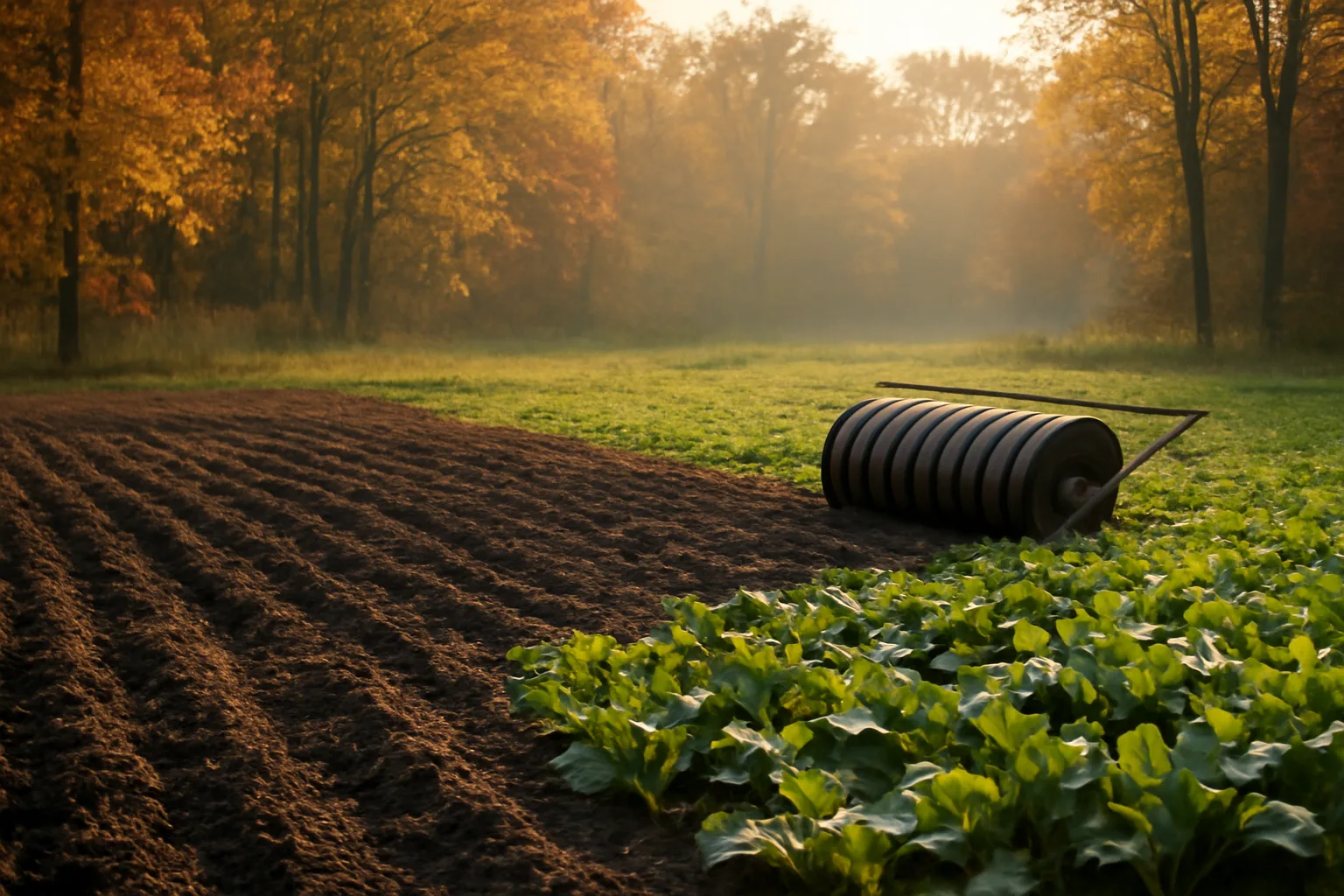
Turnips get planted at the same time as your other fall brassicas, generally 60 to 90 days before first frost, so leaves have time to establish and bulbs have time to size up before the ground freezes. Purdue Extension notes that brassica forages like turnips need roughly 80 to 90 days to reach full maturity, and a hard frost actually improves palatability by converting starches to sugars in the leaves and roots [4]. That frost-triggered sweetening is the whole reason late-season brassica plots work. Deer often walk past a green turnip plot in October and hammer it in December once repeated frosts have hit it. If you're not seeing pressure on a brassica plot early in the season, that's normal, not a failure. Plant turnips shallow, a quarter inch deep or less, since the seed is small and germinates poorly if buried too deep. A cultipacker pass after broadcasting helps a lot with seed-to-soil contact on turnips specifically.
When to plant oats for deer?
Oats go in on the same general fall calendar as brassicas, 60 to 90 days before frost, because oats are a cool-season annual grain that deer hit hard as soon as it's tender and green, often within three to four weeks of germination. Oats don't need the frost-sweetening that brassicas do. Deer will eat oats the moment they poke through the ground, which makes oats a good early-season draw mixed alongside brassicas that won't get hit until later. A lot of plotters run a blend for exactly this reason: oats or winter wheat for early attraction, brassicas for the late-season push once frost hits. NC State Extension lists oats as one of the more shade-tolerant, quick-establishing cool-season cereal grains for wildlife plots, useful where a plot gets partial timber shade. Oats will winterkill in most of the northern and mid-latitude U.S. once temperatures drop into the low 20s or lower for extended periods, so don't count on oats as a January food source in Zone 5 or colder. Winter wheat or rye holds up better through hard winters if you need standing forage into late season.
Do deer eat clover, and do deer like it?
Yes, deer eat clover readily and it's widely considered one of the most consistent food plot forages across the whitetail's range. White clover and red clover both show up as staple plantings in nearly every state extension wildlife food plot guide, valued for high crude protein (often 25 percent or higher in fresh growth) and season-long regrowth after grazing [5]. Clover isn't a brassica and it's planted on a different calendar, generally spring through late summer depending on your zone, since it's a perennial that needs to establish a root system before winter. Clover shines April through October in most of the country and then goes dormant. If your goal is a fall-focused hunting plot, brassicas or cereal grains fill the gap clover leaves once it slows down with cold weather. A lot of serious plotters run both: a perennial clover field for spring and summer, a rotated brassica or grain plot for fall and winter. That two-plot approach covers the calendar without over-relying on one plant.
What do deer prefer to eat, and is there a favorite food?
Deer are opportunistic browsers and their preference shifts by season, region, and what's locally available, so there's no single universal favorite. That said, across food plot studies and extension forage-preference trials, soybeans, clover, and acorns consistently rank at or near the top for whitetail preference when available [6]. Within food plot species specifically, brassicas (especially the bulb types like turnips and radishes) tend to rank lower in preference during warm weather and climb sharply in preference after frost, which is the opposite pattern from clover or soybeans. Corn and acorns are calorie-dense fall favorites but low in protein. If you're chasing one plant to plant everywhere, there isn't one; matching the plant to season and soil is the actual strategy. A properly built food plot whitetail plan usually rotates two or three species across the year rather than betting on a single miracle seed.
Do deer like honey? (and other odd bait questions)
There's no research or extension guidance supporting deer having any particular preference for honey, and it isn't a legal or practical food plot or bait product in most contexts. Deer are herbivores built to digest cellulose and plant sugars through a four-chamber rumen system; concentrated sugars like honey aren't part of their natural diet and there's no data showing deer seek it out. What matters more here is your state's baiting and feeding law, which varies widely and changes over time. Some states allow baiting on private land with restrictions, others ban it outright, and food plots are treated differently from bait piles in nearly every state's regulation. Check your state wildlife agency's current regulation before assuming any planted or placed food source is legal to hunt over; Michigan DNR, for example, maintains specific baiting restrictions tied to chronic wasting disease zones that change plot legality in affected counties [7].
How do you actually plant a brassica food plot, step by step?
Start with a soil test 60 to 90 days before your planting date, not the week of. Brassicas want a pH between 6.0 and 6.5 and respond hard to nitrogen, so a soil test from your county extension office or a private ag lab tells you exactly how much lime and fertilizer to apply rather than guessing. Your soil test lab's recommendation is the actual authority here, not a bag label or a forum post. Here's the general sequence: 1. Kill existing vegetation. Spray glyphosate 2 to 3 weeks before planting if you're no-till, or work the ground with a disk if you're tilling. 2. Apply lime if your test calls for it. Lime takes months to fully react with soil, so if your pH is below 5.5, you're behind before you start; consider applying the fall before if you can. 3. Broadcast or drill seed. Brassica blends typically go down at 4 to 6 lbs/acre for a blended mix, or 3 to 5 lbs/acre for straight turnips, per most seed tag recommendations and extension seeding guides [8]. 4. Cultipack or drag. Brassica seed is small and needs to sit near the surface, a quarter inch deep at most. A cultipacker or a chain drag gives you seed-to-soil contact without burying it too deep. 5. Fertilize per your soil test, typically split with some down at planting and the rest as a topdress 3 to 4 weeks later if the crop needs a nitrogen boost. 6. Wait. Brassicas often look thin and unimpressive for the first month. That's normal. If you don't own a drill, broadcasting with a hand or ATV spreader followed by a cultipacker or light disking works fine for a small plot under an acre. For anything larger, a no-till drill saves seed and improves your stand. Reviewing equipment and methods options before you buy anything is worth the hour.
What varieties of brassica should you plant, and how do they differ?
Brassica is an umbrella term covering turnips, radishes (including forage/tillage radish), rape, kale, and canola, and each behaves a little differently in a food plot. Turnips grow a bulb deer will dig up and eat along with the leaves, and they're one of the most frost-tolerant options, often holding up into January in mid-latitude states. Forage radishes grow a long taproot that breaks up compacted soil as a side benefit, though deer eat the tops more than the root in most cases. Rape and kale are leafy, don't bulb, and tend to get hit earlier in the season than turnips because there's no waiting on a bulb to form. Canola is more of a niche plot species, grown more for oilseed than deer forage, though deer will browse young canola leaves. Most commercial brassica blends combine two or three of these types specifically so you get early leaf browse (rape, kale) and a late-season bulb reserve (turnips, radish) from the same planting. That's a smarter bet for a single food plot than a straight monoculture of one brassica type, since it spreads your attraction window across more of the season.
What's a realistic seeding rate and cost for a brassica plot?
For a straight brassica blend, plan on 4 to 6 lbs/acre if broadcasting, and you can drop slightly lower (around 3 to 5 lbs/acre) if you're drilling since drilled seed gets better soil contact and needs fewer seeds per square foot to establish a stand. Seed for a quality brassica blend generally runs somewhere in the range of $4 to $8 per pound depending on brand and blend complexity, meaning a one-acre plot's seed cost typically lands between $20 and $50, before lime and fertilizer. Lime and fertilizer costs vary enormously by how far off your soil test comes back. A field that needs 2 tons of lime per acre to correct pH from 5.0 to 6.0 costs meaningfully more to establish than a field that's already sitting at 6.2. This is exactly why skipping the soil test to save $15 to $20 is a bad trade; you can easily overspend or underspend fertilizer by 3x guessing blind. If you want help translating a soil test result into an actual seed and fertilizer plan without hiring an agronomist, that's the gap our $99 Custom Food Plot Plan is built to fill: you send us your soil test and property details, we send back a straightforward planting plan. It's general guidance built from your numbers, not a substitute for your soil lab's specific lime and nutrient recommendations, which remain the final word on your ground.
Why won't deer touch my brassica plot until December?
This is the single most common brassica complaint and it's almost always normal, not a planting failure. Brassica leaves and bulbs contain glucosinolates and complex starches that taste bitter or simply unappealing to deer until repeated freezing temperatures convert those starches to simple sugars, a process plant physiologists describe happening after a plant experiences multiple frost events, more than one light frost [4]. In practice this means a brassica plot in Zone 5 or 6 might sit almost untouched through October and then get hammered hard in late November through January, right when native browse (acorns, greenbrier, forbs) has died back or been buried under snow. That's the design, not a bug. If you're hunting brassicas in early October expecting heavy pressure, you're hunting the wrong plot for that date; put an early-season bow stand over clover or beans instead and save the brassica field for your late-season sits.
How do brassicas compare to other fall food plot options?
| Brassicas (turnip/rape blend) | 60-90 days pre-frost | Slow, peaks after hard frost | Very high | Late season | |
|---|---|---|---|---|---|
| Oats | 60-90 days pre-frost | Fast, 3-4 weeks | Low to moderate | Early-mid fall | |
| Winter wheat/rye | Similar window, later OK | Fast | Very high | Fall through spring | |
| Clover (perennial) | Spring or late summer | Fast once established | Moderate (dormant, not dead) | Spring-fall, multi-year | |
| Soybeans | Spring/early summer | Fast in summer | None (annual, dies at frost) | Summer through early fall | Most experienced plotters don't plant one species and call it done. A blend of a fast-germinating grain with a slow-maturing brassica in the same field covers both early bow season and the January gun or late-archery push from a single planting date. Browsing a deer food plot seed blend built around that early/late combo saves you from planting two separate fields. |
Here's how the common fall plot species stack up on the traits that matter for planning: | Species | Planting window | Time to attraction | Frost tolerance | Best use |
Frequently asked questions
Do deer eat sorghum in food plots?
Yes, though it's a secondary forage. Deer browse young sorghum leaves and will eat mature grain heads, but corn, soybeans, and brassicas outperform sorghum as primary deer attractants. Sorghum is more commonly used as a dove field crop or a screening/cover planting alongside a main food plot species.
Do deer eat clover and do they actually like it?
Yes. Clover is one of the most reliably eaten food plot forages in the whitetail's range, prized for crude protein often above 25 percent in fresh growth and its ability to regrow after grazing. It's a spring-through-fall perennial, not a fall-only plant like brassicas.
When should you plant food plots for deer?
Spring/summer plots (clover, soybeans) go in after your last frost when soil hits the mid 50s F. Fall plots (brassicas, cereal grains) go in 60 to 90 days before your area's average first killing frost. Exact dates shift by three to five weeks across a single state, so check your local extension calendar.
When is the best time to plant turnips for deer?
Plant turnips 60 to 90 days before your area's first expected frost, generally late July through early September depending on your zone. Turnips need that lead time to grow both leaf mass and a sizable bulb before cold weather arrives, and a hard frost is what actually triggers deer to start hitting the plot heavily.
When should you plant oats for deer food plots?
Plant oats on the same 60-to-90-day-before-frost window as brassicas. Unlike brassicas, oats get eaten almost immediately after germination, often within three to four weeks, making them a good early-season complement to a slower-maturing brassica blend planted in the same field.
What exactly is a food plot?
A food plot is a planted area of forage crops on hunting land, meant to feed deer or other wildlife and draw them within range of a stand. Plots range from a quarter acre to several acres and use different plant species depending on whether the goal is spring/summer nutrition or fall/winter hunting attraction.
What is a deer's favorite food overall?
There's no single universal favorite; preference shifts by season and region. Soybeans, clover, and acorns rank consistently high in whitetail forage preference studies. Brassicas rank low in preference until after a hard frost, then climb sharply, which is the opposite seasonal pattern from clover or beans.
Do deer like honey or sugary bait?
There's no research showing deer seek out honey, and it isn't a standard or legal food plot or bait input in most states. Deer are herbivores adapted to browse plants through a four-chamber rumen, not concentrated sugars. Check your state wildlife agency's baiting rules before placing any non-plot food source.
How deep should I plant brassica seed?
About a quarter inch deep or less. Brassica seed (turnip, rape, radish) is small and germinates poorly if buried too deep. Broadcast the seed, then cultipack or lightly drag the field to get seed-to-soil contact without burying it, or use a no-till drill set to a very shallow depth.
Why haven't deer touched my brassica plot yet?
This is normal. Brassica leaves and bulbs contain compounds that taste bitter until repeated hard frosts convert starches to sugars, usually after multiple freeze events, not one light frost. Expect little pressure in October in most zones and heavy use from late November through winter once native browse dies back.
What soil pH do brassicas need for a food plot?
Brassicas grow best with soil pH between 6.0 and 6.5. A soil test from your county extension office or a private lab tells you exactly how much lime to apply; pH below 5.5 significantly limits nutrient uptake regardless of how much fertilizer you add, so correct pH before or alongside planting.
Can you plant brassicas and clover in the same field?
Not in the same planting cycle, since clover is a perennial planted in spring or late summer and brassicas are annuals planted 60 to 90 days before fall frost. Many hunters run separate fields, a perennial clover plot for spring/summer and a rotated annual brassica or grain plot for fall and winter.
Sources
- USDA Natural Resources Conservation Service, Plant Hardiness Zone Map: Regional planting windows shift based on USDA hardiness zone and average frost dates
- Iowa State University Extension and Outreach, Food Plots for Wildlife: Recommended brassica seeding from early July through mid-August depending on region of Iowa
- Mississippi State University Extension, Deer Food Plots: Fall food plot planting in Mississippi is pushed later, into late August through September
- Purdue University Extension, Forage Brassicas for Deer: Brassica forages need roughly 80-90 days to reach maturity and frost improves palatability by converting starches to sugars
- University of Tennessee Extension, Establishing Wildlife Food Plots: White and red clover are staple food plot forages valued for high crude protein and regrowth after grazing
- USDA Forest Service, Southern Research Station, White-tailed Deer Habitat and Forage: Soybeans, clover, and acorns rank consistently high in whitetail forage preference
- Michigan Department of Natural Resources, Baiting and Feeding Regulations: State baiting restrictions vary and are tied to CWD management zones, changing plot/bait legality by county
- University of Georgia Extension, Wildlife Food Plot Establishment: Brassica blend seeding rates typically run 4-6 lbs/acre broadcast, 3-5 lbs/acre drilled