Last updated 2026-07-26
TL;DR
A food plot is a planted area of forage or grain meant to feed and hold deer. Plant clover in early spring or late summer, brassicas like turnips 60 to 90 days before first frost, and cereal grains like oats in late summer for fall attraction. Soil test first. Timing beats seed choice for most failed plots.
what is a food plot, exactly
A food plot is a patch of ground, usually somewhere between a quarter acre and several acres, planted with forage crops or grains specifically to feed deer and other wildlife. That's the whole definition. It's not a garden, and it's not a lawn. It's agriculture done for a wildlife outcome instead of a harvest-for-market outcome. Most plots fall into two rough categories. Annual plots get replanted every year (think brassicas, cereal grains, some clovers) and often produce more tonnage per acre early. Perennial plots (clover, chicory, alfalfa) get planted once and can produce for 3 to 5 years with the right mowing and fertility maintenance. Most state wildlife agencies treat food plots as a habitat management tool, not a baiting shortcut, when they're planted and left to grow rather than dumped as loose grain. That distinction matters a lot legally, which we'll get into below. If you want a broader rundown on plot categories and how they fit whitetail management, food plot whitetail covers the strategy layer above this planting-tips piece.
when to plant food plots for deer
| Clover, chicory (perennial) | Early spring (Mar-May) or late summer (Aug-Sep) | Cooler zones lean spring; warmer zones can do fall | |
|---|---|---|---|
| Oats, wheat, rye (cereal grain) | Late summer to early fall (Aug-Oct) | Plant 6-8 weeks before first hard freeze | |
| Brassicas (turnips, radish) | 60-90 days before first frost | Southern zones plant later, northern zones earlier | |
| Soybeans, corn, sorghum (warm season) | Late spring after last frost (May-Jun) | Needs full growing season before frost | For a season-by-season breakdown by region, our zone-based calendars content covers this in more depth than a single table can. |
Timing depends entirely on what you're planting and your first and last frost dates, not a calendar date that works nationwide. There are really two planting windows: spring (April to June in most of the whitetail range) for warm-season annuals and perennials, and late summer (mid-July through early September) for cool-season annuals and brassicas. The single biggest mistake we see is planting a cool-season crop, like clover or brassicas, in the wrong window because a bag of seed says "spring planting" on generic packaging without accounting for regional frost dates. Your local USDA plant hardiness zone and your regional frost data are the actual authority here [1]. Here's a rough national framework, adjust by 2 to 4 weeks for your specific zone: | Crop type | Planting window | Zone note |
do deer like clover, and when should you plant it
Yes. Clover is one of the most consistently preferred forages in whitetail diet studies, and it's the closest thing to a default answer if someone asks what to plant first. It's high in protein (often 25 to 30 percent crude protein in vegetative growth stages), it regrows fast after grazing, and it's a perennial, so you're not replanting every year. Plant clover in early spring (as soon as soil is workable and frost risk has passed) or in late summer/early fall (roughly 6 to 8 weeks before your first expected hard frost) so seedlings establish before winter dormancy. Spring plantings deal with more weed competition; fall plantings usually establish cleaner because summer annual weeds are dying back. Clover needs a soil pH close to 6.0 to 6.5 for good nodulation and nitrogen fixation, according to university extension nutrient guides [2]. If your soil test comes back at 5.2, don't skip lime and expect the clover to shrug it off. It won't perform, and you'll blame the seed instead of the pH. A light disking or mowing each spring, plus a nitrogen-free maintenance fertilizer based on your soil test, keeps an established clover stand producing for 3 to 5 years before you need to reseed.
do deer eat sorghum
Yes, deer will eat grain sorghum, both the standing seed heads in fall and the plant itself earlier in the growing season, though it's generally considered a secondary food plot crop rather than a first choice compared to soybeans or corn. It's mostly valued for drought tolerance and as a screening/bedding cover crop that also provides late-season grain. Grain sorghum works well in the southern half of the whitetail range and in drier soils where corn struggles. It's planted in late spring after soil temps hit around 65°F, similar timing to corn, and it matures in roughly 90 to 120 days depending on variety. One real caveat: birds (especially blackbirds and doves) can hammer a sorghum plot before deer ever touch it, so don't count on sorghum alone as your only late-season standing grain option. Pairing it with corn or soybeans spreads the risk.
when to plant oats for deer
Plant oats in late summer to early fall, roughly 60 to 90 days before your first hard frost, so plants establish and tiller out before cold weather slows growth. In much of the Midwest and Northeast that lands somewhere between mid-August and mid-September; in the Southeast you can push into October. Oats are a cool-season annual cereal grain, and they're one of the fastest-germinating, most forgiving plots you can plant. Deer hit young oat shoots hard in September and October, when the plant is at peak sweetness and digestibility, and oats tolerate a wider pH range than clover, generally fine from 5.5 to 7.0. A lot of hunters mix oats with brassicas or with winter wheat/rye in the same planting. Oats give you fast early attraction; the brassicas or cereal rye carry the plot into late season after a hard freeze sweetens the tubers or leaves. That blend approach is probably the single best return on a $99 bag of seed for a first-time plotter.
when to plant turnips for deer, and do deer actually eat them
Plant turnips 60 to 90 days before your area's average first killing frost. That timing matters more with brassicas than almost any other crop, because turnips need a hard frost (or several) to convert starches to sugars in the bulb and leaves, which is what triggers deer to switch from mostly ignoring the plot to hammering it in December and January. In zone 5 to 6 country (much of the Midwest and mid-Atlantic), that's roughly late July through mid-August. In zone 7 to 8 (Southeast, mid-South), you can wait until late August or early September. Do deer eat turnips? Yes, both the leafy tops (eaten earlier, before frost) and the bulbs (eaten later, after repeated frost has sweetened them). It's genuinely a late-season food source more than an early-season one; don't expect much action on a turnip plot in September and then give up on it. The good stuff often happens in December. Turnips like a pH of 6.0 to 6.5 and decent nitrogen, somewhere in the range of 50 to 100 lbs of actual nitrogen per acre depending on your soil test results, according to extension brassica planting guidance [3]. Overseeding rate is typically 4 to 6 lbs per acre if drilled, more if broadcast.
what soil work do you actually need before planting anything
A soil test, full stop. Every credible extension publication on food plots starts here, and it's not filler advice, it's the single highest-leverage $15 to $20 you'll spend on the whole plot. Land-grant soil labs will tell you your exact pH, phosphorus, potassium, and organic matter, and give you a lime and fertilizer recommendation specific to the crop you tell them you're planting [4]. Most whitetail food plot crops want a pH between 6.0 and 7.0. Below 5.5, phosphorus and other nutrients become less available to the plant no matter how much fertilizer you dump on, according to university extension soil fertility guidance [5]. If your test comes back at 5.0, lime is not optional, and it's not fast either. Ag lime can take 6 to 12 months to fully react with the soil, so ideally you're applying lime a full season before you expect peak production, not the same week you plant. Your soil test lab is the actual authority on how much lime and fertilizer your specific field needs. A generic plan or article (including this one) can tell you what ranges are normal; it can't tell you what your dirt actually needs this year. That's a physical soil chemistry question, and it only gets answered by pulling a sample and sending it in. If you want a deeper walkthrough of reading a soil test report and translating it into lime/fertilizer amounts, that lives under soil-and-fertility content on the site.
what equipment do you actually need to plant a food plot
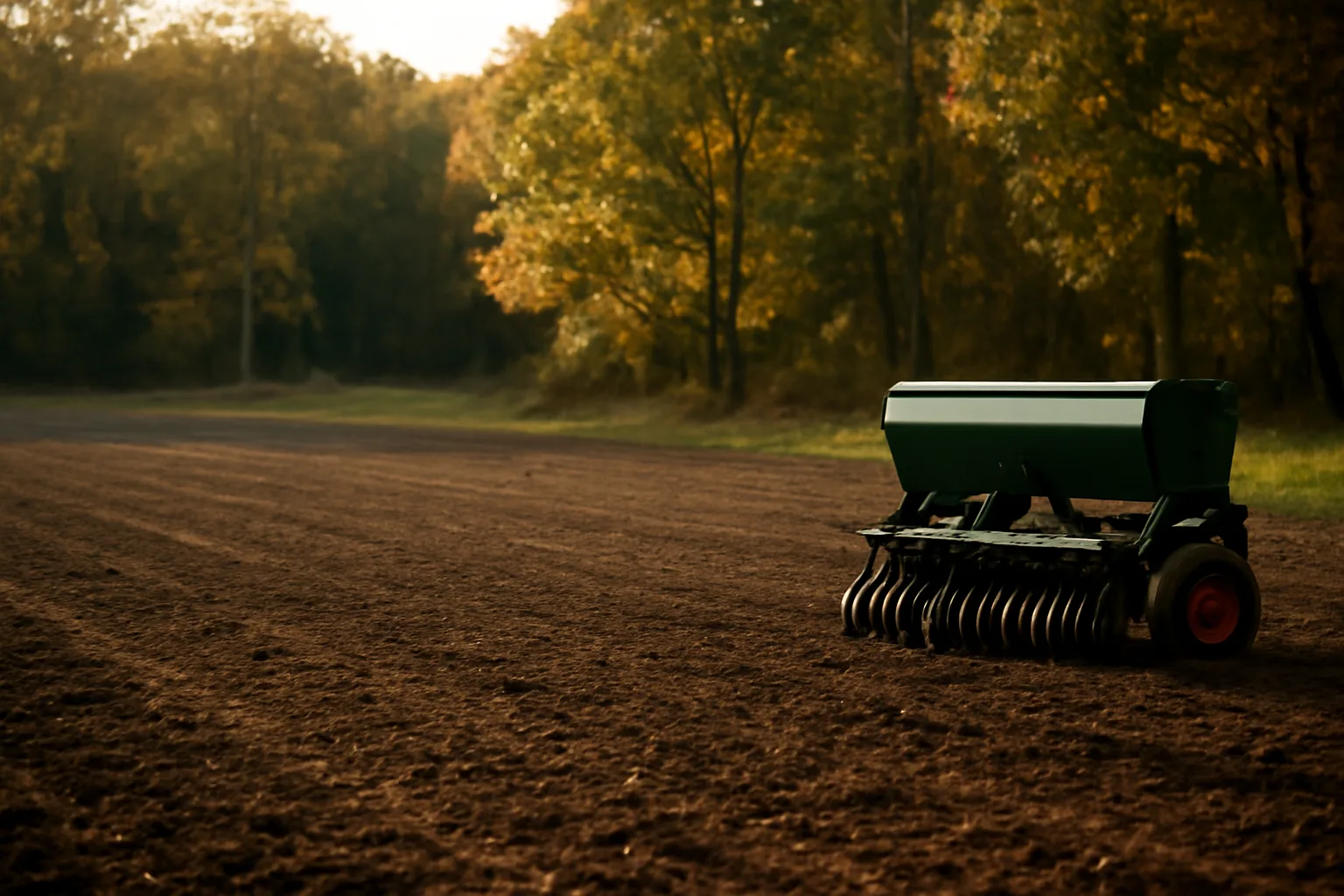
Bare minimum: something to kill or knock down existing vegetation, something to work the seedbed, a way to spread seed, and a way to get seed-to-soil contact. That's it. You don't need a $40,000 tractor. For small plots (under an acre), a lot of hunters get by with an ATV or UTV, a pull-behind disk or cultipacker, a broadcast spreader (even a handheld one), and glyphosate for burndown. For larger plots, a compact tractor with a disk, drag harrow, and a seed drill speeds things up a lot and improves germination rates because drilled seed gets consistent depth control that broadcast seed can't match. A basic no-till or minimum-till approach (spray, wait 7 to 14 days, then broadcast into dying vegetation and drag) works fine for a lot of species and saves fuel and time compared to full conventional tillage. Full tillage still makes sense on compacted ground or when you're trying to bury lime and correct pH at depth. More detail on matching equipment to acreage and plot type is covered under equipment-and-methods content.
what are deer's favorite foods
Deer are opportunistic browsers, and their actual favorite food changes by season and region more than most marketing suggests. That said, several plants show up consistently at the top of preference studies and forage analysis: clover, soybeans, acorns (especially white oak acorns, which are lower in tannins than red oak), and, seasonally, standing corn and brassicas after a frost. Acorns deserve more credit than most food plot content gives them. White oak acorns can make up a large share of fall whitetail diet in years with a good mast crop, and deer will often bypass planted plots entirely when acorns are dropping heavy, according to state wildlife agency deer biology publications [6]. That's not a food plot failure, that's just deer doing what deer do when free, high-energy, high-fat food is on the ground. Among planted crops, soybeans in the vegetative stage and clover generally test highest for crude protein and palatability in the growing season, while corn and standing grain sorghum matter more in late fall and winter for energy and fat reserves headed into cold weather. For species-by-species comparisons of what actually gets eaten first in mixed plots, deer food plot seed and food plot seed both go deeper on variety selection than this planting-timing piece can.
do deer like honey, and does it actually attract them
There's no real science supporting honey as a deer attractant, and it's mostly internet folklore rather than anything backed by wildlife research. Deer aren't drawn to sugar the way a raccoon or a bear might be, and their digestive system (a four-chambered rumen built around fibrous browse and mast) isn't set up around opportunistic sweet-food foraging the way an omnivore's is. Where honey shows up in hunting content is usually as a mineral/attractant additive mixed into soil or poured on stumps, sometimes alongside molasses. Neither has strong research behind it as a deer attractant specifically, and in a lot of states, pouring liquid attractants or scent products onto the ground for the purpose of drawing deer for hunting can cross into baiting rules depending on how the state defines bait. If you're hunting over or near a food plot, check your state wildlife agency's baiting and feeding regulations before adding any supplemental attractant, mineral, or feed product. Rules vary a lot: some states allow baiting on private land with restrictions on distance and visibility, others ban it outright statewide, and some ban it only in certain disease management zones (particularly CWD-affected counties). A planted, standing food plot is treated differently from loose grain, minerals, or liquid attractants in essentially every state, but the exact legal line differs, so check your specific state agency page before you do anything beyond planting seed in the ground.
annual vs perennial plots: which should you actually plant first
| Time to establish | Fast, 3-6 weeks | Slower, full season to mature | |
|---|---|---|---|
| Replanting | Every year | Every 3-5 years | |
| Soil forgiveness | More forgiving | Needs corrected pH to perform | |
| Best season | Fall/late-season | Spring through fall, multi-season | |
| Upfront cost | Lower per planting, recurring | Higher setup, lower recurring | For a full plot-type comparison including cost breakdowns, deer food plots and deer for food both cover this decision in more depth. |
If you're planting your first plot ever, start with an annual, cool-season blend (oats plus brassicas, or oats plus clover) rather than a pure perennial stand. Annuals establish faster, forgive soil imperfections better, and give you a full growing season to see results before you've committed years of maintenance to a perennial stand. Perennials (clover, chicory, alfalfa) are the better long-term investment once you know your field's pH is corrected and you're willing to mow and manage it 2 to 3 times a growing season. A well-maintained clover plot can outproduce annual replanting costs within 2 to 3 years, but only if lime and fertility are dialed in from a real soil test, not guessed at. | Factor | Annuals (oats, brassicas, sorghum) | Perennials (clover, chicory, alfalfa) |
how big should a food plot be, and where should you put it
Most successful hunting plots (as opposed to large agricultural food plots meant for tonnage) run somewhere between a quarter acre and 2 acres. Bigger isn't automatically better; a smaller plot tucked into cover with good wind access often gets hunted more effectively than a 5-acre field that broadcasts your presence for a quarter mile. Placement matters as much as planting. Morning/evening feeding plots do best with good access that doesn't blow your scent across bedding, and at least a few hours of direct sun for most crop types (clover and brassicas both want 6+ hours if you can get it). Kill plots (small, secluded, meant for a stand-hunting setup) can be a tenth of an acre and still work well because they're about ambush position, not calories produced. A soil test and a rough sketch of your property (sun exposure, access routes, wind direction, distance to bedding cover) does more for plot success than any seed blend decision. That's genuinely the order of operations: soil and location first, species second.
what a $99 custom plan actually gets you, and where the free advice stops
Everything above is general guidance that applies across most of the whitetail range, adjusted by hardiness zone. What it can't do is look at your specific field: your soil test numbers, your property's shape and cover, your local frost dates down to the week, and your budget for seed and lime. That's the gap a Custom Food Plot Plan is built to close. For a one-time $99 fee, you get a plan built around your actual soil test results and property details rather than a generic zone chart. It's still general planning guidance, not site-specific agronomy from a certified agronomist standing in your field, and your soil test lab remains the real authority on exact lime and fertilizer rates. But it's a lot more specific than a blog post can be. Whether you build your own plan from extension resources or use a paid one, the fundamentals don't change: test your soil, match species to your actual frost dates, and don't skip the lime just because it's slow to work.
Frequently asked questions
Do deer eat sorghum?
Yes, deer eat both grain sorghum seed heads and young sorghum plants, though it's usually a secondary crop compared to soybeans or corn. It's valued for drought tolerance and screening cover, and it matures in about 90-120 days after planting in late spring.
Do deer eat clover?
Yes, clover is one of the most preferred whitetail forages and often the top pick among food plot crops, testing at 25-30% crude protein in vegetative growth. It's palatable spring through fall and regrows fast after grazing, unlike most annuals.
When should I plant food plots for deer?
It depends on the crop: cool-season annuals and brassicas go in mid-July through September (60-90 days before first frost), cereal grains like oats go in late summer, and warm-season crops like corn, soybeans, and sorghum go in after your last spring frost, roughly May-June.
Do deer like clover more than other plot crops?
Clover consistently ranks at or near the top of whitetail forage preference studies, alongside soybeans in vegetative stage. It's high protein, regrows after grazing, and works as a perennial, so most extension guides recommend it as a base plot species.
When should I plant oats for deer?
Plant oats 60-90 days before your area's first hard frost, generally mid-August to mid-September in the Midwest and Northeast, later (into October) in the Southeast. Oats germinate fast and attract deer to young shoots within a few weeks of planting.
When should I plant turnips for deer?
Plant turnips 60-90 days before your average first killing frost, since bulbs need repeated frost exposure to sweeten and become attractive. That's roughly late July to mid-August in zone 5-6 areas, and late August to early September farther south.
What exactly is a food plot?
A food plot is a planted patch of forage, grain, or brassica crops, typically a quarter acre to several acres, established specifically to feed and hold deer or other wildlife. It's managed as agriculture, with soil testing, planting windows, and fertility, not as loose scattered feed.
What are deer's favorite foods overall?
Acorns (especially white oak), clover, and soybeans consistently rank highest in whitetail diet and preference studies. Preference shifts by season: clover and soybeans dominate spring through fall, while acorns, corn, and frosted brassicas matter most in late fall and winter.
Do deer like honey?
There's no research supporting honey as a deer attractant. Deer forage around fibrous browse and mast rather than sweet foods, and claims about honey or molasses drawing deer are unsupported by wildlife studies. Check state baiting rules before using any liquid attractant near a hunting area.
What soil pH do most food plot crops need?
Most common food plot species, including clover, brassicas, and cereal grains, perform best between pH 6.0 and 7.0. Below 5.5, nutrient availability drops sharply regardless of fertilizer applied, so a soil test and lime application (which can take 6-12 months to fully react) should come before planting.
Is it legal to hunt over a food plot?
In most states, a planted, standing food plot is treated differently from loose bait or minerals and is legal to hunt over, but rules vary significantly by state and sometimes by county (especially in CWD management zones). Always check your state wildlife agency's current baiting and feeding regulations before hunting.
How big should a food plot be for deer hunting?
Most hunting-focused plots run a quarter acre to 2 acres; small, hidden kill plots can be as little as a tenth of an acre. Size matters less than sun exposure, wind-friendly access, and proximity to bedding cover for actually getting a shot opportunity.
Sources
- NOAA National Weather Service, Frost/Freeze Climatology: first and last frost dates vary regionally and determine planting windows
- Penn State Extension, "Food Plots for Deer" (Agronomy Facts 79): clover requires soil pH near 6.0-6.5 for good establishment and nodulation
- Mississippi State University Extension, "Brassica Wildlife Food Plots" (P2765): brassicas like turnips need nitrogen fertility and perform best after frost sweetens bulbs
- Mississippi State University Extension, "Soil Testing for the Farmer" (P2311): soil testing is the recommended first step before planting food plots, providing pH and nutrient recommendations
- Mississippi State University Extension, "Establishing and Managing Wildlife Food Plots" (P2111): nutrient availability, especially phosphorus, drops sharply in soils below pH 5.5
- Pennsylvania Game Commission, "White-tailed Deer Biology and Range": acorn mast, especially white oak, is a major component of fall whitetail deer diet