Last updated 2026-07-26
TL;DR
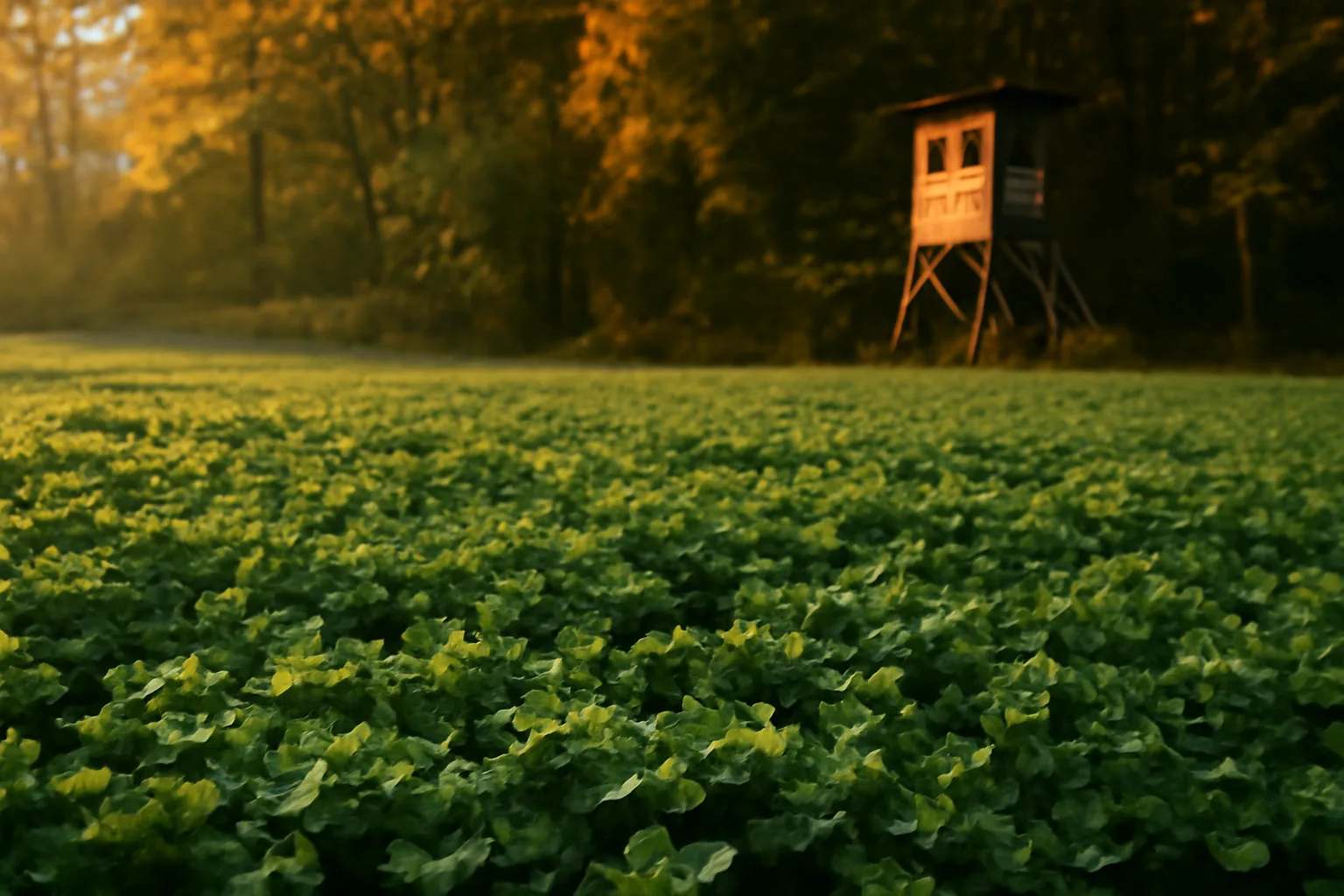
Food plot hunting means planting forage plots that attract and hold deer for hunting, more than feeding them. Success depends on matching species (clover, oats, brassicas, sorghum) to your zone's planting window, testing soil first, and placing plots where deer will move through them in daylight during season.
What is a food plot, exactly?
A food plot is a planted patch of forage, usually somewhere between a quarter acre and a few acres, put in specifically to attract, hold, or feed deer on a piece of hunting ground. That's different from a farm field or a wildlife food plot planted purely for habitat restoration. A hunting food plot has one more job: it needs to put deer in a spot where you can see them and get a shot, ideally during legal shooting hours. The USDA Natural Resources Conservation Service supports wildlife habitat plantings through its Conservation Practice Standard for Wildlife Habitat Planting (Code 420), which covers establishing food and cover plantings for wildlife on agricultural and other land [1]. Most state wildlife agencies and land-grant extensions describe the same basic idea: pick a plant deer will eat at the time you want to hunt, put it in soil that can actually grow it, and place it where deer travel naturally. There are really two kinds of plots on most properties. Destination plots are bigger, often quarter to two acres, tucked in thicker cover, meant to hold deer during the day and give you an evening or morning sit. Transition or kill plots are small, sometimes under a quarter acre, planted along travel corridors specifically to catch deer moving between bedding and a bigger food source. Confusing the two is one of the most common planning mistakes. A big open plot near a road pattern will get hit hard at night and rarely in daylight. If you're building your first plot plan, a soil test and a rough sketch of your property (bedding, water, prevailing wind, access routes) matter more than which seed bag you buy. For a structured start, see food plot whitetail for how plot placement and hunting pressure interact.
When should you plant food plots for deer?
| Upper Midwest / Northeast | Late April to early June | Early August to early September | |
|---|---|---|---|
| Mid-South / Transition zone | May to early June | Mid-August to mid-September | |
| Deep South / Gulf Coast | April to May | Mid-September to late October | The single biggest timing mistake hunters make is planting fall brassicas or clover too late, chasing a cheap seed sale in September instead of hitting the actual window. Brassicas especially need 80 to 90 days of growth before they're worth much to deer. Plant them in September in a zone that frosts in October and you'll get a thin, disappointing plot. |
Timing runs backward from your first hard frost and your hunting season, not forward from when the ground thaws. Cool-season plots (clover, brassicas, cereal grains) generally go in 60 to 90 days before your average first frost date. Warm-season plots (soybeans, sorghum, corn) go in after your last spring frost risk passes, typically May through early June across most whitetail range. Your local NRCS county office and state extension both publish frost date tables specific to your area, and that's the number you actually need, not a national calendar. In the Southeast, Mississippi State University Extension recommends fall plot planting from mid-September through October depending on rainfall, since the region's frost comes much later [2]. Further north, growers generally need to move that window up by three to six weeks to outrun an earlier frost. Here's a rough national breakdown, but treat it as a starting point and check your own zone: | Region | Spring/summer plot window | Fall plot window |
When should you plant clover for deer?
Plant perennial clover in early spring (April into May, north to south) or late summer to early fall (August into September), depending on your rainfall and irrigation situation. Clover germinates in cool soil and needs consistent moisture the first three to four weeks. A lot of experienced planters lean toward late summer plantings timed just ahead of fall rain, when weed competition is lower. Spring seeding works but you'll fight more weed pressure through the first summer. Late-summer seeding into a firm, moist seedbed generally gives clover a cleaner start because cooler nights slow down annual weed germination while clover keeps growing. Clover is a perennial, meaning a well-managed stand can produce for three to five years before you need to reseed, especially ladino and white clover blends. That's part of why it's the most planted food plot species in North America: one planting, mowed and fertilized annually, keeps producing.
Do deer like clover, and do deer actually eat it?
Yes. Clover is one of the most consistently preferred forages in whitetail diet studies, and it's palatable across almost the entire growing season. Multiple state wildlife agency food plot guides list clover as a top-tier plot species precisely because deer use it heavily from spring green-up through fall, and it holds up under repeated grazing better than most other forages. A deer nutrition summary from Mississippi State University Extension's whitetail deer program lists clover among the higher-preference forages, alongside soybeans and certain brassica varieties, based on browse studies and field observation [2]. Clover is also high in protein, commonly running 25 to 30 percent crude protein in vegetative growth stages, which matters most in spring and summer when does are lactating and bucks are growing antlers. The catch: clover needs a soil pH close to neutral (roughly 6.0 to 7.0) to thrive, and it's one of the pickier plants about lime, based on USDA NRCS plant guidance for the species [3]. If your soil test comes back at 5.2 or 5.5, expect a weak, weedy stand until lime raises the pH, and that can take months to work into the soil. For background on matching seed choices to what deer actually prefer across a full season, see deer food plot seed.
When should you plant oats for deer?
Plant oats in late summer to early fall, generally 6 to 8 weeks before your first frost, so the same window as brassicas and cereal rye. Oats are a cool-season annual, they germinate fast (often within a week in warm, moist soil), and deer hit them hard in the first six to eight weeks after they green up, before a hard freeze kills the plant back. Oats are one of the most attractive early-fall food plot options because deer seem to prefer the young, sugary leaf growth. One real limitation: oats generally aren't frost-hardy in the way winter wheat or cereal rye is. A hard freeze in the teens will usually kill oats outright, while rye and wheat can survive and regrow. If you're hunting into December or January in a cold-winter state, pair oats with a hardier grain or a brassica so you've got food left after the first big freeze.
When should you plant turnips for deer?
Plant turnips 80 to 90 days before your first expected hard frost, which usually lands in late July through mid-August in northern states and August into early September farther south. Turnips are a brassica, and the timing math is about the bulb, more than the leaf: deer often ignore turnip bulbs until after a couple of hard frosts convert starches to sugars, so the plant needs enough time to bulb up before that frost hits. That delayed-attraction pattern is well documented anecdotally and in extension guidance. Deer typically eat the leafy tops first in fall, then switch to digging up and eating the bulbs in late fall and winter once repeated freezes sweeten them [2]. That makes turnips one of the better late-season food plot options, since they're often still standing and palatable in December and January when clover has gone dormant and other annuals are gone. Turnips need decent soil fertility and a pH around 6.0 to 6.5 to bulb well, consistent with USDA NRCS plant guidance for forage turnip [4]; in poor, acidic soil you'll get spindly plants with little bulb mass. They also need moisture at planting since the seed is tiny and can't push through a dry crust. If your fall planting window is dry, irrigation or at least a rain forecast matters more for turnips than for almost anything else in the cool-season lineup.
Do deer eat sorghum, and is it worth planting?
Yes, deer eat sorghum, particularly the grain heads once they mature and dry down in fall, but it's a secondary food source compared to soybeans, corn, or clover for most whitetail programs. Grain sorghum (milo) is more commonly planted as a dove field or a drought-tolerant grain crop than as a dedicated deer attractant, though deer will absolutely browse the plant and eat the grain when it's available. Sorghum's real value in a deer program is often as a nurse crop or a standing cover/food combo alongside soybeans, since it's far more drought-tolerant than corn and needs less nitrogen. Kansas State University Research and Extension's Grain Sorghum Production Handbook notes the crop's strong fit for dryland production in areas with limited rainfall, which is part of why it shows up more in food plot mixes across the drier Plains states than in the wetter Midwest or Southeast [5]. If you're picking between sorghum and soybeans purely for deer attraction in a normal-rainfall year, soybeans usually win on preference and tonnage. Sorghum earns its spot in dry years or thin, sandy soils where beans just won't hold up.
Do deer like honey, and does it belong in a food plot conversation?
Deer don't eat honey in any meaningful way as part of their natural diet, and it has no real role in food plot planning. This question shows up because of "honey hole" terminology (a honey hole is hunter slang for a great spot, not an actual food source) and because some commercial deer attractant products use sugar or molasses-based scents marketed loosely alongside honey branding. Whitetail deer are browsers and grazers built around forbs, woody browse, mast (acorns, and similar hard nuts), grasses, and agricultural crops. There's no wildlife agency or extension guidance recommending honey as deer attractant or forage, and it doesn't fit the diet studies that inform food plot species selection. If a product claims deer are drawn to honey-based scent, that's a mineral or sugar attractant claim, not a food plot forage recommendation, and it's worth checking your state's baiting and feeding regulations before using any concentrated attractant near a stand, since rules vary widely and some states classify sugar-based products as bait.
What are deer's favorite foods overall?
Deer preference shifts by season, region, and what's locally available, but across most whitetail range the consistent favorites are acorns (especially white oak group), soybeans, clover, and browse from young woody plants like honeysuckle, greenbrier, and blackberry. In a planted food plot context, soybeans and clover top most preference rankings, with brassicas and cereal grains close behind in fall and winter. Acorns deserve special mention because they often out-compete anything you plant. When there's a strong white oak acorn drop in October, deer will frequently abandon food plots for the woods until acorns run out, then come back to plots. That's not a plot failure, it's just deer being efficient: acorns pack more fat and carbs per bite than most planted forage. Mississippi State University Extension's whitetail nutrition guidance lists mast, soybeans, and high-quality forbs among the top natural and planted preferences documented in browse studies across the Southeast [2]. Seasonally, protein needs (spring and summer, driven by antler growth and lactation) push deer toward clover, alfalfa, and soybean leaves. Energy needs (fall and winter, driven by cold and the rut) push them toward grain, acorns, and brassica bulbs loaded with sugar. A plot plan that only accounts for one season is only half a plan; see deer food plots for a fuller rundown of seasonal species rotation.
How do you plan a food plot that actually hunts well?
Start with the soil test, not the seed catalog. A basic soil test through your county extension office or a private ag lab tells you pH, phosphorus, potassium, and organic matter, and that determines what will even grow before you think about deer preference at all. Most extension labs charge somewhere in the $8 to $20 range per sample, and turnaround is usually one to two weeks. Once you know your soil, work backward from how you'll hunt the plot. A destination plot in thick cover, planted with clover or a brassica blend, works for evening sits when deer feed before dark. A narrow transition plot along a fence line or logging road, planted with a fast, cheap annual like oats or winter rye, works for catching deer moving between bedding and a bigger field, often better for morning access since deer are heading back to bed. Wind and access matter as much as seed choice. A perfectly planted plot that requires you to walk past a bedding area to reach your stand will get hunted out in a week. Plan entry and exit routes on paper before you plant, not after you notice deer blowing out every sit. If you want a structured, size-and-goal-specific plan without guessing at rates and blends, a $99 one-time Custom Food Plot Plan walks through your acreage, soil test results, and hunting goals to build a planting plan. It's general guidance built from your inputs, not site-specific agronomy; your soil test lab is still the final word on lime and fertilizer recommendations for your exact field.
What equipment do you actually need to plant a food plot?
For a small plot (under an acre), a lot of hunters get by with a UTV or ATV, a small disc or tiller, a hand-crank or towed broadcast spreader, and a cultipacker or drag to firm the seedbed. For anything over two or three acres, a tractor with a disc, drill, or no-till planter starts saving real time and gives more consistent seed depth, which matters a lot for small-seeded species like clover and brassicas. The gear question really comes down to seed size and planting method. Small seeds (clover, brassicas) need to sit near the surface, roughly a quarter inch deep or less, and get cultipacked or rolled for good soil contact; bury them too deep with a disc pass and they won't emerge. Larger seeds (soybeans, corn, cereal grains) need to go deeper, an inch to an inch and a half, and tolerate disc incorporation fine. A lot of hunters overspend on tillage equipment and underspend on a soil test and lime. Skipping lime on acidic ground and running a $3,000 no-till drill over it still gets you a mediocre plot. Get pH right first; the equipment matters less than most catalogs make it sound.
What food plot mistakes cost hunters the most?
The most expensive mistakes are planting on untested soil, planting too late for the species chosen, and putting a big open plot where deer only feel safe visiting after dark. All three are free or cheap to fix on paper before you ever buy seed. Skipping a soil test is the number one wasted-money mistake. Clover and brassicas both need pH in the 6.0 to 7.0 range to perform, and a huge share of hunting ground, especially reclaimed timber or CRP land, sits well below that without lime. Lime takes months to fully react in soil, so testing in spring for a fall planting (or testing now for next year) gives it time to work. The second mistake is buying seed before checking your frost dates. Brassicas planted in early September in a zone that frosts in early October simply don't have time to bulb. Oats planted in June in the Deep South will burn up in summer heat since they're a cool-season annual, not a summer crop. The third mistake is treating a food plot like a garden instead of a hunting tool. A plot needs an approach that doesn't cross deer bedding, a wind that favors your entry, and enough cover nearby that deer feel comfortable showing up before dark. Species selection matters, but placement decides whether you actually see deer during shooting hours. For more on matching seed blends to plot type and size, see food plot seed and domain food plot seed.
Frequently asked questions
Do deer eat sorghum?
Yes, deer eat grain sorghum, especially the mature seed heads in fall, and they'll browse the plant too. It's more drought-tolerant than corn, which makes it useful in dry regions, but most whitetail programs rank it below soybeans and corn for pure attraction and tonnage.
Do deer eat clover?
Yes, clover is one of the most preferred forages in whitetail diet studies, used heavily from spring green-up through fall. It runs 25 to 30 percent crude protein in vegetative stages and holds up under repeated grazing better than most annual forages, which is why it's the most commonly planted food plot species.
When should I plant deer food plots?
Cool-season plots (clover, brassicas, cereal grains) go in roughly 60 to 90 days before your first fall frost, usually August in the North and September into October in the South. Warm-season plots (soybeans, corn, sorghum) go in after last spring frost risk, generally May into early June across most whitetail range.
Do deer like clover more than other food plot options?
Clover ranks among the top preference forages in whitetail research, similar to or ahead of soybeans and brassicas depending on season. It's especially preferred in spring and summer for protein; in late fall and winter, deer often switch preference toward acorns, grain, and brassica bulbs for energy.
When should I plant oats for deer?
Plant oats 6 to 8 weeks before your first expected frost, typically August into September depending on your zone. Oats germinate fast and deer hit the young growth hard for the first several weeks, but oats generally aren't frost-hardy and will winterkill in hard freezes, unlike cereal rye or wheat.
When should I plant food plots for deer in general?
Work backward from your local first and last frost dates, available from your county NRCS office or state extension. Fall cool-season plots need 60 to 90 days of growth before frost; spring or summer warm-season plots go in after your last spring frost risk, generally April through early June depending on region.
When should I plant turnips for deer?
Plant turnips 80 to 90 days before your expected first hard frost, since the bulb needs that time to develop and deer often won't eat bulbs heavily until after a couple of freezes sweeten them. That's usually late July into mid-August in northern states, August into early September farther south.
What is a food plot?
A food plot is a planted patch of forage, typically a quarter acre to a few acres, put in specifically to attract, hold, or supplement food for deer on hunting ground. Unlike a farm field, a hunting food plot is placed and timed to put deer in range during legal shooting hours.
What are deer's favorite foods?
Across most whitetail range, top preferences include acorns (especially white oak group), soybeans, clover, and browse from young woody plants like honeysuckle and greenbrier. In planted food plots specifically, soybeans and clover consistently rank highest, with brassicas and cereal grains close behind in fall and winter.
Do deer like honey?
No, honey isn't part of the natural whitetail diet and has no real role in food plot forage planning. The idea likely comes from hunter slang ("honey hole") or sugar and molasses-based commercial attractants, which are separate from planted forage and may fall under state baiting regulations.
How big should a food plot be for hunting?
Destination plots that hold deer during daylight often run a quarter acre to two acres in thicker cover. Transition or kill plots meant to catch deer moving between bedding and food are usually smaller, often under a quarter acre, placed tight to a stand for close-range shots.
Do I need a soil test before planting a food plot?
Yes. Soil test results (pH, phosphorus, potassium, organic matter) determine whether species like clover or brassicas can even establish well, since both need pH near 6.0 to 7.0. Most county extension offices or private ag labs run tests for roughly $8 to $20 per sample with results in one to two weeks.
Sources
- USDA Natural Resources Conservation Service, Conservation Practice Standard: Wildlife Habitat Planting (Code 420): Food plots are supported as a wildlife habitat planting practice supplementing natural forage
- Kansas State University Research and Extension, Grain Sorghum Production Handbook (C-687): Grain sorghum's drought tolerance and adaptation to dryland, low-rainfall production
- National Weather Service, Climate Normals and First/Last Freeze Dates: Regional frost dates vary significantly and should be checked locally rather than assumed from a national calendar
- USDA NRCS, Plant Guide: White Clover (Trifolium repens): White clover soil pH preference and perennial stand persistence characteristics
- USDA NRCS, Plant Guide: Forage Turnip (Brassica rapa): Turnip fertility and pH requirements for bulb development