Last updated 2026-07-25
TL;DR
There's no universal number, but a common starting point without a soil test is 300 to 400 lbs/acre of a balanced blend like 19-19-19 or 13-13-13, plus lime if your pH is below 6.0. A real soil test (roughly $10-25 through most state extension labs) will tell you exact N-P-K and lime needs for your soil and species, and that's always more accurate than a guess.
How much fertilizer does a deer food plot actually need?
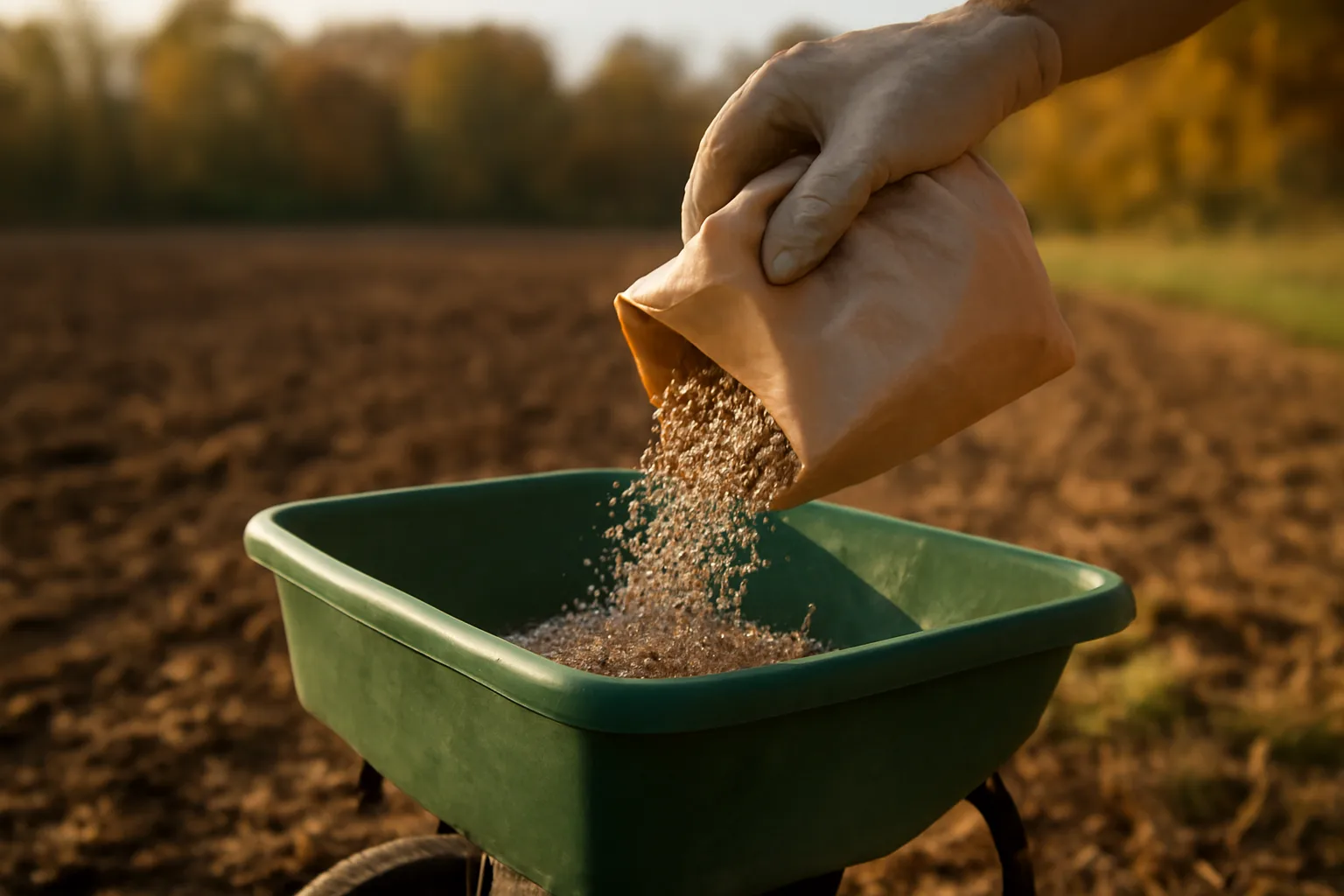
The honest answer is: it depends on what your soil already has, what you're planting, and what your soil test says, and there's no way around that last part if you want to stop wasting money. That said, hunters need a working number before the bags get loaded, so here's the practical range. For a general-purpose plot without a soil test, most state extension guides and seed companies land somewhere around 300 to 400 lbs per acre of a balanced fertilizer such as 19-19-19, 13-13-13, or 10-10-10, applied at planting. Clover and other legumes need less nitrogen because they fix their own from the air, so a lower-N blend like 0-20-20 or a starter dose of 100-150 lbs/acre of 6-24-24 type product often works better for a clover-based plot. Brassicas (turnips, radishes) and cereal grains (oats, wheat) are heavier nitrogen feeders and often benefit from a topdress of 100 lbs/acre of urea or ammonium nitrate 3-4 weeks after emergence [1]. The University of Tennessee Extension's food plot guide puts it simply: soil testing is the only way to know your actual phosphorus and potassium levels, since those don't move much in soil and can build up or run out over years of planting the same ground [2]. Guessing on P and K either wastes money on nutrients you don't need or starves a plot of what it does need, and you can't tell the difference by looking at the field.
What does a soil test actually tell you, and is it worth doing?
Yes, and it usually costs less than one bag of fertilizer. A basic soil test through a state land-grant university lab typically runs $7 to $20 per sample, and most report back pH, phosphorus, potassium, and sometimes organic matter and micronutrients, along with a lime and fertilizer recommendation matched to the crop you tell them you're planting. The test result usually reads like this: apply X lbs/acre of nitrogen, Y lbs/acre of P2O5, Z lbs/acre of K2O, plus however many tons of lime per acre to correct pH. That recommendation is built around your soil's actual nutrient levels and your target crop, which is exactly why it beats any blanket "300 lbs per acre" rule sitting on a seed bag or a blog post (including this one). Mississippi State University Extension notes that food plot soils are frequently acidic, in the 5.0 to 5.5 pH range, in a lot of the whitetail's range in the Southeast, and that most food plot species want a pH between 6.0 and 7.0 for nutrients to actually be available to the plant roots [3]. If your pH is off, more fertilizer does not fix that. Lime fixes that. Your soil test is the actual authority here, not any generic number from an article. Fertilizer recommendations always beat generic guidance when they're based on your dirt, in your field, from a lab that ran your sample.
How much lime does a food plot need?
Lime is usually the bigger lever than fertilizer, and it's the one people skip. Most food plot soils that haven't been limed in years sit acidic, and clover, alfalfa, and brassicas all want a pH close to neutral (6.0-7.0) to use the nitrogen, phosphorus, and potassium you're already putting down. Penn State Extension recommends applying lime based on a soil test's "lime requirement" value, since generic rates can under- or over-correct depending on your soil's buffering capacity, but common food plot applications run 1 to 3 tons per acre of agricultural lime for soils that test moderately acidic. Here's the part that trips people up: lime takes months to fully react with the soil, sometimes 6 months to a year for full effect, especially if it's not tilled in. If you're planning a fall plot and your soil test says you need lime, get it down as early in the season as you can, ideally the spring before, not the week you plant. A plot that gets fertilizer without needed lime is like feeding a plant through a straw with a kink in it. The nutrients are there. The plant can't get to them.
When should I plant food plots for deer?
Timing depends on your zone and what you're planting, but as a rule, spring/summer annuals go in after your last frost date, and fall annuals go in 60-90 days before your first hard frost, timed so they mature right as hunting season opens. Spring plots (clover, chicory, soybeans, and other warm-season legumes or forages) typically go in between April and June depending on latitude, once soil temps are consistently warming and frost risk has passed. Fall plots (brassicas, cereal grains, clover overseed) usually go in from mid-August through early October across most of the whitetail's range, adjusted earlier for northern states and later for the Deep South. The safest way to nail your exact window is your local frost dates and your state extension's planting calendar, since a plot planted three weeks too early or too late can fail to establish before frost or before deer season, wasting the whole season's work. If you want zone-specific windows mapped out for your exact planting dates, that's the kind of thing food plot whitetail planning resources are built for.
When should I plant oats for deer?
Oats are a fall food plot staple, and they're best planted 6-8 weeks before your area's first expected frost, which lands most of the Midwest and Upper South somewhere between late August and mid-September. Oats germinate fast, usually within 7-10 days in warm soil, and they're extremely palatable to deer while young and tender, which is exactly the window bowhunters are targeting in September and October. Oats don't handle deep winter cold as well as wheat or rye though, so in northern zones (much of the Midwest and Northeast) they'll often get killed back hard by the first real freeze, while wheat or triticale keeps growing into winter. A lot of plotters mix oats with brassicas or with wheat/clover specifically because oats give you fast, attractive fall growth while the slower-establishing species catch up underneath. Seeding rate for oats alone typically runs 2-3 bushels (roughly 64-96 lbs) per acre, and a light starter fertilizer with the N-P-K your soil test calls for gets them up quickly.
When should I plant turnips for deer, and do deer actually eat them?
Turnips go in the ground in late summer, typically 80-90 days before your first fall frost, since they need that runway to bulb out and reach peak palatability right as cold weather hits. Deer absolutely eat turnips, but timing matters more with turnips than almost any other food plot crop. Turnip tops (the leafy greens) get eaten readily soon after they come up, but the bulbs themselves usually don't turn attractive to deer until after a couple of hard frosts convert starches into sugars, sweetening them up. That's why turnip plots often look untouched in October and then get hammered in December, once the deer figure out the bulbs are there and the sugar content has climbed. Because turnips (and other brassicas) are heavy nitrogen feeders, most extension guidance calls for a fertilizer program in the 300-400 lbs/acre range of a complete fertilizer at planting, sometimes with a nitrogen topdress a few weeks in if the soil test and growth pattern call for it [1]. A soil test still runs the show on exact rates.
Do deer eat clover, and do deer actually like it?
Yes, and it's one of the most reliably preferred food plot forages across the whitetail's range. Clover (white clover, red clover, and ladino types especially) is a perennial legume that regrows after grazing, stays palatable through spring, summer, and fall, and consistently ranks as one of the most heavily used food plot species in university browse studies and extension guidance [2]. Clover's advantage is that it's high in protein, usually 15-25% crude protein depending on growth stage and fertility, which matters most in spring and summer when does are lactating and bucks are growing antlers. It also fixes its own nitrogen through rhizobium bacteria in the root nodules, so a healthy clover stand needs far less nitrogen fertilizer than a grain crop, mainly phosphorus and potassium plus lime to keep pH in the 6.0-7.0 range where the rhizobia work well. The catch with clover is establishment and weed pressure. It's a slower starter than oats or brassicas, and a poorly limed, weedy seedbed will out-compete a clover stand before it ever gets going. If you want a lower-maintenance perennial base for a plot, clover-heavy blends are worth building around, and resources like deer food plot seed break down which clover varieties and blends suit different soil types.
Do deer eat sorghum, and does it belong in a food plot?
Deer will eat sorghum, particularly the grain heads once they mature and especially after frost softens them up, but it's more of a supplemental or cover-and-food dual-purpose crop than a primary attractant plot. Grain sorghum and forage sorghum both show up in food plot mixes, often as a summer annual planted alongside soybeans or cowpeas, and it holds up better than corn in drought-prone or lower-fertility soils. Its main value in a lot of plot plans isn't as the thing deer prefer most, it's as standing cover and a late-season grain source when other food sources have already been picked clean or gone dormant. Turkeys, deer, and a long list of other wildlife will use sorghum heads through fall and winter. If your goal is peak deer attraction during archery season, sorghum isn't going to outperform clover, brassicas, or beans. If your goal is late-season standing forage that also gives deer a place to bed or feel secure walking to a plot, it earns its spot.
What are deer's favorite foods, really?
There's no single "favorite," because deer preference shifts by season, region, and what's naturally available, but soybeans, clover, and native browse consistently top preference studies, with acorns dominating in fall wherever oaks are producing. In spring and summer, deer key in on high-protein forage: clover, soybeans (as a growing plant, more than the bean), alfalfa, and native forbs. Come fall, acorns become the dominant food source in areas with mature oaks, often pulling deer off food plots entirely during a good mast year, which is a well-documented pattern in deer research and one reason plot performance varies so much year to year [4]. In winter, deer shift to whatever standing forage, browse, or waste grain is left, which is exactly why brassicas, cereal grains, and standing corn or soybeans matter so much for late-season plots. Soybeans deserve a specific mention: as a growing plant during summer, soybean foliage is one of the most heavily browsed food plot crops there is, so much so that a small soybean plot can get grazed to the ground by deer before it ever reaches maturity, which is why soybean acreage recommendations usually run larger than other crops specifically to outpace browsing pressure. For a broader rundown on what species actually hold up under real grazing pressure, see deer for food.
Do deer like honey, and does it matter for food plots?
No, and this one is mostly a myth. Deer are not attracted to honey in any meaningful way, and there's no credible wildlife research or extension guidance suggesting honey functions as a deer attractant, unlike sugar-rich natural foods such as fruit or frost-sweetened brassica bulbs. Deer don't seek out honey the way bears do; their diet is built around browse, forbs, mast, and forage crops, not the kind of concentrated sugar source honey represents in the wild. Where the confusion probably comes from: some commercial deer attractant products use sugar, molasses, or apple/persimmon scent as a base, and "honey" gets tossed around in marketing copy or forum chatter as a supposed ingredient or flavor note. But feeding or baiting deer with any supplemental attractant, honey included, is regulated or outright banned in a lot of states, so check your state wildlife agency's rules before using any bait, mineral, or scent-based attractant near a plot or stand, since rules vary widely by state and can carry real penalties. If you're trying to pull deer to a specific spot, a well-fertilized, well-timed food plot planted to something deer actually prefer, like clover or brassicas, does far more work than any bait product ever will.
What is a food plot, exactly?
A food plot is a planted area, usually somewhere between a quarter acre and several acres, seeded with forage or grain crops specifically to provide supplemental nutrition and, secondarily, a place to hunt deer or other wildlife. Food plots range from small, hidden "kill plots" tucked into timber near a stand, to large "destination" or "field" plots meant to hold deer on a property and support herd nutrition through the year. They're built on the same basic agronomy as any small farm field: soil testing, lime and fertilizer application, seedbed prep, seeding at the right rate and depth, and timing planting to your growing zone. Most state wildlife agencies and universities treat food plots as a wildlife habitat management tool, distinct from baiting, since a food plot is a growing crop rather than piled feed, though states differ on where that legal line sits, especially around hunting over a plot during active season, so it pays to check your state wildlife agency's regulations directly [5]. If you're new to plotting and want a full breakdown of plot types and how to pick one for your land, deer food plots is a good starting point, and a soil test plus a plan built for your actual dirt (this is where a service like PlotSeason's $99 Custom Food Plot Plan comes in, built around your soil test and property, at /plot-plan-builder) beats guessing every time.
How do I calculate the right fertilizer rate for my specific plot?
| Clover/legumes | 100-150 lbs/acre of 0-20-20 or similar low-N blend | 1-2 tons/acre if pH below 6.0 | |
|---|---|---|---|
| Brassicas (turnips, radish) | 300-400 lbs/acre of 19-19-19, plus N topdress | 1-2 tons/acre if pH below 6.0 | |
| Cereal grains (oats, wheat) | 250-300 lbs/acre of 19-19-19 | 1 ton/acre typical | |
| Soybeans | Low N needed (fixes own), 0-20-20 starter common | 1-2 tons/acre if acidic | These numbers are a starting reference, not a substitute for your soil test results. Your lab's recommendation, built from your sample, always overrides a generic table. |
Start with a soil test, then match the lab's recommendation to your acreage, and adjust only for the specific crop's known feeding habits (legumes need less N, brassicas and grains need more). Here's the actual math: if your soil test recommends 60 lbs/acre of nitrogen, 40 lbs/acre of P2O5, and 40 lbs/acre of K2O, and you're using a 19-19-19 blend, you'd need roughly 210 lbs/acre of that product to hit the nitrogen target (60 ÷ 0.19 ≈ 316 lbs, but you'd typically split N between planting and a topdress, so applying around 150-200 lbs/acre at seeding and topdressing the rest later is common practice). This is exactly the kind of calculation your soil test report or your county extension agent will walk through with you for free, and it's worth that phone call. A rough reference table for common food plot species, without a soil test, based on typical extension guidance [1] [2] [3]: | Crop type | Typical fertilizer rate | Lime need |
What happens if I over-fertilize or under-fertilize a food plot?
Over-fertilizing wastes money and can burn young seedlings or push excess nitrogen runoff into nearby water, while under-fertilizing leaves a thin, weedy stand that can't compete or hold up to grazing pressure. Too much nitrogen applied at once, especially on brassicas or grains, can scorch tender seedlings, similar to over-fertilizing a lawn, and it also just runs off or leaches past the root zone in sandy soils or heavy rain, meaning you paid for nutrients the plants never used. The EPA and multiple state extension programs point to nutrient runoff from over-application as a real water quality concern in agricultural areas generally, which is part of why soil testing matters beyond just plot performance, it keeps you from applying more than the ground can use [6]. Under-fertilizing shows up differently: pale, slow-growing plants, poor tonnage, and a stand that gets grazed out fast because there just isn't enough plant there to handle deer pressure. A thin clover stand under-fed on potassium, for example, thins out and lets weeds take over within a season or two. The fix for both problems is the same: soil test, follow the lab's recommended rate, and don't eyeball it based on what worked in a neighbor's field with different dirt.
Frequently asked questions
Do deer eat sorghum?
Yes, deer eat sorghum grain, especially after frost softens the seed heads, and they'll browse the plant itself too. It's more commonly used as a late-season standing food source and cover crop than as a primary attraction plot, since deer generally prefer soybeans, clover, or brassicas when those options are available.
Do deer eat clover?
Yes, clover is one of the most consistently preferred food plot forages for whitetails. It's high in protein (often 15-25%), regrows after grazing since it's a perennial, and stays palatable spring through fall, which is why it's a staple in most food plot programs across the whitetail's range.
When should I plant food plots for deer?
Spring/summer plots go in after your last frost date, typically April through June depending on latitude. Fall plots go in 60-90 days before your area's first hard frost, usually mid-August through early October, timed so the crop matures right as hunting season opens.
Do deer like clover?
Yes, clover consistently ranks among the top preferred food plot forages in university browse and extension research. Deer use it heavily in spring and summer when protein demand is highest for lactation and antler growth, and a well-maintained perennial clover stand can produce for 3-5 years or longer.
When should I plant oats for deer?
Plant oats 6-8 weeks before your area's first expected fall frost, which lands roughly late August through mid-September across most of the Midwest and Upper South. Oats germinate fast (7-10 days) and are highly palatable while young, but they winterkill easier than wheat or triticale in colder zones.
When should I plant turnips for deer?
Plant turnips 80-90 days before your first fall frost. The leafy tops get browsed soon after emergence, but the bulbs usually don't become attractive until after a couple of hard frosts convert starches to sugar, often making turnip plots most productive in December rather than October.
What is a food plot?
A food plot is a planted patch of forage or grain crops, ranging from a quarter acre to several acres, established specifically to provide supplemental deer nutrition and a place to hunt. It follows standard small-farm agronomy: soil testing, liming, fertilizing, and seeding timed to your growing zone.
What are deer's favorite foods?
There's no single favorite; it shifts by season. Acorns dominate fall diets wherever oaks are producing, soybeans and clover lead in spring and summer for protein, and deer shift to browse, waste grain, and standing brassicas or cereal grains in winter when other sources are gone.
Do deer like honey?
No, honey isn't a real deer attractant. There's no credible wildlife research supporting it, and deer diets center on browse, forbs, mast, and forage crops rather than concentrated sugar sources. Baiting and feeding rules also vary by state, so check your state wildlife agency before using any attractant product.
How much fertilizer per acre for a deer food plot without a soil test?
A common general rate without a soil test is 300-400 lbs/acre of a balanced blend like 19-19-19 or 13-13-13 for grains and brassicas, and 100-150 lbs/acre of a low-nitrogen blend like 0-20-20 for clover or other legumes. A soil test always gives a more accurate, cheaper-in-the-long-run number.
How much lime does a food plot usually need?
It depends entirely on your soil's starting pH, but food plot soils that haven't been limed in years commonly need 1-3 tons per acre of agricultural lime to reach the 6.0-7.0 pH range most food plot species prefer. Lime takes months to fully react, so apply it as early as possible.
Can you over-fertilize a food plot?
Yes. Excess nitrogen can burn seedlings and runs off unused in sandy soil or heavy rain, wasting money and contributing to nutrient runoff concerns that extension programs and the EPA flag in agricultural settings generally. Following your soil test's exact recommendation avoids both over- and under-application.
Sources
- Mississippi State University Extension, Food Plot Establishment and Management: Fertilizer rate ranges and nitrogen topdress practices for brassicas and cereal grain food plots
- University of Tennessee Extension, Wildlife Food Plots: Soil testing is necessary to determine actual phosphorus and potassium needs for food plots, and clover's role as a preferred forage
- Mississippi State University Extension, Soil pH and Liming: Food plot soils in the Southeast are frequently acidic (pH 5.0-5.5) and most food plot species prefer pH 6.0-7.0
- USDA Forest Service, Oak Mast and White-tailed Deer: Acorn mast production strongly influences deer food source preference and food plot use in fall
- Quality Deer Management Association / National Deer Association, Food Plots for Wildlife: Food plots are a habitat management tool distinct from baiting, though state rules vary on hunting regulations near plots
- U.S. Environmental Protection Agency, Nutrient Pollution: Excess nitrogen and phosphorus fertilizer application contributes to agricultural nutrient runoff and water quality concerns