Last updated 2026-07-26
TL;DR
There's no single best seed, it depends on your soil, zone, and hunting goals. Clover works almost everywhere as a spring/summer draw. Brassicas (turnips, radishes) and cereal grains (oats, wheat) shine in fall. A soil test, not a bag label, should drive your final call.
What is a food plot, exactly?
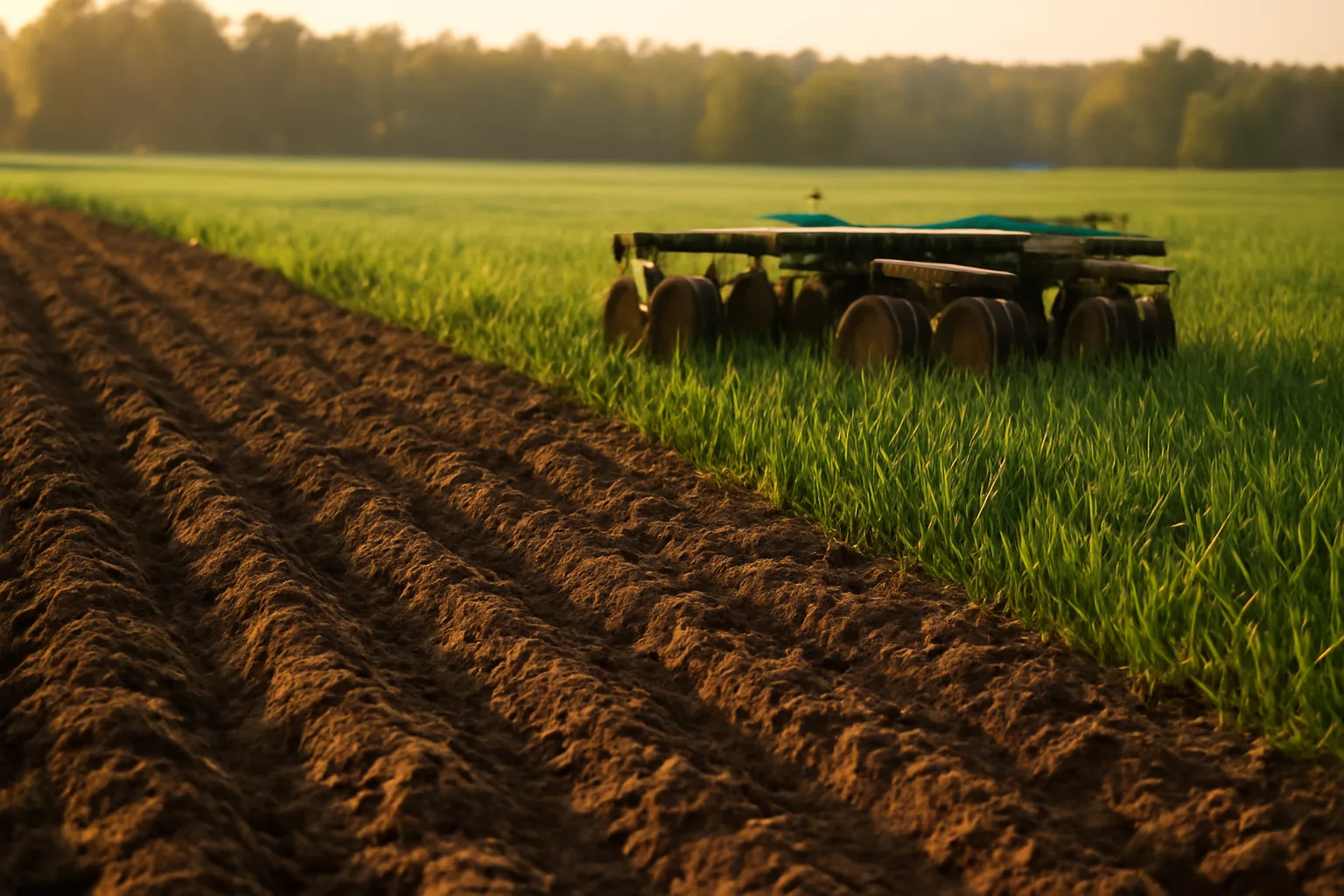
A food plot is a planted area on hunting land, usually somewhere between a quarter acre and a few acres, designed to give deer a reliable food source and give hunters a place to watch or intercept them. It's not the same as agricultural farming, though the practices overlap a lot: soil testing, liming, fertilizing, and planting on a calendar. Most plots fall into two rough categories. Annual plots get replanted every year (think brassicas, cereal grains, sorghum). Perennial plots like clover or alfalfa can produce for three to five years off one planting if you manage them right. Neither type is inherently better. A lot of serious plotters run both, a perennial clover plot for spring through fall, and a fall annual plot timed to peak during hunting season. State wildlife agencies generally don't regulate what you plant on your own land, but baiting and feeding rules are a different animal and vary a lot by state. Some states draw a hard line between a planted, rooted food plot (legal almost everywhere) and piled bait like corn or mineral (restricted or banned in many states). Check your state wildlife agency's baiting regulations before you do anything that isn't a standing crop [1]. For background on the basic concept, see food plot whitetail.
So what is the best deer food plot seed overall?
If you forced a one-word answer, most extension agronomists and plot researchers would say clover, because it's the most forgiving, most widely adapted, and highest-protein option across the largest range of soils and climates. But "best" only makes sense next to a goal. Best for spring and summer nutrition is different from best for a late-season hunting draw in a cold snap. Here's the honest breakdown. Clover (white clover especially, ladino types) is the closest thing to a universal answer for season-long forage, and whitetail deer readily eat it from spring green-up through fall dormancy [2]. Brassicas (turnips, radishes, rape) are the best bet if your goal is a magnet plot for late season, because they get sweeter after a hard frost. Cereal grains like oats and wheat germinate fast, tolerate cool soil, and work well in blends or as a nurse crop for clover. A blend usually beats a monoculture. Mixing a cereal grain with a brassica, or clover with chicory, spreads your risk across weather, browse pressure, and soil variability. If you want a starting point tailored to your dirt and zone rather than a generic bag, that's exactly what a Custom Food Plot Plan is built to do: you get species and rates matched to your soil test and planting window for about $99, one time, no subscription.
Do deer like clover, and is it worth planting?
Yes, deer like clover a lot, and it's one of the most heavily researched food plot forages in the country. White clover (Trifolium repens) and red clover (Trifolium pratense) both show up constantly in university food plot trials because they're palatable, high in crude protein (often 25 to 30 percent in vegetative growth), and persistent for multiple years once established [2]. Mississippi State University Extension's food plot guidance treats clover as a cornerstone perennial option for whitetail management because of its combination of protein content and multi-year stand life once it's properly limed and fertilized [2]. That multi-season window is clover's real advantage over annuals: you plant it once (ideally with a nurse crop of oats or wheat) and, with proper mowing and fertilizing, get three to five years of production. The tradeoffs are real too. Clover needs decent drainage, doesn't love acidic soil below about pH 6.0, and gets hammered by drought worse than deep-rooted brassicas or chicory. It also draws heavy browse pressure early, which is a good problem for hunters but can stunt young stands if deer density is high relative to plot size. For deeper species comparisons, deer food plot seed breaks down variety options further.
Do deer eat sorghum, and does it belong in a plot?
Yes, deer eat sorghum, both the standing grain and the foliage, and it's used in food plots mostly as a fall/winter grain source or as cover and a wind break inside a bigger plot design. Grain sorghum (milo) produces a seed head that deer and turkey both hit hard once it dries down in fall. Where sorghum earns its place is in warm-season, drought-prone ground, since sorghum tolerates heat and dry spells better than corn does; it's a common recommendation in southern and transitional zones where summer plots need something that won't die in a three-week dry spell. It's rarely the headline species in a plot plan, but it's a solid supporting player, either as a standalone grain strip or mixed into a summer blend with soybeans and cowpeas. One caution: sorghum can contain compounds (dhurrin) that convert to prussic acid (cyanide) under stress conditions like frost or drought. The Oklahoma State University Extension fact sheet on prussic acid poisoning explains that "sorghum species contain cyanogenic glucosides that release hydrocyanic acid (prussic acid) when plant cells are damaged," which is why frosted or drought-stressed sorghum forage is a documented livestock hazard [3]. It's mostly a cattle and horse grazing issue rather than a deer food plot issue, but if you're running livestock on the same ground, that's worth knowing.
When should you plant food plots for deer?
Timing splits into two windows almost everywhere in whitetail country: a spring/summer planting for warm-season annuals and perennials, and a late-summer/fall planting for cool-season annuals aimed at hunting season. Your exact dates depend heavily on your USDA Plant Hardiness Zone and your area's first-frost date, since a planting date that works in south Georgia will fail badly in Michigan. As a rough national framework: spring plots (clover, chicory, soybeans, cowpeas) generally go in after your last frost date, when soil temps are reliably above 50 to 55 degrees F. Fall plots (brassicas, cereal grains, clover overseeds) typically get planted 6 to 10 weeks before your average first frost, which gives brassicas enough growing season to bulk up roots and tops before they need to be palatable. The USDA Plant Hardiness Zone Map is the standard reference point for figuring out your zone and adjusting these windows. A practical rule a lot of experienced plotters use: work backward from your local first frost date. Brassicas want 80 to 90 days before a hard frost. Cereal grains want at least 6 weeks. Clover, if frost-seeded or planted in early fall, wants enough time to get a root system down before winter dormancy. See deer food plots for a broader planting calendar breakdown by region.
When should you plant oats for deer specifically?
Oats go in the ground either in early spring (spring oats, for a quick summer forage or nurse crop) or in late summer to early fall (fall/winter oats, timed to be lush and attractive right as deer season opens). The fall planting is by far the more common food plot use case, since oats are famous for being one of the most palatable cool-season cereal grains available, often out-competing wheat and rye for deer preference. For most of the whitetail's range, that means a planting window somewhere between mid-August and late September, aimed at getting 6 to 8 weeks of growth before the first hard frost. Oats germinate fast, often within 7 to 10 days in warm, moist soil, which makes them forgiving for hunters who get a late start. They do have a downside: oats are less cold-hardy than winter wheat or cereal rye, and a hard freeze can kill the plant back, which is actually part of why deer hit them so hard right before it happens, since the plant is pumping sugars into its tissue as a natural antifreeze response.
When should you plant turnips for deer, and do deer actually eat them?
Turnips get planted in late summer, generally 80 to 90 days before your area's average first hard frost, because they need that runway to build both leaf mass and a bulb before deer start hitting them hard. Deer absolutely eat turnips, both the tops (which get browsed almost immediately) and the bulbs (which usually don't get eaten heavily until after one or more hard frosts convert starches to sugars). That frost-triggered sweetening is the whole reason turnips are a late-season staple rather than an early-fall draw. Land-grant extension programs, including Mississippi State University Extension's food plot publications, note that brassica forage quality and palatability improve after frost because cold triggers starch-to-sugar conversion in the plant, which is also why hunters often see turnip plots get ignored in October and then hammered in December [2]. Practical planting math: if your first hard frost historically lands around October 15, you want turnips in the ground by mid to late July. Miss that window and you get small bulbs and thin tops, which deer will still eat but won't provide nearly the tonnage of forage per acre. Turnips also do best on well-drained soil with a pH close to 6.0 to 6.8, and they respond hard to nitrogen, so a soil test matters more here than with something forgiving like clover.
What are deer's favorite foods, ranked by what the research shows?
There's no single, universally agreed "favorite food" list, because deer preference shifts by season, region, and what's locally available, but wildlife research and extension forage trials point to a consistent shortlist: soybeans and cowpeas in summer, clover and alfalfa across most of the growing season, and brassicas plus acorns in fall and winter. Acorns in particular are a massive natural preference; white oak acorns especially are lower in tannins and higher in preference than red oak acorns, a pattern documented in whitetail food habit research summarized by the University of Georgia Warnell School of Forestry and Natural Resources [4]. Among planted food plot species, soybeans consistently rank at or near the top of preference trials during the growing season, largely because of high protein content (often 30+ percent crude protein in the leaf) and palatability, though heavy deer density can wipe out a soybean plot before it ever reaches maturity. Clover is the most consistent multi-season favorite. Chicory holds up well in summer heat when clover struggles. It's worth being honest that a lot of "deer's favorite food" marketing is more brand hype than science. What the research actually supports is preference ranking shifts by season and by what alternative browse is available on that specific property, which is exactly why a generic answer is less useful than matching species to your zone, soil, and hunting timeline. That's the whole logic behind starting from a soil test rather than a bag with a buck on it, something we build into every Custom Food Plot Plan.
Do deer like honey, or is that just marketing?
Deer do not eat honey in any meaningful field sense, deer aren't drawn to honey the way they're drawn to sugars in browse or fruit, and this question usually comes from confusion with commercial deer attractant products that use words like "honey" or sweet, syrupy scents in their branding. There's no wildlife research documenting honey as a meaningful deer food source, and it's not part of any legitimate food plot seed blend. What is real: deer strongly prefer high-sugar, high-carbohydrate food sources, especially in fall when they're building fat reserves, which is why acorns, apples, and frost-sweetened brassicas draw so hard. That's a different mechanism than a jar of honey. If you see a product marketed around honey as a deer attractant, treat it the same as any other unregulated attractant claim: there's minimal independent research behind most commercial attractant efficacy claims, and state agencies regulate attractant use under the same baiting rules that cover corn and mineral piles in many states, so check local regulations before using any scent or feed attractant [1].
Which food plot seed fits which situation? A quick comparison
| Species | Best planting window | Soil pH target | Main strength | Main weakness | |
|---|---|---|---|---|---|
| White/ladino clover | Early spring or late summer | 6.0-7.0 | Multi-year forage, high protein | Slow establishment, drought-sensitive | |
| Brassicas (turnips, radish) | 80-90 days before first frost | 6.0-6.8 | Late-season sugar spike after frost | Useless if planted too late | |
| Oats | Mid-Aug to late Sept (fall) | 5.8-6.5 | Fast germination, high early palatability | Winterkills easily | |
| Winter wheat/rye | Early-to-mid fall | 6.0-7.0 | Cold-hardy, good soil holder | Less palatable than oats early on | |
| Soybeans | After last spring frost | 6.0-6.8 | Very high preference, high protein | Deer can wipe out young plants fast | |
| Grain sorghum | Late spring, after soil warms | 5.8-6.5 | Drought tolerant, fall grain source | Frost/drought stress raises prussic acid risk in forage | This table is a starting reference, not a substitute for your soil test results. Your lab report is the actual authority on lime and fertilizer rates for your ground; extension guidance and this article give you the framework, but the numbers on your soil test should drive your final application decisions [2]. For a species-by-species deeper look, food plot seed and domain food plot seed cover individual varieties in more depth. |
How do you actually pick between all these options for your land?
Start with three inputs: your USDA hardiness zone, your soil test results, and your hunting goal (early season pattern plot vs. late-season food source vs. year-round nutrition). Those three variables narrow the list fast. A wet, heavy-clay zone-5 property aiming for a December hunt points hard toward brassicas and winter rye. A well-drained zone-7 property that wants a low-maintenance perennial points toward clover with chicory mixed in. Don't skip the soil test. Extension soil test data consistently shows that food plot failures trace back to pH and nutrient problems more often than seed selection; Mississippi State University Extension's food plot guidance recommends soil testing before planting because lime and fertilizer application matched to actual soil test results is the foundation of a productive plot [2] [2]. A $99 custom plan or a $15 bag of premium seed both fail the same way on soil sitting at pH 5.2 with no lime applied. If you want a plan built around your actual zone, soil test numbers, and equipment on hand rather than a generic blend, the Custom Food Plot Plan runs $99 one time and gives you specific species, rates, and a planting calendar matched to your property. It's general guidance built from your inputs, not site-specific agronomy, and your soil test lab is still the final word on lime and fertilizer amounts. For the fundamentals on getting a plot in the ground the first time, start with deer for food.
Frequently asked questions
Do deer eat sorghum in food plots?
Yes. Deer eat both sorghum foliage and the grain once it matures. It's most useful as a drought-tolerant summer grain component in warm, dry regions rather than a standalone plot species. Watch for prussic acid risk in stressed or frosted sorghum forage if livestock also graze the same ground.
Do deer eat clover, and how much do they prefer it?
Yes, clover is one of the most consistently preferred food plot forages across whitetail range, with crude protein often 25 to 30 percent in vegetative growth. It's a top choice for season-long nutrition, especially white and red clover varieties recommended by extension programs like Mississippi State University.
When should you plant food plots for deer?
Spring/summer annuals and perennials go in after your last frost date. Fall annuals like brassicas and cereal grains go in 6 to 10 weeks before your average first frost, timed by your USDA Plant Hardiness Zone. Exact dates vary by region, so check local first-frost averages before planting.
Do deer like clover more than other forages?
Clover ranks among the top preferred forages in most regions, competitive with soybeans during growing season, though preference shifts by season and location. It's especially valued for being palatable across spring, summer, and fall rather than peaking in just one window like brassicas do.
When should you plant oats for deer?
Fall oats go in mid-August to late September in most whitetail range, giving 6 to 8 weeks of growth before a hard frost. Oats germinate fast (7 to 10 days) and are highly palatable, but they're less cold-hardy than wheat or rye and can winterkill in a hard freeze.
When is the best time to plant food plots overall?
There are two main windows: spring after last frost for warm-season species, and 6 to 10 weeks before first frost for fall annuals. Your USDA Plant Hardiness Zone and local frost dates should set your exact calendar rather than a generic national date.
When should you plant turnips for deer?
Plant turnips 80 to 90 days before your area's average first hard frost, usually mid-to-late July in many regions. That timeline lets bulbs and tops develop before frost converts starches to sugars, which is when deer start hitting turnip plots hardest.
What is a food plot, in simple terms?
A food plot is a planted patch of land, from a quarter acre to several acres, grown specifically to feed deer and give hunters a predictable place to observe or hunt them. Plots can be annual (replanted yearly) or perennial (producing for 3 to 5 years).
What is a deer's favorite food?
There's no single universal favorite; preference shifts by season and region. Research points to soybeans and cowpeas as top summer choices, clover as the most consistent multi-season favorite, and acorns (especially white oak) plus frost-sweetened brassicas as top fall/winter picks.
Do deer like honey?
No meaningful field evidence supports honey as a real deer attractant. This mostly comes from marketing on scent and attractant products, not actual deer feeding behavior. Deer are drawn to natural sugar sources like frosted brassicas, acorns, and fruit, not honey itself.
What is the single best all-around food plot seed?
If forced to pick one, most extension-backed data points to white or ladino clover for its wide soil adaptability, multi-year persistence, and season-long palatability. But brassicas beat clover for late-season hunting draws, so 'best' really depends on your goal and hunting timeline.
Is a soil test really necessary before choosing seed?
Yes. Extension research consistently shows pH and nutrient deficiencies cause more plot failures than seed choice. A soil test tells you exact lime and fertilizer needs, which matters more than which bag of seed you buy. Your soil lab's recommendations should always override generic planting guides.
Sources
- Michigan Department of Natural Resources, Wildlife Conservation Order, Baiting and Feeding of Deer (Part 3, R 435.201 et seq.): Baiting and feeding rules vary by state and are distinct from standing food plot regulations
- Mississippi State University Extension, Publication 2617, "Establishing and Managing Wildlife Food Plots": Clover crude protein levels, palatability, and frost-driven brassica sweetening for whitetail deer
- University of Tennessee Institute of Agriculture Extension, PB1769, "Wildlife Food Plots": Clover food plots provide high quality forage from spring through fall
- Oklahoma State University Extension, PSS-2903, "Prussic Acid Poisoning": Sorghum can develop prussic acid risk under frost or drought stress
- University of Georgia Warnell School of Forestry and Natural Resources, WSFNR-20-29, "White-tailed Deer Food Habits" (D. Miller): White oak acorns are lower in tannins and generally preferred over red oak acorns by deer