Last updated 2026-07-26
TL;DR
Plant no-till food plots based on soil temperature and frost dates, not the calendar. Spring plots (clover, chicory) go in after last frost when soil hits 50-55°F. Fall plots (brassicas, oats, cereal grains) go in 60-90 days before your area's first hard frost, usually late July through September depending on latitude.
what is a food plot, and how is no-till different from conventional planting
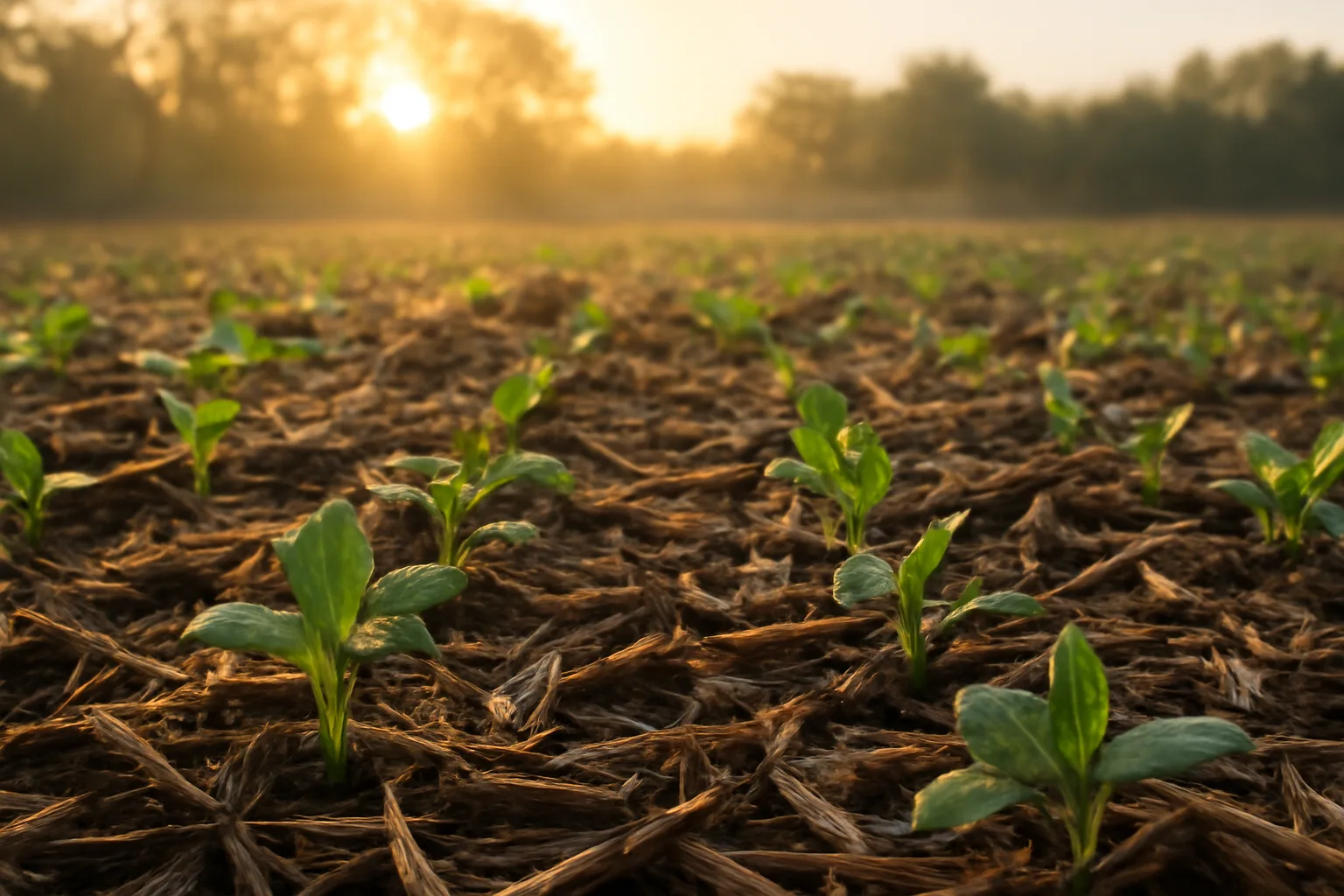
A food plot is a planted patch of forage on hunting land, usually somewhere between a quarter acre and a few acres, meant to feed deer and other wildlife and to concentrate animal activity somewhere you can hunt it. Landowners plant everything from clover and brassicas to corn and soybeans, and the goal ranges from pure nutrition (helping deer through winter or antler growth season) to pure hunting attraction (a plot you can watch from a stand 20 yards away). No-till planting means you're putting seed into the ground without plowing or disking it first. Instead you kill existing vegetation with herbicide, sometimes run a light vertical tillage tool or a no-till drill, and drop seed directly into the residue. The old growth acts like mulch, holding moisture and suppressing new weeds. Conventional tillage turns soil over, which mixes in lime and fertilizer nicely but also burns up organic matter, dries out the seedbed, and invites erosion on sloped ground, which describes most hunting properties. The USDA Natural Resources Conservation Service notes that no-till and reduced-till systems cut soil erosion and improve water infiltration compared to conventionally tilled fields [1]. For food plotters, the practical upside is simpler: less equipment, less time, and a seedbed that often holds moisture better through a dry August or September, which is exactly when a lot of fall plots go in. The tradeoff is that no-till plots depend more on herbicide timing and seed-to-soil contact than tilled ground does. If you don't kill the existing sod well, or you broadcast seed onto thick thatch without any drag or roller to press it down, germination suffers. That's the real skill in no-till: not the lack of tillage, it's nailing the kill window and the seeding method.
when to plant food plots for deer, in general terms
| Zone 3-4 (northern MN, WI, MI, ME) | Mid May to early June | Late July to mid August | |
|---|---|---|---|
| Zone 5 (IA, southern WI/MI, PA, NY) | Late April to mid May | Early to late August | |
| Zone 6 (KY, VA, southern OH, MO) | Mid April to early May | Late August to mid September | |
| Zone 7 (TN, NC, AR, OK) | Late March to mid April | Early to late September | |
| Zone 8+ (deep South, TX, FL panhandle) | March | Late September to October | These windows shift a couple weeks in either direction depending on elevation, whether you're near a large lake, and the actual weather that year. A soil thermometer costs about $10 and is the cheapest insurance you can buy against planting too early. |
Plant spring/summer food plots after your last frost date when soil temperatures reach the mid 50s Fahrenheit, and plant fall food plots 60 to 90 days before your area's average first frost date, adjusted by species. Those two windows cover almost every plot a hunter puts in. The reason frost dates and soil temperature matter more than a fixed date on the calendar is that germination is driven by soil warmth and moisture, not by the month. Land-grant universities publish average frost date maps by county, and Michigan State University Extension explains that soil temperature, not air temperature or calendar date, should guide when seeds go in the ground for most forage and grain crops [2]. A late, cold spring can push planting back two or three weeks from what worked the year before, and no-till ground in particular tends to warm up a little slower than tilled black dirt because the residue shades it. Here's a rough framework broken out by region. These are averages. Always check your local frost dates through the NOAA/NWS climate normals or your state extension office before locking in a date. | Zone (USDA Hardiness) | Spring plot window | Fall plot window |
when to plant clover for deer, and do deer like clover
Plant clover in early spring (as soon as the ground is workable, before the last frost in most zones) or in late summer to early fall alongside a cereal grain nurse crop. Clover is a perennial, so timing matters less than with annuals, but a clean spring or fall start gives it the best shot at establishing before summer heat or winter cold stresses it. Do deer like clover? Yes, and it's one of the most consistently used forages in food plot research and practice. White clover and red clover both test high in crude protein, frequently 25 to 30% in vegetative growth, and deer graze it through spring, summer, and fall wherever it's available. The Noble Research Institute, which runs long-term forage trials for wildlife food plots, lists clover among the top perennial choices for whitetail plots because of its palatability and its ability to regrow after grazing [3]. For no-till specifically, clover works well because you're not disturbing a stand once it's established, and you can frost-seed it (broadcasting onto slightly frozen or thawing ground in late winter) with zero tillage at all. Frost seeding into an existing no-till plot or even into a thin pasture is one of the cheapest, lowest-effort ways to add clover acreage. Just know that clover needs decent seed-to-soil contact even in a no-till setting, so mowing or grazing down residue first, then broadcasting and rolling, beats just tossing seed onto thick thatch.
when to plant oats for deer
Plant oats for deer in late summer to early fall, roughly 6 to 10 weeks before your first expected frost. That timing lets the oats reach a leafy, vegetative stage right when deer activity and nutritional demand pick up going into fall and winter. Oats are a cool-season annual grain, and unlike wheat or rye, they usually winterkill in colder zones, so most hunters treat them as a fall-only attractant rather than a plant that carries into next spring. They germinate fast, often within 5 to 7 days in warm, moist soil, and deer will hit young oats hard, sometimes literally mowing a new stand down to the dirt within a couple weeks of germination. That's a real risk on small plots: if you only planted an acre of oats, deer pressure alone can wipe out the stand before it produces much tonnage. Pairing oats with clover or a brassica blend spreads that pressure out and gives you a longer window of standing forage. In the upper Midwest and Northeast, aim for planting in August. In the transition zone and mid-South, September works. In the deep South, oats often go in during October since first frost comes so much later. University of Wisconsin-Madison Extension recommends planting fall oat forage plots in early to mid August in that state so plants establish before shorter days and cooler temperatures slow growth.
when to plant turnips for deer
Plant turnips 60 to 90 days before your first fall frost, which for most of the whitetail's range falls between late July and early September. Turnips are a brassica, and they need that lead time to bulb out and produce leafy tonnage before a hard freeze. Here's the interesting thing about turnips: deer often ignore the leaves early in the season and then switch hard to the plant, tops and roots both, after a few frosts. Cold weather converts starches in the plant to sugars, which makes them a lot more palatable. That's why turnip plots that look untouched in October can get hammered in December. If your goal is a late-season attractant, plant turnips on the early side of that 60-to-90-day window so the tubers have time to size up before deer switch on to them. Soil test before planting brassicas. Turnips like a pH close to neutral, generally 6.0 to 7.5, and respond well to nitrogen, but your specific lime and fertilizer needs depend entirely on what your test comes back with. Purdue University Extension's forage guidance notes that brassica species establish best with a firm, weed-free seedbed and shallow planting depth, around a quarter inch, since the seed is small [4]. In a no-till setting that means terminating existing vegetation early enough that it's fully dead and starting to break down before you drop seed, otherwise the small turnip seed won't get good soil contact. If you're building out a mixed fall plot, food plot whitetail has more detail on species combinations that spread deer use across the whole season.
do deer eat sorghum, and when would you plant it
Yes, deer eat sorghum, both the grain heads and the leaves, though it's typically used more as a summer-into-fall standing crop and cover than a top-tier attractant on its own. Grain sorghum and forage sorghum both show up in food plot mixes, often blended with soybeans or cowpeas to add structure and some late-season grain. Plant sorghum in late spring to early summer once soil temperatures are reliably above 60°F, since it's a warm-season crop that will just sit and rot in cold, wet soil. That puts planting in May through June across most of the whitetail range, similar timing to corn and soybeans. Deer will browse young sorghum leaves through summer, and the grain heads that form in late summer and fall provide a carbohydrate source into winter, especially valuable because standing sorghum often survives light snow cover better than beans or corn that have been knocked down. It's not usually a deer's first choice when clover, soybeans, or acorns are available nearby, but it earns a place in plots built for winter cover and a food source when other options run out. Some hunters also like it because turkeys and other wildlife use it heavily, which adds value to the acreage beyond deer season alone.
what are deer's favorite foods, and does that change what and when you plant
Deer preference shifts by season and by what's naturally available, but research consistently ranks acorns, soybeans, and clover near the top, with agricultural crops like corn and standing beans pulling deer from long distances when they're available. A well-cited whitetail food habits study from the Mississippi State University Deer Lab and similar work across the Southeast shows soft and hard mast (acorns especially) and legumes making up a large share of fall and winter diets where they're present. That matters for timing because a food plot doesn't compete in a vacuum. If your plot goes head to head against a neighbor's soybean field in September, deer will often choose the beans, and your plot might get more attention later in winter once other food sources are exhausted. This is one more reason fall brassica and cereal grain plots, timed to mature and sweeten up after frost, work well as late-season draws: they're filling a gap in November and December rather than competing directly with abundant early fall food. Clover, chicory, and alfalfa (all perennials) tend to get steady use spring through fall since they stay palatable and regrow after grazing, which is a different role than a fall annual plot planted for one big push of late-season tonnage. A property benefits from having both types rather than betting everything on one plot or one planting date.
do deer like honey, and does it belong in a food plot
Deer don't eat honey the way people imagine, and it has no real place in a legitimate food plot strategy. Some hunters have used sugary attractants like molasses, apple scent, or in rare cases honey-based products as bait or lure additives, but this isn't a food plot practice, it's a supplemental attractant/bait practice, and the two get confused online. More importantly, many states classify baiting and feeding deer, which can include placing food, salt, or sugary substances to attract deer for hunting, as illegal or heavily restricted. Michigan, for example, prohibits baiting for deer hunting in the Lower Peninsula under its Department of Natural Resources regulations, with narrow exceptions [5]. Pennsylvania's Game Commission similarly bans baiting statewide for big game [6]. Rules vary a lot state to state and sometimes county to county, so before you put out anything beyond a planted crop, check your state wildlife agency's current baiting and feeding regulations. A legal, planted food plot is treated completely differently under the law than a bait pile, but the line differs by state, so don't assume.
how do you kill the existing vegetation before a no-till planting
Spray a systemic herbicide like glyphosate 2 to 3 weeks before your planting date, giving weeds and grass enough time to fully die and start breaking down before seed goes in. That lead time is the single most important scheduling decision in a no-till plot, more than the planting date itself. Spray too close to planting and you'll drill seed into vegetation that's still alive enough to compete for light and water in the first couple weeks, which is exactly when a new seedling is most vulnerable. Spray too early (a month or more out) on fast-growing summer weeds and you might get a second flush of growth before you plant, undoing the work. Two to three weeks is the sweet spot for most burndown herbicides on typical plot weeds and grasses, though tougher perennial grasses like bermuda or fescue sometimes need a second spray application 10 to 14 days after the first. University of Tennessee Extension's food plot management guidance recommends killing existing sod at least two weeks before no-till planting to ensure adequate control and reduce competition with new seedlings [7]. If you're on a tight schedule going into fall, that means your spray date, not your planting date, is the one you need to lock in first. Work backward from your target seeding window.
what equipment do you actually need for no-till planting
At minimum you need a sprayer for burndown herbicide, a way to broadcast or drill seed, and something to firm the seed into the soil. Beyond that, equipment choice depends on budget and plot size, and a lot of successful no-till plots get planted with surprisingly basic gear. For small plots (under 2 acres), a backpack or UTV-mounted sprayer, a hand-crank or electric broadcast spreader, and a drag made from a chain-link fence section or a section of cattle panel can cover the whole job for a few hundred dollars. For larger acreage, a no-till drill (rented or owned) gives more consistent depth control and better germination rates, especially for small-seeded species like clover and brassicas where planting depth needs to stay around a quarter inch. ATV/UTV-mounted no-till drills have become common enough that many farm co-ops and conservation districts rent them out during planting season, which is worth checking before buying one outright. If you're planning multiple plots or different species across a property, food plot seed and deer food plot seed cover selection details that pair with this equipment decision. A soil test, a sprayer, and a spreader will get most hunters 90% of the way to a good stand; the drill is the upgrade that improves consistency once you're planting more than a couple acres a season.
how does soil temperature, not the calendar, actually determine planting date
Check soil temperature at a 2 to 4 inch depth with a basic soil thermometer, and use these thresholds as your real planting trigger instead of a date on the wall calendar: clover and brassicas germinate reliably around 45-50°F, oats and cereal grains want at least 50°F, and warm-season species like soybeans, corn, and sorghum need 60°F and rising before you plant. A soil thermometer is a five-dollar tool that prevents the most common food plot mistake, which is planting a fall brassica plot in late June because the calendar says summer, or planting warm-season beans in a cool, wet April because a magazine article said May. Land-grant extension agronomy guides consistently point to soil temperature thresholds, not calendar dates, as the trigger for planting decisions across row crops and forage species [2]. This matters even more in no-till fields because residue on the surface shades and insulates the soil, which means no-till ground often runs a few degrees cooler than clean-tilled dirt in spring and a few degrees cooler in the heat of summer too. If your neighbor's tilled field is ready to plant, your no-till plot might need another few days. It evens out over the season, since that same residue holds moisture better once things get hot and dry, but it does shift your exact planting date compared to a tilled plot a mile away.
putting together a full-season no-till plot plan
A property with two plot types, one perennial (clover or chicory) planted in spring and one annual fall mix (brassicas, oats, cereal rye) planted in late summer, covers deer nutrition and hunting opportunity across most of the year with a manageable equipment and labor load. That's the setup most experienced plotters land on after a few seasons of trial and error. The spring plot goes in after last frost, once soil hits the mid 50s, and it sits there providing forage through summer with minimal upkeep beyond a mow or two. The fall plot gets sprayed 2 to 3 weeks ahead, then planted 60 to 90 days before first frost depending on species, timed so it's at peak palatability right when hunting season opens and stays productive into the late season after a few frosts sweeten up the brassicas. Getting the exact dates right for your specific latitude, soil type, and species mix is where a lot of hunters get stuck, since frost dates, soil types, and species interactions vary enough county to county that generic advice only goes so far. That's the gap a Custom Food Plot Plan is built to close: for $99 one time, you get a plan built around your zone, your acreage, and your goals, so you're not guessing at planting windows from a national average. It's general guidance built from your inputs, not a site visit, so your soil test results are still the final word on lime and fertilizer rates. You can start one at /plot-plan-builder. Whatever plan you use, write your spray date and your planting date on an actual calendar as soon as you know your zone's frost averages, and adjust year to year based on what the current spring or summer is actually doing, not what the calendar says it should be doing.
Frequently asked questions
Do deer eat sorghum?
Yes, deer eat both the leaves and grain heads of sorghum. It's usually planted as a warm-season crop from May through June and works best blended with soybeans or cowpeas, providing standing cover and a carbohydrate source into fall and winter rather than being a top attractant on its own.
Do deer like clover, and is it worth planting?
Yes, clover is one of the most consistently used food plot forages. It tests high in crude protein (often 25-30%) and deer graze it spring through fall. It's a perennial, so one good planting can produce for 3-5 years with proper maintenance, making it a strong return on effort for most properties.
When should you plant food plots for deer?
Plant spring plots after your last frost once soil hits the mid 50s Fahrenheit, and plant fall plots 60 to 90 days before your area's average first frost date. Exact timing depends on species and USDA hardiness zone, ranging from March in the deep South to mid-May in the northern Midwest for spring plots.
When should you plant oats for deer?
Plant oats 6 to 10 weeks before your first expected fall frost, which lands in August for the upper Midwest and Northeast, September for the transition zone and mid-South, and into October in the deep South. Oats germinate fast and are usually a fall-only crop since they winterkill in cold zones.
When should you plant turnips for deer?
Plant turnips 60 to 90 days before your first fall frost, typically late July through early September depending on latitude. Turnips need that lead time to bulb before frost, and deer often prefer them more after a few hard frosts convert plant starches to sugars.
What exactly is a food plot?
A food plot is a planted area on hunting land, usually a quarter acre to several acres, seeded with forage like clover, brassicas, or grains to feed deer and other wildlife and to concentrate their activity somewhere huntable. Goals range from winter nutrition to pure hunting attraction.
What are deer's favorite foods overall?
Acorns and other hard mast typically top the list where available, followed closely by soybeans and clover. Research from university deer labs shows mast and legumes make up a large share of fall and winter whitetail diets, which is why food plots often see heavier use once natural mast supplies run low later in the season.
Do deer like honey or sugary attractants?
Deer don't really use honey as a food source, and it's not part of legitimate food plot planting. Sugary attractants fall under baiting/feeding rules, and many states restrict or ban baiting for deer hunting entirely. Check your state wildlife agency's current regulations before using anything beyond a planted crop.
How early before planting should you spray for a no-till plot?
Spray burndown herbicide 2 to 3 weeks before your planting date. That gives existing vegetation time to fully die and start breaking down, so new seedlings aren't competing with living weeds or grass for light, water, and nutrients in their most vulnerable early growth stage.
Can you plant a no-till food plot without a drill?
Yes. Many small plots (under 2 acres) get planted successfully with a broadcast spreader and a drag made from chain-link fence or a cattle panel to press seed into the soil after spraying. A no-till drill improves consistency and depth control, but it's an upgrade, not a requirement, especially on smaller acreage.
How do you know when soil is warm enough to plant?
Use a soil thermometer at 2 to 4 inches deep. Clover and brassicas germinate around 45-50°F, oats and cereal grains need at least 50°F, and warm-season crops like corn, beans, and sorghum need 60°F and rising. Soil temperature is a more reliable planting trigger than calendar date.
Why does no-till ground sometimes plant later than tilled ground?
Leftover plant residue on no-till fields shades and insulates the soil surface, which can keep it a few degrees cooler than freshly tilled black dirt in spring. That same residue helps hold moisture during summer heat, so the tradeoff generally balances out over a full growing season.
Sources
- USDA Natural Resources Conservation Service, No-Till and Soil Health: No-till and reduced-till systems reduce soil erosion and improve water infiltration compared to conventional tillage.
- Michigan State University Extension, Soil Temperature and Planting Guidance: Soil temperature, not calendar date or air temperature, should guide planting timing for most forage and grain crops.
- Noble Research Institute, Wildlife Food Plot Forage Recommendations: Clover is among the top perennial forage choices for whitetail food plots due to palatability and regrowth after grazing.
- Purdue University Extension, Brassica Forage Establishment: Brassica forages establish best in a firm, weed-free seedbed with shallow planting depth around a quarter inch.
- Michigan Department of Natural Resources, Baiting and Feeding Regulations: Michigan prohibits baiting for deer hunting in the Lower Peninsula, with narrow exceptions.
- Pennsylvania Game Commission, Baiting Regulations: Pennsylvania bans baiting statewide for big game hunting.
- University of Tennessee Extension, Food Plot Establishment for Wildlife: Existing sod should be killed at least two weeks before no-till planting to ensure adequate control and reduce seedling competition.