Last updated 2026-07-26
TL;DR
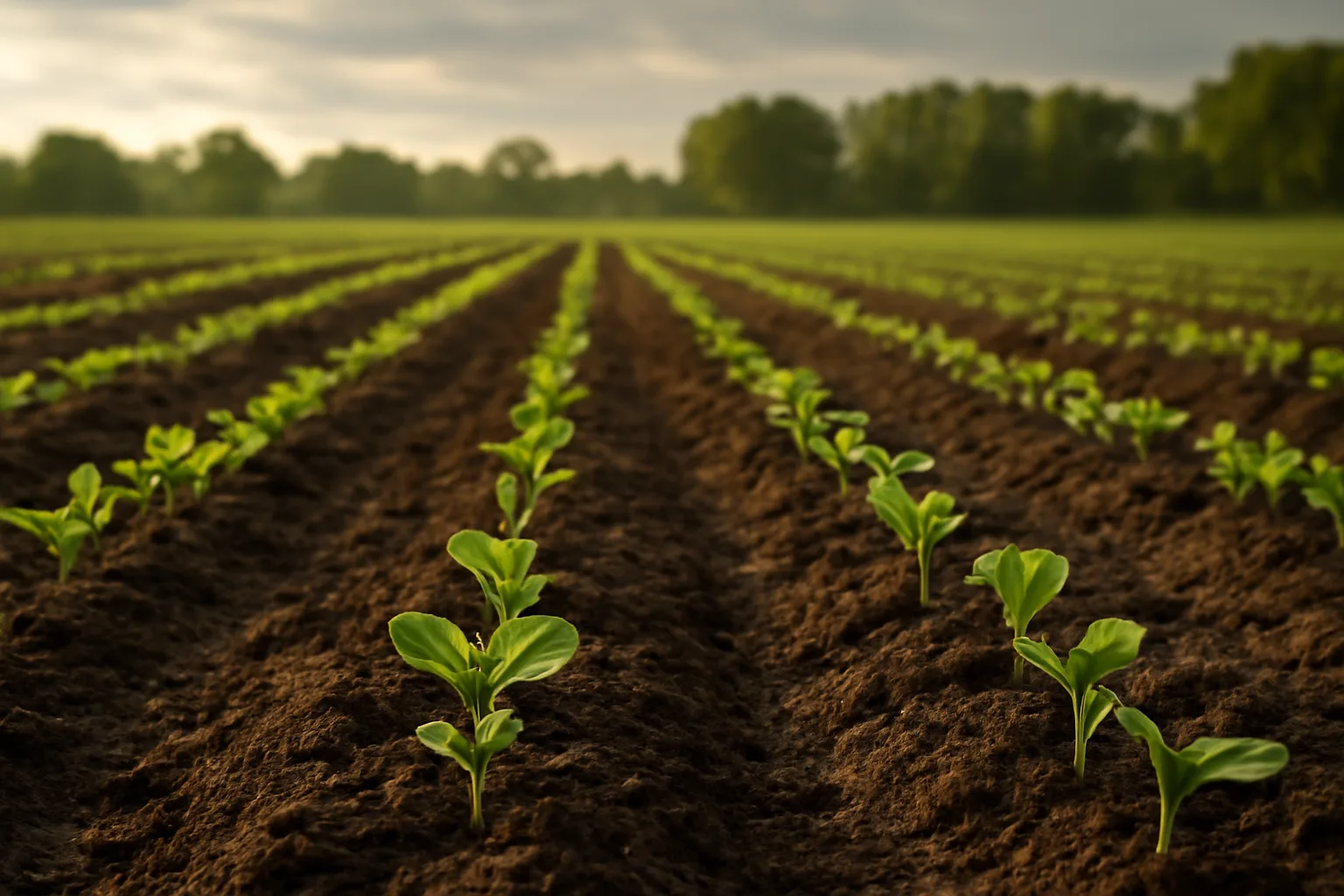
Plant food plot soybeans once soil temperature reaches 55-60°F and the frost risk has passed, roughly mid-May in the Deep South through early June in the northern tier. Drill or broadcast 1-1.5 inches deep at 50-60 lbs/acre into a firm, weed-free seedbed with about 100-120 frost-free days left before your first hard freeze.
When should you plant soybeans for a deer food plot?
Plant food plot soybeans when soil temperature has warmed to at least 55°F and ideally 60°F, and your local frost-free date has already passed. That works out to roughly late April to mid-May in the Deep South, mid-May into early June across the Midwest and mid-South, and late May through mid-June in the northern states and southern Canada border counties. Soybeans are a warm-season legume. Cold, wet soil rots seed and invites disease before it ever germinates. Land-grant agronomy programs that work with commercial soybean growers generally recommend waiting until soil temperature at planting depth hits 50°F minimum, with germination and emergence much more reliable at 55-60°F. Food plot soybeans aren't grown for grain yield, but the same soil biology rules apply. Cold soil is cold soil whether the beans end up combined or browsed. The other half of the equation is your growing season length. Food plot soybeans need roughly 100-120 frost-free days to get from planting to a mature, standing bean pod that holds forage value into late fall and winter. Count backward from your average first fall frost date, found on your state climate office or NOAA data, and don't plant later than that window allows. If you're unsure exactly where your ground falls, a food plot whitetail planting calendar broken out by region is a faster gut check than guessing off a generic bag date.
What soil temperature triggers soybean planting?
55°F at a 2-inch planting depth is the practical minimum, with 60°F being the safer target most agronomists actually recommend for food plot use. University of Wisconsin-Madison Extension guidance for commercial soybean planting notes that germination is slow and uneven below 50°F, and cool, wet soils raise the risk of seedling disease and poor stands. You can check this cheaply with a $10-15 soil thermometer pushed to seeding depth, checked mid-morning for a few consecutive days. Don't trust the air temperature on the truck radio. Soil under a shaded fence line or heavy thatch can run 5-10 degrees cooler than open, tilled ground on the same day. If a cold front is forecast right after planting, it's usually fine to wait a week. Soybean seed sitting in cold, saturated soil for more than a few days before germinating is far more likely to fail than seed planted a week later into warmer ground.
When do you plant food plots for deer overall (more than soybeans)?
| Soybeans | Mid-April (South) to mid-June (North), soil 55-60°F | 100-120 days | |
|---|---|---|---|
| Corn | Similar to soybeans, soil 50-55°F minimum | 90-120 days | |
| Sorghum/milo | Late spring, soil 60°F+ | 90-100 days | |
| Clover (perennial) | Early spring OR late summer, depending on region | N/A, perennial | |
| Brassicas (turnips, radish) | Late July to early September, 60-90 days before frost | 60-90 days | |
| Cereal grains (oats, wheat, rye) | Late August to early October | 45-60 days to establish | A deer food plots overview breaks these categories down further if you're planning a full-property rotation rather than one field. |
Food plot timing splits into two seasons: warm-season plots (soybeans, cowpeas, sorghum, corn) go in spring after your last frost, and cool-season plots (clover, brassicas, cereal grains) go in late summer to early fall, roughly 60-90 days before your first hard frost. The simplest way to think about it: plant warm-season annuals for summer and early fall food, and cool-season annuals and perennials for the late fall through winter hunting window when deer need it most. Most serious plotters run both in the same year on different acreage or in rotation. Here's a rough national planting window by category. Your exact dates shift by zone, so treat this as a starting frame, not gospel. | Plot type | Typical planting window | Frost-free days needed |
What planting depth and seeding rate work best for soybeans?
Plant soybean seed 1 to 1.5 inches deep into firm, moist soil. Too shallow and the seed dries out before it germinates; too deep and it burns energy reserves trying to push through before reaching sunlight. For food plot rates, drilled soybeans typically go in at 50-60 lbs per acre, while broadcast-and-cultipacked plots often run higher, 60-90 lbs per acre, to compensate for uneven seed-to-soil contact. Commercial row-crop rates are usually lower per acre because of tighter row spacing and precision placement; food plot broadcasting is less efficient, so bumping the rate up is standard practice among extension agronomists and seed companies alike [1]. A firm seedbed matters more than people think. If you can see your boot heel sink more than half an inch when you walk the field, it's too loose. Cultipack or roll after broadcasting to press seed into contact with soil moisture. Deer pressure on young soybeans is real and can wipe out a small plot before it ever reaches the trifoliate stage. Extension deer damage research generally recommends plots of at least 1-3 acres for soybeans specifically because deer will graze small plantings down to nothing during the vulnerable seedling stage [2]. If your available ground is small, a soybean/forage blend or a fenced exclosure for the first few weeks buys the plants time to get past that stage.
Do deer eat sorghum?
Yes, deer eat sorghum, both the leafy forage while it's growing and the grain heads once they mature in fall. Sorghum (grain sorghum, also called milo) is a warm-season annual that tolerates drought and poor soil better than corn, which makes it a common substitute on sandy or low-fertility ground. Deer use standing sorghum heavily in late fall and winter once the seed heads dry down, similar to how they use standing corn. It's often planted as a mixed-species warm-season plot alongside soybeans or cowpeas rather than as a monoculture, both for diversity and because a mixed stand holds up better to browse pressure early on. Sorghum needs soil temperatures around 60°F or warmer to germinate well, slightly warmer than soybeans, so it typically goes in a week or two later in spring.
Do deer eat clover, and do deer like it?
Yes, deer eat clover readily, and it's consistently one of the most preferred food plot forages available. Clover is a legume that's high in protein (often 20-30% crude protein in vegetative growth) and stays palatable through most of the growing season because it regrows quickly after grazing [3]. White clover varieties (Durana, Ladino) and red clover are the two most common food plot choices. Perennial clover plots can produce usable forage for 3-5 years with proper mowing and fertility maintenance before needing to be reseeded, which makes them one of the better long-term investments per acre compared to annual replanting every year. Clover is planted in either early spring (March-April in most zones) or late summer to early fall (August-September), depending on regional rainfall patterns and weed pressure. Fall plantings often establish with less weed competition, since summer annual weeds have already finished their cycle.
When should you plant oats for deer?
Plant oats for deer in late summer to early fall, typically August through September in the North and September into early October farther south, giving the crop 45-60 days to establish before killing frost. Oats are a cool-season cereal grain that deer graze heavily as soon as it emerges, and they stay palatable and sweet even after a light frost, since cold temperatures convert stored starches to sugars in the leaf tissue. Oats winterkill in most of the northern half of the country once temperatures drop into the teens and lower, so they function as a fall-only annual there. In the Deep South and parts of the mid-South, oats can survive a mild winter and provide additional grazing into late winter or early spring. Oats are commonly blended with clover, brassicas, or winter wheat/rye in a fall plot mix. The oats germinate fast and give deer something to eat within 2-3 weeks, while the slower clover establishes underneath for the following spring.
When should you plant turnips for deer?
Plant turnips for deer in late July through early September, roughly 80-90 days before your average first frost, since turnips need that much time to bulb properly and reach peak palatability. Turnips are a brassica, and deer often ignore the leafy tops early in fall, then switch hard to eating both tops and bulbs once a few frosts sweeten the plant's sugars. This late-season switch is well documented anecdotally among food plot managers and extension wildlife programs, and it means turnip plots often look untouched in October and get hammered in December. Don't panic if deer aren't hitting a turnip plot right after the first cold snap. Turnip seed is tiny and should be planted very shallow, about a quarter inch, into a firm seedbed. Broadcasting and light cultipacking works better than trying to drill it deep.
What is a food plot, exactly?
A food plot is a planted area on hunting land, usually a fraction of an acre up to several acres, established specifically to provide supplemental forage for deer and other wildlife. Plots serve two overlapping purposes: improving the nutritional carrying capacity of the property, and concentrating deer activity in predictable locations for observation or hunting. Food plots are distinct from mineral sites or bait piles (which many states regulate or ban outright) because they're a standing crop that deer forage naturally, not a concentrated feed source placed on the ground. Most state wildlife agencies treat planted agricultural food plots differently from baiting under their hunting regulations, but the specifics (distance from stand, size limits, species restrictions in some states) vary, so checking your state wildlife agency's current baiting and feeding regulations before planting near a stand is worth the five minutes it takes [4]. A well-planned property usually runs a mix: a warm-season plot for summer/early fall, a cool-season plot for late fall/winter hunting, and sometimes a perennial clover plot that anchors both. If you want help figuring out which mix fits your acreage, soil, and season length, that's exactly what our $99 Custom Food Plot Plan is built to do. It's general regional guidance based on your inputs, not site-specific agronomy, so your soil test results and lab recommendations still take priority on lime and fertilizer rates.
What are deer's favorite foods, and where do soybeans and honey fit in?
Deer preference shifts by season and by what's locally available, but soybeans, clover, and acorns consistently rank among the most preferred whitetail foods across published forage studies. Soybeans in particular are attractive both as a growing forage (high protein leaves through summer) and as a standing grain crop in fall and winter once the pods dry down [5]. No, deer do not eat honey. Honey isn't a natural or practical deer food, it's not something deer forage for in the wild, and using it as an attractant offers no real nutritional value; it also risks running afoul of state baiting laws in places where sugar-based attractants are restricted the same as corn or salt blocks. If you've heard hunters mention it, it's folklore, not a documented deer food source. Realistic favorites, in rough order of how often they show up in forage preference research and extension deer-nutrition guidance, are: acorns (when available, especially white oak family), soybeans, clover, cowpeas, and standing corn. A deer for food breakdown covers preference by season in more depth if you're trying to build a year-round plan rather than a single plot.
How does soybean planting timing differ by region or zone?
| Deep South (TX, LA, MS, AL, GA, FL) | Late April - mid May | Watch for late-planted double-crop soybeans running into June in some areas | |
|---|---|---|---|
| Mid-South / Lower Midwest (AR, TN, KY, MO, southern IL/IN) | Early - late May | Soil warms fast; don't rush ahead of a cold, wet stretch | |
| Upper Midwest / Northeast (WI, MN, MI, NY, PA) | Late May - mid June | Shorter season; pick early-maturing food plot blends | |
| Northern border states / southern Canada | Early - mid June | Frost risk into late May in some pockets; verify local last-frost date | A food plot seed selection guide is a useful next stop if you're trying to match a specific soybean blend's maturity group to your remaining season length, since a full-season bean planted too late in a short-season zone may not reach maturity before frost kills the pods. |
Soybean planting timing shifts about 4-6 weeks from south to north across the whitetail range, driven almost entirely by last frost date and how fast soil warms in spring. Here's a general regional breakdown; always confirm against your local extension office's current-year frost data, since a warm or cold spring can shift these by 1-2 weeks either direction. | Region | Typical soybean planting window | Notes |
What are the most common soybean planting mistakes to avoid?
The single biggest mistake is planting too early into cold soil out of impatience, followed closely by planting a plot too small to survive early deer browse pressure. Both are avoidable with a little discipline and planning. Other recurring mistakes worth flagging: Planting into a rough, cloddy seedbed without cultipacking. Poor seed-to-soil contact is one of the most common causes of a spotty stand, and it's an easy fix with a drag harrow or cultipacker pass. Skipping the soil test. Soybeans, like any legume, still need adequate phosphorus and potassium and a pH in the 6.0-6.8 range to nodulate and fix nitrogen efficiently. Your soil test lab's specific lime and fertilizer recommendation is the authority here, not a generic bag rate; regional extension soil-fertility guides back this up as the standard approach for legume establishment. Not accounting for deer pressure on a small plot. If your total available planting ground is under an acre, soybeans alone are a risky bet; a mixed blend with a grain component or a temporary exclosure fence for the first month gives the beans a fighting chance to get past the seedling stage. Planting a full-season maturity group in a short-season zone. If your frost-free window is only 100 days, an early or mid-maturity group soybean blend suited to food plots will outperform a full-season row-crop variety that never finishes filling pods.
Frequently asked questions
Do deer eat sorghum?
Yes. Deer graze sorghum leaves while it's growing and eat the grain heads once they dry down in fall, similar to how they use standing corn. Sorghum tolerates drought and poor soil better than corn, so it's a common choice on sandy or low-fertility ground, often planted mixed with soybeans or cowpeas.
Do deer like clover?
Yes, clover is one of the most consistently preferred food plot forages. It's high in protein (often 20-30% crude protein), regrows quickly after grazing, and stays palatable through most of the growing season, which is why perennial white and red clover plots are a food plot staple across most whitetail range.
When should you plant food plots for deer overall?
Warm-season plots like soybeans and corn go in after your last spring frost, once soil hits 50-60°F. Cool-season plots like clover, brassicas, and cereal grains go in late summer to early fall, roughly 60-90 days before your first hard frost, so they mature into the late-season hunting window.
When should you plant oats for deer?
Plant oats in late summer to early fall, typically August-September in northern zones and September into early October farther south, allowing 45-60 days before a killing frost. Oats stay sweet and palatable after light frosts, and they winterkill in most northern climates, functioning as a fall-only forage there.
When should you plant turnips for deer?
Plant turnips 80-90 days before your average first frost, usually late July through early September depending on region. Turnips need that time to bulb properly. Deer often ignore the tops early in fall and switch hard to eating tops and bulbs after a few frosts sweeten the sugars in the plant.
What is a food plot?
A food plot is a planted area on hunting land, from a fraction of an acre to several acres, established to provide supplemental deer forage and concentrate activity for observation or hunting. It's a standing crop deer forage naturally, which most states treat differently from baiting, though rules on size and stand distance vary by state.
What are deer's favorite foods?
Acorns (especially white oak family), soybeans, clover, cowpeas, and standing corn consistently rank among the most preferred whitetail foods in forage research. Preference shifts by season: deer favor high-protein greens like clover and soybean leaves in summer, and switch to calorie-dense grain and mast (acorns, standing beans, corn) in fall and winter.
Do deer like honey?
No. Deer don't naturally forage for honey and it offers no meaningful nutritional value as a food plot or attractant strategy. It's folklore among some hunters, not a documented deer food source, and sugar-based attractants can run into the same state baiting restrictions as corn or salt blocks in some states.
What soil temperature is needed to plant soybeans?
Soil should be at least 55°F at planting depth, with 60°F being the safer target most agronomists recommend. Below 50°F, germination is slow and uneven and seedling disease risk rises. Check soil temp at a 2-inch depth with a simple soil thermometer rather than relying on air temperature.
How deep should you plant soybeans in a food plot?
Plant soybean seed 1 to 1.5 inches deep into firm, moist soil. Too shallow and seed dries out before germinating; too deep and it exhausts energy reserves before reaching sunlight. Cultipacking or rolling after broadcasting improves seed-to-soil contact and stand consistency.
How big does a soybean food plot need to be?
Most extension guidance and food plot practitioners recommend at least 1-3 acres for soybeans specifically, since deer browse pressure can wipe out smaller plantings before plants get past the vulnerable seedling stage. If your ground is limited, a mixed blend or a temporary fence for the first few weeks helps protect a small plot.
Can you plant soybeans too late for a food plot?
Yes. Soybeans need roughly 100-120 frost-free days to mature into a standing crop that holds forage value into fall and winter. Count back from your average first frost date; planting past that window in a short-season zone risks pods that never fill out before a killing frost.
Sources
- Mississippi State University Extension, Establishing Wildlife Food Plots: Seeding rate and depth guidance for food plot soybean and broadcast plantings
- University of Tennessee Extension, Wildlife Food Plots: Minimum plot size recommendation for soybeans due to deer browse pressure on seedlings
- USDA NRCS Plant Guide, White Clover (Trifolium repens): Crude protein content and forage characteristics of clover
- Michigan Department of Natural Resources, Baiting and Feeding Regulations: State wildlife agency regulation distinguishing food plots from baiting and feeding
- USDA Forest Service, Deer Forage and Habitat Research: Whitetail deer forage preference research including soybeans, clover, and acorns