Last updated 2026-07-26
TL;DR
Plant sugar beet food plots 90 to 120 days before your first killing frost, which lands most of the North in late May to mid-June and the Mid-South in June to early July. Soil needs to hit at least 50°F. Beets need that long growing window to bulb up before deer start hammering the tops in fall.
When should you plant sugar beets for deer food plots?
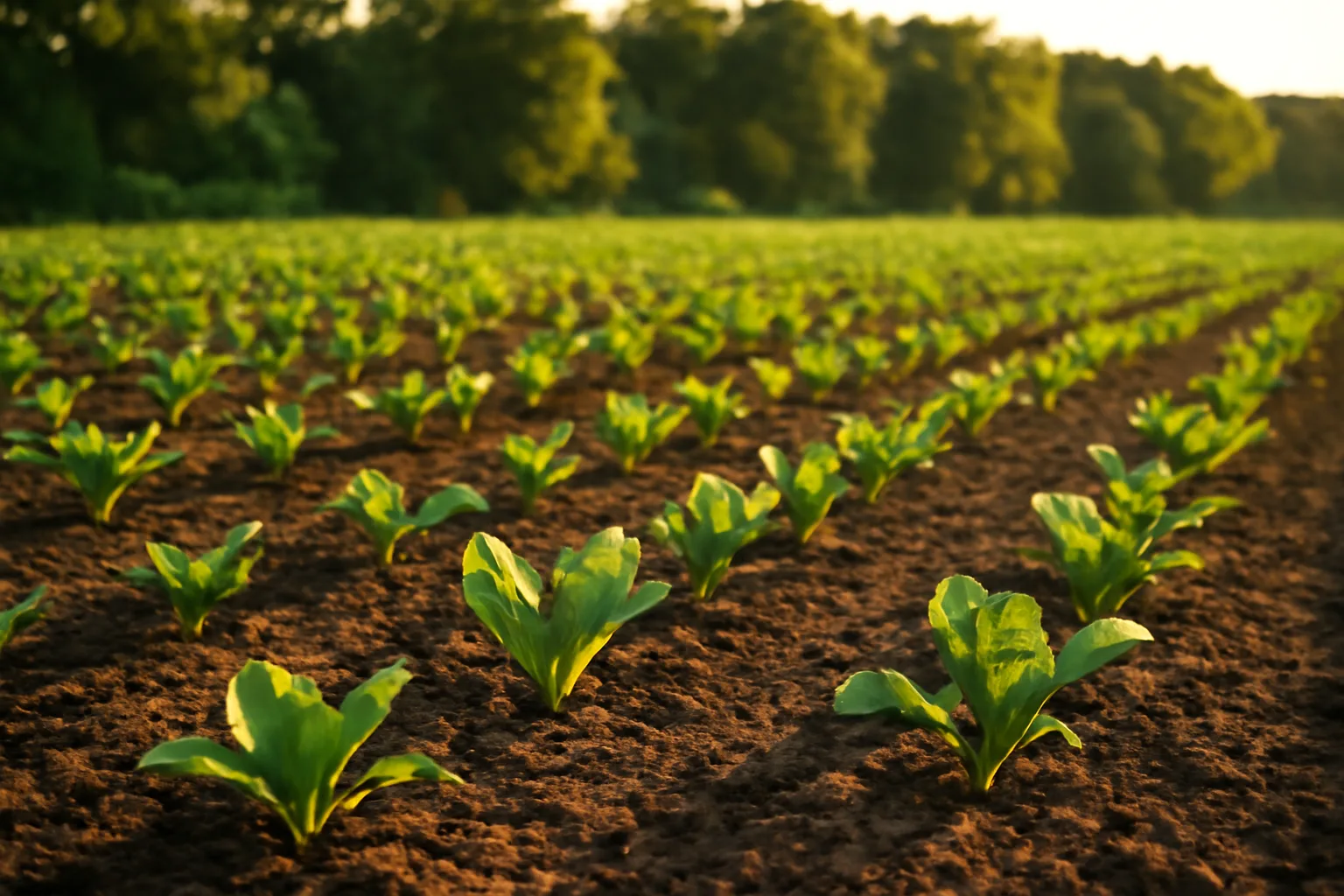
Sugar beets go in the ground 90 to 120 days ahead of your area's average first frost date. That window gives the plant enough time to grow a full canopy, push root mass down, and build up the sugar content in the bulb that makes beets such a late-season draw. Plant too late and you get a plot of small, woody roots that never really finish. For most of the northern whitetail range (think Minnesota, Wisconsin, Michigan, upstate New York) that means planting between mid-May and mid-June. In the transition zone (Ohio, Indiana, southern Iowa, Kansas) you're usually looking at late May through late June. Down into the mid-South and parts of the Southeast, growers push planting into late June or even early July since frost doesn't show up until November or later. Soil temperature matters more than the calendar date. Cold soil slows germination way down, and germination rate and speed pick up steadily as soil warms from the low 50s into the 60s and beyond. If you plant into cold, wet soil, you'll get spotty germination and weeds will win the race. A cheap soil thermometer costs less than a bag of seed and tells you more than a planting calendar ever will. One more practical note. Sugar beets are a full-season commitment. Unlike a quick oat plot you can throw in six weeks before season, beets need the entire summer to size up. If you're deciding in July whether to plant beets, the honest answer is you're probably too late for that fall and should look at deer food plot seed options with a shorter maturity window instead.
What soil temperature do sugar beets need to germinate?
Sugar beets need soil temperatures of at least 50°F to germinate, and they germinate faster and more evenly once soil warms into the upper 50s and 60s. Below that, seed can sit in the ground for weeks without breaking dormancy, and it becomes vulnerable to rot and seedling disease in wet, cold conditions. A lot of food plotters make the mistake of using air temperature as a proxy. Soil lags behind air temp, especially in spring, by a couple weeks in shaded or heavy-clay ground. Push a soil thermometer four inches down in the morning for a few days running. Once you're consistently above 50°F and the extended forecast doesn't show a hard cold snap, you're clear to plant. Beets also don't like standing water. If your plot holds moisture in spring, wait for it to drain and warm before you plant, even if that pushes you toward the back half of your window.
How many days before frost should sugar beets go in the ground?
| Upper Midwest / Northern tier | Late Sept - early Oct | Mid-May to mid-June | |
|---|---|---|---|
| Transition zone (OH, IN, KS, MO) | Mid-Oct | Late May to late June | |
| Mid-South (TN, AR, KY) | Late Oct - early Nov | Mid-June to mid-July | |
| Deep South / Southeast | Mid-Nov or later | Late June to early August | These are general guides, not guarantees. Elevation, local microclimate, and a wet spring can shift things by two or three weeks in either direction. If you're not sure of your zone's frost dates, your state's land-grant extension office publishes county-level frost data and it's worth five minutes to look up. |
Plan on 90 to 120 days of growing season from planting to a mature, harvest-ready sugar beet plot. Count backward from your local average first frost date (your state climate office or the National Weather Service publishes these by county) and that's your planting deadline on the late end. Here's a rough regional breakdown: | Region | Typical first frost | Ideal planting window |
When do you plant food plots for deer in general?
Food plot timing splits into two seasons: spring/summer plots for warm-season annuals and perennials, and late-summer plots for fall brassicas, cereal grains, and clover overseeds. Which one you're planting determines your window, and mixing the two up is probably the single most common mistake new plotters make. Spring plots (clover, chicory, soybeans, sugar beets, sunflowers) go in after your last frost date, once soil hits the 50s, generally April through June depending on latitude. These are the plots meant to feed deer through summer and, in the case of beets and brassicas, size up for a fall payoff. Fall plots (brassicas like turnips, cereal grains like oats and wheat, annual clovers) go in 60 to 90 days before first frost, which for most of the whitetail range lands in August. The idea is timing peak palatability and tonnage to when hunting season opens and food gets scarce elsewhere. Sugar beets straddle both categories a little. You plant them in the spring/summer window, but they're really a fall and winter food source once the tops get frost-killed and deer start digging into the roots. If you want a plan built around your specific frost dates and soil test instead of guessing off a regional chart, that's exactly what a Custom Food Plot Plan is built to do; it's a $99 one-time plan that maps species and timing to your actual property.
When should you plant turnips for deer?
Turnips go in the ground 80 to 90 days before your first fall frost, which for most of the country means late July through August. Turnips grow faster than sugar beets and don't need the full 90-to-120-day runway, so you have more flexibility on the back end of summer. Deer usually ignore turnip greens for the first month or two after planting (they're a bit bitter early), then hammer both the tops and the bulbs hard once a few frosts sweeten them up. That's the same sugar-conversion process that makes sugar beets so attractive late season: cold temps break down starches into sugars, and deer key in on that. A lot of plotters run turnips and sugar beets together in the same mix because they mature on complementary but slightly offset timelines and both benefit from the same frost-driven sugar spike.
When should you plant oats for deer?
Oats go in 45 to 60 days before your first fall frost, typically August into early September depending on zone. Oats are one of the fastest-growing, most forgiving fall plot options, which is why they show up in almost every fall blend on the market. Oats germinate quickly, tolerate many soil types, and deer typically hit them almost as soon as they're a few inches tall, unlike brassicas which often need a frost to get palatable. That makes oats a good anchor for hunters who want food on the ground fast, or who are filling a plot that failed earlier in the season. Winter-hardiness varies by variety and zone. In the Deep South oats can survive mild winters and provide green forage into late winter, while in the North a hard freeze will usually kill them off by December. If you want oats standing into late season further north, blending them with winter wheat or cereal rye extends the plot's life since those cereals tolerate colder temps.
What is a food plot, exactly?
A food plot is a planted area, usually a fraction of an acre up to several acres, established specifically to provide forage for deer and other wildlife on hunting or managed land. Plots range from a quarter-acre kill plot tucked into timber to multi-acre agricultural-style fields planted in soybeans or corn. The purpose varies by plot. Some are meant to hold deer on a property through summer stress periods. Others are timed to peak in palatability right as hunting season opens, giving hunters a predictable spot to set up. Perennial plots like clover are planted once and maintained for three to five years; annual plots like beets, brassicas, and cereal grains are replanted every year. Food plots work best as one piece of a habitat plan, not a substitute for natural forage. Even a well-fertilized plot can't replace the year-round browse and mast that a property's natural cover and timber management provide across a full season. If you're starting from scratch, food plot whitetail basics and deer food plots planning guides are a good place to get oriented before you buy seed.
Do deer eat sorghum?
Yes, deer eat sorghum, both the grain heads and the young leafy growth, though it's usually planted more for its cover value and as a component in fall/winter blends than as a primary attractant. Sorghum (including grain sorghum and forage sorghum types) is drought-tolerant and does well in sandier soils and hotter climates where corn struggles. Deer will browse sorghum leaves through summer and hit the grain heads once they mature, but it's rarely a deer's first choice when clover, beans, or brassicas are available nearby. Its bigger value on a lot of properties is as standing cover and a wind or visual screen for a kill plot, or as part of a diverse summer blend that also feeds turkey and quail.
Do deer eat clover, and do deer like clover?
Yes. Deer eat clover heavily, and it's consistently one of the most preferred food plot forages available. Clover is a perennial legume, meaning it comes back year after year without replanting, and it produces highly digestible, protein-rich forage through most of the growing season. Clover regularly shows up at or near the top of preference studies and extension forage-quality data because of its combination of palatability and crude protein content, often cited in the 20-30% range depending on variety, cutting stage, and soil fertility. That's a big reason clover anchors so many perennial plot programs; it's not flashy, but deer come back to it week after week, spring through fall, in a way that few annuals match. The tradeoff is that clover takes real soil fertility and pH management to perform. A soil test is non-negotiable here. Your soil test lab's lime and fertilizer recommendations are the actual authority on what your specific plot needs, and no article can substitute for that report.
What are deer's favorite foods?
There's no single universal answer because deer preference shifts by season, region, and what's locally available, but acorns, soybeans, clover, and standing corn consistently rank as top-tier whitetail foods across most of the range. In fall, acorns (especially white oak family acorns, which are lower in tannins) often outcompete anything you plant because of their fat content and abundance. Among planted forages, clover and soybeans are usually the most reliably preferred through summer, brassicas and beets take over as frost sweetens them in late fall, and cereal grains like wheat and oats provide green forage into winter when little else is left. The practical takeaway: no single species wins every month. A property with clover, a brassica/beet fall plot, and a cereal grain component covers spring through winter better than betting everything on one crop.
Do deer like honey, and does it belong in a food plot mix?
Deer don't naturally seek out honey, and there's no research or extension guidance supporting honey as a deer attractant or food plot additive. Deer are herbivores adapted to browse, forbs, mast, and agricultural crops; honey isn't part of their natural diet and isn't something wildlife agencies or land-grant extension programs recommend using. Some commercial deer attractant products use sugary or molasses-based scents to appeal to deer's preference for sweetness (the same basic mechanism that makes frost-sweetened beets and brassicas so attractive), but that's a different thing from spreading honey in a plot. It's also worth checking your state's baiting and feeding regulations before using any supplemental attractant. Many states regulate or restrict baiting for hunting purposes under their own wildlife codes, and rules vary by state and sometimes by county, so check your state wildlife agency's current regulations before using anything beyond a straight planted food plot.
How do you plant sugar beets for a food plot step by step?
Start with a soil test 60 to 90 days before your planting window. Sugar beets are sensitive to low pH and won't size up right in acidic soil. General guidance for sugar beet production targets a soil pH around 6.0 to 7.0, and beets are known to be more sensitive to acidic soil than many other food plot crops. Lime takes months to fully react in the soil, so get that test done early and apply lime according to your lab's specific recommendation, not a generic number from an article. Once soil is ready and warmed to at least 50°F, here's the sequence: 1. Kill existing vegetation with a burndown herbicide or heavy tillage 2-3 weeks ahead of planting. 2. Work the soil to a fine, firm seedbed. Beet seed is small and needs good soil-to-seed contact; a cloddy field gives poor germination. 3. Plant at roughly 1/4 to 1/2 inch depth. Too deep and the seedling can't push through. 4. Fertilize based on your soil test, typically a nitrogen, phosphorus, and potassium blend, since beets are heavy feeders, especially on nitrogen and boron. 5. Control weeds early. Beet seedlings are slow to establish canopy and get outcompeted fast by grasses and broadleaf weeds in the first 4-6 weeks. 6. Watch for deer pressure on young plants. Beets can get browsed to nothing before they establish if deer density is high and there's not much else growing nearby. For a broader look at how beets fit alongside other species in a full plot rotation, food plot seed and deer for food guides cover blend strategy in more depth.
What equipment do you need to plant sugar beets in a food plot?
At minimum you need something to kill existing vegetation, something to work up a seedbed, and a way to get small seed in at a shallow, consistent depth. Beets have tiny seed compared to corn or beans, so broadcasting and cultipacking works, but a calibrated drill gives more even stands and better seed placement. For smaller plots (under an acre), a hand-crank broadcast spreader, an ATV/UTV-mounted spreader, or even a walk-behind seeder works fine if you follow up with a drag harrow or cultipacker to press seed into contact with soil. For larger plots, a no-till drill or conventional drill set to a shallow depth setting gives more consistent emergence and uses less seed per acre. Don't skip the cultipacking or rolling step if you broadcast. Beet seed left sitting on top of loose soil dries out fast and germination rates drop hard. A basic lawn roller or ATV cultipacker attachment solves this on a budget.
Frequently asked questions
When is the best time to plant sugar beets for deer?
The best window is 90 to 120 days before your area's first fall frost, once soil temperature is consistently above 50°F. For most of the northern and transition whitetail range that lands between late May and late June; further south it can push into July.
Can you plant sugar beets too early?
Yes. If soil is still cold and wet, seed can rot or germinate poorly, and early plants are more exposed to a late frost that can set them back or kill seedlings outright. Wait until soil is reliably above 50°F rather than going strictly by calendar date.
What happens if you plant sugar beets too late?
Beets need the full 90 to 120 day season to bulb up. Plant too late and you get small, underdeveloped roots and thin tops going into fall, right when you want maximum tonnage on the ground for hunting season.
Do deer eat sorghum?
Yes, deer browse sorghum leaves and grain heads, though it's usually valued more for cover, drought tolerance, and blend diversity than as a top attractant. It performs well in hot, sandy conditions where other grains struggle.
Do deer like clover?
Yes, clover is one of the most consistently preferred food plot forages available, offering high crude protein (often cited in the 20-30% range depending on variety and cutting) and season-long palatability. It's a perennial, so it requires less annual replanting than beets or brassicas.
When should you plant turnips for deer food plots?
Plant turnips 80 to 90 days before your first fall frost, generally late July through August depending on zone. Deer often ignore the greens early on but hit both tops and bulbs hard once frost sweetens them.
When should you plant oats for deer?
Plant oats 45 to 60 days before first frost, typically August into early September. Oats germinate fast and deer often start browsing them within weeks, making them a good fast-turnaround option for fall plots.
What is a food plot?
A food plot is a planted area established specifically to provide forage for deer and other wildlife, ranging from small kill plots to multi-acre fields. Plots are managed as a habitat supplement, not a full replacement for native browse and mast.
What is a deer's favorite food?
It varies by season and region, but acorns, soybeans, clover, and standing corn consistently rank as top preferred foods. Among planted forages, clover and soybeans lead in summer, while beets and brassicas take over once frost sweetens them in fall.
Do deer like honey?
There's no research or extension guidance showing deer seek out honey; it isn't part of their natural browse-based diet. Some commercial attractants use sweet or molasses-based scents for a similar sugar-preference effect, but plain honey isn't a recommended food plot input.
What soil pH do sugar beets need?
Sugar beets generally do best in a pH range of about 6.0 to 7.0 and are notably sensitive to acidic soil. Get a soil test done 60 to 90 days before planting since lime takes time to raise pH, and follow your lab's specific lime recommendation.
Can you plant sugar beets and turnips together?
Yes, many food plotters blend sugar beets and turnips because both benefit from frost-driven sugar conversion and mature on slightly offset timelines, extending the plot's peak attraction window through fall and into winter.
How much seed do I need per acre for sugar beets?
Rates vary by product and seed size, but most food plot sugar beet blends recommend somewhere in the range of 5 to 10 pounds per acre broadcast, or lower rates with a precision drill. Always follow the specific seed tag or bag recommendation since blends differ.
Sources
- USDA Natural Resources Conservation Service, Plant Guide: Sugarbeet: Beet seed germination is slow in cold soil and improves as soil warms; beets prefer near-neutral soil pH and are sensitive to acidic soil
- Oklahoma State University Extension, PSS-2585, Clover for Wildlife Food Plots: Clover provides high crude protein forage, commonly cited in the 20-30% range depending on variety and growth stage
- Pennsylvania Game Commission, Title 34 Pa.C.S. Section 2308, Feeding of Wildlife: Baiting and supplemental feeding regulations for deer vary by state and should be checked before using attractants beyond planted food plots
- USDA Natural Resources Conservation Service, Cover Crop Termination Guidelines: Seedbed preparation and soil conditions affect germination success for small-seeded crops planted in cover-cropped or tilled ground
- Purdue University Extension, FNR-486-W, White-tailed Deer Food Habits: Deer food preference shifts seasonally and mast crops like acorns can outcompete planted forages in fall