Last updated 2026-07-25
TL;DR
You can plant a solid food plot without tilling by killing existing vegetation with glyphosate, mowing it down, and broadcasting seed into the residue before rain, then dragging a chain or driving over it to get seed-to-soil contact. This works for clover, oats, brassicas, and cereal grains, and it beats tilling on erosion-prone or small hunting-property ground.
What is a food plot, exactly?
A food plot is a planted patch of forage, usually somewhere between a quarter acre and five acres, put in specifically to feed and hold deer or other game on a piece of hunting ground. It is not a farm field in the commodity-crop sense. Most hunters plant food plots to supplement natural browse, concentrate deer activity near a stand, and carry animals through stress periods like late summer drought or deep winter. State wildlife agencies generally treat food plots as normal agricultural plantings, not as bait, as long as you're planting and more than dumping piles of corn or minerals. Rules on baiting versus planting vary a lot by state, especially in areas dealing with chronic wasting disease. Check your state wildlife agency's current regulations before you plant anything near a stand you intend to hunt over [1]. The no-till approach covered here works for the two biggest food plot categories: perennials like clover and chicory that you plant once and maintain for 3 to 5 years, and annuals like oats, brassicas, and cereal grains that you replant each season. Both can be established without a tiller or disc, which matters if you're working small parcels, steep ground, or don't own a tractor.
Why plant a food plot without tilling in the first place?
Tilling exposes bare soil, and bare soil on hunting land is usually on a slope, next to a creek, or surrounded by trees where erosion control matters more than it would on a flat 200-acre corn field. The USDA Natural Resources Conservation Service has pushed no-till and reduced-till practices for decades. Its conservation practice standard for residue and tillage management notes that reducing tillage helps maintain or improve soil organic matter and structure while cutting erosion on sloped or exposed ground [2]. There's a practical angle too. A lot of food plotters don't own a tractor, disc, or tiller, and renting or borrowing one for a half-acre plot in the timber is a hassle. No-till lets you plant with a UTV, a hand seeder, or even a backpack sprayer and a bag of seed you carry in. No-till also keeps the seed bank of weeds you don't want buried and reactivated. Tilling brings dormant weed seeds up to the surface where they germinate right alongside your clover or brassicas. The tradeoff: no-till plots depend more on timing and rainfall for seed-to-soil contact, since you don't have loose tilled soil to work seed into. Get the timing right and it works as well as a tilled plot for most species. Get it wrong (planting into thatch with no rain in the forecast) and germination suffers.
How do you kill existing vegetation before a no-till planting?
Spray a systemic herbicide like glyphosate (the active ingredient in Roundup and generic equivalents) on the existing grass, weeds, or old plot residue at least 7 to 14 days before you plant, depending on how well it's growing and the label rate for the product you're using. Glyphosate is non-selective, meaning it kills grasses and broadleaf plants alike, which is exactly what you want when your goal is a clean slate. A typical rate for glyphosate concentrate (41% formulations) runs 2 to 4 quarts per acre, though you should always follow the specific product label since concentrations vary [3]. Spray on a calm day with no rain expected for at least 6 hours. Rain can wash the herbicide off leaves before it's absorbed. If you're converting an old pasture or CRP-type field with heavy sod, one spray application often isn't enough. Plan on spraying, waiting 2 to 3 weeks, then spraying a second time on the regrowth before you plant. For plots you're rotating (say, killing off spring clover to plant fall brassicas), a single glyphosate application 10 to 14 days ahead is usually enough since you're not fighting established sod.
What equipment do you actually need for no-till planting?
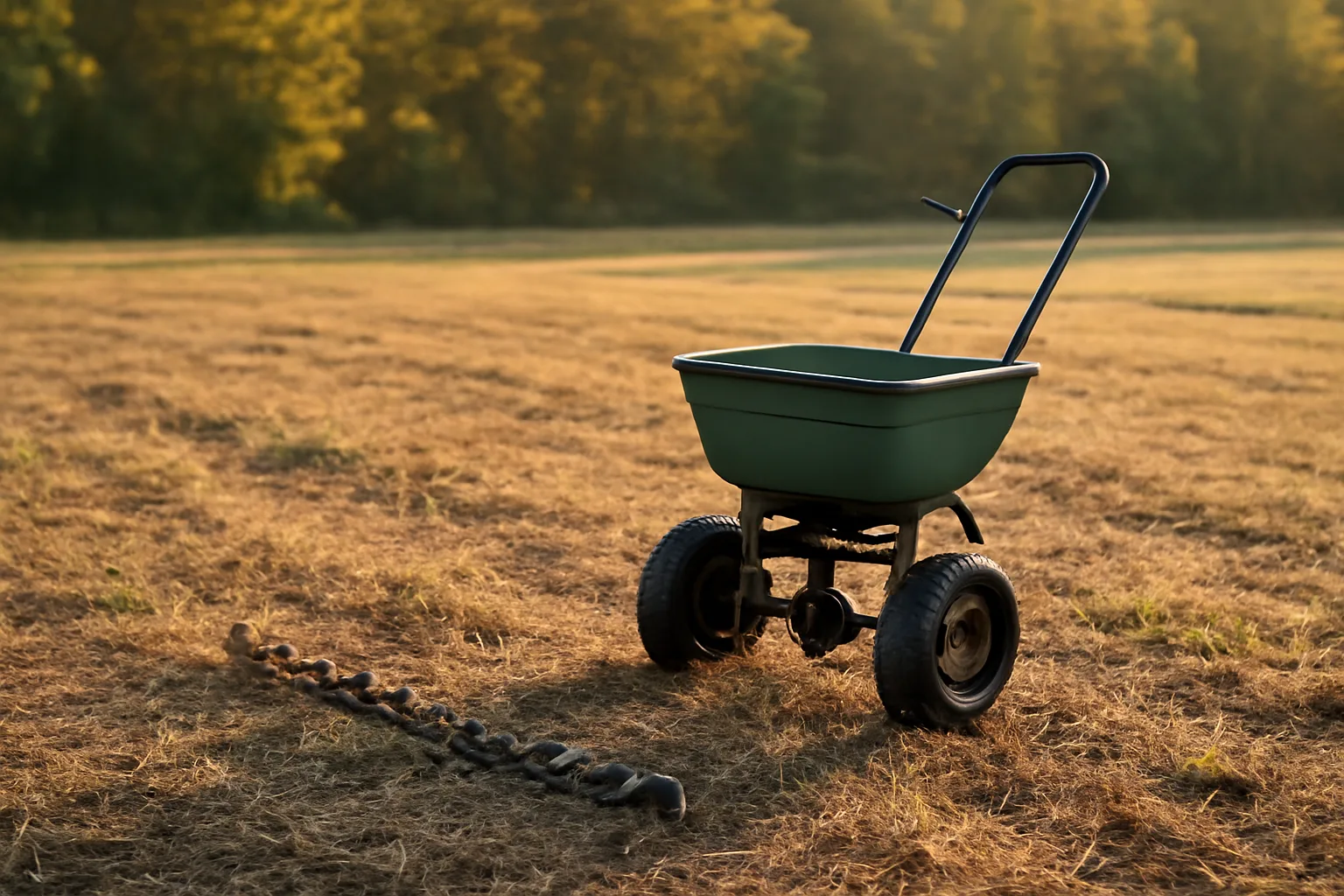
You need less than most people think. At minimum: a backpack or ATV-mounted sprayer for herbicide, a hand-crank or ATV broadcast seeder, and something to drag over the seed afterward, which can be as simple as a section of chain-link fence, a piece of cattle panel, or even a heavy tire dragged behind a four-wheeler. A lot of no-till plotters use a 'kill, mow, spray, drop' sequence: spray to kill, mow the dead residue down short 2 to 3 weeks later, then broadcast seed right into the mowed thatch and drag or cultipack over it. The dead thatch actually helps hold moisture around the seed once it's down. If you've got a UTV, a tow-behind plot drag or a section harrow (sometimes called a York rake) does a nice job of scratching seed into the top half-inch of soil without full tillage. Some hunters use a lawn and garden disc set very shallow, just enough to nick the surface, which blurs the line between till and no-till but still avoids deep soil disturbance. For small plots (a half acre or less), you can skip machinery almost entirely. A hand-crank spreader, a pair of boots, and a rake or drag chain you pull by hand covers it. This is where no-till really shines for the guy with a lease and no equipment shed.
When should you plant food plots for deer?
| Zone 3-4 (northern MN, WI, ND) | Mid-May to early June | Late July to mid-August | |
|---|---|---|---|
| Zone 5-6 (IA, southern WI, PA, OH) | Late April to mid-May | Mid-August to early September | |
| Zone 7 (VA, NC, TN, AR) | Early to mid-April | Early to mid-September | |
| Zone 8-9 (Deep South, TX, FL) | March | Late September to October | These windows aren't rigid law. They're a starting point. Always check your local extension office's frost date data before locking in a planting date. |
Timing depends on whether you're planting a spring/summer plot or a fall plot, and both depend heavily on your USDA plant hardiness zone and first/last frost dates. As a general framework, spring plots (clover, chicory, soybeans) go in after your last frost date, typically April through May in the northern half of the whitetail range and March in the Deep South. Fall plots (brassicas, cereal grains, oats) go in 60 to 90 days before your first fall frost so plants have time to establish before cold shuts down growth. The USDA Plant Hardiness Zone Map is the standard reference for matching your location to a zone, and local cooperative extension offices publish frost date tables by county, which are more reliable for planting decisions than a generic national planting chart. A food plot calendar for zone 5 in Minnesota looks nothing like one for zone 8 in Georgia, so match your dates to your actual zone, not a blanket date from a bag of seed. Here's a rough framework: | Region (USDA zone) | Spring plot window | Fall plot window |
When should you plant oats for deer food plots?
Plant oats in late summer to early fall, generally 6 to 10 weeks before your first expected frost, so they've got time to reach a leafy, palatable stage before hard freezes. In most of the whitetail range that lands somewhere between mid-August and mid-September. Oats are a cool-season annual grain and one of the most attractive fall food plot options because deer hit them hard as soon as they emerge, often within 10 to 14 days of planting given decent moisture. They're also cheap relative to blended food plot seed, and you can often source oats from a local feed or farm supply store instead of a specialty food plot brand. One quirk: oats aren't very frost-hardy compared to wheat or rye. A hard freeze in the 20s (Fahrenheit) will usually kill oat plants back for good, while winter wheat and cereal rye keep growing again after a thaw. If you want forage that lasts into late winter, blend oats with wheat or rye rather than planting oats alone. For no-till oat plantings specifically, broadcast at roughly 2 to 3 bushels (about 64 to 96 pounds) per acre and drag or cultipack immediately. Oat seed sitting on bare soil with no coverage germinates poorly and is an easy target for birds and rodents.
When should you plant turnips for deer?
Plant turnips in mid to late summer, typically 80 to 90 days before your first fall frost, since turnips need that full window to bulb up and reach peak palatability. In much of the Midwest and mid-South that means planting between late July and mid-August. Turnips are a brassica, and deer usually ignore the leaves early in the season, then switch hard to eating both the tops and the roots once a couple of frosts hit and convert the plant's starches to sugars. That's why so many food plot guys see turnips sit untouched in October and then get hammered in December. Don't plant turnips too early. Planted in June heat, they tend to bolt, get woody, and lose the sweetness that makes them attractive once cold weather hits. For a no-till turnip plot, broadcast at 4 to 6 pounds per acre (turnip seed is tiny, so it's easy to overseed) and drag lightly. Turnip seed needs to be close to the surface, no deeper than a quarter inch, so a light drag or cultipacker pass is plenty.
Do deer eat clover, and do they actually like it?
Yes, clover is one of the most consistently preferred food plot forages for whitetail deer across nearly every region of the country. University forage preference studies consistently rank clover among the top preferred plot forages, alongside soybeans, based on deer utilization data and crude protein content [4]. Clover's appeal comes down to protein and digestibility. Quality clover stands run 25 to 30% crude protein during active growth, which rivals or beats most other food plot options, and it stays palatable through spring, summer, and fall in a way that many annuals don't. White clover (including ladino types) and red clover are the two most common food plot choices. White clover is lower-growing and more grazing-tolerant, holding up better under constant browsing pressure, while red clover grows taller and produces more total tonnage but can get browsed out faster on high-deer-density ground. For a no-till clover plot, timing and seed-to-soil contact matter more than with almost any other species, because clover seed is tiny and won't germinate well if it's sitting on top of thatch with no contact at all. Broadcast clover at 6 to 10 pounds per acre right after a light mow and drag pass, ideally with rain in the 5 to 7 day forecast.
Do deer eat sorghum, and is it worth planting?
Yes, deer eat grain sorghum, especially the seed heads once they mature, but it's more of a secondary or fall/winter standing-grain option than a primary attractant like clover or beans. Sorghum (milo) is drought-tolerant and holds up in poor soil better than corn, which is part of why it shows up in food plot mixes for marginal ground. Deer will browse young sorghum shoots some, but the real draw comes later in the season when the grain heads mature and dry down, giving deer (and turkey, and other wildlife) a standing grain source through late fall and winter. It's commonly planted as a component of wildlife food plot blends rather than as a stand-alone plot, often mixed with something like sunflowers or soybeans for structure and diversity. Sorghum isn't a great fit for tiny hunting-only plots since it needs a full growing season, warm soil to germinate, and does best in blocks large enough that deer feel comfortable feeding in the open during daylight. If you're working a small timber plot under an acre, clover, brassicas, or oats are a better use of your seed dollars than sorghum. For no-till sorghum, plant after soil temps hit 60°F consistently (similar timing to corn), broadcast at around 6 to 8 pounds per acre if drilling isn't an option, and drag to cover, since sorghum seed germinates poorly sitting fully exposed on the surface.
Do deer like honey, and does it belong in a food plot?
No, deer don't seek out honey as a natural food source, and it has no real place in a food plot planting. Deer are browsers built to digest cellulose from plants through a four-chambered rumen system, not built to process concentrated sugar sources like honey the way an omnivore or insect would. The honey question usually comes up because of scent and mineral attractant products that use sweet smells, molasses, or sugar-based additives to draw deer to a specific spot, sometimes marketed loosely around "honey holes" or sweet mineral licks rather than honey itself. Those products are a separate category from food plot planting entirely, and in many states, using them close to a stand you plan to hunt crosses into baiting regulations, which vary significantly state to state [1]. If you're trying to boost attraction to a legitimate food plot, better money goes toward soil fertility than toward any sugar or scent additive. Get that soil test done and follow the lime and fertilizer recommendations it gives you. A well-fertilized clover plot outperforms any attractant spray by a wide margin, because you're feeding the plant, not masking a smell. Skip honey and sugar-based attractants for food plot purposes. Put that money into seed, lime, or fertilizer instead.
What are deer's favorite foods, and how does that shape plot planning?
Deer preference research consistently points to a short list: soybeans, clover, and acorns rank at or near the top depending on season and region, with corn, brassicas, and cereal grains filling in as secondary or seasonal preferences. University forage preference trials rank forages by actual deer utilization in test plots, more than guesswork [4]. Acorns deserve a mention because they're not something you plant in a plot, but they often out-compete anything you put in the ground during a heavy mast fall. If your property has a good white oak component, don't be surprised when deer ignore a beautiful clover plot in October during a bumper acorn year. That's normal, not a sign your plot failed. Seasonally, protein-heavy soybeans and clover dominate spring and summer, while energy-dense brassicas, cereal grains, and acorns take over once deer shift toward building fat reserves for winter. This is why a lot of experienced plotters run at least two plot types on a property: a perennial clover or clover/chicory plot for spring and summer, and an annual brassica or grain plot for fall and winter. If you're trying to figure out which combination actually fits your soil, climate, and hunting pressure, that's exactly the kind of planning where a Custom Food Plot Plan from PlotSeason earns its $99 one-time cost, since it maps species selection to your zone, soil test results, and equipment on hand instead of a generic bag recommendation.
Step-by-step: a no-till planting sequence you can actually follow
Here's the sequence in order, whether you're planting clover, oats, brassicas, or a blend: 1. Soil test first. Pull samples 4 to 6 inches deep from several spots in the plot, mix them, and send to your local extension office or a private ag lab. Your lab's specific lime and fertilizer recommendations are the real authority here, not a generic rule of thumb, since soil chemistry varies plot to plot. 2. Spray to kill. Apply glyphosate at label rate 10 to 14 days before your target planting date, longer (2 to 3 weeks with a second spray) if you're converting heavy sod. 3. Mow the dead vegetation down short, ideally within a few days of planting, so seed has a clear path to soil contact instead of tall dead thatch blocking it. 4. Apply lime and fertilizer per your soil test results, ideally before the next rain so it has a chance to start working into the root zone. 5. Broadcast seed at the recommended rate for your species, using a hand-crank or ATV spreader. 6. Drag or cultipack immediately to press seed into the soil surface. A chain-link section, cattle panel, or ATV tire dragged behind works for small plots; a real cultipacker or section harrow is faster on bigger ground. 7. Time it around rain. Check the forecast and aim to finish steps 5 and 6 within a day or two of an expected rain event, since no-till seed germination depends more heavily on timely moisture than tilled ground does. Skip steps 3 and 6 and you'll still get some germination, especially with small seeds like clover in a wet fall, but you'll get patchier stands and more seed loss to birds and wind.
No-till vs. tilling: which actually makes sense for your plot?
| Equipment needed | Sprayer, seeder, drag | Tractor, disc or tiller, plus sprayer/seeder | |
|---|---|---|---|
| Erosion risk | Low | Higher, especially on slopes [2] | |
| Weed seed bank | Stays buried, less flush | Gets stirred up, more weed pressure | |
| Best for | Small plots, sloped ground, no-tractor situations | Large plots, heavy clay needing structure change | |
| Time to plant | Faster once vegetation is dead | Slower, multiple tillage passes often needed | |
| Seed-to-soil contact | Depends on drag/rain timing | More reliable, loose soil | For most hunting-property food plots under 3 acres, no-till wins on convenience and erosion control without giving up much in stand quality, as long as you follow the kill-mow-drag-rain sequence. Bigger ag-style plots on flat, accessible ground with a tractor already on hand may still favor conventional tillage, especially on compacted clay that genuinely needs to be broken up. If you're weighing which method fits your specific property, food plot whitetail planning basics and deer food plots layout guidance cover the site-selection side of this decision, which matters as much as the planting method itself. |
No-till and conventional tillage both have a place, and the right call depends on your ground, your equipment, and how much time you've got. Here's a straight comparison: | Factor | No-till | Conventional till |
Frequently asked questions
Do deer eat sorghum?
Yes. Deer browse young sorghum shoots some, but the bigger draw is the mature grain head, which provides a standing food source into late fall and winter. It's usually planted as part of a blend for marginal or drought-prone ground rather than as a stand-alone plot, and it needs a full warm growing season to mature.
Do deer eat clover?
Yes, and clover ranks among the most consistently preferred food plot forages in university deer research, with quality stands running 25 to 30% crude protein [6]. White clover and red clover are the two most common food plot types, with white clover holding up better under heavy grazing pressure over multiple seasons.
When should you plant deer food plots?
Spring plots (clover, soybeans) go in after your last frost date, typically April to May in northern zones and March in the Deep South. Fall plots (brassicas, oats, cereal grains) go in 60 to 90 days before your first fall frost. Check your local extension office's frost date tables for your specific zone rather than a generic national date [4].
Do deer like clover?
Yes, clover is consistently among the top-preferred food plot forages in university deer research, often ranking alongside soybeans at the top of preference studies [6]. Its high protein content (25 to 30% crude protein in quality stands) and long growing window from spring through fall make it a staple perennial choice for most food plot programs.
When should you plant oats for deer?
Plant oats 6 to 10 weeks before your first expected fall frost, generally mid-August to mid-September across most of the whitetail range. Oats aren't very frost-hardy compared to wheat or rye, so a hard freeze in the 20s Fahrenheit typically kills them back; blend with wheat or rye if you want forage lasting into deep winter.
When should you plant food plots for deer?
It depends on the plot type and your USDA hardiness zone. Spring plantings follow your last frost date; fall plantings target 60 to 90 days before first frost. Local cooperative extension frost date tables give more accurate windows than a generic seed bag date, since a zone 4 date and a zone 8 date can be two months apart [4].
When should you plant turnips for deer?
Plant turnips 80 to 90 days before your first fall frost, typically late July to mid-August in much of the Midwest and mid-South. Deer often ignore turnip tops early in the season, then hit both leaves and bulbs hard after a couple of frosts convert plant starches to sugar, a common cold-weather response in brassica forage.
What is a food plot?
A food plot is a planted area, usually a quarter acre to several acres, established specifically to provide supplemental forage for deer or other wildlife on hunting property. It's distinct from a commodity farm field and typically includes species like clover, brassicas, cereal grains, or soybeans chosen for palatability and nutrition rather than yield alone.
What are deer's favorite foods?
University forage preference research consistently ranks soybeans, clover, and acorns among the top preferences, with corn, brassicas, and cereal grains as strong secondary options depending on season [6]. Acorns from a heavy mast year can outcompete any planted plot, which is normal and not a sign the plot failed.
Do deer like honey?
No, deer don't naturally seek out honey; they're browsers adapted to digest plant cellulose, not concentrated sugar. The honey question usually comes from confusion with scent or sugar-based attractant products, which are a separate category from food plot planting and may fall under state baiting regulations near a stand [1].
Can you really plant a food plot without a tractor or tiller?
Yes. A backpack sprayer for herbicide, a hand-crank or ATV broadcast seeder, and a drag (chain-link section, cattle panel, or dragged tire) cover the whole process for small plots. The kill-mow-broadcast-drag sequence works without a tractor, especially on plots under an acre or two.
How do you get seed-to-soil contact without tilling?
Mow dead vegetation down short after spraying, broadcast seed into the residue, then drag a chain-link section, cattle panel, or cultipacker over the top to press seed into the top half-inch of soil. Timing seed drop within a day or two of expected rain matters more for no-till germination than for tilled ground.
Is no-till food plotting better than tilling for erosion control?
Generally yes. USDA's Natural Resources Conservation Service conservation practice standard for residue and tillage management supports reduced tillage and no-till to protect soil structure and cut erosion, especially on sloped or erosion-prone ground common on hunting properties [2]. Flat, accessible ag-style plots see less benefit from skipping tillage.
What herbicide do you use to kill vegetation before no-till planting?
Glyphosate (Roundup or generic equivalents) is the standard choice since it's non-selective and kills both grasses and broadleaf weeds. Typical rates run 2 to 4 quarts per acre for 41% concentrate formulations, but always follow the specific product label, and spray 10 to 14 days before planting with no rain expected for at least 6 hours after application [3].
Sources
- Michigan Department of Natural Resources, Wildlife Conservation Order 2.44, Baiting and Feeding of Deer and Elk: Baiting versus planting rules for deer vary significantly by state and some restrict feeding near CWD management zones
- USDA Natural Resources Conservation Service, Conservation Practice Standard: Residue and Tillage Management, No Till (Code 329): Tillage accelerates soil erosion and degrades soil structure, which is why no-till and reduced-till practices are recommended
- University of Missouri Extension, Weed control in food plots: Typical glyphosate application rates and timing guidance for killing existing vegetation before planting
- Purdue University Extension, Brassicas for Deer Food Plots (FNR-503-W): Brassica palatability increases after frost converts plant starches to sugars, changing deer utilization patterns through fall and winter
- Mississippi State University Deer Lab, Preferred Deer Forage Research: University forage preference studies rank clover and soybeans among the top preferred food plot forages by crude protein and deer utilization