Last updated 2026-07-26
TL;DR
Plant turnip food plots 60 to 90 days before your area's average first frost, which lands most of the country between late July and early September. Turnips need cool weather to bulb up and sweeten, so timing off frost date matters more than a calendar month. Check your local frost date and count backward.
When should you plant turnips for deer food plots?
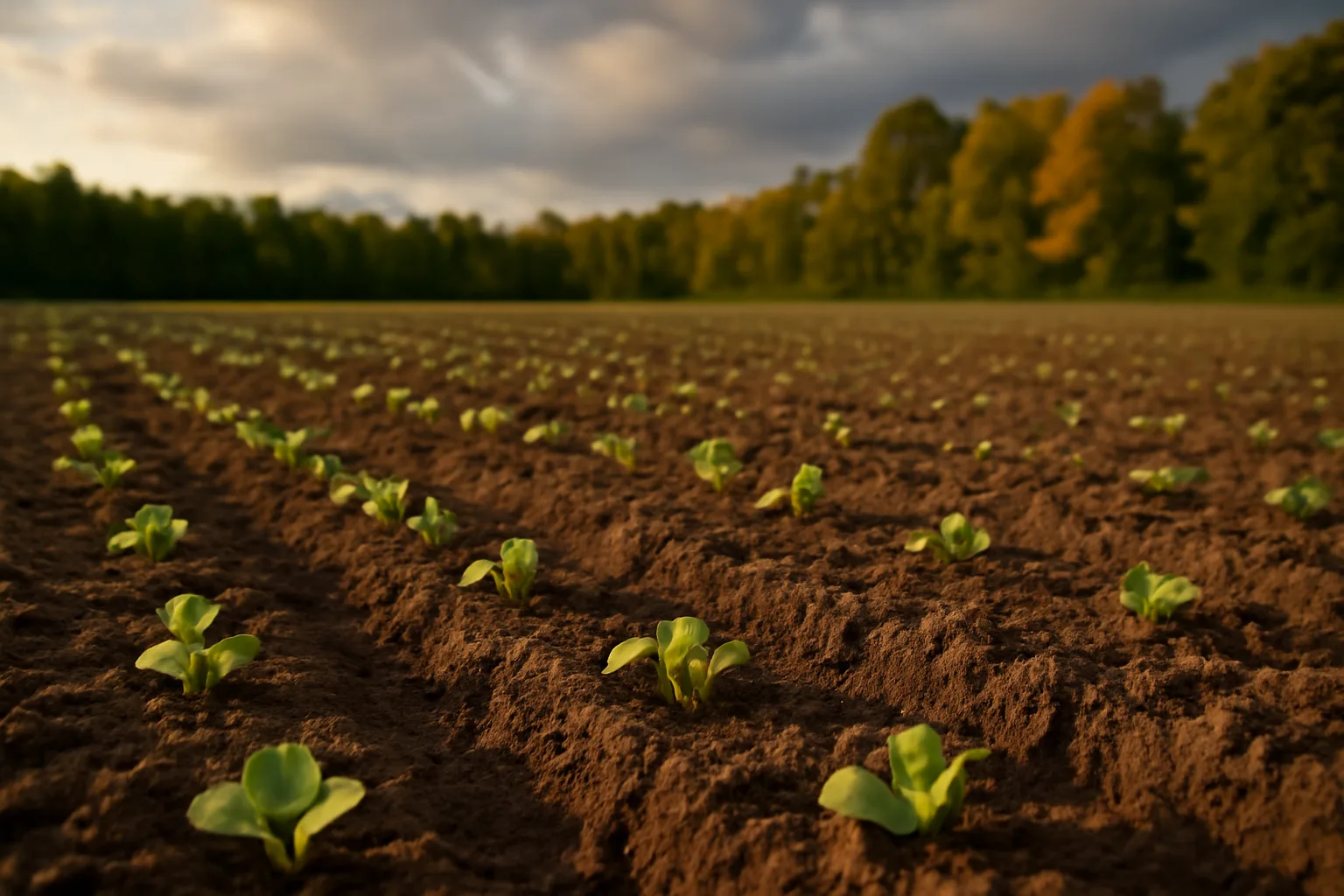
The short answer: count backward 60 to 90 days from your area's first average fall frost date, then plant. Turnips are a cool-season brassica, and they need that stretch of warm-to-cooling weather to grow leaf mass and then bulb up before hard frost sweetens them. For most of the whitetail range that means a planting window somewhere between mid-July and early September. Southern states (Alabama, Georgia, the Carolinas) often plant late August into early September. Northern states (Minnesota, Wisconsin, Michigan) need to get seed in the ground by late July or the first half of August, because their frost date arrives so much earlier. The reason frost matters isn't just about killing the plant. A few hard frosts (temps in the upper 20s) actually improve turnip palatability by converting starches to sugars in the bulb and leaves. That's why deer often ignore a turnip plot in October and hammer it in December. If you plant too late, the plant never builds enough bulb or leaf mass before growth stops, and you end up with a thin, unproductive plot. Plant too early in hot weather and seedlings can struggle or get outcompeted by weeds before the cooler growing window even opens. Your local NOAA climate data or your state's cooperative extension frost date tables are the best source for your specific county, not a national blanket date [1].
What's the exact window by planting zone?
| Deep South (S. Georgia, S. Alabama, Florida panhandle) | Late Nov to early Dec | Late Aug to mid Sept | |
|---|---|---|---|
| Mid South (Tennessee, Arkansas, N. Georgia) | Mid to late Oct | Early Aug to early Sept | |
| Lower Midwest / Mid-Atlantic (Kentucky, Virginia, Missouri) | Early to mid Oct | Late July to late Aug | |
| Upper Midwest / Northeast (Wisconsin, Minnesota, upstate NY) | Mid to late Sept | Mid July to mid Aug | These are rough midpoints, not guarantees, and microclimates (valley bottoms, elevation, tree cover) can shift your actual frost date by a week or two either direction. If you've got a soil test back and know your plot's history, that's the other half of the equation. Turnips aren't picky about soil type, but they do respond hard to phosphorus and boron, and a soil test is the only honest way to know what your ground needs [2]. |
Because "turnip planting date" really means "frost date minus 60 to 90 days," the practical way to plan is by region. Here's a general breakdown, but always confirm against your county's average first frost from NOAA or your state extension office [1]. | Region | Typical first frost | Turnip planting window |
When should you plant food plots for deer in general?
Food plot timing splits into two buckets: spring/summer plots (clover, chicory, soybeans, cowpeas) and fall plots (brassicas, cereal grains, annual clover, winter wheat). Spring plots usually go in after your last frost, roughly April through May depending on latitude. Fall plots, which include turnips, go in during that same 60 to 90 day window before first frost we just covered. A lot of new plotters try to plant everything in spring, which works fine for perennial clover but wastes turnips, since they'd bulb up and get eaten (or bolt to seed) in the heat of July with nothing left for hunting season. The whole point of a brassica plot is late-season tonnage when other food is gone. Your state wildlife agency's food plot guidance and your land-grant extension office are the two best free resources for nailing down local dates. Many extension offices publish specific forage planting calendars by county.
When should you plant turnips specifically for deer?
Same rule as above, just worth repeating because it's the most-searched version of this question: turnips for deer go in 60 to 90 days before first frost, which for most whitetail country lands between late July and early September. A few practical notes that matter more than the exact date. First, seeding rate: turnips are typically drilled or broadcast at 4 to 6 lbs per acre, and depth matters, no deeper than a quarter to half inch, since the seed is tiny [3]. Second, weed control before planting helps a lot, since a bare, worked seedbed lets turnip seedlings establish without competition. Third, don't skip the soil test. Turnips like a pH close to neutral, generally 6.0 to 6.5, and if your ground is more acidic than that, lime takes months to fully react, so get it applied well ahead of planting, not the same week [2]. A lot of hunters blend turnips with other brassicas (radish, kale) or cereal grains (oats, winter rye) in the same plot. That's a legitimate strategy, since it staggers palatability and gives deer options as the season progresses.
Do deer actually like turnips, or is that a myth?
Deer eat turnip leaves readily in fall, often before the bulbs matter at all. Bulb consumption is the part that's inconsistent. In a lot of plots, deer eat the tops down to nothing in October and November, then only start digging up and eating the bulbs after several hard frosts sweeten them, typically December into January. This is well documented anecdotally by hunters and by extension brassica trial writeups, though there isn't a large peer-reviewed body of research quantifying exact deer preference rankings between turnip varieties. What extension research does confirm is the agronomic side: turnips are a reliable, high-tonnage, cold-tolerant forage crop that holds nutritional value later into winter than most other food plot options [3] [4]. If your goal is late-season hunting (January in the North, sometimes into deep winter in the South), turnips are one of the better tools available. If you're trying to pull deer in during early bow season in September or October, turnips usually aren't your best bet since the bulbs aren't attractive yet and deer might just skip the leaves for something more familiar nearby.
What is a food plot, exactly?
A food plot is a planted area, usually somewhere between a quarter acre and several acres, seeded with forage crops to provide supplemental food for deer and other wildlife on hunted or managed land. Food plots aren't the same as baiting: baiting typically means placing loose feed, minerals, or bait piles, while food plots involve actually growing a crop in the ground. That distinction matters legally. Many states regulate or ban baiting for deer hunting but allow food plots, since a planted crop is treated as normal agricultural land use. Rules vary a lot by state though, and some states do restrict hunting over food plots under certain conditions or during specific seasons. Always check your state wildlife agency's current regulations before you hunt a plot, since baiting and attractant laws change and enforcement varies by county in some states [5] [6]. Agronomically, food plots split into perennial plots (clover, chicory, alfalfa, which can last 3 to 5 years with maintenance) and annual plots (brassicas, cereal grains, soybeans, which get replanted every year). Most serious plotters run both: perennials for spring/summer nutrition and annuals like turnips for a fall/winter hunting draw.
Do deer eat sorghum?
Yes, deer eat sorghum, both the leaves and the grain heads, though it's more commonly planted as a summer annual for cover and as a component of dove fields than as a primary deer forage crop. Grain sorghum can work in a food plot mix, especially in the South, but it's not typically the headline species most plotters reach for. Sorghum's bigger food plot value is often structural: it grows tall and thick, so it doubles as screening cover next to a bean or clover field, and deer will feed on dropped grain heads through fall once they mature and lodge over. It's also more drought-tolerant than corn, which matters in dry summers.
Do deer eat clover, and do they actually like it?
Yes. Clover, especially white clover varieties like Durana and Ladino, is one of the most consistently preferred forages in whitetail food plots, and it's backed by more agronomic research than almost any other plot species. Clover is high in protein (often 20 to 30% crude protein in vegetative growth) and stays palatable through most of the growing season, which is why it's a staple spring/summer perennial [7]. Clover's downside is that it goes dormant or gets buried under snow in northern winters, and it can struggle in low-fertility or highly acidic soil without lime correction. It also needs mowing and occasional herbicide touch-ups to fight off weed competition, so it's more of a maintenance crop than a plant-and-forget one. Most food plot programs pair clover (spring/summer) with a fall annual like turnips or cereal grains to cover the whole season. For species selection and how to build a full-season rotation, see food plot whitetail and deer food plot seed.
When should you plant oats for deer food plots?
Oats go in during the same general fall window as turnips, roughly 45 to 60 days before first frost, which is often a couple weeks later than turnip planting since oats germinate and grow a bit faster. In the Midwest and Mid-South, that's typically late August through mid-September. In colder northern zones, early to mid-August. Oats are one of the most attractive early-fall forages available, often getting hit hard the moment they sprout, which makes them a good choice for early bow season plots. The tradeoff is winter-kill: oats aren't very cold-hardy compared to winter wheat or rye, so in the North they often die back after the first hard freezes, right when turnips and brassicas are just hitting their prime. A lot of plot mixes combine oats with turnips or winter rye specifically so hunters get an early-season draw (oats) followed by a late-season one (turnips, or regrowth from rye).
What do deer prefer to eat most, and does honey matter?
Deer are generalist browsers, and their preferences shift by season, region, and what's locally available. That said, extension and wildlife agency forage studies consistently rank a short list of favorites: soybeans and cowpeas in summer, acorns (especially white oak) in fall, clover across most of the growing season, and brassicas (turnips, radishes) plus cereal grains in late fall and winter [7] . Corn is also heavily used, mostly as a high-energy winter food source in the North. No, deer don't eat honey in any meaningful dietary sense, and it's not a real food plot or attractant strategy. Deer are herbivores; they browse plants, forbs, and mast, not animal-produced sugars. If you've heard of "honey holes" or scent products marketed with honey or sweeteners, that's a different thing entirely, some liquid deer attractant products use sugar-based scents, but that's a commercial lure claim, not evidence of dietary preference, and it has nothing to do with actual food plot planning. If you're deciding what to plant based on real deer preference data rather than marketing, cooperative extension forage trial results and state wildlife agency habitat guides are the best sources, not attractant product copy [7] .
How do you actually plant a turnip food plot, step by step?
First, get a soil test 60 to 90 days ahead of your planting window if you haven't already, since lime needs time to adjust pH and you don't want to be guessing on fertilizer rates. Your local extension soil lab is the authority here, not a general internet chart, since your specific results drive the actual lime and fertilizer amounts needed [2]. Second, kill existing vegetation and work the seedbed. A light disking or a burndown herbicide application 2 to 3 weeks before planting gives turnip seedlings a clean start. Third, broadcast or drill seed at 4 to 6 lbs per acre, no deeper than a half inch, ideally right before a rain if you're broadcasting into worked ground [3]. Fourth, apply fertilizer per your soil test results, generally turnips respond well to phosphorus and a moderate nitrogen rate, but skip guessing and follow your lab report. Fifth, be patient. Turnip tops grow fast (30 to 45 days to significant leaf growth) but bulbs take longer, so don't judge the plot until you're within a month or so of your local first frost. If you want help translating your soil test and acreage into an actual planting plan instead of piecing it together yourself, that's exactly what a $99 Custom Food Plot Plan is built for; it turns your soil numbers, region, and goals into a specific seed and fertilizer plan rather than a generic chart.
What mistakes ruin turnip food plots most often?
Planting too early is the single biggest mistake. Hot, dry August soil (in southern zones) can crisp young turnip seedlings before they establish, and even where they survive, plants that grow too long in the heat sometimes bolt to seed instead of bulbing properly. Planting too late is the second most common mistake, especially in northern states where hunters get busy with early season prep and push turnip planting into September when it should have gone in by mid-August. The plant simply runs out of growing season. Skipping the soil test is third. Turnips aren't as pH-sensitive as clover, but they still perform far better in the 6.0 to 6.5 range, and low phosphorus soils will visibly stunt bulb development regardless of how well you time the planting [2]. Finally, planting into unprepared, weedy ground chokes out young seedlings before they get a foothold; a clean seedbed matters more for tiny brassica seed than for larger-seeded crops like beans or corn.
Should you check state rules before hunting over a turnip plot?
Yes, always check your state wildlife agency's current regulations before hunting near or over any food plot. While food plots themselves are legal nearly everywhere as standard agricultural practice, some states have specific rules about hunting distance from bait, definitions of what counts as "baiting" versus a planted crop, and seasonal restrictions that can catch hunters off guard. Rules vary significantly. Some states draw a clear legal line between a growing crop (legal) and harvested grain or feed piled on the ground (regulated or banned as bait). Others have distance requirements or disease-management closures (often tied to chronic wasting disease zones) that can affect food plot hunting even where baiting itself isn't the issue [5] [6]. Check your specific state wildlife agency's hunting regulations page before the season, not a general internet summary, since these rules do change year to year.
Frequently asked questions
When is the best time to plant turnips for deer?
Plant turnips 60 to 90 days before your area's average first fall frost date. For most whitetail range, that's late July through early September, with northern states planting earlier and southern states planting later. Check your county's frost date through NOAA or your state extension office rather than using a national calendar date.
Can you plant turnips too early?
Yes. Planting in high summer heat can stress or kill young seedlings, and turnips that grow too long before cool weather sets in sometimes bolt to seed instead of forming a bulb. Stick to the 60 to 90 day pre-frost window for your specific region rather than planting as soon as you have free time.
Do deer eat turnip leaves or bulbs first?
Deer typically eat turnip leaves first, often stripping them down in October and November. Bulbs usually don't get heavily eaten until after several hard frosts convert starches to sugars, which is typically December into January in most of the whitetail range.
Do deer eat sorghum in food plots?
Yes, deer eat both sorghum leaves and grain heads, though it's used more often as summer cover and a dove-field crop than as a primary deer forage. It works in mixed plots and doubles as tall screening cover near clover or bean fields.
Do deer like clover, and is it worth planting?
Yes, clover is one of the most consistently preferred whitetail forages, especially white clover varieties, and it's high in protein (often 20-30% crude protein) through the growing season. It requires mowing and occasional weed control, so pair it with a fall annual like turnips for full-season coverage.
When should you plant oats for deer?
Plant oats roughly 45 to 60 days before your area's first frost, generally a couple weeks later in the calendar than turnips since oats grow faster. Oats are highly attractive early in fall but often winter-kill after the first hard freezes in northern climates.
What is a food plot, and is it the same as baiting?
A food plot is a planted forage crop grown to feed deer, distinct from baiting, which involves placing loose feed or bait piles. Most states treat food plots as normal agriculture and allow hunting over them, but baiting rules vary a lot, so check your state wildlife agency's current regulations.
What are deer's favorite foods overall?
Preferences shift by season, but common favorites include soybeans and cowpeas in summer, acorns (especially white oak) in fall, clover through much of the growing season, and brassicas like turnips plus cereal grains in late fall and winter. Corn is also heavily used as a winter energy source, especially in the North.
Do deer like honey or sweet attractant products?
No, deer don't eat honey as part of their natural diet; they're herbivores that browse plants, forbs, and mast. Some commercial attractant sprays use sugar or honey-based scents, but that's a marketing claim about scent lures, not evidence that honey is a real deer food.
How deep should you plant turnip seed?
Plant turnip seed no deeper than a quarter to half inch. The seed is very small, and planting too deep is a common reason for poor germination in food plots. A cultipacker or light dragging after broadcasting helps ensure good seed-to-soil contact without burying it too deep.
What soil pH do turnips need for food plots?
Turnips grow best in soil with a pH close to 6.0 to 6.5. If your soil test shows lower pH, apply lime well ahead of planting, since lime can take several months to fully adjust soil chemistry, and waiting until planting week won't help that season's crop.
Can you plant turnips with other food plot species?
Yes, turnips are commonly blended with other brassicas like radishes and kale, or with cereal grains like oats and winter rye, in the same plot. Blending staggers palatability through the season, giving deer options as different plants mature and as frost sweetens the brassicas later in winter.
Sources
- NOAA National Centers for Environmental Information, U.S. Climate Normals frost/freeze data: Average first frost dates vary by region and are the basis for backward-counting turnip planting windows
- University of Missouri Extension, Soil Testing: Soil testing determines site-specific lime and fertilizer needs before planting food plot crops
- University of Tennessee Extension, Brassicas for Deer: Brassica crops like turnips retain forage value and palatability later into winter than many other food plot options
- Georgia Department of Natural Resources, Wildlife Resources Division Hunting Regulations: State wildlife agencies set specific rules distinguishing food plots from baiting and regulating hunting near bait
- Michigan Department of Natural Resources, Baiting and Feeding Regulations: Baiting and feeding regulations for deer vary by state and can include disease-management restrictions
- USDA Natural Resources Conservation Service, Plant Guide: White Clover: White clover provides high crude protein forage and is widely used and preferred in wildlife food plots
- USDA Forest Service, White-tailed Deer Habitat and Food Habits: White-tailed deer diet composition shifts seasonally among mast, forbs, browse, and agricultural forages