Last updated 2026-07-26
TL;DR
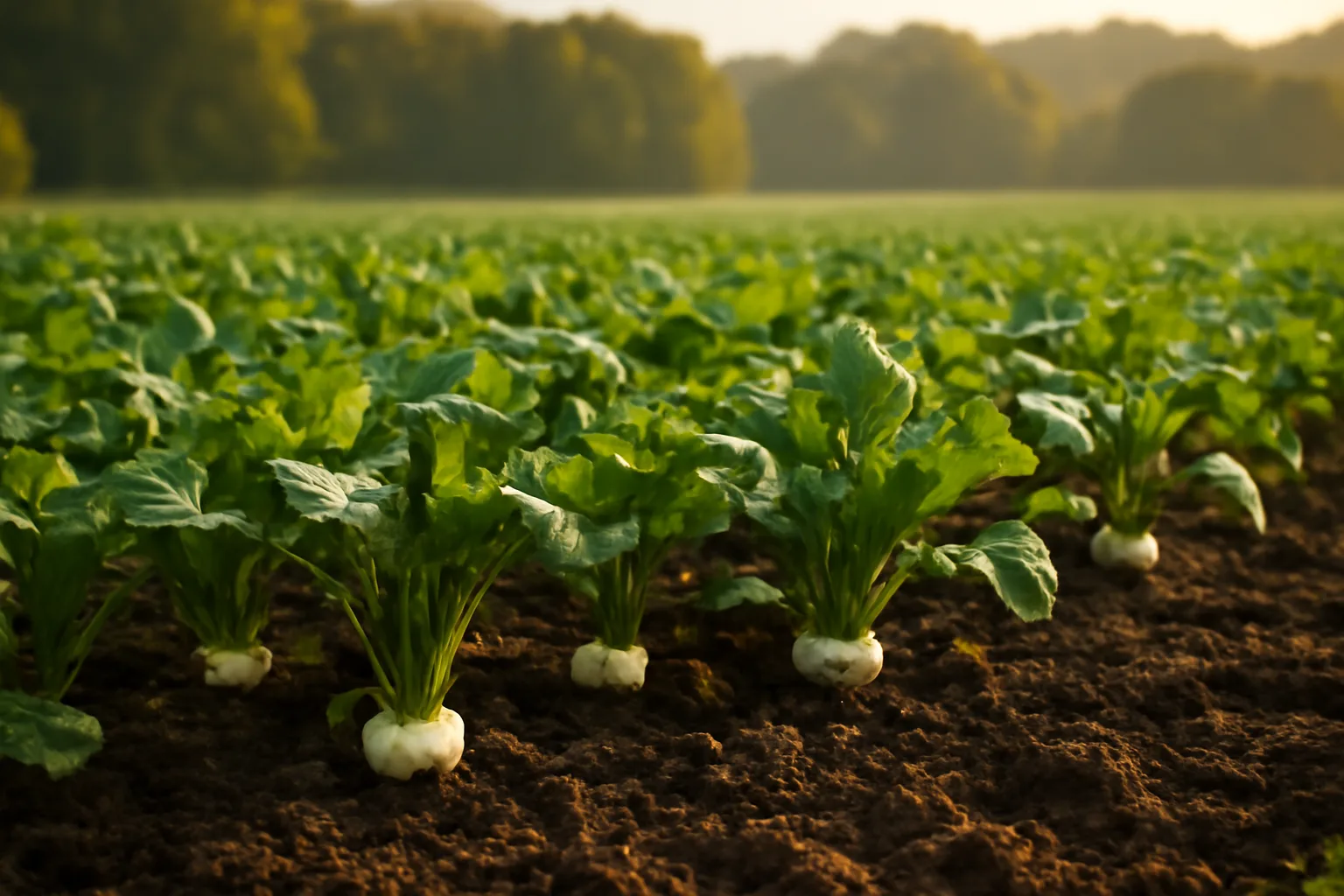
Plant turnips 60 to 90 days before your area's average first fall frost date so they can bulb up before deer season. That's late July into mid August for the Upper Midwest and Northeast, and August into early September for the Mid-South and transition zone. Soil temps of 45 to 85°F work, but 60 to 85°F germinates fastest.
When should you plant turnips for a food plot?
The short answer: count backward 60 to 90 days from your area's first average fall frost date, then plant. Turnips need that window to develop bulbs and build the sugar content that makes them attractive after a few frosts hit. Plant too early in hot summer soil and you risk poor germination or bolting. Plant too late and the plants never bulb out before deer season starts. Most land-grant extension guides list turnip maturity at 60 to 90 days depending on variety, with some hybrid forage types (like Purple Top or Barkant) reaching usable size closer to 60 days [1]. That planting window is why turnips are one of the few food plot species you plant in mid to late summer rather than spring. If you already have a soil test back and know your pH and fertility needs, the timing question is really the only thing left to nail down. Get the calendar right and the agronomy mostly takes care of itself.
When to plant turnips for deer, by USDA hardiness zone
| Upper Midwest, Northeast (Zones 3-4) | mid to late September | July 15 to Aug 15 | |
|---|---|---|---|
| Central Midwest, Mid-Atlantic (Zone 5-6) | early to mid October | Aug 1 to Aug 25 | |
| Transition zone, Mid-South (Zone 6-7) | late October to early November | Aug 15 to Sept 10 | |
| Deep South (Zone 8+) | mid November or later | Sept 1 to Sept 20 | These are starting points, not gospel. Local elevation, low-lying frost pockets, and a wet or dry summer all shift things by a week or two either direction. Check your county extension office's frost date table before you lock in a date. Purdue's forage extension notes brassicas like turnips should be planted with enough lead time before the first killing frost for best bulb development [1], and that's the rule I'd hang your calendar on. If you want a plan built around your specific zone and plot size instead of guessing off a regional table, that's exactly the kind of thing a plot-plan-builder is for. A $99 custom plan runs the frost math for your location so you're not squinting at a national map. |
Turnip planting dates track your first frost date, not a fixed calendar date, so a Minnesota plot and a Tennessee plot are weeks apart. Here's a working framework based on regional frost timing and extension guidance for brassica planting windows [2]. | Region / Zone | Avg. first frost | Plant turnips |
When to plant food plots for deer overall
Food plot timing splits into two seasons: spring plots (clover, chicory, soybeans, alfalfa) go in April through June depending on your zone, and fall plots (brassicas, cereal grains, some clover overseeds) go in late July through September. Turnips belong firmly in the fall camp. Spring plantings need soil temps consistently above 50°F and a good shot at rain before summer heat sets in. Fall plantings need enough growing season left before frost, but not so much heat that seedlings burn out in July drought. This is why so many food plot calendars look confusing at first: you're really running two separate planting seasons on the same property. A simple rule extension agronomists repeat often: plant warm-season annuals in spring once soil hits 50 to 60°F, and plant brassicas and cereal grains in later summer counting back from frost. If you're building a full-property plan, check out food plot whitetail strategy or a broader deer food plots overview for how spring and fall plots work together on one property.
When to plant oats for deer
Oats go in around the same window as turnips, roughly 45 to 60 days before first frost, which usually lands mid August to mid September depending on zone. Oats germinate fast (5 to 10 days in warm soil) and put on quick top growth, so they don't need quite as long a runway as turnips do. A lot of hunters plant oats and turnips together in the same blend. The oats give deer something green to eat within a few weeks while the turnip bulbs are still sizing up underground. By late fall, the oats have often been grazed down or killed by hard frost, and the turnip bulbs take over as the main draw. Soil test results matter here too. Oats respond well to nitrogen, and your lab report will tell you exactly how much to apply, usually somewhere in the 40 to 60 lb N/acre range for food plot rates, though your specific test is the real authority on that number, not a blanket rule.
Do deer eat turnips, and when do they start?
Yes. Deer eat both the leaves and the bulbs, but the timing of which part they hit first depends on frost. Early in fall, deer graze turnip tops almost like a leafy green. Once temperatures drop and the plant experiences a few hard frosts, starches in the bulb convert to sugars, and deer start digging up and eating the bulbs themselves. This is well documented in university forage research: freezing temperatures trigger starch-to-sugar conversion in brassica bulbs, which is exactly why turnip plots often get ignored in October and then hammered in December [1]. If you're hunting a turnip plot, late season is usually when it performs best, not opening week. A common mistake is judging a turnip plot a failure in early fall because deer aren't touching it yet. Give it time. The plot is doing its job underground before it ever shows up in browse pressure.
Do deer eat sorghum?
Yes, deer eat sorghum, particularly the grain heads once they mature and dry down, and they'll browse young sorghum leaves earlier in the season too. Grain sorghum (milo) is more commonly planted as a wildlife food source in the Midwest and South, often mixed with other warm-season grasses for both food and cover. Sorghum isn't usually a primary food plot species on its own for deer the way clover or soybeans are, but it shows up often in dove field mixes and wildlife blends because turkeys, deer, and upland birds all use it. Standing sorghum also doubles as screening cover, which is a real bonus if your plot borders a road or a neighbor's stand.
Do deer eat clover, and do they like it?
Yes. Deer eat clover heavily, and it's consistently ranked among the most preferred food plot forages available. White clover (Ladino types especially) and red clover both hold up well in food plots and can persist for 3 to 5 years with proper mowing and fertility maintenance, which makes clover one of the better cost-per-year investments in a food plot program. Deer preference research and field observation both back this up: clover shows up near the top of almost every whitetail forage preference study done at land-grant universities. If you're deciding between clover and brassicas for a given plot, it often comes down to season of use. Clover is your spring and summer workhorse. Turnips and other brassicas are built for fall and winter. Many successful properties run both in a rotation. For a deeper comparison of species options, deer food plot seed and food plot seed break down blends by season and soil type.
What are deer's favorite foods overall?
There's no single universal answer because it shifts by season and region, but research and field data point to a consistent short list: acorns (especially white oak group), soybeans, clover, and native forbs rank as top preferred foods across most whitetail range. In agricultural areas, standing corn and soybeans get heavy use in fall. In the deep woods, natural browse and mast dominate the diet most of the year. A study-backed way to think about it: deer are opportunistic browsers that shift preference based on nutritional need and availability, not a fixed favorite food. During antler growth and lactation (spring and summer), high-protein forages like clover and soybeans get priority. Heading into winter, high-carb, high-energy foods like corn, acorns, and frost-sweetened brassica bulbs move up the list because deer need calories to survive cold, more than protein. So "favorite food" really means "whatever meets their nutritional need for that specific month." That's also why a food plot program built around single-species monocultures usually underperforms one that stacks a spring protein source with a fall energy source.
Do deer like honey?
There's no research or wildlife agency data suggesting deer seek out honey, and it isn't a food plot or attractant strategy backed by any extension source. Deer are herbivores built to digest cellulose and plant material through a rumen system; honey doesn't fit their natural diet or digestive process. Some hunters have used sugar-based mineral or attractant products historically, but check your state's baiting and feeding regulations before using any supplemental attractant, since rules vary widely by state and many wildlife agencies classify sugar-based products the same as bait or feed for legal purposes [3]. Your state wildlife agency's baiting page is the actual authority here, not forum advice.
What exactly is a food plot?
A food plot is a planted area, usually somewhere between a quarter acre and several acres, seeded with forage species specifically to attract and feed deer or other wildlife on a property. Food plots serve two main goals: nutrition (helping deer through stress periods like antler growth, lactation, or winter) and hunting access (giving hunters a predictable spot deer will visit). Food plots aren't a wildlife management requirement and they don't replace natural habitat, but on properties with limited native forage or heavy agricultural pressure nearby, a well-placed plot can concentrate deer activity in a spot you control. State wildlife agencies and university extension programs generally treat food plots as a habitat management tool separate from baiting, though the legal line between the two varies by state and by method of planting versus placing loose feed [3]. If you're new to the concept entirely, deer for food and domain food plot seed walk through the basics of picking a plot location and species mix before you ever touch a drill or a broadcaster.
How do you plant turnips correctly once you've picked a date?
Turnip seed is tiny, so seeding depth is the number one mistake hunters make. Plant no deeper than 1/4 to 1/2 inch, and a light cultipack or roller after broadcasting works better than trying to drill it deep. Seeding rate for pure turnip stands generally runs 4 to 6 lbs/acre broadcast, per most extension forage guides [1]. Get your soil test back before you plant, not after. Turnips prefer a pH of 6.0 to 6.5 and respond strongly to phosphorus and potassium; your specific lab report is the real authority on lime and fertilizer rates for your soil, not a generic chart. A quick pre-plant weed knockdown with glyphosate on existing sod, roughly 1 to 2 weeks before seeding, gives turnip seedlings a clean start without competition. One more practical note: turnips are unforgiving about drought right after planting. If your extended forecast shows a dry stretch right after your target date, it's worth pushing planting a few days to catch rain, even if that nudges you slightly outside the ideal window.
Frequently asked questions
How many days before frost should you plant turnips for deer?
Plant turnips 60 to 90 days before your area's average first fall frost date. Most extension guides list turnip forage maturity in that range, with faster hybrid varieties sometimes ready closer to 60 days. Check your county's frost date table since local pockets and elevation shift this by a week or two.
Can you plant turnips too early?
Yes. Planting turnips in hot mid-summer soil (above 85°F) can hurt germination and cause seedlings to bolt or struggle. It's better to wait a week or two into your planting window than to rush turnips into soil that's still baking from summer heat.
Do deer prefer turnip bulbs or turnip leaves?
Deer graze the leaves first in early fall, then shift to digging up and eating bulbs after a few hard frosts convert starches to sugar in the root. This is why turnip plots often look untouched early season and get hammered late in the year.
What soil temperature is needed to plant turnips?
Turnip seed germinates in soil temperatures from about 45°F up to 85°F, with 60 to 85°F giving the fastest, most even germination. Soil thermometers are cheap and worth using rather than guessing off air temperature alone.
Should you plant turnips alone or in a blend?
Many hunters blend turnips with oats, radishes, or cereal rye. The oats or rye give deer quick green growth within weeks, while turnip bulbs finish sizing up over the following two months, giving you food available across a longer window.
Do deer eat sorghum in food plots?
Yes, deer browse young sorghum leaves and eat mature grain heads once they dry down. It's more common in wildlife blends alongside other grasses than as a standalone deer food plot, and it also provides useful screening cover.
Do deer really like clover that much?
Yes, clover consistently ranks among the top preferred food plot forages in university studies. It's especially valuable in spring and summer during antler growth and lactation, and it persists 3 to 5 years with proper mowing and fertility upkeep.
When should oats be planted for deer food plots?
Plant oats 45 to 60 days before your first fall frost, which is typically mid-August to mid-September depending on your zone. Oats germinate fast, often within 5 to 10 days in warm soil, and pair well with turnips in a blend.
What is the best time of year overall to plant deer food plots?
It depends on species: spring plantings (clover, soybeans, chicory) go in April through June once soil hits 50-60°F, while fall plantings (turnips, brassicas, cereal grains) go in late July through September, counting backward from your first frost date.
Do deer eat honey or sugar-based attractants?
There's no wildlife research supporting honey as a deer attractant, and it doesn't fit their natural browsing diet. Sugar-based products are sometimes used as mineral or attractant additives, but check your state wildlife agency's baiting regulations first since rules vary widely.
What exactly counts as a food plot versus baiting?
A food plot is a planted, growing forage area, while baiting typically means placing loose feed, grain piles, or minerals on the ground. States regulate these differently; a planted plot is generally legal where baiting isn't, but you should confirm with your state wildlife agency's specific regulations.
What's the single favorite food of whitetail deer?
There isn't one. Preference shifts by season: acorns and soybeans rank high in fall, clover and native forbs dominate spring and summer, and frost-sweetened brassica bulbs and standing corn matter most in early winter when deer need calories, more than protein.
Sources
- Purdue University Extension, Forage Brassicas for Deer: turnip forage maturity window of 60-90 days and freeze-triggered starch-to-sugar bulb conversion
- USDA NRCS, Plant Fact Sheet for Turnip (Brassica rapa): regional planting timing and growth characteristics used to build planting windows
- USDA NRCS, Cover Crop Chart, Brassica species planting and soil temperature guidance: spring versus fall food plot planting windows and soil temperature thresholds for brassicas and warm-season annuals
- Ball, D.M. et al., Southern Forages, 5th ed., International Plant Nutrition Institute: clover crude protein content of roughly 20-25 percent in vegetative growth stages
- Jones, P.D. et al., 'Nutritional Carrying Capacity of Native Forage Plants for White-tailed Deer,' PMID 24895451: seasonal shifts in whitetail deer nutritional needs and forage preference
- Pennsylvania Game Commission, Baiting and Feeding Regulations, Chronic Wasting Disease Response: state-level variation in baiting and feeding regulations affecting attractant use