Last updated 2026-07-26
TL;DR
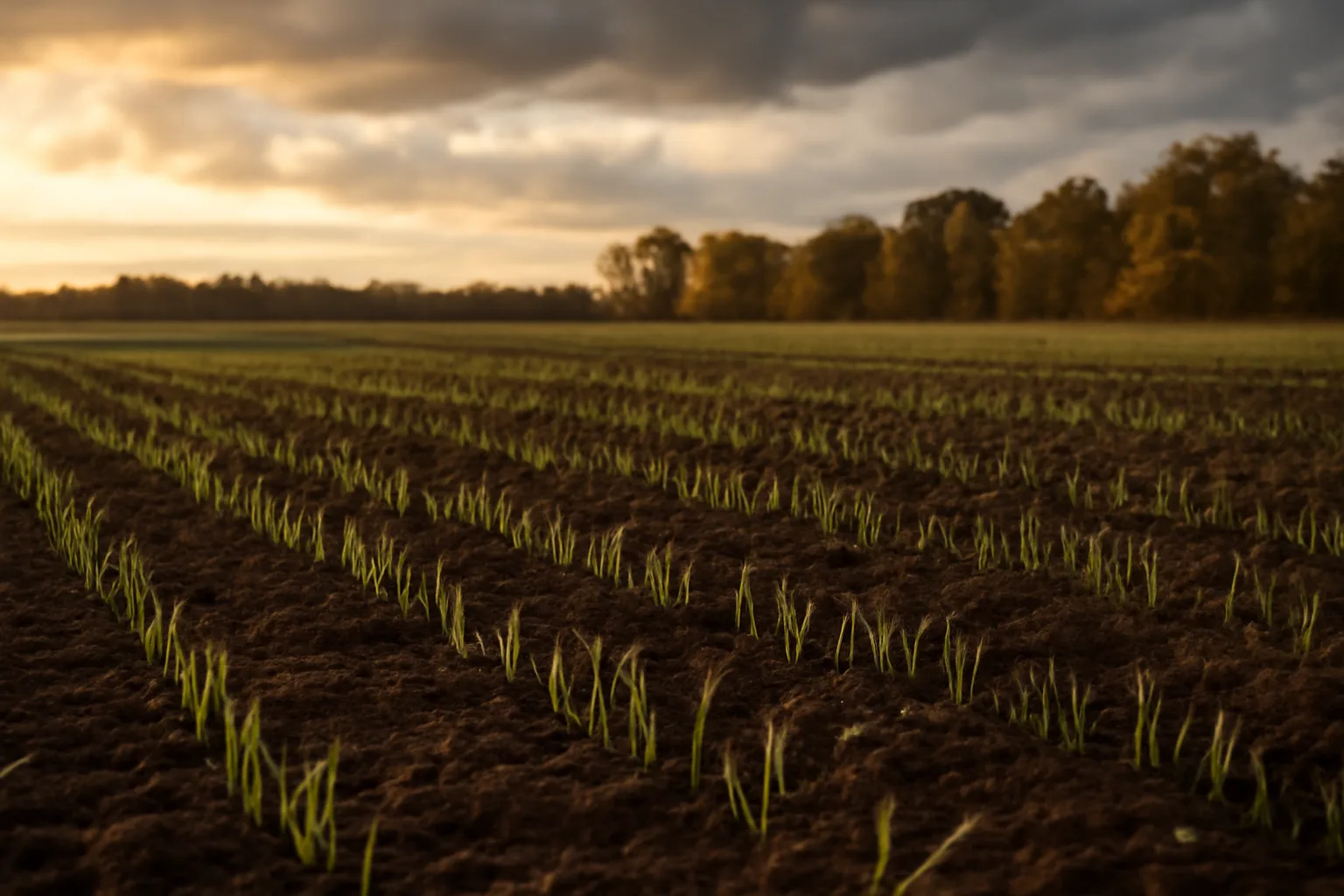
Plant winter rye 4 to 8 weeks before your area's average first frost, which lands anywhere from late August in the far north to mid-October in the Deep South. It germinates fast in cool soil, tolerates a rushed seedbed, and can also go in early spring (March-April) as a quick cover or nurse crop.
When should you plant winter rye for a deer food plot?
Plant cereal rye (Secale cereale, often called winter rye) 4 to 8 weeks before your area's average first fall frost date. That window gives the plant enough warm soil to germinate and put on 4 to 6 inches of growth before winter dormancy sets in. In practical terms that means late August into early September in the northern tier states (think Minnesota, Wisconsin, Michigan, Maine), mid-September through early October in the transition zone (Ohio, Indiana, Missouri, Virginia), and late September through mid-October, sometimes into November, in the Deep South and lower Southeast. Rye is famous among food plotters for how forgiving that window is. It germinates at soil temperatures as low as 34 degrees Fahrenheit, lower than almost any other food plot species, and it will still put on usable growth even if you plant later than the ideal date [1]. That cold-germination trait is why so many hunters use winter rye as their "insurance" planting. If a wet September blows your window for brassicas or a clover frost-seeding, rye is usually still not too late. You can also plant it in early spring, roughly March into April depending on latitude, as a fast-growing cover crop or nurse crop for a spring clover or alfalfa seeding. Spring-planted rye won't produce grain heads before you likely terminate it, but deer will still hit the vegetative growth hard in April and May. One clarification trips up a lot of new plotters. Winter rye, a cereal grain (Secale cereale), is not the same plant as annual ryegrass (Lolium multiflorum) or perennial ryegrass. Winter rye is far more cold and drought tolerant, and USDA plant fact sheets list it as one of the hardiest cool-season grain crops for late fall seeding [1].
When to plant food plots for deer overall (more than rye)
| Upper Midwest / Northeast | Late Aug - mid Sept | Late April - late May | |
|---|---|---|---|
| Mid-South / Mid-Atlantic | Mid Sept - mid Oct | Mid April - late May | |
| Deep South / Gulf Coast | Late Sept - mid Nov | March - April | These are generalized windows, not a substitute for your own frost data or your soil test lab's recommendation. Soil temperature and moisture matter as much as the calendar date. A dry September with no rain in the forecast is a bad time to plant brassicas or rye no matter what the calendar says. Waiting two weeks for a rain event usually beats planting into dust on schedule. |
Food plot timing splits into two seasons, and the split matters more than any single species. Spring plots (clover, chicory, soybeans, cowpeas) go in after your last frost, generally April through June depending on latitude. Fall plots (brassicas, cereal grains, winter peas) go in 60 to 90 days before your first fall frost so they mature right as hunting season opens. Most state wildlife agency and extension guidance boils down to working backward from your local frost dates. NOAA's National Centers for Environmental Information publishes historical freeze and frost occurrence data by station, and most extension food plot calendars are built from that underlying dataset [2]. If you don't know your average first and last frost dates, your county extension office can pull them from local weather station records. A rough national framework: | Region | Fall plot window | Spring plot window |
When to plant oats for deer food plots?
Plant oats 45 to 60 days before your first fall frost, which usually lines up within a week or two of your winter rye window but slightly earlier. Oats germinate a bit slower than rye and are less cold-hardy, so they need more of that fall warmth to establish. Oats are one of the most attractive fall food plot cereals available. Deer often prefer the taste of oat forage over wheat or rye early in the season. The tradeoff is winter survival: oats generally winterkill anywhere temperatures drop into the low teens or single digits for extended periods, while winter rye keeps growing after a hard freeze and can survive temperatures well below zero once established [1]. That's why a lot of plotters blend oats and rye together. Oats bring the early-season palatability. Rye carries the plot through January and February. In the Deep South, where winterkill isn't a concern, straight oats can work as a full-season fall/winter plot on their own.
When to plant turnips for deer food plots?
Plant turnips 80 to 90 days before your first fall frost, earlier than rye or oats because turnips need time to bulb up before the ground gets cold. That usually means late July through early September depending on your zone, with the northern tier planting first. Turnips (and other brassicas like radishes and rape) go through a maturation process deer actually notice. The tubers and leaves aren't very palatable until after a couple of hard frosts convert starches to sugars. That's why brassica plots often sit almost untouched in October and then get hammered in December and January. If you plant turnips too late, they never bulb and you lose that late-season sugar swing that makes them worth planting in the first place. Err on the early side of your window rather than the late side. Brassica performance is more sensitive to planting date than cereal grain performance is, and a bulb that never sizes up gives you nothing but leaf.
What is a food plot, exactly?
A food plot is a planted area, usually somewhere between a quarter acre and several acres, on hunting land that's seeded with forage crops to attract and hold deer or provide supplemental nutrition. Most state agencies classify this as agricultural planting, distinct from baiting or supplemental feeding with piled feed, corn, or minerals, which many states regulate or ban outright. Food plots generally fall into two functional categories. Attraction plots (brassicas, cereal grains, some clover) are meant to draw deer for hunting during specific windows, usually fall and winter. Destination/nutrition plots (perennial clover, alfalfa, chicory) are meant to provide season-long forage that helps antler growth, lactation, and overall herd health. Rules on what counts as a food plot versus illegal baiting vary a lot by state. Standing crops planted and left in place are almost universally legal, but hunting over piled or spread feed is restricted or banned in many states, including much of the Midwest and parts of the Northeast. Check your state wildlife agency's current regulations before hunting any plot, especially if you're combining it with mineral or supplemental feed. Michigan, for instance, restricts baiting and feeding of deer under state law, enforced by the DNR, with exceptions carved out for normal agricultural practices like standing food plots [3]. If you're planning your first plot, food plot whitetail and deer food plots cover the broader planning basics.
Do deer eat sorghum?
Yes, deer eat sorghum, both the grain heads and the vegetative growth, but it's rarely planted as a dedicated deer attractant. Sorghum (grain sorghum or forage sorghum) is more commonly used as a screening or cover crop in food plot systems, planted in strips to hide plots or hunters from road view, with deer browsing it as a secondary benefit rather than the main draw. Whitetails will hit sorghum grain heads in fall once they mature, and turkeys and other wildlife use it too. But compared to soybeans, corn, or brassicas, sorghum isn't a top-tier deer food plot choice on its own. If you're using it, treat it as a structural or screening component of a plot design rather than the primary forage.
Do deer eat clover, and do deer like clover?
Yes, deer eat clover heavily, and it's consistently one of the most preferred food plot forages available. Both white clover (Trifolium repens) varieties like Durana and ladino, and red clover, rank at or near the top of deer food preference studies across most of the whitetail's range. Clover's appeal comes down to protein content and availability. Quality clover stands commonly run 20 to 30 percent crude protein during active growth, which rivals or beats soybeans and alfalfa, and it stays available spring through fall in a properly maintained perennial stand [4]. That's a big reason clover shows up in nearly every state extension food plot guide as a foundational species. The tradeoff is establishment and maintenance. Clover needs a well-limed, fertile seedbed, and extension soil guidance generally targets a pH of 6.0 to 6.5 for good clover nodulation and growth [5]. It also needs mowing and occasional herbicide work to keep grass and weed competition down. It's not a plant-and-forget crop. But the payoff in deer traffic and multi-year forage is usually worth the work for anyone with a semi-permanent plot location.
What are deer's favorite foods, and do deer like honey?
Deer don't have one single "favorite" food; preference shifts by season, region, and what's locally available. The consistent top performers in preference research and food plot practice are soybeans, clover, alfalfa, chicory, and standing corn, along with natural browse like acorns and woody stems in fall. Brassicas and cereal grains climb the preference list in late fall and winter after a frost sweetens them. Acorns deserve a mention because they're often the single strongest natural draw in a given fall. Deer will frequently abandon a food plot for a few weeks during a heavy white oak drop, which is normal and not a sign your plot failed. Do deer like honey? There's no real research or extension guidance on deer and honey specifically, and it's not a practical food plot or attractant question. Honey isn't a crop you plant or a natural forage deer seek out in the wild. If you've seen this question online, it's likely confused with honeysuckle, which deer do browse readily, or with commercial sweet-scented mineral or attractant products that use sugar or molasses bases. Those products fall under the same baiting rules as other feed in states that regulate it, so check your state agency's page before using them near a stand.
How do you plant winter rye correctly once you've picked a date?
Winter rye is one of the easiest food plot species to establish, which is part of why it's a go-to for hunters without heavy equipment. Broadcast at 100 to 150 pounds per acre if drilling, or up to 150 to 180 pounds per acre if broadcasting without incorporation, and cover seed with a light disc pass, drag, or even ATV tire tracks to get seed-to-soil contact [1]. Seeding depth should run about 1 to 1.5 inches. Rye germinates fine even at shallow, uneven depths, which is why it tolerates a hunter with a hand spreader and no drill better than almost any other plot species. It also tolerates poor soil pH and low fertility better than clover or brassicas, though it will still respond to lime and nitrogen if your soil test calls for it. Your soil test lab is the real authority on lime and fertilizer rates for your specific dirt. A general guide like this one can't replace a site-specific report. If you don't have a current soil test, get one before you buy seed.
Should you plant rye alone, or mix it with something else?
Rye works well alone as a quick fall attractant or spring nurse crop, but it's often planted in a blend for a reason: straight cereal grain plots are heavy on carbohydrates and lower on protein than a blend that includes a legume. Common fall blends pair winter rye with winter peas, crimson clover, or oats. Rye brings cold tolerance and fast cover, peas and clover bring protein and palatability, and the combination extends attraction later into winter than any single species usually manages alone. In spring, rye is often planted specifically as a nurse crop over a new clover or alfalfa seeding. It comes up fast, suppresses weeds while the slower legume establishes, and then gets mowed off or shades out on its own by early summer. If you're not sure which blend fits your soil, region, and goals, that's exactly the kind of question a Custom Food Plot Plan is built to answer. For $99 you get a one-time plan based on your soil test and location instead of guessing off a bag label. It's general guidance built for your conditions, not a site visit or a guarantee of deer activity, but it beats picking a blend at random.
What can go wrong with fall rye timing, and how do you fix it?
The most common mistake is planting rye too early into hot, dry August soil, where it can germinate, get stressed by heat, and thin out before fall rains arrive. If your fall window opens in late August but conditions are still summer-hot and dry, it's usually fine to wait one to two weeks past the "ideal" date rather than plant into a drought. The second common mistake is treating rye's forgiving germination window as an excuse to plant too late. Yes, rye will germinate in cold soil that would stall brassicas or clover, but a rye plot seeded in late November in the northern half of the country still needs a few weeks of fall growth before hard dormancy to build a stand thick enough to matter. If you're routinely planting past your region's suggested window, you're better off shifting to a true dormant/frost-seeding strategy for spring clover instead and using rye earlier, in its proper fall slot, for actual fall attraction. Watch soil moisture more than the calendar. Frost date tables and extension planting calendars give you a target window, but they can't tell you whether this particular September is wet or dry where you hunt [2]. Local judgment on rainfall still beats a printed date.
Frequently asked questions
When to plant winter rye food plot for the best fall attraction?
Plant winter rye 4 to 8 weeks before your area's average first fall frost date so it has time to establish before cold shuts down growth. In most of the whitetail range that lands somewhere between late August (far north) and mid-October (Deep South). Rye also tolerates later plantings better than almost any other food plot species.
When to plant food plots for deer in spring versus fall?
Spring food plots (clover, chicory, soybeans) go in after your last frost, roughly April through June depending on latitude. Fall food plots (brassicas, cereal grains like rye and oats) go in 60 to 90 days before your first fall frost. Work backward from your local frost dates, which your county extension office or NOAA frost data can provide.
When to plant oats for deer food plots?
Plant oats 45 to 60 days before your area's first fall frost, slightly earlier than rye since oats establish a bit slower and are less cold hardy. Oats are highly palatable to deer early in fall but usually winterkill in hard freezes, unlike winter rye, which keeps growing through winter dormancy.
When to plant turnips for deer food plots?
Plant turnips 80 to 90 days before your first fall frost, earlier than cereal grains, since the tubers need a full growing period to bulb up. A couple of hard frosts convert starches to sugars in the leaves and bulbs, which is why deer often ignore turnip plots in October and hit them hard in December and January.
Do deer eat sorghum?
Yes, deer eat both the grain heads and vegetative growth of sorghum, but it's a secondary food plot choice at best. It's more commonly planted as a screening or cover crop to hide plots and hunters, with deer browsing it opportunistically rather than seeking it out the way they do soybeans or clover.
Do deer eat clover, and do deer actually like it?
Yes, clover is one of deer's most preferred food plot forages, consistently ranked at or near the top in wildlife forage studies. Quality white and red clover stands commonly run 20 to 30 percent crude protein during active growth, which matches or beats soybeans and alfalfa, and clover stays available from spring through fall in an established stand.
What is a food plot?
A food plot is a planted area on hunting land, usually a quarter acre to several acres, seeded with forage crops to attract deer or supplement their nutrition. It's legally distinct from baiting with piled feed in most states; standing planted crops are generally legal, while hunting over spread feed or minerals is often restricted, so check your state wildlife agency's current rules.
What are deer's favorite foods overall?
Preference shifts by season and region, but soybeans, clover, alfalfa, chicory, standing corn, and acorns consistently rank as top draws across food plot and forage studies. Brassicas and cereal grains become more attractive in late fall and winter after frost sweetens them. Acorns often outcompete any planted plot during a heavy fall drop.
Do deer like honey?
There's no meaningful research or extension guidance on deer and honey, and it isn't a real food plot or attractant strategy. This question usually comes from confusion with honeysuckle, a shrub deer readily browse, or with sugar and molasses based commercial attractant products, which are subject to the same state baiting restrictions as other supplemental feed.
Can you plant winter rye in spring instead of fall?
Yes, winter rye can be planted in early spring, roughly March into April depending on latitude, usually as a fast-growing nurse crop over a new clover or alfalfa seeding or as quick temporary cover. It won't produce grain heads before typical termination timing, but deer will browse the vegetative growth readily through April and May.
How cold can winter rye tolerate compared to oats?
Winter rye germinates in soil as cold as 34 degrees Fahrenheit and survives hard freezes well below zero once established, continuing growth through much of winter. Oats are less cold hardy and typically winterkill once temperatures hold in the low teens or single digits for extended periods, which is why many plotters blend the two.
How much winter rye seed do you need per acre?
Broadcast winter rye at 100 to 150 pounds per acre if drilling, or up to 150 to 180 pounds per acre for broadcast seeding without incorporation, since broadcast methods lose more seed to poor soil contact and predation. Cover seed lightly with a disc, drag, or ATV pass for the best germination.
Sources
- USDA NRCS, Plant Fact Sheet for Cereal Rye (Secale cereale L.): Winter rye germination at low soil temperatures and cold/winter tolerance characteristics
- NOAA National Centers for Environmental Information, Climate Normals Data Access: First and last frost dates used to plan fall and spring food plot seeding windows
- Michigan Legislature, Natural Resources and Environmental Protection Act 451 of 1994, MCL 324.40111a: Michigan regulates baiting and feeding of deer with exceptions for standing crops and normal agricultural practice
- USDA NRCS Plant Guide, White Clover (Trifolium repens L.): White and red clover crude protein levels during active growth
- Oklahoma State University Extension, PSS-2207, Soil pH and Liming: Recommended soil pH range for clover establishment and nodulation
- Purdue University Extension, Managing Soil pH and Fertility for Food Plots: Typical soil test turnaround time and cost range through land-grant extension labs