Last updated 2026-07-26
TL;DR
Plant winter peas 6 to 8 weeks before your area's average first fall frost, same window as oats and brassicas. That's roughly early August in the far north down to mid-October in the Deep South. Peas need soil temps still warm enough to germinate but cool nights ahead for tender, attractive growth.
When should you plant winter peas for a deer food plot?
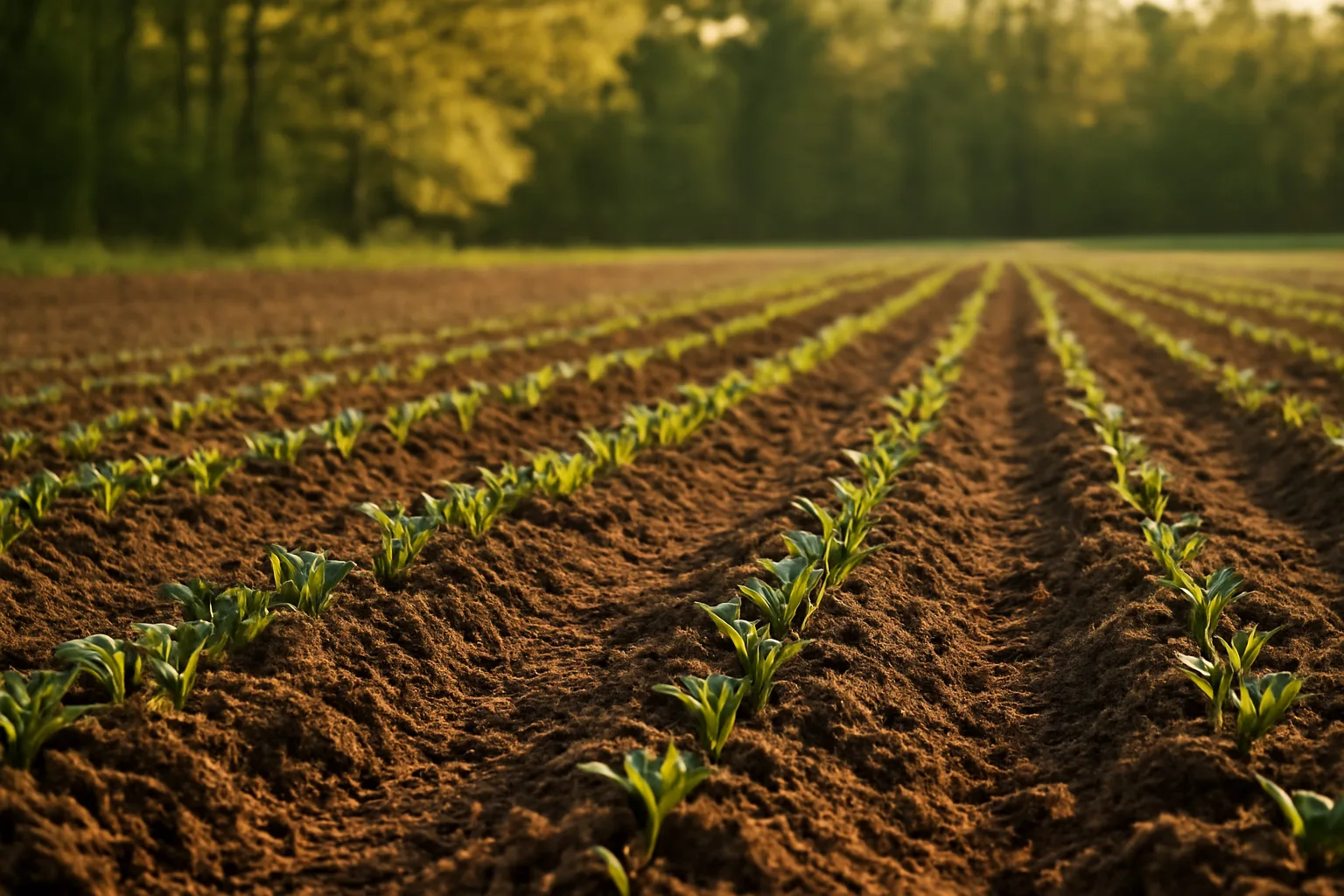
Winter peas (usually Austrian winter peas, a type of field pea) go in the ground 6 to 8 weeks before your area's average first fall frost date. That timing lets the plant establish a root system and put on leafy growth before hard freezes slow it down, but still gives you tender forage right when deer are keying in on protein and carbs ahead of winter. In practice this means early to mid August in the northern tier (International Falls, MN or northern Wisconsin), late August into early September through the upper Midwest and Northeast, mid September in the transition zone (Kentucky, southern Missouri, Virginia), and late September through mid October across the Deep South and Gulf Coast. Check your county's average first frost date through your local NOAA/NWS climate normals or your state extension office, then count backward 6 to 8 weeks. Winter peas are a cool-season annual legume. They germinate fine in soil temps from the mid 50s to mid 70s Fahrenheit, but they don't handle summer heat and drought stress well. Plant too early and you risk seedling burn-up or getting eaten to the dirt before fall hunting season even starts. Plant too late and you don't get enough top growth before frost knocks them back. This is the same general window most extension guides recommend for other cool-season plot staples: oats, brassicas, and cereal grains. That's not a coincidence. It's driven by the same soil temperature and daylight cues [1].
When to plant food plots for deer overall?
| Northern (MN, WI, MI, ME) | Late July to mid August | Early May to early June | |
|---|---|---|---|
| Upper Midwest / Northeast | Mid August to early September | Mid April to late May | |
| Transition zone (KY, MO, VA, NC) | Early to late September | Late March to late April | |
| Deep South / Gulf Coast | Late September to late October | Late February to March | These are general windows, not gospel. Soil moisture matters as much as the calendar. A lot of experienced plotters will wait for a rain forecast even if it pushes them a week or two outside the ideal frost-count window, because dry-dirt planting wastes seed regardless of date. |
Food plot timing splits into two seasons: spring/summer plots (usually warm-season annuals or perennial clover) and fall plots (cool-season annuals like peas, oats, brassicas, and cereal rye). Most hunters focused on fall hunting season care most about the fall planting window. For fall plots, the rule of thumb from university extension programs is consistent: plant 45 to 60 days before your first expected frost for brassicas and turnips, and 6 to 8 weeks before frost for peas, oats, and clover-grain mixes [2]. Perennial clover and alfalfa can go in either early spring (April into May in the North) or late summer/early fall, whichever gives better soil moisture and weed control in your area. Here's a rough planting calendar by zone: | Zone / region | Fall plot window | Spring/summer plot window |
When to plant oats for deer food plots?
Oats go in the same 6 to 8 week pre-frost window as winter peas, and the two are often planted together. Oats germinate fast (5 to 10 days in warm soil) and put on a lot of leafy tonnage quickly, which is exactly why they pair well with slower-establishing peas and brassicas. Oats are among the most palatable cool-season forages available to deer, often preferred over wheat or rye in early fall browse comparisons noted in university forage guides [2]. That palatability fades some as oats mature and get tough and fibrous, so the sweet spot for hunting over them is usually 4 to 8 weeks after planting, while leaves are still tender. A classic fall blend is oats, winter peas, and a brassica like turnips or radish, seeded together. The oats give quick cover and early browse, the peas add protein and nitrogen fixation, and the brassica bulbs and greens carry the plot into December and January after a couple of hard frosts sweeten the sugars in the bulbs.
When to plant turnips for deer?
Turnips need 45 to 60 days before your first killing frost. That's a slightly wider window than peas and oats because turnip bulbs need real time to size up underground, and the leaf-to-bulb ratio matters for how attractive the plot is in early season versus late season. A lot of hunters make the mistake of planting turnips too late, chasing a "perfect" frost-sweetened plot in December, and end up with skinny bulbs and thin leaf mass because there just wasn't enough growing season left. If your average first frost is October 15, you want turnip seed in the ground by mid August at the latest, and honestly earlier is usually better as long as soil moisture holds. Turnips (and other brassicas like radish and rape) get sweeter after a hard frost. The cold triggers the plant to convert starches to sugars, a documented plant stress response covered in university brassica management guides, which is part of why brassica plots often see the heaviest deer use in late fall and winter rather than right after planting [3]. If you're mixing turnips with winter peas and oats in one plot, plant on the same day and lean toward the earlier end of the turnip window so the peas and oats don't outcompete the slower-establishing turnip seedlings.
What is a food plot, exactly?
A food plot is a planted area, usually somewhere between a quarter acre and several acres, established specifically to provide supplemental forage for deer or other wildlife. It's not farming in the commercial sense. The goal is browse quality and hunting opportunity, not yield per acre for sale. Food plots range from simple disked clover patches to intensively managed multi-species blends with soil amendments dialed in from a lab soil test. The USDA Natural Resources Conservation Service treats wildlife habitat plantings, including food plots tied to a broader conservation plan, as an eligible practice under some of its working lands programs, including EQIP [4]. A basic plot needs four things: reasonably fertile and correctly limed soil, a seed choice suited to your soil type and season, some form of seedbed preparation (disking, tilling, or no-till drilling), and realistic sunlight (most food plot species want at least 4 to 6 hours of direct sun). Skip any one of those and you're gambling seed money. If you want a plan built around your specific soil test results and acreage, that's exactly what a food plot whitetail plan is for, rather than guessing at a bag mix off a farm store shelf.
Do deer eat sorghum?
Yes, deer eat sorghum, both the grain heads and the young leafy growth, though it's generally considered a secondary or standby food plot choice rather than a first pick. Grain sorghum is more common as a wildlife food source in the Midwest and South, often planted for its drought tolerance and because it provides standing grain into winter for both deer and upland birds. Deer will browse sorghum seedlings readily in the early growth stage, similar to how they hit young corn. Once it matures into a grain head, use shifts more toward turkey, deer nibbling fallen grain, and various birds. It's rarely the centerpiece of a serious deer plot the way clover, brassicas, or beans are, but it works as a drought-tolerant summer filler or a component in a diverse warm-season blend, especially on sandy or lower-fertility ground where corn and soybeans would struggle.
Do deer eat clover, and do deer like clover?
Yes. Deer eat clover heavily, and it's one of the most consistently preferred food plot forages across university deer research. Clover (white clover, red clover, and various regional varieties) offers 20 to 30+ percent crude protein in good growing conditions, stays palatable through most of the growing season, and regrows after grazing pressure far better than most annuals [5]. Deer preference studies and decades of practical plot experience both point to clover as a top pick, particularly in spring and summer when protein demand is highest for antler growth and lactation. The catch is clover is a perennial that needs decent soil pH (extension guides generally recommend 6.0 to 6.5 for clover stands) and it can get out-competed by weeds if you don't manage mowing and, in some cases, herbicide. If you're deciding between clover and an annual blend, clover wins on multi-year cost and spring/summer nutrition, but annuals like peas, oats, and brassicas often win for fall hunting attraction because they concentrate deer activity right when a hard frost or first cold snap hits. A lot of experienced managers run both: a perennial clover field for season-long protein, and a fall annual blend for hunting pressure timing.
What are deer's favorite foods?
There's no single universal answer because it shifts by season, region, and what's available, but research and field data point to a consistent short list: acorns (especially white oak acorns, which are lower in tannins and more palatable than red oak), soybeans, clover, and in fall, brassicas and cereal grains after a frost. Acorns are often cited as a highly preferred natural fall food where available, largely because of their high fat and carbohydrate content going into winter [6]. Where acorns are scarce or in years of poor mast production, deer shift hard toward planted food plots and agricultural crops like soybeans and corn. Among food plot options specifically, soybeans and clover consistently rank at the top of deer preference in university browse trials, with brassicas and cereal grains gaining preference specifically after a hard frost sweetens them. There's no data suggesting deer have a species preference the way humans crave a specific flavor. It's really about protein content, digestibility, and what's seasonally scarce.
Do deer like honey?
There's no real evidence deer seek out honey in the wild or that it's a meaningful food source for them. Deer are herbivores built around a rumen digestive system suited to browse, forbs, mast, and agricultural crops, not the concentrated sugar of honey, which is a byproduct of honeybee foraging on flower nectar, not a plant deer browse directly. Some hunters have used sugar-based attractants (including honey or molasses-scented products) as a supplemental lure, similar to how mineral licks or apple scent products work, but this isn't the same as a food plot forage strategy. State rules on baiting and supplemental feeding vary widely and matter a lot here. Some states prohibit baiting or feeding entirely, some allow it with restrictions on distance from a stand or blind, and some allow it freely . Check your state wildlife agency's current regulations before using any bait or attractant, since violations can carry real penalties and enforcement differs state to state.
How do you plant winter peas alongside oats and brassicas in one plot?
Most successful fall blends use a simple ratio: something like 10 to 15 lbs per acre of winter peas, 40 to 50 lbs per acre of oats, and 3 to 5 lbs per acre of a brassica like turnip or radish, broadcast or drilled together on the same planting day. Peas are a legume and fix nitrogen, oats give quick cover and early tonnage, and the brassica carries the plot into deep winter after frost. Seed depth matters more than people think. Peas and oats want to go about 1 to 1.5 inches deep, while brassica seed is tiny and should barely be covered, more like a quarter inch or just pressed into the soil with a cultipacker. If you're broadcasting all three together into one seedbed, a light drag or cultipacker pass after seeding usually gets everyone close enough to their ideal depth to establish well. A soil test before planting tells you what you actually need for lime and fertilizer. Get it done before you buy seed, not after. Most state extension soil labs charge modest per-sample fees and turn results in one to two weeks. Fee schedules and turnaround windows vary by state and by season, so check your own state's ag department or land-grant extension lab page for current pricing before you submit samples . Your soil test lab's recommendations on lime and fertilizer rates are the real authority for your specific dirt; a general planting guide (including this one) can only give you the timing and species logic, not your exact pH and nutrient numbers.
What equipment do you actually need to plant winter peas?
You don't need a full tractor and drill setup, though it helps. At minimum you need a way to break up existing sod or weeds (a disk harrow, tiller, or even a heavy rake on a small plot), a way to broadcast seed evenly (a hand-crank spreader works fine on plots under an acre or two), and a way to firm the seed into contact with soil, which can be as simple as dragging a chain-link section or piece of carpet behind an ATV. No-till drills are worth the rental cost if you're planting into existing sod or a cover crop residue without wanting to till, since they place seed at consistent depth and get better germination rates with less seed wasted on the surface where it dries out or gets eaten by birds. For a straightforward annual fall blend like peas, oats, and brassica on a prepared seedbed, broadcast-and-cultipack is the standard, affordable approach most small landowners use.
Frequently asked questions
When should I plant winter peas for deer?
Plant winter peas 6 to 8 weeks before your area's average first fall frost date. That's roughly early to mid August in the northern US, September in the transition zone, and late September into October across the Deep South. Check your county's frost date through NOAA climate normals or your state extension office before finalizing the exact week.
Can winter peas be planted in spring instead of fall?
Yes, in northern zones some growers plant winter peas as an early spring cover crop or plot component, since they tolerate light frost. But most food plot use is fall-focused, because peas paired with oats and brassicas give a hunting-season attraction window that spring plots can't replicate.
Do deer eat sorghum?
Yes. Deer browse young sorghum leaves readily and will eat fallen grain from mature heads, though it's more commonly used as a drought-tolerant summer filler or component in a mixed blend than as a primary deer food plot species.
Do deer like clover and eat it heavily?
Yes, clover is one of the most consistently preferred food plot forages in university research, often testing at 20 to 30 percent or higher crude protein. It's especially valuable in spring and summer when does need protein for lactation and bucks are growing antlers.
When is the best time to plant oats for deer?
Same window as winter peas: 6 to 8 weeks before your first fall frost. Oats germinate fast, often within 5 to 10 days in warm soil, and stay most palatable to deer for the first 4 to 8 weeks after planting before growth toughens up.
When should I plant food plots for deer overall?
It depends on species and season. Fall annual blends (peas, oats, brassicas) go in 6 to 8 weeks before first frost. Perennial clover can go in early spring (April to May in the North) or late summer, whichever timing gives better soil moisture in your region.
When do you plant turnips for deer food plots?
Turnips need 45 to 60 days before your first killing frost, slightly earlier than peas and oats because bulbs need time to size up. If your first frost is mid October, get turnip seed down by mid August at the latest for a full-sized plot.
What exactly is a food plot?
A food plot is a planted area established specifically to provide supplemental forage for deer or other wildlife, usually a quarter acre to several acres in size. It requires suitable soil, the right seed for your season and region, seedbed preparation, and adequate sunlight, generally 4 to 6 hours a day minimum.
What is a deer's favorite food?
There's no single answer, but acorns (especially white oak) rank as a top natural preference in fall due to high fat content, while soybeans and clover consistently top preference rankings among planted food plot options. Preference shifts by season and what's locally scarce.
Do deer like honey?
There's no real evidence deer seek out honey as a food source. They're herbivores built for browse, forbs, and mast, not concentrated sugar. Some attractant products use honey or molasses scent, but that's a lure strategy, not a food plot forage, and baiting rules vary by state.
Can you plant winter peas alone or do they need a mix partner?
You can plant winter peas alone, but they tend to sprawl and get lodged over without a companion crop to climb on. Most growers mix them with oats or another cereal grain, which gives structure for the pea vines and adds quick-growing tonnage of its own.
How much winter pea seed do you need per acre?
In a mixed blend, 10 to 15 lbs per acre of winter peas is typical alongside 40 to 50 lbs per acre of oats and 3 to 5 lbs per acre of a brassica. Planted alone, winter peas are usually seeded at a higher rate, often 50 to 90 lbs per acre depending on the variety and drill versus broadcast method.
Sources
- USDA NRCS Plant Guide, Austrian Winter Pea (Pisum sativum): Cool-season legume growth habit, germination temperature range, and fall planting timing for winter peas
- Oklahoma State University Extension, Food Plots for Wildlife (PSS-2118): Recommended planting windows before frost for brassicas versus cereal grains and legumes
- USDA NRCS, Environmental Quality Incentives Program (EQIP) overview, 7 U.S.C. 3839aa: Wildlife habitat practices, including food plots tied to a conservation plan, can be eligible for federal cost-share assistance under EQIP
- University of Georgia Extension, Clover and Alfalfa for Deer (Circular 1147): Clover forage commonly tests between 20 and 30+ percent crude protein under good growing conditions
- USDA Forest Service Southern Research Station, General Technical Report SRS-101, Oak Mast and Wildlife: Acorns, particularly white oak, are a high-preference, high-fat fall food source for white-tailed deer
- Congressional Research Service, State Wildlife Feeding and Baiting Law Variation (R45943): Baiting and supplemental feeding rules for wildlife vary significantly by state jurisdiction