Last updated 2026-07-25
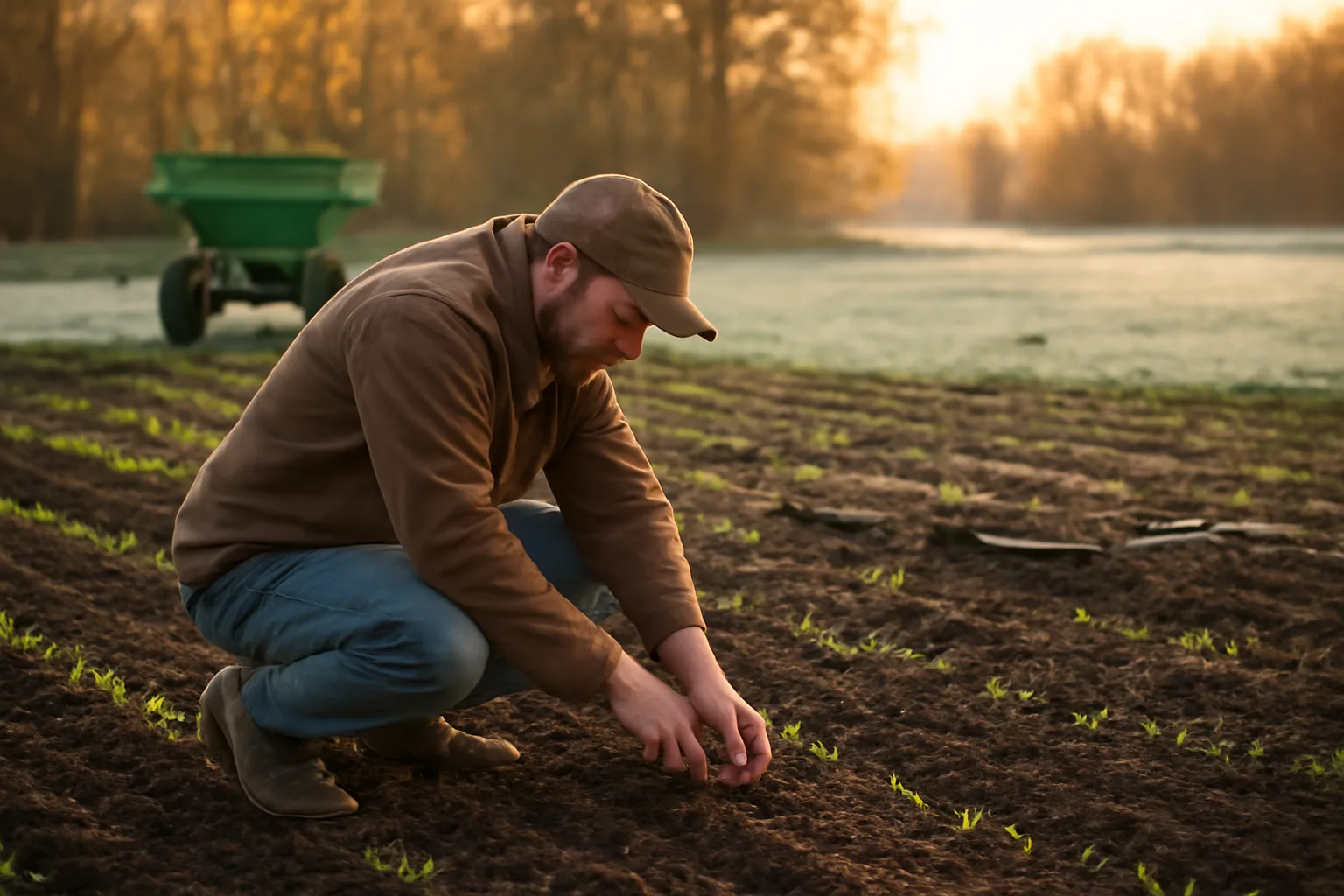
TL;DR
Most food plot species need 45 to 90 days before a killing frost to reach useful maturity. Brassicas and oats can go in as late as 60 to 75 days before first frost. Clover and cereal grains can be pushed even later in the South. Past that window, you're feeding deer next spring, not this fall.
How late can you actually plant a food plot and expect results
The honest answer is it depends on species and your first frost date, not the calendar month. Brassicas like turnips and radishes need roughly 60 to 90 days to bulb out and reach peak attraction, so most of the Midwest and Upper South has a planting window that closes around late August to early September for a good fall crop [1]. Cereal grains (oats, wheat, rye) are more forgiving. Oats germinate fast, in 5 to 10 days under good soil moisture, and can put on grazeable growth in 3 to 4 weeks, which means you can plant them into September in most zones and still get deer on them by October [2]. Clover is a different animal. If you're planting a perennial clover plot in late summer, you're not racing a frost, you're racing winter dormancy. Extension guidance generally recommends late summer clover seedings happen 6 to 8 weeks before the ground freezes so seedlings can establish a root system before winter [3]. Miss that window and the seed either won't germinate until spring, or germinates too late to survive. So "how late" really breaks into three separate questions: how late for a fall annual you want deer eating this season, how late for a perennial you want established before winter, and how late for something you're basically planting as an insurance policy for next spring. Answer those three separately and the confusion mostly disappears. If you want a plan built around your actual frost dates and soil test instead of a generic calendar, that's the whole point of a food plot whitetail plan built for your zone.
When to plant food plots for deer, by region
| Deep South (Zone 8-9) | March to April | September to November | |
|---|---|---|---|
| Mid-South / Transition (Zone 7) | April | late August to October | |
| Midwest / Upper South (Zone 6) | late April to May | mid-August to mid-September | |
| Northern tier (Zone 4-5) | May | early to mid-August | The fall window is the one that matters most for this article, since that's where "how late is too late" questions come from. In the northern tier, an early August planting date isn't a suggestion, it's close to a hard deadline for brassicas because you need 60-plus frost-free days and first frost can arrive by late September. In the Deep South, you have much more room to work. Cool season plots often go in through November because first frost might not show up until December, and warm humid soil keeps germination fast even in fall [5]. The practical move: find your average first frost date from your state extension or the NOAA climate normals for your county, then count backward using the days-to-maturity number printed on your seed bag. That's a real planning method, not a guess. |
Zone matters more than any single calendar date. USDA plant hardiness zones aren't a perfect proxy for planting windows, but they're a reasonable shorthand once you cross-reference them with your local frost data from NOAA or your state climate office [4]. Here's a rough framework, not gospel, because local microclimates and a wet or dry year will shift these by two or three weeks either direction: | Region | Spring plot window | Fall plot window |
When to plant oats for deer
Oats are one of the most forgiving food plot cereal grains for late planting because they germinate fast and green up quick, even in cooler soil. University of Wisconsin-Extension forage variety trial guidance describes oats as a fast-establishing, high-tonnage forage option well suited to short-window plantings compared to slower cereal grains [2]. For a fall attraction plot, most guides recommend planting oats 45 to 60 days before your average first killing frost. That puts the window at roughly mid-August in the northern Midwest, early September in the transition zone, and late September into October in the Deep South. Oats won't survive a hard winter in most of the whitetail range (they're not as winter-hardy as winter wheat or cereal rye), so in the North they function as a fall annual, not a perennial forage. Deer will hit tender oat shoots hard in September and October, then activity often tapers once a frost sweetens other options like brassicas or once snow covers the plot. If you're mixing oats with brassicas, which is a common and reasonable combo, plant them together on the same date since both benefit from the same late-summer window and the oats give you fast early cover while the turnips or radishes bulk up underground.
When to plant turnips for deer
Turnips need real lead time. Most land-grant extension publications put brassica maturity at 80 to 90 days for full bulb development, though deer will eat the tops (foliage) well before that. That means for a plot you want deer using by mid-October, you need seed in the ground by late July to mid-August in most of the whitetail's range. The forage quality story with turnips is interesting: deer often ignore the bulbs until after several hard frosts convert starches to sugars, then activity on the bulbs spikes in December and January, well after the leaves are gone. That's a real cold-tolerance advantage turnips have over almost anything else you can plant. A turnip plot that looks "late" and thin in October can still be the best food source on your property in January. Planting turnips too late doesn't just mean smaller bulbs, it can mean no bulbs at all, just a thin stand of greens that gets hammered in the first hard freeze and disappears. If you're inside 60 days of your average first frost, you're better off switching your plan to a fast cereal grain or clover instead of forcing turnips into a window that's too tight.
Do deer eat sorghum
Yes, deer eat sorghum, particularly the seed heads once they mature and dry down, and they'll browse the young leaves earlier in the season. Grain sorghum is more commonly planted as a food plot component for turkey and quail, and as a standing grain crop that also draws deer, especially in the Southeast and parts of the Midwest where it handles heat and drought better than corn. Sorghum is a warm-season crop, so the planting window question here runs opposite to the fall species above: you plant it in late spring after soil temps are consistently above 60°F, not in late summer. If you're asking "how late can I plant sorghum," the real limiter is summer heat units, not frost. Most grain sorghum varieties need roughly 90 to 120 days from planting to grain maturity depending on the hybrid, so a late June planting in the Upper Midwest is cutting it close for full grain fill before fall frost. It's not a top-tier whitetail attractant compared to soybeans or a brassica blend, but as a standing winter grain source or a component in a wildlife blend, it has a real role, especially where drought stress kills other options.
Do deer eat clover, and do deer actually like it
Yes, deer eat clover readily, and it's one of the most consistently preferred food plot forages across whitetail range studies. White clover and red clover both show up repeatedly in forage preference research as high-use species, and clover's crude protein content, often 25 to 30 percent in vegetative growth stages, makes it valuable for antler growth and lactation in spring and summer. Clover's advantage over annuals is duration. A well-maintained perennial clover stand can produce grazeable forage for 3 to 5 years before you need to reseed, compared to replanting brassicas or cereal grains every single season [3]. That's a real cost and labor savings over time, even though clover needs more patience to establish and more mowing to keep weeds down. The tradeoff: clover is pickier about planting timing than oats or brassicas. Spring seedings need to go in early enough that seedlings establish before summer heat and weed pressure hit hard, and late summer seedings need that 6 to 8 week window before frost mentioned earlier [3]. Clover planted too late in fall, after that establishment window closes, often just sits as ungerminated seed until spring, which isn't necessarily wasted, but it's not the fall food source you were hoping for either.
What is a food plot, exactly
A food plot is a planted area, usually somewhere between a quarter acre and several acres, established specifically to provide supplemental forage for deer and other wildlife, either to hold animals on a property, improve nutrition, or create a hunting location with predictable food-source activity. Food plots range from simple clover or brassica plantings along field edges to full rotational systems with soil testing, lime and fertilizer programs, and multiple plot types (a spring/summer plot for growing season nutrition, and a fall plot for hunting season attraction). State wildlife agencies generally treat food plots as a legal land management practice distinct from baiting, though the rules on what counts as a food plot versus a bait pile vary significantly by state, and you should check your state wildlife agency's regulations before hunting over anything that looks like a concentrated feed source [6]. A food plot isn't a guarantee of deer activity. Soil quality, plot placement relative to bedding and travel corridors, hunting pressure, and surrounding ag all matter more than the seed blend you choose. Good seed in bad dirt or a bad location still underperforms.
What are deer's favorite foods, and does that change what you plant
Deer are opportunistic browsers, and their preferences shift by season, region, and what's available. A few categories consistently rank high across regional deer research: acorns (when available, deer often prefer them over almost anything else in fall), soybeans, clover, and browse from native forbs and woody plants. Acorns are worth calling out specifically because they can wreck a food plot hunting plan. In a heavy mast year, deer will often abandon food plots entirely for a few weeks in favor of white oak acorns, which are lower in tannins and more palatable than red oak acorns. If your plot goes quiet in October during a big acorn drop, that's normal, not a sign you did something wrong. Beyond mast, soybeans (both forage and grain stage) and clover consistently rank as top preference in forage studies, largely because of protein content and digestibility. Brassicas rank lower on preference scales in early fall but climb sharply after frost sweetens them, which is part of why a lot of food plotters plant brassicas specifically for the late season instead of early bow season.
Do deer like honey, and does that matter for food plots
There's no real research or extension guidance suggesting deer seek out honey as a food source, and it's not a food plot planting question in any practical sense. Deer are herbivores adapted to browse, forbs, mast, and agricultural crops; there's no established scientific literature on deer foraging behavior involving honey, and it doesn't factor into any food plot planning decision. Where this question probably comes from is confusion with honey-based deer attractant products (sprays, licks) sold for scent or mineral supplementation, which is a completely separate product category from food plot seed and forage management. If you're planning what to plant, this isn't a factor worth spending time on.
What happens if you plant a food plot too late
A few things can happen, and none of them are great, but some are worse than others. If you plant a fall annual (oats, brassicas) too close to your first frost, you often get thin, stunted growth that doesn't reach useful tonnage before cold shuts down growth entirely. You'll see some germination, maybe some green color, but not the bulk forage deer need to make the plot worth their travel time. If you plant a perennial (clover, alfalfa) too late in fall, past that 6 to 8 week pre-freeze window, germination can stall until spring. That's not always a total loss, since spring green-up can still work, but you've lost an entire fall/winter season of use and you're gambling on winterkill of the tender new seedlings if a hard freeze hits before any real root development. The worst outcome is spending real money on seed, lime, and fertilizer for a plot that never produces enough forage to matter, which is a bigger problem than most people think. A basic soil test through a university soil testing lab typically costs somewhere in the 10to 20 range for a standard fertility test and takes one to two weeks to turn around, and skipping it to rush a late planting often costs you more in wasted inputs than the test would have cost you in delay [7]. If your soil pH is off, nothing you plant, on any date, will perform well; lime takes months to fully react in the soil, so a late-season lime application won't fix this year's plot regardless of planting date.
Can you still plant something useful after the fall window closes
Yes, and this is where a lot of food plotters give up too early. If you've missed the window for brassicas or a full clover establishment, cereal rye is worth a serious look. Cereal rye (Secale cereale, not annual ryegrass) tolerates cool soil temperatures at germination and can be planted later than almost anything else on this list, sometimes into October or even November in mid-latitude zones, and it'll still put on some fall growth plus a strong flush the following spring. Winter wheat is a similar late option, generally plantable a few weeks later than oats since it's more cold-tolerant and is bred to survive winter dormancy and resume growth in spring. If you've genuinely missed every fall window, the honest move is to treat this season as a soil-building and prep season instead. Get a soil test done over winter, apply lime if needed (fall and winter application gives it months to react before spring planting), and plan your spring plot now instead of forcing a fall planting that won't produce. That's exactly the kind of planning problem a Custom Food Plot Plan is built to solve. It's a $99 one-time plan that maps out species and timing for your zone and soil test results, instead of you guessing at a planting date from a seed bag calendar that was written for a different state.
How do you figure out your personal planting cutoff date
Start with your average first frost date. NOAA's climate data centers and most state extension offices publish county-level frost date tables, and this is a real, specific number, not a guess, usually given as a date range with a stated probability (for example, a 50 percent chance of frost by a certain date, and a 10 percent chance by an earlier date) [4]. Then take the days-to-maturity number off your seed bag or the extension variety guide for that species. Subtract that number of days from your frost date, and you've got your latest reasonable planting date, with maybe a one to two week buffer for a bad-luck cold snap. For example: if your average first frost is October 15 and you're planting a brassica blend that needs 80 days to reach full bulb size, count back to July 27. Planting in mid-August instead of late July won't ruin the plot, deer will still eat the greens, but you likely won't get full bulb development, which matters if you're counting on that late-season food source in January. This is genuinely more reliable than any generic "plant food plots in August" advice you'll find online, because your county's frost date and your seed's maturity window are the only two numbers that actually matter.
Frequently asked questions
How late can you plant food plots and still get deer to use them this fall?
For brassicas, you need roughly 60 to 90 days before your first frost, so mid-August is often the last reasonable date in Zone 5-6 areas. Oats are more forgiving and can go in through early September in many zones. Clover needs 6 to 8 weeks before hard freeze to establish. Past those windows, you're planting for spring, not this season.
Do deer eat sorghum?
Yes. Deer browse young sorghum leaves and eat the grain heads once they mature, though sorghum is more commonly used as a turkey and quail plot component. It's a warm-season crop planted in late spring, needing roughly 90 to 120 days to reach grain maturity, so it's not typically a late-summer or fall planting choice.
Do deer eat clover, and do deer actually like it?
Yes, clover is one of the most consistently preferred food plot forages in whitetail research, with crude protein often reaching 25 to 30 percent during active growth. Deer use it heavily spring through fall. Its main limitation is planting timing: fall seedings need 6 to 8 weeks before hard freeze to establish properly.
When should you plant food plots for deer?
It depends on species and your region's frost dates. Spring plots (soybeans, corn, warm-season blends) go in April to May after soil warms past roughly 60°F. Fall plots (brassicas, oats, cereal grains) go in mid-August to October depending on zone, working backward from your average first frost date and the seed's days-to-maturity.
When should you plant oats for deer?
Oats germinate fast, often in 5 to 7 days, and only need 45 to 60 days before first frost to produce useful fall forage. That puts the planting window at roughly mid-August in the northern Midwest and late September into October in the Deep South. Oats aren't reliably winter-hardy, so treat them as a fall annual.
When should you plant turnips for deer?
Turnips need 80 to 90 days for full bulb development, so most of the whitetail range needs seed in the ground by late July to mid-August for an October-ready plot. Deer often ignore turnip bulbs until several hard frosts sweeten them, so a plot planted on time can still peak in activity in December and January.
What is a food plot?
A food plot is a planted area, often a quarter acre to several acres, established to give deer and other wildlife supplemental forage, either to improve nutrition, hold animals on a property, or create a predictable hunting location. Plots range from single-species clover fields to multi-plot rotational systems with soil testing and fertility programs.
What are deer's favorite foods?
Preferences shift by season and region, but acorns (especially white oak), soybeans, and clover consistently rank highest in forage preference. In heavy acorn years, deer often leave food plots alone for weeks in favor of mast. Brassicas rank lower until frost sweetens them, then use often climbs sharply in late season.
Do deer like honey?
There's no research supporting honey as a meaningful deer food or attractant; deer are browsers adapted to forbs, mast, and crops, not sweeteners like honey. This question likely comes from confusion with honey-based commercial deer attractant sprays or mineral licks, which are unrelated to food plot seed selection or planting timing.
What happens if you plant a food plot too late in the season?
Fall annuals planted too close to frost often produce thin, stunted growth that never reaches useful tonnage. Perennials planted past their fall establishment window can stall germination until spring, losing an entire season of use. In both cases you risk wasting money on seed and fertilizer with little forage to show for it.
Can you plant a food plot in September or October and still have it work?
Yes, depending on species and zone. Oats, winter wheat, and cereal rye all tolerate later planting than brassicas, with cereal rye handling cool soil at germination better than most cover crops. In southern zones, September and even October plantings of cool-season blends are standard practice, not a late-season compromise.
How do you find your exact food plot planting deadline?
Look up your county's average first frost date from NOAA climate data or your state extension office, then subtract the days-to-maturity listed on your seed bag. That gives you a real, location-specific deadline, more reliable than generic national planting calendars that aren't built for your specific climate zone.
Is it worth planting a food plot if you've missed the ideal window?
Often yes, if you switch species. Cereal rye or winter wheat can go in weeks later than brassicas and still produce fall growth plus a strong spring flush. If you've missed every fall window, use the season to soil test and apply lime instead, so your spring plot starts from corrected soil chemistry.
Sources
- USDA Natural Resources Conservation Service, Plant Fact Sheet: Forage Turnip: Brassica maturity timing and post-frost palatability increase in bulbs
- University of Wisconsin-Extension, Cool-Season Forage Variety Trials: Oat germination speed and use as a fast-establishing forage
- USDA Natural Resources Conservation Service, Plant Guide: White Clover: Fall clover seeding window before ground freeze and stand longevity
- NOAA National Centers for Environmental Information, U.S. Climate Normals: County-level average first frost date data
- USDA Natural Resources Conservation Service, Plant Guide: Grain Sorghum: Sorghum days to maturity and warm-season planting requirements
- USDA Natural Resources Conservation Service, Plant Guide: Red Clover: Clover crude protein content and forage value
- Pennsylvania Game Commission, Baiting and Feeding Regulations: State-level distinctions between food plots and baiting rules
- USDA Forest Service, Fire Effects Information System: Quercus alba (White Oak): White oak acorn palatability and lower tannin content relative to red oak
- University of Missouri Extension, Soil Testing for Lawns and Gardens (MU Guide G9110): Typical soil test cost and turnaround time
- Oklahoma State University Extension, Soil Acidity and Liming (PSS-2226): Lime reaction time needed to correct soil pH
- USDA Natural Resources Conservation Service, Plant Guide: Cereal Rye: Cereal rye's cold-tolerant germination and late planting flexibility