Last updated 2026-07-26
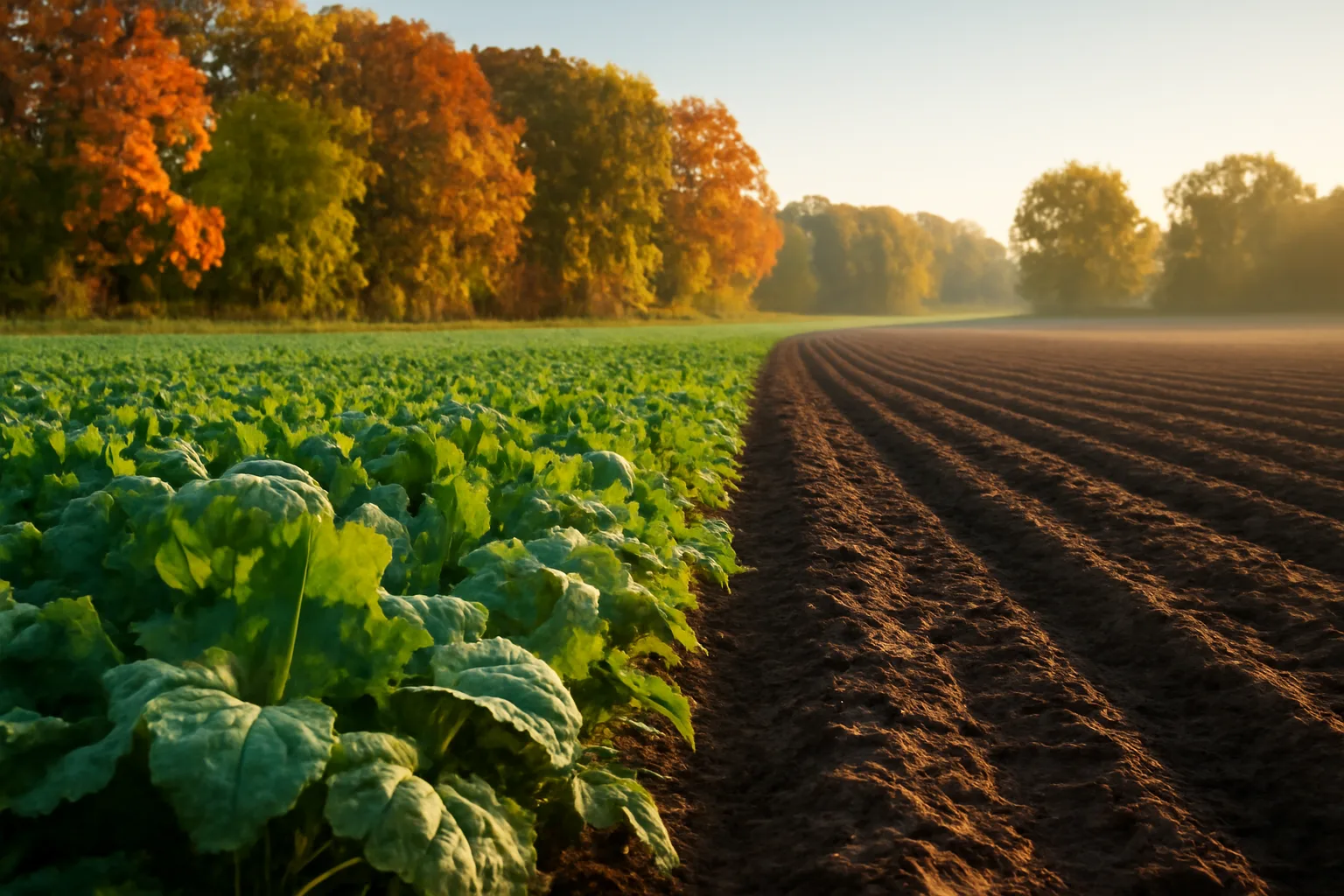
TL;DR
In Michigan, plant fall brassicas and clover from mid-July through mid-August, oats from late July into early September, and spring/summer plots (clover, chicory, beans) after your last frost date, roughly May 10 to June 1 depending on region. Northern Michigan runs 2-3 weeks earlier than the southern tier.
When should you plant deer food plots in Michigan?
Timing in Michigan splits into two windows: a spring/summer planting for perennials and warm-season annuals, and a mid-to-late summer planting for fall annuals like brassicas, oats, and cereal grains. Which window you use depends entirely on what you're planting and where in the state your ground sits. Michigan spans three USDA hardiness zone bands, roughly zone 5a in the north (Upper Peninsula, far northern Lower Peninsula) up to zone 6b in the southeast corner near Detroit and the Ohio border. That's a real spread. A grower near Marquette is working with a last frost date that can run into early June, while someone farming near Ann Arbor or Monroe is usually clear by early-to-mid May [1]. For fall food plots, the rule most Michigan land managers use is to plant so the crop matures right as hunting season opens and deer pressure on ag fields starts pushing them toward cover. That means backing up from early-to-mid October (when gun season typically approaches) by the number of days a given seed needs to mature. Brassicas need 60-90 days, so mid-July to mid-August planting is standard across most of the state. Oats and other cereal grains need less time, 45-60 days, so late July into early September works, with northern growers front-loading toward the July end. Spring plantings (clover, chicory, alfalfa, soybeans, warm-season annuals) go in after soil has warmed and frost risk has passed, generally May 10 through June 1 depending on your zone. Perennial clover especially benefits from an early start so it has a full season to establish a root system before winter.
What is a food plot?
A food plot is a planted patch of forage, grain, or browse, usually somewhere between a quarter acre and a few acres, established specifically to feed and hold deer or other wildlife on a property. It's not a wildlife feeder and it's not incidental crop leftover. It's a deliberate planting, usually of a species deer prefer over what's naturally available nearby. Most hunters run two broad types: a hunting plot (small, tucked near stand access, meant to draw deer into bow range) and a destination or feed plot (larger, meant to hold deer on the property and offset stress from hunting pressure or a hard winter). Michigan DNR describes food plots as a tool that can supplement, not replace, natural habitat management on private land, and points out that plots work best paired with cover and browse improvement rather than as a standalone fix [2]. If you're new to this and want a rundown of plot types and how they're used differently, food plot whitetail covers the basic categories in more depth.
When to plant oats for deer in Michigan?
Plant oats for fall deer plots in Michigan between late July and early September, depending on your region. Oats germinate fast (5-10 days in warm soil) and reach grazeable height in about 3-4 weeks, but they need 45-60 days total to hit full maturity and cold tolerance. In southern Michigan, you can push oats as late as early September and still get a solid fall plot, since the first hard frost usually doesn't arrive until mid-to-late October. In the north, aim for late July through mid-August; an early frost can nip young oats before they've built enough sugar reserve to handle cold snaps. Oats are a fall annual play here, not a spring one. Spring-planted oats in Michigan tend to bolt and go to seed fast in the longer summer days, and deer lose interest once the plant matures past the leafy stage. Nearly every Midwest extension guide on oats for forage treats them as a cool-season crop meant for fall grazing or fall/winter wildlife plots, not a summer staple [3].
When to plant turnips for deer in Michigan?
Plant turnips in Michigan between mid-July and mid-August for a fall/winter food plot. Turnips are a brassica, and like other brassicas (rape, radish, kale) they need a real frost or two to convert starches to sugars, which is what makes the bulbs and greens palatable to deer. Plant too early and the plant is past its prime by the time deer start hammering it in November and December. Plant too late and it never bulbs up before the ground freezes. A safe target: 90 days before your average first hard frost. For most of the Lower Peninsula that lands you in the last two weeks of July. Far northern counties and the U.P. should aim for the earlier side of that window, even the first week of July in some years, since frost risk shows up sooner. One practical note nobody tells beginners: deer often ignore turnip plots completely until after the first hard frost, sometimes not touching them until December. Don't panic if your plot looks untouched in October. That's normal, not a failure.
When to plant food plots for deer generally (spring vs. fall)?
| Fall annual (brassica) | Turnips, radish, rape | Mid-July to mid-August | |
|---|---|---|---|
| Fall annual (cereal grain) | Oats, winter wheat, rye | Late July to early September | |
| Perennial clover | White clover, red clover | May 10 to June 15, or Aug 1-20 | |
| Warm-season annual | Soybeans, cowpeas, sorghum | After last frost, mid-May to early June | |
| Spring green-up | Chicory, alfalfa | May, after soil hits 50-55°F | Perennial clover is actually flexible both ways: a spring planting gives it a full season to establish, but a late-summer planting (early August) also works well in Michigan because weed pressure drops and fall rains help germination. Many Michigan food plotters prefer the August clover window specifically to dodge the brutal early-summer weed competition that spring plots fight all June. Warm-season annuals like soybeans and sorghum need soil temps consistently above 55-60°F to germinate reliably, which in Michigan usually means waiting until mid-May in the south and early June up north. |
The honest answer is it depends on the species, but here's the simplified breakdown for Michigan: | Plot type | Species examples | Michigan planting window |
Do deer eat clover, and do deer like clover?
Yes, deer eat clover readily, and it's one of the most consistently preferred food plot forages across the whitetail's range. White clover and red clover both show up at the top of deer preference studies and extension forage guides for a reason: they're high in protein (often 25-30% crude protein in vegetative growth stage), palatable, and they regrow quickly after grazing, which matters because deer hit a good clover plot hard and often. Clover's biggest practical advantage in Michigan is that it's a perennial. Plant it right (proper pH, good seed-to-soil contact, inoculant if it's your first legume in that soil) and a clover stand can produce for 3-5 years before you need to reseed, versus replanting brassicas or oats every single year. That makes clover the backbone plot for a lot of Michigan land managers, with annual plots rotated in around it. The tradeoff: clover needs decent soil pH (mid-to-upper 6.0s ideally) and full-to-partial sun, and it struggles on heavy clay that stays wet. If your soil test comes back low on pH, lime it before you plant; clover performance drops fast in acidic soil. Michigan State University Extension recommends soil testing every 2-3 years for food plots and adjusting lime and fertilizer to the specific crop you're planting, since needs vary a lot between clover, brassicas, and grains [4]. If you want species-specific seed guidance, deer food plot seed breaks down blends by soil and sun conditions.
Do deer eat sorghum?
Yes, deer eat grain sorghum, both the standing grain heads and the young green forage, though it's usually a secondary or transition-season food rather than a primary attractant like clover or brassicas. Sorghum (including the sorghum-sudangrass hybrids sold for food plots) is a warm-season annual, planted after frost risk passes, typically late May through June in Michigan. Sorghum's real value on Michigan ground is as a screening and structure crop as much as a food source. It grows tall (5-8 feet), which makes it useful for hiding stand access trails or breaking up a big field into smaller huntable pockets. Deer will browse the leaves through summer and hit the grain heads in fall once they dry down, and it holds up well against deer and drought pressure compared to some other warm-season options. If your main goal is fall hunting attraction, sorghum shouldn't be your only plot. Pair it with a fall brassica or clover plot nearby so you've got both cover/structure and a strong food draw going into archery season.
What is deer's favorite food, really?
There's no single universal answer, because deer preference shifts by season, region, and what's available naturally. But across food plot research and forage preference studies, a few things consistently rank at the top: acorns (especially white oak family acorns, which are lower in tannins and more palatable than red oak acorns), clover, soybeans, and, in fall, brassicas once frost sweetens them. Acorns aren't a food plot crop, obviously, but they matter for context: in a good mast year, deer will often bypass a food plot entirely to hammer a white oak flat. That's not a plot failure, that's just deer being deer. A lot of Michigan hunters get discouraged when their plot goes quiet in October and it's usually mast, not a bad planting. Within food plot crops specifically, soybeans and clover tend to top preference trials during the growing season (both run 20-30%+ crude protein in good growing conditions), while brassicas and cereal grains take over as fall/winter preferences once frost hits and natural browse thins out. Corn is a strong late-season draw too, mostly for its carbohydrate/energy value once temperatures drop and deer shift toward fat reserves for winter.
Do deer like honey?
There's no real evidence deer are drawn to honey as a food source, and it's not used in any legitimate food plot or attractant literature. Deer are herbivores with digestive systems built around browse, forbs, mast, and agricultural crops, not concentrated sugars like honey. Some commercial deer attractant products contain sugar-based additives (molasses is common in mineral licks and some liquid attractants), but that's a different thing than honey specifically, and even those products are attractants, not food plot substitutes. Worth flagging here: Michigan, like most states, regulates baiting and feeding of deer separately from food plots, and the rules differ meaningfully. A planted, standing food plot is generally treated as normal agricultural activity, not baiting. Piling up feed, minerals, or attractants (including sugar-based products) is a different category and is restricted or banned in parts of Michigan due to CWD concerns. Michigan DNR has banned baiting and feeding of deer in the Lower Peninsula, with narrow exceptions, since bovine TB and CWD management became a priority; check the current DNR baiting and feeding regulations for your specific county before using any bait or feed product, since rules have changed multiple times and vary by zone .
How does Michigan's frost date map change your planting window?
Michigan's average first fall frost date ranges from around September 15-20 in the far north and interior high ground, to mid-to-late October in the southern tier and areas moderated by the Great Lakes . That's more than a month of spread across one state, which is why a single "plant food plots on this date" answer doesn't work here. Practically, that means: - U.P. and northern Lower Peninsula: fall brassicas and oats by mid-July to early August; spring plots after May 25-June 1.
- Central Lower Peninsula: fall brassicas and oats late July through mid-August; spring plots after May 15-20.
- Southern Lower Peninsula (Great Lakes-moderated counties especially): fall brassicas and oats into early September; spring plots after May 5-10. Counties right along Lake Michigan and Lake Huron often get a longer frost-free season than their latitude suggests, because the lake moderates temperature swings. If your property sits within a few miles of a Great Lakes shoreline, you likely have more planting flexibility than a county map alone would suggest. When in doubt, use NOAA's climate normals data for your nearest weather station to pull the actual average frost dates rather than guessing off a statewide map [1].
What soil prep matters before you commit to a planting date?
A planting date is only useful if the ground is actually ready. Soil pH is the single biggest lever most Michigan food plotters ignore. Brassicas and clover both want pH in the 6.0-7.0 range, and a lot of Michigan soils, especially sandy ground up north, run more acidic than that without lime correction. Get a soil test done at least 60-90 days before your target planting date if you suspect you'll need lime, since lime takes time to move pH (it's not instant, especially on clay). Michigan State University Extension's soil testing program is a straightforward, affordable option, and their recommendations are calibrated specifically to Michigan soils and cropping systems [4]. Your soil test lab is the real authority on exact lime and fertilizer rates for your specific field; a general planting calendar can't account for your dirt. Beyond pH, check drainage and sun exposure before you lock in a spot. A shaded plot or one that holds standing water after rain will underperform no matter how perfect your planting date is. If you want a full rundown on building fertility from scratch, the soil-and-fertility hub on this site covers testing intervals and amendment timing in more detail.
How does equipment change your Michigan planting timeline?
What you're planting with changes how tight your window needs to be. A no-till drill lets you plant into standing residue or firmer ground and gives you more flexibility on timing, since you're not dependent on a clean, worked seedbed. A broadcast-and-cultipack setup (disc, drag, spreader, cultipacker) needs drier, workable soil, which in a wet Michigan spring or a rainy August can push your actual planting date later than your target window. If you're broadcasting brassica or clover seed by hand or ATV spreader, timing around rain matters more than it does with a drill. Small-seeded brassicas and clover need to land in good seed-to-soil contact and get moisture within a few days, or germination rates drop hard. Watch a 7-10 day forecast and try to plant right ahead of rain rather than right after a downpour that leaves ground too wet to work. For a straightforward comparison of no-till versus conventional tillage timing and cost, that's covered in more depth on the equipment-and-methods hub. If you're still deciding what to plant before locking in gear and dates, deer food plots and food plot seed both walk through species selection by region.
What's the simplest way to build a planting calendar for your specific property?
Start with your county's average first frost date (NOAA climate normals or your local MSU Extension office both have this), then work backward from there using the maturity window for whatever you're planting: 90 days for brassicas, 45-60 for oats, and after-last-frost for warm-season stuff like beans and sorghum. A lot of Michigan hunters manage a few different plot types across a property, a perennial clover field, a fall brassica plot near a stand, maybe a screening strip of sorghum, and each of those has a different ideal planting date. Trying to hit all of them off memory or a generic national calendar is where most planting mistakes happen; national calendars are built for the Midwest corn belt average, not for the specific frost pocket your north forty sits in. If you'd rather not build that calendar yourself field by field, PlotSeason's $99 one-time Custom Food Plot Plan builds a planting schedule and seed recommendation specific to your property's location, soil test results, and equipment, through the plot-plan-builder. It's a planning tool, not a guarantee of deer activity or a harvest; your soil test lab remains the final word on lime and fertilizer rates for your ground.
Frequently asked questions
Do deer eat sorghum?
Yes. Deer browse young sorghum leaves through summer and eat the grain heads once they dry in fall. It's a solid warm-season crop for screening and late-season energy, but it works best paired with a fall brassica or clover plot rather than standing alone as your primary attractant.
Do deer eat clover?
Yes, and clover is one of the most reliably preferred food plot forages across the whitetail's range. White and red clover both run 25-30% crude protein in vegetative growth and regrow fast after grazing, which is why it's the backbone perennial plot for most Michigan land managers.
When to plant deer food plots in Michigan?
Fall brassicas and clover: mid-July to mid-August. Oats and cereal grains: late July to early September. Spring/summer plots (soybeans, sorghum, spring clover): after last frost, roughly May 10 to June 1 depending on region. Northern Michigan runs 2-3 weeks earlier than the southern tier.
Do deer like clover?
Yes, strongly. Clover ranks near the top of forage preference across most deer research and extension guides, largely because of its high protein content and fast regrowth after grazing. It's also a perennial, so a well-established Michigan clover plot can produce for 3-5 years before needing reseeding.
When to plant oats for deer in Michigan?
Late July through early September, depending on region. Oats mature in 45-60 days and are a fall/cool-season crop in Michigan, not a spring one; spring-planted oats bolt too fast in longer summer days and lose leafy palatability before deer season.
When to plant food plots for deer?
It depends on the crop. Fall annuals (brassicas, oats) go in mid-to-late summer, timed 45-90 days before your area's first frost. Spring/summer crops (clover, soybeans, sorghum) go in after your last frost date, once soil temps hold above 50-60°F.
When to plant turnips for deer in Michigan?
Mid-July to mid-August for most of the state, earlier (early-to-mid July) in the U.P. and far north. Turnips need roughly 90 days to bulb and need a hard frost to sweeten, so plant too early and they're past prime by hunting season; too late and they never bulb.
What is a food plot?
A food plot is a deliberately planted patch of forage, grain, or browse, typically a quarter acre to a few acres, established to feed and hold deer on a property. Michigan DNR treats it as a supplemental habitat tool, not a replacement for natural cover and browse management.
What are deer's favorite foods?
It varies by season, but acorns (especially white oak), clover, and soybeans consistently top preference studies during the growing season, with brassicas and cereal grains taking over once frost hits. In a heavy mast year, deer often bypass food plots entirely for acorns.
Do deer like honey?
There's no real evidence deer seek out honey as food; it's not part of legitimate food plot or attractant research. Some commercial attractants use sugar or molasses additives, but that's separate from honey specifically, and using bait/attractant products may run into state baiting and feeding restrictions.
Is Michigan's baiting and feeding law relevant to food plots?
A standing planted food plot is generally treated as normal agriculture, not baiting. But Michigan DNR restricts baiting and feeding of deer, especially in the Lower Peninsula, due to bovine TB and CWD concerns. Check current DNR rules for your county before using any bait, mineral, or feed product.
Can you plant a food plot in spring and fall in the same year?
Yes, and many Michigan properties run both. A spring-planted perennial clover field can stay in the ground for years while a fall annual (brassica or oats) rotates in a separate plot each summer. Just budget separate soil prep and planting windows for each.
How much does a soil test cost before planting a Michigan food plot?
Michigan State University Extension's standard soil test typically runs in the range of $25 or under per sample through their soil testing program, a small cost compared to wasting seed and fertilizer on ground with the wrong pH. Get results back before you finalize lime and fertilizer purchases.
What if my food plot isn't getting hit by deer after planting?
Check timing first (brassicas often go untouched until after a hard frost sweetens them), then check for a heavy natural mast year pulling deer to acorns instead. A quiet plot in October isn't necessarily a failure; give brassicas and clover time before assuming something's wrong.
Sources
- NOAA National Centers for Environmental Information, Climate Normals: Average first and last frost dates vary by county and can be pulled from the nearest weather station's climate normals
- Michigan Department of Natural Resources, Habitat Management for Deer: Food plots are a supplemental habitat tool best paired with cover and browse management, not a standalone fix
- Michigan State University Extension, Soybean Planting Date Considerations: Warm-season crops like soybeans need soil temperatures consistently above roughly 55-60F to germinate reliably
- NOAA National Centers for Environmental Information, Michigan Climate Data: Michigan's average first fall frost ranges from mid-September in the north to mid/late October in the south
- Michigan State University Extension: MSU Extension guidance on establishing food plots for wildlife in Michigan
- Michigan State University Extension: Timing and methods for planting brassicas such as turnips for deer forage
- Michigan State University Extension: Clover establishment and management guidance for deer food plots
- Michigan State University Extension: Soil testing recommendations as preparation before planting food plots