Last updated 2026-07-26
TL;DR
Plant honey hole plots so growth peaks right as hunting season opens: brassicas and cereal grains go in 60-90 days before your first hard frost (mid-July to early September in most whitetail country), while spring clover and warm-season annuals go in April through June once soil hits 55-60°F.
What is a food plot, exactly?
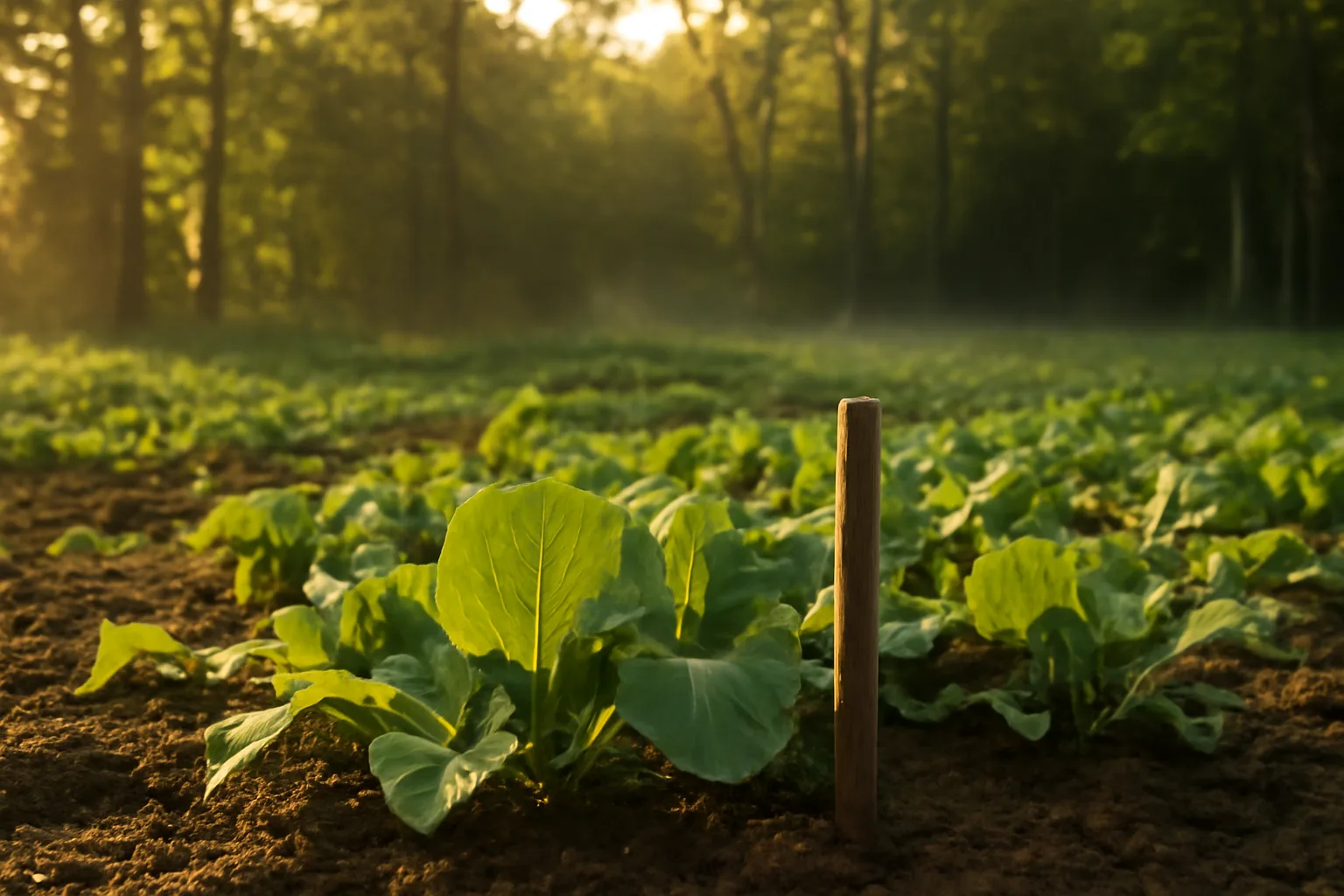
A food plot is a planted patch of forage on hunting ground, sized anywhere from a quarter acre to several acres, meant to concentrate deer activity and give them a reliable food source through part or all of the year. Some plots are "destination" plots (big, food-heavy, meant to hold deer through winter). Others are "honey hole" plots: small, tucked-in kill plots, often a half acre or less, positioned tight to bedding or a pinch point where you can hunt them without blowing out the whole property. The honey hole plot lives or dies on timing. A destination plot planted two weeks late still feeds deer all winter. A honey hole plot planted two weeks late might peak in November instead of October, and that's the exact month you needed it drawing deer during shooting light. The USDA Natural Resources Conservation Service treats food plots as a wildlife habitat practice under its conservation planning guidance, and most state wildlife agencies publish their own planting calendars because soil temperature and frost timing vary so much by latitude and elevation [1].
When should you plant food plots for deer?
| Northern (MN, WI, MI, upstate NY) | Mid-May to mid-June | Late July to mid-August | |
|---|---|---|---|
| Mid-latitude (OH, PA, MO, KS, VA) | Late April to late May | Early August to early September | |
| Southern (AL, GA, TX, LA) | Mid-March to late April | Late August to late September | These are starting points, not gospel. Local extension offices and your own soil thermometer beat any national chart. |
Split it into two seasons. Spring plots (clover, chicory, soybeans, alfalfa) go in once soil temps hit roughly 55 to 60°F and your last frost date has passed, typically April through early June depending on latitude. Fall plots (brassicas, cereal grains, annual clover blends) go in 60 to 90 days ahead of your area's average first hard frost, so the plot matures right as hunting season opens. For most of the whitetail belt, that fall planting window runs mid-July through early September. Northern states (Minnesota, Wisconsin, Michigan, upstate New York) need to plant earlier, often by late July to mid-August, because their first frost can land in late September. Southern states (Alabama, Georgia, Texas) can wait until late August or September because frost doesn't show up until November or later [2]. A honey hole plot is where this timing matters most. You're not trying to feed deer all winter. You're trying to have a small, hot plot at peak palatability during the first few weeks of your season, whatever that looks like in your state. Check your first and last frost dates through the NOAA National Centers for Environmental Information climate normals tool before you lock a date [2]. Here's a rough planting window by region: | Region | Spring plot window | Fall plot window |
When to plant oats for deer?
Oats are a fall staple because they germinate fast, tolerate cool soil, and put out sweet, tender forage that deer hit hard in September and October. Plant oats 60 to 90 days before your first frost date, which usually lands in the same window as brassicas: mid-July to early September for most of the country. Oats grow fast, often showing green shoots within 5 to 10 days of planting given adequate moisture, which makes them a good pick for a honey hole plot you want producing quickly. They don't survive hard winter cold the way winter wheat or rye does, so in northern climates oats will typically die back after a few hard freezes. That's fine for a honey hole plot meant to peak in October and November anyway. Some hunters plant oats in early spring too, as a quick cover crop or nurse crop for clover, but the fall planting is what matters for hunting season draw. Oklahoma State University Extension notes that small grains like oats are among the most palatable and readily consumed forages for white-tailed deer when planted in late summer for fall grazing [3].
When to plant turnips for deer?
Turnips need roughly 80 to 90 days from planting to reach full maturity, and they get sweeter after a frost or two converts starches to sugars. That means you want turnips in the ground by mid-July to mid-August in most whitetail range, so the frost-sweetening happens right as your season opens. This timing lines up almost perfectly with the honey hole strategy. Deer often ignore turnip tops and bulbs in September, then switch hard to them in November and December once cold weather sweetens the plant and other food sources thin out. If your hunting season runs October through January, turnips planted in late July can be exactly what you want peaking in the back half of the season. The tradeoff: turnips planted too late (after early September in northern states) won't bulb up before winter shuts down growth. Penn State Extension recommends planting brassicas like turnips 60 to 90 days before the first killing frost for adequate root development.
Do deer eat clover, and do they actually like it?
Yes. Clover, especially white clover and red clover, is one of the most consistently preferred forages in food plot research and one of the easiest to keep alive for years. It's a perennial in most zones, meaning a well-maintained clover plot can produce for 3 to 5 years before you need to reseed. Deer like clover because it's high in protein (often 25 to 30 percent crude protein in vegetative growth stages) and stays palatable through spring, summer, and fall. Mississippi State University Extension lists clover among the top perennial forage choices for deer food plots because of its protein content and regrowth after grazing pressure [4]. For a honey hole plot, clover works best as a season-long draw rather than a one-shot fall attractant. Plant it in spring (April to early June depending on latitude) or make a late-summer frost-seeding, and it'll still be green and getting hit in October when you're actually hunting it. The catch: clover alone in a small, heavily-browsed honey hole plot can get grazed down to nothing by August if deer density is high, so pair it with a fall annual in part of the plot if you're worried about it holding up.
Do deer eat sorghum?
Yes, deer will eat grain sorghum, both the leaves and the seed heads, though it's not usually a first-choice forage the way clover or brassicas are. Sorghum is more commonly planted as a screening or cover crop in food plot systems, tall enough to break sightlines and create security cover next to a honey hole plot, with the grain heads providing a late-season food bonus once they dry down. If you're using sorghum, plant it as a warm-season crop, after soil temps are reliably above 60°F, typically late May through June in most of the whitetail belt. It needs a full frost-free growing season to mature grain heads, so it's not something you plant in July hoping for fall food. Think of sorghum as a structural piece of a honey hole setup (screening the plot from a road or neighboring property) more than the primary attractant.
Do deer like honey?
Not in the sense of raw honey as a food source. Deer aren't drawn to actual honey the way bears are, and there's no wildlife research suggesting honey itself is a meaningful deer attractant. The "honey hole" in food plot talk refers to a small, high-value kill plot, not anything to do with bees or honey as bait. That said, some commercial deer attractant products use sweet, sugary scents (including honey-based or molasses-based sprays) marketed to pull deer in short-term, similar to apple or acorn scent attractants. These are separate from food plots and fall under different state rules. Baiting and the use of scent attractants are regulated differently state by state, and some states classify sweet feed, syrup, or mineral licks as bait under their hunting regulations. Check your state wildlife agency's current baiting and feeding rules before using any attractant product near a stand or plot, because rules vary widely and enforcement differs by state.
What are deer's favorite foods, and how does that affect plot timing?
Deer preference shifts by season, which is exactly why honey hole timing matters so much. In spring and summer, deer favor high-protein browse: clover, soybeans, alfalfa, and natural forbs. In fall, preference shifts toward high-carbohydrate, high-sugar foods as deer build fat reserves for the rut and winter: acorns, brassicas, standing corn, and soybeans left to mature. A University of Tennessee Extension study on deer forage preference found that whitetails select forages based on a mix of protein content, digestibility, and availability relative to native browse, and that preference for planted forages often increases as native food sources decline in late fall [5]. That's the mechanism behind honey hole timing: you're planting something that peaks in palatability at the exact moment natural food is getting scarce and deer are actively searching for calories. Acorns are usually the top natural preference in years with a good mast crop, and no food plot reliably out-competes a heavy white oak drop. That's part of why honey hole plots work better in poor or moderate mast years, and why scouting mast before committing your best stand to a plot is smart. If the woods are covered in acorns, deer may walk right past a turnip plot they'd otherwise hammer.
How does soil test timing affect when you plant?
Pull your soil sample 60 to 90 days before your planned planting date, not the week before. Lime takes months to fully adjust soil pH, so if you're planting a fall honey hole plot in August, you want that soil test back and lime applied by May or June if possible. Most land-grant university extension labs (Penn State, Mississippi State, Purdue, and others) turn around results in 1 to 2 weeks, but shipping time and application timing eat into your window. Your soil test lab is the real authority on your specific lime and fertilizer rates, not any general planting guide, since soil chemistry varies plot to plot even on the same farm. If you're short on time and can't get lime worked in before planting, don't skip the plot: plant anyway and treat the lime as a longer-term fix for next year. A honey hole plot with slightly suboptimal pH that gets planted on time still beats a perfect-pH plot planted three weeks late and hit by an early frost before it matures.
How do you build a planting calendar specific to your honey hole?
Start with your first frost date (NOAA's climate normals tool gives you a 30-year average for your zip code), then count backward 60 to 90 days depending on species [2]. Cross-check that against your actual hunting season dates from your state wildlife agency, since the goal is peak palatability during legal hunting days, more than before winter. If you want a plot to peak during opening week of archery season (often early September in the North, early October in the mid-latitudes, or October-November in the South), you may need to plant earlier than the standard "90 days before frost" rule to hit that specific window instead of just avoiding a freeze. This is where a lot of DIY calendars fall short. A generic chart tells you when to avoid frost. It doesn't tell you whether your plot will be at peak draw on October 3rd when your season opens versus November 3rd when it's mostly done. Working backward from your actual season dates, more than frost dates, is the difference between a plot that's good and one that's dialed in. If you want that worked out for your specific property and season dates rather than guessing off a regional chart, PlotSeason's $99 Custom Food Plot Plan builds a planting calendar around your zip code, soil test, and season dates instead of a generic one-size chart.
What equipment do you need to hit these windows?
Honey hole plots are small, often under an acre, so you don't need a tractor. A UTV with a disc or cultipacker, a hand broadcaster, and a rented or borrowed no-till drill (many farm co-ops rent these) cover most small plot needs. What actually matters for timing isn't the equipment, it's having it ready before the window opens. The most common mistake: waiting to borrow a disc or drill until the week you meant to plant, then losing 10 to 14 days to scheduling. If your window is already tight (say, a 3-week planting gap in a northern climate), losing two weeks to equipment access can push you from a plot that peaks during your season to one that peaks after it closes. Book rented equipment, order seed, and get soil amendments in hand at least a month before your target planting date. For more on picking species and blends that fit small kill plots specifically, see food plot whitetail and deer food plot seed.
Frequently asked questions
Do deer eat sorghum?
Yes, deer eat both the leaves and grain heads of sorghum, though it's usually a secondary food source rather than a top preference like clover or brassicas. Sorghum is more often planted for cover and screening around a food plot, with the mature grain providing bonus late-season food once it dries down in fall.
Do deer eat clover?
Yes, clover is one of the most consistently preferred forages in food plot research. Mississippi State University Extension lists it among top perennial choices due to its high protein content, often 25 to 30 percent crude protein in vegetative stages, and its ability to regrow after grazing pressure through spring, summer, and fall.
When to plant deer food plots?
Spring plots (clover, chicory, soybeans) go in April through early June once soil hits 55-60°F. Fall plots (brassicas, cereal grains) go in 60 to 90 days before your first hard frost, typically mid-July through early September depending on latitude. Check your state's frost dates through NOAA's climate normals tool before locking a date.
Do deer like clover?
Yes, clover ranks among the most preferred whitetail forages because of its high protein content and long growing season. It stays palatable spring through fall and, as a perennial, can produce for 3 to 5 years with minimal reseeding, making it a strong base for season-long honey hole draw rather than a single fall peak.
When to plant oats for deer?
Plant oats 60 to 90 days before your area's first frost date, usually mid-July to early September. Oats germinate fast, often showing shoots within 5 to 10 days, and produce sweet, tender forage deer hit hard in September and October, though they die back after repeated hard freezes.
When to plant food plots for deer?
Spring window: April through early June once soil temps hit 55-60°F. Fall window: 60 to 90 days before your first hard frost, adjusted for your region (late July for northern states, up to late September for southern states). Match your planting date to your actual hunting season dates, more than frost avoidance.
When to plant turnips for deer?
Turnips need 80 to 90 days to reach full maturity and get sweeter after a frost converts starches to sugar. Plant by mid-July to mid-August in most whitetail range so bulbing finishes before your first hard frost, which lines up with peak palatability in November and December.
What is a food plot?
A food plot is a planted patch of forage, from a quarter acre to several acres, established on hunting ground to provide reliable deer food and concentrate activity. Small "honey hole" plots near bedding are built to draw deer during shooting hours; large "destination" plots aim to hold deer through winter.
What are deer's favorite foods?
Preference shifts by season: spring and summer favor high-protein browse like clover and soybeans, while fall shifts toward high-carbohydrate foods like acorns, brassicas, and mature soybeans as deer build fat reserves. Acorns from a good mast crop usually beat any planted forage when both are available at once.
Do deer like honey?
Not really. There's no wildlife research showing raw honey is a meaningful deer attractant the way it is for bears. "Honey hole" in food plot language means a small, high-value kill plot, unrelated to honey or bees. Some commercial attractant sprays use sweet honey or molasses scent, but that's separate from planted forage.
How far in advance should I plant a honey hole plot before hunting season opens?
For brassicas and cereal grains, plant 60 to 90 days before your first frost, which should land close to your season opener in most states. Work backward from your actual archery or gun season opening date rather than just frost date, since the goal is peak palatability during legal shooting hours, not simply surviving winter.
Can I plant a honey hole plot too early?
Yes. Brassicas or turnips planted too early can bulb up and start declining in palatability before your season even opens, especially in warm falls. Cereal grains like oats planted too early can get overgrown and less tender by opening day. Timing to your season dates, more than avoiding frost, matters most.
What size should a honey hole food plot be?
Most honey hole plots run a quarter acre to one acre, small enough to hunt on a favorable wind without blowing out the whole property but large enough to hold a meaningful food source. Larger destination plots (two acres or more) serve a different purpose: feeding deer through winter rather than concentrating them for a specific hunt.
Sources
- USDA Natural Resources Conservation Service, Wildlife Habitat Management: Food plots are treated as a wildlife habitat conservation practice under USDA program guidance
- NOAA National Centers for Environmental Information, Climate Normals: First and last frost dates vary significantly by latitude and are available as 30-year averages by location
- Oklahoma State University Extension, Food Plots for Deer: Small grains like oats are among the most palatable forages when planted in late summer for fall deer grazing
- Mississippi State University Extension, Deer Food Plot Establishment: Clover is among the top perennial forage choices for deer food plots due to protein content and regrowth ability
- University of Tennessee Extension, Deer Forage Preference and Nutrition: Whitetail deer select forages based on protein content and digestibility, with preference for planted forages increasing as native food declines in late fall