Last updated 2026-07-25
TL;DR
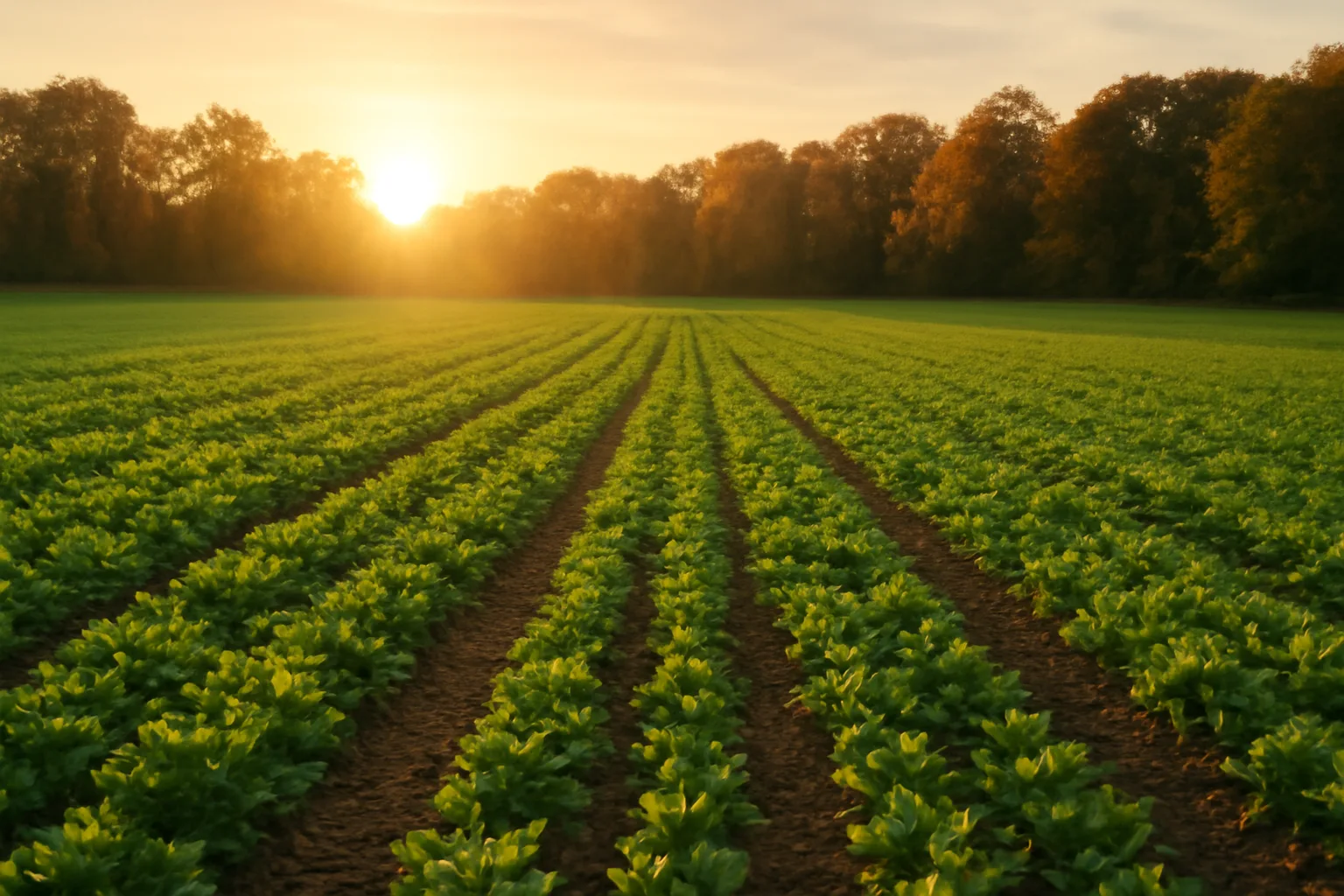
A food plot is a planted patch of forage, usually clover, brassicas, or grain, put in on hunting ground to feed deer and improve hunting odds near a stand. Most plots run a quarter acre to a few acres, planted in spring for warm-season plots or late summer for fall plots, timed off soil temperature and your area's first frost date.
what is a food plot?
A food plot is a small planted field, usually somewhere between a quarter acre and a few acres, put in on land you hunt to give deer (and often turkey, rabbits, and other wildlife) something better to eat than what's already growing there. It's not a garden and it's not a crop field meant for harvest. It's forage grown specifically to attract and hold deer, and to give hunters a predictable place to set up. Most plots fall into two broad buckets: perennial plots (clover, chicory, alfalfa) that you plant once and get two to five years of growth from, and annual plots (brassicas like turnips, cereal grains like oats or wheat, or warm-season stuff like soybeans and sorghum) that you replant every year or every season. A lot of serious plotters run both, a perennial clover field for spring and summer nutrition, and annual brassica or grain plots timed to peak right before the rut or gun season. The idea isn't new. State wildlife agencies and land-grant universities have published food plot guidance for decades because plots do more than draw deer for a shot. Good plots add protein and energy during antler growth and lactation, and they can hold deer on your property instead of the neighbor's. The Mississippi State University Extension describes food plots as a tool for "improving nutrition, health, and productivity of local deer herds" when planted and managed correctly [1]. For background on plot styles and how people build them into a broader property plan, see food plot whitetail.
when to plant food plots for deer?
| Upper Midwest / Northeast | mid-May to mid-June | late July to late August | |
|---|---|---|---|
| Mid-South / Ohio Valley | late April to late May | late August to mid-September | |
| Deep South / Gulf Coast | March to April | late September to late October | Check your state extension office or a frost-date tool from NOAA for your specific county before locking in dates. |
It depends on what you're planting and where you live, but the short answer is: cool-season plots (clover, brassicas, oats, wheat) go in late summer to early fall, and warm-season plots (soybeans, corn, sorghum, sunn hemp) go in spring after the last frost. For fall plots, the general rule is to plant 60 to 90 days before your area's average first hard frost, which gives brassicas and grains time to establish before growth slows. In the Upper Midwest and Northeast, that often means late July through August. In the Southeast and lower Midwest, September into early October works, sometimes later. The Penn State Extension food plot guidance recommends timing brassica and cereal grain plantings around late July to early September for most of Pennsylvania, adjusted for elevation and typical frost dates. Spring plots (clover, chicory, soybeans) are usually planted after soil temperatures hit 50 to 55°F and the frost risk has passed, which in much of the whitetail range lands somewhere between mid-April and early June. Clover germinates best with consistent soil moisture, so a lot of guys plant right ahead of a rain forecast rather than on a fixed calendar date. Here's a rough national planting window by region. Treat it as a starting point, not gospel, since local frost dates and rainfall patterns vary a lot even within a state. | Region | Spring plot window | Fall plot window |
when to plant oats for deer?
Oats for fall food plots go in the ground 6 to 8 weeks before your first expected frost, so deer get tender, high-protein forage right as hunting season ramps up. That usually lands in late August through mid-September across most of the whitetail's range, a little earlier up north, a little later down south. Oats are a cool-season annual grain and one of the most attractive food plot plantings there is early in fall, deer often hit a fresh oat plot within days of it coming up. The catch is winter survival: oats generally aren't as cold-hardy as winter wheat or rye, so in harsh-winter regions oats may get killed back by a hard freeze while wheat and rye keep growing. Oklahoma State University Extension notes that oats are less winter-hardy than wheat, rye, or triticale, and recommends blending oats with a hardier grain if you want fall attraction plus winter persistence [2]. If you're planting oats alone for an early-season plot, a seeding rate around 100 to 120 pounds per acre broadcast (or 60 to 90 pounds drilled) is typical, worked into a firm, moist seedbed no more than an inch deep. A lot of plotters blend oats with clover or with a brassica like turnips or radish to stretch attraction from September through winter.
when to plant turnips for deer?
Turnips for deer plots go in 90 to 100 days before your first hard frost, which for most of the whitetail's range means late July through late August. Turnips need that long runway because deer often ignore the bulbs and leaves until after a couple of hard frosts sweeten the plant by converting starches to sugars. That frost-triggered palatability shift is well documented and it's the reason turnip plots often look untouched in October and get hammered in December. If you plant turnips too late, you get plants but you miss the growing time needed to build a decent bulb, and yield drops fast. The University of Tennessee Extension recommends planting brassicas like turnips 60 to 90 days ahead of the first killing frost and notes that deer use of brassica forage typically increases substantially after the first frost of the season [3]. Seeding rate for turnips alone runs 4 to 6 pounds per acre, but most people blend turnips with oats, cereal rye, or clover so there's green leafy forage available immediately while the bulbs mature. For seed blend options built around this kind of fall plot, check deer food plot seed.
do deer like clover?
Yes, and it's not close. Clover (white clover, red clover, and ladino types especially) is one of the most consistently used food plot plantings across the whitetail's range, and it's usually the first thing recommended to someone new to plotting. Clover is a perennial, so one good planting can produce forage for three to five years with proper mowing, weed control, and fertility maintenance based on a soil test. It's high in crude protein, typically 25 to 30 percent in young, well-fertilized clover, which matters a lot during spring green-up when does are pregnant or nursing and bucks are growing antlers. The USDA NRCS plant guide for white clover lists it as a preferred forage for deer and other wildlife and notes it tolerates moderate shade and a range of soil types when fertility and pH are managed [4]. The tradeoff with clover is patience and upkeep. It takes a season to fully establish, it needs mowing to keep it from getting stemmy and to knock back weed competition, and it can get hammered so hard by deer in small plots that it never gets a chance to reseed or spread. If you've got the acreage and you're willing to maintain it, clover is close to the best forage-per-dollar investment in food plotting.
do deer eat sorghum?
Yes, deer eat sorghum, both the grain heads and, to a lesser extent, the leaves and stalks, but it's not typically planted as a primary attraction crop the way corn, soybeans, or brassicas are. Grain sorghum (milo) is more commonly used as a cover crop, a screen, or a supplemental grain source that also benefits birds like dove and quail. Sorghum has some real advantages: it's more drought-tolerant than corn, it can handle poorer soils, and standing sorghum provides good winter cover and a grain source when other food sources are picked over. Several state wildlife agencies list sorghum as a wildlife food plot option specifically because of its drought tolerance and dual use as cover and forage. Deer will browse sorghum through the growing season and eat the grain once it matures and heads drop, especially late in winter when other food is scarce. If your goal is maximum deer attraction on a small plot, sorghum usually isn't the first choice, soybeans, corn, or a brassica blend will draw more consistent deer activity. But on larger acreage, or in dry regions where corn struggles, sorghum earns a spot in the rotation as a screening and late-season grain crop.
what are deer's favorite food?
There's no single "favorite," deer preference shifts by season, region, and what's available, but a few things show up again and again in feeding studies and extension guidance: acorns, soybeans, clover, and, seasonally, agricultural crops like corn and standing grain. Acorns are probably the closest thing to a universal deer favorite where oaks are present. They're calorie-dense, they drop in a predictable fall window, and deer will often abandon a food plot entirely during a heavy acorn drop. Soybeans rank high too, both as a growing-season forage (deer browse the leaves hard in summer) and as a fall grain source once pods mature and dry down. The Quality Deer Management Association (now the National Deer Association) has long noted that natural forages and mast crops make up the bulk of a whitetail's diet, with food plots supplementing rather than replacing that natural base [5]. Bottom line: deer preference is opportunistic and seasonal. A plot planting that gets hit hard in September might sit untouched in November if acorns are raining down nearby. That's normal, not a sign your plot failed.
do deer like honey?
Deer don't seek out honey in the wild and it's not a realistic food plot or attractant strategy, mainly because raw honey isn't something deer encounter or forage for naturally, and it's not legal or practical to spread around a plot in most states anyway. This question usually comes up because of "honey hole" confusion (a honey hole is hunting slang for a great stand location, not an actual food source) or because of scent and mineral attractant products that sometimes use sweet, molasses-like ingredients. Deer are drawn to sugar and salt in general, which is part of why molasses-based mineral licks and sweet feed exist commercially. But that's a different thing from planting or pouring honey, which isn't a food plot practice and, depending on your state, could run afoul of baiting and feeding regulations. That's the bigger issue here: baiting and supplemental feeding rules vary hard by state, and some states that allow food plots strictly prohibit piles of grain, syrup, salt, or other concentrated attractants. Michigan, for example, restricts baiting statewide with limited exceptions, and enforces separate rules for supplemental feeding [6]. Always check your state wildlife agency's current regulations before using any attractant, additive, or feed product, food plots are broadly legal but baiting often isn't.
what's the difference between a food plot and just letting a field grow wild?
A food plot is intentionally planted, fertilized, and managed for specific forage species that deer prefer and that provide better nutrition than whatever volunteer weeds and grasses would show up on their own. An unmanaged field usually turns into a mix of native grasses, brambles, and early-successional weeds, some of which deer will browse, but at lower nutritional value and with way less predictability for hunting purposes. The nutritional gap is the real difference. A well-limed, well-fertilized clover or brassica plot can run 20 to 30 percent crude protein in the growing tissue, while a lot of native browse in a mature woodlot runs in the single digits to low teens depending on species and season, particularly late in the growing season. That gap matters most in spring and summer when does are lactating and bucks are growing antlers, both processes that draw heavily on protein and mineral intake. The other difference is control. A planted plot gives you a known location, a known green-up window, and a spot you can set a stand around. A wild field gives you none of that predictability, deer might use it heavily or barely touch it depending on what else is available nearby.
how big should a food plot be?
Most successful hunting plots run a quarter acre to two acres, with the right size depending more on your goal (a bow-hunting kill plot vs. a larger nutrition-focused field) than on any fixed rule. Smaller plots (a quarter to half acre) tucked into thick cover work well for bow hunting because deer feel secure entering them and you can get close with a stand or blind. Larger plots (one to five acres or more) are better suited to nutrition programs, since they take more pressure before getting grazed down and support more deer over a longer window. A lot of extension and wildlife agency guidance suggests keeping plot count and total acreage proportional to your total property size, often cited around 1 to 5 percent of total acreage in food plots as a starting benchmark, though this varies a lot based on region, deer density, and how much natural forage and mast is already present. Soil quality matters as much as size. A half-acre plot on decent, limed soil will out-produce a two-acre plot on acidic, compacted ground every time. That's why a current soil test should come before any acreage decision, your test results (not a generic size chart) are the real authority on how much a given plot can support.
do i need a soil test before planting a food plot?
Yes, and it's the single most overlooked step in food plotting. A soil test tells you your soil's pH and nutrient levels (phosphorus, potassium, and often others) so you know exactly how much lime and fertilizer to apply, instead of guessing. Most land-grant university extension offices offer soil testing for a modest fee, often in the $10 to $20 range per sample, and turn results around in one to two weeks. Many food plot soils run acidic, especially in the Southeast and parts of the Northeast, and most plot species (clover especially) want a pH in the 6.0 to 7.0 range to access the nutrients you're paying for in fertilizer. Applying fertilizer to soil with a pH below 5.5 is largely wasted money, the plants can't take up the nutrients efficiently until pH is corrected with lime, and lime takes months to fully react in soil, which is part of why fall testing ahead of a spring planting (or spring testing ahead of a fall planting) makes sense. Your soil test lab's recommendations are the real authority here, not a generic bag-of-seed label. Follow their lime and fertilizer numbers for your specific field, since soil chemistry varies a lot even across one property. For help turning a soil test into an actual seed and planting plan, PlotSeason's $99 Custom Food Plot Plan walks through species selection and timing based on your test results and region, though it's general planning guidance, not a substitute for your lab's site-specific agronomy advice.
what equipment do i actually need to plant a food plot?
At minimum, you need something to kill or clear existing vegetation, something to work the seedbed, a way to spread seed, and a way to pack it in. That can mean a full tractor and disc setup, or it can mean an ATV, a hand-crank spreader, and a lot of sweat, both approaches produce plots, just at different acreages and time investments. A typical small-plot equipment list looks like this: a sprayer (backpack or ATV-mounted) for a glyphosate burn-down two to three weeks before planting, a disc harrow or tiller to work the soil, a broadcast spreader for seed and fertilizer, and a cultipacker or drag to firm the seedbed after seeding so seed-to-soil contact is good. Skipping the packing step is one of the most common reasons plots fail to germinate evenly, loose soil dries out fast and seed sitting on top of it just doesn't come up as well. For smaller plots (under an acre) tucked into timber, hand tools and an ATV with an implement can get the job done, plenty of hunters plant quarter-acre kill plots with nothing more than a rake, a hand seeder, and a lawn roller. For larger fields, a compact tractor with a three-point disc and cultipacker earns its cost back fast in time saved and consistency of stand.
Frequently asked questions
what is a food plot in simple terms?
A food plot is a planted patch of forage, usually clover, brassicas, or grain, put in specifically to feed deer and other wildlife and to give hunters a predictable spot to hunt near. It's not a harvested crop field, it's grown to be eaten by animals, typically ranging from a quarter acre to a few acres in size.
do deer eat sorghum?
Yes, deer eat sorghum grain and browse the leaves, and standing sorghum also works as cover and a screen. It's more drought-tolerant than corn but usually used as a secondary or late-season grain crop rather than a primary attraction planting, since soybeans, corn, and brassicas typically draw more consistent deer activity on small plots.
do deer like clover?
Yes, clover is one of the most reliably used food plot forages across the whitetail's range. It's high in crude protein (often 25-30 percent in well-fertilized stands), it's perennial so it lasts several years, and deer use it heavily spring through fall, especially during antler growth and lactation periods when protein demand is highest.
when to plant deer food plots?
Fall cool-season plots (clover, brassicas, oats) go in 60-90 days before your area's first hard frost, typically late July through September depending on region. Spring warm-season plots (soybeans, clover establishment, sunn hemp) go in after last frost when soil hits about 50-55°F, usually mid-April through June.
when to plant oats for deer?
Plant oats 6-8 weeks before your first expected fall frost, generally late August through mid-September across most of the whitetail range. Oats aren't as winter-hardy as wheat or rye, so in harsh-winter climates many hunters blend oats with a hardier grain for season-long persistence.
when to plant food plots for deer generally?
It depends on species: perennials like clover go in spring or late summer, annual grains and brassicas go in late summer for fall hunting season, and warm-season annuals like soybeans go in late spring after frost risk passes. Local frost dates from your state extension office should guide exact timing.
when to plant turnips for deer?
Plant turnips 90-100 days before your first hard frost, usually late July through late August in most whitetail range. Turnips need the extra runway because deer often don't hit them hard until after a couple of frosts convert starches to sugars, making the bulbs and leaves noticeably more palatable.
what are deer's favorite food?
There's no single favorite; it shifts by season and region, but acorns, soybeans, and clover consistently rank as top preferences in extension and wildlife research. Acorns especially can pull deer away from planted plots entirely during a heavy fall mast drop, which is normal and not a sign of a failed plot.
do deer like honey?
No, honey isn't a real deer food or food plot strategy. Deer don't forage for it naturally, and using it as an attractant could violate state baiting or feeding regulations, which vary widely. Check your state wildlife agency's current rules before using any sweet attractant or supplemental feed product.
how big does a food plot need to be to work?
Most hunting-focused plots run a quarter acre to two acres. Smaller plots tucked in cover suit bow hunting setups, while larger fields (one to five acres) work better for herd nutrition goals since they withstand more grazing pressure. Soil quality matters more than raw size for how much forage a plot actually produces.
do i need a soil test before planting a food plot?
Yes. A soil test (often $10-$20 through a university extension lab) tells you exact pH and nutrient levels so lime and fertilizer aren't guesswork. Most plot species want pH around 6.0-7.0, and fertilizer is largely wasted on soil that's too acidic for plants to take up the nutrients.
what's the cheapest way to plant a small food plot?
A backpack sprayer for burn-down, a hand-crank broadcast spreader, and a simple hand rake or lawn roller for seed-to-soil contact can plant a quarter-to-half-acre plot for well under $200 in tools, not counting seed and fertilizer. An ATV with a small implement speeds things up but isn't strictly required for small plots.
Sources
- Mississippi State University Extension, food plot publication: Food plots are described as a tool for improving nutrition, health, and productivity of local deer herds
- Oklahoma State University Extension, small grains for wildlife food plots: Oats are less winter-hardy than wheat, rye, or triticale
- University of Tennessee Extension, brassica food plot guidance: Brassicas like turnips should be planted 60-90 days ahead of first killing frost, and deer use increases after first frost
- USDA NRCS Plant Guide, white clover: White clover is a preferred wildlife forage tolerant of a range of soils when fertility and pH are managed
- National Deer Association (formerly QDMA), deer nutrition resources: Natural forages and mast crops make up the bulk of a whitetail's diet, with food plots supplementing rather than replacing that base
- Michigan Department of Natural Resources, baiting and feeding regulations: Michigan restricts baiting statewide with limited exceptions and enforces separate supplemental feeding rules