Last updated 2026-07-25
TL;DR
A good whitetail food plot starts with a soil test, then picks a species that fits your calendar (clover for season-long protein, brassicas and oats for fall draw), and gets seed in the ground during a narrow planting window tied to your USDA hardiness zone and first frost date. Fertilize and lime by the test, not by guessing.
what is a food plot, exactly
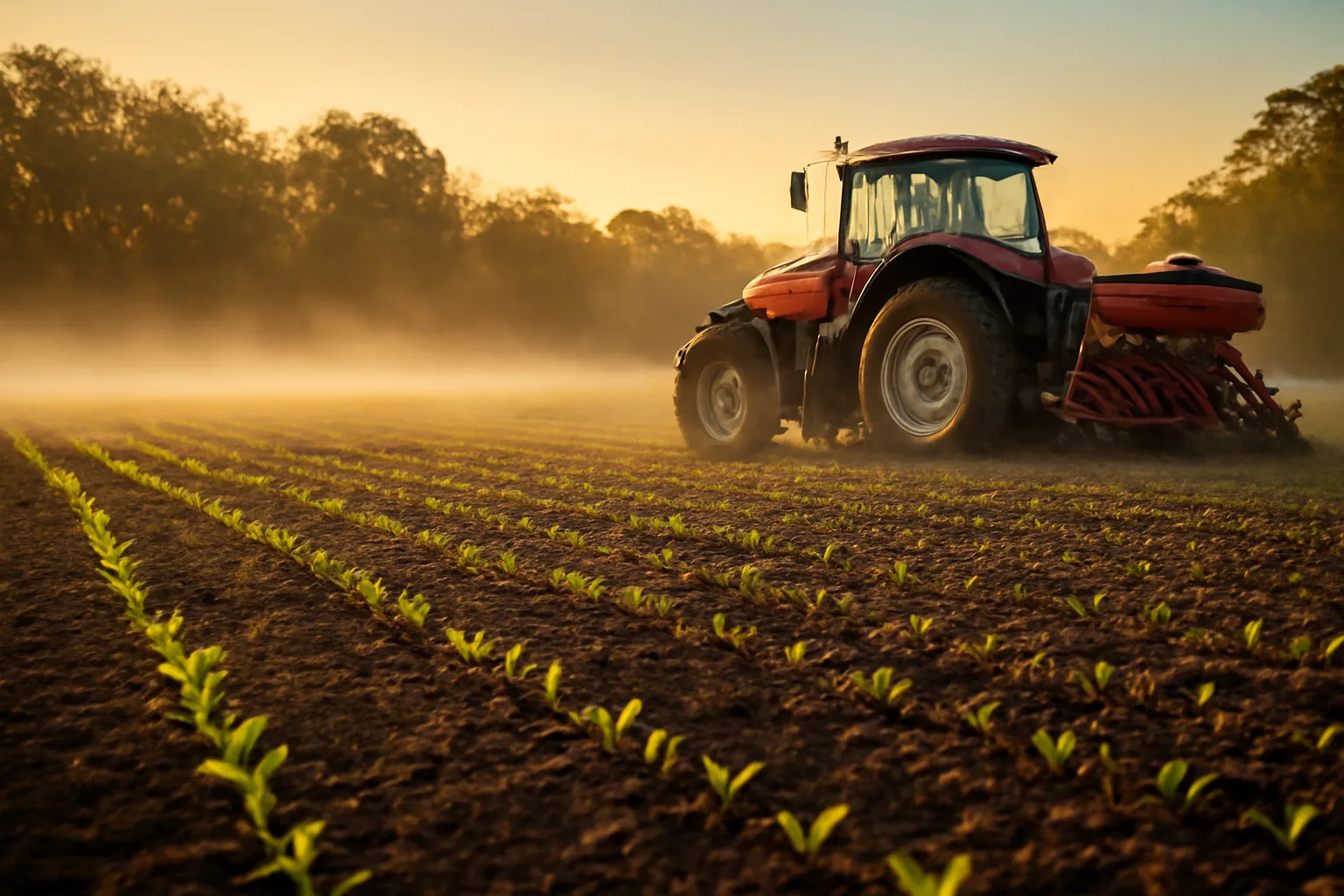
A food plot is a planted patch of forage, usually somewhere between a quarter acre and a few acres, put in specifically to feed deer (and often other wildlife) and to give hunters a place to watch or hunt over. It is not the same as a wildlife opening left to grow up in weeds, and it is not the same as baiting, which is illegal in a lot of states and regulated everywhere else. A food plot is a farmed crop planted with a purpose: clover, brassicas, cereal grains, corn, soybeans, or a blend of those. Most plots fall into two rough categories. Food source plots are the bigger, more open fields meant to feed deer through a season, often planted in perennial clover or alfalfa, or in annuals like soybeans and corn. Hunting plots (sometimes called kill plots) are small, often less than half an acre, tucked tight to bedding cover with one or two shooting lanes, planted in something deer will hit hard in daylight during hunting season, like brassicas or a clover/chicory mix. The USDA National Agroforestry Center and most state wildlife agencies treat food plots as a habitat management tool, similar to prescribed burning or timber stand improvement, not as supplemental feeding in the legal sense. Check your state's baiting and feeding regulations before you plant anything near a stand, because some states regulate any concentrated food source within a certain distance of where you hunt, and rules on baiting versus food plots vary by state and can change year to year [1]. If you want a plan built around your specific property, soil test, and region instead of piecing one together from articles, that is exactly what a food plot whitetail plan is for.
when to plant food plots for deer
| Zone 3-4 (northern Midwest, upper Great Lakes) | mid-May to early June | late July to mid-August | |
|---|---|---|---|
| Zone 5-6 (Ohio Valley, mid-Atlantic, central Plains) | late April to late May | mid-August to early September | |
| Zone 7-8 (mid-South, lower Midwest) | early April to mid-May | late August to mid-September | |
| Zone 9 (deep South, Gulf Coast) | March | late September to October | These windows are general guidance, not a substitute for your local extension office, which tracks actual frost data and soil temperatures for your county. University extension guidance on brassica forages, for instance, generally recommends matching brassica seeding to a date that gives the crop 90 to 100 days of growth before a killing frost, since brassicas need that time to bulb up and reach peak palatability [3]. If you are only planting one plot this year, aim for a fall plot. It is the one that lines up with hunting season, and it is more forgiving of a late start than a spring perennial plot. |
Timing depends on what you are planting and where you live, but the short answer is this: spring plots (clover, soybeans, alfalfa) go in after your last frost date, and fall plots (brassicas, oats, wheat, cereal rye) go in 60 to 90 days before your first fall frost so they mature right as hunting season opens. The single most useful number on your property is the average first and last frost date, which you can look up by station through NOAA's climate normals data [2]. Everything else, brassica planting windows, clover seeding dates, oat planting dates, gets built around that number. As a rough national framework: | Region (USDA zone) | Spring plot window | Fall plot window |
when to plant clover for deer
Plant clover in early spring (as soon as soil can be worked, roughly 4 to 6 weeks before your last frost) or in late summer to early fall (August into early September in most of the whitetail's range), because clover establishes best in cool, moist soil and struggles in the heat of a summer planting. Clover is a perennial, so you are planting it once and expecting 3 to 5 years of production if you maintain it (mowing, spot-spraying grass, and topdressing fertilizer based on a soil test each year). A frost-seeding method, broadcasting clover seed onto bare or short ground in late winter while the ground is still doing freeze-thaw cycles, works well in northern zones and is one of the cheapest ways to establish a stand, since the freeze-thaw action pulls seed into soil contact without any tillage [3]. Soil pH matters more for clover than for almost anything else you'll plant. University extension liming guidance generally puts legumes' ideal pH range at 6.0 to 7.0, and yields drop off hard below 6.0 because the plant can't access nutrients and, in some species, can't fix nitrogen efficiently through its root nodules [4]. If your soil test comes back at 5.2, lime before you plant, not after.
do deer like clover, and do deer actually eat it
Yes. Clover is one of the most consistently used food plot forages across whitetail range, and it shows up in food habit studies as a preferred forage through spring, summer, and into fall. It is high in crude protein, typically 20 to 30 percent depending on variety, growth stage, and soil fertility, which matters most for does in late gestation and lactation and for bucks growing antlers in summer. The reason clover works so well as a food plot staple isn't mystery or marketing. It regrows fast after grazing, it tolerates repeated browsing better than most annuals, and it is available for a longer stretch of the year than almost anything else you can plant. A well-maintained clover plot can provide forage from spring green-up through the first hard frosts of fall, and in the South, some varieties stay green through a mild winter. The catch: clover alone doesn't do much for you in November and December in northern climates once it goes dormant or gets buried in snow. That is why most experienced plotters pair clover food plots with a fall annual (brassicas, cereal grains) somewhere else on the property, so there is always something green available regardless of season.
when to plant oats for deer
Plant oats 60 to 90 days before your first expected fall frost, which lands roughly between mid-August and mid-September across most of the whitetail's core range, and slightly earlier (late July to August) in the northern tier of states. Oats are a cool-season annual grain, and deer hit them hard right after planting through the first few hard frosts, sometimes longer in milder climates. They germinate fast, often in 5 to 7 days under good soil moisture, and they give you visible green growth and deer activity faster than almost anything else you can plant, which is part of why they're a common choice for a plot you want producing before archery season opens. Oats don't tolerate deep cold as well as winter wheat or cereal rye. In zone 5 and colder, expect oats to die back hard after your first sustained hard freeze (mid-20s F or lower for several nights), while wheat and rye keep growing into winter and green back up in spring. A lot of plotters blend oats with wheat or rye specifically to get the fast early growth of oats and the winter persistence of the small grains.
when to plant turnips for deer
Plant turnips (and other brassicas like radishes and rape) 90 to 100 days before your first fall frost, which usually means late July through mid-August in the North and mid-August through early September in the mid-South and mid-Atlantic. Turnips need that long runway because the plant spends the first two-thirds of the season building leaf mass and root structure, and it needs a hard frost or two to convert starches to sugars in the bulb, which is what triggers deer to start really digging in. Plant them too late and you get small, tough plants that never sweeten up before the season ends. Plant them too early in warm soil and you risk flea beetle damage and bolting. University extension guidance on brassica forages notes that brassica forages, including turnips, often see low deer use for the first several weeks after emergence, with utilization picking up sharply after the first hard frosts of the season, since cold temperatures convert starches in the leaves and bulbs to sugars, making the plant more palatable [3]. That is a normal pattern, not a sign your plot failed. If you plant turnips in August and nothing is touching them in September, don't panic and don't rip them up. Give it until after your first frost.
do deer eat sorghum
Yes, deer eat sorghum, both the standing grain heads and the leaves, but it is generally a secondary or supplemental food plot crop rather than a primary draw, and deer preference for sorghum is usually lower than for soybeans, corn, or brassicas when those are available nearby. Grain sorghum (milo) and forage sorghums are planted as summer annuals, generally after soil temperatures hit 60 to 65 degrees F, which lines up with corn planting windows in most regions, roughly late April through June depending on latitude. Sorghum has some real advantages: it tolerates drought and poor soil better than corn, it is cheaper per acre in a lot of regions, and standing grain sorghum provides late-season and winter food after other crops are gone or picked over. The tradeoff is deer often treat sorghum as a fallback. In plots where corn, soybeans, and sorghum are all planted, wildlife food plot trials commonly show deer hitting the corn and beans first and using sorghum more heavily later in winter when other options are thinner. If you're on tight soil or a dry site where corn struggles, sorghum is a reasonable substitute. If you have good ground and can grow corn or beans instead, most experienced plotters would put sorghum in the number two or three slot, not number one.
what are deer's favorite foods
| Soybeans (forage type) | Very high | Summer through early fall | |
|---|---|---|---|
| Clover | High | Spring through fall | |
| Brassicas (post-frost) | High | Late fall, winter | |
| Cereal rye/wheat | Moderate-high | Fall through winter | |
| Oats | Moderate-high | Early fall | |
| Chicory | Moderate | Summer | |
| Corn (standing) | Moderate-high, high in winter | Fall through winter | |
| Sorghum | Moderate | Late fall, winter | No single species holds deer all year. That's why most working food plot programs run at least two forage types, one that produces protein and tonnage through summer and one that holds up through hunting season and winter. |
Deer are opportunistic browsers, and their favorite foods shift by season, region, and what's available, but across food plot species specifically, soybeans, clover, and brassicas after a hard frost consistently show up as the highest-preference planted forages in most food plot programs and university trials. In the wild, outside of planted plots, deer diets lean heavily on browse (leaves, twigs, and buds of woody plants), forbs, mast (acorns and other nuts, which can make up a huge share of fall diet in oak-heavy country), and agricultural crops where available. Acorns in particular can override almost any food plot when they're dropping heavy in October, which is a big reason plot activity sometimes goes quiet during a good mast year. Within the food plot world specifically, here's how the common species stack up on general deer preference, based on repeated observation across extension and industry trials (this is a preference ranking, not a guarantee for your specific property): | Forage type | General deer preference | Best season |
do deer like honey (and does it belong in a food plot)
Deer aren't drawn to honey the way people sometimes assume from mineral and attractant marketing, and there is no real food plot use for honey itself, but sweet liquid attractant products marketed with honey, molasses, or apple scent are a different thing from a food plot and operate on smell and taste appeal rather than nutrition. Deer do have a documented preference for sugars, which is part of why brassicas and turnips get more palatable after a frost converts starches to sugar, and why deer hit acorns and soft mast hard when it's available. That same sugar preference is what liquid and granular attractant products (some using molasses, some using honey-based scents) are trying to exploit, usually as a short-term draw to a mineral site or camera location rather than as a food source. Here's the practical distinction: a food plot is a planted forage crop that provides calories and protein over weeks or months. An attractant is a scent or taste product meant to pull deer to a specific spot for a short window, often a few days. Some states regulate liquid and scent-based attractants under the same baiting rules that cover corn and mineral, so check your state wildlife agency's regulations before using any commercial attractant product near a stand .
how do i soil test before I plant anything
Pull a soil sample 4 to 6 weeks before you plan to plant, using a soil probe or shovel to take 8 to 10 cores across the plot at a 4 to 6 inch depth, mix them in a clean bucket, and send roughly a pint of the mixed sample to your state land-grant extension soil lab or a private ag lab. Most state extension soil testing programs cost under $20 per sample and return results in 1 to 2 weeks, including pH, phosphorus, potassium, and often a lime and fertilizer recommendation for the crop you tell them you're planting . This is the cheapest, highest-leverage thing you can do before putting seed in the ground. A $15 soil test that tells you to add 2 tons of lime per acre can be the difference between a plot that thrives and one that limps along at half its potential yield, because most food plot species (clover especially) do poorly below pH 6.0 regardless of how much fertilizer you throw at it. Your soil test report, not a blog article, is the actual authority on how much lime and fertilizer your specific ground needs. Recommendations vary by soil type, existing nutrient levels, and the crop you're planting, and a lab that has your actual sample in hand is going to give you a better number than any general rule of thumb.
what equipment do i actually need to plant a food plot
At minimum you need a way to kill or turn existing vegetation, a way to get seed into the soil at the right depth, and a way to pack the seed in for good soil contact. For small plots (under an acre), a lot of that can be done with an ATV or UTV and pull-behind implements instead of a tractor. A basic no-till or minimum-till setup looks like this: spray existing vegetation with glyphosate 2 to 3 weeks before planting, broadcast seed with a hand or ATV-mounted spreader, and drag a section harrow, chain-link drag, or cultipacker over the top to press seed into soil. Small-seeded species like clover and brassicas need very shallow planting, often just a quarter inch of soil coverage or less, while larger seeds like corn, soybeans, oats, and sorghum need actual planting depth (0.75 to 2 inches depending on species) that broadcasting alone won't give you reliably. If you're planting corn, soybeans, or sorghum on any real acreage, a grain drill or planter is worth renting or borrowing rather than trying to broadcast and hope. A lot of local NRCS offices, extension programs, and co-ops have loaner or rental drills specifically for conservation and food plot plantings. For gear-specific buying advice on drills, sprayers, and spreaders sized to small plots, that's a separate rabbit hole worth its own research. For seed selection matched to your soil test and region, browsing deer food plot seed or food plot seed options is a faster starting point than guessing at a farm store.
how much does a food plot cost to plant
A basic half-acre to one-acre food plot, seed, lime, and fertilizer, generally runs somewhere between $150 and $500 depending on species mix, whether you're correcting soil pH from scratch, and whether you already own spraying and planting equipment. Lime is often the biggest single cost surprise. Ag lime runs roughly $30 to $60 per ton delivered and spread in a lot of regions, and a plot starting at pH 5.0 that needs to reach 6.5 for clover might need 2 tons per acre or more, which extension liming guides commonly cite as a standard recommendation for that kind of pH correction on medium-textured soils . That's a $60 to $120 per acre expense before you've bought a bag of seed. Seed costs vary a lot by species. Clover blends often run $15 to $30 for enough to cover an acre with an annual overseed rate, brassica and turnip blends run similar, and corn or soybean seed for food plot use runs higher, especially for treated or Roundup Ready varieties, often $40 to $80 or more per acre depending on seeding rate and variety. If the planning side (species mix, seeding rate, fertilizer program, timing) is the part you don't want to guess at, that's the specific gap a $99 one-time Custom Food Plot Plan is built to close, built around your soil test results, region, and equipment instead of a generic bag-of-seed label.
what's the simplest step-by-step process for a first-time plotter
Start with soil, not seed. Pull a soil test 4 to 6 weeks before your planned planting date and send it to your state extension lab or a private ag lab. Once results are back, apply lime if recommended (it takes weeks to months to fully adjust pH, so earlier is better) and apply fertilizer based on the test's specific recommendation, not a generic bag rate. Kill existing vegetation with glyphosate 2 to 3 weeks before planting, or till it under if you're working ground that's never been farmed. Pick a species or blend that matches your calendar goal (clover for a season-long plot, brassicas or oats for a fall hunting plot) and your region's planting window. Plant at the right depth and rate for your species, using a drill for larger seeds and a cultipacker or light drag for broadcast small seeds. Keep deer off it if you can during establishment (this is where the small kill plot next to bedding cover has an advantage: you're not hunting it hard in the first month). Mow, spot-spray, and topdress fertilizer in following years if it's a perennial like clover. For a broader look at how plot types differ (perennial versus annual, hunting plot versus food source plot), deer food plots and domain food plot seed cover the tradeoffs in more depth than a single how-to piece can.
Frequently asked questions
Do deer eat sorghum in food plots?
Yes. Deer eat both the leaves and grain heads of sorghum, but it usually ranks below corn, soybeans, and brassicas in preference when those options are available. Sorghum's real strength is drought and poor-soil tolerance, plus late-season and winter food value after other crops are gone.
Do deer eat clover, and how much do they rely on it?
Yes, clover is one of the most heavily used food plot forages across whitetail range. It runs 20 to 30 percent crude protein depending on variety and soil fertility, and it stays productive from spring through fall, making it a season-long protein source rather than just a fall draw.
When should I plant food plots for deer?
Spring plots (clover, soybeans, alfalfa) go in after your last frost date, roughly April through early June depending on region. Fall plots (brassicas, oats, cereal grains) go in 60 to 100 days before your first fall frost, generally late July through mid-September, so they mature right as hunting season opens.
Do deer actually like clover or is it just cheap and easy to grow?
Both things are true. Clover is genuinely high on deer's preference list in food habit studies, and it also happens to be one of the cheaper, longer-lasting food plot options once established, since it's a perennial that can produce for 3 to 5 years with basic maintenance.
When do you plant oats for deer food plots?
Plant oats 60 to 90 days before your first fall frost, which lands mid-August to mid-September across most of the whitetail range and slightly earlier in the northern tier. Oats germinate fast, often in 5 to 7 days, but die back hard after sustained hard freezes, unlike wheat or cereal rye.
When is the best time to plant turnips for deer?
Plant turnips 90 to 100 days before your first expected fall frost, usually late July through mid-August in the North and mid-August through early September farther south. Turnips need a hard frost or two to convert starches to sugars in the bulbs, which is what triggers heavy deer use, so don't expect much interest until after that first freeze.
What exactly is a food plot?
A food plot is a planted area of forage, typically a quarter acre to a few acres, established specifically to feed deer and other wildlife and give hunters a place to hunt over. It's a farmed crop (clover, brassicas, grains, beans) planted with intent, distinct from a wild opening and distinct from baiting, which many states regulate separately.
What are deer's favorite foods overall?
In planted food plots, forage soybeans, clover, and post-frost brassicas consistently rank highest in preference trials. In the wild, deer diets lean on browse, forbs, and mast like acorns, which can override food plot activity entirely during a heavy acorn drop in October and November.
Do deer like honey or sweet attractants?
Deer show a documented preference for sugars, which is part of why some liquid and granular attractant products use honey or molasses scent to draw deer to a mineral site or camera location. That's a short-term attractant strategy, not a food plot, and some states regulate these products under baiting rules.
How big should a food plot be for whitetails?
Hunting plots (kill plots) tucked near bedding cover often run a quarter acre to half an acre, small enough to hunt with the wind and keep deer comfortable entering in daylight. Food source plots meant to feed deer through a season often run one to five acres or more, depending on herd density and available land.
Do I need a tractor to plant a food plot?
No. Small plots under an acre can be handled with an ATV or UTV, a pull-behind sprayer, a broadcast spreader, and a drag or cultipacker for seed-to-soil contact. Larger row crops like corn and soybeans benefit from a real drill or planter, which many local NRCS offices and co-ops rent or loan out.
What's the difference between a hunting plot and a food source plot?
A hunting plot (kill plot) is small, usually under half an acre, placed tight to bedding cover with limited access, meant to draw deer into range during legal shooting hours. A food source plot is larger and meant to feed deer through a season, often planted in clover, beans, or corn, and hunted less aggressively.
Sources
- USDA National Agroforestry Center, Working Trees for Wildlife: Food plots and habitat plantings are treated as wildlife habitat management tools by federal agroforestry guidance
- NOAA National Centers for Environmental Information, Frost/Freeze Data: Average first and last frost dates by location are tracked through NOAA climate normals data
- University of Tennessee Extension, Brassicas for Deer Food Plots (PB 1770): Brassica forages need roughly 90 to 100 days of growth before a killing frost and become more palatable after frost converts starches to sugars
- Iowa State University Extension and Outreach, Soil Testing (PM 287): Standard soil test services through land-grant extension labs typically cost under $20 per sample and return pH and fertility recommendations
- University of Missouri Extension, Soil Acidity and Liming, G9101: Correcting soil pH from roughly 5.0 to 6.5 on medium-textured soils commonly requires around 2 tons of agricultural lime per acre