Last updated 2026-07-26
TL;DR
No-till food plot planting means killing existing vegetation with herbicide (or crimping/mowing) and drilling or broadcasting seed straight into the residue, skipping the plow entirely. It saves fuel, protects soil structure, and works well for clover, brassicas, oats, and cereal grains. Most plots go in either spring (April to June) or late summer (August to September), depending on species and your zone.
What is a food plot, and why go no-till?
A food plot is a planted area, usually a fraction of an acre to a few acres, seeded with forage or grain to feed deer and other wildlife and to concentrate animal activity where a hunter can watch or hunt it. Most food plots on hunting land run somewhere between a quarter acre and two acres, though bigger ag-style plots on large tracts can run five acres or more. The USDA Natural Resources Conservation Service treats wildlife food plots as a conservation practice (Practice Standard Code 645, "Upland Wildlife Habitat Management") when they're part of a broader habitat plan, and cost-share money is sometimes available through state NRCS offices [1]. No-till planting means you never turn the soil with a plow or disc. Instead, you kill the existing vegetation with a burndown herbicide like glyphosate, then drill or broadcast seed directly into the dead residue. The residue mat holds moisture, blocks weed seed germination, and keeps the soil from washing off a hillside during a hard rain. The appeal for hunters is simple: less equipment, less time, less erosion. You don't need a tractor with a disc harrow. A four-wheeler with a no-till drill, or even just a hand-crank spreader and a rain forecast, can get a plot in the ground. Traditional tillage still has its place on new ground with heavy sod or compaction, but once a plot has a few seasons of history, no-till usually costs less and grows just as well.
When should you plant food plots for deer?
Timing depends entirely on species and your climate zone, but the two big windows are spring (roughly April through June) for warm-season plots, and late summer to early fall (roughly August through September) for cool-season plots. Cool-season brassicas, clover, and cereal grains need soil temperatures in the 50s to 70s Fahrenheit and enough soil moisture to germinate, which usually means planting 60 to 90 days before your first hard frost. In the Upper Midwest and Northeast (Zone 3-4 equivalents), that late-summer window often falls between mid-August and early September. In the Southeast and mid-South, you can push cool-season planting into late September or even October because frost comes later. Spring plots (soybeans, corn, warm-season annuals) generally go in after your last frost date, which your local Cooperative Extension office publishes county by county. Check your state's frost dates and extension planting calendar before locking in a date. There's no single national date that works; a plot calendar built for zone 6 will burn you in zone 3. Regional planting windows can shift two to three weeks even within one state, from the northern tier to the southern edge, so a county-level frost date is worth more than any national chart.
When should you plant oats for deer plots?
Oats are a cool-season cereal grain, and most Cooperative Extension guides recommend planting them in early fall, generally 6 to 8 weeks before your average first frost, so the plants get enough growth before winter dormancy. In much of the whitetail range that lands somewhere between mid-August and mid-September. Oats germinate fast, often in 5 to 10 days with good soil moisture, and deer hit them hard as soon as they emerge because young oat shoots are highly palatable and easy to digest. The catch: oats winterkill in a lot of the northern half of the country once temperatures drop into the low 20s and below for extended periods, so in Zone 3 and colder parts of Zone 4 they function as an early-fall to early-winter plot rather than a season-long one. In the South, a spring-planted oat crop is also common, planted from late winter into early spring for a shorter-lived cool-season forage before summer heat shuts it down. If you want a plot that survives into late winter in cold country, blend oats with a hardier cereal like winter rye or winter wheat, both of which tolerate much colder temperatures and will often outlast the oats in the same plot.
When should you plant turnips for deer?
Turnips, like other brassicas, go in during late summer, typically 90 to 100 days before your first expected frost, because the plants need that runway to bulb out and reach full tonnage. Planting too early in hot, dry August conditions can also cause poor germination or flea beetle damage on young seedlings. A lot of extension guidance and seed company agronomy notes point to a sweet spot of late July through early September depending on latitude, with northern growers planting earlier in that window and southern growers planting later. Turnip forage quality actually improves after a hard frost, because cold temperatures convert starches to sugars in the leaves and bulbs, which is part of why turnip plots often see their heaviest deer use in November and December rather than right after planting. One practical note: turnips are notorious for the "boom or bust" pattern where deer largely ignore the tops early in the season, then hammer the whole plant, bulbs included, once a freeze sweetens it up. If you're planting turnips as a late-season draw, don't panic if the plot looks untouched in October.
Do deer eat sorghum?
Yes, deer eat sorghum, particularly grain sorghum (milo), and it's a legitimate summer/fall food source, though it's more commonly used as a screening or standing-grain plot than a primary forage plot. Sorghum is drought-tolerant compared to corn, which makes it a reasonable choice on sandy or dry ground where corn struggles. Deer will browse young sorghum shoots and later feed on the grain heads once they mature, especially after other food sources thin out in late fall. Sorghum is also a staple in dove field mixes and is used broadly in wildlife food plot blends across the Southeast and parts of the Midwest for its dual role as cover and food. One caution worth knowing: sorghum and its relative, Johnsongrass, can produce cyanogenic compounds (prussic acid) under stress conditions like drought or frost damage, which has been documented as a livestock poisoning risk in stressed sorghum forage, according to University of Missouri Extension livestock guidance [2]. This risk is best known in cattle grazing situations rather than free-ranging deer, and there's no strong documented case of wild deer being harmed by it in a food plot setting, but it's worth knowing if you're also running livestock on the same ground.
Do deer eat clover, and do they actually like it?
Yes, deer eat clover readily, and most wildlife biologists and extension agronomists rank it among the most consistently used food plot forages available, largely because of its protein content (often 25 to 30 percent crude protein in vegetative growth stages) and season-long availability. Clover, unlike an annual brassica or grain, keeps growing back after grazing, which means a single planting can feed deer for two to four years before it needs to be reseeded. Do deer "like" clover in a preference sense? Field studies and decades of hunter observation suggest yes, especially white clover and red clover blends, which show up constantly in food plot mixes because deer return to them through spring, summer, and fall. Clover is also relatively shade-tolerant compared to brassicas, so it handles a plot edged by timber better than most other options. Clover does need decent soil fertility and a pH close to 6.0 to 6.5 to perform well, which is exactly the kind of thing a soil test settles instead of guessing. If your soil test comes back at pH 5.5, no amount of good seed will fix that; you need lime, and your soil-test lab's recommendation is the actual authority on how much.
What are deer's favorite foods overall?
There's no single scientifically ranked "favorite food" list, because deer preference shifts by season, region, and what else is available, but state wildlife agencies and extension research generally point to a short list of high-preference items: acorns (especially white oak acorns), soybeans, clover, and agricultural crops like corn and alfalfa when available. Mast crops (acorns) are often preferred over planted forages when a good acorn crop is on the ground, because of their high fat content. Among planted food plot species, soybeans and clover consistently rank at the top of forage preference studies for their protein and palatability, with brassicas like turnips and radishes ranking high specifically in late fall and winter once frost sweetens them. Deer are also highly adaptable browsers. A whitetail's diet can shift constantly with availability across dozens of plant species in a single year, based on deer nutrition research summarized by land-grant university wildlife programs [3]. So the honest answer is: it depends on the month, the region, and what's already growing wild nearby. A plot planner who tells you one seed mix is a deer's "favorite food" everywhere, always, is oversimplifying.
Do deer like honey (as in honeysuckle or actual honey)?
If the question is about honeysuckle, yes, deer readily browse Japanese honeysuckle (Lonicera japonica) and native honeysuckle species, and it's actually considered an important winter browse plant in parts of the Southeast because it stays semi-evergreen when other browse has dropped leaves. It's not something you'd plant in a food plot (it's more often managed as invasive brush than cultivated forage), but its presence on a property does affect deer browsing patterns nearby. If the question is literally about honey, the sweet substance made by bees, there's no meaningful evidence deer seek it out or that it plays any role in deer nutrition or food plot planning. Deer aren't going to raid a beehive for honey the way a bear will. This appears to be a common autocomplete-style search question rather than something with real wildlife biology behind it, so treat honeysuckle as the relevant answer and honey itself as a non-issue for plot planning.
How do you actually kill the existing vegetation before no-till planting?
The standard no-till burndown uses a glyphosate-based herbicide, applied 7 to 14 days before planting, giving the existing grass and weeds enough time to fully die back before you drill or broadcast seed. Glyphosate works systemically, meaning it moves through the plant to the roots, and research on glyphosate translocation confirms perennial weed control depends on giving the compound time to move into root tissue rather than just contacting leaf surfaces [4]. A full kill on perennial grasses like fescue or bermuda usually takes the full 10 to 14 days, more than a few days. Application rate matters. Most labels for common glyphosate products call for somewhere in the 1 to 2 quart per acre range for general weed and grass control, though exact rates vary by product concentration and target species, so read the specific label on the jug you're using rather than guessing. Cooperative Extension weed science programs generally recommend applying during active weed growth, not drought-stressed or already mowed-short vegetation, for the best kill. An alternative to herbicide is mechanical: mowing very short followed by a heavy roller-crimper if you're working with a cover crop like cereal rye, which physically crimps stems without killing roots on most annual weeds but does knock back competition enough to plant into. This method is more common in row-crop no-till systems than small food plots, mostly because the equipment is expensive and hard to justify for an acre or two.
What equipment do you actually need for no-till plots?
| Hand spreader + backpack sprayer | $150 to $400 total | Small plots (under 1 acre), small-seeded species | |
|---|---|---|---|
| ATV/UTV tow spreader + tow sprayer | $500 to $1,500 combined | 1 to 5 acre plots, repeat annual use | |
| Small no-till drill (4 to 6 ft, used) | $2,000 to $6,000+ used | Multiple plots per year, larger acreage, grain species | |
| Full-size tractor + no-till drill | $15,000+ | Larger properties, ag-scale plots | Prices move constantly with the used equipment market and region, so treat these as rough guidance, not quotes. |
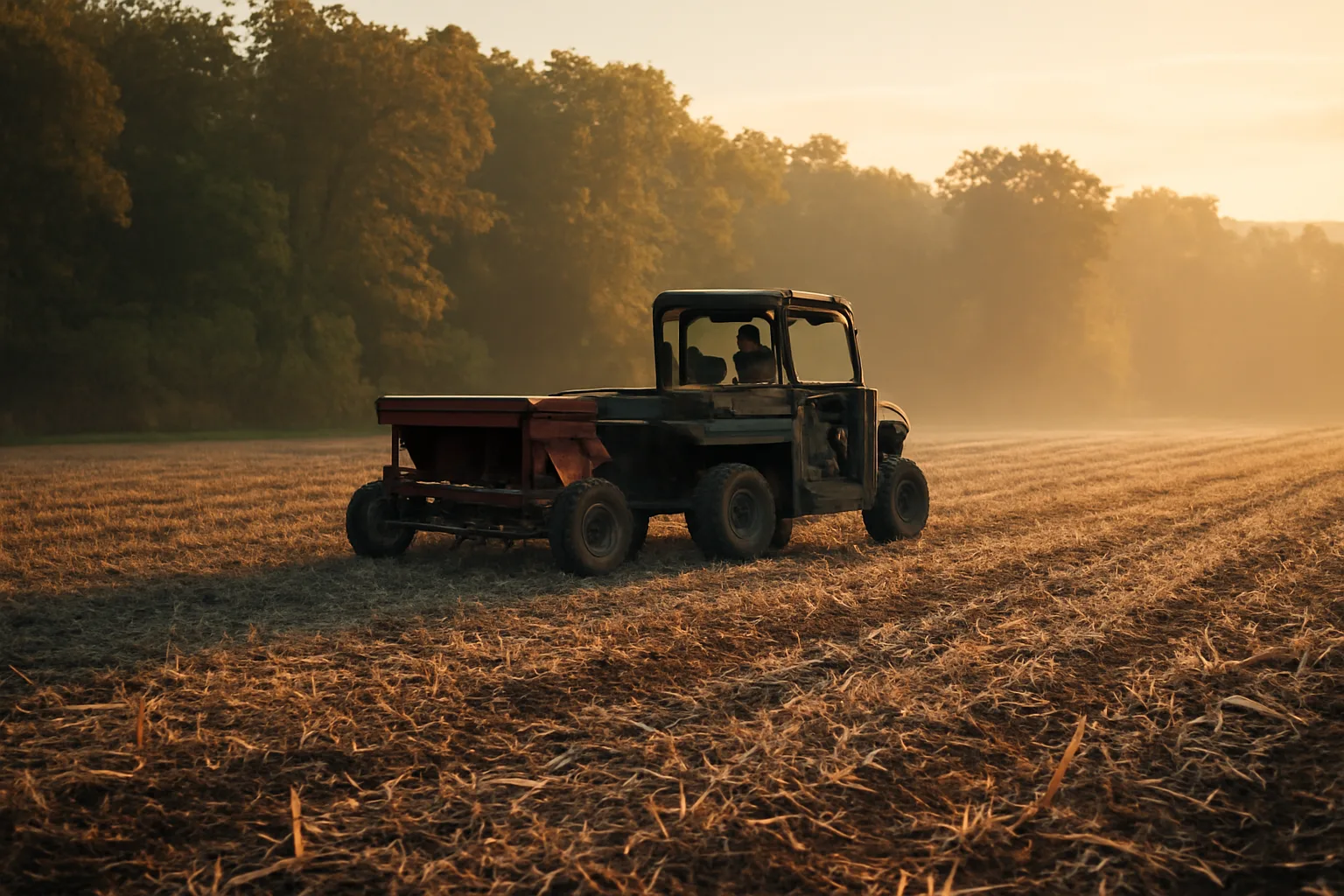
The minimum viable setup is a UTV or ATV, a tow-behind no-till drill sized for small equipment (several companies make 4 to 6 foot no-till drills specifically marketed to food plotters), a sprayer for burndown herbicide, and a soil test kit or mailer from your local extension office or a private ag lab. That's genuinely enough to plant a solid plot from scratch. If you don't own or want to buy a no-till drill, broadcasting seed by hand or with a spreader still works for a lot of species, especially small-seeded ones like clover and brassicas, as long as you get decent seed-to-soil contact. A common trick is broadcasting seed right before a rain, or lightly dragging a chain-link section or piece of cultipacker-style equipment over the seed afterward to press it in. Drilling gives more consistent depth control and usually better germination rates, but broadcasting with good timing can produce a solid stand, especially for small-seeded species that don't need to be buried deep. Here's a rough cost comparison for small-plot equipment paths: | Approach | Typical cost range | Best for |
How does soil testing fit into a no-till plot plan?
A soil test is the single most useful thing you can do before spending money on seed, because it tells you your actual pH and nutrient levels instead of guessing, and lime takes months to fully adjust soil pH, so timing matters. Most land-grant university soil labs run a standard soil test for somewhere between $6 and $20 per sample, and turnaround is usually one to three weeks depending on season and lab volume. Your soil-test lab's fertilizer and lime recommendations are the actual authority for your dirt, not a generic seed bag label. A bag might say "apply 300 lbs of 19-19-19 per acre," but if your soil already has high phosphorus and potassium from years of fertilizing, that's wasted money and potential nutrient runoff. Lime is the other half of the equation: most clover and brassica species want a pH between 6.0 and 6.8, and a lot of untested hunting-land soil runs more acidic than that, especially in the Southeast and parts of Appalachia where a pH of 5.0 to 5.5 isn't unusual. If you want a full planting plan built around your specific soil test results, equipment, and region rather than piecing it together from general articles, the Custom Food Plot Plan is a one-time $99 option that turns your soil test numbers into an actual species and timing plan. It's general guidance built from your data, not a substitute for your soil lab's specific lime and fertilizer recommendation, which stays the final word on your dirt.
What state rules should you check before planting or hunting a food plot?
Food plots themselves are almost universally legal to plant, but a lot of states draw a legal line between a "planted food plot" and "baiting," and the rules differ meaningfully state to state, so check your state wildlife agency's current regulations before hunting over one. Some states classify a food plot as legal regardless of size or visibility, while others have specific rules about minimum plot size, distance from a stand, or whether supplemental feed (as opposed to a standing crop) counts as bait. Wisconsin's administrative code, for example, spells out baiting and feeding restrictions on wild animals separate from general food plot guidance, with specific bans tied to counties affected by chronic wasting disease, and violating those rules can carry real penalties [5]. Some states, including Wisconsin, have had CWD-driven feeding and baiting bans in specific counties that change year to year, which makes checking your current state regulations non-optional rather than a one-time thing you look up once and forget. The practical move: before each season, pull up your state wildlife agency's current hunting regulations digest (most publish an annual PDF) and search specifically for "baiting" and "food plot" language. Rules shift, especially in states dealing with chronic wasting disease management, and a food plot that was fine to hunt over last year isn't automatically fine this year in every state.
No-till versus conventional tillage: which actually works better for food plots?
For established food plots (anything planted more than once), no-till usually wins on cost, time, and soil health, while conventional tillage still has a real edge on brand-new ground with heavy sod, compacted soil, or a rocky seedbed that needs to be broken up first. USDA NRCS conservation guidance for Practice Standard 645 supports habitat management practices, including reduced disturbance planting methods, as part of a broader upland wildlife habitat plan [1]. The tradeoff on brand-new plots: a thick stand of existing sod (fescue, bermuda, or heavy perennial weeds) can be tough to kill with a single herbicide pass, and drilling into thick dead thatch sometimes gives spotty seed-to-soil contact compared to a clean, tilled seedbed. A lot of experienced plotters run one tilled season to break in raw ground, then switch to no-till maintenance for every season after that. Cost is the other clear differentiator. Tilling requires a tractor, disc, and often a cultipacker, which is a meaningful equipment investment if you don't already own it, while no-till can be done with a UTV, a sprayer, and either a small drill or just a spreader and some luck with rain timing. For a hunter planting one to three small plots a year on land they've worked for more than one season, no-till is very often the better return on time and money.
What's a realistic no-till planting calendar by region?
| Upper Midwest / Northeast (Zone 3-4) | Mid-August to early September | Mid-May to mid-June | |
|---|---|---|---|
| Mid-South / Transition (Zone 5-6) | Late August to late September | Late April to late May | |
| Deep South (Zone 7-8) | Mid-September to late October | Mid-April to mid-May | These windows are built around typical first-frost dates and standard extension recommendations from programs like the Penn State Agronomy Guide, but your local county extension office frost date data is more precise than any regional table, since frost dates shift meaningfully even within a single state [6]. One more timing wrinkle worth knowing: no-till plots into standing summer weeds generally need that herbicide burndown 10 to 14 days before your planting date, so back-plan your spray day off your target planting date, not the other way around. |
Regional timing genuinely matters more than the specific seed you pick, because the same clover or brassica mix planted three weeks too early or too late can fail outright. Here's a general framework, understanding that your exact county extension office data should override this if it conflicts. | Region (rough) | Cool-season plot window (brassicas, clover, cereal grains) | Warm-season plot window (soybeans, corn, sorghum) |
What food plot species pair well with a no-till system, and where to go next
Clover, cereal grains (oats, wheat, rye), and most brassicas (turnips, radishes) all do well in no-till systems because their seed size and planting depth requirements work fine with drilling or careful broadcasting into dead residue. Soybeans and corn can also be no-tilled, though they're more commonly grown that way on larger ag-scale plots than small hunting-land plots, mostly because deer pressure on young soybean and corn shoots can wipe out a small plot before it establishes. If you're still deciding what to actually plant, a good next step is comparing species side by side for your specific goals, whether that's season-long browse, a late-season draw, or maximum tonnage per acre. The food plot whitetail guide breaks down species by purpose, and deer food plot seed and food plot seed cover blend options and seeding rates in more depth than fits here. If you want the whole plan (species, timing, seeding rate, and fertility) built around your actual soil test and equipment instead of a generic regional table, that's exactly what the Custom Food Plot Plan is built to do, for a one-time $99. It won't promise a specific buck shows up on a given night; nothing legitimately can. But it takes the guesswork out of matching species and timing to your dirt.
Frequently asked questions
Do deer eat sorghum in food plots?
Yes. Deer browse young sorghum shoots and eat mature grain heads, and sorghum is commonly used in Southeast and Midwest wildlife blends as a drought-tolerant summer/fall option, often paired with its role as screening cover. It's used more as a supplemental or standing-grain plot than a primary forage source.
Do deer eat clover, and do they like it more than other forages?
Yes, deer eat clover readily and most wildlife agencies rank it among the most consistently preferred food plot forages, largely due to its 25 to 30 percent crude protein content in vegetative growth. It also regrows after grazing, giving multi-year plot life unlike single-season annuals.
When should you plant food plots for deer?
Timing depends on species and region. Cool-season plots (clover, brassicas, cereal grains) generally go in 60 to 100 days before first frost, often mid-August to late September depending on zone. Warm-season plots (soybeans, corn) go in after your last spring frost, typically April through June.
When is the best time to plant oats for deer?
Plant oats roughly 6 to 8 weeks before your first expected frost, generally mid-August through mid-September in most whitetail range. Oats germinate in 5 to 10 days and get heavy early browsing, but they winterkill in cold northern climates, so pair them with winter rye or wheat if you need late-winter forage.
When should you plant turnips for deer food plots?
Plant turnips 90 to 100 days before your first frost, typically late July through early September depending on latitude. Turnip forage sweetens after a hard frost as starches convert to sugar, so deer use often peaks in November and December rather than right after planting.
What is a food plot exactly?
A food plot is a planted patch, usually a quarter acre to a few acres, seeded with forage or grain crops to feed deer and other wildlife and concentrate their activity for observation or hunting. The USDA NRCS recognizes wildlife food plots as part of formal upland habitat management conservation practices.
What are deer's favorite foods overall?
There's no single ranked list since preference shifts by season and region, but acorns (especially white oak), soybeans, clover, and standing agricultural crops consistently rank highest in research and state agency observations. Brassicas like turnips rank high specifically in late fall and winter after a frost.
Do deer like honey?
There's no real evidence deer seek out actual honey; that's not meaningful to deer nutrition or food plot planning. If the question means honeysuckle, yes, deer readily browse Japanese and native honeysuckle, which is an important winter browse plant in parts of the Southeast.
Is no-till planting actually better than tilling for a food plot?
For already-established plots, no-till usually wins on cost, erosion control, and time, under USDA NRCS conservation practice guidance for habitat management. Brand-new ground with heavy sod or compaction often needs one tilled season first to break in the seedbed before switching to no-till maintenance in following years.
How long before planting should you spray a no-till plot?
Spray your glyphosate burndown 7 to 14 days before your planting date. Glyphosate is systemic and needs that time to fully kill perennial grass and weed roots; spraying and planting the same week often leaves live competition that outcompetes new seedlings.
Can you broadcast seed instead of using a no-till drill?
Yes, especially for small-seeded species like clover and brassicas. Broadcast right before a predicted rain, or drag a chain or cultipacker-style implement over the seed afterward for better seed-to-soil contact. Drilling gives more consistent depth and germination, but broadcasting with good timing works fine for many plots.
Are food plots legal to hunt over in every state?
Food plots themselves are broadly legal, but states differ on where the baiting line falls, and some have county-specific feeding restrictions tied to chronic wasting disease management. Always check your state wildlife agency's current regulations before hunting over a plot, since rules change year to year.
How much does a basic soil test cost before planting a food plot?
Most land-grant university soil labs charge roughly $6 to $20 per standard sample, with results back in one to three weeks depending on season and lab volume. Your soil-test lab's specific lime and fertilizer recommendations should override any generic seed bag application rate.
Sources
- USDA NRCS, Conservation Practice Standard 645 - Upland Wildlife Habitat Management: Food plots as wildlife habitat management are a recognized NRCS conservation practice, and reduced-disturbance planting supports that habitat goal
- Penn State Extension, Agronomy Guide: Regional fall planting windows shift by region and standard soil fertility recommendations come from land-grant university guidance
- University of Missouri Extension, Guide G4653, Prussic Acid Poisoning: Stressed sorghum and Johnsongrass can produce cyanogenic (prussic acid) compounds that pose a poisoning risk, documented in livestock
- Mississippi State University Extension Publication 2286, Feeding and Nutrition of White-tailed Deer: Whitetail deer diets include a large and shifting number of plant species across seasons
- Duke, S.O., "Glyphosate: uses other than in glyphosate-resistant crops, mode of action, degradation in plants, and effects on non-target organisms", Pest Management Science, PMID 23504985: Glyphosate works systemically and requires a period of days to translocate through the plant to kill roots of perennial weeds
- Wisconsin Administrative Code NR 19.40, Baiting and feeding of wild animals: Some states have county-specific baiting and feeding bans tied to chronic wasting disease management that change year to year