Last updated 2026-07-26
TL;DR
For northwoods ground (roughly USDA zones 3-4), the safest food plot picks are brassicas (turnips, radish), oats, and cold-hardy clovers like red or ladino. Plant brassicas and oats in late July through mid-August, and spring clover as soon as soil hits 50°F. Short frost-free seasons mean timing matters more than species choice up north.
What is a food plot, and why does the northwoods change the plan?
A food plot is a planted patch of forage or grain, usually somewhere from a tenth of an acre to several acres, put in specifically to feed and hold deer on a property. It is not a garden and it is not landscaping. The goal is calories and attraction on a schedule that matches deer needs and hunting season. In the northwoods, that plan runs into a hard wall: a short growing season. Much of northern Wisconsin, Minnesota, Michigan's Upper Peninsula, and similar latitudes sit in USDA Plant Hardiness Zones 3b to 4b, with average frost-free periods often under 120 days. Compare that to 180-plus days in the Midwest corn belt, and you can see why a plot plan that works in Iowa can fail in Iron County, Wisconsin. That compressed window pushes northwoods planters toward crops that either germinate fast and mature before frost (brassicas, oats), or that are perennial and cold-hardy enough to survive brutal winters and come back strong (red clover, some ladino varieties). Corn and soybeans can work in the northwoods but need full-season varieties matched to a shorter relative maturity rating, and they're a bigger equipment and cost commitment than most small-acreage hunters want to take on. If you're new to the whole concept, the food plot whitetail overview covers the basics before you get into northern-specific timing.
When to plant food plots for deer in northern climates?
| Clover (red, ladino) | Late April to late May, or early August | Spring planting most common; can frost-seed in March | |
|---|---|---|---|
| Oats | Late July to mid-August | Fast germination, attractive within 2-3 weeks | |
| Turnips/brassicas | Late July to mid-August | Needs 80-90 days before killing frost for bulbs | |
| Winter rye/wheat | Late August to mid-September | Cold-hardy, can go in later than oats | |
| Corn/soybeans | Mid-May, short-season varieties only | Needs full 90+ day window, higher risk up north | For a broader look at seed choices before narrowing to species, check deer food plot seed. |
In the northwoods, you're really working two calendars: a spring window for perennial clover and a summer window for annuals like brassicas and oats that finish before hard frost. Get the timing wrong and you either lose the seed to frost or watch it sit dormant in cold soil. Spring plantings (clover, chicory) go in once soil temperature reaches about 50°F, which in much of the Upper Midwest north is late April to late May depending on elevation and how far north you sit [1]. Soil temperature, not the calendar date, is what actually triggers germination, so a soil thermometer beats guessing. Summer/fall plantings (brassicas, oats, cereal grains) go in 60 to 90 days before your area's first expected hard frost. For most of the northwoods that means late July through mid-August. University of Wisconsin-Extension guidance on forage brassicas recommends seeding by early to mid-August in northern Wisconsin to get full bulb and leaf development before frost shuts things down [2]. Here's a rough northwoods planting calendar: | Crop type | Planting window (northwoods) | Notes |
When to plant oats for deer in the northwoods?
Plant oats in the northwoods from late July through mid-August so they've got roughly 60 to 70 days of growth before a killing frost. Oats germinate fast, often showing green in 5 to 10 days, and they stay attractive to deer well into fall since a light frost actually sweetens the plant by converting starches to sugars. Oats don't overwinter reliably north of about zone 6, so treat them as a fall annual, not a perennial investment. That's fine, because their job in a northwoods plot is usually to draw deer during archery season and the first weeks of gun season, not to persist into spring. A common northwoods mix pairs oats with a brassica like turnips or a cereal rye. The oats green up fast and get hit early; the brassica bulbs and rye tillers finish later and carry the plot after a couple of frosts have knocked back other vegetation. Seeding rate for oats alone typically runs 2 to 3 bushels per acre (roughly 64-96 lbs), though check your specific blend's tag since rates vary by product [2].
When to plant turnips for deer, and do they even work up north?
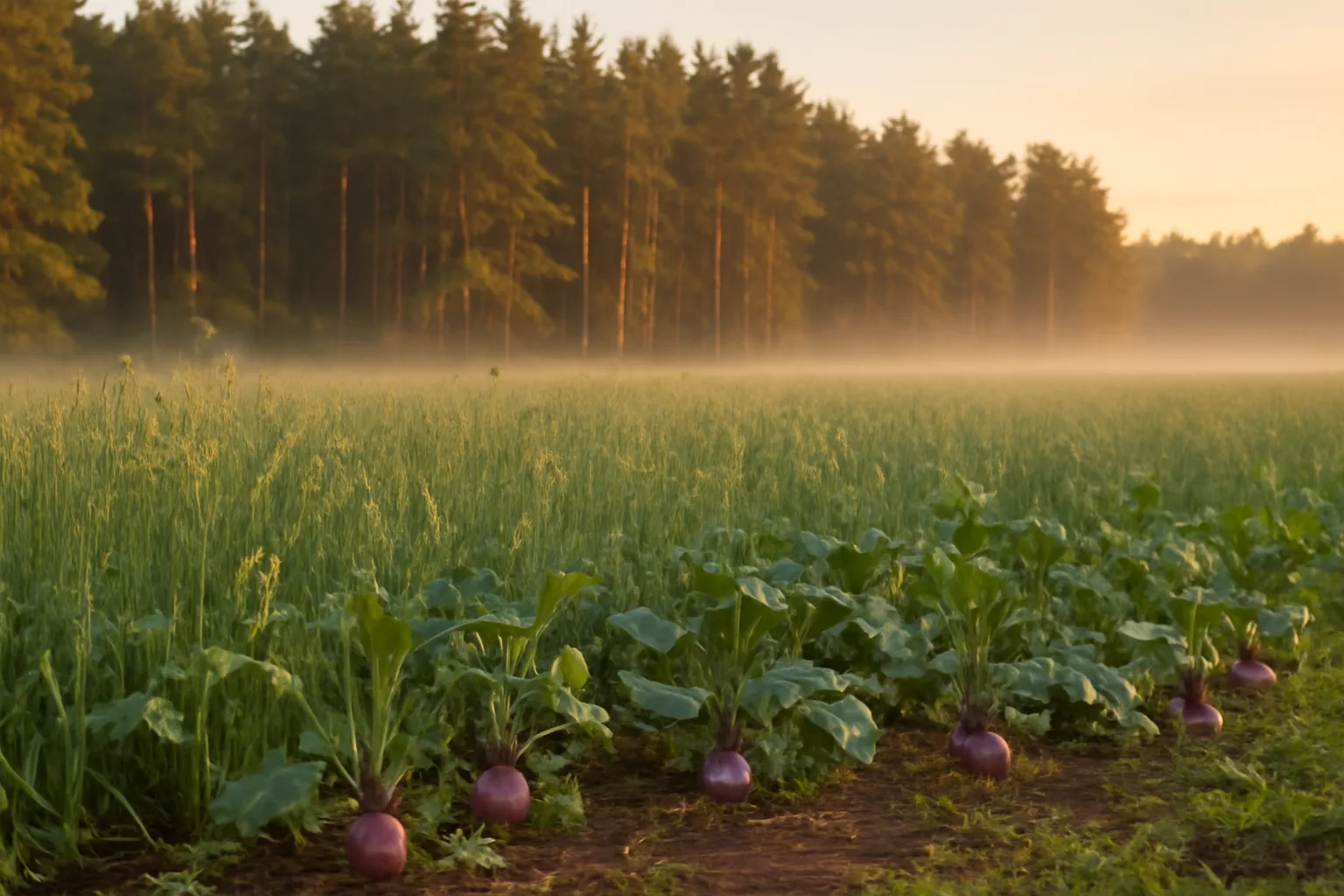
Turnips for deer go in the ground 80 to 90 days before your first expected killing frost, which in most of the northwoods lands in late July to the first week of August. Miss that window and the bulbs won't size up before the ground freezes. Turnips work well in northern climates specifically because deer often ignore the leafy tops until after a hard frost, then hit both tops and bulbs hard once sugar content rises. That makes turnips a strong late-season plot, timed right when northern gun seasons and late archery are running. One real northwoods risk: heavy clay or poorly drained soil common in parts of the Upper Midwest can rot bulbs if you get a wet fall. A soil test showing drainage and organic matter helps here, and this is exactly the kind of site-specific detail your soil test lab is best positioned to advise on, not a general seed tag. Seeding rate for pure turnip stands is light, typically 4 to 6 lbs per acre, since the seed is tiny and easy to overseed into a thin, weak stand. Extension guidance from Penn State on brassica forages notes that seeding rate errors (over-seeding) are one of the most common mistakes with small-seeded brassicas.
Do deer like clover, and does it work in the northwoods?
Yes, deer strongly prefer clover, and it's one of the most reliable perennial plot options even in cold climates, provided you pick a cold-hardy variety. Red clover and certain ladino (white clover) varieties are rated for USDA zones as cold as 3, meaning they can survive northwoods winters and come back for 3 to 5 seasons with proper mowing and fertility maintenance [3]. Clover's appeal is protein. Whitetail research generally shows clover forage running 20-30% crude protein during active growth, which matters most in spring and summer when does are lactating and bucks are growing antlers [4]. That protein window lines up well with the northwoods growing season, since clover is actively putting on growth from May through early fall in the north. The tradeoff up north is establishment risk. Clover seeded too late in spring or too early in fall can get hit by frost before it's established a real root system, and a hard winter with little snow cover for insulation can kill even hardy varieties. Frost-seeding, broadcasting clover seed onto frozen or thawing ground in March, is a technique a lot of northwoods planters use to get a jump on the season and let freeze-thaw cycles work the seed into the soil naturally. If you're deciding between annual and perennial strategies for northern ground, species and strategy content on the site (once published) or the deer food plots overview is a good next stop.
Do deer eat sorghum, and is it worth planting up north?
Deer do eat sorghum, mostly the grain heads, and it can work as a standing grain plot for late season. But sorghum is a warm-season crop that needs a longer, hotter growing period than most of the northwoods can reliably offer. Grain sorghum generally needs 90 to 120 frost-free days and warm soil to establish, which puts it right at the edge of feasibility in zone 3-4 country [5]. In a normal year with an early frost, a sorghum plot in far northern Minnesota or the UP might not mature before the growing season ends. If you're set on trying it, pick the shortest relative-maturity sorghum hybrid you can find, plant as early as soil temps allow (generally once soil hits 60-65°F), and treat it as a bonus late-season standing grain plot rather than your main plan. Most northwoods hunters get better returns from oats, brassicas, and clover, which are lower risk and cheaper to fail with. A $99 Custom Food Plot Plan can help you sort out whether a marginal crop like sorghum is worth the acreage on your specific property, versus doubling down on proven northwoods staples.
What are deer's favorite foods, and does that change up north?
Deer preference shifts by season and by what's available, but across most whitetail research, acorns, soybeans, clover, and standing corn rank as consistent favorites where they're available. In the northwoods, oak mast (particularly white oak acorns) can outcompete any planted food plot in a good mast year, which is part of why northwoods food plotters often see wildly different deer activity year to year on the same plot. Within planted options, agronomic research and deer preference trials consistently show brassicas and clover rank near the top for both tonnage and attraction, especially brassicas after a frost sweetens them and clover during the growing season [2] [4]. Corn and soybeans are also favorites but are harder and more expensive to grow well on small northwoods acreage without full-season varieties and decent soil. Worth being honest here: deer preference research is mostly regional and mast-year dependent. Nobody has a definitive ranked list that holds true everywhere, because acorn crops, ag field proximity, and even snow depth change what a deer is actually eating that week.
Do deer like honey, or is that a food plot myth?
No, honey is not a real food plot ingredient and there's no deer-preference research suggesting deer seek out honey as a food source. This question mostly comes from confusion with honey locust trees (a browse and pod source deer do eat) or from mineral/attractant products that use molasses (a sugar product, not honey) as a scent additive. If you're seeing 'honey' mentioned near deer food, it's almost certainly a mixup with honey locust (Gleditsia triacanthos), whose seed pods deer readily eat in fall, or a molasses-based mineral lick. Neither is honey itself, and neither should be confused with an actual food plot seed strategy.
Which food plot seeds handle the northwoods best overall?
Based on cold-hardiness and northwoods growing-season length, these tend to perform most consistently: Brassicas (turnips, radish, kale blends): fast-growing, frost-tolerant, and specifically improve in palatability after a hard frost, which lines up with northern gun seasons. Oats: fast germination, strong early-season attraction, cheap insurance crop that doesn't need to survive winter. Red clover and hardy ladino varieties: perennial protein source, rated for zone 3-4 survival when properly established and maintained [3]. Winter rye or winter wheat: extremely cold-hardy cereal grains that can be planted later than oats (into September in many northwoods areas) and still establish before freeze-up, then green up again in early spring as one of the first food sources available. Corn and soybeans: workable but higher-risk and higher-cost; stick to short relative-maturity varieties (under 90-95 days) and expect more variable results than in warmer zones. For a side-by-side on how these northwoods staples stack up against options used further south, the food plot seed and deer for food pages cover broader species comparisons.
How does soil testing change the northwoods plan?
Northwoods soil is frequently acidic (many forested, sandy, or glacial-till soils in the Upper Midwest run pH 5.0-6.0) and often low in organic matter compared to prairie-derived soils further south [6]. Clover and brassicas both perform best in the 6.0-7.0 pH range, so a lot of northwoods plots need lime just to get species like clover to hold long-term. A soil test through your county extension office or a private ag lab (typically $15-30 depending on state) will tell you exact pH and nutrient levels, and your lab's specific lime and fertilizer recommendations should be treated as the real authority for your dirt, not a generic bag rate on a seed label. Northwoods soils vary block to block even on the same property, especially where you've got a mix of sandy outwash and heavier till. If lime is recommended, get it down early. Lime takes months to fully react and adjust pH, so applying it the same week you plant clover doesn't help that season's stand much. Fall application ahead of a spring planting is the more realistic northwoods timeline.
What about baiting and feeding rules in northwoods states?
Food plots are legal planted crops and are treated differently from bait piles in essentially every state, but supplemental feeding and baiting rules vary a lot and some northwoods states restrict or ban baiting outright, often tied to chronic wasting disease (CWD) concerns. Wisconsin, for example, has baiting and feeding bans in specific counties tied to CWD management, managed by the Wisconsin DNR [7]. Minnesota similarly restricts feeding in parts of the state under its CWD response plan, administered by the Minnesota DNR [8]. These rules change year to year based on CWD detections, so check your state wildlife agency's current regulations before assuming last year's rules still apply. A planted, standing food plot is almost universally treated differently from a pile of corn or minerals dumped on the ground, but always confirm with your state agency directly since definitions of 'baiting' can get technical (some states count a plot mowed and left as hay differently than a growing plot, for instance).
What does a realistic northwoods planting calendar look like start to finish?
March: frost-seed clover if you're using that method, broadcasting onto still-frozen or just-thawing ground. Late April to late May: main spring clover and chicory planting window, once soil hits 50°F. Mid-May: short-season corn or soybeans if you're going that route, once soil hits about 55-60°F and frost risk has passed. Late July to mid-August: primary annual planting window for oats, brassicas, and turnips, timed 60-90 days ahead of first frost. Late August to mid-September: winter rye or wheat, which tolerates later planting than oats and can still establish before freeze-up. This calendar shifts by roughly two weeks earlier or later depending on where you sit within the northwoods (far northern Minnesota runs later frost-free windows than central Wisconsin, for instance), so cross-check against your specific county's average first-frost date, available through NOAA climate normals or your state climatology office.
Frequently asked questions
Do deer eat sorghum in food plots?
Yes, deer eat grain sorghum, especially the seed heads in late fall and winter. But sorghum needs 90-120 frost-free days, which is a stretch in most northwoods zones. It works best as a bonus standing-grain plot using a short-maturity hybrid, not as your primary plot strategy up north.
Do deer eat clover, and is it their preferred forage?
Yes, clover is one of deer's most consistently preferred forages, running roughly 20-30% crude protein during active growth. It's especially valuable in spring and summer for lactating does and antler growth. Cold-hardy red clover and certain ladino varieties survive northwoods winters (USDA zones 3-4) when established and maintained correctly.
When should I plant food plots for deer in a northern climate?
Plant perennial clover in spring once soil hits about 50°F (typically late April to late May in the northwoods). Plant annual brassicas and oats in late July to mid-August, roughly 60-90 days before your area's first hard frost. Winter rye can go in slightly later, into September.
Do deer like clover more than other food plot options?
Deer show strong, consistent preference for clover across most research and field observation, largely because of its high protein content during the growing season. That said, preference shifts seasonally: brassicas often win late season after a frost, and acorns can outcompete any planted plot in a heavy mast year.
When should I plant oats for deer up north?
Plant oats in the northwoods from late July through mid-August, giving them 60-70 days before a killing frost. Oats germinate in 5-10 days and stay attractive into fall, since frost converts starches to sugars. They don't survive northern winters, so treat them as a fall annual, not a long-term stand.
When is the best time to plant food plots overall?
There's no single best date; it depends on species. Perennials like clover go in spring once soil hits 50°F. Annuals like oats and brassicas go in 60-90 days before your first fall frost. In the northwoods that generally means late April-May for clover and late July-mid-August for annuals.
When should turnips for deer be planted?
Plant turnips 80-90 days before your area's first expected killing frost. In most of the northwoods that lands in late July to the first week of August. Turnip bulbs need that full window to size up, and deer often ignore the tops until after a hard frost sweetens them.
What exactly is a food plot?
A food plot is a planted area, from a fraction of an acre to several acres, seeded specifically with forage or grain to attract and feed deer on a property. It's distinct from farming for harvest; the goal is deer nutrition and hunting opportunity, timed around planting windows and hunting seasons.
What are deer's favorite foods in general?
Across most research, acorns, soybeans, clover, and standing corn rank as consistent favorites where available. Within planted food plots, brassicas and clover tend to score highest in preference trials. Preference is heavily seasonal and mast-dependent, so the 'favorite' food changes month to month and year to year.
Do deer like honey?
No, honey isn't a real deer food or food plot ingredient, and there's no research showing deer seek it out. The confusion usually comes from honey locust trees, whose pods deer do eat, or molasses-based mineral products, which use sugar cane byproduct, not honey.
Can I grow corn or soybeans in the northwoods?
Yes, but stick to short relative-maturity varieties (under 90-95 days) and expect more variability than growers see further south. The northwoods' shorter frost-free season (often under 120 days per USDA hardiness data) makes full-season corn and soybean varieties risky without careful hybrid selection.
How does soil pH affect northwoods food plots?
Many northwoods soils run acidic, often pH 5.0-6.0, while clover and brassicas prefer 6.0-7.0. A soil test (usually $15-30 through a county extension or private lab) tells you exact lime needs. Lime takes months to fully adjust pH, so apply it well ahead of planting, ideally the prior fall.
Sources
- University of Minnesota Extension, Soil temperature and planting: Clover and other spring plantings should follow soil temperature reaching about 50°F, not calendar date
- University of Wisconsin-Madison Extension, Brassica Forages: Northern Wisconsin brassica seeding should occur by early-mid August for full development before frost
- USDA NRCS Plant Fact Sheet, Red Clover: Red clover is cold-hardy and adapted to USDA zones as cold as 3
- Mississippi State University Deer Lab, Forage quality research: Clover forage typically runs 20-30% crude protein during active growth stages
- Purdue University Extension, Grain Sorghum Growth and Development: Grain sorghum generally needs 90-120 frost-free days to mature
- University of Minnesota Extension, Soil pH and Liming: Many Upper Midwest forest and sandy soils run acidic, often pH 5.0-6.0
- Wisconsin Department of Natural Resources, Baiting and Feeding Regulations: Wisconsin restricts baiting and feeding in specific counties tied to CWD management
- Minnesota Department of Natural Resources, Deer Feeding and Attractant Restrictions: Minnesota restricts feeding in parts of the state under its CWD response plan