Last updated 2026-07-24
TL;DR
For northwoods ground (roughly Zones 3-5), plant brassicas and cereal grains by late July through mid-August and perennial clover from mid-April through June. Short growing seasons and early frosts mean northern planters usually need to plant 3-6 weeks earlier than southern guides suggest. Match seed to your first frost date, not a calendar page.
What is a food plot, exactly?
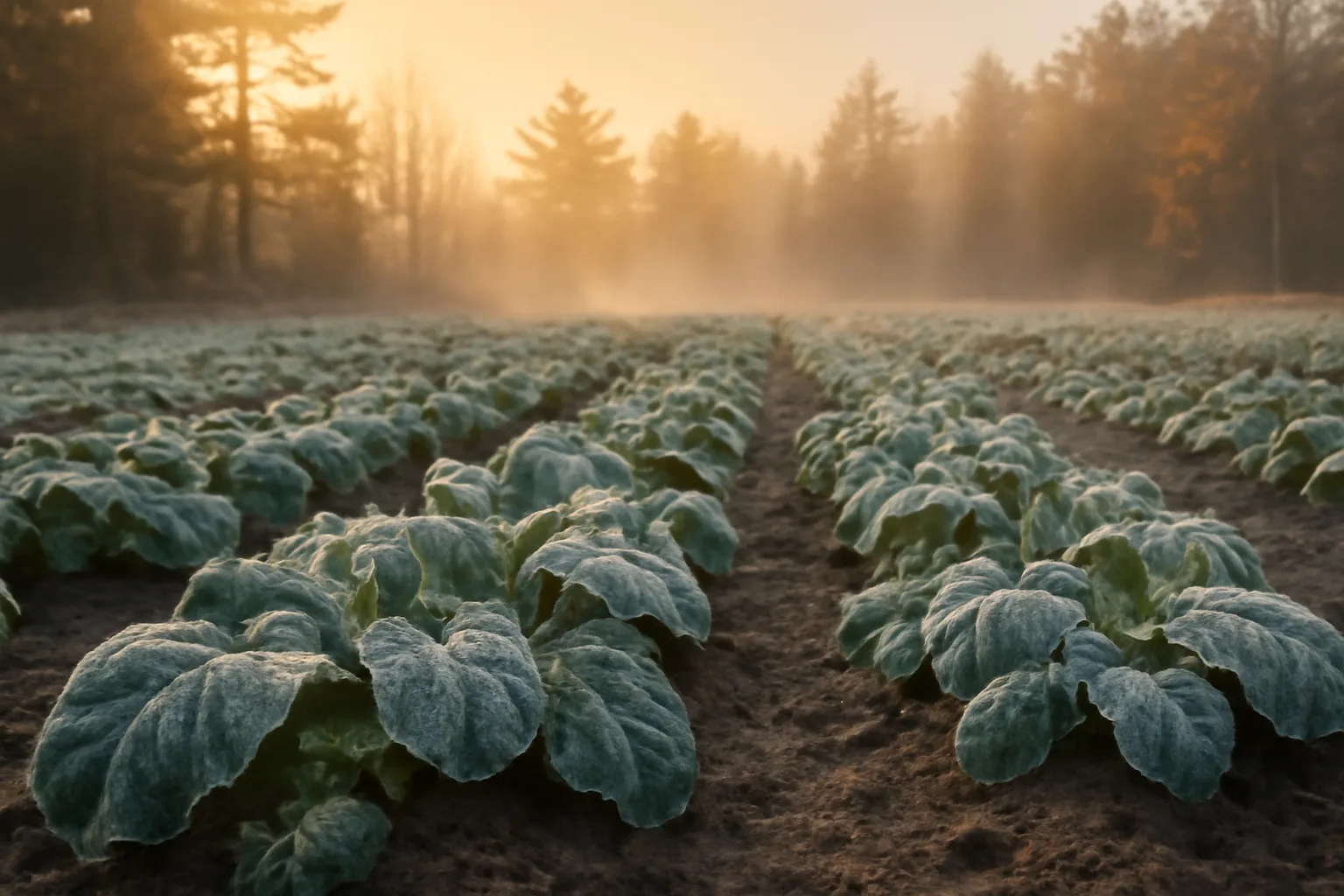
A food plot is a planted patch of ground, usually somewhere between a quarter acre and several acres, seeded with forage that deer and other wildlife will eat. It's more than a corn pile or a mineral lick. It's an actual crop, planted with the same basic steps a farmer uses: soil testing, lime and fertilizer, seedbed prep, seeding, and sometimes mowing or spraying to manage weeds. Most food plots fall into two buckets. Annual plots get replanted every year, things like brassicas, cereal grains, and soybeans. Perennial plots, mainly clover and alfalfa, get established once and then mowed or sprayed to maintain them for two to five years before you till them back up. The USDA's National Agroforestry Center and state extension programs both treat food plots as a form of small-scale wildlife habitat management, not a magic bullet. A good plot supplements natural browse, it doesn't replace it [1]. In the northwoods (the boreal-transition belt across northern Wisconsin, Minnesota, Michigan's Upper Peninsula, and similar latitudes) food plots matter more, not less, because natural browse gets buried under snow for months. A well-timed brassica or cereal grain plot can be one of the only green, accessible food sources left in December and January.
When to plant food plots for deer in northern zones?
| Clover / chicory | Mid-April to early June | 60-90 days to first grazing | |
|---|---|---|---|
| Cereal grains (oats, winter rye, winter wheat) | Late July to early September | 30-45 days (oats), overwinters (rye/wheat) | |
| Brassicas (turnips, radish, rape) | Late July to mid-August | 80-90 days | |
| Soybeans (forage type) | Late May to mid-June | 100-120 days | If you're unsure of your exact zone or frost dates, your county extension office has historical frost data specific to your township, and it's worth a phone call before you buy seed. |
In northern zones (USDA Hardiness Zones 3-5, roughly the northern half of Wisconsin and Minnesota, the UP of Michigan, and northern New England) your planting windows shift 3-6 weeks earlier than what national seed bag labels usually assume. Bag instructions are often written for a Zone 6-7 audience, and following them verbatim in the northwoods is one of the most common plot mistakes. Spring plantings (clover, chicory, alfalfa) should go in after your last frost date but while soil is still cool and moist, typically mid-April through early June depending on elevation and local microclimate. The National Weather Service and NOAA climate normals show average last-frost dates for northern Wisconsin and Minnesota landing anywhere from early May to early June depending on the specific county [2]. Fall/summer plantings (brassicas, cereal grains, soybeans as a fall attractant) need to go in early enough that the plant has 60-90 days before a killing frost. For most of the northwoods, that means seeding brassicas by late July to mid-August, not September like you'd see in a Georgia planting guide. University of Wisconsin-Extension guidance on forage brassicas recommends planting turnips and other brassicas 80 to 90 days before the first expected hard frost to allow full bulb and leaf development [3]. Here's a rough seasonal cheat sheet for Zone 3-5 ground: | Crop type | Northwoods planting window | Days to maturity |
When to plant oats for deer?
Oats are one of the best cheap, fast, high-attraction plantings for northern hunters, and timing is simpler than most crops because oats grow fast and die at the first hard freeze anyway. Plant oats in early to mid-August in Zone 3-5 country, giving them 6-8 weeks of growth before deer season opens and before a hard freeze shuts them down. Oats germinate in 7-10 days under decent moisture and can be grazed within 3-4 weeks of emergence, which makes them a good choice if you're planting late or want a fast green-up for early bow season. They won't survive winter in northern climates the way winter rye or winter wheat will, so treat oats as a single-season fall attractant plot, not a food source you're counting on into January. A lot of northwoods hunters blend oats with brassicas or winter rye in the same plot. The oats come up fast and give deer something to eat while the slower brassica bulbs and leaves are still developing, and the rye keeps growing after the oats have frozen out. This is a cheap insurance strategy: if one component fails from drought or an early frost, you're not starting from zero.
When to plant turnips for deer?
Plant turnips 80 to 90 days before your area's average first hard frost date, which for most of the northwoods lands the planting window between late July and mid-August [3]. Planting turnips too late is the single most common brassica mistake up north; the plant needs that long runway to build both leaf mass and the actual bulb, and a rushed planting gives you thin, small bulbs that don't hold much tonnage. Turnips are also a crop where deer behavior genuinely changes with the calendar. Early in the season, deer often ignore the bulbs entirely and just browse the leafy tops. It's only after a few hard frosts, when cold temperatures convert starches to sugars in the bulb, that deer start digging up and eating the roots themselves. That's why a well-timed turnip plot can turn into a magnet in late November and December, well after most annual plots have been eaten down or died back. Cornell Cooperative Extension and other land-grant programs note this frost-sweetening effect as one of the reasons brassicas work so well as late-season deer forage in northern climates. Seeding rate matters too. Most turnip blends run 2-5 lbs per acre if planted alone, broadcast into a firm, shallow (quarter-inch) seedbed. Planting too deep is a common failure mode since brassica seed is tiny.
Do deer eat sorghum?
Yes, deer will eat sorghum, particularly the grain heads once they mature, but it's not a top-tier northwoods food plot seed choice on its own. Sorghum (grain sorghum or forage sorghum) is more of a warm-season, longer-growing-season crop, closer in role to corn than to a fast-maturing northern annual. It typically needs 90-120 frost-free days to reach grain maturity, which is a tight fit in Zone 3-4 country where your frost-free window might only run from early June to mid-September. Where sorghum does show up in northern plot mixes is as a cover or screening component, planted alongside a food source to break sight lines and hold deer on a property longer. Some hunters plant a sorghum/sudangrass border around a clover or brassica plot for exactly that reason: it's cheap, it grows tall fast, and deer will browse the leaves and eventually the grain even if it's not their first choice. If your goal is straight-up food value in a short season, oats, brassicas, and clover will outperform sorghum in the northwoods almost every time. Save sorghum for screening cover, not the main forage plan.
Do deer eat clover, and do deer actually like it?
Yes, and clover is arguably the single most reliable perennial food plot seed for whitetails anywhere in the country, northwoods included. Deer eat clover readily from spring green-up through fall, and multiple state wildlife agencies and university extension forage programs list clover among the highest-preference forages measured in cafeteria-style feeding trials. Clover works well in the north for a few practical reasons. It's a perennial, so once established (typically a 2-4 year stand life for a good white clover blend) you're not buying new seed and re-tilling every year. It's also cold-tolerant; both white clover and red clover overwinter fine in Zone 3-5 ground once the root system is established, and they green up again in early spring before most annuals have even been planted. The catch with clover in northern zones is establishment timing. A spring seeding needs to go in early enough that the plant builds a root system before summer heat and drought stress hit, but late enough that a hard frost doesn't kill young seedlings. Mid-April through late May is the safe window for most northwoods latitudes; a late-summer seeding (early August) also works if soil moisture is reliable, since it avoids competing with spring weed pressure. Clover does have a real weakness up north: it goes dormant and low-growing under snow, and once several inches of snow cover the plot, clover stops being a practical food source until spring thaw. That's exactly why northern plot plans usually pair a perennial clover plot with an annual brassica or cereal grain plot nearby, so there's still standing food above the snowline in December and January.
What is deer's favorite food overall?
There isn't one single answer, because deer preference shifts hard by season, region, and what's locally available, but a few forage types show up at the top of nearly every preference study and every serious plot planner's list: soft mast (acorns especially), clover, and standing agricultural grain like corn and soybeans. Acorns are consistently the number one preferred natural food where oaks are present; multiple university deer research programs, including work summarized by Mississippi State's Deer Lab and various northern extension programs, note that white oak acorns in particular are chosen over almost any planted food plot forage when both are available at the same time. That's a humbling fact for plot planners: your $200 bag of brassica seed is competing against free acorns, and the acorns usually win in a good mast year. Among planted crops, clover, soybeans (as a standing forage before pod drop), and brassicas after a frost sweetens them tend to rank highest in observed preference and in actual tonnage consumed per acre. Corn is eaten heavily too, but mostly as a high-energy late-season and winter food rather than a preferred summer browse. The honest answer for a northwoods planter: plant what fits your season length and soil, not what a marketing label calls a deer's "favorite." A well-timed oat/brassica combo that deer can actually reach before three feet of snow will out-produce a trendy blend planted at the wrong time.
Do deer like honey, and does it matter for food plots?
Deer don't seek out honey the way people imagine; whitetails are browsers and grazers built around forbs, woody browse, mast, and grasses, not concentrated sugar sources like honey. There's no meaningful research or extension guidance treating honey as a deer attractant, and it's not a legitimate food plot input. What probably drives the question is confusion with commercial deer attractant products, many of which use sweet, sugary scents (some genuinely include molasses or syrup-based ingredients) to pull deer toward a mineral site or bait pile rather than a planted crop. Those products are a different category entirely from food plot seed, and their use is regulated separately from plots in most states. If you're hunting over any kind of feed, mineral, or attractant, check your state wildlife agency's baiting and feeding regulations before you use it. Baiting rules vary widely: some states allow it with restrictions on distance from stands or blinds, some states allow it in some seasons or zones but not others, and some states ban it outright for deer. Michigan, for example, has specific baiting restrictions tied to CWD management zones, and Wisconsin similarly restricts baiting and feeding in CWD-affected counties [4] [5]. A legitimate seeded food plot is treated differently from bait in nearly every state, but always confirm with your state agency before assuming a plot-adjacent practice is legal.
How do soil tests change what you plant?
A soil test tells you your pH and your phosphorus, potassium, and organic matter levels, and those numbers should decide your lime and fertilizer plan, not a generic bag recommendation. Clover and brassicas both want a pH in the 6.0-7.0 range for best nutrient uptake; below that, lime becomes the highest-value dollar you'll spend on the plot, often more impactful than any seed choice [6]. Most land-grant university soil labs (University of Wisconsin, University of Minnesota, Michigan State) will run a standard test for somewhere between $15 and $25 per sample, and turnaround is usually 1-2 weeks depending on season. Their report will give you specific lime (in tons per acre) and fertilizer (in lbs of N-P-K per acre) recommendations tailored to your target crop. Here's the thing worth saying plainly: your soil test lab is the authority on your actual lime and fertilizer numbers. National seed company "general guidance" printed on a bag is a starting point at best. If your test says you need 2 tons of lime per acre and the bag says "apply lime as needed," go with the test. Lime also takes months to fully react in the soil, so fall applications for a following spring planting, or spring applications for a fall brassica planting, give the lime time to actually move your pH before the crop needs it.
What equipment do you actually need for a northwoods plot?
At minimum you need a way to kill existing vegetation, a way to create a seedbed, a way to spread seed, and a way to pack it in. For small plots (under an acre) an ATV or UTV with a drag harrow, a broadcast spreader, and a cultipacker or roller covers most of it. For larger plots, a tractor with a disc, a drill or no-till planter, and a boom sprayer speeds things up considerably and improves seed-to-soil contact. Brassica and clover seed is tiny and needs shallow planting, roughly a quarter inch deep. A common northwoods mistake is planting brassica seed too deep with a grain drill set up for oats or soybeans; when in doubt, broadcast small seed onto a firm seedbed and cultipack it in rather than drilling it deep. If you're planting cereal grains like oats or winter rye, a drill set to 1-1.5 inches works well, and drilled cereal grains generally establish more evenly than broadcast in dry years. Herbicide timing also matters more in short northern seasons: a burndown application (glyphosate is the common choice for a clean start) needs 5-7 days to work before you till or plant, so build that into your calendar instead of tacking it on at the last minute.
Zone-by-zone northwoods planting calendar
| Late March - April | Soil test if you haven't already; order lime | |
|---|---|---|
| Mid-April - late May | Spring clover, chicory, or alfalfa seeding | |
| Late May - mid-June | Forage soybean planting (if soil temps are 60°F+) | |
| July | Mow/spray existing perennial plots; prep fall plot ground | |
| Late July - mid-August | Brassica and turnip planting; oats planting | |
| Late August - early September | Winter rye or winter wheat planting for late-season/overwinter forage | |
| September onward | Monitor plots, no more planting; hunting season begins | This calendar shifts earlier the further north and higher in elevation you are. A property in far northern Minnesota near the Canadian border should lean toward the earlier end of every window; a property in southern Wisconsin's driftless region has a bit more room to plant later. Your county extension office's frost date tables are the most reliable local adjustment tool [2]. |
Here's a practical calendar built around USDA Hardiness Zones 3-5, which covers most of what people mean by "northwoods" ground: northern Minnesota and Wisconsin, Michigan's Upper Peninsula, northern New England, and similar latitude bands. | Month | Task |
Building a plan that fits your specific ground
Every piece of northwoods deer ground is a little different: soil texture, drainage, shade from timber, deer density, and how much acreage you can actually till all change what mix makes sense. A soil test gives you the chemistry. A hardiness zone and frost date give you the calendar. But turning that into an actual seed order, a rate per acre, and a sequence of plots across a season takes some judgment calls. If you'd rather not guess, PlotSeason's Custom Food Plot Plan is a $99 one-time service that takes your soil test results, acreage, and location and builds a specific planting plan (species, rates, timing) for your ground. It's general planning guidance built from your numbers, not a replacement for your soil lab's specific lime and fertilizer recommendations, and nobody can promise deer activity or a harvest from any plot. But it takes the guesswork out of matching seed to your actual frost dates and soil chemistry. Whatever route you take, the two things that matter most in northwoods planting are getting your lime and pH corrected early and hitting your planting windows on time. A perfect seed blend planted three weeks late will underperform a mediocre blend planted on schedule, every time, in short-season country.
Frequently asked questions
Do deer eat sorghum?
Yes, deer eat sorghum leaves and grain, but it needs 90-120 frost-free days to mature, which is tight in northern zones. It works better as tall screening cover around a plot than as a primary northwoods forage crop; oats, brassicas, and clover generally outperform it for food value in short growing seasons.
Do deer eat clover and do they actually like it?
Yes, clover is one of the highest-preference forages for whitetails in feeding studies and extension data. It's palatable spring through fall, cold-hardy for 2-4 year stands in northern zones, and pairs well with a fall annual plot since clover goes dormant under snow in deep winter.
When should you plant food plots for deer in northern zones?
Spring perennials (clover, chicory) go in mid-April through early June. Fall annuals (brassicas, oats) need planting by late July to mid-August, roughly 3-6 weeks earlier than national seed labels suggest, because northern frost dates arrive early and brassicas need 80-90 days to mature before a hard freeze.
When should you plant oats for deer?
Plant oats in early to mid-August in Zone 3-5 ground. Oats germinate in 7-10 days and can be grazed within 3-4 weeks, making them a fast fall attractant. They won't survive northern winters, so treat them as a single-season plot, often blended with brassicas or winter rye.
When should you plant turnips for deer?
Plant turnips 80-90 days before your area's average first hard frost, generally late July to mid-August across most northwoods latitudes. Deer often ignore the bulbs until after a few hard frosts convert starches to sugars, so turnip plots tend to peak in late November and December.
What is a food plot?
A food plot is a planted area, typically a quarter acre to several acres, seeded with forage crops like clover, brassicas, or cereal grains to supplement natural deer browse. It involves soil testing, lime and fertilizer, seedbed prep, and planting, the same basic steps used in small-scale farming.
What is deer's favorite food overall?
It varies by season and region, but acorns (especially white oak) consistently rank as the top preferred natural food when available. Among planted crops, clover, standing soybeans, and frost-sweetened brassicas rank highest in observed deer preference and consumption.
Do deer like honey?
No, deer don't seek out honey; they're browsers built around forbs, mast, and grasses, not concentrated sugars. Honey has no real role in legitimate food plot planning. The question likely stems from confusion with sweet-scented commercial attractant products, which are a separate, often state-regulated category from planted plots.
How early do I need to plant compared to southern food plot guides?
Northwoods planters typically need to plant 3-6 weeks earlier than national seed bag instructions, which are usually written for Zone 6-7 audiences. Brassicas that a Georgia guide says to plant in September need to go in by mid-August in Zone 3-5 country to reach maturity before frost.
Can clover survive northern winters?
Yes, established white and red clover overwinter well in USDA Zones 3-5 once the root system is developed, typically after the first growing season. Clover greens up again in early spring, often before annual plots are even planted, but it goes dormant and inaccessible under deep snow cover.
What soil pH do food plot crops need?
Clover and brassicas both perform best in a soil pH range of 6.0 to 7.0. Below that range, nutrient uptake drops sharply regardless of fertilizer applied, which is why a soil test and lime application often matter more than seed selection for northern plot success.
Is baiting deer near a food plot legal?
It depends entirely on your state; baiting and feeding rules vary widely and change with CWD management zones. Michigan and Wisconsin both restrict baiting in CWD-affected counties. A planted food plot is treated differently from a bait pile in most states, but always confirm current rules with your state wildlife agency before hunting near any supplemental feed.
Sources
- USDA National Agroforestry Center, Working Trees for Wildlife: Food plots function as supplemental wildlife habitat management, not a replacement for natural browse
- NOAA National Weather Service, Climate Normals: Average last-frost dates for northern Wisconsin and Minnesota vary from early May to early June
- University of Wisconsin-Madison Extension, Forage Brassicas for Grazing: Brassicas should be planted 80-90 days before expected first hard frost for full development
- Michigan Department of Natural Resources, Baiting and Feeding Regulations: Michigan restricts baiting and feeding deer in CWD management zones
- Wisconsin Department of Natural Resources, Baiting and Feeding Regulations: Wisconsin restricts baiting and feeding of deer in CWD-affected counties
- University of Minnesota Extension, Soil pH and Lime Recommendations: Target soil pH of 6.0-7.0 for optimal nutrient uptake in forage crops like clover and brassicas