Last updated 2026-07-25
TL;DR
A good no-till food plot mix pairs a fast cover crop (oats or winter rye) with a legume (clover or forage soybeans) and often a brassica like turnips, planted straight into existing sod or crop residue with a drill or broadcast-and-cultipack method. Timing depends on your zone: brassicas and clover go in late summer, oats often follow in early fall.
What is a food plot, exactly?
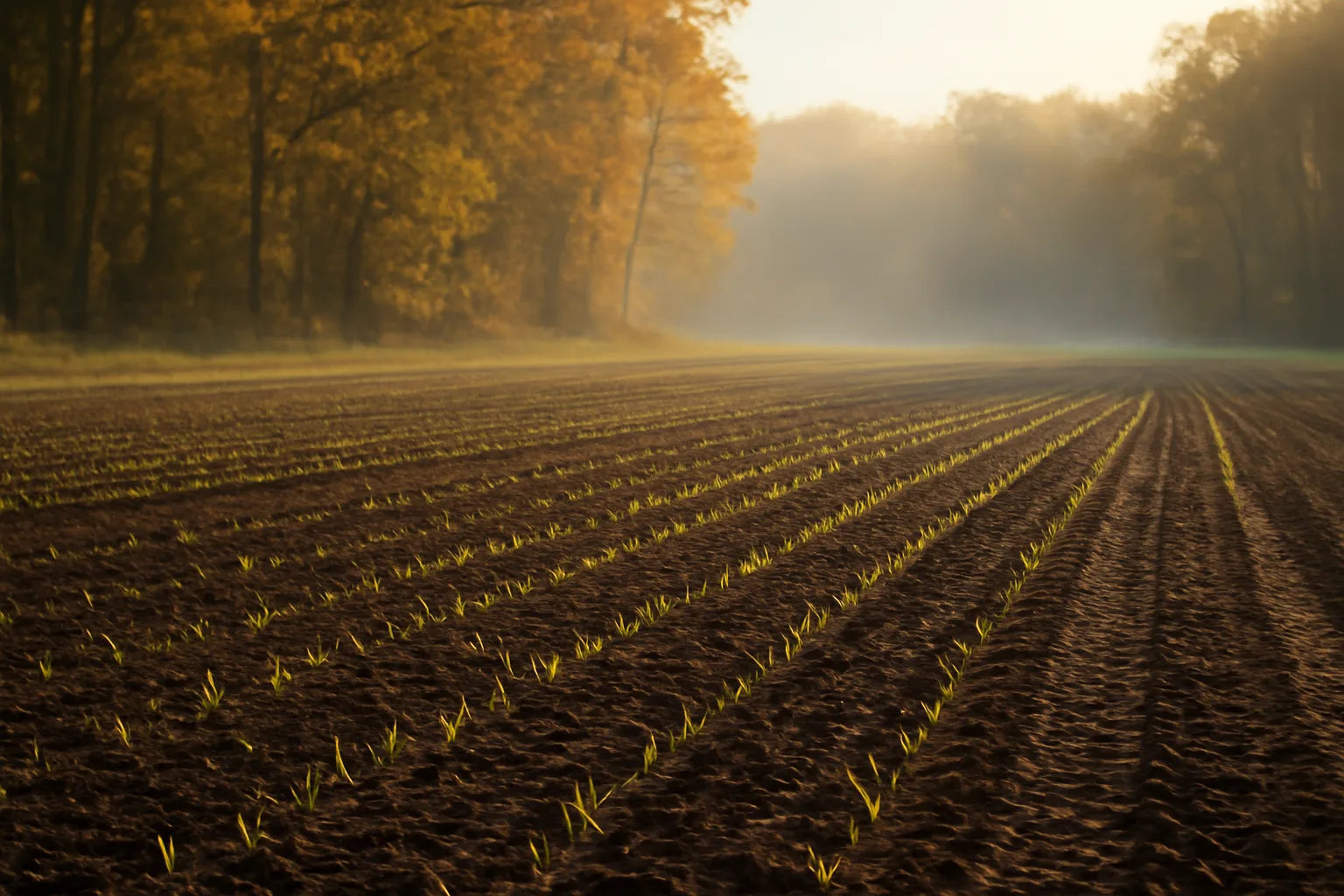
A food plot is a planted area on hunting land, usually somewhere between a quarter acre and a few acres, seeded with forage that deer and other wildlife will eat. It's not a garden and it's not a lawn. The goal is nutrition and attraction, sometimes both at once, depending on whether you're planting a spring/summer growing plot for antler and body growth or a fall plot timed to be attractive during hunting season. Most state wildlife agencies treat food plots differently from bait piles or feeders, and the legal line matters. In many states, a plot of seed broadcast and grown in the ground is legal to hunt over even where baiting (piling corn, minerals, or other feed) is not. Rules vary a lot by state, so check your state wildlife agency's baiting and feeding regulations before you plant or hunt over anything unusual, like a plot with supplemental feed nearby [1]. No-till food plots specifically mean you're planting into existing residue, whether that's a killed-off cover crop, dead sod, or the stubble left from last year's plot, without turning the soil over with a disc or plow. You're relying on a no-till drill, a seed drill attachment, or a broadcast-and-cultipack approach instead.
Why go no-till for a food plot at all?
No-till saves you a tractor pass, protects topsoil structure, and keeps moisture in the ground longer, which matters a lot on the sandy or clay-heavy soils common on a lot of leased hunting ground. Conventional tillage exposes bare soil to sun and wind, and that dries out fast, especially on a plot you can only visit every couple of weeks. The USDA Natural Resources Conservation Service points out that no-till systems reduce erosion and can improve water infiltration over time compared to conventionally tilled ground, because the undisturbed soil structure and root channels stay intact [2]. That's a real agronomic benefit, more than marketing language. For a small plot on a hillside or near a creek, that erosion control is often the difference between a plot that still has topsoil in five years and one that's washed into the creek. The tradeoff: no-till planting demands more from your seed-to-soil contact. You can't just toss seed on top of thick thatch and expect much to come up. You either need a drill that can cut through residue, or you need to knock down the existing vegetation first with herbicide or mowing, then broadcast and cultipack to press seed into contact with soil.
When should you plant food plots for deer?
| South (zones 8-9) | March-April | September-October | |
|---|---|---|---|
| Mid-South/transition (zones 6-7) | April-May | August-September | |
| North (zones 3-5) | May-June | late July-August | These are general starting points, not guarantees, since a late frost or a drought year changes everything. Check your own food plot whitetail planning notes against your local extension office's frost tables before locking in a date. |
Planting windows split into two seasons: spring/summer plots (usually April through June depending on zone) meant for growing-season nutrition, and late-summer/fall plots (usually late July through September) meant to be green and attractive during hunting season. Your zone and first-frost date drive almost everything here. Cooperative extension frost date data is the best free tool for this. Purdue Extension and most land-grant universities publish average first and last frost dates by county, and food plot seed bags almost always list a planting window relative to first frost [3]. For fall brassica and clover plots, you generally want seed in the ground 60 to 90 days before your average first frost, since brassicas need that runway to bulb up and get sweet from cold exposure. Here's a rough framework by zone: | Zone (approx.) | Spring plot window | Fall plot window |
What should go into a no-till seed mix?
A solid no-till mix usually combines three functional pieces: a fast-establishing grain or cover crop, a legume for protein and soil nitrogen, and sometimes a brassica for fall tonnage and cold-sweetened forage. You don't need all three in every mix, but most of the best-performing plots use at least two. Oats or winter rye are the standard no-till companions because they germinate fast, even in imperfect soil contact, and their root mass helps hold the seed bed together while slower species like clover establish underneath. Winter rye in particular is a favorite for no-till because it tolerates cold, poor soil, and late planting better than almost anything else, per Penn State Extension's cover crop guidance. Clover, especially white clover varieties like Ladino, is the backbone of a lot of perennial no-till plots because it survives 3 to 5 years once established. Forage soybeans or cowpeas work as annual legume options where you want tonnage fast rather than a perennial stand. Brassicas (turnips, radishes, rape) round out fall mixes because deer preference for them increases sharply after a hard frost converts starches to sugars, something wildlife biologists have documented in forage palatability studies [4]. A practical no-till fall blend might run something like: 40% winter rye or oats, 30% clover, 20% turnip or radish, 10% chicory, adjusted for your seeding rate math on each component.
Do deer eat clover, and do they actually like it?
Yes, deer eat clover readily, and it's one of the most consistently preferred forages in food plot research. White clover and red clover both show up near the top of deer preference studies across multiple states, and clover's crude protein content, often in the 25-30% range for well-fertilized, actively growing clover, makes it a strong nutritional option during spring and summer when does are lactating and bucks are growing antlers [5]. The catch is that clover needs decent soil fertility and a pH close to neutral (6.0-7.0) to really produce, and a soil test is the only honest way to know where your ground stands. Clover also takes a full season to establish well in a no-till setting since it germinates slower than oats or rye, so a lot of planters use a nurse crop (oats, usually) planted alongside it to protect the young clover seedlings and suppress weeds during establishment. Once established, clover plots can produce for 3 to 5 years with proper mowing and occasional overseeding, which makes the upfront establishment cost worth it compared to replanting an annual mix every single year.
Do deer eat sorghum, and is it worth planting?
Deer will eat sorghum, particularly the grain heads and young shoots, but it's not typically a top-tier attractant crop the way soybeans, clover, or brassicas are. Sorghum shows up more often as a screening or cover crop choice, planted for its height and structure to create bedding cover or visual screens along field edges, with the grain as a secondary benefit for deer and turkey. In a no-till rotation, grain sorghum can work as a summer cover crop that also produces some fall forage value, but if your goal is maximum deer attraction, most seed mix comparisons and extension forage trials rank soybeans, cowpeas, and brassicas higher for palatability and tonnage per acre [4]. If you're planting sorghum specifically for screening cover rather than primary nutrition, that's a legitimate use, just don't expect it to pull deer the way a clover or bean plot will.
When should you plant oats for deer?
Oats are almost always a fall planting for deer food plots, typically going in 60 to 75 days before your first expected hard frost. That gives the oats time to establish a leafy stand before cold weather slows growth, and it puts peak palatability right around when most bow seasons open. In zones 6-7 (much of the transition belt), that usually means late August into September. Further north, in zones 3-5, oats often go in earlier, sometimes late July into August, to beat an earlier frost. In the Deep South, oats can go in as late as October since frost comes much later. Oats germinate fast, often within 7 to 10 days under decent moisture, which makes them a forgiving no-till option, since you don't need perfect seed-to-soil contact the way you do with tiny clover or brassica seed. A lot of no-till planters use oats specifically because of that forgiveness. Broadcast the oats, run a cultipacker or ATV drag over the top, and you'll usually get a stand even without a drill.
When should you plant turnips for deer, and do deer actually like them?
Turnips go in the ground roughly 90 days before your first fall frost, since they need that runway to bulb up and reach the sweetness that makes them attractive. Deer preference for turnips is well documented once temperatures drop, because frost converts the starches in the bulb and leaves into simple sugars, which deer clearly favor over the same plant pre-frost. Early in the season, before frost, deer often ignore turnip plots almost entirely, which frustrates first-time planters who check trail cameras in September and see nothing happening. That's normal. The real action typically starts in late fall and often peaks in the dead of winter when turnips become one of the few high-carbohydrate food sources left standing above snow or frozen ground. In zone terms: zones 3-5 want turnips in by late July to mid-August, zones 6-7 by mid-August to early September, and the South can push into late September. Turnip seed is tiny, so no-till planters need good seed-to-soil contact, meaning a light cultipack pass after broadcasting matters more here than it does with oats.
What is a deer's favorite food, really?
There's no single universal favorite, since deer preference shifts by season, region, and what's already growing wild nearby, but food plot and forage research consistently puts a handful of species at the top: white clover, soybeans (as a growing-season forage and bean pod), and cool-season brassicas after frost. Acorns, where available, often outcompete anything planted, since deer strongly prefer natural mast when it's on the ground. A multi-state Mississippi State University deer nutrition study and similar work from other land-grant programs point to legumes and soft mast as consistently high-preference, high-protein food sources, with white-tailed deer diets shifting heavily toward acorns and other mast in fall when it's available [4]. That's worth remembering: a food plot competes with a heavy acorn year, and it usually loses that fight. Plots earn their keep most in years and areas with light mast crops, or as a stable protein source through spring and summer when acorns aren't a factor at all.
Do deer like honey, or is that a myth?
There's no real evidence deer seek out honey in the wild, and it's not a natural or practical food plot ingredient. This question usually comes up because of commercial deer attractant products with names that reference sweetness (molasses, sugar-based syrups, and similar scent/flavor attractants), not because deer are out there raiding beehives. What deer clearly do respond to is sugar content in their actual forage, which is exactly why frost-sweetened brassicas and late-season standing corn or soybeans pull deer hard in December and January. If you're looking for a sweetness-driven attraction strategy, that's better achieved through the frost-sugar conversion in brassicas and grains than through any honey-based product, and most wildlife agencies would flag pouring honey or syrup on the ground as a form of baiting anyway, which circles back to checking your state's feeding and baiting statute before doing it [1].
How do you actually plant a no-till mix without a drill?
The broadcast-and-cultipack method is the standard no-till approach for anyone without a no-till drill, and it works fine for most seed sizes if you do the steps in order. First, knock down existing vegetation, either by mowing short or spraying a burndown herbicide like glyphosate 2 to 3 weeks ahead of planting. Second, broadcast your seed mix at the recommended rate, ideally right before or during a rain forecast. Third, drag a cultipacker, a chain-link section, or even a loaded ATV tire drag over the area to press seed into soil contact. Seed depth matters more than people think. Clover and brassica seed is tiny and should barely be covered, often less than a quarter inch deep, while oats and cereal grains want closer to half an inch to an inch of coverage. Broadcasting everything at one uniform depth is one of the most common reasons a mixed no-till planting fails to come up evenly, since the big seed germinates fine but the tiny seed either blows away or sits too exposed and dries out. If your budget allows it, a no-till drill (even a rented one, since some co-ops and NRCS conservation districts loan them out) gives far more consistent results than broadcast-and-cultipack, especially on ground with heavy existing residue.
How do soil test results change your seed mix choice?
Your soil test report is the single most useful document you'll have for picking a no-till mix, because pH and existing nutrient levels determine which species will actually perform versus which ones will limp along regardless of seed cost. Clover, for example, struggles hard below pH 6.0, while brassicas and cereal grains tolerate a wider pH range. Most land-grant extension soil test labs (Penn State, Mississippi State, Purdue, and others) return a report with lime and fertilizer recommendations specific to the crop you tell them you're planting, so it pays to name your intended food plot species when you submit the sample rather than getting a generic report [3]. Your soil test lab is the authority here, not a seed bag label, since your lab knows your actual pH, phosphorus, and potassium levels and a bag of seed doesn't. If your test comes back at pH 5.2 and you don't have time or budget to lime before planting, skip clover for that season and lean into brassicas, oats, or rye instead, since they'll tolerate the acidity better while you work lime into the plan for next year.
Building your own mix versus buying a pre-blended bag
Pre-blended food plot mixes save time and take the species-ratio math off your plate, but they're rarely calibrated to your specific soil test results or your zone's exact frost timing. Building your own mix from individual seed types costs more planning time but lets you adjust ratios based on what your soil test actually recommends and what your local frost dates demand. For most first-time no-till planters, a pre-blended bag from a reputable seed company is the lower-risk starting point, especially paired with an actual soil test rather than guesswork. From there, once you've got a season or two of results, building custom mixes gets a lot easier because you know how your specific ground performs. If you want a plan built around your actual soil test, your acreage, and your zone's planting windows rather than a generic bag recommendation, that's exactly the kind of thing a Custom Food Plot Plan is built to solve, for a flat $99 one-time fee. It's general planning guidance built from your inputs, not a site visit or a guarantee of deer activity, but it beats guessing at ratios off a bag label. For a broader look at species options and how they stack up against each other, deer food plot seed and food plot seed both cover selection criteria in more depth.
Frequently asked questions
Do deer eat sorghum?
Yes, deer eat sorghum grain and young shoots, but it's usually ranked below soybeans, clover, and brassicas for palatability in extension forage trials. Sorghum works better as a screening or cover crop in food plot rotations than as a primary attraction crop, though deer will browse it opportunistically.
Do deer eat clover?
Yes, clover is one of the most consistently preferred food plot forages in deer research, with well-fertilized white and red clover often testing at 25-30% crude protein. It requires decent soil pH (6.0-7.0) and fertility to perform well, which is why a soil test matters before planting.
When should you plant food plots for deer?
Spring/summer nutrition plots go in April through June depending on zone; fall attraction plots go in late July through September, timed so brassicas and clover have 60-90 days before first frost. Check your local extension office's frost date tables to nail down exact windows for your county.
Do deer like clover?
Deer strongly prefer clover, especially actively growing white clover, which ranks near the top of most food plot preference studies. It's particularly valuable in spring and summer when protein demands are highest for lactating does and antler-growing bucks.
When should you plant oats for deer?
Plant oats 60-75 days before your area's average first frost, which in zones 6-7 usually means late August to September, earlier in northern zones and later in the South. Oats germinate fast, often in 7-10 days, making them forgiving for no-till broadcast planting.
When should you plant food plots for deer in general?
It depends on whether you want a spring growing-season plot or a fall hunting-season plot. Spring plots go in April-June; fall plots go in late July-September, timed backward from your local first-frost date so brassicas and clover have enough runway to mature.
When should you plant turnips for deer?
Plant turnips about 90 days before your first fall frost, since they need that time to bulb up before cold weather sweetens them through starch-to-sugar conversion. Zones 3-5 typically plant late July to mid-August; zones 6-7 mid-August to early September.
What is a food plot?
A food plot is a planted patch, usually a fraction of an acre to a few acres, seeded with forage crops to feed and attract deer or other wildlife. It differs legally and practically from a bait pile, since it's a growing crop rather than piled feed, though state rules on the distinction vary.
What are deer's favorite foods?
No single universal favorite exists, but white clover, soybeans, and frost-sweetened brassicas rank consistently high in food plot preference research. Acorns and other natural mast typically outcompete any planted forage when available in a given fall.
Do deer like honey?
There's no real evidence deer seek out honey in the wild; it's not a practical food plot ingredient. Deer do respond strongly to sugar in actual forage, like frost-sweetened brassicas, which is likely where the honey association in commercial attractant marketing comes from.
Can you plant a no-till food plot without a drill?
Yes, using the broadcast-and-cultipack method: mow or spray down existing vegetation, broadcast seed at the right rate, then drag a cultipacker or chain section over the plot to press seed into soil contact. It works well for most species if seed depth and timing are right.
How does a soil test change what you plant no-till?
Your soil test tells you pH and nutrient levels, which determine whether clover will thrive or struggle. Below pH 6.0, clover performs poorly, so many planters lean toward brassicas or cereal grains until lime brings pH up, a decision your soil test lab is best positioned to guide.
Sources
- Example state wildlife agency baiting/feeding regulation (verify with your own state): Baiting and feeding rules for deer vary by state and should be checked before hunting over unusual attractants
- USDA Natural Resources Conservation Service, No-Till and Soil Health: No-till systems reduce erosion and improve water infiltration compared to conventional tillage
- Purdue University Cooperative Extension, Indiana frost dates and planting guidance: Land-grant extension offices publish county-level average first and last frost dates used to time food plot planting
- Mississippi State University Extension, Deer Nutrition and Food Plots: Deer diets shift heavily toward acorns and other mast in fall when available, often over planted forage
- University of Tennessee Extension, Forages for Wildlife Food Plots: White and red clover rank among the highest-preference, highest-protein forages in food plot research