Last updated 2026-07-26
TL;DR
Get a soil test before buying anything. Clover and other legumes need phosphorus, potassium, and lime, but little nitrogen once established. Brassicas, cereal grains, and sorghum need real nitrogen, often 100-150 lbs/acre split across the season. Your soil test report, not a bag label, should set your actual rates.
What fertilizer should you actually use for a deer food plot?
The honest answer is: whatever your soil test says you need, in the ratio your specific plant requires. There's no single bag of fertilizer that's right for every plot. A clover plot and a brassica plot want almost opposite nutrient profiles. For legumes like clover, chicory, and alfalfa, you want a fertilizer heavy in phosphorus (P) and potassium (K) with little to no nitrogen (N), something like 0-20-20 or 6-24-24, because these plants fix their own nitrogen from the air through root bacteria once they're established [1]. For brassicas (turnips, radish, rape) and cereal grains (oats, wheat, rye) and grain sorghum, nitrogen is the nutrient that drives yield, and you'll often need 40-60 lbs of actual nitrogen at planting plus a topdress later in the season [2]. The single biggest mistake food plotters make is buying a generic "food plot blend" fertilizer off the shelf without ever pulling a soil sample. Low soil pH can lock up applied phosphorus so severely that plants can't use it no matter how much you spread [3]. You could dump $200 of fertilizer on acidic dirt and get almost nothing back until you fix the pH with lime. Your soil test lab is the real authority here. Extension labs (most land-grant universities run one) will give you a specific N-P-K recommendation and a lime rate in tons per acre based on your actual soil, not a guess based on your zip code.
Why does a soil test matter more than the fertilizer bag itself?
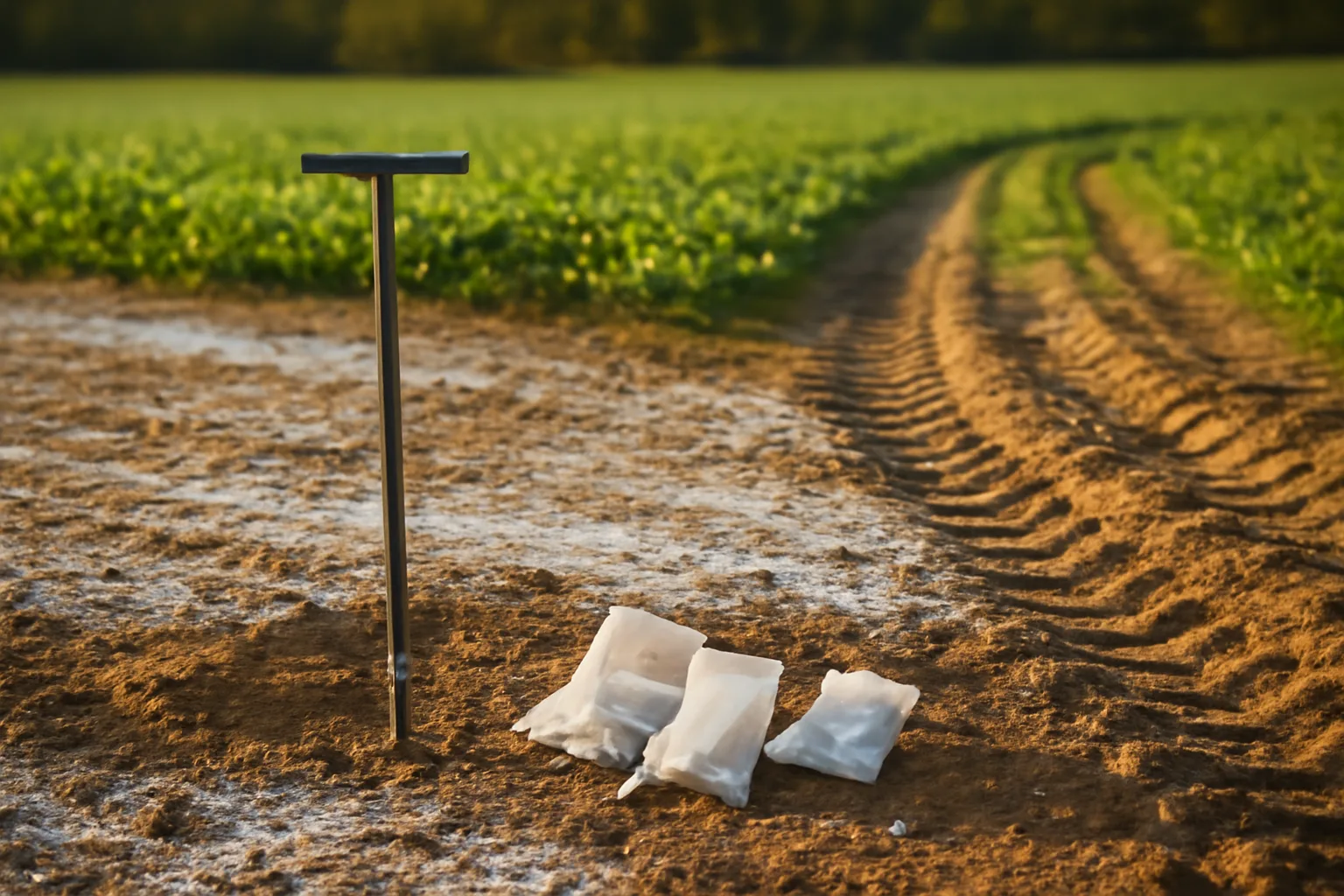
A soil test tells you three things a fertilizer bag never can: your current pH, your existing phosphorus and potassium levels, and your soil's buffer capacity, which determines how much lime you actually need to correct it. Skip the test and you're guessing blind. Most land-grant extension soil labs charge somewhere between $9 and $20 per sample for a standard fertility test, and turnaround is usually one to two weeks [4]. That's a trivial cost next to what you'll spend on seed, lime, and fertilizer for the season. Test every two to three years for established plots, and test new ground before you ever break it. Here's what the report actually gives you: a pH reading, P and K levels usually reported in pounds per acre or as "low/medium/high," and a specific lime and fertilizer recommendation for the crop you tell them you're planting. That last part matters. Always list your intended species on the sample form, because the lab's recommendation changes based on whether you're growing clover or corn. If your pH is below 6.0, most extension agronomists recommend applying lime months before planting, ideally over the summer or fall before a spring planting, because lime takes time to react with the soil and raise pH [5]. Pelletized lime works faster than ag lime but costs more per ton. If you have the lead time, ag lime is the better value. If you want a starting point before your soil test results come back, or you're building out a full-season plan across multiple plots, a Custom Food Plot Plan can give you species and rate guidance to work from, though your soil test report should always be the final word on your specific ground.
What is a food plot, exactly?
A food plot is a planted area, usually somewhere between a quarter acre and a few acres, established specifically to provide forage for deer and other wildlife on a piece of hunting land. It's not a lawn and it's not a farm field in the commercial sense. It's a managed patch of clover, brassicas, grains, or a mix, planted to hold deer on your property and support their nutrition through parts of the year when native browse is thin. Food plots generally fall into two categories: perennial plots (clover, chicory, alfalfa) that you plant once and maintain for three to five years, and annual plots (brassicas, cereal grains, soybeans) that you replant each season. Most managed properties run both, often in a rotation where an annual plot gets planted into fresh ground while perennials mature elsewhere. State wildlife agencies generally treat food plots as habitat management, distinct from baiting or supplemental feeding, but the line differs by state. Some states classify a planted, rooted crop as legal even where baiting with piled feed is not, while others regulate proximity to stands or blinds. Check your state wildlife agency's regulations before you plant near a hunting setup, because rules on baiting and feeding vary widely and carry real penalties if you get it wrong. If you're new to the whole concept, it's worth reading through what a food plot for whitetail actually accomplishes on a property, because plot design changes a lot depending on whether your goal is early-season attraction, late-season nutrition, or year-round holding cover.
When should you plant food plots for deer?
| Northern (Zone 3-4) | Late July - mid August | Mid May - mid June | |
|---|---|---|---|
| Transition (Zone 5-6) | Mid August - mid September | Late April - late May | |
| Southern (Zone 7-8) | September - early October | March - April | These are general windows, not guarantees. Always check your local extension office's specific planting calendar for your county. |
Timing splits into two windows: spring/summer plantings for warm-season annuals and perennials, and late summer/early fall plantings for cool-season annuals like brassicas and cereal grains. Your specific dates depend heavily on your latitude and first-frost date. As a rough framework used across most of the whitetail's range: spring plots (clover, chicory, soybeans, sorghum) go in after your last frost date, typically April through June depending on region. Fall plots (brassicas, oats, wheat, rye) go in 60 to 90 days before your average first fall frost, because brassicas need that runway to bulb out and cereal grains need time to establish before cold shuts down growth [2]. University extension planting guides consistently frame it around frost dates rather than calendar months, because a "September planting" in Alabama and a "September planting" in Minnesota are two completely different situations. Pull your local frost dates from NOAA's climate data or your state extension office and count backward from there [6]. General zone guidance: | Region | Cool-season plots (brassica, cereal grain) | Warm-season plots (clover, soybean, sorghum) |
When should you plant oats for deer food plots?
Oats are a cool-season cereal grain, and most extension guides recommend planting them 6 to 8 weeks before your first fall frost, which lands most of the whitetail range somewhere between late August and mid September [2]. Plant too late and oats won't establish enough leaf growth before cold weather stalls them out. Oats germinate fast, often within 7 to 10 days in good soil moisture, and they're one of the most palatable cereal grains to deer in the early fall. That makes them a strong choice for a hunting-season attraction plot rather than a long-season nutrition plot. They don't tolerate hard freezes as well as wheat or rye; a hard freeze in the teens will usually kill oats back, while winter wheat and cereal rye will often survive and regrow in spring. Fertilizer-wise, oats respond well to 30-40 lbs of nitrogen at planting, with many growers adding another light nitrogen topdress 3-4 weeks in if growth looks pale or slow [2]. Phosphorus and potassium needs should come straight from your soil test. A lot of plotters blend oats with a brassica like turnips or a legume like crimson clover in the same fall planting. The oats give you fast, early tonnage while the brassica bulbs mature later into winter.
When should you plant turnips for deer food plots?
Turnips need to go in the ground roughly 90 to 100 days before your first hard frost, because both the leaf growth and the bulb need that long window to fully develop [2]. Plant too late in a northern climate and you'll get leafy tops but small, underdeveloped bulbs. In most of the whitetail range this puts turnip planting somewhere in late July through mid August for northern and transition zones, and August into early September for the Deep South. Turnips are frost tolerant and actually get sweeter after a hard frost converts starches to sugars, which is exactly why they're a late-season draw. Deer often ignore turnip plots in October and hammer them in December and January once a freeze has hit them. Turnips need nitrogen to bulb properly, and most extension recommendations land around 50-60 lbs of actual nitrogen per acre at planting [2]. Skimp on nitrogen and you'll get skinny plants with small bulbs regardless of how good your seed is. One real-world note: deer often eat the tops first and ignore the bulbs until they're conditioned to dig them up, or until snow cover limits other options. Don't panic if bulbs sit untouched in November. That's normal, and it's often the January cold snap that triggers the bulb feeding everyone associates with turnip plots.
Do deer eat sorghum?
Yes. Deer eat grain sorghum, both the standing grain heads and the young foliage, and it's used both as a food plot component and as cover in some plot designs because of its height. Grain sorghum is a warm-season annual, planted after your last spring frost, similar timing to corn. Sorghum is more drought tolerant than corn, which makes it a reasonable substitute on lighter, sandier soils or in regions with less reliable summer rainfall. It generally needs less nitrogen than corn, often 60-90 lbs per acre depending on your soil test and yield goal, versus the 120-150+ lbs corn typically requires . Some plotters use sorghum less as a primary deer food and more as a screening/cover crop, planting it in strips to break sightlines into a plot or bedding area. Deer will browse it either way, but it's not usually anyone's top attraction crop compared to soybeans, brassicas, or clover. If your goal is pure tonnage of deer food per acre, soybeans or corn generally outperform sorghum in most soil and moisture conditions. Sorghum earns its place in cover and drought-prone ground more than as a headline forage crop.
Do deer eat clover, and do they actually like it?
Yes. Deer eat clover readily, and it's consistently one of the most reliable food plot forages across the whitetail's range because it's high in protein (often 25-30% crude protein in good stands) and it regrows continuously through the growing season rather than getting grazed out in one pass. White clover varieties like Durana and Ladino, along with red clover, are the most common food plot choices. Clover's appeal comes down to two things: it's available across a long window, from spring green-up through fall, and it can handle repeated grazing pressure better than almost any other food plot forage because it regrows from the crown rather than needing to be replanted. A well-maintained clover stand can last three to five years before it needs to be renovated or replanted. The catch with clover is establishment and maintenance. It needs a pH close to 6.0-6.5 to thrive, it's slow to establish (often 60-90 days to a full stand), and it can get choked out by grass and weed competition if you don't mow or spray it. Most of clover's fertilizer needs are phosphorus and potassium, applied per your soil test, with little supplemental nitrogen needed once the stand is established and nodulating. For more on how clover compares to other perennial and annual options for a specific property, see deer food plot seed selection by region and goal.
What are deer's favorite foods, food plot or otherwise?
There's no single universal answer, because deer preference shifts by season, region, and what's available naturally, but researchers and extension wildlife biologists consistently point to a short list: acorns, soybeans, clover, and agricultural crops like corn and alfalfa rank among the highest-preference foods across most of the whitetail's range . Acorns are frequently cited as one of the most important natural fall foods where oak trees are present, both for their abundance and their high fat content, which deer need heading into winter . In food plot terms, soybeans (in their vegetative stage, before pods mature and dry) and clover are the closest cultivated equivalents in terms of preference and consistent use. Seasonally, deer preference shifts hard. Spring and summer favor high-protein forages like clover and soybean leaves to support antler growth and lactation, while fall and winter favor high-energy, high-carbohydrate foods like acorns, corn, and brassica bulbs to build fat reserves. This is exactly why a good food plot program usually runs more than one species; no single plant covers every season's nutritional need. Regional and local food availability matters enormously too. A clover plot in a county full of soybean fields might get less pressure than the same plot in a county with nothing but pine plantations, because deer preference is relative to what else is on the landscape.
Do deer eat honey, or is that a myth?
No. Deer don't eat honey in any meaningful sense as part of their diet, and there's no wildlife research or extension guidance suggesting honey has any role in deer nutrition or attraction. Deer are herbivores built around browsing plant material, forbs, mast, and agricultural crops, not sugary liquids or animal-produced substances. The honey question likely comes from confusion with commercial deer attractant products, some of which use sugar, molasses, or sweet scent compounds to draw deer to a specific spot, separate from actual food plot forage. Those products function as attractants, not nutrition, and their use is often restricted under state baiting laws even where food plots themselves are legal. If you're trying to concentrate deer activity around a plot or stand, the more reliable approach is a well-timed planting of a high-preference forage (brassica bulbs after a frost, soybeans in late summer) rather than any kind of scent or sugar attractant. Check your state wildlife agency's baiting and feeding regulations before using any attractant product, since rules vary widely and some states classify sugar-based products as bait regardless of intent.
How much fertilizer do you actually need per acre?
| White/red clover | Low (fixes own N) | Moderate to high | 6.0-6.5 | |
|---|---|---|---|---|
| Brassicas (turnip, radish) | Moderate to high (50-60 lbs/ac) | Moderate | 6.0-6.8 | |
| Cereal grains (oats, wheat) | Moderate (30-50 lbs/ac) | Moderate | 6.0-7.0 | |
| Grain sorghum | Moderate (60-90 lbs/ac) | Moderate | 5.8-6.5 | |
| Soybeans | Low (fixes own N) | Moderate to high | 6.0-6.8 | These are general ranges pulled from extension planting guides, not a substitute for your own soil test recommendation, since actual existing soil fertility swings the real number up or down significantly. One more practical note: buy fertilizer based on your plot's actual acreage, measured, not eyeballed. A lot of over- or under-application comes from guessing plot size rather than pacing it off or using a mapping app. If you're planning multiple plots with different species, a Custom Food Plot Plan can help you work out per-plot rates before you're standing in the farm store aisle guessing. |
Rates vary by species and by what your soil already has, but extension guides give reliable ballpark ranges you can sanity-check your soil test against. For clover and other legumes, expect a starter application heavy in P and K, often in the range of 300-400 lbs/acre of something like 0-20-20, with little to no nitrogen [1]. For brassicas and cereal grains, expect 40-60 lbs of actual nitrogen at planting, sometimes split with a topdress application 4-6 weeks later [2]. Here's a rough comparison across common food plot species: | Species | Nitrogen need | P & K need | Lime/pH target |
Should you use a generic food plot fertilizer blend or buy straight N-P-K?
Generic bagged "food plot fertilizer" blends (often something like 19-19-19 or a proprietary mix) are convenient, but they're rarely the most efficient or cost-effective choice once you have soil test numbers in hand. They're built to be a reasonable average across many soil types and species, which means they're rarely optimized for your specific field. If your soil test comes back high in phosphorus already (common in fields with a long fertilization history) but low in potassium, a blended 19-19-19 wastes money on phosphorus you don't need while underdelivering potassium. Buying straight fertilizers, urea for nitrogen, triple super phosphate for P, potash for K, and blending to your soil test's actual recommendation, almost always costs less per unit of nutrient and gets your field closer to its real target. The tradeoff is convenience. Straight fertilizers require either a farm co-op that will custom blend for you, or your own capacity to buy and spread multiple products. For a single small plot, a blended bag might genuinely be the simpler and only marginally more expensive option. For multiple plots or repeat-year plotting, straight fertilizer bought against your soil test pays for itself. Either way, lime is usually the highest-leverage dollar you'll spend, because pH correction unlocks the fertilizer you're already applying. Land-grant extension research consistently shows that fertilizer efficiency drops sharply below pH 6.0, meaning a lime application can make your existing fertilizer program work better without buying a single extra pound of N-P-K [3] [5].
Frequently asked questions
Do deer eat sorghum?
Yes. Deer browse grain sorghum's foliage and eat the grain heads. It's more drought tolerant than corn and generally needs less nitrogen (60-90 lbs/acre versus 120-150+ for corn), but it's usually a secondary attraction crop compared to soybeans, clover, or brassicas.
Do deer eat clover?
Yes, clover is one of the most reliably eaten food plot forages across the whitetail range. It offers 25-30% crude protein in a good stand and regrows continuously under grazing pressure, unlike many annuals that get grazed out in a single pass.
When should you plant deer food plots?
It depends on the species. Warm-season plots (clover, soybeans, sorghum) go in after your last spring frost. Cool-season plots (brassicas, oats, wheat) go in 60-100 days before your first fall frost. Always count backward from your local frost dates, not a fixed calendar month.
Do deer like clover?
Yes, deer show strong preference for clover, particularly white clover varieties like Ladino and Durana, because of its high protein content and long season of availability from spring through fall. It's a staple perennial choice in most managed food plot programs.
When should you plant oats for deer?
Plant oats 6-8 weeks before your area's first fall frost, typically late August to mid September across most of the whitetail range. Oats germinate fast (7-10 days) but don't survive hard freezes as well as winter wheat or cereal rye.
When is the best time to plant food plots for deer overall?
There's no single best date; it's frost-date dependent. Spring plantings (clover, soybeans, sorghum) start after your last frost. Fall plantings (brassica, cereal grain) start 60-100 days before your first fall frost. Check your local extension office's planting calendar for exact county-level dates.
When should you plant turnips for deer food plots?
Plant turnips roughly 90-100 days before your first hard frost so both leaf growth and bulb development finish before winter. In most of the whitetail range that lands in late July through early September, depending on latitude.
What is a food plot?
A food plot is a planted area, typically a quarter acre to a few acres, established on hunting land to provide forage for deer through part or all of the year. Plots are either annual (replanted yearly, like brassicas or grains) or perennial (clover, alfalfa, lasting 3-5 years).
What are deer's favorite foods?
Preference shifts by season and region, but acorns, soybeans, clover, and alfalfa consistently rank as top-preference foods across the whitetail's range. Acorns are especially important in fall for their fat content, while clover and soybeans dominate spring and summer preference.
Do deer eat honey?
No, honey isn't part of a deer's natural diet, and there's no wildlife research supporting it as an attractant or food source. Confusion likely stems from sugar or molasses-based commercial attractant products, which are separate from actual food plot forage and are restricted as bait in some states.
What fertilizer ratio is best for a clover food plot?
Clover generally needs a fertilizer heavy in phosphorus and potassium with little nitrogen, something like 0-20-20 or 6-24-24, since established clover fixes its own nitrogen. Exact rates should come from a soil test, since existing soil P and K levels vary a lot by field.
How do I know how much lime my food plot needs?
A soil test is the only reliable way to know. The lab measures your soil's pH and buffer capacity and gives a specific lime recommendation in tons per acre. Guessing lime rates without a test risks under-correcting pH, which limits how well any fertilizer you apply actually works.
Sources
- Oklahoma State University Extension, Clover for Wildlife Food Plots: Clover fixes its own nitrogen once established and needs primarily phosphorus and potassium fertilization
- Penn State Agricultural Analytical Services Laboratory, Soil Testing Fees: Typical cost range for a standard soil fertility test
- University of Missouri Extension, Soil Testing: Recommended soil testing frequency of every two to three years
- University of Missouri Extension, Soil Acidity and Liming: Lime needs time to react with soil and should be applied months before planting to raise pH effectively
- Quality Deer Management Association / National Deer Association research summary on wildlife feeding regulation variation: Baiting and feeding regulations for deer vary significantly by state
- NOAA National Centers for Environmental Information, Climate Normals: Source for local first and last frost date data used to time plantings
- University of Georgia Extension, Grain Sorghum Production Guide (Bulletin 1287): Nitrogen requirement comparison between grain sorghum and corn