Last updated 2026-07-26
TL;DR
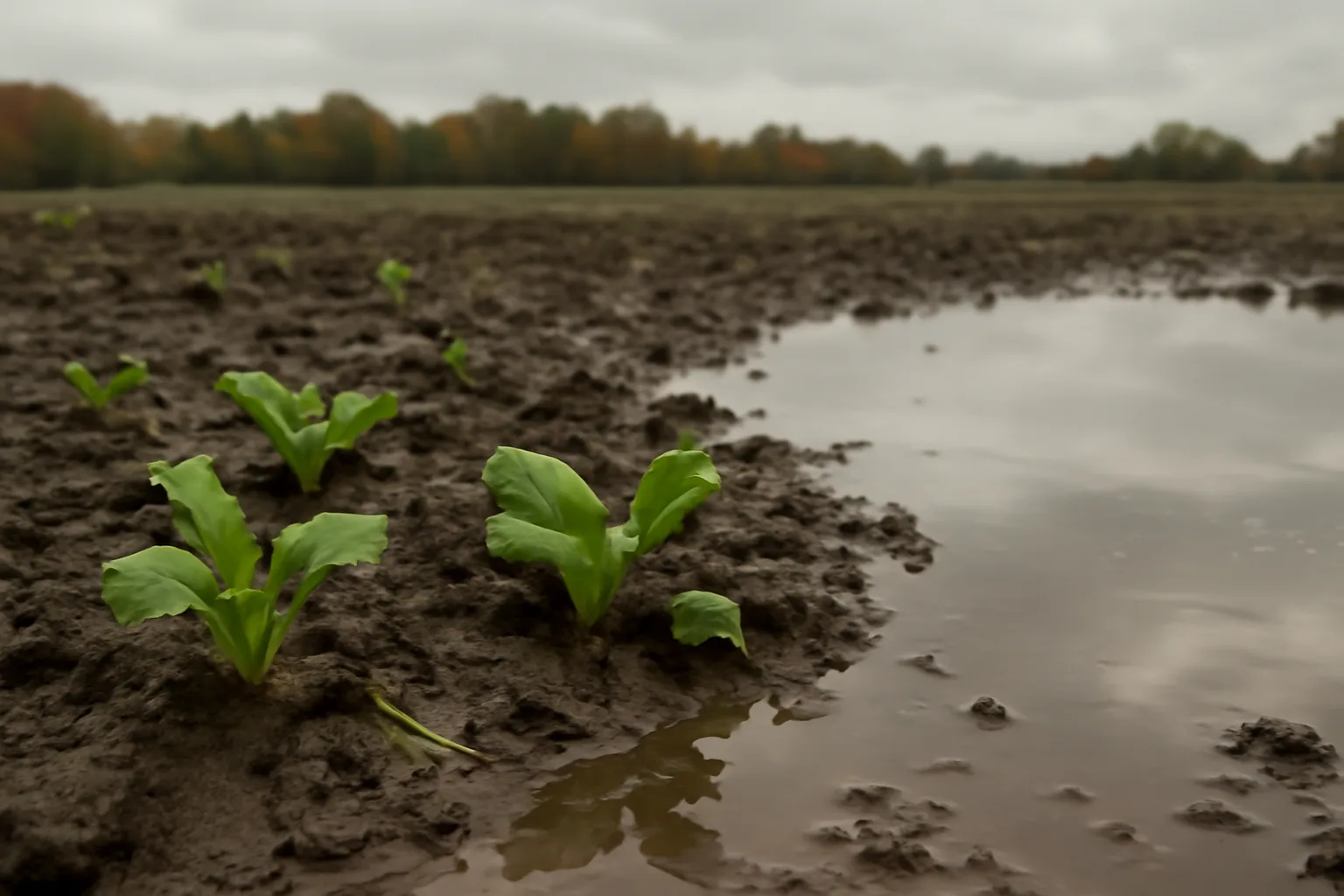
For wet or poorly drained plots, brassicas like turnips and forage rape, plus wheat, oats, and some clover varieties (ladino, alsike, white Dutch) handle saturated soil far better than beans or standard red clover. Chicory and switchgrass work in seasonally wet spots too. Match species to how long the water sits: a few soggy days versus standing water for weeks changes the answer completely.
what food plot grows best in wet soil
If your plot holds water for a day or two after a hard rain, brassicas (turnips, forage rape, kale) and small grains (wheat, oats) are your best bet. They germinate fast, tolerate short-term saturation, and don't rot out like soybeans or standard red clover will. For spots that stay genuinely wet, meaning the water table sits high most of the season, you're looking at alsike clover, switchgrass, or reed canarygrass territory. Alsike clover is specifically bred for wet meadows and poorly drained soils, something most food plotters have never heard of because it's rarely sold at the farm store next to ladino and crimson. The honest answer depends on degree. Nothing edible for deer thrives in standing water all season. If your plot is a swamp from March through July, you need drainage work, a raised bed, or a different plot location, not a different seed bag. USDA plant fact sheets classify alsike clover (Trifolium hybridum) as having good tolerance for wet, poorly drained soils and even some flooding tolerance, more than white or red clover [1]. That's the closest thing to an official answer for the wet-clover question.
do deer eat sorghum
Yes, deer eat grain sorghum, especially the seed heads once they mature and dry down in fall. It's more of a late-season and winter food source than something deer hit hard in August. Sorghum is not a top-tier food plot choice on its own. It's more common as a cover crop or a component in a wildlife blend, often mixed with soybeans or cowpeas to add structure and standing grain. Some hunters like it because the tall stalks provide screening cover along with food, which matters if you're trying to keep deer from spotting you on the way to a stand. Sorghum does reasonably well in wetter, heavier soils compared to corn, and it's more drought tolerant too, which is part of why it shows up in wildlife mixes marketed for tough ground. It's not a wet-soil specialist the way alsike clover or brassicas are, but it handles imperfect drainage better than corn does.
do deer eat clover, and do deer like clover
Deer eat clover readily and it's one of the most consistent food plot performers across the whitetail's range. Extension research and decades of food plot use back this up: clover is high in protein (often 20-25% crude protein in vegetative growth) and stays palatable through spring, summer, and into fall until frost knocks it back. Do deer like clover more than other options? In most areas, yes, especially in spring and summer when deer need protein for antler growth and lactation. Clover's main weakness is that it can't outcompete weeds without some mowing and it doesn't handle prolonged flooding well, aside from alsike and some white clover varieties. For wet ground specifically, ladino (a large white clover type) and alsike clover handle occasional wet feet better than red clover, which tends to thin out fast in poorly drained soil. If your plot floods for a few days each spring but dries out the rest of the year, a ladino/alsike blend is a reasonable call. If it stays wet for weeks, clover of any type will struggle.
when to plant food plots for deer
| Deep South (Zone 8-9) | March-April | September-October | |
|---|---|---|---|
| Mid-South/Transition (Zone 7) | April-May | August-September | |
| Midwest/Upper South (Zone 6) | April-May | Late July-August | |
| Northern/Upper Midwest (Zone 4-5) | May-June | Late July-mid August | For wet plots specifically, timing matters even more. Planting into saturated soil in spring often means rot before germination. Many food plotters with wet ground wait an extra week or two past their normal window to let the soil firm up, even if that means planting slightly later than the neighbor's dry, well-drained field. |
Timing splits into two windows almost everywhere in whitetail country: spring plots (April through June depending on zone) for warm-season annuals and perennials, and late-summer plots (late July through September) for fall annuals like brassicas and cereal grains. The exact date depends heavily on your frost dates and soil temperature, not a calendar month. Cooperative extension soil temperature guidance is the more reliable marker than a fixed date, since a late spring can push planting back two or three weeks in a given year. As a rough framework: | Region | Spring plot window | Fall plot window |
when to plant oats for deer
Oats go in during late summer to early fall for a fall/winter food plot, generally 60 to 90 days before your first hard frost, which lets them establish enough leaf growth before killing cold sets in. In most of the whitetail range that lands somewhere between mid-August and mid-September. Oats are a solid choice for wetter ground because they establish fast and tolerate cooler, damp soil better than warm-season legumes. They're also a favorite in fall blends because deer hit young oat shoots hard, sometimes before the plot even fully closes in. One caveat: oats will winterkill in harsher northern climates once temperatures drop into the low teens or below for extended periods, so in Zone 4 and colder, oats function as a fall-only food source rather than something that lingers through a hard winter. Winter wheat or triticale often outlasts oats there.
when to plant turnips for deer
Turnips go in the ground roughly 90 to 120 days before your area's first killing frost, which in practice means late July through early September across most of the whitetail's range. Plant too early and the summer heat stresses seedlings or invites bug pressure; plant too late and the bulbs don't size up before frost stops growth. Turnips are one of the better brassica choices for imperfectly drained or seasonally wet soil. They tolerate wetter conditions better than soybeans or many warm-season legumes, though they still want soil that drains within a day or two, not a plot that holds standing water for a week. Deer often ignore turnip leaves early in the season and then hammer them after the first hard frost converts starches to sugars, a well-documented pattern in extension brassica guidance [2]. The bulbs themselves get eaten later still, sometimes not until December or January once easier food sources thin out. That delayed-interest pattern surprises a lot of first-time plotters who assume the plot failed when deer simply haven't started keying on it yet.
what is a food plot
A food plot is a planted area on hunting or wildlife land, typically ranging from a quarter-acre kill plot tucked into timber to a multi-acre field, seeded specifically to provide forage for deer and other wildlife. It's a wildlife management tool, not a farm crop meant for harvest and sale. Most food plots fall into one of two categories: annual plots (replanted each year, often brassicas, cereal grains, or soybeans) and perennial plots (clover or alfalfa stands that can produce for three to five years with proper mowing and fertility upkeep). State wildlife agencies generally regulate food plots differently than bait piles or feeders; a planted, standing crop is usually legal where scattered grain or bait is not, but the specific line varies by state. Always check your state wildlife agency's current regulations before assuming a practice is legal, since baiting and feeding rules change from year to year and differ sharply by state. For a broader rundown of layout, sizing, and species choices, see food plot whitetail and deer food plots.
what are deer's favorite foods
Deer preference shifts by season and region, but extension forage studies consistently rank white clover, soybeans, and acorns near the top for palatability and nutrition. In terms of raw preference, deer often choose soybeans and cowpeas over almost anything else available in late summer, then shift to acorns and browse once mast drops in fall. A widely cited whitetail food habits study from the Mississippi State University Deer Lab and similar regional research groups shows clover and soybeans consistently rank among the highest-preference plantings in controlled feeding trials, though actual rankings shift by region and available browse. In terms of a rough hierarchy for most of the whitetail range: 1. Acorns (when available, often preferred over anything planted) 2. Soybeans (vegetative stage) 3. Clover (ladino, white Dutch) 4. Standing corn 5. Brassica tops post-frost Wet ground limits several of the top picks. Soybeans hate wet feet and rot fast in saturated soil, so a wet plot owner is often working from clover, brassicas, and cereal grains rather than the full list. For species comparisons across plot conditions, deer food plot seed and food plot seed break down more options.
do deer like honey
Deer don't naturally forage for honey in the wild the way they browse plants, but they will eat honey-soaked or molasses-based bait products when they're offered, and some hunters use honey or sugar-based scent attractants for the same reason bears go after hives, the sweetness draws interest. This isn't a food plot question so much as a bait question, and it matters here because honey, syrup, and molasses-treated feed products fall under bait and feeding regulations in most states. Many states restrict or ban baiting for deer hunting entirely, while others allow it with restrictions on distance from a stand or timing relative to the hunt. A planted food plot is treated differently under most state rules than a poured bait pile, but the line depends entirely on your state agency's definitions, so check before assuming a honey-based attractant or feed additive is legal where you hunt.
how do you tell if a plot is too wet to plant
The simplest field test: dig a hole about a foot deep a day or two after a rain. If water sits in the hole and doesn't drain within a few hours, that spot has a high water table or heavy clay subsoil and needs wet-tolerant species or drainage work, more than a different seed choice. Another tell is standing vegetation. Cattails, sedges, rushes, and reed canarygrass growing naturally in a low spot are strong signs of a seasonally saturated soil, even if the ground looks dry on the surface during a summer visit. A basic soil test from your state land-grant extension lab will also flag drainage-related nutrient issues, since waterlogged soils often show nitrogen loss and different pH behavior than well-drained ground [3]. Your soil test lab is the real authority here on lime and fertilizer rates specific to your dirt; this article gives general species and timing guidance, not a substitute for that report.
what should you plant if the whole field floods every spring
If a field floods every spring and dries out by early summer, plant it late. Skip the typical spring window entirely and go straight to a summer annual planted once the ground firms up, often June rather than April or May in flood-prone bottomland. Good choices for this pattern include buckwheat (fast-growing, tolerates imperfect drainage, and can be planted again in late summer), grain sorghum, and Japanese millet, which is specifically known for handling wet, poorly drained soils and even brief flooding better than almost any other food plot annual [4]. For perennial plots on ground that floods briefly every spring but drains the rest of the year, alsike clover paired with birdsfoot trefoil is a combination extension agronomists in wetter regions have recommended for pasture and forage use on poorly drained soils [5]. It's not marketed heavily as a deer plot mix, but the same wet-tolerance that makes it useful for cattle pasture applies directly to a deer plot in the same conditions. A $99 Custom Food Plot Plan from PlotSeason factors in drainage patterns like this alongside your zone and soil test results, since a generic seed bag recommendation rarely accounts for a field that's dry in July and a swamp in April. You can start one at /plot-plan-builder.
does soil pH change how wet-tolerant species perform
Yes, and it's a factor a lot of food plotters overlook. Wet, poorly drained soils often run more acidic than well-drained upland fields because standing water slows the breakdown of organic matter and can lock up certain nutrients, which extension soil science explains drives lower pH readings in saturated ground compared to nearby drained soil [3]. Clover, including the wet-tolerant alsike variety, generally wants a pH between 6.0 and 7.0 to perform well; below that range, nitrogen fixation from the clover's root nodules drops off sharply and yield suffers even if the plant technically survives the wet conditions. Brassicas are a bit more forgiving, tolerating pH down into the high 5s, but they still perform best closer to neutral. This is exactly the kind of number a generic article can't give you with confidence for your specific field, because lime recommendations depend on your soil's current pH, buffer capacity, and the crop you're planting. Pull a soil test through your state land-grant extension office before assuming a wet-tolerant seed choice alone will fix a stunted plot; the lime and fertilizer numbers on that report are the real authority, not a blanket rule of thumb.
Frequently asked questions
Do deer eat sorghum?
Yes. Deer eat grain sorghum, mostly the mature seed heads in fall and winter. It's more often used as part of a wildlife blend or as screening cover with food value than planted alone. It tolerates heavier, wetter soils better than corn but isn't a wet-soil specialist like brassicas or alsike clover.
Do deer eat clover?
Yes, and it's one of the most reliable food plot plantings across whitetail range. Clover runs 20-25% crude protein in vegetative growth stages, making it valuable for antler growth and lactation. Ladino and alsike varieties handle occasional wet conditions better than standard red clover, which thins out fast in poorly drained soil.
Do deer like clover?
Generally yes, especially in spring and summer when they need protein. Preference varies by region and what else is available; where soybeans or acorns are abundant, clover may rank lower on a given day. But across most whitetail range, clover stays a top-tier, consistent food source through the growing season.
When should you plant food plots for deer?
Spring annuals and perennials go in April through June depending on your zone; fall annuals like brassicas and cereal grains go in late July through September, timed to your first frost date. On wet ground, plan to plant a week or two later than dry fields nearby to avoid seed rot in saturated soil.
When do you plant oats for deer?
Plant oats 60 to 90 days before your area's first hard frost, generally mid-August through mid-September across most of the whitetail range. Oats establish fast in cool, damp soil, making them a solid fall choice for wetter plots, though they'll winterkill in harsh northern winters.
When do you plant turnips for deer?
Plant turnips 90 to 120 days before your first killing frost, usually late July through early September. Deer often ignore the leaves early and hit them hard after the first frost converts starches to sugar, then eat the bulbs later in winter once other food sources thin out.
What is a food plot?
A food plot is a planted patch of forage, on hunting or wildlife land, seeded specifically to feed deer or other wildlife rather than for harvest. It ranges from a small kill plot in the timber to a multi-acre field, and it's managed as a wildlife tool, distinct from a farm crop.
What are deer's favorite foods?
Acorns typically top the list when available, followed by soybeans in vegetative stage, white and ladino clover, standing corn, and brassica tops after a hard frost. On wet ground, soybeans often fail, so clover, brassicas, and cereal grains carry more weight in the rotation.
Do deer like honey?
Deer don't seek out honey naturally, but they will eat honey or molasses-based bait and scent products when offered. This falls under bait and feeding rules in most states, which vary widely, so check your state wildlife agency's current regulations before using any sweetened attractant.
What food plot species tolerates the wettest soil?
Alsike clover and Japanese millet are among the most wet-tolerant options commonly available, handling poorly drained soil and brief flooding better than most food plot species. Neither survives standing water for weeks on end, but both outperform clover, soybeans, or corn on ground that stays soggy longer than a day or two.
Can you plant soybeans in a wet food plot?
Not reliably. Soybeans are sensitive to saturated soil and rot easily if planted into wet ground or if heavy rain floods the field soon after planting. If your plot floods regularly, brassicas, cereal grains, or wet-tolerant clover varieties are safer bets than soybeans.
How do you fix a food plot that's too wet to plant?
Options include shallow drainage ditches, tile drainage on larger acreage, raised bed tillage, or simply switching to wet-tolerant species like alsike clover, turnips, or Japanese millet. A soil test can also reveal whether poor drainage has dropped your pH, which needs separate correction through lime.
Does a wet food plot need different fertilizer than a dry one?
Often yes. Waterlogged soils tend to run more acidic and can lose nitrogen faster than well-drained ground, according to soil science guidance from land-grant extension programs. A current soil test from your state extension lab is the only reliable way to get accurate lime and fertilizer numbers for a specific wet field.
Sources
- USDA NRCS Plant Fact Sheet: Alsike Clover: Alsike clover tolerates wet, poorly drained soils and some flooding better than white or red clover
- University of Tennessee Extension: Brassicas for Deer: Deer preference for brassicas increases after a hard frost converts starches to sugars
- University of Missouri Extension: Soil pH and Liming: Waterlogged and poorly drained soils tend to show altered pH and nutrient behavior
- USDA NRCS Plant Guide: Japanese Millet: Japanese millet tolerates wet, poorly drained soils and brief flooding
- University of Wisconsin Extension: Forage Legumes for Wet Soils: Alsike clover and birdsfoot trefoil recommended for wet, poorly drained pasture soils