Last updated 2026-07-26
TL;DR
August is brassica and early-clover month across most of the whitetail range. Plant turnips, radishes, and rape 60-90 days before your first hard frost (roughly August 1-20 in the North, August 15-September 1 further south). Hold true perennial clover and oats until soil temps cool in late August or September so they don't burn out or get hammered by bugs before frost.
what should you actually plant in august for deer plots
August is brassica season, full stop. Turnips, radishes, rape, and blends like Dwarf Essex or Purple Top do their best growing when you give them 60 to 90 days of warm soil before a hard frost, and for most of the whitetail range that math points straight at early-to-mid August [1]. Cereal grains (oats, winter wheat, winter rye) can go in during August too, but there's a real tradeoff. Plant oats too early in hot August soil and you get lush growth that deer hit hard before it ever has a chance to mature seed heads or hold through fall. Most extension guidance has oats going in late August through October, timed so the plant is young and tender right when bow season opens [2]. Clover is the one to hold off on, mostly. Spring-planted clover already up and growing just needs a late-summer mowing and maybe a shot of nitrogen if it's looking stressed. New clover seedings do better late August into September when heat breaks and weed pressure drops, not the dead middle of August. If you're planting from scratch, wait a few weeks. Soybeans and other warm-season annuals are already in the ground by August (they go in May/June) and by this point you're managing them, not planting them. If you missed that window, August isn't the month to fix it with beans. Move to brassicas or a fall cereal grain instead.
when to plant food plots for deer (the actual calendar)
| Northern (MN, WI, MI, ME, upper NY) | July 15 - Aug 10 | Aug 1 - Sept 1 | Aug 15 - Sept 15 | |
|---|---|---|---|---|
| Mid-latitude (IA, IL, OH, PA, southern NY) | Aug 1 - Aug 20 | Aug 15 - Sept 15 | Sept 1 - Oct 1 | |
| Southern (AL, GA, TN, AR, TX) | Aug 15 - Sept 15 | Sept 1 - Oct 15 | Sept 15 - Nov 1 | Brassica plantings timed for 60-90 days before frost consistently outperform later plantings, because the plants need that runway to bulb out and build sugar content that makes them palatable once frost hits [1]. That runway is non-negotiable. Skip it and you get thin greens with no bulb. If you're not sure which window applies to your specific ground, a food plot whitetail planning guide can help you sort out species by region, but honestly the fastest gut check is calling your county extension office and asking for the average first frost date. That one number tells you almost everything you need to know about your August planting window. |
There's no single national date because frost timing swings by weeks across the whitetail's range. The rule extension agronomists actually use: count backward from your area's average first hard frost date and hit your planting window from there [1] [1]. Here's a rough breakdown by general zone. Treat these as starting points, not gospel, and check your local extension office or state frost-date tables for your county specifically. | Region (general) | Brassicas / turnips | Clover (new seeding) | Oats / cereal grains |
do deer eat sorghum
Yes, deer eat grain sorghum, but it's more of a fall/winter standing-grain food source than a preferred early-season plot. Sorghum (milo) is planted in late spring to early summer (May-June in most of the Midwest and South), not August, so if you haven't already got it in the ground, August is too late to start. Where sorghum earns its keep is as a standing grain crop that deer and other wildlife hit hard once seed heads mature and other food gets scarce in late fall and winter. It's more commonly grown as a dedicated grain or wildlife food plot component than a primary attractant plot, and it takes real acreage and equipment to manage well. For most food-plotters with limited acreage, sorghum isn't the best use of August planning time. Better to put that effort into brassicas or fall cereals that are actually in their planting window right now.
do deer eat clover, and do deer like clover
Yes and yes. Clover is one of the most consistently used food plot species across whitetail range, and it's a preferred forage through spring, summer, and fall when it's actively growing. It commonly runs 20-25% crude protein in a well-managed stand, and it regrows fast after grazing, which is part of why it holds up as a season-long plot rather than a one-shot planting [3]. The catch is timing and management, not preference. Clover planted in August needs cooler soil and more reliable moisture than mid-summer usually offers, which is why most guidance pushes new clover seedings to late August or September, or to a spring planting window instead [1] [3]. If you've already got clover established from a spring planting, August is maintenance month: mow it to knock back weeds and stimulate fresh regrowth, and get a soil test read on whether it needs more nitrogen or a pH correction going into fall. Deer will hit clover from green-up in spring straight through a hard freeze in many regions, which is part of why it's such a staple in perennial plot mixes. For readers building out a full-season plan, deer food plot seed selections often lean heavily on clover as the perennial backbone with annuals rotated in around it.
when to plant oats for deer
Late August through October is the standard window for oats in most of the country, timed so the crop is young and green right as archery season opens rather than mature and less palatable [2]. Oats planted too early in August heat can bolt, get hammered by armyworms, or simply get overgrazed before fall hunting season even starts. Oats are a fast grower, often showing green shoots within 5-10 days of planting given decent moisture, which is part of their appeal for hunters who want visible plot activity heading into September and October. They're also cheap relative to some other cereal grains and blend well with brassicas or winter peas in a fall mix. One real tradeoff: oats generally winterkill in colder zones once temperatures drop into the teens or lower for sustained periods, so in the northern part of the whitetail range they're a fall-only food source, not a food plot that carries deer through a hard winter. Winter wheat or winter rye are the better choice if you want something that survives into late winter and greens back up in spring.
when to plant turnips for deer
Turnips go in the ground 60 to 90 days before your area's first hard frost, which lands most plots in early-to-mid August depending on latitude [1] [1]. Plant too late and the bulbs never size up; plant too early in brutal mid-summer heat and germination can be spotty without consistent rain or irrigation. Turnips are a two-stage food source. Deer often ignore the leafy tops early in the season when other browse is plentiful, then switch hard to both tops and bulbs after a few frosts convert starches to sugars, making the plant noticeably sweeter. That's why plot managers who plant turnips specifically for late-season hunting or post-season nutrition time them for a fall frost, not an August harvest. Soil matters more with brassicas than a lot of hunters expect. Turnips like a pH close to neutral (6.0-7.0) and respond well to nitrogen, so a current soil test really is the difference between a thin, disappointing plot and a thick one deer come back to all winter. Your soil-test lab's specific lime and fertilizer recommendation is the actual authority here, not a generic online rule of thumb, since soils vary enormously county to county.
what is a food plot
A food plot is a planted area, usually somewhere between a quarter acre and several acres, established specifically to provide supplemental forage for deer and other wildlife on hunting or wildlife-management land. It's distinct from farming a cash crop in that the goal is deer nutrition and hunting opportunity, not harvest for sale. Most state wildlife agencies and extension services treat food plots as one tool within broader habitat management, alongside natural browse, mast production (acorns, soft mast), and cover. USDA's Environmental Quality Incentives Program (EQIP), authorized under 16 U.S.C. 3839aa, provides cost-share funding that can support wildlife habitat plantings, including food plots, for eligible landowners [4]. A food plot can be as simple as a disked half-acre of clover along a field edge or as involved as a rotational system with summer annuals, fall brassicas, and perennial clover blocks working together across a property. The right approach depends on soil, acreage, budget, and what part of the season you're trying to influence, early season food, rut activity, or late-season nutrition.
what are deer's favorite food (and do deer like honey)
Deer are opportunistic browsers, and their actual favorite food changes by season, region, and what's locally available. In late summer and fall, acorns and other hard mast are often the single most preferred natural food where they're abundant, because of their high fat content, something the Pennsylvania Game Commission points to when explaining why plot activity can drop off hard in a big acorn year [5]. Among planted forages, clover, soybeans, and brassicas consistently rank as preferred food plot species, largely because of their protein or sugar content relative to native browse [3] [1]. Corn and standing grain crops become more attractive in winter when little else is available. As for honey: no. Deer don't eat honey, and there's no wildlife agency or extension guidance recommending it as bait or attractant. It's not a natural food source for whitetails, and using any sweet bait or scent-based attractant may run afoul of state baiting and feeding regulations depending on where you hunt, so it's not worth the legal risk even setting aside the fact that it does nothing for deer nutrition. Check your state wildlife agency's baiting and feeding rules before using any supplemental feed or attractant, since these vary widely and enforcement is real.
how do baiting and feeding rules affect august food plot planning
Food plots are legal in every state as a habitat and land management practice, but supplemental feeding and baiting (piles of corn, mineral licks, feeders) are regulated very differently state by state, and some states draw a legal line between a planted food plot and a bait pile even though both attract deer. Before you plant or add any supplemental feed component to a plot, check your state wildlife agency's current baiting and feeding regulations directly, not a hunting forum summary, since these rules shift year to year, especially in states managing chronic wasting disease (CWD). A properly planted and maintained food plot is almost always treated differently under law than a bait pile, but the definitions matter and vary by state. Some states ban baiting statewide. Others restrict it only in CWD management zones. A few allow it with volume or timing limits. There's no substitute for reading your own state's current rule before the season starts.
how do you match august plot species to your soil test
A soil test is the cheapest insurance policy in food plot planning, typically $10 to $20 through a university extension lab, and it tells you exactly what your specific ground needs rather than guessing at a bag-label recommendation [6]. Most land-grant extension soil labs turn results around in one to two weeks, which still gives you time to lime or fertilize ahead of an August planting if you send samples in early summer. pH is the big lever for brassicas and clover both. Brassicas tolerate a slightly wider pH range, roughly 5.5 to 7.0, but really perform best closer to neutral, while clover is notoriously pH-sensitive and struggles below 6.0 without lime correction [6] [3]. If your test comes back at 5.2, don't skip the lime step and expect a good clover stand. It won't happen, and you'll have wasted the seed cost. Your soil-test lab's specific lime and fertilizer rate is the real authority here, not a general online chart, because actual buffer pH, organic matter, and existing nutrient levels vary a lot even between fields on the same property. If you want help translating a soil test result into an actual seed and fertilizer plan for your specific acreage, that's exactly the kind of legwork a Custom Food Plot Plan is built to handle for $99, though plenty of hunters do fine working directly off their extension lab's printed recommendation sheet too.
what equipment do you actually need for an august planting
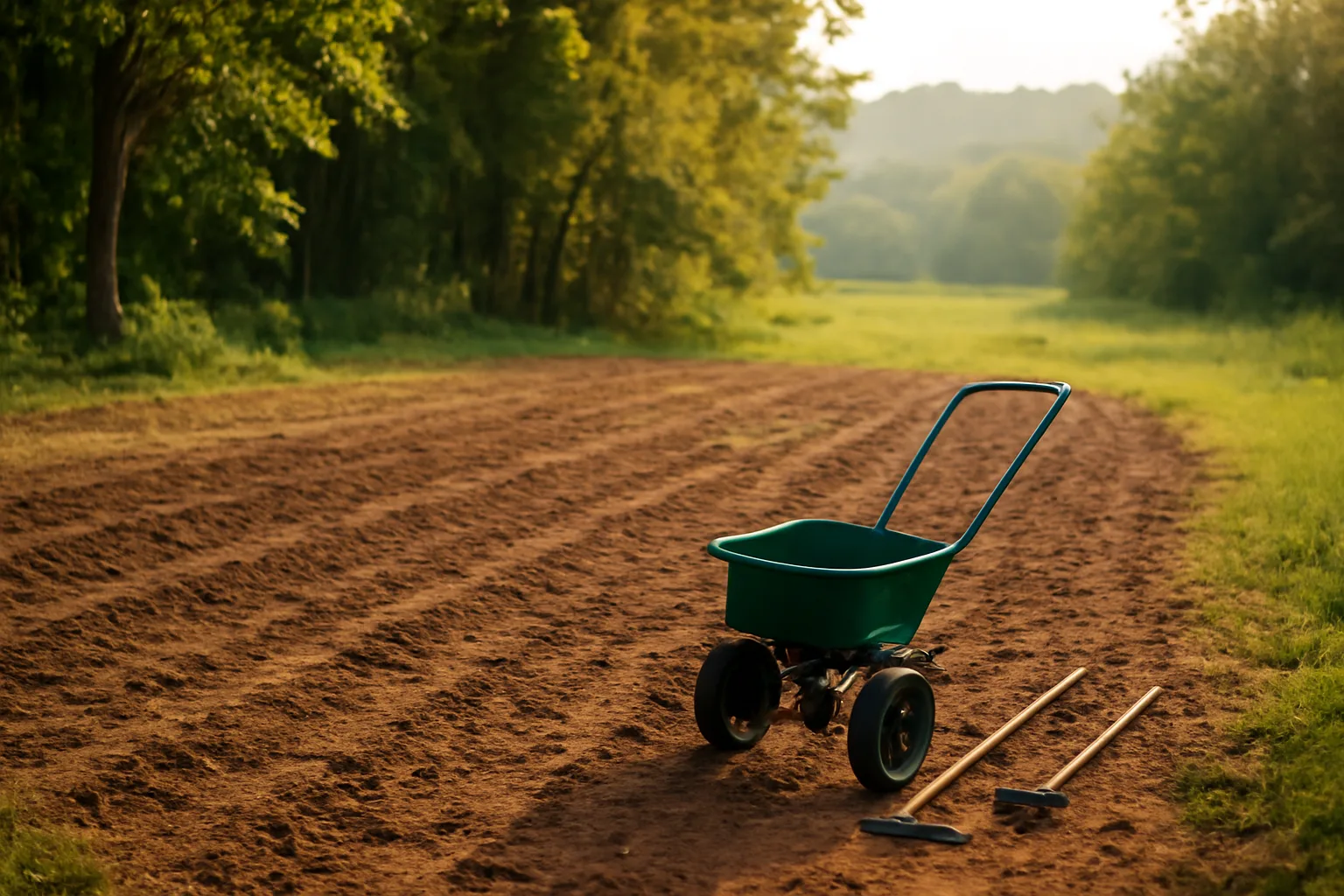
For brassicas and small grains in August, you don't need a full no-till drill, though it helps on tougher ground. A basic setup of a disk or tiller, a broadcast spreader (even a handheld one for small plots), and a cultipacker or drag to firm the seedbed covers most food plot situations under a few acres. Brassica seed is small and needs good seed-to-soil contact but very shallow planting depth, often just a quarter inch or less, so a light cultipacking pass after broadcasting works better than trying to drill it deep. Oats and other cereal grains want slightly deeper placement, around 1 to 1.5 inches, which is where a drill or a disk-and-drag combination earns its keep. If you're working reclaimed ag ground or an existing plot with decent soil structure, a simple ATV or UTV-mounted spreader and drag setup is genuinely enough. Where equipment matters more is on compacted or weedy ground that needs real tillage to break up first. For a broader look at species options across plot types and how they pair with different equipment setups, deer food plots and food plot seed breakdowns cover the tradeoffs in more depth.
Frequently asked questions
Do deer eat sorghum?
Yes, deer eat grain sorghum (milo), especially as a standing winter grain source once seed heads mature. It's planted in late spring to early summer, not August, so if you haven't already got sorghum growing, it's not an August-planting option. It works better as a dedicated grain plot than a primary attractant plot for most hunters.
Do deer eat clover?
Yes, clover is one of the most consistently used food plot forages across whitetail range, often running 20-25% crude protein in a healthy stand. Deer use it from spring green-up through fall, and in mild climates into winter. New clover seedings do best planted late August through September rather than in peak summer heat.
Do deer like clover?
Yes, clover ranks among the top preferred food plot species in extension and state wildlife agency guidance, largely because of its protein content and ability to regrow after grazing. Deer will return to a well-maintained clover stand repeatedly through the growing season, which is why it's a common perennial backbone in food plot rotations.
When should you plant food plots for deer?
Timing depends on species and your region's frost dates. Warm-season annuals like beans go in May/June. Brassicas go in 60-90 days before first frost, often early-to-mid August. New clover and cereal grains like oats generally go in late August through October. Check your county extension office for local average frost dates before planting.
When should you plant oats for deer?
Late August through October is the standard window in most of the whitetail range, timed so oats are young and green heading into archery season. Planting oats too early in August heat risks bolting or heavy insect pressure before fall. Oats typically winterkill in colder zones, so they're a fall-focused food source, not a winter-long one.
When should you plant turnips for deer?
Plant turnips 60 to 90 days before your area's first hard frost, generally early-to-mid August depending on latitude. Deer often ignore turnip tops early in the season and switch to eating both tops and bulbs after a few hard frosts sweeten the plant's starches into sugars.
What is a food plot?
A food plot is a planted area, typically a quarter acre to several acres, established to provide supplemental deer forage on hunting or managed land, distinct from a cash crop grown for sale. It's one tool within broader habitat management alongside natural browse and mast production, and some states offer cost-share support through USDA's EQIP program.
What are deer's favorite foods?
It varies by season and region, but acorns and other hard mast often top the list in fall due to high fat content. Among planted forages, clover, soybeans, and brassicas consistently rank high in extension and state agency recommendations because of their protein or sugar content compared to native browse.
Do deer like honey?
No. Honey isn't a natural whitetail food and no state wildlife agency or extension source recommends it as an attractant. Using sweet bait or scent lures can also violate state baiting and feeding regulations depending on where you hunt, so it carries legal risk for zero real nutritional benefit to deer.
Can you plant clover and brassicas together in August?
It's possible but timing gets tricky since brassicas want early August planting and new clover generally prefers late August or September soil conditions. Many plot managers instead run brassicas as an annual block and maintain existing perennial clover separately, mowing it in August rather than reseeding it at the same time.
Is it too late to plant a food plot in late August?
Not necessarily. Brassicas planted in mid-to-late August can still work in southern and mid-latitude zones with later frost dates. Oats and other fall cereal grains are actually just entering their ideal window in late August. It's really only warm-season annuals like soybeans and corn where late August is too late.
How much does a soil test cost before planting?
Most university extension soil labs charge roughly $10 to $20 per sample, with turnaround of one to two weeks. It's the cheapest way to know your actual pH and nutrient levels before buying lime, fertilizer, or seed, and your specific lab's recommendation should override generic online fertility charts.
Are food plots legal, and do baiting laws apply to them?
Food plots are legal everywhere as a habitat management practice, but supplemental feeding and baiting (corn piles, feeders) are regulated separately and vary a lot by state, especially in areas managing chronic wasting disease. Check your state wildlife agency's current baiting and feeding rules before adding any feed component beyond a planted plot.
Sources
- Mississippi State University Extension Publication 2617, Establishing and Managing Food Plots for White-tailed Deer: Brassica planting windows run roughly August 1 through September 15 depending on latitude, timed 60-90 days before frost
- Oklahoma State University Extension, PSS-2119: Establishment and Management of Food Plots for White-Tailed Deer: Oats and cereal grains are typically planted late summer into fall so they're young and palatable heading into hunting season
- University of Georgia Extension, Circular 1026: Food Plots for Wildlife: Clover is a preferred perennial food plot forage valued for its high crude protein content and ability to regrow after grazing
- USDA, Environmental Quality Incentives Program statutory authority, 16 U.S.C. 3839aa: EQIP provides cost-share support for wildlife habitat plantings including food plots under statutory authority
- Pennsylvania Game Commission, 2022-23 Deer Management Report: Acorn and hard mast abundance affects deer use of planted food plots in fall
- Michigan Department of Natural Resources, Wildlife Conservation Order Amendment No. 2 of 2023 (Baiting and Feeding): Michigan has specific baiting restrictions tied to CWD management zones that have changed in recent years
- Clemson University Cooperative Extension, Agricultural Service Laboratory Soil Testing Fees: University soil testing labs typically charge a modest per-sample fee with about a one to two week turnaround