Last updated 2026-07-25
TL;DR
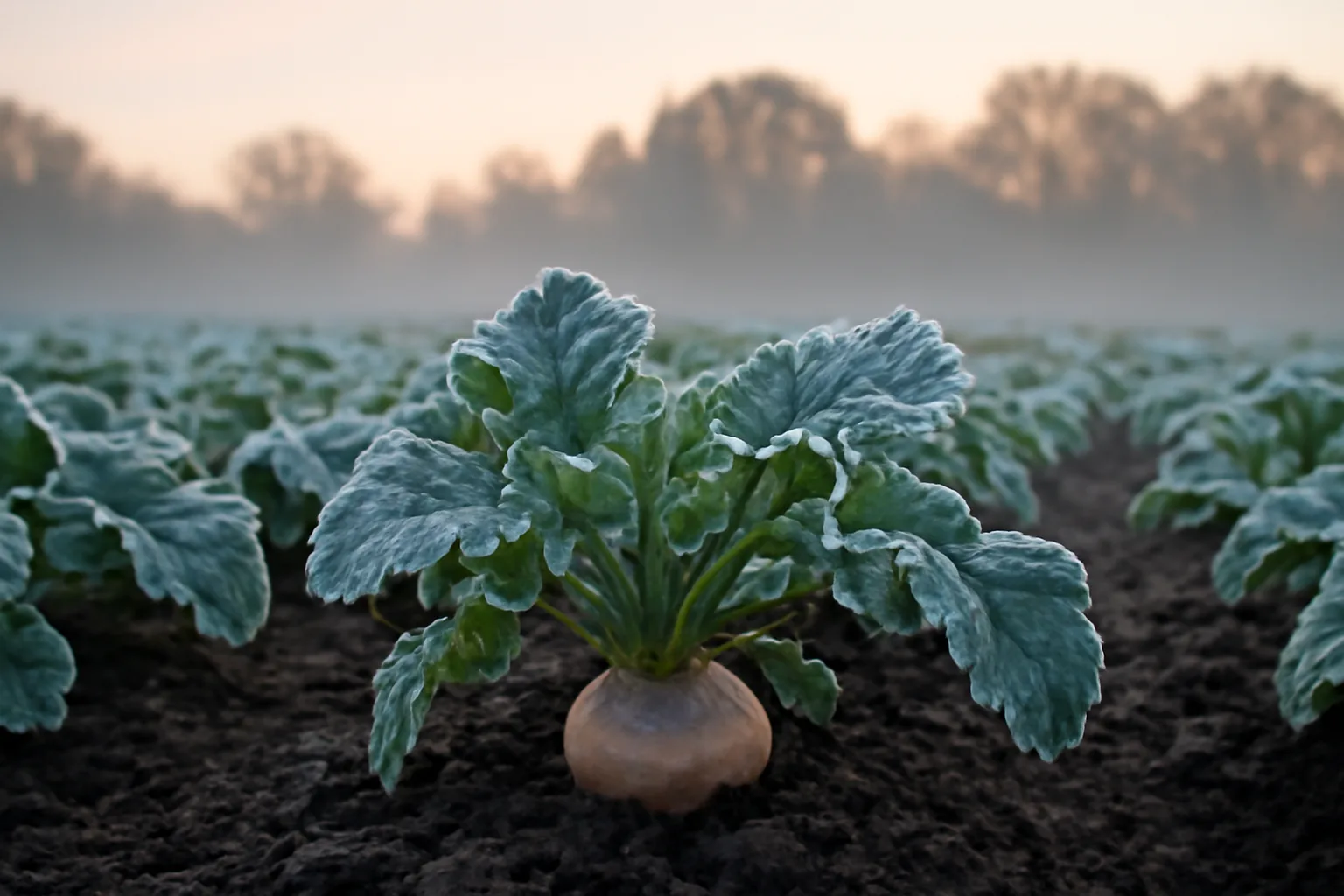
Turnips are a low-cost, high-tonnage brassica that deer often ignore until after the first hard frost converts starch to sugar. Plant 60 to 90 days before your average first frost, seed at 4 to 6 lbs/acre on tilled ground or 3 to 5 lbs/acre broadcast, and pair with a soil test aimed at pH 6.0 to 6.5.
What is a food plot, and where do turnips fit in?
A food plot is a planted area, usually somewhere between a quarter acre and several acres, managed specifically to grow forage that attracts and holds deer or improves their nutrition. Most hunters plant two kinds: annual plots reseeded every year (turnips, oats, clover mixes) and perennial plots that persist for three to five years (clover, chicory). Turnips fall into the annual, cool-season brassica camp. Brassicas as a group include turnips, radishes, rape, and kale. They're valued for tonnage. A well-fertilized turnip plot can produce several tons of forage per acre between the leafy top growth and the bulb itself, which is more biomass per acre than most clover stands generate in a single cutting. Purdue University Extension notes brassicas are "among the most productive forage crops available" for fall and winter deer nutrition when managed correctly [1]. Where turnips fit: they're a fall and early-winter food source, not a spring or summer one. If you're building a rotation, turnips usually get planted in a plot that grew a spring/summer annual (soybeans, sunn hemp) or in a dedicated fall brassica plot planted alongside oats or winter peas. For background on plot types generally, see food plot whitetail and deer food plots.
When to plant turnips for deer?
Plant turnips 60 to 90 days before your area's average first hard frost. That window lets the plant build a bulb and enough leaf mass before growth slows, and it times the sugar conversion (from frost) to land right when hunting season and late-season deer pressure on food peaks. In practical calendar terms, that's roughly late July through August across most of the Midwest and Upper South, and into early September in the Deep South and along the Gulf Coast where frost comes later. In the northern tier (Minnesota, Wisconsin, Michigan, northern New England) aim for late July to mid-August. Wait too long and the bulbs stay small. The leaf canopy never closes either, which lets weeds take over. A simple rule extension agronomists use: count backward from your average first frost date, land on a 60 to 90 day window, and plant inside it. NOAA's National Centers for Environmental Information publishes the 1991-2020 U.S. Climate Normals, which include station-level average first and last frost dates that many state extensions use to build fall brassica planting calendars [2]. Don't confuse "when to plant turnips" with "when deer will eat them." Those are two different clocks, covered below.
When do deer actually start eating turnips?
Deer usually ignore turnip tops and bulbs for weeks after they're mature, then hit them hard after the first hard frost. That's not superstition. Frost converts starches in the plant to simple sugars, which makes the forage sweeter and more digestible, and deer key in on that change. This means your turnip plot might look untouched in October and then get hammered in late November or December. That's a feature, not a bug, if you're managing it as a late-season draw. If your hunting season closes before your first hard frost typically hits, turnips may not pay off for you the way they would in a state with a December gun season. Some hunters get frustrated the first year they plant turnips because deer seem to walk past a lush green plot all fall. Give it time and cold weather. Once frost hits two or three times, tops get eaten first, then deer paw up and eat the bulbs through the winter, sometimes into February if snow cover isn't too deep.
How do you plant turnips: seeding rate, depth, and method?
Turnip seed is tiny, so shallow planting and good seed-to-soil contact matter more than depth precision. Broadcast at 3 to 5 lbs per acre if you're not covering seed, or drill/till in at 4 to 6 lbs per acre. Seed depth should be no more than a quarter to half inch. Too deep and it won't emerge; germination drops fast past half an inch. Most food plotters broadcast turnip seed onto a worked seedbed, then cultipack or drag lightly to press seed into the soil. A cultipacker works well. Dragging a section of chain-link fence or a piece of carpet behind an ATV also works in a pinch. Rain within a few days of planting helps a lot; turnips germinate fast (5 to 10 days) with adequate moisture. Mixing turnips with other seed is common and often better than a monoculture. A typical fall blend: turnips at 2 to 3 lbs/acre plus oats at 50 to 60 lbs/acre plus a small amount of winter peas or clover. The oats give deer something to eat immediately (turnips take weeks to bulb) and the turnips provide the late-season tonnage. If you want ready-made options, deer food plot seed and food plot seed cover blend selection in more depth.
What soil pH and fertility do turnips need?
Turnips grow best in soil with a pH between 6.0 and 6.5 and want moderate nitrogen, moderate phosphorus, and higher potassium relative to a legume plot, since they aren't fixing their own nitrogen. Below pH 5.5, nutrient uptake drops sharply and yield suffers even with adequate fertilizer. A soil test is the only honest way to know what your ground needs. Lime takes months to fully adjust pH, sometimes a full season on heavy clay, so testing early matters more than people think. USDA NRCS soil health guidance frames nutrient management around testing rather than guesswork, stating that decisions should be tied to "soil test results and realistic yield goals" instead of blanket application rates [3]. Your soil test lab's report is the actual authority on how much lime and fertilizer to apply, not a generic seed bag label; treat any blanket rate below as a starting point only. As a rough baseline, many turnip plots respond well to 300 to 400 lbs per acre of a balanced fertilizer like 19-19-19 or an equivalent split application, plus lime if your test calls for it (commonly 1 to 2 tons per acre on acidic soils, applied months ahead if possible since lime moves slowly through soil). If your test comes back needing 2+ tons of lime per acre, don't skip it just because turnips are marketed as tolerant of poor soil; they'll grow in poor soil, they just won't grow much.
When to plant food plots for deer overall (annual calendar)?
| Deep South / Gulf Coast | March to April | Late Aug to mid-Sept | |
|---|---|---|---|
| Mid-South / Southern Appalachia | April to May | Aug to early Sept | |
| Midwest / Mid-Atlantic | May | Late July to mid-Aug | |
| Northern tier (MN, WI, MI, ME) | Mid-May to June | Late July to early Aug | These are general windows, not guarantees; local frost dates vary by elevation and microclimate even within a county. Check your state extension's frost date tables or NOAA climate normals for your specific location before locking in a date. |
Food plot timing splits into two seasons: spring/summer plantings for warm-season annuals and perennials, and late-summer plantings for fall/winter annuals like turnips, oats, and brassica blends. Turnips belong squarely in the second window. Spring plots (soybeans, cowpeas, clover establishment, chicory) generally go in after your last frost date, often April through May depending on latitude. Fall plots (turnips, oats, wheat, rye, brassica blends, cereal grains) go in 60 to 90 days before first frost, which lands in the July-to-September range across most of the whitetail's range. Here's a rough regional guide: | Region | Spring plot window | Fall brassica/turnip window |
When to plant oats for deer, and how do they pair with turnips?
Plant oats in the same window as turnips, roughly 60 to 90 days before first frost, because oats are a fast-germinating cool-season annual that deer often eat immediately, while turnips take longer to bulb. Oats typically emerge in 5 to 7 days and are palatable to deer within two to three weeks of planting, well before frost even hits. That timing mismatch is exactly why oats and turnips get planted together so often. Oats give you early fall attraction and green forage while the turnip bulbs are still developing underground. By the time oats get grazed down or winterkill in a hard freeze (oats aren't very frost-hardy compared to wheat or rye), the turnips are just hitting their frost-sweetened peak. A common oat-turnip-clover blend runs something like 50 lbs oats, 3 lbs turnips, and 5 to 8 lbs of a clover or winter pea addition per acre, drilled or broadcast together and cultipacked once. If you want oats to survive into late winter rather than winterkilling, some hunters swap in winter wheat or cereal rye alongside the turnips instead, since those cereals tolerate cold much better than oats.
Do deer eat sorghum?
Yes, deer eat grain sorghum, both the standing seed heads and the leaves, though it's used more often as a screening or bedding cover crop than a primary attractant plot in most food plot programs. Sorghum is a warm-season annual planted in late spring after soil warms to 60°F or above, similar timing to corn. Whitetail deer will browse sorghum leaves through the growing season and eat seed heads once they mature and dry down in fall, which can extend a food source into the early hunting season in some regions. It's more drought-tolerant than corn and cheaper per acre in many cases, which is part of its appeal on marginal ground. It's not typically the centerpiece of a brassica or clover plan; think of it as a secondary or cover-focused option rather than a turnip replacement.
Do deer eat clover, and do they actually like it?
Yes, deer eat clover readily and it's one of the most consistently preferred forages in food plot research, particularly ladino and red clover varieties. Clover is a perennial, so unlike turnips it isn't a one-season crop; a well-maintained stand can produce for three to five years before needing to be replanted. Clover's appeal comes down to protein content and season-long availability. Quality clover stands can run 20 to 25% crude protein in vegetative growth, which rivals or beats most other food plot forages, and it's available spring through fall, unlike turnips which are a fall/winter-specific play. The tradeoff is clover needs more consistent mowing and weed management across the growing season, and it doesn't provide the tonnage-per-acre that a mature turnip plot does going into winter. Many experienced plotters run both: clover as the perennial backbone plot and turnips or brassica blends as the fall annual rotation elsewhere on the property. That combination covers spring through fall (clover) and late fall through winter (turnips) without relying on one species to do everything.
What are deer's favorite foods, and do they like honey?
Deer don't have a single "favorite food"; preference shifts by season, region, and what's available, but deer favor high-protein browse and mast in warm months (acorns, soybeans, clover, forbs) and shift to high-energy, high-carbohydrate foods (corn, brassica bulbs, acorns again) as temperatures drop and they need to build fat reserves. Acorns are frequently cited as one of the most preferred natural foods wherever oaks are present, because of their fat content. As for honey: deer don't seek out honey in the wild and it isn't a natural or recommended food plot or attractant additive. There's no meaningful body of wildlife research behind "deer like honey" as a forage claim. Using it as bait also raises legal questions. Many states classify sugar-based substances as bait when placed to attract deer for hunting purposes, and Michigan's Wildlife Conservation Order restricts baiting and feeding of deer statewide, with narrow exceptions, under its baiting and feeding regulations [4]. If you've seen the honey claim on hunting forums, treat it as folklore, not agronomy. Worth being blunt here: preference research ranks forages by crude protein, digestibility, and observed selection in pen trials and field cameras, and honey simply doesn't appear in that literature as a deer food.
Do deer prefer turnip tops or turnip bulbs, and does that change over the season?
Deer typically eat turnip leaves first, often within days of the plant reaching a few inches of growth, well before any bulb has formed. Bulb consumption comes later, usually after multiple frosts, and often not until other food sources (acorns, standing crops, remaining green browse) get scarcer through December and January. This two-stage pattern is one reason turnip plots seem to have two "waves" of activity: a modest one in fall as tops get browsed, then a heavier one in early winter once deer start pawing up and eating bulbs. In snow country, deer will paw through several inches of snow to get at turnip bulbs, which is part of why turnips are popular in northern late-season plans specifically. If you're hunting an early bow season in September, don't expect a turnip plot to be the hotspot yet. It's a December and January play in most of the whitetail's range, not an October one.
How much does a turnip food plot cost, and is it worth it?
Turnip seed itself is inexpensive, commonly $3 to $8 per pound depending on variety and whether it's sold alone or in a blend, and at a 3 to 5 lb/acre rate that's a modest seed cost per acre compared to corn or soybean plots. The bigger costs are lime and fertilizer if your soil test calls for significant amendment, plus fuel and equipment time for tillage or spraying. For a straightforward per-acre budget: seed runs roughly $15 to $40/acre depending on rate and blend, fertilizer commonly adds $30 to $80/acre depending on your soil test recommendations, and lime, if needed, is a separate and sometimes larger cost (a ton of ag lime often runs $30 to $60 delivered and spread, and full-rate corrections can call for 1 to 2+ tons per acre). Equipment and fuel vary too much by setup to generalize honestly. Whether it's worth it depends entirely on whether your season overlaps with the post-frost feeding window. If you hunt a state or property where gun season runs into December or January, turnips are one of the better tonnage-per-dollar options available. If your season closes in October, you're planting a crop that peaks after you've stopped hunting, so oats, soybeans, or a clover plot might serve you better. If you're not sure how turnips fit into your specific rotation, soil type, and season dates, a Custom Food Plot Plan ($99, one-time) at /plot-plan-builder builds out species, timing, and blend recommendations for your property based on the details you provide. It's general planning guidance built around your inputs, not a substitute for your own soil test results or a site visit from an agronomist.
What mistakes do people make planting turnips, and how do you avoid them?
The most common mistake is planting too early or too late relative to first frost, which either lets weeds choke out young turnips (too early, in still-hot soil with weed pressure) or leaves bulbs too small and immature (too late). Stick to the 60-to-90-day-before-frost window and adjust based on your specific region's history rather than a generic date. The second common mistake is skipping the soil test and guessing on lime and fertilizer. Turnips aren't magic; they still need adequate pH and nutrients to produce real tonnage, and a lot of "deer won't touch my turnips" complaints trace back to stunted, low-quality plants rather than deer pickiness. Third: planting turnips alone in a monoculture. A pure turnip plot can look bare and be slow to attract deer for the first month or more. Blending with oats or another fast-germinating annual gives you earlier green-up and covers the gap before bulbs mature. Last one worth naming: expecting turnips to work in a hunting season that ends before your area's first hard frost. That's a calendar mismatch, not a seed problem. For broader species comparisons and blend planning, domain food plot seed and deer for food are useful next reads.
Frequently asked questions
Do deer eat sorghum in food plots?
Yes. Deer browse sorghum leaves through summer and eat mature seed heads in fall. It's a warm-season annual planted after soil hits roughly 60°F, and it's more often used as cover or a drought-tolerant secondary plot than as a primary attractant like turnips or clover.
Do deer eat clover, and is it better than turnips?
Deer eat clover readily; it's a top-preference perennial forage running 20 to 25% crude protein. It's not "better" than turnips so much as different: clover feeds deer spring through fall, turnips feed them in late fall and winter after frost sweetens the bulbs. Many hunters plant both.
When should I plant food plots for deer in general?
Warm-season plots (soybeans, cowpeas, clover establishment) go in after your last spring frost, often April to May. Cool-season fall plots (turnips, oats, brassicas, cereal grains) go in 60 to 90 days before your area's first fall frost, typically late July through early September depending on region.
When to plant turnips for deer specifically?
Plant turnips 60 to 90 days before your average first hard frost date. That's roughly late July to mid-August in the northern tier, and late August into September in the Deep South. Planting too late leaves bulbs undersized; too early invites weed competition in warm soil.
When do deer start eating turnips after planting?
Deer often eat turnip tops within weeks of emergence, but they usually ignore the bulbs until after one or more hard frosts convert plant starches to sugar. Peak bulb consumption typically happens in December and January in most of the whitetail's range, well after the first freeze.
What is a food plot, exactly?
A food plot is a planted area, often a quarter acre to several acres, managed to grow forage that attracts deer and supplements their diet. Plots split into annuals (replanted yearly, like turnips or oats) and perennials (clover, chicory) that persist three to five years with maintenance.
What are deer's favorite foods overall?
Preference shifts by season. Deer favor high-protein browse, forbs, soybeans, and clover in warm months, then shift to high-energy foods like acorns, corn, and frost-sweetened brassica bulbs as fall turns to winter and they need to build fat reserves for cold weather.
Do deer like honey?
No. Deer don't seek honey in the wild and it isn't part of any recognized food plot or attractant strategy. It doesn't appear in deer forage preference research from university extension programs. It's also worth checking your state's baiting rules before using any sugar-based attractant, since many classify it as bait.
When to plant oats for deer food plots?
Plant oats in the same 60-to-90-day-before-frost window as turnips, often paired in the same blend. Oats germinate in 5 to 7 days and become palatable within a few weeks, giving deer an early food source while slower-maturing turnip bulbs finish developing underground.
What soil pH do turnips need for a food plot?
Turnips grow best between pH 6.0 and 6.5. Below pH 5.5, nutrient uptake drops sharply and yield suffers even with fertilizer applied. A soil test is the only reliable way to know your field's actual pH and lime needs; treat generic rate recommendations as a starting point only.
Can you plant turnips alone, or do they need a blend partner?
You can plant turnips alone, but many food plotters blend them with oats, winter peas, or clover because pure turnip stands are slow to attract deer for the first several weeks. Oats especially fill that early gap since they green up and get browsed well before turnip bulbs mature.
How much turnip seed do you need per acre?
Broadcast turnip seed at 3 to 5 lbs per acre if you're not covering it, or 4 to 6 lbs per acre if drilling or tilling it in. Seed should sit no deeper than a quarter to half inch; turnip seed is tiny and won't emerge well from deeper planting.
Sources
- Purdue University Extension, Forestry and Natural Resources: Brassicas are among the most productive forage crops for fall and winter deer nutrition
- NOAA National Centers for Environmental Information, U.S. Climate Normals: Regional average first and last frost dates used to time fall brassica plantings
- USDA Natural Resources Conservation Service, Soil Health Technical Note 450-05: Nutrient management should be based on soil test results and realistic yield goals rather than blanket application rates
- Michigan Department of Natural Resources, Wildlife Conservation Order 2.10 (Baiting and Feeding): State wildlife regulations restrict baiting and feeding of deer, with substances like sugar-based products classified as bait
- University of Tennessee Institute of Agriculture, Extension Publication W346 (Soil Testing): Soil testing before planting is the basis for lime and fertilizer recommendations on food plots