Last updated 2026-07-25
TL;DR
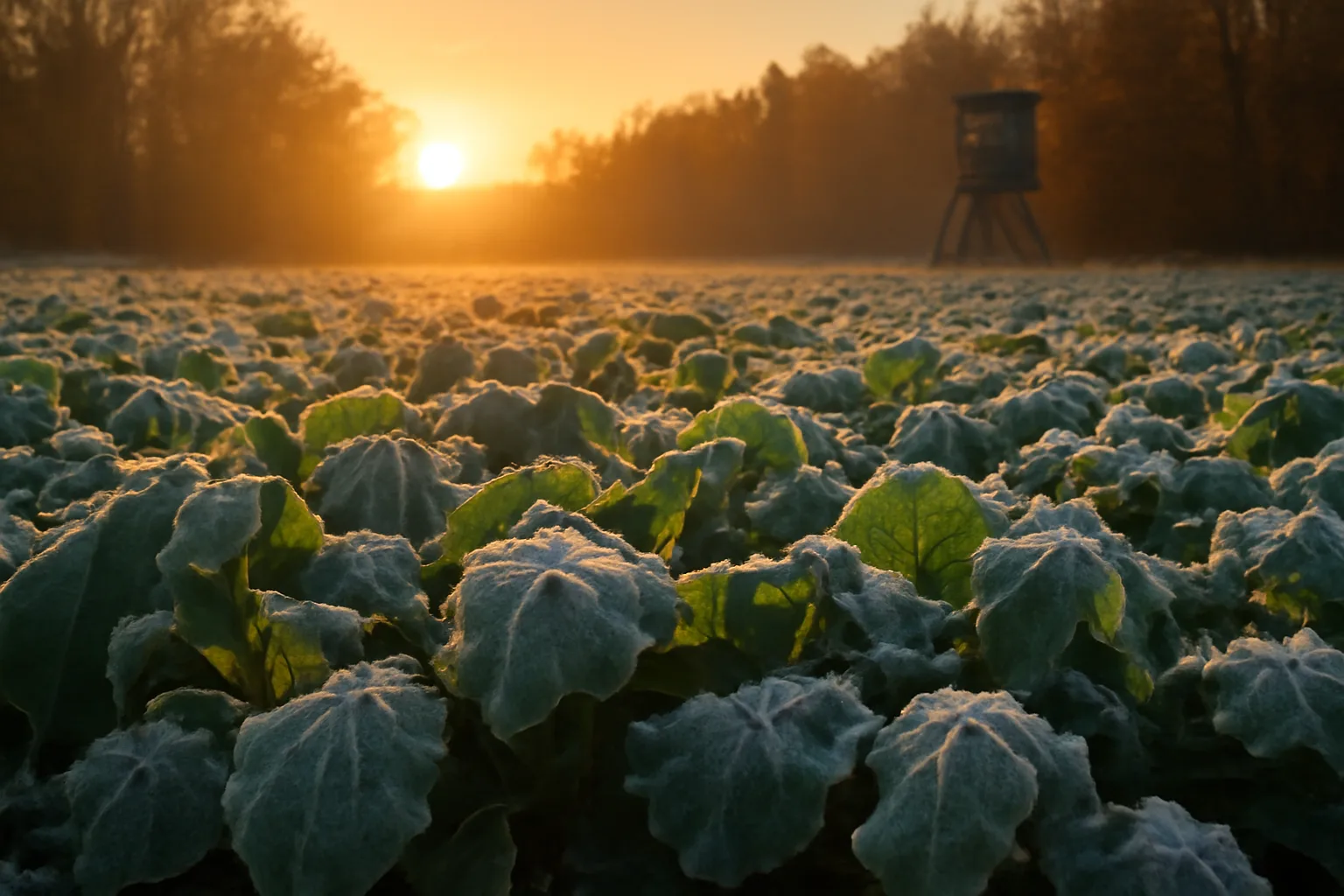
Turnips make a solid fall/winter deer plot because tubers and tops hold nutrition into cold weather, after frost sweetens the leaves. Plant 60 to 90 days before your area's first killing frost, roughly 4-6 lbs per acre broadcast, into soil at pH 6.0-6.5. Deer often ignore turnips early in the season, then hit them hard once frost sets in.
what is a food plot, and where do turnips fit in?
A food plot is a planted patch of forage on hunting ground, meant to feed deer, hold them on your property, and give you a place to hunt over natural food instead of relying only on mast or ag fields. Plots range from a quarter-acre kill plot tucked in timber to multi-acre destination fields planted to soybeans or clover. The category is broad enough to cover annuals, perennials, and blends, and most serious plot programs run more than one type. Turnips fall into the brassica category, along with radishes, rape, and kale. They're a cool-season annual, meaning you plant them once and they finish their life cycle in one growing season, unlike clover or alfalfa which come back year after year. Turnips are usually planted as a fall/winter food source rather than a spring or summer plot, because their sugar content spikes after a hard frost and that's when deer switch on to them. Compared to a clover plot, which is more of a spring-through-fall protein source, turnips are a late-season energy source. A lot of plot managers run both: clover or a perennial mix for spring and summer, then a brassica or brassica/cereal grain blend for fall and into winter. If you're weighing turnips against other plot types for your ground, it helps to look at the broader picture of food plot whitetail strategy before locking in one species.
when to plant turnips for deer?
Plant turnips 60 to 90 days before your area's average first killing frost. That window gives the plant enough time to build a bulb and leaf mass before growth slows, but still lets frost hit the plot while deer are actively browsing it. In most of the whitetail's range that lands somewhere between late July and early September, though it shifts a lot by latitude and elevation. The Mississippi State University Extension publication on establishing fall food plots recommends brassica plantings roughly 60 to 90 days ahead of the first killing frost, and notes that timing shifts by region and elevation within the state (Mississippi State University Extension Publication 2111, "Establishing and Managing Wildlife Food Plots") [1]. If you're in the Deep South, you can push closer to September. If you're in the Upper Midwest or Northeast, late July to mid-August is more realistic, because your first frost comes sooner. The biggest planting mistake is going in too late. Turnips need real leaf and root development before cold weather stalls growth. A late-August planting in Michigan is a different animal than a late-August planting in Alabama, so check your local frost date and count backward. Land-grant extension offices publish average first frost dates by county, and that's a better guide than a generic calendar date pulled off the internet.
when to plant food plots for deer in general?
Timing depends entirely on what you're planting and what season you want it to feed deer. Spring plots (clover, chicory, alfalfa) typically go in as soil temps warm, generally April through May in most of the whitetail range, once soil hits the mid-50s Fahrenheit. Summer annuals like soybeans or cowpeas get planted after the last frost, often May through June. Fall plots, which includes brassicas, cereal grains, and fall blends, get planted from late summer into early fall, 60 to 90 days ahead of first frost for brassicas and closer to 45 to 60 days for cereal grains. The short version: perennials and spring annuals go in when the ground warms up in spring, fall annuals go in when you start counting backward from your first frost date. Missing either window by a few weeks can mean a thin, underdeveloped plot that never gets the tonnage or maturity to hold deer. If you're not sure which category fits your goals, a broader look at deer food plots covers the full seasonal lineup and how to sequence more than one plot type across a property.
when to plant oats for deer?
Oats, like other cereal grains, go in 45 to 60 days before first frost, generally a bit later than brassicas since they establish faster and don't need as long to mature before deer start using them. In most of the Midwest and mid-South that puts oat planting in the August to early September window. Oats are attractive to deer almost immediately after germination, unlike turnips which often get ignored until frost changes their sugar content. A lot of successful fall blends combine oats (or winter wheat) with brassicas specifically because of this timing mismatch. Deer hit the oats hard right out of the gate, then shift to the turnip tops and bulbs once cold weather hits and the oats have been grazed down or gone dormant. Oats also tend to winterkill in colder climates, while winter wheat and rye persist, so pick your cereal grain component based on how far north you are. Penn State Extension's guidance on forage establishment notes that small grains are commonly paired with slower-maturing forage species specifically to extend the grazing window of a planted stand, which is the same logic behind pairing oats with brassicas in a fall plot.
how do you plant a turnip food plot step by step?
| Soil test | 2-3 months before planting | Determines lime and fertilizer needs | |
|---|---|---|---|
| Lime application | As soon as test results are back | Can take months to adjust pH | |
| Planting window | 60-90 days before first frost | Adjust earlier at higher latitude/elevation | |
| Seeding rate | 4-6 lbs/acre (pure stand) | Lower rate in blends | |
| Planting depth | 1/4 to 1/2 inch, or surface broadcast | Seed is very small, don't bury deep | |
| Fertilizer | Per soil test, often 300-400 lbs/acre 19-19-19 | Brassicas are nitrogen hungry | If you'd rather have someone build out the seeding rates, blend ratios, and timeline specific to your zip code and soil test, that's exactly what a plan service like a Custom Food Plot Plan is built to do. It's not a substitute for your soil lab's lime and fertilizer recommendation, but it turns those numbers into an actual season-by-season planting calendar. |
Start with a soil test. This is not optional if you want a plot that actually produces tonnage instead of a thin, yellowed stand. Turnips want a soil pH between 6.0 and 6.5, and most wooded or long-fallow food plot ground runs more acidic than that, often in the 5.0 to 5.5 range. Your soil test report will tell you exactly how much lime and fertilizer to apply for your specific field; that report, not a blog post, is the real authority on rates for your dirt. Once lime is worked in (ideally months ahead, since lime takes time to move through the soil profile), prep a clean seedbed. Turnip seed is tiny, roughly 60,000 to 130,000 seeds per pound depending on variety, so it can't be planted deep. A firm, weed-free seedbed with the seed broadcast on top or drilled no deeper than a quarter inch to half inch works best. Cultipacking after broadcast helps seed-to-soil contact enormously. Broadcast rate for pure turnips runs 4 to 6 lbs per acre. If you're running a blend (turnip, radish, rape, plus a cereal grain), rates drop for each component since you're splitting the seeding rate across species. The University of Georgia Extension publication on wildlife food plots lists brassica seeding rates in a similar 2 to 6 lb per acre range depending on species and whether it's planted alone or in a mix (University of Georgia Extension Bulletin 1435, "Establishing Wildlife Food Plots") [2]. Fertility-wise, brassicas are nitrogen hungry. A common approach is 300 to 400 lbs per acre of a balanced blend like 19-19-19, or split-applying nitrogen with a sidedress around 3 to 4 weeks after emergence if you want maximum bulb size. Again, your soil test is going to give you numbers specific to your field's existing nutrient levels, so treat any blanket rate as a starting point, not gospel. Here's a rough at-a-glance planning table: | Step | Timing | Detail |
do deer like turnips right away, or only after frost?
Mostly the latter. Turnip leaves are edible from germination on, and you'll sometimes see light browsing on tops through September and October, but the real draw kicks in after the first hard frost. Cold temperatures trigger the plant to convert starches into sugars as a natural antifreeze response, which makes the leaves and bulbs noticeably sweeter and more attractive. This is the single most common turnip-plot complaint from first-year plotters: they plant turnips, watch deer walk past them all September, and conclude the plot failed. It usually hasn't. Give it until after a couple of frosts in the 25 to 28 degree range before judging the plot. Once that happens, deer will often switch almost entirely onto the brassica plot and hammer it through the rest of the season, especially once snow covers other browse. Bulbs get eaten too, generally later in winter after the tops are grazed down, since deer have to paw or dig for them. In really deep snow or frozen ground, bulb availability drops, which is one reason many hunters treat brassicas as an early-to-mid-winter food source more than a deep-January one.
what are deer's favorite foods, and where do turnips rank?
Deer are opportunistic browsers, and their preferences shift by season, region, and what else is available on the landscape. Acorns are consistently one of the most preferred fall foods where oaks are present, because of the fat and carbohydrate content, and deer will often bypass planted plots entirely during a heavy acorn drop. Soybeans and clover are among the most preferred planted crops through summer and into fall. Agricultural corn and beans, where available, pull deer hard too. Brassicas including turnips generally rank below soybeans, clover, and acorns in raw preference, but they have one advantage almost nothing else does: they stay attractive and available deep into the cold months after most other browse has died back or been buried in snow. That's their real value, not that deer love them more than anything else, but that they fill a food gap in December and January when clover has gone dormant and beans are picked clean. So the honest answer is that turnips aren't likely to be a deer's single favorite food on the property. They're a late-season specialist crop that earns their keep specifically because almost nothing else is still green and available when everything else has quit.
do deer eat clover, and how does it compare to turnips?
Yes, and clover is arguably the most widely planted food plot forage in North America for good reason. White clover and red clover are both highly palatable to deer, high in protein (often 25-30% crude protein in good stands), and unlike turnips, clover is a perennial that can produce forage for three to five years from a single planting with proper mowing and fertility maintenance. The tradeoff is seasonality. Clover peaks in spring and again in early fall, and it goes dormant or gets buried under snow in winter in northern climates. Turnips are the opposite: useless in summer heat (brassicas actually struggle in high heat and can bolt or die back), but they hit their stride exactly when clover checks out for the year. This is why so many plot programs run both. Clover for spring green-up when deer need protein for antler growth and lactation, brassicas for late fall and early winter energy when deer need carbohydrates to build fat reserves for the rut and winter. If you're trying to decide between the two for a single plot, or how to split acreage between them, it's worth comparing food plot seed options across both categories before buying.
do deer eat sorghum?
Yes, deer will eat sorghum, particularly the grain heads once they mature, and sorghum (including grain sorghum and forage sorghum types) is sometimes planted as a summer annual or as a screening/cover crop in food plot rotations. It's more heat and drought tolerant than corn, which makes it a fit for the South and drier regions. That said, sorghum isn't a top-tier deer attractant crop compared to soybeans, corn, or brassicas. It's more commonly used as a companion planting, a nurse crop, or a visual screen around a plot to reduce pressure and give deer a sense of security approaching the field. Some hunters plant grain sorghum specifically for turkey and quail food and let deer use it as a secondary benefit rather than the primary target species. If sorghum is on your planting list, treat it as a supporting crop in a mixed planting plan rather than a standalone destination plot.
do deer like honey, and does it matter for food plots?
There's no real evidence deer seek out honey specifically, and it has nothing to do with food plot planning. This question shows up online mostly connected to homemade mineral or attractant recipes that call for adding honey, molasses, or sugar to a mix, on the theory that deer are drawn to sweetness. Deer do have a documented preference for sweeter forage, which is part of why frost-sweetened turnips and brassicas become so attractive in late fall, and why deer readily hit standing corn and soybeans, both of which carry natural sugars and carbohydrates. But that's a different mechanism than a jar of honey poured on the ground, which isn't a food plot practice and isn't something extension research addresses as a deer nutrition strategy. Worth a real caution here: many states regulate or outright ban baiting and supplemental feeding of deer, and the rules differ sharply by state and sometimes by county or disease-management zone. Before adding any mineral, molasses, or scent-based attractant to a property, check your state wildlife agency's current baiting and feeding regulations, since violating them can carry real penalties and varies constantly as chronic wasting disease management zones expand. Michigan, for example, has restricted baiting and feeding of deer and elk statewide through its Natural Resources Commission's Wildlife Conservation Order, with narrow exceptions, as part of its CWD management approach (Michigan Wildlife Conservation Order, Baiting and Feeding of Deer and Elk, Michigan Compiled Laws 324.40108) [3].
should you plant turnips alone or in a blend?
Most experienced plot managers run turnips in a blend rather than as a monoculture, and there's good agronomic logic behind it. A straight turnip plot can look great in October and then get grazed down to bare dirt fast once frost hits and deer key in on it, leaving nothing standing by mid-winter. A common blend pairs turnips with radish (deeper taproot, breaks up soil compaction), rape or kale (similar frost-sweetening benefit, slightly different growth habit), and a cereal grain like oats, wheat, or rye (fast germination, early-season attraction while brassicas are still maturing, and continued green forage into winter in the case of wheat and rye). This staggers both the attraction timeline and the physical structure of the plot, so you're not relying on one plant part (a bulb) to carry the whole plot through winter. The Mississippi State University Extension publication on food plot establishment discusses combining brassica species with cereal grains to extend a plot's productive window and improve overall stand performance across the season [1]. If you're shopping seed for a blend, look at how vendors package deer food plot seed mixes, since pre-blended bags are formulated around exactly this staggered-timing logic.
how much turnip food plot tonnage should you expect?
Brassica yields vary enormously based on soil fertility, moisture, and variety, but well-fertilized turnip and brassica blends can produce several tons of forage (tops plus bulbs) per acre under good conditions. That's part of why brassicas are popular on tight acreage: pound for pound, they can put more forage on the ground per planted acre than a lot of other annual options, provided the fertility program keeps pace with the crop's nitrogen demand. The catch is that yield collapses fast without adequate lime and fertilizer. Brassicas planted into raw, unlimed, unfertilized dirt at native pH (often below 5.5 on wooded ground) will produce a fraction of their potential, sometimes barely germinating a usable stand at all. This is the number one reason turnip plots fail, more than deer pressure or timing mistakes: skipping the soil test and fertility step entirely. If tonnage and season-long coverage matter to you, and you're trying to decide how many acres of turnips versus other species to plant, comparing options through something like domain food plot seed or general deer for food planning resources can help scale seed purchases to your actual acreage instead of guessing.
Frequently asked questions
When should I plant turnips for deer in my area?
Plant 60 to 90 days before your local first killing frost. Check your county's average first frost date through your state land-grant extension office, then count backward. In the Southeast that's often late July through early September; in northern states, aim for late July to mid-August.
Why aren't deer eating my turnip plot in September?
This is normal. Turnip leaves and bulbs get noticeably sweeter after a hard frost converts starches to sugar, so deer often ignore turnips until temperatures drop into the mid-20s a few times. Judge the plot's performance in late fall and winter, not right after planting.
What soil pH do turnips need for a food plot?
Turnips grow best at soil pH 6.0 to 6.5. Most untested wooded food plot ground runs more acidic than that, often around 5.0 to 5.5, so a soil test and lime application ahead of planting is one of the biggest factors in whether the plot actually produces.
Do deer eat sorghum?
Yes, deer eat sorghum grain and forage, but it's not a top-tier attractant crop compared to soybeans, corn, or brassicas. It's more often planted as a heat and drought-tolerant companion crop or screening planting, with deer use as a secondary benefit rather than the main draw.
Do deer actually like clover, and is it better than turnips?
Yes, clover is one of the most preferred food plot forages, high in protein and available spring through fall. Turnips serve a different role: they're a late-season energy source that stays available after clover goes dormant. Most plot programs plant both rather than choosing one.
When should I plant oats for a deer food plot?
Plant oats 45 to 60 days before first frost, a bit later than turnips since oats establish faster. In most of the Midwest and mid-South that's August into early September. Oats attract deer almost immediately, unlike turnips, which is why the two are often blended together.
What is a food plot, in simple terms?
A food plot is a planted area of forage crops on hunting land intended to feed deer or other wildlife and give hunters a place to hunt over a food source. Plots range from small kill plots in timber to large destination fields, planted with annuals, perennials, or blends depending on the season targeted.
What are deer's favorite foods overall?
Acorns rank among the most preferred fall foods where available, along with soybeans and clover among planted crops. Turnips and other brassicas rank lower in raw preference but become highly used in late fall and winter once frost sweetens them and other food sources decline.
Do deer like honey, and should I add it to a food plot?
There's no research support for deer specifically seeking out honey, and it has no real role in food plot planning. Deer do prefer sweeter forage, which is why frosted turnips and standing corn draw them, but that's unrelated to pouring honey on the ground. Check state baiting rules before adding any attractant.
How deep should I plant turnip seed?
Very shallow. Turnip seed is tiny, so plant no deeper than a quarter to half inch, or simply broadcast onto a firm, prepared seedbed and cultipack afterward for seed-to-soil contact. Burying the seed too deep is a common cause of poor germination.
Should I plant turnips alone or mixed with other seed?
Most experienced plot managers blend turnips with radish, rape, and a cereal grain like oats or wheat. The cereal grain gives early-season attraction while the brassicas mature, and the mix of taproots and tops extends the plot's usable window further into winter than turnips alone.
How much seed do I need per acre for turnips?
For a pure turnip stand, plan on 4 to 6 lbs of seed per acre broadcast. If planting a blend with radish, rape, or cereal grains, reduce the turnip portion accordingly since you're splitting the total seeding rate across multiple species.
Sources
- Mississippi State University Extension Publication 2111, Establishing and Managing Wildlife Food Plots: Recommended planting window for brassicas (60-90 days before first killing frost) and blending guidance with cereal grains
- USDA NRCS Plant Fact Sheet, Rape (Brassica napus): Brassica forage species are cool-season crops whose quality and palatability are tied to cool temperatures and frost exposure
- University of Georgia Extension Bulletin 1435, Establishing Wildlife Food Plots: Typical brassica seeding rates range 2-6 lbs per acre depending on species and whether planted alone or in a blend
- Michigan Wildlife Conservation Order, Baiting and Feeding of Deer and Elk, Michigan Compiled Laws 324.40108: States regulate or ban baiting and supplemental feeding of deer, with rules tied to CWD management zones
- USDA NRCS Plant Guide, Forage Turnip (Brassica rapa): Turnip is a cool-season annual brassica grown for forage, with growth and quality characteristics tied to cool temperatures