Last updated 2026-07-26
TL;DR
August is the best month to plant brassicas (turnips, radishes, rape) and early cereal grains like oats across most of the whitetail's range, roughly 60-90 days before your first hard frost. Clover and perennial blends also go in late summer in northern and transition zones. Southern hunters should hold off on most seed until September when heat and drought risk drop.
what should you actually plant in august for deer
August is brassica and cereal grain month across most of the whitetail's range, plain and simple. Turnips, radishes, rape and other brassicas want 80 to 100 days to reach full maturity and sweeten up with frost, so counting backward from your average first hard frost date tells you exactly when to drop seed [1]. Oats and other cool-season cereal grains also go in during August in northern and transition zones because they germinate fast, tolerate cooler nights, and give you green forage within three to four weeks. If you're in the Upper Midwest, New England, or the northern Great Plains, August 1 through August 20 is your window for brassicas. Wait past Labor Day up there and you risk a killing frost before tubers bulb up. If you're in the transition zone (roughly Missouri, Kentucky, Virginia, and similar latitudes), you've got until late August, sometimes the first week of September for brassicas. Cereal grains like oats and winter rye have a longer runway and can go in through September. Deep South hunters, hold off. Most of August is still too hot and too dry for reliable germination down there. You're better off waiting until September or even October for brassicas and cereal grains. Planting into 95-degree soil with no rain in the forecast just burns seed money. A quick gut check: pull up your county's average first frost date from NOAA or your state climate office, subtract 90 days for brassicas, and that's your target planting date [2]. For a plan built around your specific zip code and soil test, the food plot whitetail guide covers full-season blends, and a Custom Food Plot Plan from PlotSeason maps out exact August windows for your location for $99 one time.
when to plant food plots for deer, month by month
| Northern (MN, WI, MI, ME, northern NY) | Late July to mid-August | Mid-August to early September | Late July to August, or spring | |
|---|---|---|---|---|
| Transition (MO, KY, VA, southern PA, OH) | Mid-August to early September | Late August to mid-September | August to September, or spring | |
| Southern (AL, GA, MS, LA, FL, TX) | Mid-September to October | September to November | September to October | Spring plots (soybeans, corn, cowpeas, chicory, warm-season perennials) go in April through June depending on your last frost date and soil temperature, generally once soil hits 60 degrees for beans and corn. That's outside the scope of an August planting guide. But it's worth knowing so you don't try to drill soybeans into August ground. For a full year-round breakdown, see deer food plots. |
Timing depends more on your first frost date than the calendar page. Cooperative extension programs consistently frame planting windows around frost dates rather than fixed months, because a September planting in Minnesota and a September planting in Georgia are two completely different situations [2]. Here's a rough breakdown that holds up across most of the whitetail range: | Zone | Brassicas/turnips | Cereal grains (oats, wheat, rye) | Clover/perennials |
when to plant turnips for deer
Plant turnips 80 to 100 days before your area's average first killing frost, which in most of the whitetail's range lands somewhere between late July and early September [1]. Turnips need that runway to bulb up and convert starches to sugars after a few frosts, which is when deer really start hammering them. Purdue University Extension notes that brassica forages like turnips are best planted from mid-July through August in the Midwest, with a hard cutoff around the first two weeks of September in most northern counties [1]. Plant too late and you get leafy tops with no bulb development, which deer will still eat some of, but you lose the high-energy root crop that makes turnips worth planting in the first place. Seeding rate matters here too. Most turnip blends run 4 to 6 pounds per acre if drilled, or up to 8 to 10 pounds if broadcast, since broadcast seeding has lower germination success. Depth should be shallow, a quarter inch or less. Turnip seed is tiny and easy to bury too deep with a drill set for soybeans or corn. One real-world quirk: turnips often get ignored in early fall when acorns and other natural browse are still dropping, then get hammered hard in December and January once other food sources thin out. Don't panic if your turnip plot looks untouched in October. That's normal, not a failure.
when to plant oats for deer
Oats go in the ground anywhere from mid-August through September depending on your zone, and they're one of the fastest-germinating food plot options available, often showing green shoots within 5 to 10 days of a good rain [1]. Oats tolerate cooler soil better than most warm-season options, which is exactly why they're an August staple in northern and transition zones. Deer tend to hit oats hard in early fall while the plant is young and tender, then interest tapers some as the plant matures and toughens up, unless a frost sweetens the leaves again. That's part of why a lot of blends mix oats with brassicas or winter wheat: you get the fast, palatable early growth from oats plus a food source that holds up better into late fall and winter. Seeding rate for oats alone runs 60 to 100 pounds per acre broadcast, lighter if drilled. Oats aren't usually a standalone plot in most whitetail strategies. They're commonly paired with clover as a nurse crop, or blended with brassicas and cereal rye for a longer feeding window.
do deer like clover and is it worth planting in august
Yes, deer eat clover readily and it's one of the most consistently used food plot forages across whitetail research, but August is a mixed bag for planting it depending on your zone. Clover is a cool-season perennial legume, and most extension guidance recommends either a spring planting (March through May) or a late-summer planting (roughly mid-August through early September) timed so seedlings establish before a hard frost [1]. Late-summer clover seeding works best where you've got reliable rainfall and at least 60 days before your ground freezes, since young clover seedlings need time to develop a root system before winter dormancy. In dry years or in the Deep South where August heat is brutal, a fall clover planting can fail outright from heat stress and lack of moisture, which is why a lot of southern plotters wait until September or October, or just plant in spring instead. Clover's real value shows up over multiple seasons, not one fall. It's a perennial that, properly maintained with mowing and occasional herbicide for weed control, can produce forage for three to five years or more. Purdue University Extension lists white clover and red clover among the top perennial forages for deer food plots specifically because of their high crude protein content, commonly cited in the 25 to 30 percent range for actively growing clover [1]. If you want a plot that isn't a once-a-year replant, clover earns its spot in the rotation. For seed selection specifics by region, check deer food plot seed.
do deer eat sorghum, and should you plant it in august
Deer will eat sorghum, particularly the grain heads once they mature, but it's not a top-tier whitetail food plot choice compared to brassicas, cereal grains, or legumes, and August is generally too late to plant it anyway. Grain sorghum is a warm-season annual that needs 90 to 120 days to reach grain maturity and wants warm soil (65 degrees or higher) to germinate well, which puts its planting window in late spring through early summer in most of the country, not August [3]. Where sorghum shows up in food plot mixes, it's usually as a standing grain crop meant to hold seed heads into winter for turkeys and deer both, or as cover and a supplemental grain source rather than a primary attractant. Deer will browse young sorghum shoots and will feed on the grain heads once they dry down, but whitetail research and most extension forage guides put soybeans, corn, and brassicas well ahead of sorghum in terms of deer preference and nutritional value for food plot purposes. If you've already got sorghum in the ground from a June or July planting, let it mature into fall. If you're starting from scratch in August, you're better off putting that acre into oats or brassicas instead.
what is a food plot, exactly
A food plot is a planted area, usually somewhere between a quarter acre and several acres, established specifically to provide supplemental forage for deer and other wildlife, typically on land the hunter owns or leases. Food plots aren't natural browse; they're intentional plantings of species like clover, brassicas, cereal grains, soybeans, or corn, chosen and timed to fill nutritional gaps in the deer's natural diet and to concentrate deer activity for hunting and observation purposes. State wildlife agencies generally regulate food plots separately from baiting or supplemental feeding, since a planted, rooted crop is treated differently under most state game laws than a pile of corn or a mineral lick. Rules vary a lot by state, though, and even by public versus private land. Check your state wildlife agency's current regulations before assuming a food plot is automatically legal to hunt over in your state. Food plots generally fall into two categories: annual plots (brassicas, cereal grains, soybeans, corn) that get replanted each year, and perennial plots (clover, chicory, alfalfa) that can produce forage for several years with proper maintenance. Most serious food plot programs run both, using annuals for fast tonnage and attraction, and perennials for lower-maintenance, longer-term forage. For a broader rundown of plot types and how to pick one for your ground, see food plot seed and domain food plot seed.
what are deer's favorite foods, and how do food plots fit in
Deer are opportunistic browsers, and their actual diet shifts constantly with what's available: acorns and other hard mast in fall, forbs and agricultural crops in summer, woody browse in winter when little else is left [4]. There's no single favorite food, but research consistently shows deer prefer high-protein, high-energy forages when they can get them, which is exactly why food plot species like clover, soybeans, and brassicas get planted, since they deliver more digestible protein and energy than most native browse. Soft mast (apples, persimmons) and hard mast (acorns, especially white oak acorns, which are lower in tannins and more palatable than red oak acorns) often outcompete food plots when they're available in quantity. That's a big reason plot activity can look slow in a heavy acorn year. Deer aren't ignoring your plot because it's bad; they're just eating free food in the timber first. Among planted food plot species, soybeans and clover consistently rank near the top for crude protein and preference in university forage trials, with brassicas gaining ground fast in late fall and winter once frost sweetens the tubers and leaves [1] [1]. Corn is more of an energy and cover crop than a protein source. If you're trying to build a plan around actual deer preference by season, that's exactly the kind of detail a Custom Food Plot Plan is built to sort out, matching species to your specific frost dates and soil rather than guessing from a bag label.
do deer like honey, or is that a myth
No, deer don't eat honey in any meaningful sense as part of their natural diet, and there's no wildlife research or extension guidance suggesting honey has any use as a deer attractant or food plot input. This question shows up online mostly from confusion with commercial deer attractant products that use words like "honey" or sweet-smelling additives in their branding, not because deer are out there eating honeycomb. What deer are documented eating that might sound similarly odd: mushrooms, lichen, and even bird eggs or nestlings opportunistically, none of which are food plot relevant, but all documented in wildlife diet studies. If you're looking for a genuine attractant or supplemental sweetener effect, molasses-based mineral supplements are a real product category, though their actual pull on deer behavior is debated among biologists and mineral supplementation is restricted or banned outright in some states as a form of baiting. Check your state wildlife agency's regulations before using any mineral or attractant product.
how do soil tests change what you plant in august
Your soil test is the actual authority here, not a generic seed bag recommendation, and every land-grant extension program says the same thing: pH and nutrient levels determine what you can realistically grow before you even think about species selection . Brassicas and clover both want a soil pH in the 6.0 to 7.5 range for best growth and nutrient uptake; push much below 6.0 and you'll see stunted growth and poor nodulation in legumes regardless of how good your seed is. Lime takes time. If your test comes back low on pH, lime needs months to fully react with soil, so an August planting on unlimed acidic soil is working against you from day one. Many extension soil labs recommend applying lime at least 6 months before planting for full effect, though some correction happens faster . If your soil test is fresh and shows you need lime, you're better off treating that acre this year and planting a hardier, more tolerant cover crop for one season while the lime works, then planting your real target species next year. Fertility matters just as much. Brassicas are heavy nitrogen feeders and respond well to 40 to 60 pounds of actual nitrogen per acre in split applications, according to Extension nitrogen management guidance for brassica forage crops [1]. Clover, being a legume, fixes its own nitrogen once established and needs phosphorus and potassium more than nitrogen. Always follow your specific soil test lab's recommendation over any generic number here; your lab knows your dirt, this article doesn't.
what equipment do you need to plant food plots in august
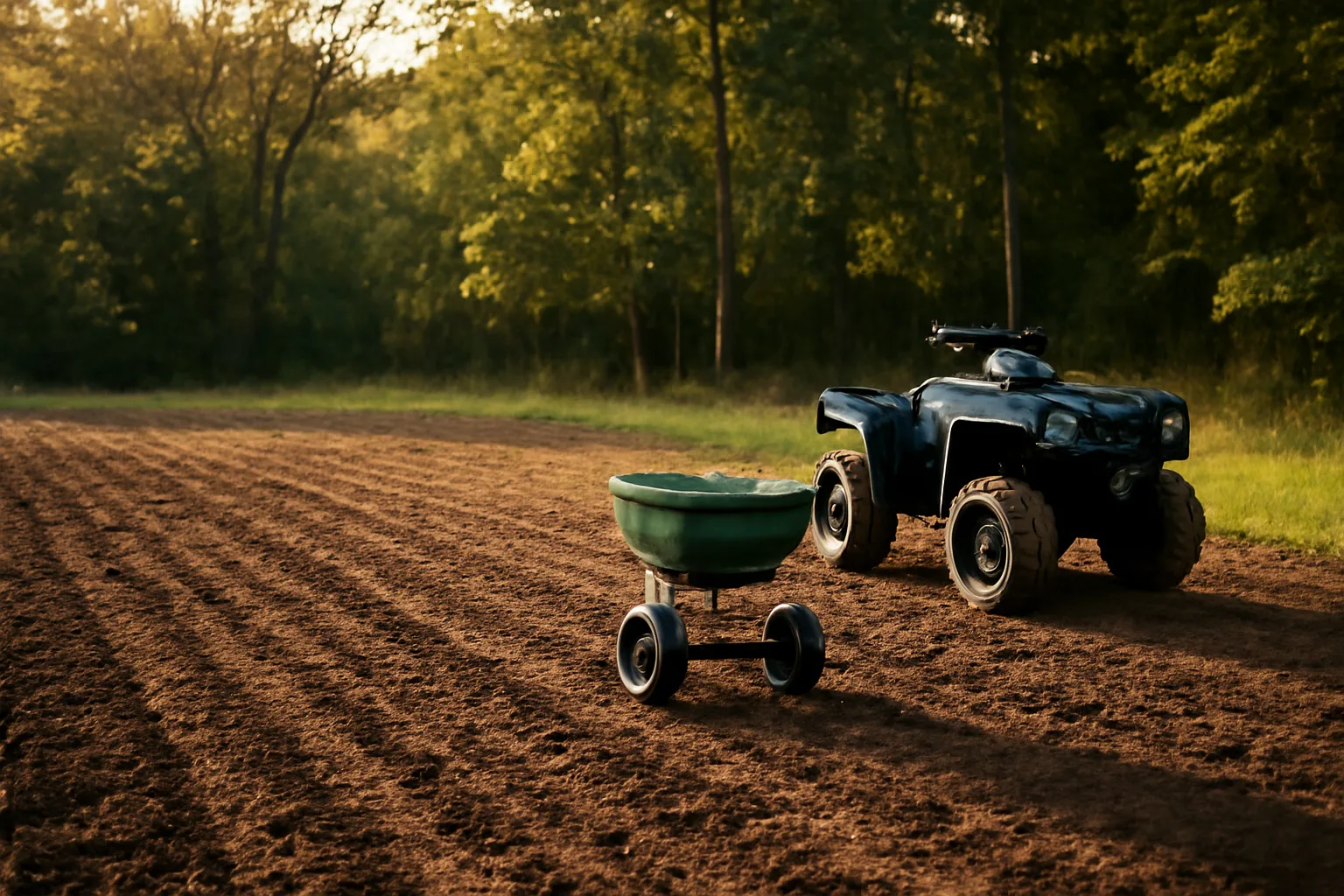
Minimum viable equipment is a soil test, a way to kill existing vegetation (herbicide or tillage), a way to get seed to the right depth, and a way to pack the seed in. That's it at the bare-bones level, and a lot of small plots get planted successfully with an ATV, a pull-behind broadcast spreader, and a cultipacker or even a piece of chain-link fence dragged behind for seed-to-soil contact. For brassicas and clover, broadcasting works fine since seed is small and shallow planting depth is actually preferred; drilling isn't required and can bury seed too deep if you're not careful with depth settings. For cereal grains like oats, a drill gives more consistent germination and stand density, but broadcasting followed by a light disking or dragging also works, just expect a somewhat patchier stand. Herbicide burndown (glyphosate is standard for killing existing grass and weeds ahead of planting) needs 7 to 14 days before planting to be effective, so factor that into your August calendar; if you're planting August 15, you want that field sprayed by August 1 at the latest. Skipping burndown and planting into standing weeds is one of the most common reasons August food plots underperform, since new seedlings simply can't compete with established grass and weed root systems for water and nutrients.
common august food plot mistakes to avoid
The single biggest mistake is planting too early or too late for your actual frost date, not the calendar month. Planting brassicas the first week of August in a zone with a mid-October frost wastes the plant's growth potential; planting them the last week of August in a zone with an early October frost risks immature bulbs. Pull your specific county frost data and count backward, don't just copy a date you saw online for a different state [2]. Second mistake: skipping the soil test and guessing on lime and fertilizer. A $15 to $20 soil test through your state land-grant university's extension soil lab tells you exactly what your dirt needs, and guessing wrong on pH or nitrogen can tank a plot's yield by half or more. Third mistake: no burndown before planting into an existing weedy field. Competition from established grass and weeds is one of the most common reasons a new plot looks thin and weak six weeks after planting, even with good seed and good rain. Fourth: planting the whole property in one species. A monoculture plot is more vulnerable to a single pest, disease, or weather event wiping out your entire food source for the season. Mixing brassicas with a cereal grain, or running separate clover and brassica plots, spreads that risk and extends the feeding window from early fall through winter.
Frequently asked questions
Do deer eat sorghum?
Yes, deer eat sorghum grain heads and will browse young shoots, but it's a lower preference food plot option compared to soybeans, corn, or brassicas. Sorghum needs 90 to 120 days and warm soil to mature, so it's typically a late spring or early summer planting, not an August one.
Do deer eat clover?
Yes, clover is one of the most consistently preferred food plot forages for whitetail deer, commonly running 25 to 30 percent crude protein while actively growing according to Purdue Extension forage guidance. It's a perennial legume that can produce for three to five years with proper mowing and weed control.
When should I plant food plots for deer?
Timing depends on your area's average first frost date, not a fixed calendar month. Brassicas and cereal grains generally go in 60 to 100 days before frost, which lands in August for northern and transition zones and September or later in the Deep South. Spring plots like soybeans go in April through June instead.
When should I plant turnips for deer?
Plant turnips 80 to 100 days before your area's first killing frost, typically late July through early September depending on latitude. Purdue Extension recommends mid-July through August planting in most Midwest counties. Planting too late leaves you with leafy tops but underdeveloped bulbs.
When should I plant oats for deer?
Oats go in mid-August through September in most zones, and germinate fast, often within 5 to 10 days of good rain. They tolerate cooler soil better than warm-season crops, which is why they're a staple August planting in northern and transition zones, often mixed with brassicas or clover.
Do deer like clover more than other food plot options?
Clover ranks near the top of most university forage preference studies alongside soybeans, largely due to its high crude protein content and long growing season. Preference does shift seasonally though; brassicas often pull deer harder in late fall once frost sweetens the leaves and bulbs.
What is a food plot?
A food plot is a planted area, usually a quarter acre to several acres, established to provide supplemental forage for deer and other wildlife on land a hunter owns or leases. Common species include clover, brassicas, cereal grains, soybeans, and corn, chosen based on soil, climate, and hunting goals.
What are deer's favorite foods?
Deer don't have one single favorite food; their diet shifts seasonally between acorns and other hard mast, forbs, agricultural crops, and woody browse in winter. Among planted food plot species, soybeans and clover consistently rank high in university preference and crude protein studies, with brassicas gaining preference after frost.
Do deer like honey?
No, honey isn't part of a deer's natural diet and there's no wildlife research supporting it as an attractant or food source. The confusion usually comes from commercial attractant product names, not actual deer feeding behavior.
Is August too late to plant a food plot?
Not in most of the whitetail's range. August is actually prime time for brassicas and cereal grains in northern and transition zones. It's often too early for the Deep South, where heat and drought risk make September or October a safer bet for the same species.
Can I plant clover and brassicas in the same plot in August?
Yes, many hunters mix a small percentage of clover into a brassica blend, though clover establishes slower and can get shaded out by fast-growing brassicas in year one. A cleaner approach is separate plots or blocks so each species gets appropriate seeding rate and depth.
Do I need to check state laws before planting a food plot?
Yes. Food plots are generally treated differently from baiting under most state game laws, but rules on things like mineral supplements, standing crop hunting, and public land plots vary by state. Check your state wildlife agency's current regulations before planting or hunting over any plot.
Sources
- Purdue University Extension, Brassicas for Deer (FNR-499-W): Brassica forages like turnips need 80-100 days to mature and are best planted mid-July through August in the Midwest, with nitrogen needs around 40-60 lbs/acre
- NOAA National Centers for Environmental Information, Frost/Freeze Data: Average first frost dates by location, used to calculate backward planting windows for brassicas and cereal grains
- USDA Natural Resources Conservation Service, Plant Guide: Grain Sorghum: Grain sorghum requires warm soil temperatures and roughly 90-120 days to reach grain maturity
- Pennsylvania Game Commission, White-tailed Deer Biology and Management: Deer diet shifts seasonally among hard mast, forbs, agricultural crops, and woody browse depending on availability
- University of Missouri Extension, Soil Test Interpretations and Recommendations (Publication G9111): Soil pH in the 6.0-7.5 range is generally recommended for brassica and clover establishment, and lime needs time to react with soil before planting for full effect