Last updated 2026-07-25
TL;DR
Throw and grow means broadcasting seed onto bare or mowed ground without tilling, then dragging or driving over it to press seed into soil. It works best on disturbed dirt (old logging roads, ATV trails, disked spots) with clover, oats, or brassicas. It fails on thick sod or thatch because seed-to-soil contact never happens.
what is a throw and grow food plot
A throw and grow food plot is exactly what it sounds like. You broadcast seed by hand or with a hand-crank spreader, then you either drive over it, drag a chain or piece of chain-link fence over it, or just let rain and foot traffic press it into the dirt. No tiller, no drill, no disc. It's the fastest, cheapest way to get a plot in the ground. A basic hand spreader costs $20 to $40, and if you already have bare dirt (a logging road, a skid trail, a spot where a tree fell and killed the grass) you can have seed down in under an hour. The tradeoff is control. You're trusting rain timing and soil contact to nature instead of a drill or cultipacker. That works fine for small-seeded, aggressive species. It works poorly for anything that needs real seed-to-soil contact and consistent depth, like corn or soybeans. For a general primer on plot types and how throw and grow fits alongside drilled and tilled plots, see food plot whitetail.
when does throw and grow actually work (and when does it fail)
Throw and grow works when you already have bare, disturbed soil. Think log landings, old ag fields with thin cover, disked firebreaks, or spots where you sprayed out competition a few weeks earlier. Seed falling into loose dirt, even without a drag, will germinate reasonably well if rain comes within a week or two. It fails on established sod. Thick grass or heavy thatch blocks seed from ever touching mineral soil. The seed sits on top, birds and rodents eat some of it, and whatever's left dries out and dies before roots ever form. This is the single biggest reason throw and grow plots fail: people broadcast into a hayfield or a lawn-like clearing and wonder why nothing came up. University extension guidance on forage establishment consistently notes that seed-to-soil contact is a top driver of germination success, often ranked ahead of seed rate or first-season fertility [1]. If you can't get contact, you can't fake it with more seed. Slope and rainfall timing matter too. On flat ground with decent moisture, throw and grow after a light disking or ATV-drag works nearly as well as drilling for small seeds. On hard clay or during a dry stretch, expect real losses, sometimes 30 to 50 percent lower stand density compared to a properly drilled plot, though nobody has run a large controlled study specifically quantifying this gap for whitetail food plots. That number is a practical estimate from extension establishment guidance on small-seeded forage stands, not a formal study.
when to plant food plots for deer
Timing depends on your zone and what you're planting, but there are two windows almost everyone uses: late summer to early fall for annual cool-season plots (clover, brassicas, oats, wheat), and spring for warm-season annuals (soybeans, cowpeas, sorghum, corn). Most of the whitetail range falls into a fall-planting window between mid-August and mid-September for the North, and September into early October for the transition zone and parts of the South. The goal is getting 60 to 90 days of growth before a hard frost for brassicas, and enough soil moisture and warmth for smaller-seeded stuff like clover and oats to germinate before the ground cools too much. Spring plots for soybeans, corn, or sorghum generally go in after your last frost date, which ranges from early April in the Deep South to late May or even early June in the northern tier and Canadian border states. The USDA Plant Hardiness Zone Map is the standard reference most extension planting calendars build from. If you're not sure which window applies to your county, your state's land-grant extension office publishes planting date guidance by region, and it's worth five minutes to check rather than guessing off a national chart. For a broader breakdown of species options across both windows, see deer food plot seed.
when to plant oats for deer
Oats go in during the same late-summer window as most fall annuals, generally mid-August through mid-September in the North, and into early October farther south. Oats germinate fast, often within 5 to 7 days with good moisture, and they tolerate a light frost, which makes them forgiving for throw and grow because you don't need perfect timing. Spring oats are also an option in some regions as a quick cover crop or early-season plot, planted as soon as soil can be worked in March or April, but most food plotters use oats as a fall attractant, often mixed with brassicas or clover, because deer hit young oat shoots hard in September and October. Oats are one of the better throw and grow candidates because the seed is large enough to survive shallow coverage but still germinates fine with just a light drag or rainfall push. You don't need to bury it deep. A quarter inch to half inch of coverage is a typical extension-recommended depth for oats in small-grain forage plantings [2].
when to plant turnips for deer
Turnips go in during the same late-summer brassica window, typically late July through late August in northern states, and into early September in the transition zone. They need 80 to 90 days before a killing frost to bulb up properly, so planting too late means you get leafy greens but no bulb, which still feeds deer but changes the plot's late-season value. Turnip seed is tiny, roughly 150,000 to 200,000 seeds per pound depending on variety, and it needs to sit at or near the soil surface, no more than a quarter inch deep. That shallow requirement is actually why turnips work well for throw and grow: broadcast onto disked or harrowed ground, then a light cultipack or rain event is enough. The catch is weed competition. Turnips broadcast into standing weeds or thick residue lose the fight fast in their first three weeks. Most throw and grow turnip failures trace back to skipping a spray-out or at least a mow before broadcasting.
do deer eat sorghum
Yes, deer eat sorghum, both the grain heads and the leaves, though it's usually a secondary food source compared to soybeans, corn, or brassicas. Sorghum is more commonly planted as a warm-season screening and browse crop, and it holds up well in drought-prone soils where corn struggles. Grain sorghum matures in 90 to 120 days depending on variety, so it's a spring-planted crop, going in after soil temperatures hit 60 degrees Fahrenheit, generally late April through June depending on your zone. Deer will browse young sorghum shoots and later feed on the grain heads once they mature, especially in fall and winter when other food sources thin out. It's not usually anyone's top pick as a standalone deer plot species, but it works well in a mix for tonnage and cover, and it's a reasonable throw and grow candidate on rougher ground because the seed size and vigor tolerate shallower coverage better than something like clover.
do deer eat clover, and do deer like clover
Yes, deer eat clover heavily, and it's one of the most consistently preferred food plot forages across the whitetail range. Clover is a perennial (usually lasting 3 to 5 years with good management), which means one planting keeps producing forage across multiple seasons instead of needing replanting every year like an annual. White clovers (ladino types especially) and red clover are the two most common choices. Clover forage typically runs 20 to 30 percent crude protein during active growth, which is why it's a go-to for spring and summer nutrition when antler growth and lactation demands are highest [3]. Clover is also one of the best throw and grow candidates because the seed is extremely small and shallow-planted by nature, no more than a quarter inch, often just pressed onto the surface. Overseeding an existing plot or broadcasting into a freshly disked seedbed with a light cultipack afterward gets solid results without a drill. The catch: clover is slow to establish and very sensitive to weed competition in its first 60 days. It's not a great choice for broadcasting into rough, weedy ground and walking away. If you want low-maintenance perennial coverage, clover earns its reputation, but it needs a clean seedbed more than almost anything else on this list.
what are deer's favorite food, according to research
There's no single universal answer, because deer preference shifts by season, region, and what's locally available, but research consistently ranks a handful of foods near the top: acorns, soybeans, clover, and agricultural crops like corn when available. Acorns are frequently cited as a preferred fall food because of their fat content. White oak acorn kernels can carry a substantial fat fraction that helps deer build reserves before winter, and the USDA Forest Service's Fire Effects Information System documents this species-level nutritional value for Quercus alba [4]. When acorns are abundant in a given fall, deer often ignore food plots almost entirely in favor of mast, something plot owners notice every few years during a heavy acorn crop. Soybeans are one of the most preferred agricultural forages during summer, both for the leaves (high protein) and the beans themselves once they mature. Clover ranks close behind for season-long preference because of its protein content and regrowth after grazing. Bottom line: there isn't a magic single species. A property with a mix, some perennial clover, some brassicas for late season, maybe beans or corn if you have the acreage, covers more of the calendar than chasing one favorite crop. For species comparisons and mixes, deer food plots breaks down common combinations.
do deer like honey (and does it belong in a food plot conversation)
Deer don't naturally forage on honey the way they browse plants, and honey isn't a legal or practical food plot input anywhere. The question usually comes up because of homemade mineral or attractant recipes circulating online that mix honey, molasses, or sugar with corn or salt. There's no research from wildlife agencies or extension services recommending honey as a deer attractant, and depending on your state, pouring out sugar-based attractants or bait piles may fall under baiting and feeding restrictions, which vary significantly by state and sometimes by county or disease-management zone. Some states ban baiting entirely, some allow it outside specific zones, and some regulate feeding differently from baiting for hunting purposes. Check your state wildlife agency's current regulations before using any attractant, mineral, or supplemental feed near a stand or plot. A quick search of your state's department of natural resources or fish and wildlife site will have the current baiting and feeding rules, and these change year to year, especially in areas managing chronic wasting disease.
what equipment do you actually need for throw and grow
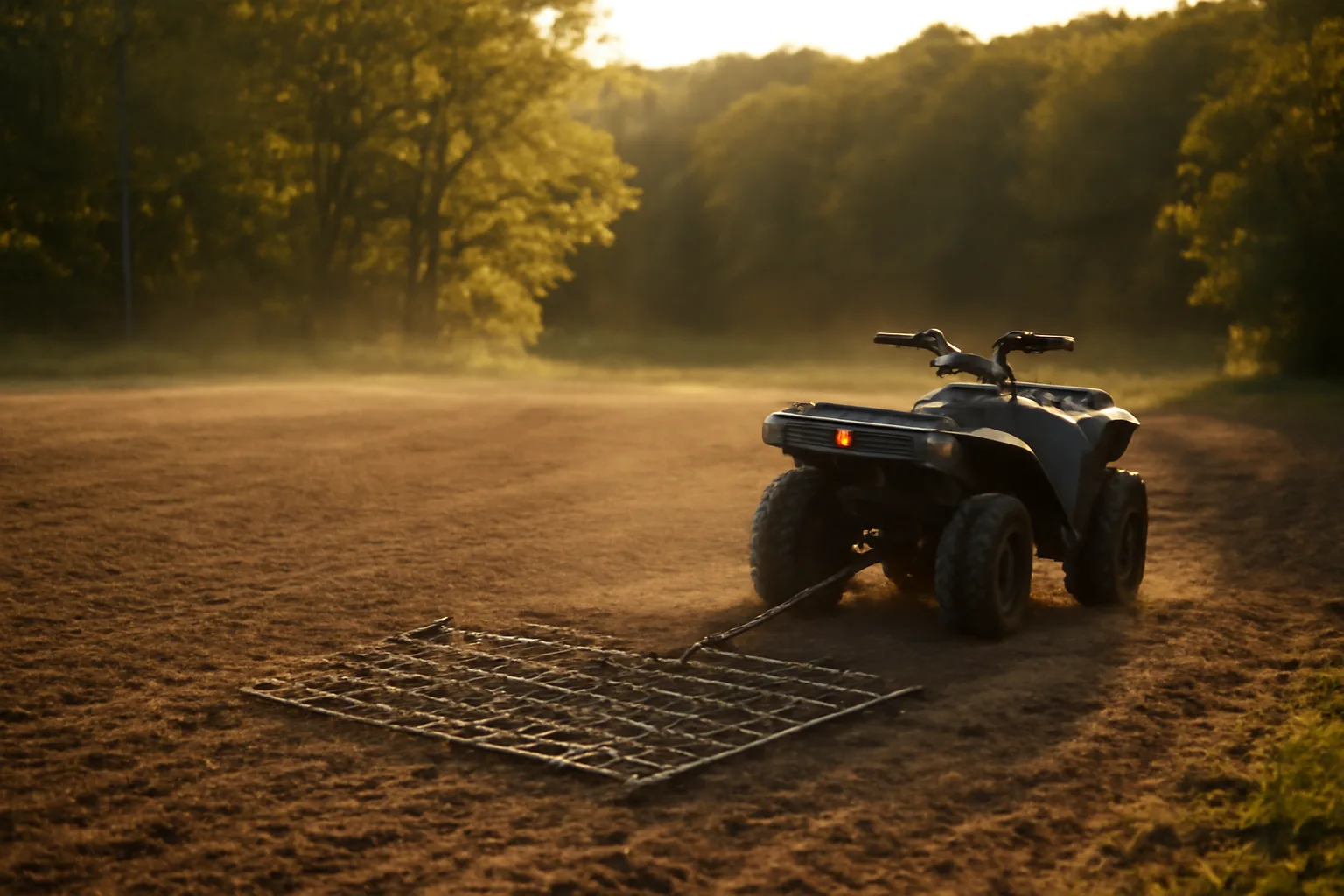
The honest minimum is a hand-crank or shoulder spreader ($20 to $50), a way to knock down existing vegetation (a mower, a string trimmer, or herbicide), and something to press seed into soil, even just driving an ATV or truck over the broadcast area a few times. A drag made from a section of chain-link fence or a piece of carpet weighted with cinder blocks, pulled behind an ATV, is the classic upgrade and costs next to nothing if you scrounge the materials. It firms up seed-to-soil contact meaningfully better than walking away and hoping for rain. A cultipacker is the next step up in effectiveness, but at that point you're closer to a conventional plot setup than true throw and grow, and it costs real money, often $800 to $2,000 depending on size, new. For most hunters working small food plots (a quarter acre to two acres) on already-disturbed ground, the hand spreader plus a homemade drag combo is the practical sweet spot. It's not the fastest to plant a large acreage, but it's the cheapest entry point and it works for the small-seed species (clover, brassicas, oats) that make up most throw and grow plantings. For a deeper comparison of tools across plot sizes, food plot seed and domain food plot seed cover seed selection by equipment level.
how does throw and grow compare to drilling or tilling
| Method | Cost to start | Best seed types | Typical stand success | Labor | |
|---|---|---|---|---|---|
| Throw and grow | $20 to $50 (spreader) | Clover, brassicas, oats, wheat | Good on bare soil, poor on sod | Low | |
| Disk and broadcast | $150 to $1,500+ (disc rental or ATV implement) | Same as above, plus larger seed | Better, more consistent contact | Medium | |
| No-till drill | $2,000 to $8,000+ (or rental) | Soybeans, corn, cereal grains, any size | Best, most consistent | Medium to high | The honest tradeoff is control versus cost and time. A no-till drill places seed at a consistent depth regardless of soil condition, which is why row-crop farmers use them almost universally. But renting or owning one only makes sense if you're planting multiple acres or plots across a season. For a half-acre clover patch on an old logging road, a drill is overkill. Disking before broadcasting splits the difference. You're breaking up the top inch or two of soil, which dramatically improves contact over broadcasting onto undisturbed ground, without needing drill-level equipment. Most extension forage establishment guides treat a disked-and-cultipacked seedbed as the baseline recommendation, with true no-till broadcast reserved for situations where tillage isn't practical or would cause erosion [1]. |
step by step: how to actually throw and grow a plot that works
First, kill or knock down whatever's growing there now. A glyphosate application two to three weeks before planting, or a hard mow followed by light disking, gives seed a fighting chance. Skipping this step is the number one reason throw and grow plots fail. Second, get a soil test if you haven't in the last two to three years. Your state extension soil lab (most run $15 to $20 per sample) will tell you pH and nutrient levels, and your lab's recommendation is the actual authority on how much lime or fertilizer to apply, not a generic chart. Most whitetail forages, clover especially, want soil pH between 6.0 and 7.0, and if your test comes back at 5.2, no amount of good seed will fix that this season [3]. Third, broadcast at the recommended rate for your seed, which varies a lot by species (clover often goes down at 6 to 8 pounds per acre, brassicas at 4 to 6 pounds per acre, oats at 60 to 100 pounds per acre). Overseeding doesn't fix bad seedbed prep, and it wastes money. Fourth, press it in. Drag it, drive over it, or time your broadcast right before a rain event if the forecast is reliable. Waiting for rain within a 3 to 5 day window after broadcasting is the single best thing you can do if you can't drag or cultipack. Fifth, be patient and don't panic if the first two weeks look thin. Clover and brassicas both have slow early growth curves before they take off. If you'd rather not guess at rates, mixes, and timing for your specific soil test and zone, PlotSeason's $99 Custom Food Plot Plan builds a planting plan around your soil results and property, though your soil lab's fertility recommendation is always the final word on lime and fertilizer amounts. You can start one at /plot-plan-builder.
is throw and grow worth it, or should you till
For small plots on already-disturbed ground, with the right seed choices (clover, brassicas, oats, wheat), throw and grow is genuinely worth it. It's cheap, it's fast, and the yield gap versus a tilled or drilled plot is real but not dramatic if you prep the seedbed and get timely rain. Where it stops being worth it: thick sod, heavy clay that crusts over, or larger-seeded crops like corn and soybeans that need real planting depth and spacing to perform. In those cases, the labor you save on the front end gets eaten up by a thin, weedy stand that underperforms all season. The practical answer most experienced plot managers land on is a hybrid: light disking or spraying to prep, then broadcast and drag, rather than either pure no-prep throw and grow or a full tillage program. That middle path costs a little more time up front and consistently beats pure broadcast-and-walk-away results.
Frequently asked questions
What is a food plot?
A food plot is a planted area, usually on hunting land, designed to provide deer or other wildlife with forage that supplements natural browse. Plots range from a quarter acre hidden in timber to multi-acre fields, and species choice depends on season, soil, and whether the goal is attraction, nutrition, or both.
Do deer eat sorghum?
Yes. Deer browse young sorghum shoots and eat mature grain heads, especially in fall and winter. It's more often used as a secondary crop for tonnage and screening cover rather than a primary attractant, and it tolerates drought better than corn in many soils.
Do deer eat clover, and do deer like clover?
Yes, clover is one of the most consistently preferred whitetail forages. It runs 20 to 30 percent crude protein during active growth and, as a perennial, keeps producing for 3 to 5 years once established, making it a staple in most food plot programs.
When to plant food plots for deer?
Cool-season annuals like clover, brassicas, and oats go in mid-August through mid-September in northern states, into early October farther south. Warm-season annuals like soybeans, corn, and sorghum go in after your last spring frost, ranging from early April in the South to late May or June up north.
When to plant oats for deer?
Plant oats mid-August through mid-September in the North, extending into early October in southern and transition zones. Oats germinate in 5 to 7 days with good moisture and tolerate light frost, making them a forgiving fall throw and grow option, often mixed with brassicas or clover.
When to plant turnips for deer?
Plant turnips late July through late August in the North, and into early September in the transition zone. Turnips need 80 to 90 days before a hard frost to bulb properly; planting too late gives you leafy growth but skips the bulb that provides late-season nutrition.
What are deer's favorite food?
It varies by season and region, but acorns, soybeans, and clover consistently rank as top preferences in research and field observation. Acorns, especially white oak, are high in fat and often draw deer away from food plots entirely during a heavy mast year.
Do deer like honey?
Deer don't naturally forage on honey, and it isn't a standard or research-supported food plot input. Homemade attractant recipes sometimes mix honey or sugar with corn, but check your state's baiting and feeding regulations first, since rules vary widely and change often, especially in CWD management zones.
Does throw and grow actually work for food plots?
Yes, on the right ground. It works well on bare or recently disturbed soil with small-seeded species like clover, brassicas, and oats. It fails on thick sod or thatch because seed never reaches mineral soil, which is a top driver of germination success according to extension establishment guidance.
What's the best seed for a throw and grow plot?
Clover, brassicas (turnips, radishes), oats, and winter wheat all work well because their seed is small enough to establish with shallow coverage. Corn, soybeans, and other large-seeded crops generally need real planting depth and don't perform well with broadcast-only methods.
Do you need to till before throw and grow planting?
Not always, but light disking or spraying out existing vegetation dramatically improves results. Pure broadcast onto undisturbed sod usually fails because seed can't reach soil. A hybrid approach, light prep plus broadcast and drag, consistently outperforms no-prep throw and grow.
How much does it cost to start a throw and grow plot?
A basic hand-crank spreader runs $20 to $40. Add a homemade drag (chain-link fence or carpet weighted with cinder blocks) for next to nothing, and seed costs depending on species and acreage. Total startup cost for a small plot often stays under $150, excluding seed.
Can you throw and grow soybeans or corn?
It's not recommended. Soybeans and corn need consistent planting depth and spacing that broadcasting can't reliably deliver, and germination rates drop significantly without proper seed-to-soil contact and depth control. Save throw and grow for small-seeded species like clover, brassicas, and cereal grains.
Sources
- University of Missouri Extension, Food Plots for Deer and Other Wildlife (G9421): Seed-to-soil contact is a primary driver of forage stand establishment success
- Oklahoma State University Extension, Small Grains Forage (PSS-2132): Recommended planting depth for oats in forage settings
- Mississippi State University Extension, Establishing Wildlife Food Plots (Publication 2111): Clover forage protein content and soil pH range for optimal legume establishment
- USDA Forest Service, Fire Effects Information System, Quercus alba: White oak acorns have high fat content important to fall wildlife nutrition
- University of Georgia Extension: Recommendations on planting brassicas like turnips for deer food plots and optimal planting windows