Last updated 2026-07-25
TL;DR
Food plot seed sprouts in 5 to 10 days under decent moisture, but plants need 3 to 5 weeks of growth before deer can browse them without stunting the stand. Full maturity for grain and forage brassicas runs 8 to 12 weeks. Cool-season clover and cereal grains establish faster than warm-season beans or sorghum.
How long does it take a food plot to grow, start to finish
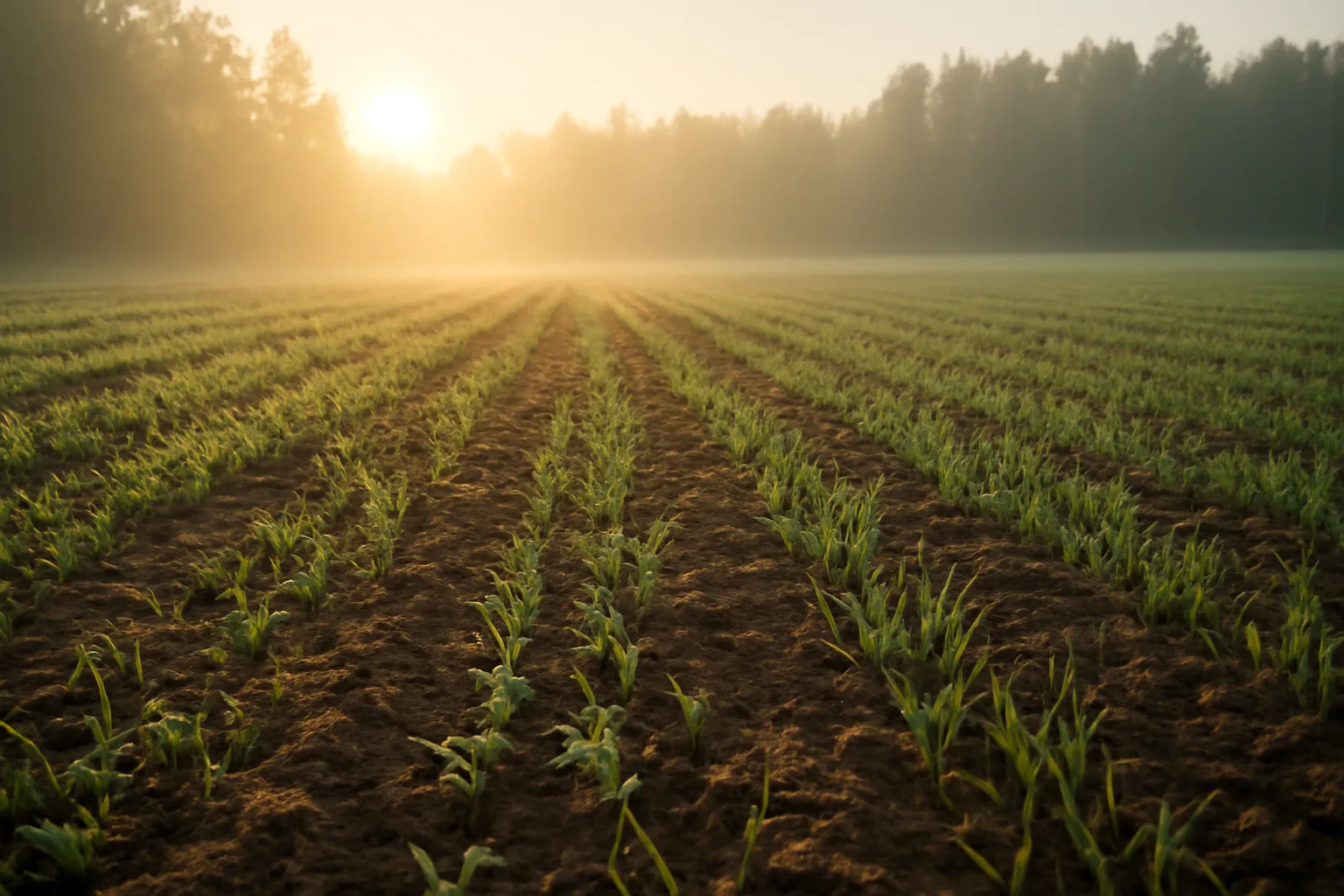
Germination is fast. Give clover, oats, or brassica seed decent soil contact and a half inch of rain and you'll see green in 5 to 10 days. That's not the same as a plot being ready to hunt over or ready to hold up to browsing pressure. The real timeline splits into three phases. Germination takes about a week. Establishment, where the plant builds a root system strong enough to survive deer nibbling on it, takes another 3 to 5 weeks. Full maturity, when brassica bulbs size up or grain heads fill out, takes 8 to 12 weeks depending on species and weather. Soil temperature drives germination speed more than anything else. Oats and other cereal grains will germinate in soil as cool as 38°F, though growth is slow until soil hits the mid-50s [1]. Clover wants soil temps above 50°F to germinate reliably. Warm-season stuff like soybeans, sorghum, and cowpeas needs soil at 60°F or warmer or the seed just sits there and rots. Here's the number that trips people up: a plot that looks lush at 3 weeks can get grazed to dirt in a weekend if deer density is high and it's the only green thing around. That's why a lot of experienced planters seed more acreage than they think they need, or fence a portion off with cheap electric fence for the first month.
When should you plant food plots for deer
| Deep South (zones 8-9) | Sept 15 to Nov 1 | April 1 to June 1 | |
|---|---|---|---|
| Mid-South / Transition (zones 7) | Sept 1 to Oct 15 | April 15 to June 15 | |
| Midwest / Upper South (zones 5-6) | Aug 15 to Sept 15 | May 1 to June 15 | |
| Northern tier (zones 3-4) | Aug 1 to Sept 1 | May 15 to June 30 | These are starting points, not gospel. A late-season heat wave or an early frost will shove things around by two or three weeks either direction. Check your local extension office's frost date tables before you commit seed to the ground. If you want help lining up species and dates to your specific zip code and soil test, that's exactly what a food plot whitetail plan is built to do. |
Plant cool-season plots (clover, oats, wheat, brassicas) in late summer to early fall, generally 6 to 10 weeks before your area's first hard frost. Plant warm-season plots (soybeans, cowpeas, sorghum) after your last spring frost date, once soil hits 60°F. Exact windows shift by 4 to 6 weeks from the Deep South to the Upper Midwest. The frost-date math matters because brassicas need real time to bulb up, and clover needs enough fall growth to survive winter. USDA's plant hardiness zone map is the standard reference for frost timing by region, and most extension planting calendars key off it. Rough regional windows, based on land-grant extension planting guides: | Region | Cool-season plot window | Warm-season plot window |
When to plant oats for deer
Plant oats 45 to 60 days before your first expected frost so plants reach the 3 to 4 leaf stage before cold shuts down growth. That usually lands in late August through mid-September for most of the whitetail range, per Mississippi State Extension's forage guidance [2]. Oats germinate fast, often within a week, and deer will hit young oat shoots hard the moment they emerge. That's the appeal and the risk. In high-deer-density areas, oats planted alone can get grazed down before they ever get a root system established. Mixing oats with cereal rye or wheat spreads out palatability and gives you a backup if oats get hammered early. Oats aren't frost-hardy the way winter wheat or cereal rye is. A hard freeze in the low 20s will usually kill oat plants outright, while wheat and rye keep growing through winter in most of the whitetail range [2]. If you want a plot that stays green into late winter, pair oats with a hardier grain or lean on wheat instead.
When to plant turnips for deer
Plant turnips 60 to 90 days before your first hard frost, giving bulbs enough time to size up before a freeze sweetens the greens and drives deer to dig them out. That's typically late July through August in the North, and August through mid-September in the Mid-South. Turnips need that frost trigger. Cold converts starches in the leaves and bulb to sugars, which is why deer often ignore a turnip plot in October and then clean it out in December. If you plant too late and a killing freeze hits before the bulb has bulked up, you get lots of leaf and a pencil-thin root, which is mostly wasted seed cost. Soil test first. Brassicas are heavy nitrogen feeders and turnips in particular respond hard to phosphorus for root development. A basic soil test from your county extension office or a private ag lab will tell you exactly how much lime and fertilizer to put down, and that lab result should be the final word over any generic bag-of-seed instructions.
Do deer eat clover, and how fast does it establish
Yes, clover is one of the most preferred and most planted food plot forages in the whitetail range, and it's a perennial, meaning one planting can produce forage for 3 to 5 years with proper maintenance. Clover germinates in 5 to 10 days and reaches grazeable height in 3 to 4 weeks under good moisture. Whitetail-focused research and extension work consistently rank clover among the top preferred forages, largely because of its high crude protein content, often 25 to 30% in actively growing clover [3]. That protein number matters most in spring and summer when does are lactating and bucks are growing antlers. The tradeoff with clover is patience on the front end and mowing on the back end. A new clover stand looks thin the first fall and doesn't hit full production until its second growing season. After that, you're mowing 2 to 3 times a season to knock back weed competition and keep the clover from getting shaded out. Ladino and white clover varieties are the most common choices for food plots because they handle grazing pressure better than red clover, which tends to get grazed out fast under heavy deer numbers. If you're weighing clover against annual options for your specific ground, the deer food plot seed comparison breaks down which perennials versus annuals make sense for different plot sizes and deer densities.
Do deer eat sorghum
Yes, deer eat grain sorghum, but it's more of a fall and winter standing-grain food source than a summer browse plot, and deer generally rank it below soybeans, corn, and clover in preference. Sorghum's real value is as cover plus a late-season grain source that stands up through hunting season better than corn does on small acreage. Grain sorghum takes 90 to 120 days to reach full grain maturity depending on variety and heat units, which is longer than most food plot annuals [4]. Plant it after soil hits 60 to 65°F in spring, same general window as corn. One real caution here: sorghum, sudangrass, and related species can produce cyanogenic compounds (prussic acid) when plants are young, drought-stressed, or frost-damaged. Extension guidance on forage sorghum specifically warns against grazing stressed or frosted sorghum because of prussic acid poisoning risk in livestock, and the same caution is worth applying to deer plots, especially right after an early frost [5]. If a frost hits your sorghum plot, give it a week or two before assuming it's safe browse.
What is a food plot
A food plot is a planted area of forage or grain, usually a half acre to several acres, established specifically to attract and feed deer or other wildlife on hunted land. Food plots supplement natural browse, concentrate deer activity for hunting and observation, and can improve herd nutrition, especially antler growth and fawn recruitment, when planted at meaningful scale. Food plots range from simple single-species plantings, like a clover field or an oat patch, to multi-species blends mixing a cereal grain, a legume, and a brassica in one planting to spread out palatability across the season. Plot size and placement matter as much as species choice. A quarter-acre plot tucked in heavy cover gets hit differently than a 3-acre destination field bordering ag ground. State wildlife agencies generally treat food plots as a land management practice separate from baiting, but the line between the two varies a lot by state. Some states cap the size or location of plots relative to stands, and several ban supplemental feeding (piles of corn, mineral licks) while still allowing planted plots. Michigan DNR, for example, draws a clear regulatory distinction between a planted food plot and baiting, and restricts baiting more heavily in areas with chronic wasting disease concerns [6]. Always check your state wildlife agency's current baiting and feeding regulations before you plant, since rules change year to year and vary by county in some states.
What are deer's favorite foods
Deer preference shifts by season, but across most of the whitetail range, acorns, soybeans, clover, and apples consistently rank as top preferred foods when available. Research out of Mississippi State and other land-grant deer programs has used cafeteria-style preference trials to rank food plot species, and soybeans and clover routinely land near the top of planted forage options, with acorns from white oak family trees outranking almost everything when they're dropping [7]. Seasonally, deer key in on whatever has the highest energy or protein payoff for the least search effort. Spring and summer favor high-protein browse like clover and soybean leaves. Fall favors acorns and other hard mast, plus standing grain. Winter favors whatever still has calories left standing, which is often brassica bulbs, standing corn, or winter wheat. This is also why native browse and habitat quality matter as much as your plot species list. A food plot in an area with heavy acorn production in October will often get ignored until the mast dries up. That's not a plot failure, it's deer behaving like deer.
Do deer like honey (honey locust and honeysuckle, not the sweetener)
Deer don't eat honey the sweetener; they're browsing animals, not omnivores looking for sugar in that form. But two plants with 'honey' in the name are real deer foods worth knowing: honey locust pods and Japanese honeysuckle. Honey locust trees drop long, flat seed pods in fall that deer readily eat, and the pods have decent sugar and protein content, which is why honey locust shows up on a lot of native browse lists for whitetail habitat . Japanese honeysuckle, an invasive vine in much of the eastern U.S., is also heavily browsed by deer and often over-browsed to the point that it disappears from a property under high deer density. Neither is something you'd plant in a food plot in the traditional sense. Honey locust is a mast tree you manage or plant on a much longer timeline (years, not weeks), and honeysuckle is usually a volunteer plant you're managing around rather than planting on purpose.
How fast do different food plot species grow, compared
| Oats | 5-10 days | 2-3 weeks | 6-8 weeks | |
|---|---|---|---|---|
| Winter wheat | 7-10 days | 3-4 weeks | overwinters, matures spring | |
| Clover (perennial) | 5-10 days | 3-4 weeks | full production year 2 | |
| Brassicas (turnip, radish) | 4-7 days | 4-6 weeks | 8-10 weeks to bulb | |
| Soybeans | 5-10 days | 3-4 weeks | 90-120 days to grain | |
| Grain sorghum | 7-10 days | not typically grazed young | 90-120 days | |
| Cowpeas/iron clay peas | 5-8 days | 3-4 weeks | 60-90 days | A plot mixing a fast grain (oats) with a slower legume (clover) gives you something grazeable in 3 weeks while the clover quietly builds a root system underneath. That layered timing is the whole logic behind most blended food plot seed bags on the market. If you're trying to figure out which combination fits your soil and season, food plot seed and domain food plot seed both cover blend options by region. |
Growth speed varies a lot by species, and that difference should drive your planting date math more than anything else. Here's a straight comparison of germination and maturity timelines for the most common food plot species, based on land-grant extension planting guides [1] [2] [4]. | Species | Germination | Grazeable stage | Full maturity |
What actually slows a food plot down
Three things stall a plot more than anything else: poor soil pH, not enough seed-to-soil contact, and drought right after planting. A soil test tells you where you stand on pH and nutrients, and it's the single most useful $15 to $20 you can spend before buying seed . Most food plot species want soil pH between 6.0 and 6.8. Clover and alfalfa are especially picky, and yields drop hard below pH 6.0 because the plant can't access the nitrogen and phosphorus that's already in the soil, tied up chemically at low pH . If your test comes back at 5.2, lime takes months to fully react in the soil, so get it down early, ideally the season before you plant, not the week before. Seed depth matters more than people think. Clover and brassica seed is tiny and should barely be covered, a quarter inch at most. Bury it an inch deep and it may never emerge. Grain seed like oats and wheat wants closer to an inch of coverage. A drill solves this problem automatically; broadcasting and cultipacking is the next best option if you don't have a drill. Your soil test lab is the authority on exact lime and fertilizer rates for your dirt, not a blog post and not a seed bag label. Treat any planting calendar, including this one, as a general starting point that you adjust once you have lab numbers in hand.
Should you plant a food plot in spring or fall
Plant spring for warm-season annuals like soybeans, cowpeas, and sorghum, once soil hits 60°F. Plant late summer to early fall for cool-season perennials and annuals like clover, oats, wheat, and brassicas. Most whitetail managers run both, using spring plots for summer nutrition and fall plots as hunting-season draws. The fall plot is the one most hunters care about most, since it lines up with hunting season and rut activity. But spring and summer plots matter more than people give them credit for for antler growth and fawn health, since that's when bucks are building antler mass and does are nursing fawns and need the highest protein intake of the year. If you can only manage one plot rotation a year, cool-season fall plots (clover, brassicas, cereal grains) tend to give the most bang for the buck in most of the whitetail range, since they double as both a hunting-season draw and, in clover's case, a perennial that keeps producing into next year. A $99 Custom Food Plot Plan can take your zip code, acreage, and soil test numbers and hand you back a specific species list and planting calendar instead of guessing off a regional chart like this one.
How big should a food plot be, and does size change the timeline
Plot size doesn't change how fast the plants grow, but it changes how fast deer can wreck a young plot before it establishes. A quarter-acre clover plot in a high-density deer area can get grazed to nothing in the first 3 weeks, while a 3-acre plot spreads that same browsing pressure thin enough for plants to establish normally. General rule of thumb from most state wildlife agency habitat guides: destination food plots run 1 to 5 acres, while smaller kill plots tucked in cover run a quarter acre to half acre. The smaller the plot, the more that first-month browsing pressure matters, and the more it's worth fencing off a portion for the first month with cheap poly-wire electric fence if you're in an area with heavy deer numbers. If you're planning your first plot and unsure how acreage, seed rate, and local deer density interact, deer food plots and deer for food both walk through sizing decisions in more detail than a single planting calendar can cover.
Frequently asked questions
Do deer eat sorghum?
Yes, deer eat grain sorghum, though it usually ranks below soybeans, corn, and clover in preference trials. Sorghum takes 90 to 120 days to reach grain maturity, and stressed or frosted sorghum can develop prussic acid, so avoid heavy browsing on plots right after an early frost.
Do deer like clover?
Yes, clover is one of the most preferred food plot forages in the whitetail range. It's high in crude protein, often 25 to 30% during active growth, and deer key in on it heavily in spring and summer when protein needs peak for lactation and antler growth.
When should you plant food plots for deer?
Plant cool-season plots (clover, oats, wheat, brassicas) 6 to 10 weeks before your first fall frost, generally August through October depending on region. Plant warm-season plots (soybeans, sorghum, cowpeas) in spring once soil hits 60°F. Check your local extension office's frost date tables for exact windows.
When to plant oats for deer?
Plant oats 45 to 60 days before your area's first expected frost, usually late August through mid-September across most of the whitetail range. Oats germinate within a week and grow fast, but a hard freeze in the low 20s will typically kill the plants, unlike more frost-hardy wheat or rye.
When to plant turnips for deer?
Plant turnips 60 to 90 days before your first hard frost so bulbs have time to size up. That's roughly late July through August in northern regions and August through mid-September in the Mid-South. Frost sweetens the leaves and bulb, which is why deer often ignore turnips early and hammer them after a freeze.
What is a food plot?
A food plot is a planted area, usually a quarter acre to several acres, established to feed and attract deer or other wildlife on hunted or managed land. Plots range from single-species plantings like clover to multi-species blends mixing grain, legume, and brassica seed in one field.
What are deer's favorite foods?
Acorns, soybeans, clover, and apples consistently rank among top preferred deer foods where available, based on cafeteria-style preference research from land-grant deer programs. Preference shifts by season: high-protein browse in spring and summer, hard mast and standing grain in fall, and whatever still holds calories in winter.
Do deer like honey?
Deer don't eat honey the sweetener since they're browsing herbivores, not omnivores. But honey locust seed pods are readily eaten in fall, and Japanese honeysuckle is heavily browsed where it grows. Neither is a food plot planting; honey locust is a slow-growing mast tree and honeysuckle is usually a volunteer plant.
How long does it take for food plot seed to germinate?
Most food plot seed, including clover, oats, and brassicas, germinates in 5 to 10 days given adequate soil moisture and proper seed depth. Warm-season species like soybeans and sorghum need soil temps above 60°F to germinate reliably and can take slightly longer in cool soil.
How long until deer can graze a new food plot without killing it?
Give a new plot 3 to 5 weeks of growth before letting deer hit it hard, so plants have time to build root reserves. In high deer density areas, even that window isn't always enough, and fencing off a portion for the first month is a common workaround.
Can you plant a food plot too late in the season?
Yes. Planting cool-season annuals too close to your first hard frost means plants don't have enough growing time before cold stops growth, resulting in thin stands or undersized brassica bulbs. As a rule, most cool-season species need 60 to 90 days of growth before a killing freeze.
Do you need a soil test before planting a food plot?
You don't strictly need one, but skipping it usually costs you in poor yield. A basic soil test, often $15 to $20 through a county extension office or private ag lab, tells you exact lime and fertilizer needs. Most food plot species want soil pH between 6.0 and 6.8.
Sources
- USDA NRCS Plant Guide, Oats: Oats germinate in cool soil and grow best once soil temperatures reach the mid-50s Fahrenheit.
- University of Tennessee Extension, Clover for Wildlife Food Plots: Actively growing clover commonly tests at 25 to 30 percent crude protein, making it a top preferred food plot forage.
- Purdue University Extension, Corn and Grain Sorghum Growth Staging: Grain sorghum requires roughly 90 to 120 days from planting to grain maturity depending on variety and heat accumulation.
- University of Nebraska-Lincoln Extension, Prussic Acid Poisoning: Frost-damaged or drought-stressed sorghum and sudangrass can develop dangerous prussic acid (cyanogenic) compounds.
- Michigan Department of Natural Resources, Baiting and Feeding Regulations: State wildlife agencies distinguish planted food plots from baiting and feeding, with rules varying by area and disease status.
- USDA NRCS Plant Fact Sheet, Honey Locust: Honey locust seed pods are readily consumed by white-tailed deer and other wildlife in fall.
- University of Missouri Extension, Soil Testing for Wildlife Food Plots: Most food plot species perform best at soil pH between 6.0 and 6.8, and low pH restricts nitrogen and phosphorus availability.