Last updated 2026-07-25
TL;DR
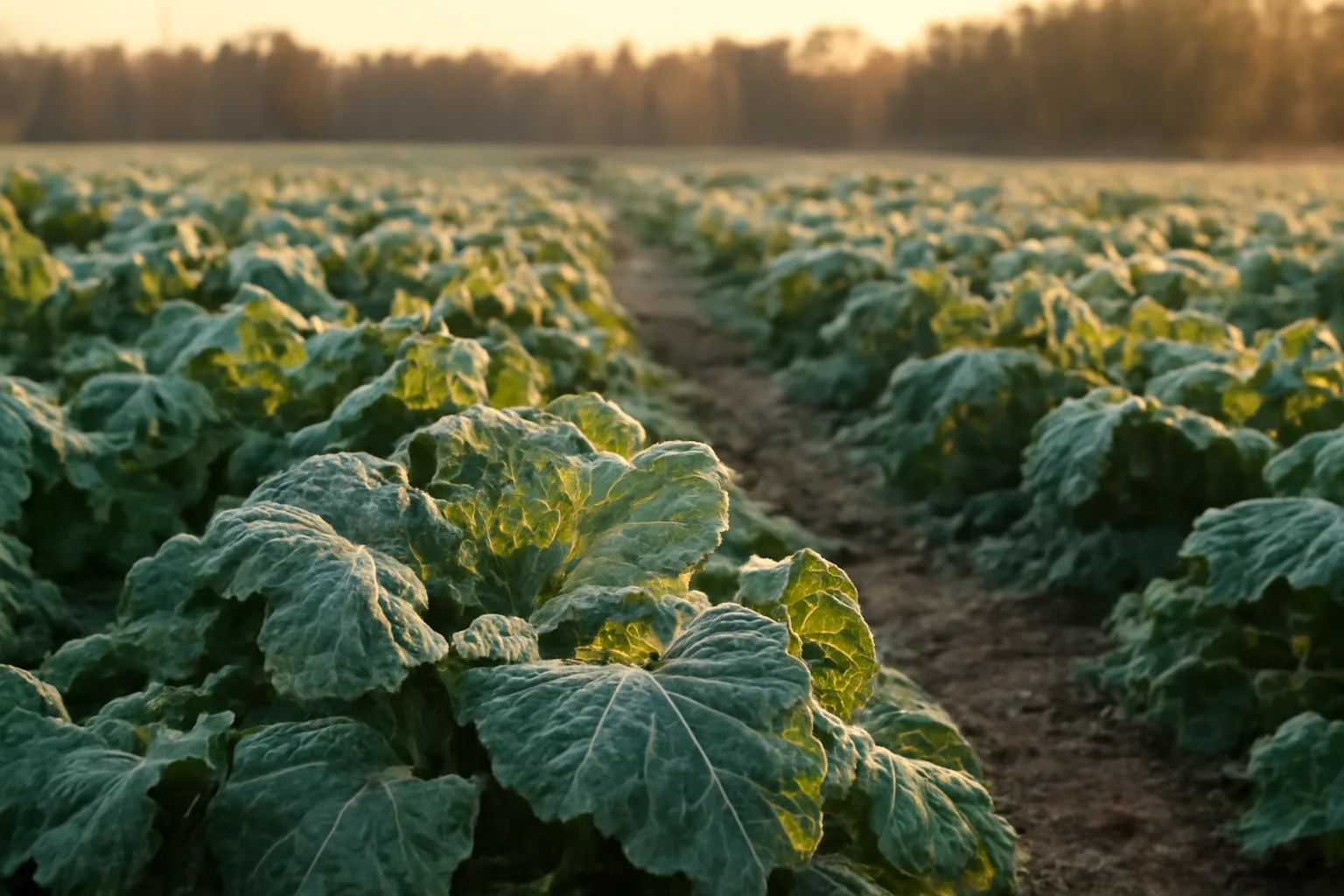
Winter food plots are late-season plantings (brassicas, cereal grains, clover) designed to feed deer after most native forage dies back. Plant brassicas and oats roughly 60-90 days before your area's first killing frost, usually mid-July through early September depending on latitude. Turnips and forage brassicas actually get sweeter after frost, which is exactly when deer start hammering them.
What is a food plot, exactly?
A food plot is a planted patch of forage on hunting land, meant to feed deer (and other wildlife) and, for most landowners, to concentrate deer activity somewhere you can hunt or observe them. Plots range from quarter-acre kill plots tucked into timber to multi-acre agricultural-style fields planted in soybeans or corn. The idea isn't new. Wildlife agencies have promoted food plantings for decades as a habitat management tool, and the USDA Natural Resources Conservation Service has long included wildlife food plots as an approved conservation practice under its EQIP cost-share program in many states [1]. That tells you something: this isn't just a hunting industry product, it's recognized habitat work. Winter food plots specifically are planted to provide forage in the late fall and winter window, after acorns drop and native browse gets thin. In the North and upper Midwest that window matters a lot, because deer are dealing with real energy deficits by January. In the South, "winter" plots often just mean cool-season plantings that stay green from November into March. Same concept, different stakes. If you're building your first plot plan, it helps to understand the broader categories before narrowing to winter species. See our breakdown of food plot whitetail strategy for how winter plots fit alongside spring and summer plantings.
When to plant food plots for deer (the general rule)
The single most useful rule in food plot planning: work backward from your first expected frost date, not forward from today's date on the calendar. Most fall and winter species need 60 to 90 days of growing time before a hard freeze locks things down. For cereal grains and brassicas, that generally means planting in a window from mid-July (far north, like Minnesota or Wisconsin) through early September (mid-South, like Tennessee or Virginia). Deep South plots (Georgia, Alabama, north Florida) often go in from late September through November because frost comes so late. Cooperative extension services publish region-specific planting calendars because "summer" and "fall" mean wildly different calendar dates from Minnesota to Mississippi. Mississippi State University Extension, for example, recommends planting cool-season food plot forages like wheat, oats, and clover from September through November depending on the specific species and region of the state [2]. Compare that to a state like Michigan, where Michigan State University Extension guidance points growers toward late July and August planting for brassicas so they have enough growing season before frost [3]. The honest answer to "when to plant food plots for deer" is: check your local extension office's frost date charts, then count backward 60-90 days depending on species. Nobody selling seed online knows your microclimate better than your state's extension agronomists do.
When to plant oats for deer
Oats are one of the most reliable, cheap, and fast-growing cool-season cereal grains for deer plots, and timing them right is simple: plant 60 to 75 days before your first killing frost. For most of the whitetail range that lands somewhere between mid-August and mid-September. Oats germinate fast (often within a week in warm, moist soil) and produce highly palatable green forage that deer hit hard in early fall while it's still tender. The catch: oats aren't as cold-hardy as winter wheat or rye. A hard freeze in the teens can kill oat forage outright, which is why a lot of plotters mix oats with wheat or rye. The oats provide quick early attraction, the wheat or rye carries the plot through the coldest stretch. Seeding rate for oats as a food plot planting typically runs 2 to 3 bushels per acre (roughly 64-96 lbs/acre) when drilled, according to extension forage guides, with rates adjusted up for broadcast seeding since seed-to-soil contact is less reliable [4]. Drilling at a quarter to one inch deep gets better stands than surface broadcasting, especially in dry falls. Oats pair well in a blend with brassicas, since the oats germinate and cover ground quickly while the slower brassicas bulk up underneath.
When to plant turnips for deer
Turnips, like other brassicas, go in the ground 80 to 90 days before your first hard frost, which is earlier than most people think. Turnips need real time to bulb out and build sugar reserves. In practice that's late July through mid-August for northern states and mid-August through early September for the transition zone (Kentucky, Tennessee, Virginia). Wait too long and you get small, spindly turnips with little tuber mass and less of the frost-driven sugar conversion that makes them attractive later. That frost-driven sugar spike is the whole point of a turnip plot. Brassicas convert starches to sugars as a cold-tolerance response, so a plot that deer walk past in October can become a magnet in December and January once repeated frosts sweeten the leaves and bulbs. Extension research on brassica forage crops confirms this cold-triggered starch-to-sugar conversion is what drives the late-season palatability shift in turnips and related brassicas. Seeding rate for turnips is light, usually 4-6 lbs/acre broadcast, because the seed is tiny and a heavy rate just wastes money and creates overcrowded, undersized bulbs. Turnips also do best in a blend (with radish, rape, or a cereal grain) rather than as a pure monoculture, since a pure brassica stand offers zero cover and looks bare most of the season.
Do deer eat sorghum?
Yes, deer eat grain sorghum, but it's a secondary food source for whitetails, not a preferred one, and it's used far more as a wildlife food plot crop for turkey, quail, and dove than as a primary deer attractant. Sorghum (milo) produces a seed head deer will eat once it matures and especially once other food sources thin out in winter, similar to how deer use standing corn. It also stands well through snow, which gives it some value as a winter forage crop in northern plots where you want something still visible above snowpack in January. But compare sorghum to a brassica or a cereal grain plot and it's not close for deer preference in most research and extension observations; sorghum is more commonly recommended as a component of dove fields and quail habitat mixes rather than a stand-alone deer plot [5]. If you're planting specifically for deer, sorghum is a supporting player at best, useful for structure and winter cover more than as a primary draw. If whole-property planning is the goal (deer plus upland birds), a small sorghum block can pull double duty. For deer-first winter nutrition, put your acreage into brassicas, cereal grains, or clover instead.
Do deer eat clover, and do deer like clover?
Yes, clover is one of the most consistently preferred forages for whitetail deer, and it's a staple recommendation across nearly every state wildlife agency and extension food plot guide. Deer graze clover from spring green-up through fall, and in mild-winter regions it stays green and available right through the cold months too. Why does clover work so well? It's high in crude protein (often 25-30% in a well-managed stand), it regrows fast after grazing pressure, and it's a perennial, so a well-established plot can produce for 3-5 years before needing renovation. That makes clover the backbone plot for a lot of properties, with annual plantings (brassicas, cereal grains) rotated in around it for late-season variety. The tradeoff for winter specifically: clover growth slows dramatically once soil temps drop and goes dormant under snow or hard freeze in northern climates. So clover alone isn't a great pure winter plot in Wisconsin or Minnesota, but in the mid-South and southeast it can stay in play well into December and green back up early in late winter thaws. If you want one perennial base plot plus one annual winter plot, clover plus a brassica/cereal blend is a combination that shows up again and again in extension and state agency recommendations. Our guide on deer food plot seed selection covers clover varieties (ladino, red, white Dutch) in more depth.
What are deer's favorite foods, really?
There's no single universal answer, because deer preference shifts by season, region, and what's available naturally. But research and extension observation consistently point to a short list: acorns (especially white oak acorns), soybeans, clover, and standing corn rank at or near the top depending on time of year. Acorns are arguably the most important natural late-fall food source across most of the whitetail range; deer will bypass planted food plots for a good white oak acorn drop most years. That's not a criticism of food plots, it's just biology, acorns are calorie-dense and deer evolved eating them. Among planted crops, soybeans (as both a summer forage and a standing grain crop into winter) and clover consistently top preference studies and extension recommendations for whitetail deer across the eastern half of the country . Brassicas rank high specifically in the late fall and winter window because of that frost-sweetening effect discussed above. The honest takeaway: there's no one silver-bullet species. A property with a soybean summer plot, a clover perennial base, and a brassica/cereal winter plot covers deer nutrition needs across almost the entire year, which is the logic behind most rotational planting calendars.
Do deer like honey? (and other odd attractant questions)
This one comes up in food plot forums surprisingly often, usually tied to homemade mineral or attractant recipes, so let's answer it directly: there's no meaningful wildlife research showing honey as a deer attractant or food source, and it's not something whitetail deer seek out in the wild. Deer are herbivores built to process plant fiber, not sugars from honey. What you're probably thinking of is deer's well-documented preference for sugar-rich forages generally, which is real and explains why frosted brassicas, ripe soybeans, and acorns pull deer hard. That's a different mechanism (carbohydrate and sugar content in plant forage) than pouring honey on a stump or mixing it into a mineral lick, which mostly just attracts insects and rot. Save your money. If you want a sugar-driven attraction play, that's what a well-timed brassica plot already gives you for free, through frost conversion, not a bottle of honey.
How do I plan a winter food plot for my specific property?
Start with a soil test. Extension soil labs (most land-grant universities run one) will tell you your pH and nutrient levels for $10-20 per sample, and that report is the actual authority on how much lime and fertilizer your ground needs, not a blog post or a seed bag guess. Winter brassicas in particular are heavy nitrogen feeders and perform poorly in acidic soil below pH 6.0, so correcting pH ahead of planting (lime takes months to fully react in soil) matters more than which brand of seed you buy. After the soil test, the planning sequence is: pick your species mix based on your region's frost date and your soil's fertility profile, figure your planting window (60-90 days pre-frost, species-dependent), then size your seed and fertilizer order to your actual plot acreage, not a rough guess. This is exactly the gap our $99 one-time Custom Food Plot Plan is built to close: you send us your soil test results, property location, and goals, and we build a specific planting and fertility plan for your ground rather than a generic national recommendation. It's general planning guidance built around your inputs, not a substitute for your soil-test lab's specific lime and fertilizer recommendations, which remain the final word on your ground's chemistry. Start at /plot-plan-builder. Whether you DIY it or use a plan, cross-check your state wildlife agency's baiting and supplemental feeding regulations before you plant or place any mineral, since rules on baiting and even food plots near stands vary a lot state to state and some states restrict feeding during hunting season specifically .
What species mix actually works best for winter plots?
| Oats | 60-75 days | Low (killed by mid-teens F) | Early fall, tender growth | |
|---|---|---|---|---|
| Winter wheat / rye | 45-75 days | Very high | Late fall through winter | |
| Turnips / brassicas | 80-90 days | High (improves with frost) | After 2-3 hard frosts | |
| Clover (perennial) | Spring or 60-90 days fall | Moderate, dormant in deep cold | Spring through fall, some winter in mild zones | Seeding rates and blend ratios should flex with your specific soil test and acreage, but this table reflects the general pattern extension guides and state agency food plot bulletins repeat across regions [2] [3] [4]. |
There's no single best answer, but extension trial data and long-running food plot programs point toward blends over monocultures almost every time, because a mix spreads out your risk (drought, deer pressure, disease) and gives deer more of what they want at different growth stages. A common, well-tested winter blend: winter wheat or cereal rye (cold-hardy backbone), oats (fast early growth and early attraction), and a brassica component like turnips or forage rape (late-season sugar spike after frost). Add a clover component if you want carryover into spring without replanting. | Species | Plant window before frost | Cold tolerance | Peak deer attraction |
What equipment do I actually need for a winter plot?
You don't need a full tractor and drill to plant a decent winter plot, but you do need a way to break ground, get seed-to-soil contact, and manage weed competition before planting. For small plots (under 2 acres), a decent ATV or UTV with a disc or cultipacker attachment, a broadcast spreader, and a sprayer for burndown herbicide covers most of what you need. For brassicas and clover specifically, seed-to-soil contact matters a lot since the seed is small; a cultipacker pass after broadcasting improves germination noticeably over just broadcasting onto rough, unpacked ground. Bigger operations (multiple acres, ag-style rotations) benefit from a real no-till drill, which gets more consistent depth and spacing than broadcasting, especially for cereal grains. But plenty of good winter plots get planted every year with nothing but a spreader, a drag harrow, and patience. If you're outfitting a new property, our deer food plots equipment overview breaks down the disc-vs-drill decision in more detail, and it's worth reading before you spend money on gear you don't need for your acreage.
Frequently asked questions
When should I plant winter food plots for deer?
Plant 60-90 days before your area's average first killing frost, with the exact date depending on species and region. Brassicas need the full 80-90 days; oats need only 60-75. Northern states (Minnesota, Wisconsin) plant mid-July through August; the mid-South (Tennessee, Virginia) plants August into September; deep South plots often go in September through November.
Do deer eat sorghum in food plots?
Yes, deer will eat mature sorghum grain heads, especially in winter when other food is scarce, but it's a secondary deer food and is more commonly planted for dove, quail, and turkey habitat than as a primary deer attractant crop.
Do deer like clover, and is it good for winter plots?
Deer strongly prefer clover; it's one of the most consistently used forages in whitetail research and extension recommendations. It's an excellent perennial base plot, but clover growth slows or goes dormant in hard freezes, so in cold northern climates it's better as a spring-through-fall plot paired with a brassica or cereal winter plot.
When should I plant oats for a deer plot?
Plant oats 60 to 75 days before your first expected killing frost. Oats germinate fast and offer strong early-fall attraction but aren't very cold-hardy, so many hunters blend oats with winter wheat or rye to keep the plot productive once temperatures drop into the teens.
When is the right time to plant turnips for deer?
Plant turnips 80 to 90 days before your first hard frost, which is earlier than most cereal grains. Turnips need that time to bulb out and build sugar reserves; frost then converts starches to sugars, which is what triggers heavy deer use in December and January.
What exactly is a food plot?
A food plot is a planted area of forage crops on hunting or wildlife land, meant to feed deer and other wildlife and to concentrate animal activity for observation or hunting. Plots range from small quarter-acre kill plots to multi-acre agricultural-style fields, and USDA recognizes them as an approved conservation practice under EQIP in many states.
What is a deer's favorite food overall?
There's no single universal favorite; it shifts by season and region. Acorns, especially white oak acorns, are arguably the most important natural food in fall. Among planted crops, soybeans and clover consistently rank highest in preference research and extension guides across the eastern whitetail range.
Do deer eat honey or seek out sugary attractants like it?
No. There's no research support for honey as a deer food or attractant, and it's not a natural whitetail food source. Deer do strongly prefer sugar-rich plant forage, like frost-sweetened brassicas, which is a completely different mechanism than a honey-based attractant.
What's the best winter food plot blend?
A cereal grain plus brassica blend, such as winter wheat or rye with oats and turnips or forage rape, tends to outperform single-species plots. The cereal grain provides cold-hardy structure, oats give early attraction, and brassicas deliver the late-season frost-sweetened sugar spike deer key on in December and January.
How much does a soil test cost before planting a winter plot?
Most land-grant university extension soil labs charge $10 to $20 per sample, and results typically include pH, phosphorus, potassium, and lime recommendations specific to your crop choice. That lab report, not a seed bag label or blog post, is the real authority on your plot's fertility needs.
Can I plant a winter food plot without a tractor?
Yes. A UTV or ATV with a broadcast spreader, a disc or cultipacker, and a sprayer for weed burndown handles most plots under two or three acres just fine. Bigger, multi-acre rotational plots benefit from a no-till drill, but plenty of solid winter plots get planted with basic equipment.
Do I need to worry about baiting laws when planting food plots?
Food plots themselves are generally legal and distinct from baiting in most states, but rules on supplemental feeding, mineral use, and hunting over bait vary a lot by state and sometimes by season. Check your state wildlife agency's current regulations before planting near a stand or adding any supplemental feed.
Sources
- USDA Natural Resources Conservation Service, EQIP Conservation Practices: USDA EQIP recognizes wildlife food plots as an approved conservation practice in many states
- Michigan State University Extension, Food Plots for Deer: Late July and August planting windows for brassicas in Michigan give enough growing season before frost
- University of Georgia Extension, Wildlife Food Plots: Seeding rates for oats and other cereal grains in food plots
- Auburn University College of Forestry, Wildlife, and Environment, Food Plots for White-tailed Deer: Soybeans and clover rank among the most preferred planted forages for whitetail deer
- Pennsylvania Game Commission, Baiting and Feeding Regulations: State wildlife agencies regulate baiting and supplemental feeding of deer, with rules varying by state and season