Last updated 2026-07-25
TL;DR
Most wildlife agencies and extension programs suggest putting 1% to 5% of your total property acreage into food plots, split between several small plots rather than one big field. On 100 acres, that's roughly 1 to 5 acres. Soil quality, hunting pressure, and whether you want a food source or a hunting setup all change the right answer.
How many acres of food plots does a property actually need?
There's no single correct number, but most state wildlife agencies and university extension programs land in the same range: 1% to 5% of your total property in food plots. The Mississippi State University Deer Lab, which runs one of the more active deer research programs in the country, frames it similarly, noting that food plots typically supplement rather than replace natural forage and work best when they make up a modest slice of total acreage. On a 100 acre farm, that's 1 to 5 acres split across the property. On 40 acres, that might be a half acre to 2 acres total. The math scales, but the logic doesn't change: food plots are a supplement to the woods, fields, and edge habitat already on your land, not a replacement for it. Why the range instead of a fixed number? Soil quality matters. A property with rich bottomland soil can grow more tonnage per acre than a property sitting on thin, rocky ridge ground, so it needs fewer plot acres to hit the same forage output. Deer density matters too. Areas with high deer populations and heavy browse pressure often need more plot acreage (or better fencing and rotation) just to keep plots from getting hammered into the dirt by August. The other variable is intent. Are you growing food plots to hold deer and improve herd health, or are you building small kill plots specifically to hunt over? Those two goals point toward different acreage decisions, which is why a flat percentage is a starting point, not gospel.
What is a food plot, exactly?
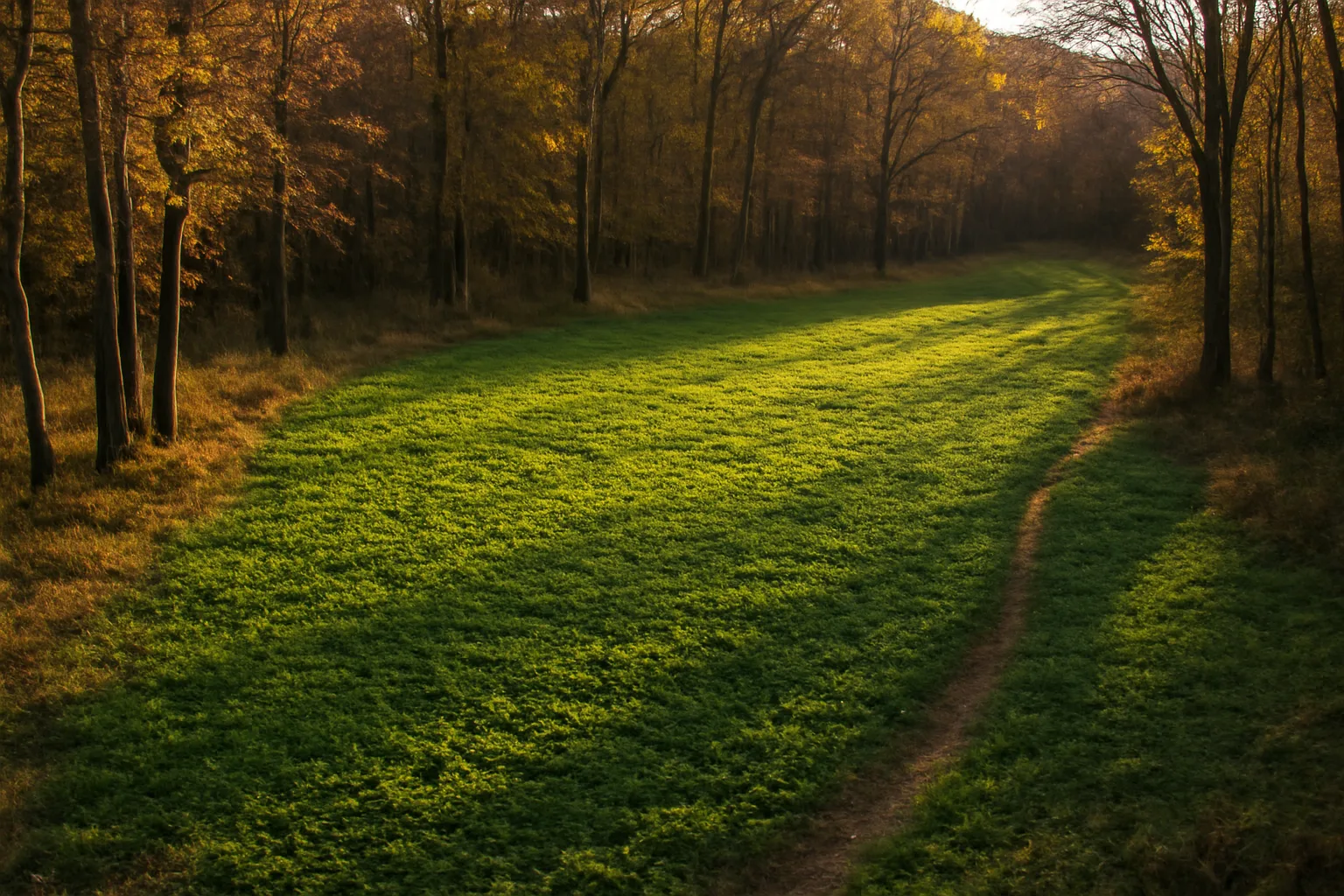
A food plot is a planted area, usually somewhere between a quarter acre and several acres, established specifically to provide supplemental forage for deer and other wildlife. It's not a farm field grown for harvest and sale. It's grown to be eaten standing, by deer, turkey, and whatever else wanders through. Food plots range from small, hidden kill plots tucked into timber (a quarter acre to half acre) up to larger destination or feeding plots of 2 to 5 acres or more, planted with cereal grains, brassicas, legumes, or blends of all three. Extension programs generally describe them as a wildlife management tool used to supplement native habitat, improve nutrition during stress periods (late winter, antler growth, lactation), and concentrate deer activity in predictable locations for hunting or observation. The honest caveat: a food plot doesn't replace good habitat. Bedding cover, browse diversity, and mast trees do more for a deer herd year-round than plots do. Plots are the dessert, not the main course. If you're deciding what to plant, food plot whitetail planning starts with the whole property, more than the open ground.
When should you plant food plots for deer?
Timing depends on your USDA plant hardiness zone, the species you're planting, and whether you're targeting a fall hunting season or a spring/summer growth window. Broadly, food plot planting falls into two windows: spring plots (planted April through June depending on zone) for warm-season annuals like soybeans, cowpeas, and sorghum, and fall plots (planted August through October) for cool-season annuals like brassicas, cereal grains, and clover. The single best resource for pinning down your local dates is your state's cooperative extension frost date and planting calendar, since a fall brassica planted too early in a warm zone bolts before deer season, and one planted too late in a cold zone never sizes up before frost. NRCS and USDA plant hardiness zone maps are the starting reference point for figuring out your zone before you check local extension planting windows. General rule of thumb across most of the whitetail's range: fall food plots go in 60 to 90 days before your first hard frost, which gives brassicas and cereal grains time to establish before cold weather hits and forage quality peaks. Spring and summer plots go in after your last frost date, once soil temperatures warm enough for germination.
When to plant oats for deer
Oats are a cool-season cereal grain, and they go in during late summer to early fall for a fall/winter food plot, typically 6 to 10 weeks before your average first frost date. That timing gives oats enough of a head start to establish a stand before deer season opens and before cold really slows growth. In the Upper Midwest and Northern states, that often means planting in early-to-mid August. In the Mid-South and Southeast, growers usually wait until September or even early October. Oats can also be planted in early spring in northern climates as a quick warm-season cover, though most food plot growers plant them for fall. Oats tolerate a wider pH range than clover, but they still respond strongly to lime and nitrogen. Extension soil test guidance is the right source to check before applying fertilizer, since oats grown on acidic soil without lime correction underperform regardless of seeding rate.
When to plant turnips for deer
Turnips, like other brassicas, are a fall food plot crop. Plant them 80 to 100 days before your first expected hard frost, which usually puts planting dates somewhere in late July through early September depending on your zone. Turnips need that long runway because they're grown for both leaf forage (which deer often ignore early and hit hard after a frost sweetens the sugars) and root bulbs (which deer dig up and eat later in winter once other food is scarce). Planting too late means the plant never bulbs up before growth stops. A frost or two actually helps turnip plots. Cold converts starches in the leaves to sugars, and that's usually when you see deer switch from ignoring a turnip plot to hammering it. If you're new to brassicas, blending turnips with a cereal grain or radish gives you a plot that's productive earlier in fall and still holds forage into December or January in most regions.
Do deer eat clover, and do they actually like it?
Yes. Clover, particularly white clover and red clover, is one of the most consistently used food plot forages across the whitetail's range, and most extension wildlife programs rank it among the top perennial plot choices for both palatability and nutritional value [1]. Deer graze clover through spring, summer, and fall, and it regrows after grazing, which is part of why it's such a workhorse crop. Clover also carries real nutrition. Extension forage data commonly shows white clover running 25% to 30% crude protein in good growing conditions, which puts it ahead of most other food plot options for supporting antler growth and lactation during spring and summer [2]. The catch: clover needs decent soil pH (extension guidance generally targets 6.0 to 6.5) and it doesn't compete well with weeds in the establishment year. A soil test before planting tells you exactly how much lime you need, and your soil test lab's recommendation is the authority here, not a generic bag rate. Clover is also a multi-year investment. A well-maintained stand can produce for 3 to 5 years, which makes the acreage math different than an annual plot you replant every season.
Do deer eat sorghum?
Yes, deer eat grain sorghum, both the standing seed heads and the surrounding foliage, though it's used more as a cover and screening crop than a primary attractant in most food plot programs. Sorghum is drought tolerant and grows tall, which makes it popular for blind screens and for holding deer in a plot longer into the season because the standing grain persists after frost. Sorghum is a warm-season crop, planted in late spring to early summer once soil temperatures are reliably above 60 degrees Fahrenheit. It's often blended with soybeans, cowpeas, or sunflowers rather than planted as a monoculture, since a straight sorghum stand alone doesn't offer the same protein punch as a legume. One practical note: heavy deer or turkey pressure on young sorghum seedlings can wipe out a stand before it establishes, so it's a better fit for larger plots or properties with lower deer density during the early growth stage.
What is a deer's favorite food, really?
There's no single universal answer, because deer preference shifts by season, region, and what's already available on the landscape, but native browse, acorns, and soft mast usually beat any planted food plot crop when they're available. Cooperative extension deer nutrition research consistently finds that whitetails are opportunistic browsers that shift diet composition seasonally based on what's most nutritious and available at that moment [3]. Within planted food plot options, soybeans and clover tend to top most preference studies and field observations for warm-season forage, while brassicas, cereal grains, and winter wheat top the list for late fall and winter. Acorns, when they're falling, will often pull deer off a food plot entirely, which is why plot placement near (not on top of) mast-producing oaks tends to work better than plots that compete directly with a hot acorn drop. The honest answer for most hunters: your food's job isn't to be a deer's single favorite thing on the landscape. It's to be reliably available and nutritious during the specific windows (late winter stress, spring green-up, pre-rut) when natural forage is thin.
Do deer like honey (locust) trees or honey as a food source?
If the question is about honey locust trees, yes, deer readily eat the seed pods that drop from honey locust trees in fall, and the pods are high in sugar content, making them a natural mast source in areas where honey locust grows. Deer will clean up pods under a honey locust tree the same way they hit a soft mast drop. If the question is about honey itself (the substance bees produce), there's no meaningful field or extension research suggesting deer seek out honey as forage, and it isn't a practical food plot or attractant strategy. Deer are herbivores adapted to browse, forbs, mast, and grain, not sugary animal products, and there's no credible wildlife agency guidance recommending honey as an attractant. Worth a separate flag here: several states restrict or ban baiting and supplemental feeding of deer entirely, and rules vary heavily by state and sometimes by county due to chronic wasting disease concerns. Before using any bait, mineral, or supplemental feed product (honey included), check your state wildlife agency's current baiting and feeding regulations, since a legal food plot and an illegal bait pile are two very different things under most state codes [4].
How much acreage should go to each type of plot: kill plots vs. destination plots vs. feeding plots?
| Kill plot | 0.25 to 0.75 acre | Small, hidden, close to bedding, hunted directly with wind and access in mind | |
|---|---|---|---|
| Destination/social plot | 1 to 3 acres | Larger, often visible, draws deer from a wider area, good for observation and late-season hunting | |
| Feeding/nutrition plot | 2 to 5+ acres | Focused on tonnage and season-long forage, less about a specific stand setup, more about herd health | A common approach on a 100 acre property running the 1% to 5% guideline: one or two small kill plots totaling under an acre, tucked in timber near bedding, and one larger 2 to 3 acre destination or nutrition plot elsewhere on the property. That split gives you a huntable ambush spot and a bigger forage base without needing 5 separate open fields. Smaller properties (10 to 40 acres) often skip the large destination plot entirely and focus everything into one or two small, well-placed kill plots, since there isn't room for a plot big enough to function as a true destination field without dominating too much of the huntable ground. |
Most experienced food plot growers split acreage across two or three plot types rather than putting everything into one field, and each type serves a different function on the property. | Plot type | Typical size | Purpose |
How do you figure out the right acreage and seed for your specific property?
Start with a soil test. It's the single most useful $15 to $20 you can spend before buying seed or lime, because it tells you your actual pH and nutrient levels rather than guessing, and your state extension soil lab report is the real authority on how much lime and fertilizer your ground needs, not a bag label or a blog post (including this one). From there, total acreage, deer density, and plot goals all factor into a real plan. A property with 15 deer per square mile needs different plot sizing than one running 40 deer per square mile, because browse pressure on young seedlings scales with density. Extension deer management guides commonly note that high deer densities can suppress plot performance and even native regeneration, which is a habitat issue as much as a food plot issue. If you've already got a soil test in hand and want a specific plan built around your acreage, deer goals, and zone, that's exactly what a $99 one-time Custom Food Plot Plan through the Plot Plan Builder is built to do. It's general planning guidance based on your inputs, not site-specific agronomy, so your soil lab's lime and fertilizer recommendation still overrides anything in a general plan.
What seed rates and species mixes make the most of limited plot acreage?
Since most properties are working with a handful of acres rather than dozens, getting seeding rates right matters more than it would on a farm field, where a mistake gets diluted across hundreds of acres. Extension seeding guidance generally recommends drilling brassicas like turnips at 4 to 6 pounds per acre, and broadcasting them slightly heavier since broadcast seed has lower emergence than drilled seed. Clover is typically seeded at 6 to 8 pounds per acre for white clover blends, and cereal grains like oats or wheat run 100 to 120 pounds per acre drilled, more if broadcast [5]. On small acreage, a multi-species blend often outperforms a monoculture because it spreads risk (drought, grazing pressure, disease) across several crops instead of betting the whole plot on one species. For starting points on specific mixes, resources like deer food plot seed and food plot seed break down blend options by region and goal, and deer food plots covers layout and design for small acreage specifically.
What mistakes waste food plot acreage?
The most common mistake is planting one plot too big instead of two or three plots in the right places. A single 3 acre field in the wrong spot (bad wind, no cover, too far from bedding) gets less hunting value than a half acre plot tucked perfectly against a bedding area. Second mistake: skipping the soil test and dumping seed on ground that's too acidic to support it. Clover and brassicas both struggle badly below pH 6.0, and no seed blend fixes that. Lime takes months to fully react with soil, so testing early, ideally the fall before a spring planting, gives lime time to work. Third mistake: planting the same acreage to the same crop every year without rotation. Continuous brassica or continuous clover plots build up disease and pest pressure over time, and rotating between a legume, a brassica, and a cereal grain year to year keeps soil health and yield more consistent, according to general extension crop rotation guidance that applies just as much to small food plots as it does to row crop fields [6].
Frequently asked questions
How many acres of food plots do I need for a 100 acre property?
Most guidance points to 1% to 5% of total acreage, so roughly 1 to 5 acres on 100 acres. Split that across a small kill plot near bedding and a larger destination or nutrition plot elsewhere, rather than one big field, for better hunting and herd benefit.
Is a bigger food plot always better for hunting deer?
No. A smaller, well-placed plot near bedding cover with good wind access often outhunts a larger plot in an open, high-pressure spot. Big plots are better for observation and herd nutrition; small, hidden plots are better for close-range bow hunting.
Do deer eat sorghum in food plots?
Yes, deer eat sorghum grain heads and foliage, though it's more commonly used as a screening and cover crop blended with legumes than as a standalone attractant. It's a warm-season crop planted after soil temperatures pass roughly 60 degrees Fahrenheit.
Do deer like clover as much as people say?
Yes. Clover ranks consistently among the top food plot forages in extension research, largely because of high crude protein (often 25% to 30%) and its ability to regrow after grazing. It requires soil pH near 6.0 to 6.5 to perform well.
When should I plant food plots for deer season?
Fall plots (brassicas, cereal grains, clover) go in 60 to 100 days before your first hard frost, usually late July through September depending on zone. Spring/summer plots (soybeans, cowpeas, sorghum) go in after your last frost date, typically April through June.
When is the best time to plant oats for deer?
Plant oats 6 to 10 weeks before your average first frost date, which is often early-to-mid August in northern states and September into early October farther south. Oats can also go in as a quick spring cover crop in colder climates.
When should I plant turnips for a deer food plot?
Turnips need 80 to 100 days before your first hard frost to fully develop, which usually means planting late July through early September depending on your zone. A frost or two after planting actually improves palatability by converting starches to sugars.
What exactly counts as a food plot?
A food plot is a planted area, from a quarter acre kill plot to several acres, established specifically to supplement wildlife forage rather than to be harvested and sold. It supplements native habitat and doesn't replace bedding cover or mast trees.
What is a deer's favorite food overall?
There's no single answer; it shifts by season and region. Native browse, acorns, and soft mast usually beat any planted crop when available, while soybeans and clover top warm-season plot preference and brassicas top late-season preference.
Do deer like honey?
There's no real evidence deer seek out honey as forage; they're browsers adapted to plants, forbs, and mast, not sugary animal products. Deer do eat honey locust tree pods readily in fall. Check your state's baiting rules before using any attractant.
How much of my property should be food plots versus left as natural habitat?
Most guidance suggests keeping food plots to roughly 1% to 5% of total acreage, leaving the rest as bedding cover, browse, and mast-producing timber. Food plots supplement a deer's diet; they don't replace the habitat value of standing timber and native forage.
Does deer density change how many acres of food plots I need?
Yes. Higher deer densities put more browse pressure on young plot seedlings, which can mean needing more total plot acreage, better fencing, or exclusion cages just to get a stand established before it's grazed down.
Should I plant one big food plot or several small ones?
Several small, well-placed plots almost always beat one large field for hunting purposes, since they let you access, hunt, and rotate pressure across a property without blowing out your only food source. A large destination plot still has value for observation and herd nutrition.
Sources
- University of Georgia Extension, Warm and Cool Season Food Plots: Clover ranks among the top perennial food plot choices for palatability and nutritional value
- University of Tennessee Extension, Wildlife Food Plots: White clover commonly runs 25 to 30 percent crude protein under good growing conditions
- Mississippi State University Extension, White-tailed Deer Nutrition: Whitetails are opportunistic browsers that shift diet composition seasonally based on availability and nutrition
- State wildlife agency baiting and feeding regulations vary by state: States restrict or ban baiting and supplemental feeding of deer, with rules varying by state and county
- Oklahoma State University Extension, Establishing Wildlife Food Plots: Cereal grain seeding rates like oats or wheat run approximately 100 to 120 pounds per acre drilled
- USDA Natural Resources Conservation Service, Crop Rotation Effects on Soil Health: Rotating crop types improves soil health and reduces pest and disease buildup compared to continuous monocultures