Last updated 2026-07-26
TL;DR
Duck food plots are moist-soil impoundments or shallow fields planted with Japanese millet, milo, smartweed, or corn, then flooded 4-12 inches deep in fall. Plant summer annuals in late spring after the last frost, time flooding to duck migration in your flyway, and check state waterfowl baiting rules before flooding standing crops.
what is a duck food plot, exactly?
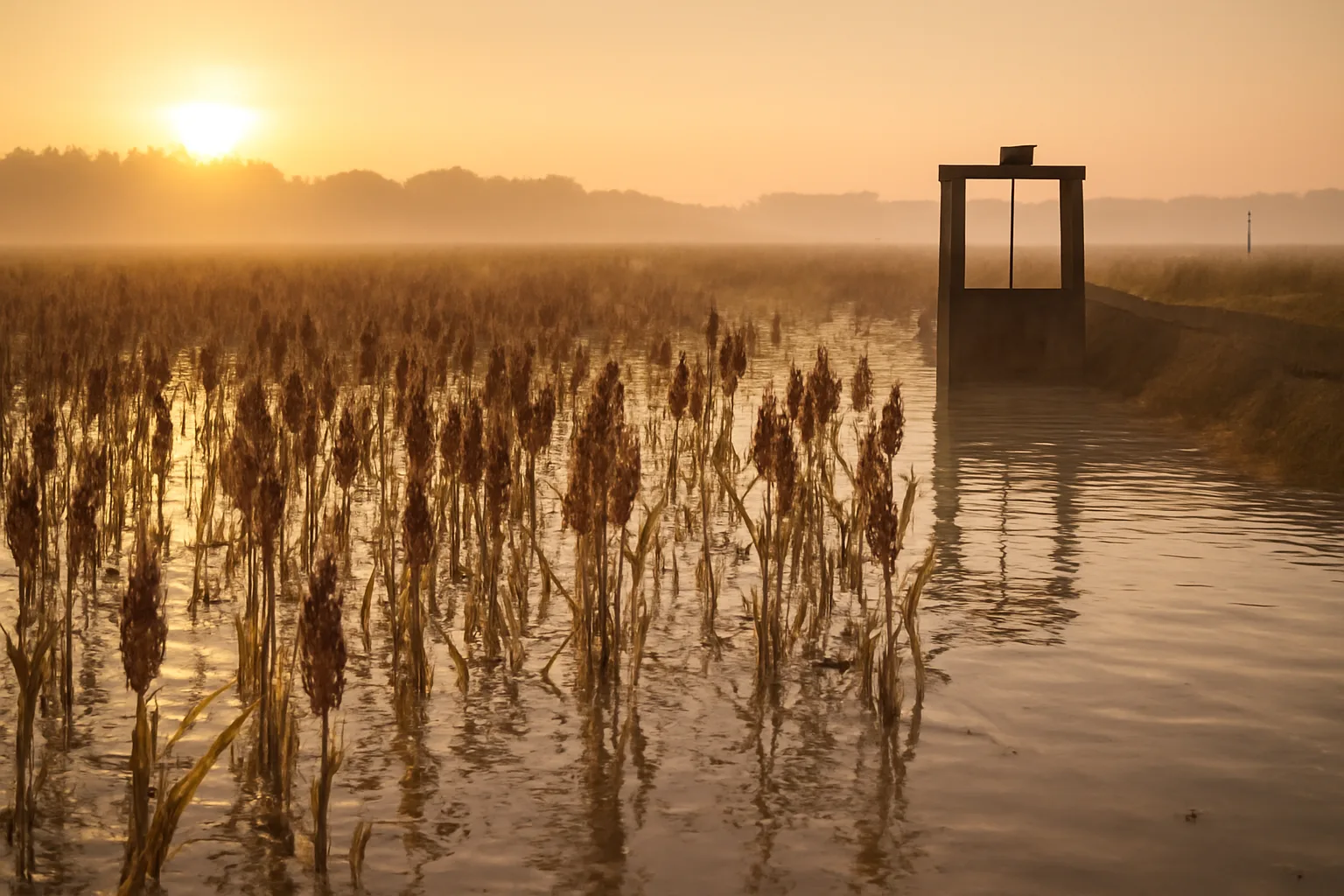
A duck food plot is a field or shallow impoundment planted with grain or moist-soil plants, then flooded shallow (usually 4 to 18 inches) in fall to attract dabbling ducks. It's a different animal than a deer plot. Deer plots grow forage that stays dry and gets browsed standing up. Duck plots grow seed that gets flooded, and the ducks tip up to feed on grain and seed heads sitting on or just under the water. Most duck plots fall into two camps. The first is a planted grain plot: Japanese millet, milo (grain sorghum), corn, or buckwheat drilled or broadcast in late spring, allowed to mature, then flooded in fall once the grain heads have dried down. The second is a moist-soil unit: you draw water off a wetland or shallow basin in spring, let natural seed-bank plants like smartweed, wild millet, and sedges germinate on the exposed mud, then reflood in fall. Wildlife agencies and university waterfowl programs favor moist-soil management on public wetlands because it costs less per acre than row-crop farming and produces a more diverse seed bank than a single planted grain [1]. If you're coming from deer plot work, the mental shift is timing. Deer plots are managed around browse pressure and frost-seeding windows. Duck plots are managed around water control, drawdown dates, and the flood-up calendar tied to migration in your flyway.
when to plant food plots for deer vs. for ducks (the timing actually differs)
This trips up a lot of guys running both programs on the same property. Deer food plot timing runs on two windows: spring/summer for warm-season forages like clover, chicory, and beans (after soil hits about 60°F), and late summer into early fall for cool-season plots like brassicas, cereal grains, and clover overseeds, generally 6 to 10 weeks before your first hard frost so plants establish before winter [2]. Duck plots run on a completely separate clock, because you're not trying to have mature, browsable forage in October. You're trying to have dry, mature grain in September or October that you then flood. Here's the difference in plain terms: a deer clover plot planted in early September needs rain and cool nights to germinate and tiller before frost. A duck millet plot planted in May needs a full 60 to 90 day growing season to head out and dry down by the time you're ready to flood in October or November. Plant duck millet in September like you would deer rye, and you'll have green seedlings underwater, not mature grain. If you manage both, build two separate calendars. Don't try to force one planting date to do double duty. For general deer-side planting windows, cooperative extension services publish region-specific dates you can cross-reference against your own zone, and it's worth reading a food plot whitetail planning guide alongside this one if you're doing both types of work on the same farm.
when to plant oats for deer (and does that timing apply to duck plots too?)
Oats for deer plots go in the ground in late summer to early fall, typically 45 to 60 days before your average first frost date, which for most of the whitetail range lands somewhere between mid-August and mid-September [3]. Oats are a cool-season annual grain that deer hit hard right after emergence and again after frost sweetens the leaves through starch conversion. Oats don't really have a role in a duck flood plot. They're a deer forage crop, not a duck grain crop. Ducks will eat oat seed if it's present and flooded, but oats aren't grown as a primary waterfowl food the way millet, milo, and corn are, because oat seed heads shatter and rot faster underwater and the plant doesn't hold up to flooding the way a grain sorghum head does. If you see "oats" mentioned in a duck-plot context, it's usually as a nurse crop in a mixed planting, not the target species.
do deer eat sorghum, and does that matter for a duck plot?
Yes, deer eat sorghum, both the standing forage and the grain heads, and grain sorghum (milo) shows up in deer food plot mixes in the southern half of the whitetail range where heat and drought tolerance matter [4]. But milo's bigger claim to fame is as a waterfowl grain crop. It's one of the most common plantings in flooded duck impoundments because the seed head stands up well, holds its grain through a flood-up, and ducks (particularly mallards and pintails) feed on it readily once it's underwater. So milo genuinely straddles both worlds. If you're managing a property with both deer ground and a duck hole, milo planted along a wet edge can pull double duty: deer will browse it in late summer while it's green and low, and you can flood the same field in November for ducks once the heads have dried. Just know your drainage. Milo tolerates wet feet better than corn does, but it still needs to mature dry before you flood it. Flooding green, immature milo just rots the plant and you lose the crop.
do deer eat clover, and do deer like clover as much as people say?
Yes, deer eat clover, and it's one of the most reliable, most heavily researched food plot forages in the whitetail world. White clover and red clover both show up constantly in university extension food plot trial data because deer consistently prefer them over most competing forages when clover is actively growing and not stressed by heat or drought [5]. Deer like clover because it's high in crude protein (often 25 to 30% in a well-fertilized stand) and it's available spring through fall as a perennial, unlike an annual grain that only feeds for a few weeks. Clover has zero role in a flooded duck plot, though. It doesn't tolerate standing water for more than a few days before it drowns out, and it's not a seed producer ducks target. If you're building separate deer and duck programs on the same farm, clover belongs on the dry upland fields and food-plot lanes, not anywhere near your flood-up basin. For deer-side clover establishment and blend options, see deer food plot seed and deer food plots.
when to plant turnips for deer, and are turnips any use to ducks?
Turnips for deer plots go in the ground in late summer, generally 90 to 100 days before your first expected hard frost, since turnips need time to bulb up before deer start hammering the roots after a few frosts sweeten the starches [3]. In most of the whitetail range that means a planting window from late July through mid-August, earlier than clover or oats because turnips need a longer runway to bulb. Turnips aren't a duck food. Waterfowl feed on seed, invertebrates, and tubers in some cases (wild celery and sago pondweed tubers are a big deal for diving ducks), but a brassica root crop planted on dry upland ground isn't part of a flooded duck plot program. If you see turnip seed marketed in a "waterfowl blend," it's almost always bundled for a mixed-use field, not because ducks are targeting the turnip itself.
what are ducks' favorite foods to plant in a flooded plot?
| Japanese millet | 60-70 days | Good, handles shallow standing water during growth | Fast-turnaround plots, wet or poorly drained ground | |
|---|---|---|---|---|
| Browntop millet | 60-70 days | Fair, prefers drier ground until flood-up | Upland fields flooded later in season | |
| Grain sorghum (milo) | 90-120 days | Good once mature | Dual-use deer/duck fields, drought-prone ground | |
| Corn | 100-120 days | Poor during growth, fine once dry and standing | Larger impoundments, needs full season and good drainage | |
| Smartweed (natural/moist-soil) | Varies, self-seeding | Excellent | Moist-soil units managed by drawdown, not drilled | Most duck-focused land managers don't rely on one species. A mixed field of millet and milo, or a millet planting adjacent to a natural moist-soil unit, spreads out your maturity dates and gives you more flexibility on when you flood. |
The workhorse species for planted duck plots are Japanese millet, browntop millet, grain sorghum (milo), and corn, with smartweed and natural moist-soil seed producers filling in on impoundments managed by drawdown rather than by planting [1] [1]. Japanese millet is probably the single most planted duck food crop in the country because it germinates fast, tolerates wet ground better than most grains, and produces a heavy seed head in 60 to 70 days. Here's a rough comparison of the common species: | Species | Days to maturity | Flood depth tolerance | Best use |
do deer like honey, and what does that have to do with duck plots?
This one gets asked because "honey hole" language crosses over between deer hunting and duck hunting, but the honest answer is deer are not drawn to honey as a food source in any meaningful, documented way. Deer are herbivores built around a rumen adapted to digest plant fiber, not concentrated sugar syrup, and there's no cooperative extension or wildlife agency research recommending honey as an attractant or food plot additive. If you've seen anecdotal claims about deer and honey online, treat them the same way you'd treat any unsourced hunting-forum claim: skeptically, and separately from real food plot planning. Where "honey hole" actually applies here is slang, not nutrition. A duck honey hole is a small flooded pocket, often a moist-soil unit or a flooded corner of a bigger field, that concentrates birds because of food, cover, and water depth. That's a habitat term, not a feeding strategy involving actual honey.
when should you plant and flood a duck food plot, step by step?
Planting and flood timing for a duck plot breaks into three phases: spring planting, summer growth and maturity, and fall flood-up tied to migration. Plant in late spring, after your last frost date and once soil temperatures are consistently above 60°F, generally April through June depending on latitude. Millet, milo, and corn are all warm-season annuals that won't tolerate a late frost, so don't rush this the way you might rush a deer clover plot. Let the crop mature through summer with no flooding. This is the part people get wrong most often: flooding too early, while the plant is still green, kills the crop before it sets seed. You want the grain heads dry and the plant senescing (turning brown) before water goes on. Flood in fall, timed to your local migration and to state waterfowl season dates. Most managers flood in stages, adding a few inches every week or two from early October through late November, which spreads out food availability and avoids dumping your whole food resource on the birds in the first week of season. Staged, incremental flooding is a standard recommendation in wetland wildlife habitat management guidance specifically because it extends the availability of seed and invertebrates through the season rather than concentrating it all at once [1]. Check your state wildlife agency's baiting and manipulation rules before you flood a standing crop, because the line between a legal flooded field and an illegal baited field depends on how and when the crop was planted and harvested, and that line is federal, more than state-level.
is flooding a planted crop for ducks considered baiting?
It can be, depending on how the crop was established and manipulated, and this is the single most important legal question in duck plot planning. Under federal migratory bird regulations (50 CFR 20.21(i)), baiting is defined as placing, exposing, depositing, distributing, or scattering salt, grain, or other feed that could lure or attract waterfowl to, on, or over areas where hunters are attempting to take them . The regulation text specifically defines a baited area as one where feed "has been placed, exposed, deposited, distributed, or scattered" if that feed "could serve as a lure or attraction for migratory game birds" . A crop that is planted, grown, and flooded in a normal agricultural manner, without harvesting the grain and then redistributing it, generally falls under the "normal agricultural practice" exception. But if you harvest a field and then scatter that same grain back over the flooded area, or manipulate a crop in an abnormal way to concentrate seed, you can cross into baiting territory. States layer their own additional rules on top of this federal baseline. Some states restrict flooding dates, some restrict what percentage of a field can be manipulated, and enforcement varies by region. Before you flood any planted field for duck season, call your state wildlife agency's law enforcement division or check their published waterfowl hunting regulations. This isn't a gray area worth guessing on. Baiting violations carry real federal penalties under the Migratory Bird Treaty Act, 16 U.S.C. 703-712.
how is a duck food plot different from a deer food plot in practice?
Beyond species selection, the two disciplines differ in soil work, equipment, and success metrics. A deer plot lives or dies on soil pH and fertility; most cooperative extension guidance calls for liming acidic soils to a pH near 6.0 to 6.5 for clover and brassicas, based on a soil test, because deer forage quality tracks directly with soil nutrient availability [2] [5]. A duck plot is far less picky about pH because you're growing a grain crop for seed yield and flood tolerance, not for protein content in standing forage that deer browse repeatedly. Equipment differs too. Deer plots need a disc or no-till drill, a cultipacker, and a sprayer for herbicide and fertilizer work, standard stuff covered in most food plot seed planning guides. Duck plots need all of that plus water control: a water control structure (a simple flashboard riser or stoplog structure), a levee or berm capable of holding several inches to a couple feet of water, and often a well or pump if you're not relying on rainfall and runoff. That water infrastructure is the single biggest cost difference between the two plot types, and it's also the piece most first-time duck plot builders underestimate. If your ground grows both programs, a soil test still matters for the dry-side deer plots, but for the duck-side grain fields, drainage and water control planning matter more than a pH number. Your state wildlife agency or local NRCS office can help with wetland engineering questions that are outside what a standard soil test lab will tell you.
what mistakes cost people the most on duck food plots?
Flooding too early is the number one mistake. Green, immature grain rots underwater instead of drying into a seed head ducks can actually feed on. Wait for the plant to senesce. Planting duck grain species on the same calendar as deer plots is the second most common error. Millet and milo need a full warm-season growing window starting in late spring, not a late-summer planting date borrowed from an oats or clover program. Skipping the legal check on baiting rules is the costliest mistake in dollar terms, because a Migratory Bird Treaty Act violation isn't a slap on the wrist. Read your state's specific waterfowl regulations and, if there's any doubt about a manipulated or harvested-and-redistributed crop, call your state agency's enforcement division before the season, not during it. Underbuilding water control is the quiet cost overrun. A lot of first-time duck plot builders put a berm around a field and assume rainfall will fill it. In dry falls, that doesn't happen, and you end up with a mature crop and no water to flood it with. If ducks are one piece of a broader deer and wildlife plan on the same acreage, it's worth mapping the whole property before committing acres to a flooded unit. PlotSeason's $99 Custom Food Plot Plan covers species and timing for the deer-side fields on your land based on your location and soil test, which can help you figure out how many acres you actually want to dedicate to a water-control project versus standard deer forage.
Frequently asked questions
Do deer eat sorghum?
Yes. Deer browse grain sorghum (milo) both as green standing forage and as mature grain heads, and it's a common food plot species in warm, drought-prone regions of the whitetail range. Milo is also one of the top planted grain crops for flooded duck plots, making it one of the few species used in both deer and duck food plot programs.
Do deer eat clover?
Yes, and clover is one of the most preferred food plot forages in university extension research, largely because well-fertilized stands run 25 to 30% crude protein. Clover has no role in flooded duck plots since it can't tolerate standing water, so keep it on dry upland ground if you're managing both deer and duck acreage.
Do deer like clover as much as other food plot options?
Deer generally rank clover among their top preferences in extension forage trials, especially white and red clover during active growth. Preference drops during summer drought stress or once clover matures and toughens, which is why many managers pair clover with a late-summer annual like brassicas or cereal grain to cover gaps.
When to plant deer food plots?
Warm-season deer plots (clover, chicory, beans) go in after your last frost, typically April through June once soil hits about 60°F. Cool-season plots (brassicas, cereal grains, clover overseeds) go in 6 to 10 weeks before your first hard frost, usually August to September depending on your region.
When to plant oats for deer?
Plant oats for deer 45 to 60 days before your average first frost, generally mid-August to mid-September across most of the whitetail range. Oats are a fall cool-season annual grain, not a species used in flooded duck plots.
When to plant food plots for deer specifically in fall?
Fall deer food plots (oats, wheat, rye, brassicas, clover overseeds) should go in 6 to 10 weeks before your area's average first hard frost so plants establish before growth slows. Check your local cooperative extension office for exact frost-date windows in your zone.
When to plant turnips for deer?
Plant turnips 90 to 100 days before your first expected hard frost, generally late July through mid-August in most whitetail range. Turnips need that longer runway to bulb up before frost sweetens the roots and drives deer feeding activity.
What is a food plot?
A food plot is a planted area of forage or grain established specifically to feed wildlife, most commonly deer or waterfowl, either as browse (clover, brassicas) or as harvestable grain (corn, milo, millet). Deer plots stay dry and get browsed standing; duck plots often get flooded once the grain matures.
What are deer's favorite foods in food plot settings?
Extension research and food plot trial data consistently rank white clover, soybeans, and brassicas like turnips and radishes among deer's most preferred plantings, alongside natural browse like acorns and native forbs. Preference shifts seasonally: clover and beans lead in summer, brassicas and cereal grains lead after frost.
Do deer like honey?
No. There's no cooperative extension or wildlife agency research supporting honey as a deer attractant or food source. Deer are herbivores built to digest fiber through a rumen, not concentrated sugar, and "honey hole" language in hunting contexts refers to a productive spot, not an actual food.
Is flooding a duck food plot considered illegal baiting?
It depends on how the crop was planted and manipulated. Federal rule 50 CFR 20.21(i) allows normal agricultural practices like planting and flooding a standing crop, but harvesting grain and redistributing it back over a flooded area can cross into illegal baiting. Check your state agency's specific waterfowl regulations before flooding.
What's the best grain to plant for a duck food plot?
Japanese millet is the most commonly planted duck grain because it matures in 60 to 70 days and tolerates wet ground well during growth. Grain sorghum (milo) and corn are also widely used, especially on larger impoundments with a longer growing season and better drainage.
How deep should you flood a duck food plot?
Most managed duck impoundments flood in stages from a few inches up to 12 to 18 inches deep, added incrementally from early fall through late season. Staged flooding, a standard wetland habitat management practice, extends food availability rather than dumping it all on birds at once.
Sources
- USDA Natural Resources Conservation Service, Conservation Practice Standard: Wetland Wildlife Habitat Management (Code 644), September 2020: Moist-soil management with staged drawdown and reflooding is a standard low-cost practice for growing natural seed-bank plants for waterfowl
- Oklahoma State University Extension, Establishing and Managing Wildlife Food Plots: Deer food plot planting windows split into warm-season spring/summer forages and cool-season late-summer plantings timed weeks before first frost
- University of Tennessee Institute of Agriculture Extension, PB 1769, Producing and Using Wildlife Food Plots: Oats and other cool-season cereal grains for deer food plots are planted roughly 45 to 60 days before the first killing frost
- University of Georgia Extension, Bulletin 1358, Establishing and Managing Wildlife Food Plots: Clover is a top-preference deer forage in extension trial data, with crude protein commonly in the 25 to 30 percent range on well-fertilized stands
- U.S. Code of Federal Regulations, 50 CFR 20.21(i): Federal law defines baiting as placing or scattering feed to lure migratory birds, with a normal agricultural planting and flooding practice generally exempted