Last updated 2026-07-26
TL;DR
Food plot planting services handle soil testing, seedbed prep, planting, and sometimes fertility scheduling for hunters short on time or equipment. Costs run roughly $50 to $300+ per acre depending on region and service level. Timing depends on species and zone: clover and brassicas like turnips go in late summer, oats in late summer to early fall, and warm-season plots like sorghum go in late spring.
What is a food plot?
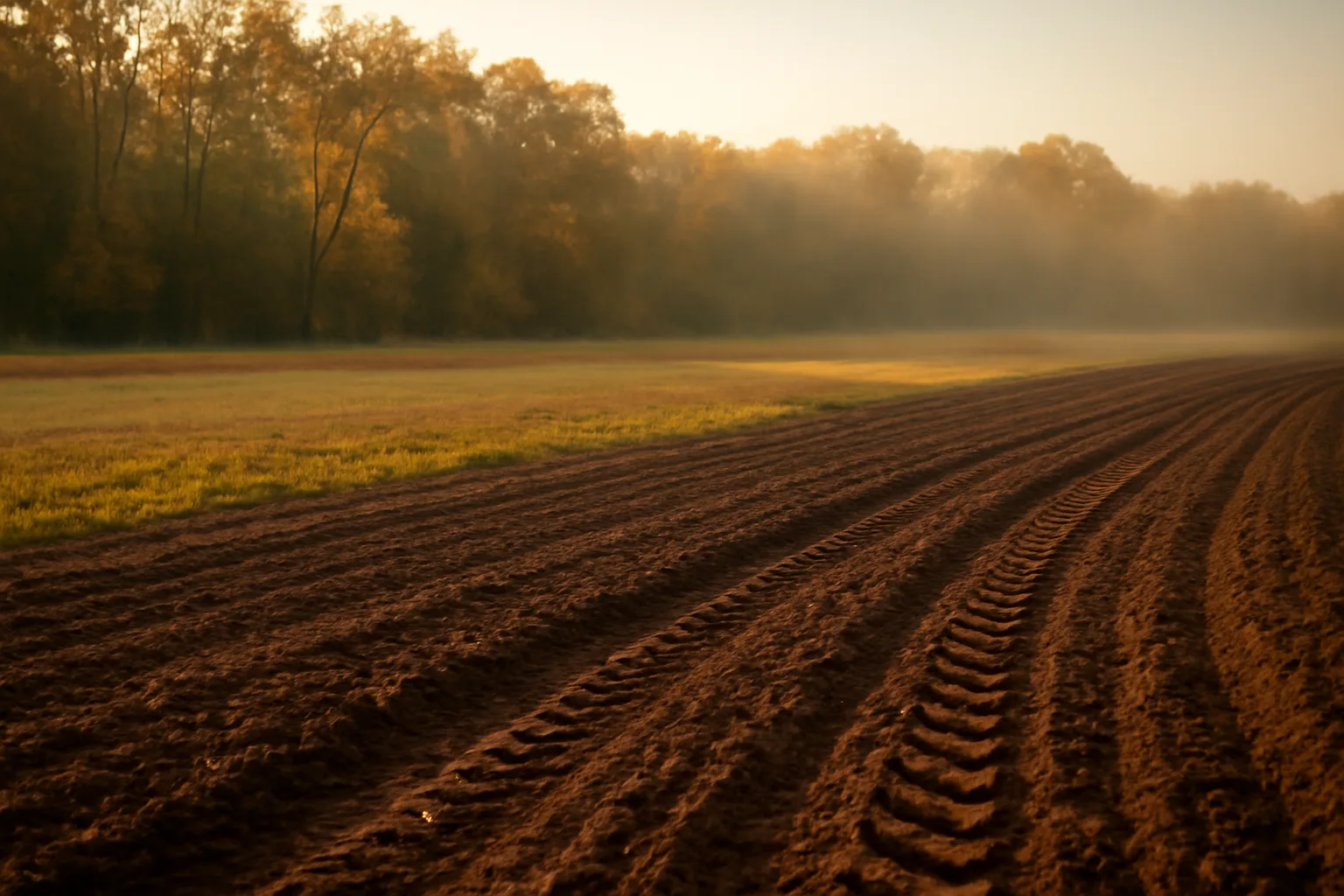
A food plot is a planted patch of ground, usually somewhere between a quarter acre and a few acres, seeded with forage or grain to attract and hold deer or improve their nutrition. It's not natural habitat left alone. It's an intentional planting, managed like a small farm field, often tucked into timber, along field edges, or carved out of CRP ground. The USDA Natural Resources Conservation Service treats food plots as a wildlife habitat practice under its conservation programs, describing plantings that provide "seasonal food and cover for wildlife species" as part of broader habitat management [1]. State wildlife agencies generally frame food plots the same way: supplemental habitat, not a replacement for natural browse, mast, and cover. Most hunters plant one of two broad types. Annual plots (clover, oats, brassicas, cereal grains) get replanted every year or two and produce fast, high-tonnage forage. Perennial plots (clover, alfalfa blends) can run three to five years before needing a full reset, though they need mowing and spot-spraying to stay productive. If you're trying to decide which category fits your ground, the breakdown at food plot whitetail walks through the tradeoffs in more depth.
What do food plot planting services actually include?
A food plot planting service typically covers soil testing or interpretation, ground prep (spraying, disking, or no-till drilling), seed and fertilizer application, and sometimes a follow-up spray or mowing visit. Some outfits also handle plot design, picking locations based on aerial imagery and access. Pricing varies a lot by region and how much equipment shows up. A rough national range for professional planting (not counting seed or lime) runs from about $50 to $150 per acre for basic drill-and-spray work, up to $250 to $300+ per acre where a company brings a tractor, disk, cultipacker, and does full soil amendment application. Seed alone can add $20 to $80 per acre depending on the blend, and lime, if your soil test calls for it, often costs $30 to $60 per ton delivered and spread, according to typical extension cost guidance for agronomic lime application [2]. A lot of hunters don't need a full-service crew. If you own a UTV and a hand seeder, or can borrow a disk from a neighbor, you can do the physical planting yourself. What most people actually lack isn't labor, it's a plan: which species fit their soil, their shade level, their zone's planting window, and their deer density. That's the gap a $99 one-time Custom Food Plot Plan is built to fill (see /plot-plan-builder), giving you species picks, seeding rates, and a planting calendar without paying for a planting crew you may not need. If you're weighing DIY against hiring it out, the equipment guidance in deer food plots covers what minimum gear actually gets a plot in the ground versus what's a nice-to-have.
When to plant food plots for deer?
Timing depends entirely on species and your zone, not a single calendar date. Cool-season plots (clover, oats, brassicas, cereal rye) go in from late summer through early fall, timed so plants establish before frost slows growth but still get enough soil moisture. Warm-season plots (soybeans, cowpeas, sorghum, corn) go in late spring after soil temperatures warm and frost risk passes. As a broad framework: in the northern tier (Minnesota, Wisconsin, Michigan, northern New England) cool-season plantings typically go in mid-July through late August. In the transition zone (Missouri, Kentucky, Virginia, southern Ohio) the window runs August into mid-September. In the Deep South (Alabama, Georgia, Mississippi, Louisiana) cool-season plots often go in September through mid-October, sometimes later, because heat and drought stress punish early plantings. Mississippi State University Extension's guidance on fall food plots recommends planting most cool-season annuals "from September through November" in the state, with earlier planting favored when soil moisture is available [3]. Compare that to a state like Minnesota, where University of Minnesota Extension guidance points hunters toward planting brassicas and clover by early August, since the growing season closes fast. The safest rule: work backward from your first hard frost date and your species' maturity window, not forward from a fixed date on a calendar. A blend planted three weeks too early in the South can burn up in August heat. The same blend planted three weeks late in the Upper Midwest may never reach grazing height before snow. For a full zone-by-zone breakdown, deer food plot seed has more detail on matching species to your specific latitude.
When to plant clover for deer?
Clover is typically planted in early spring (frost-seeded onto still-frozen or thawing ground) or in late summer, roughly six to eight weeks before your first fall frost, so it has time to establish a root system before winter dormancy. Both windows work; spring plantings avoid summer weed pressure, fall plantings often establish faster because of cooler, wetter soil. Penn State Extension's food plot guidance recommends seeding clover in "late summer" for fall establishment in the Northeast, generally August, or as a spring option once soil is workable. In southern states, fall clover can go in as late as October since frost comes later and heat stress is less of a risk in early fall. Clover is a perennial in most blends (white clover, red clover) and, once established, can produce forage for three to five years with proper mowing and pH maintenance. That makes it a strong base plot if you don't want to replant every single year, though it does need weed control and occasional overseeding to stay thick.
Do deer like clover, and do deer actually eat it?
Yes. Clover is one of the most consistently used food plot forages across whitetail range, and it shows up in stomach content and forage-use studies as a preferred cool-season plant. It's high in crude protein, often tested between 20 and 30 percent depending on maturity and soil fertility, which matters most during spring green-up and antler growth. University of Tennessee Extension and other land-grant programs consistently list clover among the top recommended perennial food plot species for whitetail deer because of its palatability, regrowth after grazing, and nitrogen-fixing benefit to soil [4]. The nitrogen fixation part matters practically: clover pulls nitrogen from the air and adds it to the soil, which is why rotating a clover plot into a grain planting the following year often needs less added nitrogen fertilizer. The catch with clover is establishment. It's a small seed that needs shallow planting (a quarter inch or less) and good seed-to-soil contact. Broadcasting clover onto a rough, cloddy seedbed and walking away is the most common reason a clover plot fails in year one.
When to plant oats for deer?
Oats are a cool-season annual, typically planted from late August through October depending on zone, timed so they germinate and put on leaf growth before the first killing frost. Oats are fast; under decent moisture they can be grazeable in three to four weeks, which makes them a good fit for early bow season attraction plots. Oklahoma State University Extension recommends planting oats for wildlife food plots in September in much of the state, noting oats "provide excellent fall and winter forage" when planted early enough to establish before cold weather [5]. Farther north, oats generally need to go in by early September at the latest to get meaningful growth before frost stops them. Oats will die back to ground level once temperatures consistently drop into the teens, unlike cereal rye or wheat, which can survive hard freezes and green back up in spring. That makes oats a great short-term attraction plot for archery season but a poor choice if you want something still green in January. A lot of successful fall blends mix oats with a hardier cereal grain and a brassica for exactly that reason: oats for early palatability, rye or turnips for late-season persistence.
When to plant turnips for deer, and do deer actually eat turnips?
Turnips are a brassica, typically planted 60 to 90 days before your first expected hard frost, most commonly late July through August in northern zones and August into September in the transition and southern zones. They need that lead time because turnips are a two-stage food source: deer eat the leafy tops first in fall, then switch to digging up and eating the bulbs after repeated frost exposure converts starches to sugars. South Dakota State University Extension guidance on brassica food plots notes that a hard freeze improves palatability of turnip bulbs by increasing sugar content, which is why turnip plots often see the heaviest use in December and January rather than October. That late-season timing is exactly why turnips pair well with earlier-maturing plants like oats or clover in a mixed plot: something is palatable early, something else peaks late. Deer do eat turnips, and in the right region a good turnip plot can hold deer through the toughest part of winter when other forage is gone. But turnip use varies more by region and local deer familiarity than most other plot species. Deer herds with no prior brassica exposure sometimes ignore turnip tops the first year and only start using the plot heavily in year two, once they've learned to associate it with food. That's a real, documented pattern among plot managers and one reason a first-year turnip plot can look disappointing even when it was planted correctly.
Do deer eat sorghum?
Yes, deer eat sorghum, both the grain heads and, to a lesser extent, the leaves and stalks, particularly in fall and winter once the plant matures and dries down. Sorghum is a warm-season annual, planted in late spring after soil temperatures reach the mid-60s Fahrenheit, similar timing to corn. Sorghum's main food plot value is as a standing grain crop for late fall and winter, and as cover. Its dense stalks provide thermal and screening cover that a clover or brassica plot can't. Compared to corn, sorghum generally needs less nitrogen and less water to produce a decent grain yield, which makes it a common choice on poorer, drier upland soils where corn would struggle. One caution: some grain sorghum varieties can accumulate prussic acid (cyanogenic compounds) in young, drought-stressed, or frost-damaged leaf tissue, a known risk for livestock grazing sorghum documented by land-grant forage programs [6]. It's a livestock feeding concern more than a proven deer food plot hazard, but it's worth knowing if you're managing sorghum as forage rather than letting it mature to standing grain.
What is a deer's favorite food, and do deer like honey?
There's no single "favorite food" for deer; preference shifts by season, region, and what's locally available. That said, several state agency and university studies on whitetail diet composition consistently rank acorns, soft mast (apples, persimmons), and high-quality legumes like clover and soybeans among the most preferred and heavily used foods where available. Acorns in particular show up as a dominant fall food source in deer diet studies across the eastern whitetail range, often making up a large share of fall stomach content in mast years, because of their high fat content relative to most plot forages. Clover and soybeans rank high too, largely because of protein content during the growing season. Deer do not eat honey in any meaningful, documented way as part of their natural diet. Deer are herbivores and their digestive system (a four-chambered rumen built for breaking down plant fiber) isn't suited to processing much of anything besides plant material, occasional fungi, and rarely some animal matter under extreme nutritional stress. Honey shows up in hunting forums and some commercial attractant marketing, but there's no wildlife agency or extension research documenting honey as a preferred or biologically meaningful deer food. If you're seeing claims that deer "love honey," treat that as marketing, not biology.
How do soil test results change what a food plot service plants?
Soil test results set the pH and nutrient baseline that determines which species will actually grow, more than which ones a planting service prefers to sell. Most food plot species (clover especially) perform poorly below a soil pH of about 6.0, and many extension programs recommend targeting pH 6.0 to 6.5 for clover and most brassicas. Purdue University Extension's food plot soil fertility guidance recommends soil testing every one to three years and notes that correcting soil pH with lime, when a test calls for it, "is often the single most cost-effective thing a landowner can do" for plot productivity, since nutrients become unavailable to plants at low pH regardless of how much fertilizer gets added [2]. That's a real limiting factor a lot of first-time plot owners miss: dumping fertilizer onto a pH 5.0 field wastes money if lime hasn't corrected the acidity first. A reputable planting service should ask for your soil test before recommending species or fertilizer rates, not the other way around. If a company gives you a species list before seeing your soil numbers, that's a real red flag. Your soil test lab (or the extension office that processed it) is the actual authority on lime and fertilizer rates for your specific field; any planting service or general planting guide, including this one, should be treated as a starting framework, not a substitute for that site-specific test.
What equipment does a food plot planting service use, and can I do it myself?
A typical professional planting service brings a tractor, a disk or tiller for seedbed prep, a broadcast or drop spreader for seed and fertilizer, a cultipacker to firm the seedbed, and a sprayer for pre-plant weed control. Some use no-till drills, which cut planting time and reduce erosion by skipping the disking step entirely. You don't need all of that to plant a small plot yourself. A quarter-acre to half-acre plot can be handled with a UTV, a tow-behind harrow or disk, a hand-crank broadcast spreader, and a sprayer tank mounted on the UTV. Total gear cost for a basic DIY setup often runs $500 to $2,000 depending on what you already own versus rent or borrow. Where hiring a service makes more sense: larger acreage (several acres or more), heavy ground that needs real tillage equipment, or land you can't get to often enough to manage timing yourself. Where DIY makes more sense: small plots, land you visit regularly, and a modest budget where paying $150 to $300 an acre for planting labor doesn't pencil out against the cost of a used disk and spreader. For a closer look at minimum viable gear lists by plot size, see food plot seed and domain food plot seed.
Are there legal restrictions on food plots and baiting I should check?
Yes, and this varies by state, sometimes significantly. Food plots are generally legal everywhere and treated differently from baiting (piling loose grain, minerals, or feed), but the line between the two isn't always obvious, and some states regulate hunting over a food plot depending on how recently it was planted, harvested, or manipulated. Michigan's Department of Natural Resources, for example, defines baiting distinctly from planted food plots but has specific rules about hunting near standing crops and manipulated plots that differ by region of the state [7]. Other states, including several in the Midwest and South, have outright baiting bans with exceptions carved out for food plots planted and left standing as a normal agricultural practice. Before planting, and definitely before hunting over a plot, check your state wildlife agency's current regulations. Rules change year to year in some states, and what's legal in a neighboring state can be a citation where you hunt. This is genuinely one of those areas where a quick call or website check to your state agency costs you nothing and prevents a real problem.
Is hiring a food plot planting service worth the cost?
It depends on your acreage, your available time, and whether you already own or can borrow the right equipment. For someone with ten-plus acres of plots, poor equipment access, and limited time on the property, a planting service often pays for itself in results and saved weekends. For someone with a half-acre plot, a UTV, and a Saturday to spare, hiring it out is usually paying for convenience, not necessity. What a lot of hunters actually need isn't the labor of planting, it's the planning: knowing which species suit their soil and shade, what rate to seed at, and when their specific zone's window opens and closes. That's a different problem than physically getting seed in the ground, and it's one a full planting crew doesn't always solve well, since a lot of crews run the same blend regardless of your specific dirt. If you want a plan built around your actual soil test, sunlight, and zone rather than a generic regional blend, the $99 one-time Custom Food Plot Plan at /plot-plan-builder is built for exactly that gap: species selection, seeding rates, and a planting calendar, without committing to a full-service planting contract you may not need.
Frequently asked questions
Do deer eat sorghum?
Yes. Deer eat sorghum grain heads and, to a lesser degree, the leaves and stalks, especially in fall and winter once the plant matures. Sorghum also provides dense standing cover. Some varieties can develop prussic acid in young or drought-stressed leaves, a documented livestock grazing concern from land-grant forage programs, though this is less studied specifically in deer.
Do deer eat clover?
Yes, clover is one of the most consistently preferred food plot forages for whitetail deer, high in crude protein (often 20 to 30 percent) and used heavily during spring and summer growth. Land-grant extension programs regularly list clover among the top recommended perennial species for deer food plots because of its palatability and regrowth after grazing.
When should I plant deer food plots?
Timing depends on species and zone. Cool-season plots (clover, oats, brassicas) generally go in late summer through early fall, roughly six to twelve weeks before your first hard frost. Warm-season plots (soybeans, sorghum, corn) go in late spring after soil warms. Work backward from your local frost date rather than using one fixed calendar date.
Do deer like clover more than other plot forages?
Clover ranks consistently high in deer preference studies and extension recommendations, especially during spring green-up when protein demand is highest for antler and fawn development. It's not universally the single top choice; deer use shifts seasonally and acorns or soybeans can outcompete clover in preference during certain months.
When should I plant oats for deer?
Oats are typically planted late August through October depending on zone, timed to establish before the first hard frost. They germinate fast, often grazeable within three to four weeks. Oats die back in hard freezes, unlike cereal rye, so they work best as an early-season attraction plot rather than a late-winter food source.
When is the best time to plant food plots for deer overall?
There's no single best date nationally. In northern zones, cool-season plots typically go in mid-July through late August. In the transition zone, August into mid-September works. In the Deep South, September through October is common. Warm-season crops like soybeans and sorghum go in late spring everywhere after frost risk passes.
When should I plant turnips for deer?
Plant turnips 60 to 90 days before your area's first expected hard frost, commonly late July through August in the north and August into September farther south. Turnips need that lead time because deer typically eat the leafy tops first, then the bulbs later in winter after freezing temperatures raise the bulbs' sugar content.
What exactly is a food plot?
A food plot is a deliberately planted area of forage, grain, or brassicas meant to attract deer and supplement their natural diet. It ranges from a quarter-acre clearing to several acres and is managed like a small agricultural field, distinct from leaving natural browse or mast trees alone.
What is a deer's favorite food?
There's no single universal favorite; preference shifts by season and region. Acorns and other mast rank very high in fall due to fat content, while clover and soybeans rank high during the growing season for protein. Diet studies across whitetail range consistently show acorns as a dominant fall food source in mast years.
Do deer like honey?
No, not in any biologically documented way. Deer are herbivores with a rumen digestive system built for plant fiber, not the diet honey would fit into. No wildlife agency or extension research documents honey as a meaningful deer food source; claims to the contrary are typically marketing, not established biology.
How much does a food plot planting service cost per acre?
Rough national ranges run $50 to $150 per acre for basic drill-and-spray service, up to $250 to $300 or more per acre for full-service work including tillage, soil amendments, and multiple visits. Seed typically adds $20 to $80 per acre on top, and lime, if needed, often runs $30 to $60 per ton delivered and spread.
Can I plant a food plot without hiring a service?
Yes, plenty of hunters plant small plots (a quarter to one acre) themselves with a UTV, a hand or tow-behind spreader, a small disk or harrow, and a sprayer. Total DIY equipment cost often runs $500 to $2,000. Hiring a service tends to make more sense for larger acreage or heavier ground needing real tillage equipment.
Do I need a permit or is it legal to hunt over a food plot?
Food plots are legal in every state, but rules distinguishing them from illegal baiting vary and can depend on how the plot was planted, harvested, or manipulated. Check your state wildlife agency's current regulations before planting or hunting over a plot, since rules differ by state and sometimes by region within a state.
Sources
- USDA Natural Resources Conservation Service, Wildlife Habitat Practices: Food plots are treated as a wildlife habitat practice providing seasonal food and cover under USDA conservation programs
- Purdue University Extension, Food Plot Soil Fertility: Correcting soil pH with lime is one of the most cost-effective steps for food plot productivity
- Mississippi State University Extension, Fall Food Plots for Deer: Recommended cool-season food plot planting window in Mississippi runs September through November
- University of Tennessee Extension, Wildlife Food Plots: Clover ranks among the top recommended perennial food plot species for whitetail deer due to palatability and nitrogen fixation
- Oklahoma State University Extension, Wildlife Food Plots: Oats planted in September provide excellent fall and winter forage for deer in Oklahoma
- University of Kentucky Extension/Forage program, Prussic Acid Poisoning: Sorghum species can accumulate prussic acid in young, drought-stressed, or frost-damaged leaf tissue, a known grazing risk
- Michigan Department of Natural Resources, Baiting and Feeding Regulations: Michigan regulates baiting distinctly from planted food plots, with rules varying by region of the state