Last updated 2026-07-26
TL;DR
Plant fall food plots 60 to 90 days before your area's average first frost, which lets brassicas bulb up and cereal grains establish before cold shuts growth down. Most of the Midwest and Upper South plants August through mid-September. Clover, oats, and turnips are the workhorses; deer favor them because they're high in protein and sugar right when deer need it most.
what is a food plot, exactly
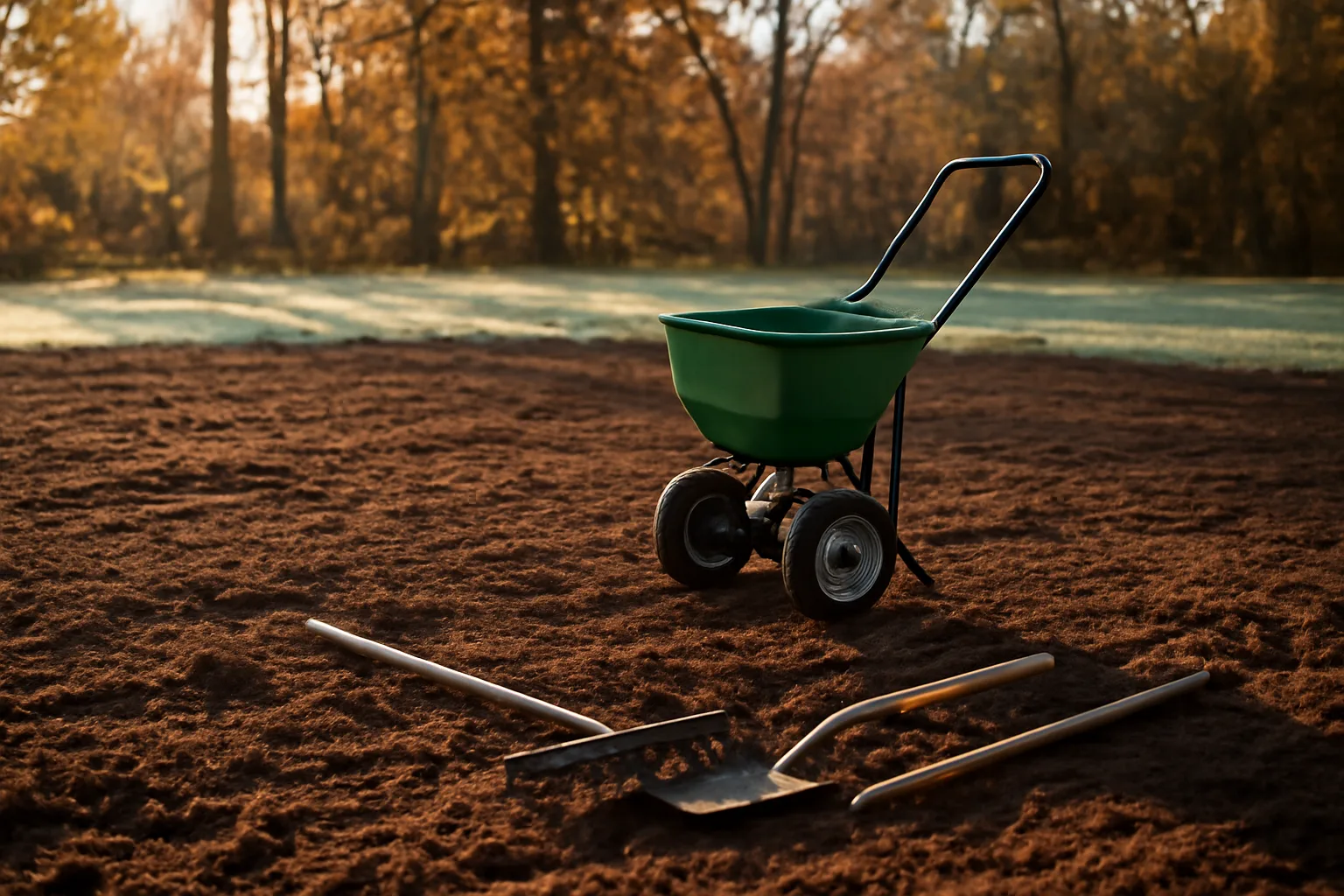
A food plot is a planted patch of ground, usually somewhere between a quarter acre and a few acres, seeded with forage that deer (and often turkey, rabbits, and other wildlife) will eat. It's not a garden and it's not a lawn. The goal is to grow something palatable and nutritious on a schedule that lines up with when local deer need extra groceries, whether that's spring green-up, summer stress, or the fall push into the rut and winter. Food plots range from simple broadcast clover patches you never touch again for two or three years to full rotations of brassicas, cereal grains, and legumes planted on a strict calendar with soil amendments dialed in. Neither approach is wrong. A half-acre clover plot next to a bedding area can hold deer just as well as a five-acre brassica field, depending on your goals and your ground. Most state wildlife agencies and land-grant extensions treat food plots as a habitat management tool, not a substitute for natural forage. The USDA Natural Resources Conservation Service and university extensions generally recommend plots make up a small percentage of total acreage, with the bulk of a property's food value coming from natural browse, mast, and agricultural edges [1]. A food plot supplements. It doesn't replace habitat. If you want a rough starting point on species and layout for your specific property, that's the kind of thing a Custom Food Plot Plan is built for. But you don't need one to plant a good fall plot. The basics below get you most of the way there.
when to plant food plots for deer
Timing depends entirely on whether you're planting a spring/summer plot or a fall plot, and fall is where most hunters focus their energy. For fall plots, the general rule from university extension programs is to plant roughly 6 to 10 weeks before your area's average first frost date [2]. That window gives brassicas enough time to bulb and cereal grains enough time to tiller before growth slows down in the cold. In practical terms, that means: - Northern tier (Minnesota, Wisconsin, Michigan, northern New England): mid-July through mid-August for brassicas, late August for cereal grains and clover.
- Mid-South and transition zone (Kentucky, Tennessee, southern Missouri, Virginia): mid-August through mid-September.
- Deep South and Gulf states: September into early October, sometimes as late as mid-October in the warmest zones. Your state extension office almost always publishes a frost date map and planting calendar specific to your county, and that's a better source than any generic national chart. The National Centers for Environmental Information (part of NOAA) also maintains average frost/freeze date data by station, which extension services pull from when building their planting guides [3]. A hard rule of thumb: if you're planting brassicas for the bulb (turnips, radishes), you want that window closer to 80-90 days before your first hard freeze. If you're just planting for leafy forage or a quick cereal grain green-up, you can push closer to 45-60 days out and still get usable growth.
when to plant turnips for deer
Turnips need roughly 80 to 90 days from planting to reach full bulb size, so back-calculate from your first expected hard frost and plant that far ahead of it [4]. In much of the whitetail's range that lands in late July through August, with more southern areas stretching into early September. Deer usually ignore turnip bulbs and greens early in the season and hit them hard after the first couple of frosts. Cold converts starches in the plant to sugars, which is why a turnip plot that gets ignored in October can get hammered in December. This is one of the most consistent patterns extension researchers and food plot agronomists point to with brassicas generally [4]. Plant turnips at 4-6 pounds of seed per acre if drilled, a bit more if broadcast, into a firm, well-limed seedbed. Turnips like a pH close to neutral, generally 6.0-6.5, and respond well to nitrogen. A soil test is the only honest way to know your starting point, and your soil-test lab's recommendation on lime and fertilizer rates should be treated as the real authority here, not a blanket number from an article. Extension guides consistently point growers back to soil testing before assuming any blanket fertilizer rate will work on their ground.
when to plant oats for deer
Oats for fall food plots go in the ground 6 to 8 weeks before your first frost, which usually means late August to mid-September across most of the whitetail's range, a little earlier up north and later in the Deep South. Oats germinate fast, often within a week in warm soil, and produce leafy green forage that deer will hit almost immediately, sometimes within days of emergence. Oats are one of the most reliably attractive fall plantings because they're easy to establish, tolerant of average soil, and don't need the long runway that brassicas do. They also don't survive hard winters the way winter wheat or cereal rye does, so in northern climates oats function as a fall annual, not a plant that carries into spring. A lot of successful fall blends pair oats with a brassica (like a turnip or radish) and a small amount of clover or winter peas. The oats give you fast early cover and forage, the brassica gives you late-season tonnage, and the clover or peas fill in as a perennial base for the following spring. This is a standard approach recommended across several university extension food plot publications, not a proprietary mix [4]. Seeding rate for oats alone typically runs 2-3 bushels per acre (roughly 64-96 pounds), broadcast or drilled about 1-1.5 inches deep.
do deer like clover, and do deer eat clover
Yes. Clover is one of the most consistently preferred forages for whitetail deer across nearly every region of the country, and it shows up in almost every extension publication on food plot species as a top recommendation [4]. Deer eat clover because it's high in protein, often 20-30% crude protein in good stands, and it stays palatable through most of the growing season. Clover is a perennial (or in some varieties, a reseeding annual), which means a well-established stand can produce forage for 3-5 years with proper mowing and fertility management, instead of requiring a full replant every season. That makes it one of the better cost-per-year options even though the upfront seed cost per pound is higher than a cereal grain. For fall planting, clover is usually seeded in late summer to early fall, timed so it germinates and gets a root system going before winter dormancy, then it comes back strong the following spring. Ladino white clover and red clover are the two most common types planted in food plots, with ladino generally more shade-tolerant and red clover more heat- and drought-tolerant depending on your region. Clover does have a soil pH requirement worth taking seriously. Most clover species want a pH of 6.0-7.0, and stands planted on acidic soil without lime correction will struggle regardless of fertilizer applied on top. This is exactly the kind of thing your soil test report should be telling you directly, with lime and fertilizer rates specific to your field, not a generic number pulled from an article.
do deer eat sorghum
Yes, deer will eat sorghum, both the grain heads and the leaves, though it's not usually planted as a primary food plot species for deer the way corn or soybeans are. Sorghum (grain sorghum, also called milo) is more commonly used as a screening or cover crop in food plot systems, or as a component in wildlife blend mixes aimed at multiple species including quail, turkey, and dove [5]. Where sorghum earns a spot in a deer-focused plot plan is usually as a standing grain source into winter, similar to how standing corn works, or as a tall screen that breaks up sightlines into a plot or bedding area. It's drought-tolerant and grows well on marginal soils where corn would struggle, which is part of why it shows up more in the southern Plains and parts of the Southeast. If your goal is straight deer attraction and tonnage, extension-recommended options like soybeans, corn, brassicas, and clover generally outperform sorghum on a pure preference basis. If your goal includes screening, erosion control on a rough field edge, or a multi-species wildlife planting, sorghum has a real role.
do deer like honey (honeysuckle, honey locust, and the honey confusion)
Deer don't eat honey itself, and there's no wildlife management basis for the idea that honey attracts deer the way a mineral lick or food plot does. This question usually comes from confusion with three different things: honeysuckle, honey locust, and commercial deer attractant products that use a sweet, syrupy scent marketed with the word 'honey' in the name. Japanese honeysuckle (Lonicera japonica) is heavily browsed by deer where it grows, and it's actually considered a preferred winter browse in parts of the Southeast because it stays semi-evergreen [6]. Honey locust (Gleditsia triacanthos) pods are also readily eaten by deer, and the tree is sometimes left standing or even planted on purpose in food plot systems for its fall-dropping pods, which are high in sugar. As for bottled 'honey' or sugar-based deer attractants sold at hunting retailers, these work (to the extent they work at all) as a scent and taste lure, not as a nutritional food source, and they have nothing to do with actual food plot planning. If you're planting for fall nutrition, put your money into seed and fertilizer, not attractant jugs.
what are deer's favorite foods
| Oats | 45-60 | 12-20% | Late Aug - mid Sept | Fast establishment, doesn't overwinter in cold climates | |
|---|---|---|---|---|---|
| Winter wheat | 60-90 (fall growth) | 15-20% | Late Aug - Sept | Overwinters, regrows in spring | |
| Turnips/brassicas | 80-90 | 15-25% (leaves), high sugar bulbs | Late July - Aug | Ignored early, hammered after hard frost | |
| Clover (ladino/red) | Perennial, 60-90 days to establish | 20-30% | Late Aug - Sept (fall seeding) | Lasts 3-5 years with maintenance | |
| Soybeans | Summer planting, not fall | 30-40% (forage stage) | Not a fall planting | Best as standing grain into winter if it survives browsing | Crude protein ranges above are commonly cited approximate figures from forage and extension literature and vary with soil fertility, maturity stage, and growing conditions [4]. |
There's no single universal answer because deer preference shifts by region, season, and what's available naturally, but extension research and forage preference studies consistently rank a handful of food plot species at the top: soybeans and cowpeas during the growing season, and clover, brassicas (turnips, radishes, rape), oats, and wheat in the fall and winter [4]. Acorns deserve a mention here too. In years with a heavy mast crop, deer will often ignore food plots entirely in favor of acorns, particularly white oak acorns, which are lower in tannins and more palatable than red oak acorns . This is one of the most common frustrations hunters report: a food plot that got hit hard in October goes quiet in a big mast year, then picks back up once acorns run out in December or January. Here's a rough comparison of common fall food plot species and how they stack up on a few practical dimensions: | Species | Days to maturity | Typical crude protein | Best planting window (Midwest/transition zone) | Notes |
how do I pick the right species for my property
Start with your soil test, your frost date, and how much time you actually have to manage the plot. Those three things narrow the list fast. If your soil test comes back with a low pH (below 6.0) and you haven't limed yet, don't plant clover or alfalfa this fall expecting a great stand. Lime takes months to fully react with soil, so a fall application often won't finish correcting pH before the plot is seeded. In that situation, a cereal grain like oats or wheat is more forgiving of lower pH and gives you a solid fall plot while lime works into the soil for a spring legume planting. If you're short on time and equipment, broadcast-friendly blends (oats, winter peas, clover mixed together) forgive a rougher seedbed better than brassicas, which want firmer, finer soil contact to bulb properly. A no-till drill helps across the board but isn't required for cereal grains broadcast onto a disked or lightly tilled seedbed ahead of rain. If your goal is late-season hunting, lean brassica-heavy. If your goal is early-fall archery season attraction plus a stand that carries into next spring, lean clover with an oat or wheat nurse crop mixed in. For a full rundown on matching species to your specific acreage, soil type, and hunting goals, see food plot whitetail and deer food plot seed. If you want it dialed in without doing the legwork yourself, that's the exact gap a $99 Custom Food Plot Plan is meant to fill: general guidance on species, seeding rates, and timing built around your zone and your soil test numbers, not site-specific agronomy advice in place of your local extension agent or soil lab.
what about baiting and feeding rules
Food plots are legal to hunt over in every state, but that doesn't mean every state treats supplemental feeding, mineral sites, or bait piles the same way, and the line between a food plot and bait can matter depending on how you plant it. A planted, standing crop, whether it's a food plot, a standing cornfield, or an agricultural crop, is treated as normal agricultural activity in essentially every state and is legal to hunt over. Piled or spread feed (corn dumped on the ground, block minerals, feeders) is a different legal category, and a growing number of states restrict or ban it entirely, often tied to chronic wasting disease concerns. Because these rules vary by state and change fairly often as CWD management zones expand, check your state wildlife agency's current regulations before assuming a feeder or mineral site is legal, and don't assume a rule in a neighboring state applies to yours. State agency hunting digests (usually published annually as PDFs) are the authoritative source here, not a forum post or a general hunting article.
how much does it cost to plant a fall food plot
Costs vary widely based on plot size, whether you own equipment already, and which species you plant, but a rough per-acre budget for seed alone runs somewhere between $30 and $120 depending on species. Cereal grains like oats and wheat are on the cheap end, brassica blends sit in the middle, and clover, which costs more per pound but lasts multiple years, is often the better long-term value per acre per year even though the sticker price looks higher up front. Lime is usually the biggest single line item people underestimate. Ag lime often runs somewhere in the $30-60 per ton range delivered and spread, and many fields need 1-2 tons per acre to correct pH, which can mean $60-120 per acre just in lime before you've bought a bag of seed. This is exactly why a soil test before planting saves money rather than costing money: it tells you whether you actually need that lime application or whether your pH is already fine. Fertilizer costs swing with commodity markets and vary by what your soil test recommends, so there's no honest flat number to give here. Your soil-test lab's recommendation, tied to your specific field's nutrient levels, is the right source for how much nitrogen, phosphorus, and potassium to actually apply.
what equipment do I actually need
You don't need a tractor to plant a decent fall food plot, but you do need a way to kill or knock back existing vegetation, get seed-to-soil contact, and pack the seed in. A minimum setup for a small plot (under an acre) is a backpack sprayer or ATV sprayer for herbicide, a hand seeder or ATV broadcast spreader, and a way to drag the ground afterward (a chain-link harrow, a section of chain-link fence, or even a piece of carpet weighted down works for small plots). For anything much over an acre, a small ATV or UTV with an implement (disc, cultipacker, drag) speeds things up a lot and reduces the guesswork on seeding depth. A no-till drill is the single best upgrade if you're planting multiple plots a year or dealing with heavier soils, because it controls seeding depth precisely, which matters a lot for small-seeded species like clover and brassicas that fail badly if buried too deep. Many co-ops, conservation districts, and NRCS offices, along with some state wildlife agencies, rent no-till drills to landowners at a daily or per-acre rate, which is a much better value than buying one for a plot or two a year. For more on matching equipment to plot size, see deer food plots and domain food plot seed.
Frequently asked questions
Do deer eat sorghum?
Yes, deer eat both the grain and leaves of sorghum, but it's used more often as a screening plant or standing winter grain source than as a primary attraction species. Extension-recommended deer forages like soybeans, clover, and brassicas generally outperform sorghum on pure palatability, though sorghum tolerates drought and poor soil better.
Do deer eat clover?
Yes, clover is one of the most preferred whitetail forages nationally, often testing at 20-30% crude protein. It's a staple in nearly every university extension food plot recommendation list and stays palatable through most of the growing season when maintained with proper mowing and fertility.
When should I plant food plots for deer?
Fall food plots generally go in 6 to 10 weeks before your area's average first frost date. That's roughly late July through August for brassicas in most regions, and late August into September for oats, wheat, and clover. Check your state extension office's frost date map for your specific county.
Do deer like clover more than other food plot species?
Preference varies by season and region, but clover consistently ranks among the top choices in forage preference studies and extension guides, alongside soybeans and cowpeas in summer. Many hunters run clover as a perennial base plot precisely because deer use it heavily across spring, summer, and fall.
When should I plant oats for deer food plots?
Plant oats 6 to 8 weeks before your first expected frost, typically late August through mid-September across most of the whitetail range. Oats germinate quickly, often within a week, and give fast green forage, but they usually die out over winter in colder climates rather than overwintering like wheat or rye.
When should I plant turnips for deer?
Turnips need 80 to 90 days to reach full bulb size, so plant them that far ahead of your first hard frost, usually late July through August depending on your zone. Deer often ignore turnips early and hit them hard after a few frosts convert starches to sugar in the plant.
What is a food plot exactly?
A food plot is a planted area, typically a fraction of an acre up to several acres, seeded specifically to provide forage for deer and other wildlife on a schedule that matches seasonal nutritional needs. It supplements natural habitat and mast; it doesn't replace it.
What are deer's favorite foods overall?
There's no single universal favorite because it shifts by region and season, but soybeans, cowpeas, clover, and brassicas rank consistently high in extension research. Acorns, especially white oak acorns, often outcompete any planted food plot in years with a heavy mast crop.
Do deer like honey?
Deer don't eat honey itself. The confusion usually comes from honeysuckle (heavily browsed, especially in the Southeast) or honey locust pods (readily eaten, high in sugar), or from commercial 'honey' scented attractant products, which are scent lures, not nutritional food sources.
How big should a fall deer food plot be?
There's no fixed rule, but many habitat managers aim for food plots to make up a small share of total property acreage, with natural browse and mast covering the rest. Quarter-acre to two-acre plots near bedding cover are common and manageable with basic equipment.
Can I plant a food plot without a tractor?
Yes, for plots under an acre a hand seeder or ATV broadcast spreader, a sprayer for herbicide, and a simple drag (chain-link fence section or weighted mat) will get seed in the ground effectively. Larger plots benefit a lot from a no-till drill, which many conservation districts and NRCS offices rent out.
Is it legal to hunt over a food plot?
Yes, in every state a planted, standing food plot is treated as normal agriculture and is legal to hunt over. Rules on piled bait, feeders, and mineral sites vary a lot by state and change as chronic wasting disease management zones expand, so check your state wildlife agency's current hunting digest before setting up feeders.
How do I know what fertilizer or lime my food plot needs?
A soil test is the only reliable way to know. Your soil-test lab's report will give lime and fertilizer recommendations specific to your field's current pH and nutrient levels, which is far more accurate than any generic per-acre number in an article.
Sources
- USDA Natural Resources Conservation Service, Wildlife Habitat Management: Food plots function as a supplemental habitat tool, not a replacement for natural forage and cover
- University of Tennessee Extension, Establishing Wildlife Food Plots: Fall food plots should be planted roughly 6 to 10 weeks before the average first frost date
- NOAA National Centers for Environmental Information, Frost/Freeze Data: Average first frost dates vary by station and region, used as the basis for extension planting calendars
- USDA NRCS Plant Guide, Grain Sorghum: Grain sorghum is used in wildlife plantings as cover and a grain source for multiple species, tolerant of drought and marginal soils
- USDA NRCS Plant Guide, Japanese Honeysuckle: Japanese honeysuckle is heavily browsed by deer and considered an important winter browse species in parts of its range
- University of Georgia Warnell School of Forestry, Acorns and White-tailed Deer: White oak acorns are lower in tannins and generally more palatable to deer than red oak acorns