Last updated 2026-07-25
TL;DR
Liquid fertilizer works best as a foliar supplement or starter boost on small or hard-to-reach plots, not as a full replacement for granular fertilizer. Most food plots need pounds of actual N-P-K per acre that liquid products can't deliver affordably. Use your soil test to set base fertility with granular product, then consider liquid for quick green-up or micronutrient correction.
what is a food plot, and where does fertilizer fit in?
A food plot is a planted patch of forage, usually somewhere between a quarter acre and several acres, seeded with something deer want to eat and something you can hunt around. That's the whole concept. Clover, brassicas, cereal grains, soybeans, corn, whatever fits your soil and your season. Fertilizer is the part that decides whether that plot actually produces tonnage or just sits there thin and yellow. Cooperative extension programs across the whitetail range treat soil testing and fertility as the foundation of plot success, right alongside seed selection [1]. You can buy the best clover blend on the shelf and still grow a mediocre stand if your soil pH is 5.2 and you skipped lime. Liquid fertilizer is one tool inside that fertility conversation, not a separate system. It's worth understanding what it does well and where it falls short before you spend money on it. If you want a full rundown on plot types before you get to fertility decisions, see food plot whitetail.
does liquid fertilizer actually work for food plots?
Yes, but only for specific jobs. Liquid fertilizer works well as a foliar feed to correct a deficiency fast, as a starter application in the row with the drill, or as a way to greenup a plot you can't get equipment onto. It does not work well as your only source of nitrogen, phosphorus, and potassium on a multi-acre plot, because the volumes needed get expensive and impractical fast. Here's the math problem. A soybean or brassica plot commonly needs 40 to 60 pounds of actual nitrogen per acre, plus phosphorus and potassium based on soil test results, according to university agronomy guidance for forage brassicas and legumes [2]. Most liquid fertilizers run somewhere around 3 to 10 pounds of actual nutrient per gallon depending on the analysis (a 28-0-0 UAN solution weighs about 10.65 pounds per gallon and is roughly 3 pounds of actual N per gallon). To hit 60 pounds of N per acre with a 28-0-0 liquid, you're looking at around 20 gallons per acre. That's not cheap, and it's not simple to handle or store compared to a bag of urea. Granular fertilizer remains the standard for base fertility on food plots because it's cheaper per pound of nutrient and easier to broadcast at scale [3]. Liquid earns its place in smaller applications: foliar boosts, starter bands, spot treatments, and plots too small or too wet to justify a spreader trip.
when should you use liquid fertilizer instead of granular?
Use liquid when you need speed, precision on a small area, or foliar correction of a specific nutrient. Skip it when you're trying to build base fertility across a half-acre or bigger plot from bare soil. Good use cases for liquid: Small food plots (under a quarter acre) where you're already spraying herbicide and can tank-mix a liquid fertilizer into the same pass. Foliar micronutrient correction, like boron for brassicas or a quick nitrogen boost on clover that's yellowing mid-season. Starter fertilizer in-furrow with a no-till drill, where a small dose of liquid phosphorus near the seed helps early root development. Remote or tight-access plots where hauling bags of granular in is a hassle but you can carry a backpack sprayer or a small tank. Bad fits for liquid: replacing your full N-P-K program on a one-acre-plus plot, correcting a serious soil pH problem (liquid fertilizer does nothing for pH, only lime does that), or trying to save money. Granular is almost always cheaper per unit of nutrient delivered.
what nutrients does a food plot actually need, and how do you know?
You know by soil testing, not by guessing. A soil test from your state land-grant university lab tells you pH, phosphorus, potassium, and organic matter, and gives you a lime and fertilizer recommendation specific to the crop you plan to grow [4]. This is the single most useful $10 to $20 you'll spend on a food plot program. Most extension labs recommend testing every plot every two to three years, and definitely before you break new ground [5]. Soil pH matters more than people think. Clover and alfalfa want a pH near 6.5 to 7.0, and if your soil sits at 5.5, no amount of fertilizer, liquid or granular, fixes that. You need lime, and lime takes months to react in the soil, so get your test done well ahead of planting. Your soil test report, not this article, is the authority on how much lime and fertilizer your specific dirt needs. Extension guidance and product labels give you the general framework; your lab results give you the number that matters for your acre.
do deer eat sorghum?
Yes, deer will eat grain sorghum, both the seed heads and, to a lesser extent, the foliage, though it's more commonly planted as a summer forage or fall/winter grain source than as a top-choice attractant crop. Sorghum is drought-tolerant and holds up well as standing grain into winter, which makes it useful in dry regions or as a winter food source when other plots have played out. It's not usually anyone's first pick over soybeans or corn for pure deer preference, but it's a solid option where drought risk is high or where you want a grain crop that doesn't need the fertility investment corn does.
do deer eat clover, and do deer like clover?
Yes on both counts. Clover is one of the most consistently planted food plot forages in the whitetail range because deer readily eat it through spring, summer, and fall, and it regrows after grazing, unlike a lot of annual forages that get eaten out. White clover and red clover are the common choices, and both provide high protein content, commonly cited in the 20 to 25 percent crude protein range for quality clover stands during active growth [6]. Clover also fixes its own nitrogen through rhizobia bacteria on its roots, once the stand is established, which cuts your nitrogen fertilizer need in later years compared to a grain crop. You'll still need phosphorus and potassium based on soil test, and clover wants that pH near 6.5 to 7.0 to really thrive. If you're deciding between species for a new plot, deer food plot seed breaks down clover against other perennial and annual options.
when to plant food plots for deer, and when to plant oats and turnips?
| Clover (spring) | 4-6 weeks before last frost | Grazable in 60-90 days | |
|---|---|---|---|
| Oats | Late summer to early fall | Grazable in 30-45 days | |
| Turnips/brassicas | Mid to late summer | 80-90 days to bulb | |
| Soybeans | After last frost | Grazable through summer | |
| Winter wheat/rye | Early to mid fall | Grazable fall through spring | For a full zone-by-zone breakdown, a seasonal calendars resource or your state extension planting guide is the better tool than a single generic date, because zone 4 timing and zone 7 timing can be six or eight weeks apart. |
Timing depends on your zone and the crop. Broadly, spring plots (clover, soybeans, chicory) go in after your last frost date, and fall plots (brassicas, cereal grains, clover overseed) go in 60 to 90 days before your first fall frost so they have time to establish before cold shuts down growth. Oats for deer are typically planted in late summer to early fall, generally August through September in northern zones and September through October further south, timed so the oats reach a few inches of growth before frost slows them, since deer favor oats most in that tender early stage . Oats also work as a spring planting in some regions but are far more common as a fall forage plot because deer hit them hard right as other food sources are drying up. Turnips for deer follow a similar fall-planting logic. Turnips need roughly 80 to 90 days to reach full bulb maturity, and extension guidance for brassica food plots generally recommends planting them mid-summer to late summer, so late July through August in most of the whitetail range, so the bulbs size up before a hard frost sweetens the plant and triggers deer to start digging and eating the roots . Deer often ignore turnip bulbs early in the season and hammer them after a few hard frosts convert starches to sugars. Here's a rough planting window table for the most common plot species. Always adjust against your local frost dates, which your state extension office publishes by county. | Species | Planting Window | Days to Maturity/Use |
what are deer's favorite foods, and do deer like honey?
Deer preference shifts by season and by what's available, but extension wildlife research and browse surveys consistently rank acorns, soybeans, clover, and other legumes among the highest-preference foods for whitetail deer, with acorns especially favored in fall due to high fat content . Agricultural crops like corn and soybeans also draw deer heavily where they're available, which is part of why food plots planted with those same species work. Do deer like honey? There's no meaningful wildlife research on deer and honey specifically, and it isn't a natural or common food source in their diet. Deer are browsers built to eat leaves, forbs, mast, and grasses; anecdotal reports of deer investigating sweet bait exist, but honey isn't a serious food plot or attractant strategy, and in many states, using bait or attractants including sweet-based products to draw deer for hunting is regulated or banned outright. Check your state wildlife agency's baiting and feeding regulations before using any attractant, because rules vary widely and violations can carry real penalties .
how do you apply liquid fertilizer correctly on a food plot?
Apply liquid fertilizer either as a foliar spray on existing growth, as a soil-directed spray before planting, or as an in-furrow starter with a drill. Each method has a different rate and timing. Foliar applications work best on actively growing plants, ideally in cooler parts of the day (early morning or evening) to reduce leaf burn risk, and generally at lower nutrient rates than a soil application since foliar uptake is faster but leaf tissue can scorch at high concentrations. Follow the product label rate exactly; liquid fertilizers vary a lot in concentration and burn risk between brands. Soil-directed liquid application before planting works like a granular application in effect: it goes down, then gets incorporated or watered in. This is where the volume problem shows up, because covering an acre at agronomic rates takes a lot of liquid and a sprayer with enough tank capacity. In-furrow starter application is probably the best-fit liquid use case for most food plotters running a no-till drill. A small metered dose of liquid phosphorus or a balanced starter blend goes right next to the seed, giving young plants a nutrient boost exactly where roots first reach. This uses far less product than a full broadcast application and targets the plant when it needs help most. Whatever method, don't skip the soil test. Fertilizer of any kind is a supplement to what the soil test says your plot needs, not a substitute for knowing that number.
what does liquid fertilizer cost compared to granular?
Liquid fertilizer generally costs more per pound of actual nutrient delivered than granular fertilizer, mainly because you're paying for water weight and transport of a diluted product. Exact pricing swings with the fertilizer market and region, so check current local pricing rather than relying on a fixed number here, but the cost-per-nutrient gap between liquid and granular has held fairly consistent across market cycles per USDA Economic Research Service fertilizer price tracking . For a small plot (under a half acre) where you need a quick foliar correction or a starter boost, the cost difference is trivial in dollar terms, maybe $15 to $40 depending on product and rate. For a full multi-acre plot fertility program, the difference adds up fast, and granular almost always wins on a per-acre cost basis for base fertility. The honest way to think about it: granular builds the foundation, liquid handles the fine-tuning. Spending your fertility budget on liquid product to replace a full granular program on anything bigger than a small plot is usually a waste of money.
can you mix liquid fertilizer with herbicide in the same pass?
do you need equipment to apply liquid fertilizer, and what does that setup look like?
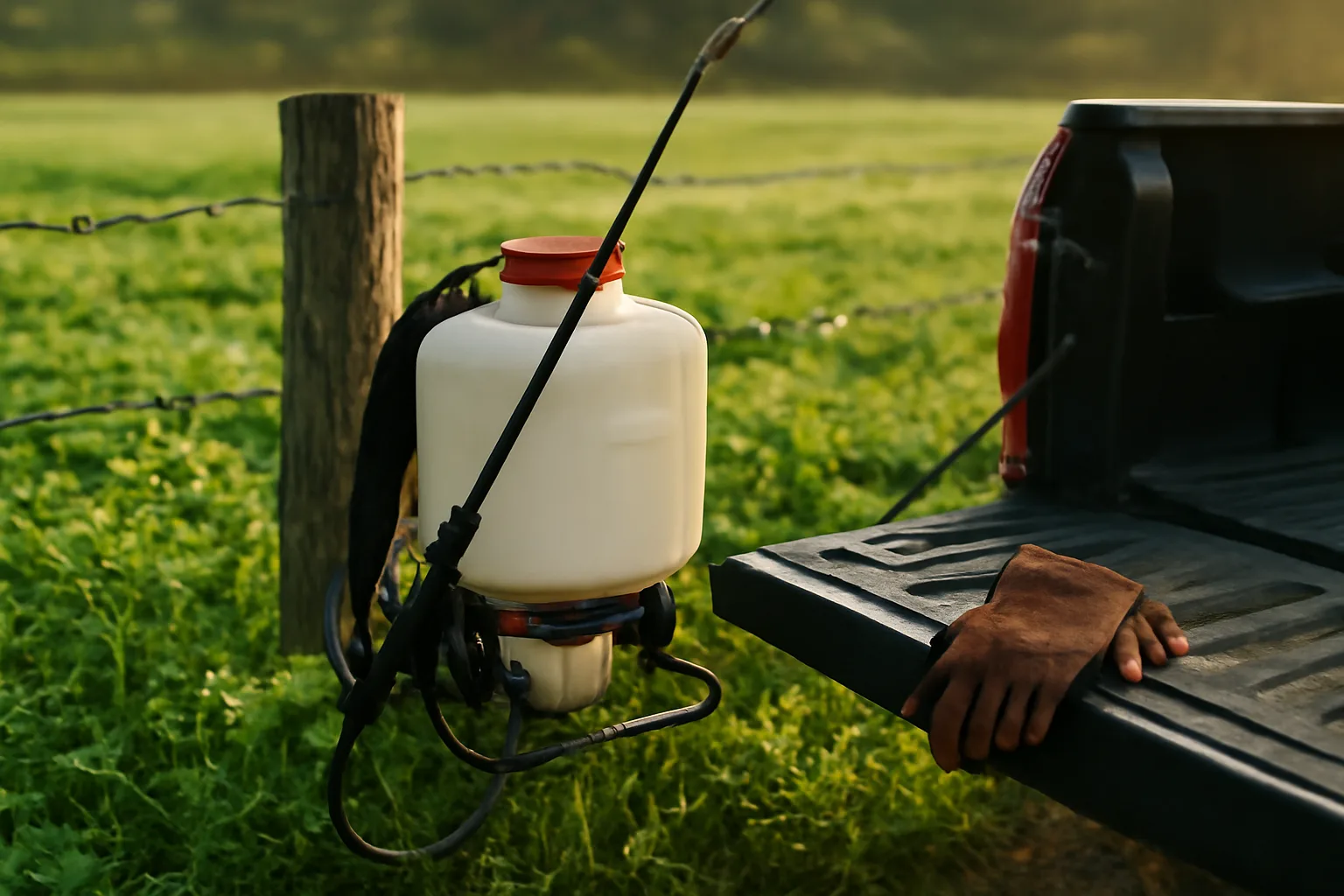
You need some kind of sprayer, ranging from a backpack unit on a quarter-acre food plot to a boom sprayer on an ATV or tractor for bigger acreage. A 15 to 25 gallon ATV sprayer with a boom is a common setup for small to mid-size plots and it doubles as your herbicide rig, which is part of why liquid fertilizer pairs so naturally with existing plot equipment. Calibration matters more with liquid than with granular, because getting your rate wrong by 20 percent either wastes expensive product or burns your crop. Extension ag engineering guides walk through basic sprayer calibration steps (measuring nozzle output over a timed distance to calculate gallons per acre), and it's worth doing before your first application each season, more than when you buy new equipment . If you're planning gear purchases around a plot program, our equipment-and-methods coverage and the deer food plots overview both cover sprayer and drill setups in more depth.
how does liquid fertilizer fit into an overall plot fertility plan?
Liquid fertilizer fits as a supplement layered on top of a base program set by your soil test, not as the whole plan. A reasonable sequence looks like: soil test first, apply lime months ahead if pH needs correcting, apply granular N-P-K at planting based on the test recommendation, then use liquid foliar feed mid-season if a deficiency shows up (yellowing, stunted growth) or as an in-furrow starter at planting to get seedlings off to a faster start. This is exactly the kind of decision where a written plan pays for itself, because guessing at rates wastes money in both directions, too little and the crop underperforms, too much and you've spent on fertilizer the soil didn't need. A $99 Custom Food Plot Plan from PlotSeason gives you species and fertility guidance built around your goals and general region, though your soil test lab remains the final word on exact lime and fertilizer rates for your specific dirt. You can start that process at /plot-plan-builder. Whatever plan you build, treat it as a general framework, not site-specific agronomy advice. Local extension agents and your soil test lab know your dirt better than any national guide can.
is liquid fertilizer worth it for a first-time food plot?
Probably not as your main fertility source. If you're planting your first plot, put your money into a soil test, lime if needed, and a straightforward granular N-P-K application matched to that test. That's the highest-leverage spend for a new plot, full stop. Save liquid fertilizer for year two or later, once you've got a baseline established and you're looking to fine-tune, foliar-feed a struggling stand, or add a starter boost through a drill. It's a good tool. It's just not the tool that fixes a plot with the wrong pH or no baseline fertility at all.
Frequently asked questions
Do deer eat sorghum in food plots?
Yes, deer eat both the grain and, to a lesser degree, the foliage of grain sorghum. It's more often used as a drought-tolerant summer forage or standing winter grain source than as a top preference crop like soybeans or clover, but deer will use it, especially once other food sources thin out in late fall and winter.
Do deer eat clover and do deer actually like it?
Yes, clover is one of the most reliably grazed food plot forages available. Deer eat it through spring, summer, and fall, it regrows after grazing pressure, and quality stands run around 20 to 25 percent crude protein during active growth, which is why extension programs and plotters alike treat it as a staple perennial choice.
When should you plant food plots for deer?
Timing depends on species and your USDA hardiness zone. Spring plots like clover and soybeans go in after your last frost date; fall plots like brassicas, oats, and cereal grains go in 60 to 90 days before your first fall frost. Check your state extension office's local frost date charts rather than using a single national date.
When should you plant oats for deer?
Oats are typically planted in late summer to early fall, roughly August through September in northern zones and September through October in southern zones, so they establish a few inches of tender growth before frost slows growth. Deer favor oats most in that early tender stage, which is why fall timing works better than spring in most regions.
When should you plant turnips for deer?
Plant turnips mid to late summer, generally late July through August in most whitetail range, since turnips need 80 to 90 days to reach full bulb size. Deer often ignore the bulbs early and start digging them up heavily after a few hard frosts convert stored starches to sugar, sweetening the roots.
What exactly is a food plot?
A food plot is a planted area, usually a quarter acre to several acres, seeded specifically to provide forage for deer or other wildlife and often positioned to give hunters a place to observe or hunt near that food source. Common plantings include clover, brassicas, cereal grains, soybeans, and corn, chosen based on soil, climate, and season.
What are deer's favorite foods overall?
Preference shifts seasonally, but browse surveys and extension research consistently rank acorns, soybeans, and clover or other legumes among the top preferred foods for whitetail deer. Acorns are especially favored in fall for their high fat content, while agricultural crops like soybeans and corn draw heavy use wherever they're available.
Do deer like honey, and is it useful as an attractant?
There's no real wildlife research supporting honey as a meaningful deer food or attractant, and it isn't part of a deer's natural diet. Deer are browsers adapted to leaves, forbs, and mast. Many states also regulate or ban baiting and feeding practices, so check your state wildlife agency's rules before using any sweet-based or scent attractant.
Should you use liquid or granular fertilizer for a food plot?
Granular fertilizer is the better choice for base fertility on most plots because it delivers nutrients cheaper per pound and broadcasts easily at scale. Liquid fertilizer works best layered on top for foliar correction, in-furrow starter application, or on very small plots where tank-mixing with herbicide saves a trip.
Can you mix liquid fertilizer with herbicide in a food plot sprayer?
Yes, this is common practice and saves a pass across the plot. Always check both product labels for tank-mix compatibility first, since some combinations reduce herbicide performance or increase crop injury risk. A quick jar test with small amounts before filling the full tank catches most compatibility problems.
How much nitrogen does a food plot actually need?
It depends on the crop and your soil test results, but common brassica and grain food plot recommendations run 40 to 60 pounds of actual nitrogen per acre. Legumes like clover and soybeans need much less added nitrogen once established, since they fix their own through root bacteria. Your soil test report gives the exact number for your plot.
Does liquid fertilizer fix soil pH problems in a food plot?
No. Liquid fertilizer supplies nutrients like nitrogen, phosphorus, and potassium, but it does nothing to correct soil pH. Only agricultural lime raises pH, and lime needs months to fully react in the soil. If your soil test shows low pH, apply lime well ahead of planting regardless of what fertilizer program you choose.
Sources
- University of Missouri Extension, Soil Testing: Extension labs recommend retesting soil every two to three years and before breaking new ground
- USDA NRCS Plant Guide, White Clover: Clover forage provides high crude protein content commonly in the 20-25 percent range during active growth
- University of Georgia Extension, Wildlife Food Plots: Oats are typically planted in late summer to early fall for deer food plots and are favored by deer in early tender growth stages
- Pennsylvania Game Commission, Feeding and Baiting Regulations: State wildlife agencies regulate or ban feeding and baiting practices, and rules vary by state
- USDA Economic Research Service, Fertilizer Use and Price: USDA tracks fertilizer pricing trends showing consistent cost-per-nutrient differences across product forms and market cycles
- Iowa State University Extension, Sprayer Calibration: Extension guides provide basic sprayer calibration steps to determine accurate gallons per acre before liquid application