Last updated 2026-07-25
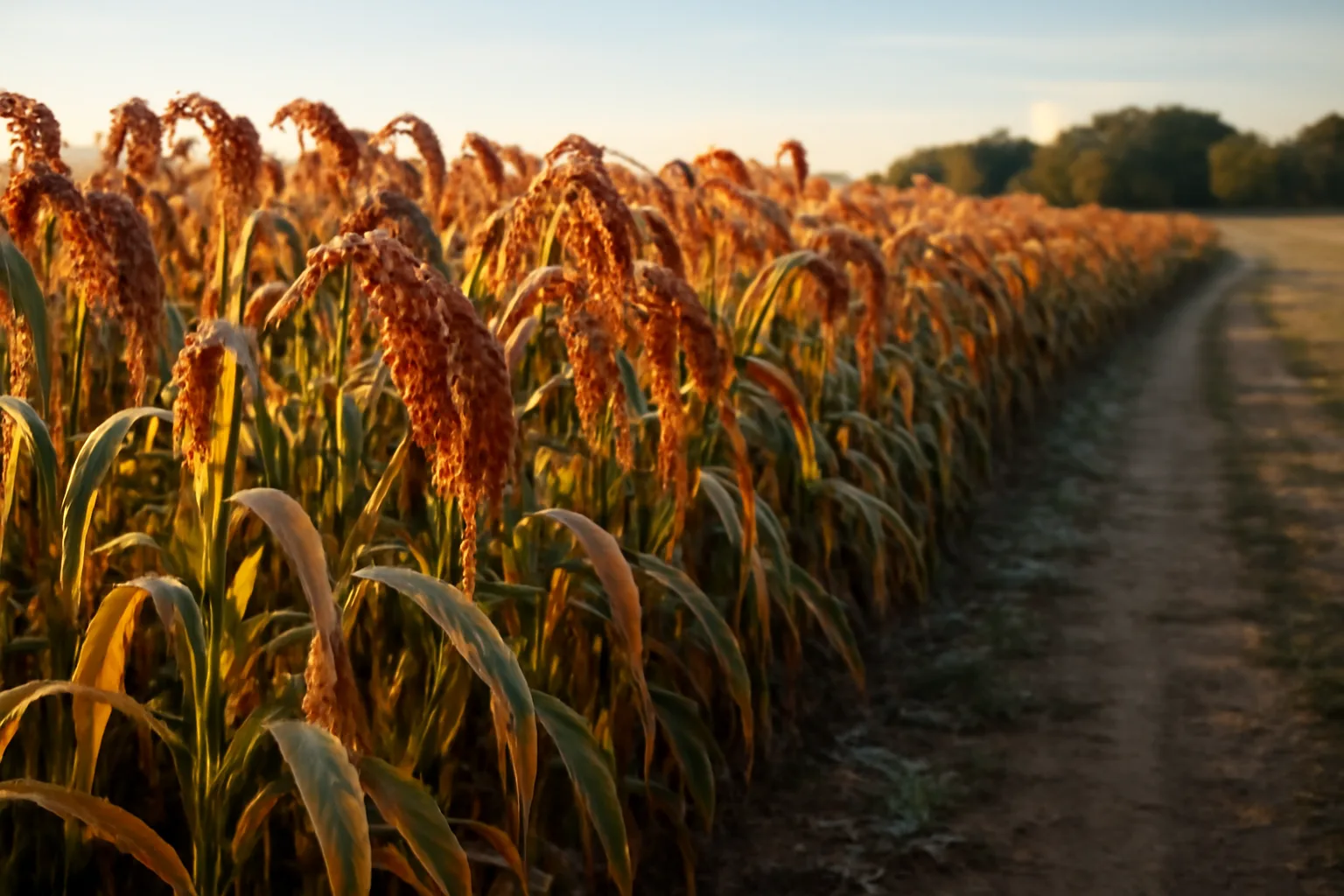
TL;DR
Milo, also called grain sorghum, is a warm-season annual that produces a starchy grain deer eat heavily in late fall and winter, especially once frost sweetens it. Plant it late spring through early summer, about the same window as corn, on soils with decent drainage. It's cheaper than corn and more drought-tolerant, but deer prefer corn and soybeans when both are available.
what is a food plot, and where does milo fit in?
A food plot is a planted area, usually on private hunting land, designed to give deer (and often turkey, rabbits, and other wildlife) a reliable food source through part or all of the year. Plots range from a quarter-acre kill plot tucked into timber to 5-acre agricultural fields planted in rotation with soybeans, corn, brassicas, or clover. Milo, which is just another name for grain sorghum (Sorghum bicolor), fits into the category of warm-season grain plots. It's planted alongside corn and soybeans as a fall and winter food source, not a spring or summer attractant. Farmers have grown milo across the Great Plains and Midwest for decades as a drought-tolerant substitute for corn, and food plotters use it the same way: as a standing grain crop that holds up through winter and feeds deer when browse gets scarce. The appeal is simple. Milo costs less per acre than corn, needs less nitrogen, and tolerates drought and poor soil better than almost any other grain crop. USDA data shows grain sorghum consistently uses less water and fertilizer input than corn per bushel produced, which is why it's popular in Kansas, Nebraska, and Texas food plot country where summers run hot and dry [1].
do deer eat sorghum (milo)?
Yes, deer eat sorghum, and grain sorghum heads become a legitimate food source once they mature and dry down in fall. Deer will nibble the plant some through summer, but the real draw is the grain head itself, which is packed with carbohydrates similar to corn. State wildlife agency and extension research generally ranks milo below corn and soybeans in deer preference when deer have a choice. A widely cited whitetail food plot preference study from Mississippi State University Extension found deer consistently chose soybeans and corn over grain sorghum in cafeteria-style trials, though sorghum still saw meaningful use, especially late in the season after frost breaks down the tannins in the seed coat [2]. That frost effect matters a lot with milo. Grain sorghum has a bitter tannin content in the seed coat that softens after repeated freezes, which is part of why milo plots often see the heaviest deer use in December and January rather than October. If you're hunting an early season and want deer already keyed in on a field, milo alone probably isn't your best bet. If you want a food source that holds up into late winter after your corn and beans are picked clean or knocked down, milo earns its spot.
when should you plant milo for deer?
| Deep South (zone 8-9) | Late April to early June | |
|---|---|---|
| Mid-South / Transition (zone 7) | Early May to mid-June | |
| Midwest / Upper South (zone 6) | Mid-May to late June | |
| Northern states (zone 4-5) | Late May to mid-June | Don't rush this one. Sorghum planted into soil under 60°F germinates unevenly and gets outcompeted by weeds fast. If you're deciding between milo and corn for a summer planting, know that milo tolerates a later planting date better than corn does, since it matures faster in many hybrids, generally 90 to 120 days to grain maturity versus 100 to 140 for corn [4]. |
Plant grain sorghum for deer the same time you'd plant field corn: after soil temperatures reach a consistent 60°F, which usually falls between mid-May and late June depending on your zone. Sorghum needs warm soil to germinate well and will sit and rot in cold, wet ground. Kansas State University Extension recommends planting grain sorghum when soil temperature at the 2-inch depth reaches 60°F and is trending upward, generally late April in southern Kansas through late May in northern regions of the state [3]. For most whitetail country stretching from the upper Midwest down through the Southeast, that translates to a planting window from mid-May through the end of June. Here's a rough breakdown by general region: | Region | Milo planting window |
when to plant food plots for deer overall
Food plot timing splits into two seasons, and milo only fills one of them. Warm-season plots (milo, corn, soybeans, cowpeas, buckwheat) go in the ground after your last frost date, typically May through June. Cool-season plots (clover, brassicas, cereal grains like oats and wheat) go in late summer to early fall, typically August through September, so they're established before deer season and can carry through winter dormancy. A practical whitetail property plan usually runs both. Spring/summer plantings of milo, beans, or corn build a standing grain crop that matures by fall and holds through winter. Late-summer plantings of clover, brassicas, and cereal grains give you green forage during hunting season itself, when deer are keying on tender growth rather than dried grain. If you're planning an entire property and not sure which crops go where, that's exactly the kind of planning problem a soil test and a written plot map solve before you ever buy seed. PlotSeason's $99 Custom Food Plot Plan walks through your specific acreage, soil test results, and region to lay out what to plant where and when, though your soil test lab remains the final word on lime and fertilizer rates for your specific dirt.
how do you plant and manage a milo plot?
Milo wants a firm, well-drained seedbed, similar to corn. Start with a soil test. Grain sorghum grows in a wide pH range (5.5 to 7.5) but performs best between 6.0 and 6.5, and it responds well to phosphorus and potassium if your test shows a deficiency [5]. Seeding rate for food plot sorghum runs lighter than commercial grain farming rates, since you're not maximizing bushels per acre for sale, you're growing a standing wildlife food source. A reasonable food plot rate is 6 to 10 pounds per acre drilled, or up to 12 pounds broadcast, at a planting depth of 1 to 1.5 inches. University of Georgia Extension notes that grain sorghum for wildlife plantings is often seeded a bit heavier than row-crop rates to create a thicker stand that better withstands deer browsing pressure while the plant is young [6]. Fertility-wise, grain sorghum needs less nitrogen than corn, generally 60 to 100 pounds of actual nitrogen per acre for food plot purposes versus 120 to 180 for corn, though your soil test and regional extension office will give you the real number for your dirt [3]. Weed control matters early. Milo seedlings compete poorly with grass and broadleaf weeds in the first 30 days, so a clean, tilled seedbed or a pre-emergent herbicide labeled for sorghum makes a real difference in stand success. One planting mistake worth flagging: don't confuse grain sorghum with sorghum-sudangrass or forage sorghum. Those are bred for hay and grazing tonnage, not grain head production, and they won't give you the standing winter grain crop you're after.
do deer like clover, and how does it compare to milo?
Yes, deer like clover, and it's arguably the most-planted food plot forage in North America because it's a perennial that comes back year after year with proper maintenance, unlike milo which you replant annually. Clover offers high protein content, generally 20 to 30 percent crude protein in vigorous stands, which matters most in spring and summer for antler growth and lactation. The comparison isn't really apples to apples. Clover is a cool-season perennial forage crop that deer graze as green leafy material through spring, summer, and fall. Milo is a warm-season annual grain crop that deer eat as dried seed heads mostly in late fall and winter. A well-planned property runs both: clover for the growing season, milo or corn for the grain season. If you only have acreage for one plot, clover generally wins for overall deer use across more months of the year, and it's cheaper to maintain long-term since you're not replanting every spring. But milo holds an edge in late winter, when clover often goes dormant or gets buried under snow in northern climates, and a standing grain field becomes one of the few remaining calorie-dense food sources on the landscape.
when to plant oats for deer
Plant oats for deer in late summer to early fall, typically August through mid-September in northern and transition zones, and September through October in the Deep South. Oats are a cool-season cereal grain that germinates fast, often within 5 to 7 days, and produces tender, high-attraction green forage that deer hit hard in the first 6 to 8 weeks after emergence. Oats generally winterkill in colder zones once temperatures drop into the teens for extended stretches, so in the upper Midwest they function as a fall attraction plot rather than a food source that carries through the entire winter. In the South, oats often survive mild winters and keep growing into late winter and early spring. Oats pair well in a mix with brassicas or cereal rye. Iowa State University Extension notes that oats are among the fastest-germinating cool-season cover crop and food plot options, making them a strong choice for a fall attraction plot planted 60 to 90 days before your local first hard frost .
when to plant turnips for deer
Plant turnips for deer in late summer, roughly 80 to 100 days before your area's first hard frost, since turnips need that full window to bulb out and reach peak palatability. For most of the whitetail range that means planting between late July and early September. Turnips are interesting because deer often ignore the leafy tops early in the season and focus on them only after a few hard frosts convert starches in the bulb and leaves to sugars, similar to the tannin-softening effect frost has on milo. This is why turnip plots often look untouched in October and get hammered in December. Purdue University Extension recommends planting brassica species like turnips 80 to 90 days ahead of the first killing frost and notes deer use of the bulbs typically increases significantly after the plant experiences several freeze events, which sweetens the tissue . If you plant turnips too early in hot weather, they can bolt or get overtaken by weeds before establishing a solid bulb.
do deer like honey, and is that relevant to food plots?
Deer don't eat honey in any meaningful way, and this isn't really a food plot question, it likely comes from confusion with 'honey hole' hunting slang or Honeysuckle, which deer do browse. Deer are herbivores adapted to digest plant fiber, browse, mast, and forbs through a four-chambered rumen system, not concentrated sugars like honey. What deer do actively seek in the honey-adjacent category is sugar-rich mast and fruit: apples, persimmons, and acorns, all of which spike in sugar and fat content in fall. If you're trying to add a sugar or attraction element to a plot, planting a soft mast tree like an apple variety, or leaving a natural persimmon stand intact, does far more than anything resembling honey ever could.
what are deer's favorite foods overall?
| Spring | Clover, alfalfa, new browse |
|---|---|
| Summer | Soybeans, cowpeas, clover |
| Early fall | Acorns (white oak), soybeans |
Deer preference shifts by season, region, and what's locally available, but repeated food plot preference trials point to a consistent short list: soybeans, corn, acorns, and clover top most rankings, with brassicas and cereal grains close behind depending on season. The Mississippi State University Extension deer preference research found soybeans and corn were consistently the most preferred plot crops in side-by-side trials, with white-tailed deer showing strong seasonal shifts, favoring soybean leaves in summer and grain (corn, soybean pods, milo) in fall and winter [2]. Acorns, when available, often out-compete every planted food plot option because of their combination of fat content and natural abundance, particularly white oak acorns which have lower tannin levels than red oak acorns and are typically consumed first . Here's a rough seasonal ranking of what tends to draw deer hardest: | Season | Top draws |
how does milo compare to corn and soybeans as a plot crop?
| Corn | High | Moderate | Highest | Fall through winter | |
|---|---|---|---|---|---|
| Soybeans | Highest (summer) | Moderate | High | Summer, then pods in fall | |
| Milo (grain sorghum) | Moderate | High | Lowest | Late fall through winter | Corn generally wins on straight deer attraction and is the classic winter standing grain crop, but it costs the most per acre in seed and fertilizer, and it's the least drought-tolerant of the three. Soybeans draw the heaviest use in summer as a forage crop before the pods dry down, but deer pressure on young bean plots can be brutal, sometimes wiping out a stand before it establishes if deer density is high. Milo splits the difference. It costs less to plant, handles a dry summer better than either corn or soybeans, and still leaves a standing grain crop for winter. The tradeoff is that deer generally prefer corn and beans when they have the option, so milo tends to work best as a supplemental winter food source, a drought-insurance crop on marginal soil, or an option when budget is tight and acreage is large. On a small property where you're trying to maximize attraction for hunting over a food plot, corn or soybeans usually make more sense. On a larger property, or on sandy, dry ground where corn struggles, milo is a legitimately good call. If you're weighing crop options for your specific acreage, the broader food plot whitetail guide breaks down full-season planning, and the deer food plot seed guide covers seed selection in more depth. |
Milo, corn, and soybeans all fill the warm-season grain plot role, but they differ enough in cost, drought tolerance, and deer preference that the choice matters. | Crop | Deer preference | Drought tolerance | Relative seed cost | Peak use window |
practical planting checklist and common mistakes
A few mistakes show up over and over with milo plots, and most are avoidable. Planting too early is the biggest one. Sorghum seed sitting in soil below 60°F just rots or germinates so slowly that weeds win the race. Wait for consistently warm soil, more than a warm week. Skipping the soil test is the second. Milo tolerates a wide pH range, but if your soil sits below 5.5, you're leaving yield on the table, and lime takes months to fully react in soil, so testing early in the season (or the fall before) gives lime time to work before planting [5]. Planting milo alone in a small plot is the third. Deer will hammer a small stand of milo before it ever produces a grain head, especially in high-density areas. Milo does better on larger acreage (2+ acres) or mixed with other grain crops so browsing pressure spreads out. Last, check your state's baiting and supplemental feeding regulations before you plant, especially if you're combining a milo plot with any additional feed or mineral stations nearby. Standing food plots are legal to hunt over in the overwhelming majority of states, but rules on feeders, bait piles, and supplemental feeding vary significantly and some states, including Michigan and portions of others with chronic wasting disease concerns, restrict feeding practices separately from food plot planting. Check your state wildlife agency's current regulations before combining strategies . For broader planning across multiple plot types on one property, the deer food plots overview and food plot seed guide are worth reading next.
Frequently asked questions
Do deer eat sorghum or milo?
Yes. Deer eat grain sorghum (milo) heads once they mature and dry in fall, and use increases after repeated frosts soften the seed coat's tannins. Research from Mississippi State University Extension shows deer generally prefer corn and soybeans over milo when given a choice, but milo still gets meaningful use, especially in late fall and winter.
Do deer like clover more than milo?
Deer generally use clover across more months of the year since it's a green, high-protein forage available spring through fall, while milo is a dried grain crop eaten mostly in late fall and winter. Both have a place: clover for growing-season nutrition, milo for standing winter calories.
When should I plant milo food plots for deer?
Plant milo when soil temperature reaches a consistent 60°F, generally mid-May through June across most of whitetail country, based on Kansas State University Extension planting guidance for grain sorghum. Southern zones can plant as early as late April; northern zones should wait until late May.
When should I plant food plots for deer in general?
Warm-season crops like milo, corn, soybeans, and cowpeas go in after your last frost, typically May through June. Cool-season crops like clover, brassicas, oats, and wheat go in late summer to early fall, typically August through September, so they establish before deer season and hunting pressure begins.
When should I plant turnips for deer?
Plant turnips 80 to 100 days before your area's first expected hard frost, which lands in late July through early September for most of the whitetail range. Purdue Extension notes deer use of turnip bulbs and leaves increases significantly after several frost events sweeten the plant.
When should I plant oats for deer?
Plant oats in late summer to early fall, roughly 60 to 90 days before your first hard frost. That's typically August through mid-September in northern zones and September through October farther south. Oats germinate fast, often within 5 to 7 days, making them a strong quick-attraction fall plot.
What is a food plot?
A food plot is a planted area on hunting land, ranging from a quarter-acre kill plot to multi-acre agricultural fields, designed to provide reliable food for deer and other wildlife. Common crops include clover, brassicas, cereal grains, soybeans, corn, and milo, chosen by season and region.
What are deer's favorite foods overall?
Preference research, including trials from Mississippi State University Extension, consistently ranks soybeans and corn as top choices among planted crops, with acorns (especially white oak) often outranking any food plot option when available. Clover is a strong spring and summer favorite; milo and brassicas draw heavier use in late fall and winter.
Do deer like honey?
No, deer don't eat honey in any real sense. As herbivores with a four-chambered rumen built for fiber, browse, and mast, deer aren't drawn to concentrated sugar sources like honey. Sugar-rich natural foods deer do seek include apples, persimmons, and acorns, especially after fall ripening.
Is milo the same thing as grain sorghum?
Yes, milo and grain sorghum are the same plant (Sorghum bicolor), just different common names for it. Milo is the term more commonly used in the southern and central Plains, while grain sorghum is the more formal agricultural term used in extension publications and seed catalogs.
How much milo seed do I need per acre for a deer plot?
A reasonable food plot seeding rate is 6 to 10 pounds per acre drilled, or up to 12 pounds broadcast, planted 1 to 1.5 inches deep. This runs a bit heavier than commercial grain-farming rates to build a thicker stand that holds up against deer browsing while plants are young.
Does milo need less fertilizer than corn?
Yes. Grain sorghum generally needs 60 to 100 pounds of actual nitrogen per acre for food plot purposes, compared to 120 to 180 pounds for corn, and it tolerates drought and poor soil better than corn. Always confirm exact rates with your soil test results, since your lab's recommendation is site-specific.
Can I hunt over a milo food plot legally?
Standing food plots are legal to hunt over in the large majority of states, since planting a crop in the ground is different from baiting or supplemental feeding in most regulatory frameworks. Rules vary by state, and some restrict feeding practices separately, especially in chronic wasting disease management zones, so check your state wildlife agency's current regulations before combining plot planting with any additional feeding.
Sources
- Kansas State University Extension, Grain Sorghum Production Handbook: Grain sorghum planting is recommended once 2-inch soil temperature reaches 60°F and is trending upward, with regional date ranges and nitrogen guidance
- USDA Natural Resources Conservation Service, Plant Guide: Grain Sorghum: Grain sorghum maturity timelines and drought tolerance characteristics
- University of Georgia Extension, Grain Sorghum Production: Grain sorghum grows across a wide pH range, performing best between 6.0 and 6.5, and responds to phosphorus and potassium per soil test
- University of Georgia Extension, Wildlife Food Plot recommendations: Food plot seeding rates for grain sorghum are often heavier than row-crop rates to withstand browsing pressure
- USDA NRCS, Plant Fact Sheet: White Clover / Red Clover: Clover forage typically provides high crude protein content in the range commonly cited for deer forage
- Iowa State University Extension and Outreach, Cover Crop Options: Oats germinate quickly, often within 5 to 7 days, and are a fast-establishing fall cover crop and food plot option