Last updated 2026-07-24
TL;DR
A micro food plot is a small planting, usually under a quarter acre, tucked into timber or a field edge to hold deer close to a stand. Clover, oats, and brassicas like turnips work best in tight spaces because they tolerate partial shade and browse pressure. Plant cool-season plots in late summer to early fall depending on your zone.
what is a food plot, and what makes one 'micro'
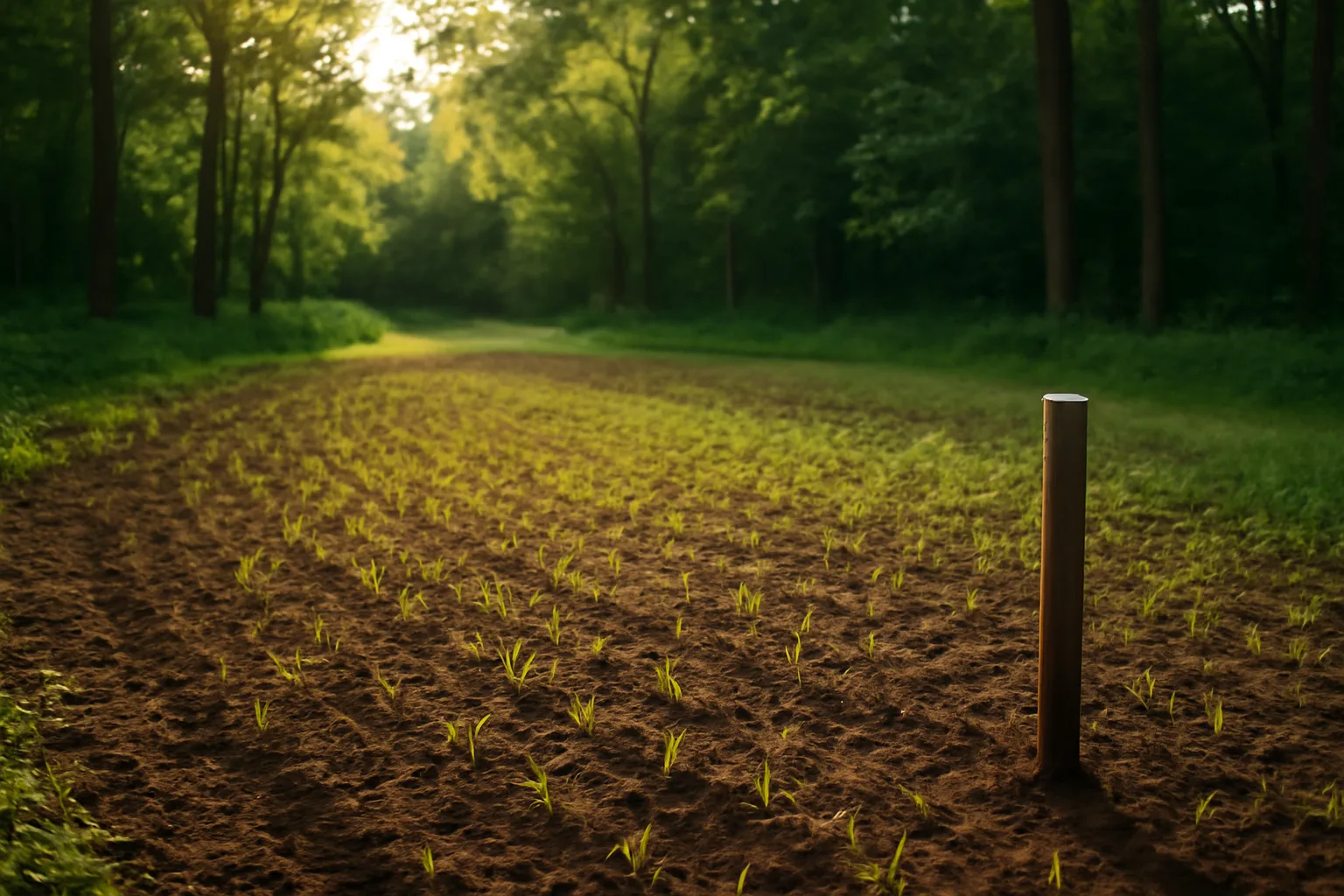
A food plot is any patch of ground planted specifically to feed deer or other wildlife, as opposed to a farm field grown for harvest and sale. Most state wildlife agencies and land-grant extensions treat food plots as a wildlife habitat management tool, not agriculture, and that distinction matters later when you're checking legal rules about baiting versus planting. A micro food plot is just a small one. There's no official acreage cutoff, but in practice, most hunters and habitat writers use the term for plots between a few hundred square feet and about a quarter acre, sometimes up to a half acre if it's long and narrow. Compare that to a standard field plot, which might run one to five acres. The appeal is simple. You don't need a tractor, you don't need to clear a big opening, and you can tuck a micro plot into a logging trail, a small timber pocket, or a kill-plot location 40 yards off your stand. The tradeoff is that small plots get hit harder per square foot. A half dozen deer can strip a quarter-acre brassica plot in a way they'd never dent a five-acre bean field. That's part of the point if your goal is to concentrate deer near a stand for an evening sit, but it means micro plots often need re-seeding or protection (electric fence exclusion cages, temporary fencing during establishment) more than big ones do. For background on how food plots fit into an overall land plan, see food plot whitetail and deer food plots.
when to plant food plots for deer
Timing depends on whether you're planting a warm-season or cool-season plot, and both depend on your local frost dates. There's no single national planting date; the right window is county-specific. Cool-season plots (clover, brassicas, cereal grains like oats or wheat) generally go in from late July through September in northern states, and from September into October farther south. The goal is to get seed in the ground 6 to 8 weeks before your first hard frost so brassicas and clover have time to establish a root system and some leaf mass before cold weather slows growth. Purdue Extension's forage and food plot guidance frames fall seeding windows around regional frost timing rather than a fixed calendar date [1]. Warm-season plots (soybeans, cowpeas, sorghum, corn) go in after your last spring frost, typically May into June depending on latitude, similar to row-crop planting windows used by USDA and state ag extensions [2]. For micro plots specifically, cool-season is usually the better call. Small plots shine as fall and winter attraction and food sources, and cool-season species like clover and brassicas tolerate the partial shade you often get in a small timber-pocket plot better than corn or soybeans do.
do deer like clover, and is it worth planting in a small plot
Yes. Clover is one of the most consistently used food plot species across whitetail range, and it's a strong pick for micro plots because it tolerates mowing, partial shade, and repeat browsing better than almost anything else you'd plant. White clover (Ladino or a similar variety) and red clover are the two most common types used. Clover is a perennial in most climates, meaning a well-established stand can produce for 3 to 5 years with proper mowing and fertility upkeep, according to University of Tennessee Extension wildlife management guidance on forage plantings [3]. That makes it a good low-maintenance choice for a small, hard-to-reach plot you don't want to till and reseed every year. The catch: clover needs decent sun. Full shade kills a clover stand fast. If your micro plot is under heavy canopy, you'll want a shade-tolerant mix or plan to open the canopy with some tree thinning first. Clover also needs correct soil pH, generally in the 6.0 to 7.0 range, to nodulate nitrogen properly, so a soil test really matters here more than with almost any other food plot species. Your soil test lab is the authority on how much lime and fertilizer your specific plot needs; don't guess.
do deer eat sorghum
Yes, deer will eat sorghum, particularly grain sorghum heads once they mature, and sorghum is also used as a standing-cover and screening crop in food plot systems, more than a food source. It's a warm-season crop, planted in late spring after soil warms, similar timing to corn. Compared to soybeans or corn, sorghum tends to see lower browse pressure early in the season and gets hit harder once the grain heads mature and other food sources thin out in fall, which is a pattern noted in several state extension forage guides on grain sorghum for wildlife plots [4]. That timing quirk makes sorghum a reasonable choice if you want standing food that holds up into late fall and winter, though for a micro plot, the tall, dense growth habit means it works better as a screening border around a smaller clover or brassica plot than as the entire planting. A quarter acre of pure sorghum won't produce much usable grain tonnage; a quarter acre of sorghum planted as a shielding strip around a small clover kill plot does real work.
when to plant oats for deer, and are they worth it in a small plot
Oats are a cool-season cereal grain, and they're one of the fastest-establishing, most reliably attractive early-fall food plot options, which makes them a strong micro-plot choice. Plant oats 6 to 8 weeks before your first expected frost, generally August in the upper Midwest and Northeast, and September into early October in the transition zone and South, following the same frost-based logic as other cool-season plantings [1]. Deer hit young oats hard the moment they emerge, sometimes within a week or two of germination, which is both the appeal and the risk. In a micro plot, that fast early browse pressure can wipe out a thin stand before it roots in. Extension guidance on cereal grain forage plots recommends a seeding rate around 100 to 120 pounds per acre for oats drilled or broadcast for wildlife plots, which scaled down to a quarter-acre micro plot works out to roughly 25 to 30 pounds. Overseeding slightly above that in a small, heavily hunted plot isn't a bad idea given how much pressure a small stand takes per square foot. Oats also winterkill in most northern climates once temperatures drop into the teens or lower for sustained periods, so in the far north they're really a fall-attraction crop, not a food source that lasts into deep winter. Farther south, oats can persist and even provide green forage into winter and early spring.
when to plant turnips for deer, and do deer actually eat them
Turnips are a brassica, planted in the same cool-season window as clover and oats, generally late July through early September depending on your zone, so they have time to bulb up before hard frost. The USDA plant hardiness zone map is the standard reference for figuring out your local frost timing and season length. Deer eat turnip leaves readily in early fall, often before they touch the bulb at all. The bulbs themselves become more palatable after a hard frost converts some of the plant's starches into sugars, which is why brassica plots often get ignored in October and then hammered in December. This late-season pattern is well documented in state wildlife agency food plot guidance, including Missouri Department of Conservation's private land habitat materials on brassica forage timing [5]. For a micro plot, turnips have one real advantage over clover: they don't need years to establish and they can be planted into a fresh, tilled small opening with no existing sod. The downside is they're an annual, meaning full replant every year, and a small plot of turnips can get grazed down to nothing well before the bulb-eating window even opens if deer density is high relative to plot size. A lot of small-plot owners plant turnips in a blend with oats or cereal rye for exactly this reason, so there's leaf forage to spread out early pressure while the bulbs finish developing.
what are deer's favorite foods, and does that change for a small plot
There's no single universal favorite; deer preference shifts by season, region, and what's naturally available. That said, a few patterns show up consistently across state agency and extension research. Soft mast (apples, persimmons) and acorns are heavily preferred when available, agricultural crops like soybeans and corn get hit hard in summer and early fall, and clover and brassicas pick up the slack in the cool season when other browse thins out. A frequently cited Pennsylvania Game Commission and Penn State deer diet study found that acorns, when present in good mast years, can make up a very large share of fall deer diets in forested habitat, sometimes displacing planted food plot use almost entirely during peak drop [6]. That's an important, honest caveat for micro plot owners: a small food plot next to a white oak flat in a heavy acorn year may see almost no deer traffic until the acorns run out, usually by mid to late November in most of the whitetail's range. For plot species specifically, clover and soybeans consistently rank as some of the most preferred planted forages in forage preference trials, with brassicas and cereal grains close behind depending on season, per multi-year forage preference work summarized by university extension wildlife programs [3]. In a micro plot, the practical answer is: plant what your specific site and soil support well, because a thriving small clover plot beats a struggling large soybean plot every time.
do deer like honey (and other odd attractant questions)
Deer don't seek out honey as a natural forage item; it's not part of their diet in the wild, and there's no research base showing deer are drawn to honey the way they are to browse, mast, or agricultural crops. This question shows up online mostly tied to homemade attractant recipes and mineral lick mixes, not actual food plot planning. Worth separating clearly: attractants and mineral supplements are a different category from food plots, and many states regulate or outright ban baiting and supplemental feeding, especially in areas with chronic wasting disease concerns. Feeding and baiting rules vary significantly by state and sometimes by county, so check your state wildlife agency's current regulations before using any bait, mineral, or attractant product, even on a planted plot [7]. A planted food plot is generally treated differently from a bait pile under most state law, but the line isn't always where you'd expect, and it changes year to year in CWD-affected zones. When in doubt, call your state agency's wildlife biologist directly; the answer only takes a phone call and the rule differences aren't worth guessing on.
how big should a micro food plot actually be
There's no fixed rule, but a useful working range for a true micro plot is 1,000 to 10,000 square feet, roughly a twentieth of an acre up to a quarter acre. Kill plots tucked close to a stand often run on the smaller end of that range, sometimes as small as a 30-by-50-foot clearing, while access-road or logging-trail plots can stretch longer and narrower. Shape matters more in a micro plot than a big field plot. Long, narrow, curved plots (sometimes called "killing plots" or "finger plots") let you position a stand at one end with shooting lanes down the length, and they disturb less canopy than a square clearing of the same square footage. A hunter clearing a plot by hand with a chainsaw and a small tiller is realistically capped around a quarter acre before the labor becomes brutal; anything bigger usually means renting or borrowing equipment. Seeding rate math gets easy once you know your square footage. An acre is 43,560 square feet, so a 2,000-square-foot plot is about 4.6% of an acre. If a species calls for 10 pounds per acre broadcast, you need roughly 0.46 pounds, call it half a pound, for that plot. Working backward like this from the per-acre rate on your seed bag is the most reliable way to avoid over- or under-seeding a small plot, since most bag rate charts assume acre-scale plantings.
what soil and sunlight does a micro plot actually need
The two biggest killers of micro plots are not enough sunlight and skipped soil testing. Both are fixable, and both are cheaper to fix before you plant than after. Most food plot species, including clover, brassicas, and cereal grains, want at least 4 to 6 hours of direct sun to perform well; full-day sun is better. If your plot site is ringed by mature timber, that often means dropping a few trees along the south side before you ever put seed in the ground. This is a bigger issue for micro plots than field plots simply because small clearings surrounded by forest edge get shaded from more directions. A soil test is the other non-negotiable. Cooperative extension soil testing programs (available through most land-grant universities) typically cost $10 to $20 per sample and tell you your current pH and nutrient levels along with specific lime and fertilizer recommendations for the crop you're planting [8]. Most food plot soils in the eastern and midwestern U.S. run acidic and need lime to hit the 6.0 to 7.0 pH range most plot species want; without it, fertilizer you apply is largely wasted because nutrients lock up in acidic soil and plants can't take them up. Your soil test lab's recommendation is the specific number to follow for your plot; a general article like this one can tell you the target range, but not your exact lime and fertilizer rate. If you want help turning a soil test and a small, awkward-shaped plot into an actual planting plan, that's exactly the gap a Custom Food Plot Plan is built to close; it's a $99 one-time plan built around your soil test results, plot size, and region. Find it at /plot-plan-builder.
cool-season vs warm-season micro plot species, side by side
| White/Ladino clover | Cool-season perennial | Late summer or early spring | Moderate | 3-5 years with upkeep [3] | |
|---|---|---|---|---|---|
| Oats | Cool-season annual | 6-8 weeks pre-frost | Low-moderate | One season, fall use | |
| Turnips/brassica blend | Cool-season annual | Late July-early Sept | Low | One season | |
| Soybeans | Warm-season annual | After last frost, May-June | Low | One season | |
| Grain sorghum | Warm-season annual | After last frost | Low | One season, standing into winter [4] | |
| Cereal rye | Cool-season annual | Fall, tolerant of late planting | Moderate | Fall through spring | For a first micro plot, a clover-plus-brassica or oats-plus-brassica blend covers the most bases: fast early cover, extended fall attraction, and some perennial base to build on next year without a full replant. You can browse specific blends built for small acreage under deer food plot seed and food plot seed. |
Here's a quick comparison of the species most commonly recommended for small plots, based on university extension forage and food plot guidance [1] [3]. | Species | Season | Typical planting window | Shade tolerance | Longevity |
equipment: what you actually need for a plot this small
A micro plot is the one place where hand tools genuinely compete with machinery. For a plot under a quarter acre, you can realistically get by with a hand tiller or a walk-behind tiller, a hand-crank broadcast spreader (the same kind used for lawn seed), a hand tamper or a piece of chain-link fence dragged behind an ATV to press seed into contact with soil, and a backpack sprayer for spot herbicide work if you're clearing existing vegetation first. An ATV or side-by-side with a small tow-behind disc or cultipacker speeds things up a lot if you have one, but it's genuinely optional at this scale, which is part of why micro plots are popular with hunters who don't own a tractor. What you can't skip regardless of scale is seed-to-soil contact; broadcasting seed onto untouched sod or hard-packed dirt and walking away is the single most common reason small plots fail. Light disturbance, even just scratching the surface with a rake or hand tiller, dramatically improves germination. For related equipment and small-plot method breakdowns, domain food plot seed and deer for food cover species selection in more depth.
protecting a small plot from getting wiped out
Small plots get browsed harder per square foot than big ones, plain and simple, because the same number of deer are working a much smaller salad bar. Temporary electric fencing, the kind sold for garden deer exclusion, is the most common fix; putting it up right after planting and pulling it once plants are 6 to 8 inches tall protects the vulnerable seedling stage without blocking the plot from its intended purpose long-term. Overseeding at a higher rate than the bag recommends is the other common workaround, essentially planting extra to offset expected early loss. Blending a fast-germinating nurse crop like oats with a slower establishing species like clover also spreads out the browse pressure timeline, since deer often hit the tender oats first and give the clover a head start.
Frequently asked questions
do deer eat sorghum?
Yes. Deer browse sorghum leaves and eat the grain heads once mature, especially in late fall when other food sources thin out. It's a warm-season crop planted after the last spring frost, and it also works well as a tall screening border around a smaller plot.
do deer eat clover?
Yes, clover is one of the most consistently used food plot forages for whitetail deer across most of their range. White and red clover varieties are the most common types planted, and both tolerate repeated browsing better than most other food plot species.
do deer like clover more than other food plot options?
Preference varies by season and region, but clover consistently ranks among the top preferred forages in university extension trials, alongside soybeans. It's especially valuable in cool seasons when natural browse is scarce, and its perennial nature makes it a strong low-maintenance micro plot choice.
when to plant food plots for deer?
Cool-season plots (clover, oats, brassicas) go in 6-8 weeks before your area's first hard frost, generally late July through September depending on latitude. Warm-season plots (soybeans, corn, sorghum) go in after your last spring frost, typically May into June. Check your county's frost dates for exact timing.
when to plant oats for deer?
Plant oats 6-8 weeks before your first expected fall frost, roughly August in the upper Midwest and Northeast, September into early October farther south. Oats germinate fast and deer often browse them within a week or two of emergence, so seedlings can take heavy early pressure in small plots.
when to plant turnips for deer?
Plant turnips in the same cool-season window as other brassicas, generally late July through early September, so bulbs have time to develop before hard frost. Deer eat the leaves early on but usually don't hit the bulbs hard until after a frost sweetens them, often in November or December.
what is a food plot?
A food plot is a patch of ground intentionally planted with forage species to feed and attract deer or other wildlife, as a wildlife habitat management practice rather than a commercial crop. Plots range from field-scale plantings of several acres down to micro plots under a quarter acre tucked into timber.
what are deer's favorite foods?
It varies by season and region, but acorns and soft mast are heavily preferred when available, agricultural crops like soybeans and corn draw heavily in summer and early fall, and clover and brassicas become preferred once cooler weather sets in and other browse declines.
do deer like honey?
No, honey isn't a natural part of a deer's diet, and there's no research showing deer seek it out. It shows up in homemade attractant recipes, but attractants are a separate category from food plots and many states restrict or ban baiting, so check your state wildlife agency's current rules before using any.
how small can a food plot be and still work?
There's no minimum, but a functional micro plot generally runs from about 1,000 square feet up to a quarter acre. Long, narrow shapes work especially well at this size because they let you set a stand at one end with shooting lanes down the length while disturbing less surrounding canopy.
what should I plant in a small, shaded food plot?
Clover and cereal grains like oats or cereal rye tolerate partial shade better than brassicas, soybeans, or corn, which all need close to full sun to produce well. If canopy is heavy, thinning a few trees on the south side of the plot before planting usually helps more than any seed choice.
do I need a soil test for a plot this small?
Yes, arguably more than for a big field plot, because a small plot gives you less margin for error. A basic cooperative extension soil test costs roughly $10-$20 and tells you the exact lime and fertilizer your specific soil needs; your test lab's recommendation is the authority to follow, not a general online rate.
is baiting deer near a food plot legal?
It depends entirely on your state, and sometimes your county, especially in areas with chronic wasting disease restrictions. A planted food plot is usually treated differently from a bait pile under state law, but rules change often, so check your state wildlife agency's current regulations before adding any bait or mineral supplement near a plot.
Sources
- Purdue University Extension, Forage and Food Plot Establishment: Fall food plot seeding windows are tied to regional frost timing rather than a single calendar date
- USDA National Agricultural Statistics Service, Crop Progress reports: Warm-season crop planting windows follow regional last-frost timing
- University of Tennessee Extension, Wildlife Food Plot guidance: Well-established clover stands can persist 3 to 5 years with proper maintenance
- University extension forage guidance on grain sorghum for wildlife plots: Sorghum sees lower early browse pressure and gets used more heavily once grain heads mature in fall
- Missouri Department of Conservation, private land food plot guidance: Brassica bulbs become more palatable to deer after a hard frost
- Pennsylvania Game Commission / Penn State deer diet research: Acorns can dominate fall deer diets in good mast years, reducing food plot use
- State wildlife agency baiting and feeding regulation pages (varies by state): Baiting and supplemental feeding rules for deer vary by state and are often restricted in CWD-affected areas
- Cooperative Extension System soil testing program information: Basic soil tests typically cost around $10 to $20 per sample through land-grant extension labs