Last updated 2026-07-25
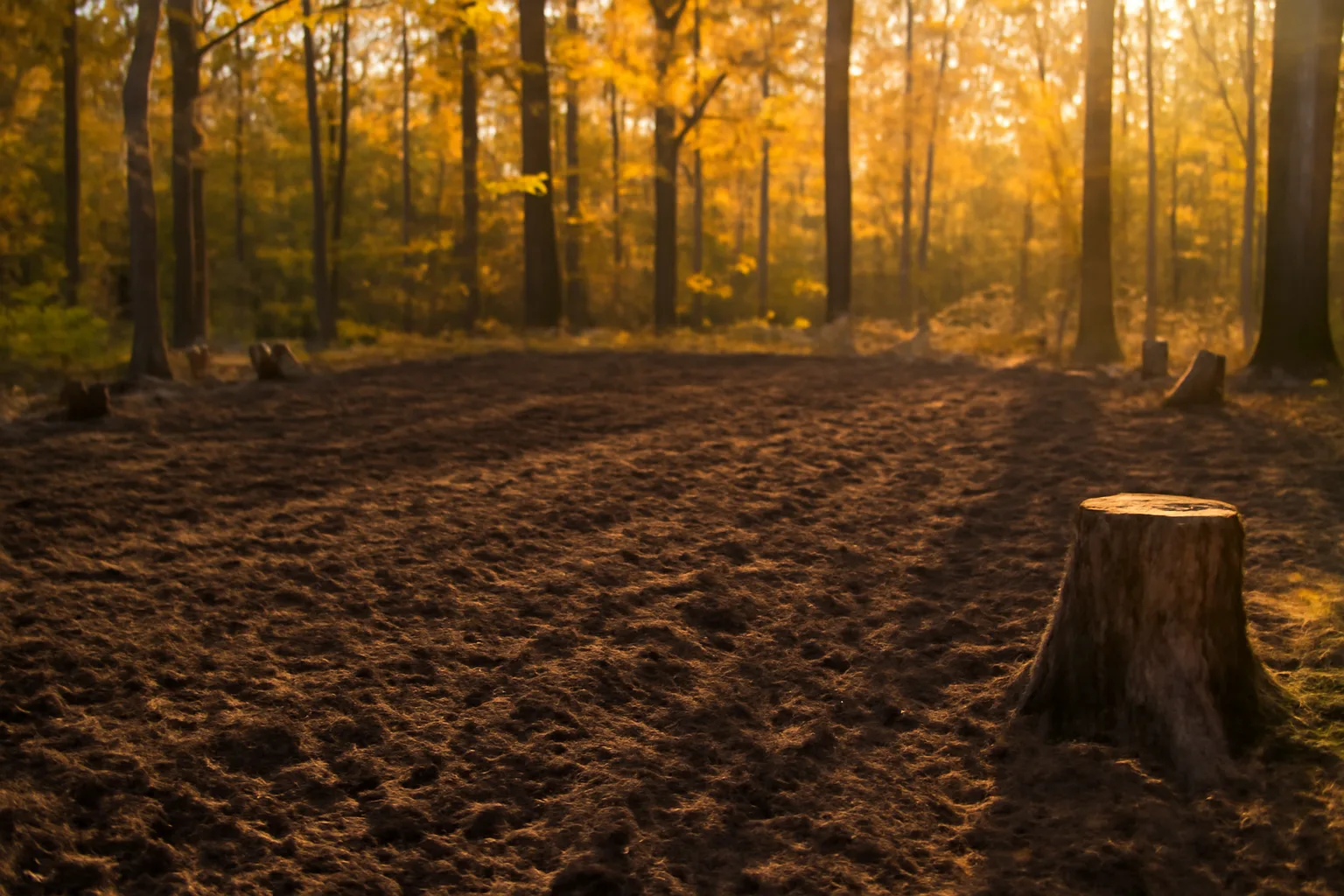
TL;DR
To make a small woods food plot, pick a half-acre to two-acre opening with some sunlight, test the soil, clear it with a chainsaw and hand tools or a small tractor, lime and fertilize per your soil test, then drill or broadcast a shade-tolerant blend like clover, oats, or brassicas 60 to 90 days before your hunting season starts.
what is a food plot, exactly
A food plot is a planted patch of forage, usually a fraction of an acre to a few acres, put in specifically to feed and attract deer or other wildlife. It's not a farm field and it's not a garden. It sits somewhere between the two: enough soil prep and seed selection to actually grow something deer want to eat, but small enough and rough enough around the edges that it fits inside timber instead of open ag ground. The USDA's National Agroforestry Center describes forest openings managed for wildlife forage as a form of habitat management that improves "food availability, cover, and edge effect" for game species [1]. That's the whole idea in one sentence. You're creating edge habitat and a food source in a place that otherwise offers deer browse, cover, and not much else. Small woods plots typically run from a quarter acre up to two acres. Anything smaller than a quarter acre gets hammered fast by deer pressure and doesn't produce enough tonnage to matter once frost hits. Anything bigger than two or three acres inside timber usually means you're fighting more trees than you need to, and you probably have room to just clear a proper field instead. For most hunters working a wooded lease or a back forty, a half acre to an acre is the sweet spot. Big enough to hold forage into December. Small enough to clear with a chainsaw, a brush hog, and a weekend. If you want a plan built around your specific acreage and region before you buy seed, that's exactly what the Custom Food Plot Plan is for. It's a one-time $99 tool, not a subscription, and it gives you a species and planting plan based on your dirt and your zone instead of a generic bag of seed.
where in the woods should you put a small food plot
Pick a spot that already gets some sun. This sounds obvious, but it's the single biggest mistake first-time plotters make. You need at least a half day of direct sunlight, and full sun is much better for anything except pure clover, which tolerates partial shade better than corn, soybeans, or brassicas. Look for natural openings first: old logging landings, a spot where a windstorm dropped a cluster of trees, a ridge saddle, or a bench along a hillside. These spots already have some light hitting the ground and usually have decent soil because water and organic matter collect there. Clearing an existing opening is a fraction of the work of cutting mature timber. A long, narrow plot (a "kill plot" shape, maybe 1/4 to 1/2 acre) tucked tight to bedding cover works well for evening or morning hunts because deer feel comfortable stepping into it right at last light. A slightly bigger, more open plot set back from bedding works better as a destination food source deer visit at all hours, since it's less pressured. Think about your access and wind before you swing a saw. If you can't get to the plot to plant, spray, and check it without blowing your entrance and exit routes, it doesn't matter how good the dirt is. Walk the property with your access trails already in your head, not after the plot is cleared.
how do you clear a small plot in timber
For a quarter acre to an acre, most guys do this with a chainsaw, a brush cutter, a small tractor or ATV with a plow/disc/harrow, and a lot of sweat equity. You don't need a bulldozer for anything under an acre in most eastern or midwestern hardwoods. Step one is dropping the canopy trees that are blocking sunlight, not necessarily every tree in the footprint. Hinge-cutting some smaller trees at the edges (cutting most of the way through the trunk so it falls but stays partially attached and alive) is a cheap way to create browse and screening cover at the same time you're opening the plot. Leave a few mast trees standing if they're producing acorns; deer will use both the mast and the plot. Stumps are the real labor sink. A stump grinder rental runs roughly $75 to $200 a day depending on your market and the machine size, and for a quarter acre with a dozen stumps that's usually money well spent versus trying to dig them by hand. If you're on a budget, you can also just cut stumps low, let them rot, and till around them for a season or two before you try to run equipment flush across the whole plot. Once the big wood is out, disc or till the soil to break up roots and duff. In small plots without tractor access, a walk-behind tiller or even a hand-pulled cultipacker and rake will get you there. It just takes longer. Don't skip breaking up the sod and duff layer. Seed-to-soil contact is what makes or breaks germination, more than almost any other single factor.
when to plant food plots for deer
| Deep South | Sept 15 - Oct 15 | April 1 - May 1 | |
|---|---|---|---|
| Mid-South / Transition | Sept 1 - Sept 30 | April 15 - May 15 | |
| Midwest / Mid-Atlantic | Aug 15 - Sept 15 | May 1 - May 31 | |
| Upper Midwest / Northeast | Aug 1 - Sept 1 | May 15 - June 10 | These are general windows, not guarantees. Your local extension office or state wildlife agency almost always publishes a more exact regional planting guide, and that's the better source to lean on for your specific county. |
Timing depends on what you're planting and your climate zone, but the short answer is: cool-season plots (clover, brassicas, oats, wheat) go in late summer to early fall, and warm-season plots (soybeans, corn, sorghum) go in spring after your last frost. Cooperative extension guidance generally recommends planting fall brassica and clover blends 60 to 90 days before your first killing frost so plants have time to establish before growth slows [2]. In much of the Midwest and Upper South, that puts brassica and clover planting windows from mid-August through mid-September. Further north, in places like the Northeast or Upper Midwest, you want to be planting by late August. Further south, you can push into late September or even October. Spring plantings for soybeans, corn, or sorghum need soil temperatures consistently above 50-55°F and the frost risk gone, which in most of the whitetail's range is late April through May. Check your local frost date data from your state extension office before you commit a spring planting date, since "last frost" varies by three or four weeks across a single state depending on elevation and latitude. Here's a rough planting calendar by region for common small-plot species: | Region | Clover/Oats/Brassica (fall) | Soybeans/Sorghum (spring) |
when to plant oats for deer
Oats are a fall-planted, cool-season cereal grain, and the ideal window is 45 to 60 days before your first frost so they get several inches of growth before cold slows them down. In most of the whitetail range that's late August through mid-September. Oats are one of the most forgiving small-plot species there is. They germinate fast, usually in under a week with decent moisture, tolerate mediocre soil better than clover, and deer hit them hard the moment they emerge because young oat shoots are high in sugar and easy to digest. The catch is that oats winterkill in colder zones. In much of the Upper Midwest and Northeast, oats die back hard after a few nights in the low 20s or teens, so they function as an early-fall to early-winter food source, not a food source that carries deer through February. In the transition zone and the South, oats can survive milder winters and keep growing into late winter, giving you a longer window of use. A lot of small-plot mixes blend oats with clover or brassicas specifically because oats provide fast tonnage and early attraction while the clover or brassica component takes over once the oats fade or winterkill.
when to plant turnips for deer
Turnips are planted in late summer, roughly 90 to 100 days before your average first hard frost, because they need that much time to bulb out and reach peak tonnage. For most of the Midwest and mid-South, that means turnip planting falls between late July and mid-August, earlier than clover or straight brassica blends. Turnips are a classic late-season food plot play. Deer often ignore the leaves and bulbs early in the fall and hammer them hard after the first hard frosts convert starches to sugars, which is why turnip plots often look untouched in October and get eaten to dirt by late December. One planning note: if your goal is a late-season food source to hunt over in December or January, plant turnips on the early side of the window rather than the late side. Underdeveloped turnip bulbs from a late planting won't have the same tonnage or sugar conversion as a plot that had a full 90-plus days to grow before frost.
do deer like clover, and do deer eat it year-round
Yes, clover is one of the most reliably attractive food plot species there is, and deer will eat it from spring green-up through fall, and sometimes through mild winters, as long as it's actively growing. White clover and red clover are both extremely common in food plot blends because they're perennial (you don't replant every year), they fix their own nitrogen, and they hold protein levels around 25 to 30% crude protein during the growing season according to forage testing summarized by university extension programs [3]. Clover's biggest advantage over annuals like brassicas or cereal grains is that a well-maintained stand can produce for three to five years off a single planting, with mowing and occasional herbicide spraying for weed control being most of your annual maintenance. That makes it one of the better cost-per-year options for a small woods plot, since you're not buying and planting seed every single fall. The tradeoff is that clover needs more sunlight than brassicas or oats to really thrive, generally at least four to six hours of direct sun, and it struggles in heavy shade or on ground that stays wet. If your small woods opening is tight and shaded, clover might be a mediocre choice compared to something more shade-tolerant. For species selection specific to your soil and canopy cover, food plot seed selection guides break down which blends handle partial shade versus which need full sun.
do deer eat sorghum
Yes, deer eat grain sorghum, both the standing seed heads and the plant itself as browse, though it's generally used more as a late-season and winter food source than a species deer hit hard the moment it's planted. Sorghum's biggest food-plot value is that the standing stalks hold their grain through snow and ice far better than corn does, which makes it a good late-winter standby in northern climates. It's a warm-season annual, planted after your last frost date alongside corn and soybeans, and it takes similar soil fertility to corn: extension guidance generally recommends soil pH in the 5.8 to 6.5 range and moderate to high nitrogen for grain sorghum production [4]. It's more drought-tolerant than corn, which makes it a reasonable choice on sandier or thinner soils where corn would struggle. In small woods plots, sorghum is usually a minor component of a bigger blend rather than the whole plot. Deer don't preferentially seek it out the way they do soybeans or acorns. And a quarter-acre or half-acre sorghum stand doesn't hold enough grain to matter much once deer pressure or turkeys start working it over.
what are deer's favorite foods, really
There's no single universal answer, because deer preference shifts by season, region, and what's locally available, but research consistently ranks a handful of foods at the top: acorns (especially white oak acorns), soybeans, clover, and other legumes. White oak acorns are generally preferred over red oak acorns because they have lower tannin content and taste less bitter, though red oak acorns matter more in years when white oak production fails, since red oaks produce more consistently year to year. Soybeans, when available as standing agriculture or a food plot, are extremely high on the preference list during the growing season because of protein content, often 30-40% crude protein in the leaf and pod stage. Clover and other legumes round out the top tier, especially in spring and summer when protein demand is highest for antler growth and lactation. In fall and winter, brassicas, cereal grains, and any remaining mast take over as the primary draw. Bottom line: there's no one "best" food plot species. The right answer depends on what season you're hunting, what's already growing wild on your property, and what your soil and sunlight can actually support. That's the whole reasoning behind building a plan around your specific dirt rather than just buying whatever bag looks good at the farm store, which is the gap the Custom Food Plot Plan tries to close for under a hundred bucks.
do deer eat honey, or anything with honey in it
Deer don't seek out honey in the wild the way they seek out mast or forage, and there's no wildlife biology literature supporting honey as a meaningful deer attractant or food source. Deer are herbivores built to digest cellulose and plant matter through a four-chambered rumen; honey is a concentrated sugar product from bees, not a natural part of a deer's diet or foraging behavior. Where this question usually comes from is commercial deer attractant products, some of which include sugar, molasses, or honey-based scent as an additive to mineral licks or spray attractants, marketed on the idea that deer are drawn to sweetness. There's very little independent research testing whether these products change deer behavior in a measurable way, and any effect is likely more about the sugar or salt content than the honey itself. More importantly, spreading feed, minerals, or attractant products is regulated or outright banned as baiting in a lot of states, especially where chronic wasting disease is a concern. Always check your state wildlife agency's baiting and feeding regulations before you put anything out that isn't a planted crop growing in the ground, since a legitimate food plot is treated very differently under most state law than scattering feed or scent products.
check your state's baiting and feeding rules before you plant or supplement
A planted food plot is legal almost everywhere in the U.S., but supplemental feeding, mineral sites, and bait piles are a completely different legal category, and the rules vary a lot state to state. Some states ban baiting for deer hunting outright, some allow it with restrictions on distance from a stand or blind, and a growing number restrict or ban feeding specifically because of chronic wasting disease management, more than fair-chase concerns. Before you assume a mineral station or feeder is fine just because your food plot is legal, check your specific state agency's current baiting and feeding regulations, because these rules change year to year as CWD zones expand. Michigan and Wisconsin, for example, both restrict or ban baiting and feeding in counties tied to CWD detections, and both states update those county lists on an ongoing basis. A quick call to your regional wildlife office beats guessing. This matters even for food plot hunters because some states classify certain plot practices, like leaving harvested grain unharvested and standing versus mowed and left on the ground, differently under baiting law. When in doubt, call your state wildlife agency's regional office directly. A five-minute phone call is a lot cheaper than a citation.
what should you plant in a shaded or marginal woods plot
If your opening only gets partial sun, four hours or less, your species list narrows fast. Brassicas and clover both struggle in heavy shade, and corn and soybeans are basically non-starters without strong sun. Oats and winter rye tolerate partial shade better than most options and still produce usable tonnage with limited light, which is why a lot of small woods plot mixes lean heavily on cereal grains. Soil matters as much as sunlight in these tight woods openings, often more. Get an actual soil test before you plant anything. Your county extension office runs soil tests for somewhere in the range of $10 to $20 in most states, and the report tells you your current pH and nutrient levels, which is the single most useful piece of information you can have before buying lime or fertilizer. Your soil test lab, not a blog article, is the real authority on how much lime and fertilizer your specific dirt needs. Most food plot species want soil pH between 6.0 and 7.0, and a lot of underperforming woods plots are underperforming purely because the soil is too acidic, often in the 4.5 to 5.5 range under mature hardwoods, and nobody limed it. Correcting pH is often the single highest-return input a food plotter can make before spending money on seed. Lime takes months to fully react in the soil, so if you can get a fall test done and lime applied a season ahead of planting, you'll see a real difference in how the plot performs. For species picks matched to shade, deer pressure, and your region, the food plot whitetail guide and deer food plot seed breakdowns go deeper into blend selection than a single article can cover.
what equipment do you actually need for a small woods plot
For anything under an acre, you don't need a full-size tractor. A lot of successful small woods plots get made with an ATV or UTV, a small disc or tiller attachment, a hand or tow-behind broadcast spreader, and a cultipacker or drag harrow to firm up seed-to-soil contact after planting. Budget-wise, a basic ATV disc or cultipacker attachment runs a few hundred dollars new, and a lot of guys find used equipment through farm auctions or Facebook Marketplace for less. If you don't want to own equipment at all, some co-ops, extension offices, or local wildlife groups have equipment-share or rental programs, though availability varies a lot by county. Hand tools still matter more than people expect in tight woods plots. A backpack sprayer for herbicide, a hand broadcast spreader for seed on plots too small or too root-choked for a spreader attachment, and basic hand tools for stump and root removal will get a quarter-acre plot from bare dirt to planted in a weekend. Don't overspend on equipment before you've even confirmed the plot will hold deer traffic worth the investment. Plenty of small, well-placed plots run for years on nothing more than a rented tiller, a hand spreader, and a soil test.
Frequently asked questions
How big should a small food plot in the woods be?
Most small woods plots run from a quarter acre up to two acres. A quarter to half acre works well as a tight kill plot near bedding, while a full acre gives you more forage tonnage and holds up better under heavy deer pressure. Anything under a quarter acre tends to get eaten down fast and stops producing usable food by mid to late fall.
Do deer eat sorghum?
Yes. Deer eat grain sorghum as both browse and standing grain, and it's especially useful late in winter because the seed heads hold up under snow and ice better than corn. It's a warm-season crop planted after your last frost, usually as part of a larger blend rather than a standalone plot.
Do deer like clover?
Yes, clover is one of the most consistently preferred food plot forages, offering 25-30% crude protein during the growing season according to extension forage data. It's a perennial, so a good stand can produce for three to five years with mowing and occasional spot spraying instead of replanting every year.
When should you plant food plots for deer?
Cool-season species like clover, oats, and brassicas generally go in late summer to early fall, 60 to 90 days before your first frost depending on the species. Warm-season species like soybeans, corn, and sorghum go in spring after your last frost date, typically late April through May depending on your region.
When should you plant oats for deer?
Plant oats 45 to 60 days before your first fall frost, which lands in late August to mid-September for most of the whitetail range. Oats germinate fast and attract deer almost immediately, but they winterkill in colder climates, so they function best as an early-fall to early-winter food source rather than a plot that lasts all winter.
When should you plant turnips for deer?
Plant turnips 90 to 100 days before your average first hard frost, generally late July to mid-August in most of the Midwest and mid-South. Turnips need that long window to fully bulb out, and deer typically don't hit them hard until after a frost converts the plant's starches to sugars, usually in late fall or early winter.
What is a food plot?
A food plot is a small planted area, usually a quarter acre to a few acres, established specifically to provide forage for deer or other wildlife. It sits between a farm field and a wild clearing: enough soil prep and seed selection to grow real forage, but sized and placed to fit inside timber, field edges, or other wildlife habitat.
Do deer like clover more than other food plot species?
Clover ranks near the top of most deer preference studies alongside soybeans and acorns, largely because of its high protein content and long growing season. That said, preference shifts seasonally: deer often favor acorns and soybeans in fall, and brassicas after a hard frost converts their starches to sugar, so no single species wins year-round.
What are deer's favorite foods overall?
Acorns, especially white oak acorns, soybeans, and clover consistently rank at the top of deer diet studies. Preference shifts with season and availability. Deer lean heavily on mast in fall when a good acorn crop exists and shift to food plots and agriculture when mast is scarce.
Do deer eat honey?
No, honey isn't a natural part of a deer's diet, and there's no wildlife research supporting it as a real attractant. Some commercial mineral or scent products include honey or molasses as an additive, but any effect likely comes from the sugar or salt content, not the honey specifically. Check state baiting rules before using any scent or feed product.
How do you clear a small food plot in heavy timber?
For a quarter acre to an acre, a chainsaw, brush cutter, and either a small tractor or ATV with a disc or tiller attachment usually gets the job done in a weekend or two. Drop canopy trees for sunlight, hinge-cut smaller trees at the edges for browse and cover, and budget for stump removal, which is usually the most labor-intensive part.
What soil pH do most food plot species need?
Most common food plot species, including clover, brassicas, and soybeans, do best in soil with a pH between 6.0 and 7.0. Woods openings under mature hardwoods often test more acidic, sometimes 4.5 to 5.5, and correcting that with lime before planting is one of the highest-return investments a food plotter can make.
Is it legal to plant a food plot for deer?
Yes, planting a food plot is legal in all US states as a form of habitat and wildlife management. What varies by state is the legality of supplemental feeding, mineral sites, and bait piles, which are regulated separately from planted crops, especially in states managing chronic wasting disease zones. Check your state wildlife agency's current rules before adding any feed or mineral supplement.
Sources
- USDA National Agroforestry Center, Working Trees for Wildlife: forest openings managed for wildlife forage improve food availability, cover, and edge effect for game species
- University of Missouri Extension, Food Plots for Deer and Turkey: fall brassica and clover blends should be planted roughly 60 to 90 days before the first killing frost
- University of Georgia Extension, Food Plots for Wildlife (Bulletin 1347): clover forage commonly tests around 25 to 30 percent crude protein during the growing season
- Kansas State University Extension, Grain Sorghum Production Handbook (C-687): grain sorghum production is generally recommended on soils with pH 5.8 to 6.5 and moderate to high nitrogen
- Michigan Department of Natural Resources, Deer Baiting and Feeding Order summary, Michigan.gov press release: Michigan has significant baiting and feeding restrictions tied to CWD management zones
- Wisconsin Legislature, Wis. Stat. § 29.338, Baiting and feeding of wild animals: Wisconsin bans baiting and feeding of deer in counties where chronic wasting disease has been detected