Last updated 2026-07-25
TL;DR
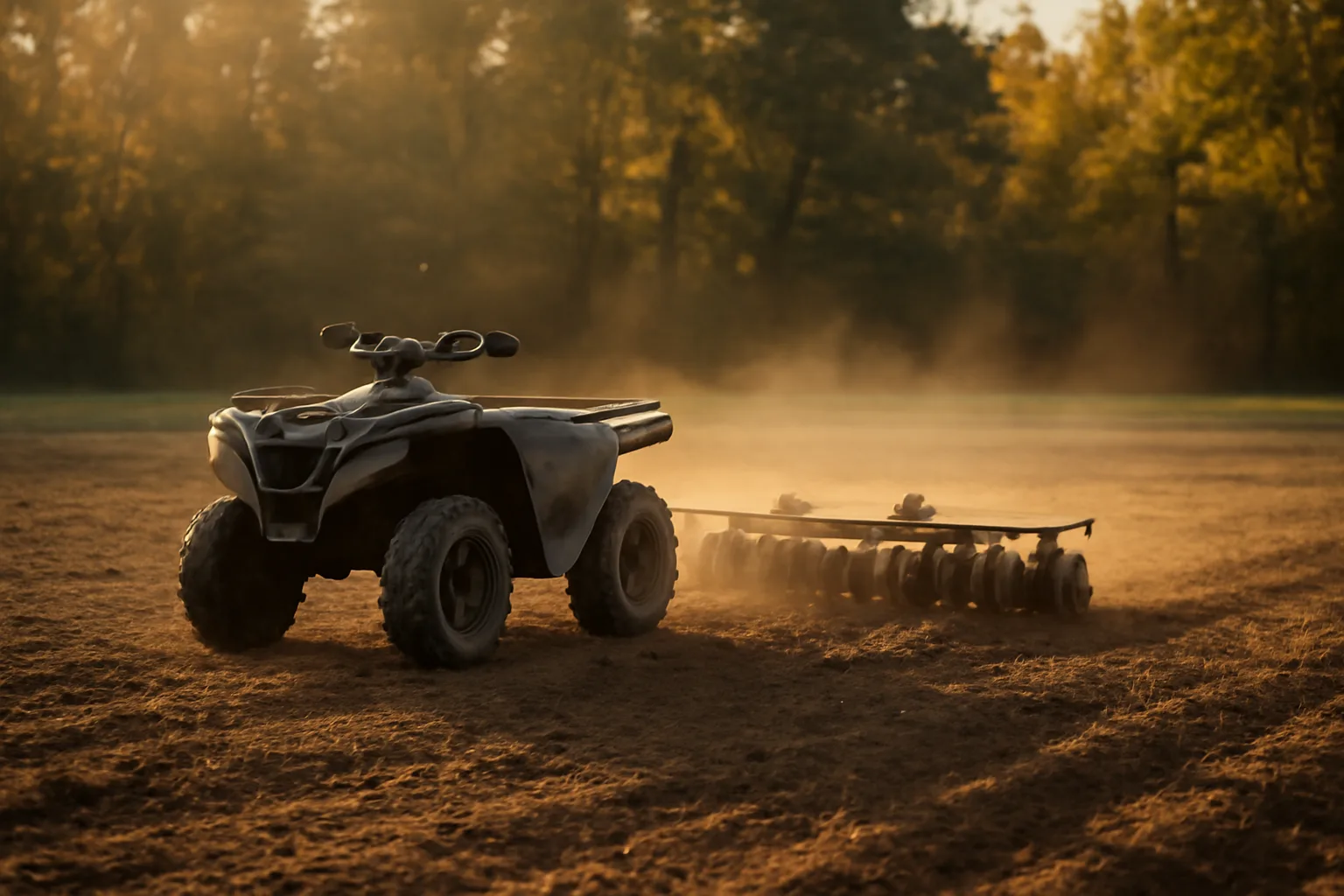
An ATV food plot planter is a small drag, disc, or box drill towed behind a four-wheeler or side-by-side to till, seed, and cover ground too tight or too small for a tractor. Good options run from a $400 chain harrow and hand spreader up to a $3,000 to $4,500 no-till drill, depending on plot size and how much soil prep you're willing to skip.
what is a food plot, and why do you need a planter at all
A food plot is a planted patch, usually somewhere between a quarter acre and a few acres, seeded with something deer will eat: clover, brassicas, cereal grains, beans, or a mix. Landowners and lease hunters plant them to concentrate deer activity, add nutrition during stress periods, and create a spot where deer show up predictably enough to watch or hunt near. The USDA NRCS treats food plots as a wildlife habitat practice under its conservation programs, describing them as planted areas intended to supplement natural forage for wildlife species [1]. You don't strictly need a planter. People have broadcast seed by hand for a century. But a planter (or a drag/disc combo doing the planter's job) gets seed-to-soil contact, which is the single biggest driver of germination success. Seed sitting on top of dead leaves and thatch mostly rots or gets eaten by birds before it sprouts. A $150 drag harrow towed behind an ATV, run before and after broadcasting, does more for your germination rate than any seed blend upgrade. For small, tucked-away plots, roughly a quarter acre to two acres, an ATV or UTV setup is usually the right scale of equipment. A tractor with a 3-point disc and drill is faster on bigger ground, but it's often physically impossible to get a tractor into the tight, wooded plots that hold deer best. That's exactly where ATV-towed gear earns its keep.
what kinds of atv food plot planters are actually out there
| Drag + broadcast | Chain harrow, handheld spreader | $150-$400 | Under 1 acre, prepped ground | |
|---|---|---|---|---|
| Disc + tow seeder | ATV disc, tow spreader, drag | $600-$1,300 | 1-3 acres, some soil work needed | |
| Integrated combo | Firminator-style disc/seed/pack | $1,500-$3,000 | 1-5 acres, one-pass efficiency | |
| No-till drill | Scaled-down no-till drill | $2,500-$4,500+ | 2-10 acres, no-till or erosion-prone ground | If you're planting one or two small plots a year and already own an ATV, tier one or two is where most people should start. You can always upgrade the seeder later. |
There isn't one category called "ATV planter." There are four rough tiers, and knowing which one fits your acreage and budget saves you from buying something you'll outgrow in a season or something way overbuilt for a half-acre kill plot. Tier one is the drag and broadcast combo: a chain-link harrow or piece of chain-link fence weighted down, towed behind the ATV to scratch up soil, followed by a handheld or ATV-mounted broadcast spreader, then dragged again to cover seed. Total cost is usually $150 to $400 if you build your own drag, cover-and lightly more if you buy a purpose-made harrow. This works fine on plots under an acre where you've already sprayed and killed the existing vegetation. Tier two is a disc harrow or tiller attachment, something like a small ATV disc (Brinly, Woods, or the ag-implement store brands) running $300 to $900, that actually turns soil rather than just scratching it. Pair it with a tow-behind seeder/spreader (another $150 to $400) and a cultipacker or drag for coverage. Tier three is an integrated ATV food plot system, brands like the Firminator, Fecon Bio Mulcher line's smaller cousins, or the Woods/Land Pride ATV-rated disc-seeder-cultipacker combos. These run $1,500 to $3,000 typically, and they do disc, seed, and pack in one pass, which matters a lot if you're planting solo and don't want three separate trips across the plot. Tier four is a no-till drill scaled for ATV/UTV pulling power, like a Genesis or Firminator no-till unit adapted down, or a Great Plains-style small drill. These run $2,500 to $4,500-plus and let you plant directly into standing residue or a sprayed-out cover crop without discing at all, which is a real advantage on erodible ground or when you're trying to keep organic matter up. | Tier | Example gear | Typical cost | Best for |
how much atv or utv do you actually need to pull a food plot planter
Most disc and drag implements sized for food plots need 15 to 25 horsepower at the drawbar to run at a reasonable pace, which most mid-size ATVs (400cc and up) and nearly all UTVs handle without strain. The heavier integrated combo units and no-till drills, especially loaded ones on wet or clay-heavy ground, are safer behind a UTV with a rated towing capacity of 1,000 to 1,500 pounds or more. Check the implement manufacturer's minimum HP and towing spec before buying. A lot of frustration with ATV planters isn't the implement, it's an underpowered machine trying to drag a disc through unbroken sod. If your ATV struggles, spraying to kill existing vegetation first (glyburning it down with glyphosate two to three weeks ahead) makes a huge difference in how easy the ground pulls.
when to plant food plots for deer
Timing splits into two windows almost everywhere in whitetail country: a spring/summer window for warm-season plots (clover, beans, chicory) and a late-summer/early-fall window for cool-season plots (brassicas, cereal grains, clover overseed). The exact dates shift by 4-6 weeks depending on your USDA plant hardiness zone and first-frost date. As a rough national pattern: spring plantings go in after your last frost date, typically April through May in zones 5-6, March in zone 7-8. Fall plantings for brassicas and cereal grains go in 60-90 days before your average first frost, so late July through early September across most of the whitetail's range, per land-grant extension planting guides used by state ag services. Your own state extension office publishes the actual frost dates and recommended windows for your county, and that's the number to use over any generic calendar, because a first-frost date in northern Minnesota and one in central Alabama can differ by two full months.
when to plant oats for deer
Plant oats for deer 6 to 8 weeks before your area's first fall frost, which lands most of the whitetail range in the late August to mid-September window. Oats are a cool-season annual grain that germinates fast, often in 5-10 days with adequate moisture, and puts on quick green growth deer hit hard in early fall. Oats winterkill in most of the northern and central U.S. once temperatures drop into the teens for sustained stretches, so they're often used as a fast-growing nurse crop mixed with brassicas or clover rather than a standalone plot meant to last all winter. In the Deep South, oats can survive milder winters and provide forage into December or January.
when to plant turnips for deer
when to plant turnips for deer
Plant turnips for deer 60 to 90 days before your first expected frost, which for most of the whitetail range means late July through late August. Turnips need that lead time to bulb out and build the tubers deer eventually dig up and eat once a hard frost sweetens the greens and roots by converting starches to sugars. Deer often ignore turnip bulbs early in the season and hammer the tops, then switch to digging the roots in December and January after repeated frosts. That delayed-interest pattern surprises a lot of first-time planters who assume the plot "isn't working" in October. Give it time; the payoff usually comes in late winter when other forage is scarce.
do deer eat sorghum
Yes, deer eat grain sorghum, both the seed heads and the young foliage, though it's typically planted more as a cover and screening crop or a supplemental grain source than a primary attractant food plot. Sorghum tolerates drought and poor soil better than corn, which is why it shows up in food plot mixes for sandy or dry ground. Deer pressure on sorghum tends to be moderate compared to soybeans or brassicas; it's not usually a first-choice food, but it holds up standing through winter and gives browsing deer a grain source when soft mast and other plots are picked clean. Several state wildlife agencies list sorghum among acceptable food plot species for wildlife habitat plantings, alongside corn, soybeans, and various clovers [2].
do deer like clover, and is it their favorite food
Yes, deer readily eat clover, and it's one of the most consistently used food plot species across the whitetail's range, largely because it regrows after grazing and stays palatable through most of the growing season. White clover varieties (Ladino, Durana) and red clover are the two most common food plot choices. Asking what deer's single "favorite food" is doesn't have one clean answer, because it shifts by region, season, and what's locally available. In late summer and fall, deer strongly prefer acorns and other hard mast when they're dropping, and multiple wildlife research summaries note that acorns can dominate a whitetail's fall diet when mast crops are good, sometimes making up over half of stomach content volume in peak mast years [3]. Soybeans and cowpeas rank near the top during the growing season for protein content, and brassicas and turnips become preferred once frost sweetens them in late fall and winter. So the honest answer is: clover is a dependable, high-use food plot staple most of the year, but acorns beat it whenever a good mast crop is on the ground, and preference rotates seasonally rather than sitting on one species.
do deer like honey
There's no real research or wildlife agency guidance suggesting whitetail deer seek out or eat honey in any meaningful dietary sense; it's not a natural or practical food plot or attractant topic, and it doesn't show up in state agency or extension forage guidance. If you're asking because of a scented deer attractant product with "honey" in the name, that's a manufactured lure scent, not a food source, and it has nothing to do with food plot planning or planting.
what should you plant in a small atv-accessible plot
For plots under two acres reachable only by ATV trail, pick species that don't demand heavy equipment to establish. Clover, oats, and brassica blends are the most forgiving for drag-and-broadcast planting because they don't need to be planted at a precise depth the way corn or soybeans do. A simple, ATV-friendly rotation a lot of small-plot owners use: spray and kill existing growth in late July, drag/disc lightly, broadcast a brassica-and-cereal-grain blend in early-to-mid August, drag again to cover, then let it run through winter. The next spring, frost-seed clover into the same plot in late winter (late February to March in much of the Midwest) by broadcasting clover seed onto frozen or thawing ground, no tillage needed at all, letting freeze-thaw cycles work the seed into the soil. For readers working from a soil test, your lab's lime and fertilizer recommendation is the actual authority on what your ground needs; a planter and a seed bag don't fix a pH of 5.0. If you want species and planting-date guidance matched to your specific zone and soil report, that's exactly what a Custom Food Plot Plan is built to do, a one-time $99 plan that turns your soil test and location into a straight planting calendar and species list, rather than a generic national chart.
what corners can you cut with atv equipment, and what wastes money
Skip the multi-thousand-dollar integrated combo if you're planting one small plot a year on ground you've already got reasonably clean. A $200 drag harrow, a $100 tow-behind broadcast spreader, and patience will get a clover or brassica plot up just fine on prepped soil. Where it's worth spending more: no-till drills earn their cost if you're planting into standing cover crop residue repeatedly, or on erosion-prone slopes where discing bare dirt causes real soil loss. Integrated disc-seed-pack combos earn their cost if you're running multiple plots and value doing it in one pass instead of three trips with three tools. Where people waste money: buying a heavy no-till drill for a single quarter-acre plot they could've drag-and-broadcast for under $300, or buying an oversized disc their ATV can't actually pull without lugging the engine. Match the tool to the acreage, not the acreage to the tool.
do you need to worry about state baiting or feeding laws when planting food plots
Food plots and baiting are legally treated as different things in most states, but the line varies, and some states regulate supplemental feeding or mineral use separately from planted forage. A food plot, an agricultural planting left standing, is legal for hunting over in the vast majority of states, while piling loose grain or minerals is what typically triggers baiting restrictions. Some states do have specific rules on the books limiting bait even near legitimately planted crops, and definitions of "bait" versus "agricultural practice" differ by state wildlife code. Check your state wildlife agency's current hunting regulations before assuming your plot setup is legal to hunt over, since rules change and vary by county in a few states as well [4].
what soil prep actually matters before you run the planter
A soil test is the step people skip that costs them the most. Extension offices and most ag labs run a basic soil test for $10 to $20 and return a pH reading plus phosphorus, potassium, and lime recommendations specific to your ground [5]. Most food plot species want soil pH between 6.0 and 7.0; clover and brassicas both struggle hard below pH 5.5, and no amount of good planting technique fixes that. Lime takes months to fully adjust soil pH, so if your test comes back needing 2 tons per acre of lime, get it down as early in the season as you can, ideally the fall before spring planting or immediately after a plot is cleared. Fertilizer, by contrast, acts fast and should go down close to planting time based on what your soil test actually recommends, not a generic "triple 19" guess. Once lime and fertilizer are handled, the ATV planter's job is straightforward: break the surface enough for seed contact, distribute seed at the right rate, and cover it lightly. Most small-seeded species like clover and brassicas want to be barely covered, a quarter inch or less, while oats and cereal grains want closer to an inch.
Frequently asked questions
What is a food plot?
A food plot is a planted area, usually a quarter acre to a few acres, seeded with forage like clover, brassicas, or grains to supplement natural deer food and concentrate activity in a spot you can hunt or observe. The USDA NRCS classifies food plots as a wildlife habitat conservation practice [1].
Do deer eat sorghum?
Yes. Deer eat both the grain heads and young foliage of sorghum, though it's usually planted as a secondary or cover-and-grain crop rather than a top attractant. It handles drought and poor soil better than corn, making it a common choice on sandy ground.
Do deer like clover?
Yes, clover is one of the most reliably used food plot forages across whitetail range because it regrows fast after grazing and stays palatable most of the growing season. White clover (Ladino, Durana) and red clover are the two most common varieties planted for deer.
When should you plant food plots for deer?
Spring/summer plots (clover, beans) go in after your last frost date. Fall plots (brassicas, cereal grains) go in 60-90 days before your first frost, roughly late July through early September across most whitetail range. Check your state extension office for exact local frost dates [2][3].
When should you plant oats for deer?
Plant oats 6 to 8 weeks before your area's average first frost date, typically late August to mid-September across most of the whitetail range. Oats germinate fast, often in 5 to 10 days, and usually winterkill once sustained temperatures drop into the teens.
When should you plant turnips for deer?
Plant turnips 60 to 90 days before first frost, generally late July through late August. Deer often ignore the bulbs early and browse the tops first, then switch to digging roots in December and January once repeated frosts sweeten the plant.
What are deer's favorite foods?
There's no single answer; preference shifts by season and region. Acorns and other hard mast can dominate fall diets in good mast years, sometimes over half of stomach content by volume [5]. Soybeans and clover rank high during the growing season, and brassicas take over after frost sweetens them.
Do deer like honey?
No real evidence or wildlife agency guidance supports deer seeking out honey as food. It isn't part of natural forage guidance or food plot planning; if you're thinking of a scented attractant product, that's a manufactured lure, not an actual food source.
What size ATV do I need to pull a food plot planter?
Most drags and discs sized for food plots need 15-25 horsepower at the drawbar, which most 400cc-plus ATVs and virtually all UTVs handle. Heavier integrated combos or loaded no-till drills are safer behind a UTV rated for 1,000 to 1,500 pounds of towing capacity or more.
How much does an ATV food plot planter cost?
Costs range widely by tier: a chain drag and broadcast spreader runs $150-$400, a disc plus tow seeder runs $600-$1,300, integrated disc-seed-pack combos run $1,500-$3,000, and scaled-down no-till drills run $2,500-$4,500 or more.
Do I need a no-till drill for a small food plot?
Usually not. No-till drills earn their cost mainly on erosion-prone ground or when planting repeatedly into standing cover crop residue. For a single small plot under two acres on already-prepped ground, a drag harrow and tow-behind spreader do the job for a fraction of the price.
Is it legal to hunt over a food plot?
In most states, a standing planted crop is treated differently from bait and is legal to hunt over, while piled grain or minerals often triggers baiting restrictions. Rules vary by state and sometimes by county, so check your state wildlife agency's current regulations before assuming your setup is legal [6].
What's the best soil pH for a deer food plot?
Most food plot species, including clover and brassicas, do best between pH 6.0 and 7.0, and both struggle hard below pH 5.5. A basic soil test from your local extension office or an ag lab, usually $10-$20, will tell you exactly how much lime your ground needs [7].
Sources
- USDA NRCS, Wildlife Habitat Conservation Practices: Food plots are treated as a wildlife habitat conservation practice under USDA programs
- Mississippi State University Extension, Food Plot Establishment: Sorghum is listed among acceptable food plot species alongside corn and clover
- Mississippi State University Extension, Deer Nutrition and Food Habits: Acorns can dominate whitetail fall diets in good mast years
- State wildlife agency hunting regulations (varies by state): Baiting and feeding rules differ from food plot regulations and vary by state
- University of Missouri Extension, Soil Testing: Basic soil tests cost roughly $10-$20 and return pH and fertility recommendations