Last updated 2026-07-25
TL;DR
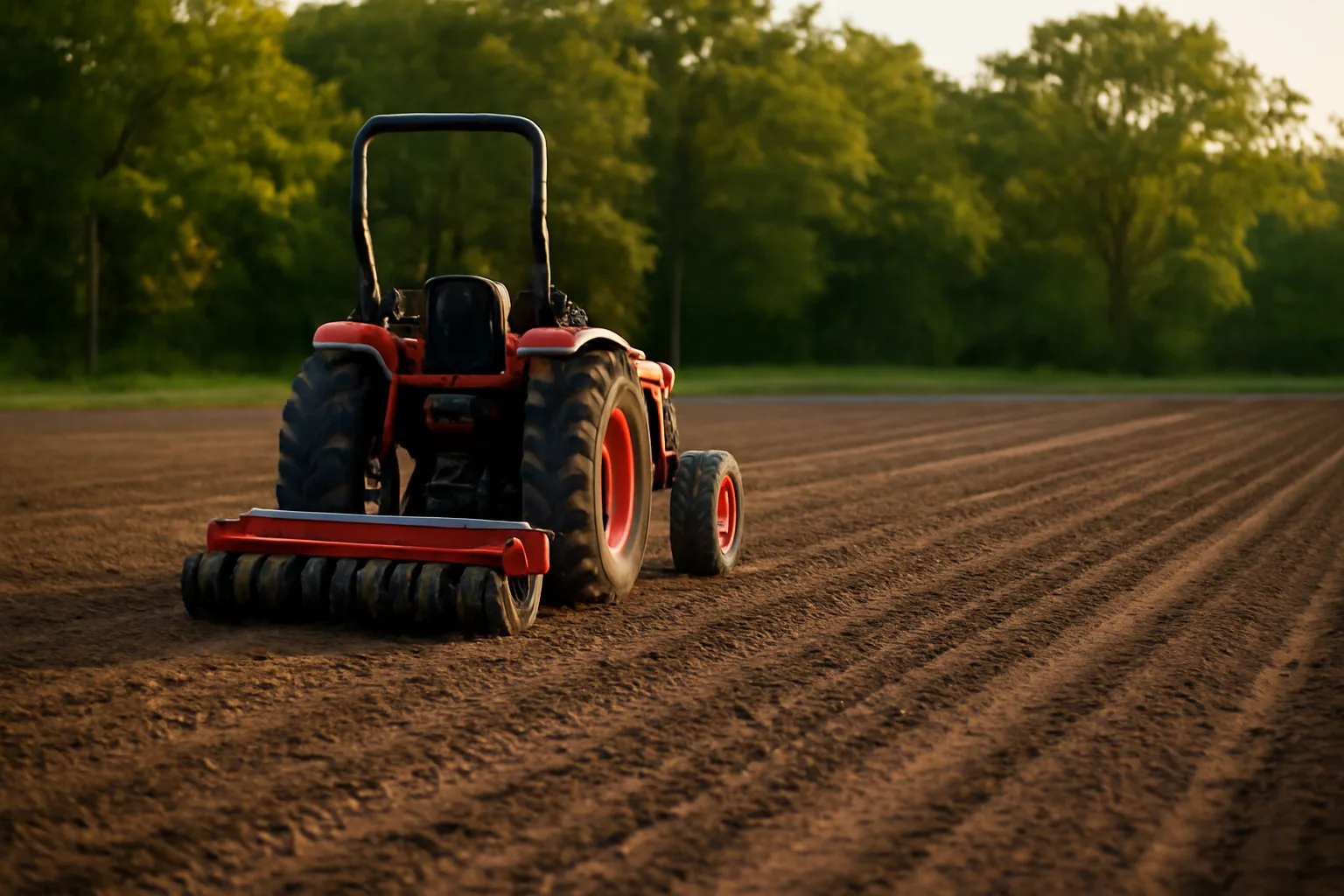
A food plot planter for tractor use is a drill or broadcast/cultipacker unit pulled behind a compact or subcompact tractor to place seed at the right depth and spacing. Pick one based on plot size, seed type (small clover seed vs. corn or soybeans), and whether your soil needs disturbance first. Most hunters planting under 10 acres do fine with a broadcast seeder and cultipacker rather than a true drill.
What is a food plot planter for a tractor, exactly?
A food plot planter is any implement pulled behind a tractor that puts seed into the ground at a usable depth and spacing, then (ideally) presses soil against the seed for contact. That's a broad category. On one end you've got a $150 hand-crank broadcast spreader that isn't a tractor implement at all. On the other end you've got a John Deere or Great Plains no-till grain drill that costs more than a used truck. For most hunters planting food plots on leased or owned ground, the practical answer sits in the middle: a broadcast seeder mounted on a three-point hitch or ATV rack, paired with a cultipacker or drag harrow, or a compact no-till drill sized for 25 to 45 horsepower tractors. These units run seed depth from a light surface dusting (clover, brassicas) down to 1 to 2 inches for beans, corn, or peas. The core job of the machine is simple: match seed-to-soil contact and depth to what the species needs. Get that wrong and germination suffers no matter how good your soil test or fertility program is. If you want help figuring out what to actually plant before you shop for equipment, a food plot whitetail plan is a good place to start. What is a food plot in the first place? It's a planted opening on hunting ground, usually somewhere between a quarter acre and several acres, seeded with forage or grain that attracts and holds deer. It's not the same as baiting; a food plot is an agricultural planting, while baiting typically means piling loose feed like corn on the ground, which many states regulate or ban outright. Rules vary by state, so check your wildlife agency's regulations on baiting and supplemental feeding before you plant near a stand or set out any loose feed.
What types of tractor planters actually work for food plots?
| Broadcast spreader | Clover, chicory, brassicas | $100-$600 | None (surface only) |
|---|---|---|---|
| Cultipacker seeder | Small seed, food plot mixes | $1,500-$4,000 | Light, via packing wheel |
| No-till drill | Grain, beans, sod-planting | $3,000-$12,000+ | Precise, adjustable |
| Row planter | Corn, soybeans in rows | $2,000-$15,000+ | Precise, per-seed |
There are four broad categories worth knowing, and they are not interchangeable. Broadcast seeders (spin or drop) throw seed across the surface. They're cheap, often $100 to $600 for a three-point or pull-behind unit, and they work great for small-seeded species like clover, chicory, and brassicas that only need a light soil cover of 1/4 inch or less. They do a poor job with larger seed like corn, soybeans, or peas because seed sits on top and dries out or gets eaten. Cultipackers and drags follow the broadcast pass to press seed into loosened soil. A cultipacker seeder combo (seed box mounted over a roller) is close to the best value for small-seed food plots; Brillion and similar units run $1,500 to $4,000 new, less used. No-till drills cut a slot, drop seed at a set depth, and close the slot in one pass, without tilling first. These are the right tool if you're planting into standing residue or sod you don't want to disturb, or if you're doing larger-seeded crops like soybeans, corn, or milo at scale. Compact no-till drills sized for food plot tractors (25 to 60 hp) run $3,000 to $12,000 used, more new. Conventional planters (row planters) are built for row-spaced crops like corn and soybeans at wider spacing than a drill. Overkill for a 2-acre plot, but if you're already running row crop ground and want to add a plot in a corner, a planter you already own may be the cheapest option. | Planter type | Best for | Typical cost (new) | Seed depth control |
How do I pick the right planter for my tractor and plot size?
Match horsepower, plot size, and seed type before you spend money. A 25-horsepower subcompact tractor can pull a small cultipacker seeder or a light drill fine on an acre or two. It will struggle to pull a heavy multi-row grain drill through clay soil or across a big plot. If most of your plots are under 2 acres and you're mainly growing clover, brassicas, or a fall blend, skip the drill entirely. A disc or tiller to prep soil, a broadcast spreader, and a cultipacker (or even a drag made from chain-link fence and cinder blocks, which plenty of hunters use successfully) gets you a good stand for a fraction of the cost of a drill. If you're planting soybeans, corn, or want to no-till into existing sod to save a prep pass, a compact no-till drill earns its keep. It also lets you plant into standing cover crops or turned-under clover without a full tillage pass, which cuts erosion risk and saves fuel. Before buying anything, run your numbers against your actual acreage. A 1-acre plot doesn't justify a $9,000 drill sitting in a shed 50 weeks a year. Renting or borrowing, or going in on a shared unit with other lease holders, is common and reasonable.
When should I plant food plots for deer?
Timing splits into two windows: spring/summer plots and fall plots, and the right one depends on species and your USDA hardiness zone. Spring plantings (clover, chicory, soybeans, cowpeas) generally go in after your last frost date, when soil temps are consistently above 50°F. Fall plantings (brassicas, cereal grains, winter peas) are timed backward from your first frost, so the plants mature or peak in palatability right as hunting season opens. As a rule of thumb, fall food plot seeding across most of the whitetail's range works best 60 to 90 days before the average first frost date for the region, which lets brassicas and grains reach a usable growth stage before a hard freeze. In the northern half of the whitetail's range that often means planting in August; in the Deep South it can stretch into October. Check your specific frost dates and zone before setting a date. Your state's land-grant extension office publishes county-level frost date tables, and those are more useful than a generic national calendar. For species-specific mixes and staggered planting windows across zones, deer food plot seed breaks down what goes in each season.
When should I plant oats for deer?
Oats are a fall-planted cereal grain in most whitetail range, going in 4 to 8 weeks before your first expected frost so plants establish before growth slows. That typically lands in late August through September across the Midwest and Northeast, and September into early October in the mid-South. Oats germinate fast, often within 5 to 10 days in warm soil, and deer hit young oat shoots hard, which makes them a good early-season draw crop. They're also cheap relative to brassica seed. The tradeoff: oats winterkill in most of the whitetail's northern range once temperatures drop into the mid-teens or lower for sustained periods, so they won't carry a plot through a hard winter the way brassicas or cereal rye can. If you want late-winter tonnage, pair oats with a hardier companion like winter rye or add turnips to the mix.
When should I plant turnips for deer?
Turnips go in the ground 60 to 90 days before your first fall frost, which for most of the whitetail range means a planting window from late July through early September. Turnips need that lead time to bulb out and build sugar content; they're famous for getting sweeter and more palatable after a couple of frosts convert starches to sugars. Seeding depth matters here more than people think: turnip seed is tiny and should go no deeper than 1/4 to 1/2 inch, which is exactly why a light broadcast pass followed by a cultipacker (not a deep drill pass) is the right tool. Plant too deep and germination drops hard. Deer often ignore turnip tops and bulbs early in the season, then switch hard to them in late fall and winter once other food sources thin out and frost sweetens the plant. That late-season pattern is one reason turnips are a staple in cold-climate late-season blends.
Do deer eat sorghum?
Yes, deer eat sorghum, both the grain heads and the young leaves, though it's typically planted as a summer/fall grain crop or as cover and a food source combined, not a primary deer attractant on its own. Grain sorghum (milo) produces seed heads deer and turkey both feed on into fall and winter, and it's drought-tolerant, which makes it a reasonable choice on sandy or low-rainfall ground where corn struggles. Sorghum is usually drilled or planted with a row planter at roughly 1 to 1.5 inches deep, similar to corn, and needs warm soil (above 60°F) to germinate reliably, so it's a late-spring planting in most of the whitetail range. It's not typically the top pick for a dedicated small hunting plot. Most hunters get more consistent draw from beans, brassicas, or a clover-based perennial mix. Sorghum shines more as a standing grain/cover combo on larger acreage.
Do deer eat clover, and do deer like clover?
Yes. Clover is one of the most reliable food plot species for whitetail across nearly every region they inhabit, and it's consistently rated as a preferred forage in wildlife habitat research. White clover and red clover both work; white clover (including ladino types) tends to hold up better to heavy grazing pressure because of its lower, creeping growth habit. Clover's appeal comes down to protein and digestibility. Extension forage data commonly puts whole-plant crude protein in vegetative white clover in the 25 to 30% range under good management, which is well above most grass forages and most fall grain crops at a similar growth stage. That protein content matters most in spring and summer, when does are lactating and bucks are growing antlers. Clover is also a perennial (technically a short-lived perennial, 3 to 5 years for most stands with good management), so it's one of the few food plot species that doesn't need replanting every year, just mowing, weed control, and a fertility top-up based on your soil test. For a broader rundown of species options and how clover stacks up against annuals, see deer food plot seed.
What are deer's favorite foods, and do deer like honey?
There's no single scientifically ranked "favorite food" list for whitetail because preference shifts hard by season, region, and what's available. That said, research on deer diets and food plot performance consistently points to a handful of standouts: acorns (especially white oak family acorns, which are lower in tannins and more palatable than red oak acorns), soybeans, clover, and other legumes rank near the top across most studies and regional wildlife agency reports. Agricultural crops like corn and soybeans also draw heavily where available, which is part of why plots near farm country can be harder to pull deer onto than plots in more remote timber. As for honey: there's no wildlife research or extension source documenting honey as a natural whitetail food or attractant, and it's not something deer encounter or forage on in the wild. Some commercial deer attractant sprays and mineral products include sweeteners, molasses, or honey-derived scent compounds as an additive, but that's a manufactured product claim, not a documented dietary preference. If a state's baiting rules apply to scent or mineral products in your area, that's worth checking before use, since some states classify sweetened attractants as bait.
Do I need to till before planting, or can I no-till?
It depends on your soil, your equipment, and what's already growing there. If you're planting into bare, worked ground or an old ag field, a disc or tiller pass followed by broadcast seeding and cultipacking works fine and is cheaper than a drill. If you're planting into existing sod, a cover crop, or ground you don't want to erode, no-till drilling is the better call. It also saves a pass (and fuel and time), which matters if you're managing multiple plots on limited weekends. The tradeoff is upfront cost: a decent compact no-till drill costs several thousand dollars more than a broadcast-and-cultipack setup. Soil compaction and drainage also factor in here, and that's something your soil test won't fully tell you. If you're planting on heavy clay that stays wet, some tillage to break up compaction usually helps more than a no-till pass would. Your state land-grant extension soil lab is the right authority on what your specific ground needs; a soil test tells you pH and nutrient levels, but a field visit or local extension agent can flag structural issues a lab report won't catch.
How much should I budget for a food plot planter setup?
For most hunters planting 1 to 5 acres across a season, a realistic total equipment budget (not counting the tractor itself) runs $500 to $3,000: a broadcast spreader ($100-$400), a cultipacker or drag ($400-$2,000 used), and basic tillage if you don't already own a disc or tiller attachment. Step up to a no-till drill setup and you're looking at $3,000 to $12,000+ depending on width and condition (used units cost meaningfully less than new). That's a real investment, and it only pencils out if you're planting more than a few acres per year, planting grain crops regularly, or splitting the cost with other landowners or lease partners. Don't let equipment cost drive species selection. A $150 broadcast spreader and a cultipacker plant clover, brassicas, and cereal grains just as well as a $10,000 drill; the drill's advantage is precision and speed on larger acreage or with big seed like corn and beans. If you're not sure which species fit your ground, soil, and shooting setup, a Custom Food Plot Plan ($99, one-time) gives you a species and planting-window recommendation based on your zone and soil test before you spend money on equipment you might not need.
What planting depth and seed rate should I run for common food plot species?
| White/red clover | Surface to 1/4 in | 6-10 lbs/acre | Early spring or late summer | |
|---|---|---|---|---|
| Brassicas (turnip, radish) | 1/4-1/2 in | 4-6 lbs/acre | 60-90 days before first frost | |
| Oats | 1-1.5 in | 2-3 bushels/acre | 4-8 weeks before first frost | |
| Soybeans (forage type) | 1-1.5 in | 50-70 lbs/acre | Late spring, after frost risk | |
| Cereal rye | 1-1.5 in | 90-120 lbs/acre | Late summer to early fall | |
| Grain sorghum | 1-1.5 in | 8-10 lbs/acre | Late spring, soil above 60°F | These rates are broadcast rates; drilled rates run lower (often 20-30% less seed) because drill placement is more efficient than broadcasting. If you're building out a mix rather than a single species, food plot seed covers blend options in more depth. |
Getting depth wrong is the single most common reason food plots fail to establish, more common than fertility mistakes. Here's a general reference table; always check the seed tag for the specific variety and blend you're planting, since rates and depths vary by supplier. | Species | Seeding depth | Typical rate (broadcast) | Best planting window |
What's the difference between planting for deer and just feeding them?
A food plot is a planted, growing crop. Feeding (bait piles, corn feeders, mineral licks in some states) is placing loose feed or supplement on the ground without planting anything. States regulate these very differently, and the line matters if you hunt over or near a plot. Food plots are almost universally legal to hunt over because they're considered a normal agricultural practice, similar to hunting over a standing crop field. Baiting rules vary widely by state: some states allow baiting with restrictions on quantity and distance from a stand, others ban it outright, and some allow it only outside hunting season. Michigan's baiting and feeding order, for example, restricts volume and placement and has changed over time in response to chronic wasting disease concerns; the state's rule states that "a person shall not use bait or feed to hunt, take, or attempt to take game in the Lower Peninsula" outside specific exceptions defined in the order (Michigan Wildlife Conservation Order 5.001). Always check your state wildlife agency's current regulations before setting out any supplemental feed, mineral, or attractant near where you hunt. If your plan is to plant grain or brassica plots specifically to hold deer through the season, that's the standard, legal approach nearly everywhere. Problems come up when hunters supplement a plot with loose corn or mineral products without checking whether that crosses into regulated baiting in their state.
Frequently asked questions
Do deer eat sorghum?
Yes. Deer eat both the grain heads and young leaves of grain sorghum (milo), and it's a reasonable late-season food source in drought-prone areas. It's less commonly used as a dedicated hunting-plot species than beans, clover, or brassicas, and works better paired with other crops or as standing cover.
Do deer eat clover?
Yes, and clover is one of the most consistently used food plot species across whitetail range. White and red clover both work well; white clover holds up better under heavy grazing. Extension forage data shows vegetative white clover can run 25-30% crude protein, well above most grasses and grain crops at similar growth stages.
When should I plant food plots for deer?
Timing depends on species and your region's frost dates. Spring plots (clover, soybeans) go in after your last frost when soil hits 50°F consistently. Fall plots (brassicas, oats, cereal grains) are typically seeded 60-90 days before your area's first fall frost. Check your state land-grant extension's county frost date tables for exact windows.
Do deer like clover?
Yes, clover is a preferred forage for whitetail in most regions, valued for its high protein content, especially during spring green-up and summer when does are lactating and bucks are growing antlers. It's also a perennial, so an established stand can produce for 3-5 years with mowing, weed control, and fertility maintenance rather than annual replanting.
When should I plant oats for deer?
Plant oats 4-8 weeks before your area's first expected frost, typically late August through September in the Midwest and Northeast, and into early October in the mid-South. Oats germinate fast and draw deer early, but they winterkill in most northern climates, so pair them with rye or brassicas for late-winter forage.
When should I plant turnips for deer?
Plant turnips 60-90 days before your first fall frost, generally late July through early September across most of whitetail range. Seed shallow, 1/4 to 1/2 inch, and expect deer to key in on turnips more heavily in late fall and winter after frost sweetens the bulbs and tops.
What is a food plot?
A food plot is a planted opening on hunting ground seeded with forage or grain, ranging from a quarter acre to several acres, meant to attract and hold deer through better nutrition and habitat structure. It's distinct from baiting, which involves placing loose feed rather than planting a growing crop.
What are deer's favorite foods?
There's no single ranked list, since preference shifts by season and region, but research and wildlife agency reports consistently rank white oak acorns, soybeans, and clover and other legumes near the top of whitetail diet preference across most of their range. Availability matters as much as preference; deer near row-crop farmland often key on corn and beans first.
Do deer like honey?
There's no wildlife research documenting honey as a natural whitetail food; deer don't forage on honey in the wild. Some commercial attractant products use honey or molasses as a scent or sweetener additive, but that's a manufactured product claim, not a documented dietary preference, and sweetened attractants can count as bait under some state rules.
Do I need a no-till drill, or can I get by with a broadcast spreader?
Most plots under 2-3 acres planting clover, brassicas, or a fall blend do fine with a broadcast spreader and a cultipacker or drag, at a fraction of a drill's cost. A no-till drill earns its cost if you're planting larger-seeded crops like corn or beans, working larger acreage, or drilling into sod without tilling first.
How deep should I plant clover and brassica seed with a tractor implement?
Both are small seeds and should go no deeper than 1/4 inch, ideally just pressed into the surface with a cultipacker rather than buried by a drill or disc. Planting these species too deep is one of the most common causes of poor food plot germination.
What tractor horsepower do I need to pull a food plot planter?
A 25-horsepower subcompact tractor handles a broadcast seeder and cultipacker fine on plots up to a few acres. Heavier no-till drills or work in dense clay soil generally call for 35-60+ horsepower, especially if you're pulling a wider drill or working larger fields in one pass.
Is it legal to hunt over a food plot?
Generally yes; planted food plots are treated as normal agricultural practice and are legal to hunt over in nearly every state. Baiting with loose feed is a separate, more restricted category that varies by state, so check your state wildlife agency's current regulations before adding any supplemental feed or attractant near a plot or stand.
Sources
- Michigan Wildlife Conservation Order, Order Amendment No. 5 of 2023, Section 5.001 (Baiting and Feeding): Baiting and supplemental feeding rules for deer vary by state and are separately regulated from food plot planting
- USDA NRCS, Plant Materials Technical Note: Cover Crop Seeding Rates and Planting Depths: Drilling seed at controlled depth improves stand establishment over broadcasting, especially for grain crops
- Mississippi State University Extension, Establishing Wildlife Food Plots (Publication 2111): Seeding equipment is one of the larger fixed costs relative to per-acre inputs like lime and fertilizer in small wildlife plantings
- University of Georgia Extension, Brassica Forages for Deer and Other Wildlife (Bulletin 1445): Turnips and other brassicas increase in palatability to deer after frost converts starches to sugars
- USDA Forest Service, Southern Research Station, General Technical Report SE-46, Wildlife and Southern Forests: White oak family acorns are lower in tannins and more palatable to deer than red oak acorns