Last updated 2026-07-24
TL;DR
A food plot planter is any tool used to prepare ground and plant seed, from a hand-crank spreader to a tractor-pulled no-till drill. The right choice depends on plot size, soil type, and whether you're planting clover, brassicas, or grain. Most hunters with under 5 acres do fine with an ATV disc, cultipacker, and broadcast spreader.
what is a food plot, and what does a planter actually do
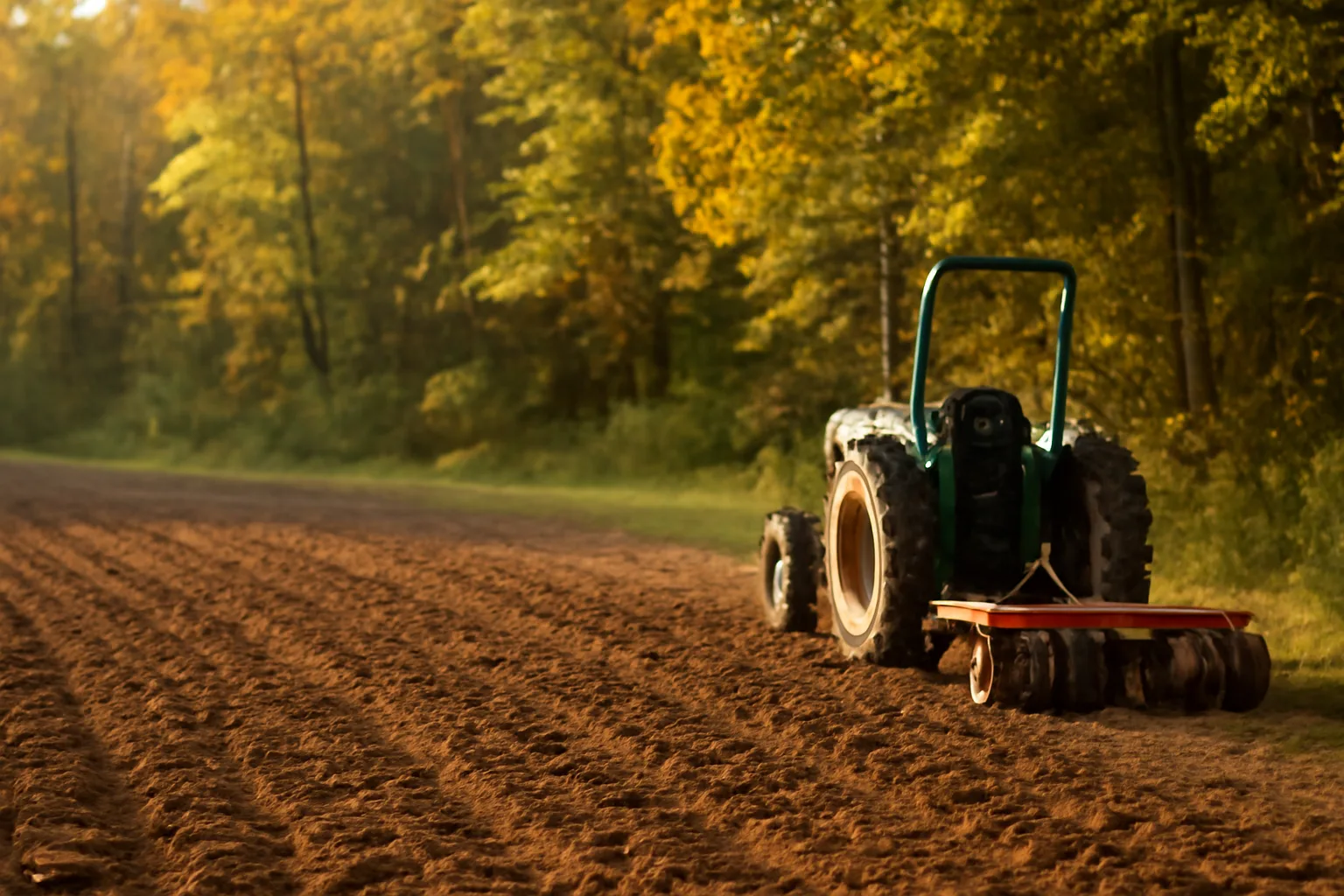
A food plot is a planted area on hunting land meant to feed and hold deer, usually somewhere between a quarter acre and several acres. Landowners plant them for a mix of reasons: better deer nutrition, easier bow shots, and a reason to build a stand where deer already want to be. USDA's Natural Resources Conservation Service treats wildlife habitat plantings as a recognized conservation practice on working land, aimed at establishing food for wildlife on ground otherwise used for agriculture or forestry [1]. A "food plot planter" isn't one specific machine. It's shorthand for whatever gear gets seed into the ground and covered at the right depth. That could be a $40 hand-crank broadcast spreader. It could be a drag harrow behind a four-wheeler. Or it could be a tractor-mounted no-till drill that costs more than a used truck. The job is the same regardless of price: kill or suppress existing vegetation, get decent seed-to-soil contact, and cover the seed to the right depth for that species. Depth matters more than most people think. Clover and brassica seed is tiny and needs to sit at 1/4 inch or shallower, basically just pressed into the surface. Larger seeds like soybeans or corn need 1 to 1.5 inches of soil over them. A planter that can't vary depth by species is going to shortchange something you plant. That's the single biggest reason cheap broadcast-and-pray setups underperform: they can't discriminate between a seed that needs to be barely covered and one that needs real depth.
when to plant food plots for deer
| Zone 3-4 (northern MN, WI, ME) | late May to mid-June | early August | |
|---|---|---|---|
| Zone 5-6 (IA, IL, OH, PA) | early May to early June | mid-August to mid-September | |
| Zone 7-8 (TN, AR, VA, NC) | mid-April to mid-May | mid-September to mid-October | These are general starting points, not guarantees. Soil temperature and rainfall matter as much as the calendar date. If you want a plan built around your actual coordinates and soil test, that's exactly what a food plot whitetail plan should account for. |
Timing depends on your zone and what you're planting, but as a rule, cool-season plots (clover, brassicas, oats, wheat) go in during late summer to early fall, and warm-season plots (soybeans, corn, sorghum) go in late spring after frost danger passes. Cooperative extension offices in your state or the nearest land-grant university publish frost date data specific to your county, and that's a better source than any generic planting chart. Spring plots (April through June in most of the whitetail range) are usually annual grain or legume mixes meant to carry deer through summer stress and antler or fawn development. Fall plots (August through October depending on latitude) are timed so the plot matures right as hunting season opens and stays attractive through the late season. A rough framework, but check your local extension calendar before locking anything in: | Zone (USDA plant hardiness) | Spring planting window | Fall planting window |
when to plant oats for deer
Oats go in the ground in late summer for a fall plot, typically 60 to 90 days before your first hard frost, so deer can hit them tender and green right as bow season opens. In the upper Midwest that's often mid-August. In the mid-South it can stretch into September. Oats are one of the most forgiving food plot grains. They germinate fast, tolerate so-so soil, and deer hit them hard as soon as they emerge because the young shoots are high in sugar and easy to digest. The tradeoff is that oats die back once temperatures drop into the teens for a stretch, so in far northern zones they're really a fall-only, short-window plant rather than a winter food source. Pairing oats with a brassica or a cereal rye extends the plot's usefulness once the oats die out, since rye stays green under snow in a lot of areas.
when to plant turnips for deer
Turnips need roughly 80 to 90 days from planting to bulb maturity, so back-calculate from your first expected hard frost and plant in July or August depending on your zone. Plant too late and you get leafy tops but no real bulb development, which cuts the plot's late-season value in half. Turnips are a classic late-season plant specifically because deer often ignore the bulbs early on and then switch hard once a few frosts sweeten the starches into sugars. That's not myth, it's basic plant physiology: cold triggers starch-to-sugar conversion in brassica roots and tubers. If your goal is a December or January food source, turnips (and other brassicas like radishes and rape) are one of the better tools, but only if you got them in the ground with enough of a runway before frost.
do deer eat clover, and do deer like it
Yes, deer eat clover readily and it's one of the most consistently used food plot forage across whitetail range. State and university extension food plot guides list clover among the top perennial forage choices because of its protein content, often 20 to 30 percent crude protein in vegetative growth, and its long growing season compared to annuals. Clover's appeal comes down to a few practical things. It's a perennial, so one planting can produce forage for 3 to 5 years with proper mowing and fertility maintenance, unlike annual grains you replant every year. It also regrows after grazing, which matters on properties with heavy deer density where an annual plot can get hammered to bare dirt in two weeks. White clover varieties (ladino types especially) tend to hold up best under heavy browse pressure. The catch: clover needs decent soil pH, generally 6.0 to 6.5, and it's slow to establish. A first-year clover plot often looks thin and gets outcompeted by weeds if you don't manage it. That's where a soil test actually pays off, because clover's biggest failure mode isn't deer preference, it's soil chemistry. If your test comes back at pH 5.2, no amount of good seed fixes that without lime, and your local extension soil lab is the authority on how much lime and what blend of fertilizer to apply, not a bag label.
do deer eat sorghum, and does it belong in a food plot
Deer do eat sorghum, both the grain heads and the young forage growth, but it's usually planted as a screening or standing-grain crop rather than a primary attractant plot. Grain sorghum (milo) tolerates drought and poor soil better than corn, which is why some hunters in the southern Plains and drought-prone areas use it as a substitute grain crop. Where sorghum earns its keep is height and cover. A tall sorghum block can screen a plot or trail from road noise or neighboring land, and deer will use it for both food and bedding cover once it matures. It's not usually anyone's first-choice attractant crop compared to soybeans or corn, but as a dual-purpose screening and late-season grain source, it has a real role, especially on properties without much natural cover.
what are deer's favorite foods, according to research
Deer are opportunistic browsers, and their actual diet shifts by season, region, and what's available, but agricultural soybeans, acorns, and clover consistently rank at the top of forage preference studies. Regional deer food habit research, including work summarized by Mississippi State University Extension, shows acorns can make up a large share of fall diet by volume in years with a good mast crop, since deer prioritize high-fat, high-carb food ahead of winter [2]. In food plot context specifically, soybeans and clover tend to top preference trials because of protein content and palatability during the growing season, while corn and brassicas gain preference in late fall and winter when energy and sugar content matter more than protein. No single "favorite" food exists across all seasons; deer preference is really a moving target driven by nutritional need, not a fixed favorite food. This is worth internalizing before buying seed: a plot built entirely around one species assumes deer want the same thing in September that they want in January, and that's rarely true. Multi-species plots or a rotation of plots (one clover perennial, one brassica/grain annual) matches deer nutritional needs across more of the year than a single monoculture does. If you're picking deer food plot seed, think in terms of what season you're targeting, more than what looked good on the bag.
do deer like honey, and does it belong in food plot strategy
There's no real evidence deer seek out honey in the wild or that it works as an attractant, and it's not part of any standard food plot or mineral supplement recommended by wildlife agencies. Deer are herbivores built around a rumen designed for plant fiber fermentation, not the simple sugars in honey, and nothing in state agency deer nutrition guidance mentions honey as a forage or attractant component. This question shows up online mostly from confusion with commercial deer attractant products that use sweet or fermented scents, not because deer actually forage on honey in the wild. If you're chasing sugar-driven attraction, standing brassicas post-frost or a molasses-based mineral lick (where legal) has actual field data behind it. Honey doesn't.
what size planter do you actually need for your plot
| Hand-crank broadcast spreader | $30-$80 | under 1/2 acre, small clover/brassica plots | no seed depth control, needs a cultipacker or drag pass after | |
|---|---|---|---|---|
| ATV/UTV tow-behind spreader + drag harrow | $300-$900 | 1/2 to 3 acres | still limited depth control on larger seed | |
| ATV disc + cultipacker combo | $600-$2,000 | 1 to 5 acres, better seedbed prep | slower than a tractor, more passes needed | |
| Tractor 3-point disc/cultipacker | $1,500-$5,000 | 3 to 15 acres | needs a tractor with adequate PTO/hydraulics | |
| No-till drill (tractor-mounted) | $6,000-$20,000+ | 5+ acres, minimal tillage, better in erosion-prone soil | high upfront cost, often shared or rented among hunters | A lot of experienced plotters actually run a hybrid: broadcast the small seed (clover, brassica) and drag or cultipack it in, but use a drill or planter unit for row-spaced seed like corn or soybeans that needs precise depth and spacing. There's no single best machine, just the right tool for that species and that acreage. |
Match your equipment to your acreage and your tractor's horsepower, not the other way around. A quarter-acre to one-acre plot is easily handled with an ATV/UTV and a drag harrow or disc, plus a hand or tow-behind broadcast spreader. Once you're pushing 3 to 5 acres or more, a tractor with a 3-point disc, cultipacker, and a seed drill starts paying for itself in time saved. Here's a rough breakdown of what's realistic at different budget and acreage levels: | Setup | Typical cost | Best for | Limitation |
no-till vs conventional tillage: which planting method actually works better
No-till planting into existing sod or a killed cover crop reduces erosion and preserves soil moisture and organic matter, while conventional tillage (disc and cultipack) gives faster, more even germination on compacted or weedy ground but costs more in soil disturbance and erosion risk. USDA NRCS soil health guidance identifies minimizing soil disturbance as one of the core soil health management principles, since tillage speeds organic matter loss and exposes soil to erosion, especially on sloped ground [3]. For food plots specifically, no-till makes the most sense on perennial clover renovation (overseeding into existing thin clover) and on erosion-prone hillside plots where you don't want bare dirt exposed to a hard rain. Conventional tillage still wins on new ground breaking sod for the first time, or on plots with heavy weed pressure that need a mechanical reset. Most weekend food plotters use a blend: till the first year to break ground and get a clean seedbed, then shift toward no-till drilling or overseeding in following years to maintain what's established. That's cheaper in labor and better for soil health long term, consistent with NRCS soil health guidance [3].
soil testing before you plant: why it matters more than the planter
A $15 soil test tells you more about your plot's success odds than a $15,000 drill does. Cooperative extension soil labs, run through land-grant universities in every state under the federal Cooperative Extension System established by the Smith-Lever Act of 1914, analyze pH, phosphorus, potassium, and organic matter, and return specific lime and fertilizer recommendations based on what you're planting [4]. Most native deer-country soil runs acidic, often in the 5.0 to 5.8 pH range, and clover and brassicas both want something closer to 6.0-6.5 to really produce. Lime takes months to fully react in soil, so testing in late winter or early spring for a fall plot (or even the prior fall for a spring plot) gives lime time to adjust pH before planting. Your soil test lab is the authority here, not a seed bag's generic fertilizer suggestion. Every property is different, and blanket recommendations printed on packaging can't account for your specific pH, phosphorus, or potassium levels. If you want a plan that pulls your test results, your zone, and your acreage into one specific planting schedule, that's the exact gap a $99 Custom Food Plot Plan is built to fill, species picks, seeding rates, and a calendar matched to your dirt, not a generic chart.
legal considerations: baiting and feeding rules vary by state
Food plots are generally legal everywhere and treated differently from baiting under most state regulations, but the line between "food plot" and "bait pile" varies, and some states restrict hunting over plots planted or maintained in certain ways close to a hunting date. Check your state wildlife agency's regulations before assuming a practice is legal; rules differ meaningfully state to state and even by wildlife management unit in some cases. A standing food plot is almost universally treated differently than a pile of corn or a mineral block. Some states have restricted baiting and feeding of deer in part due to chronic wasting disease and bovine tuberculosis concerns, with exceptions and specifics that have shifted over time as disease surveillance changes. The Michigan DNR, for example, maintains statewide baiting and feeding restrictions tied to disease management, and the specifics of what counts as bait versus a standing crop matter a lot [5]. Don't assume last year's rule still applies this season. Your state agency's hunting regulations page is the only source that matters here, not a forum post or a seed company's blog.
putting it together: a basic first-year planting plan
Start with a soil test in late winter, pick one fall plot species you can execute well (clover or an oat/brassica blend are the most forgiving), and size your equipment to your actual acreage rather than buying for the plot you hope to have in five years. Get lime down as early as your test recommends, since it needs lead time to change pH. Then plant on the calendar window for your zone, not a date you saw on a forum. A single well-executed acre beats three acres planted late into bad soil with the wrong seed depth.
Frequently asked questions
Do deer eat sorghum?
Yes, deer eat both the grain heads and young forage growth of sorghum, though it's usually planted for drought tolerance and screening cover rather than as a top attractant crop. It holds up better than corn in poor or dry soil, which makes it a practical secondary grain choice in some regions.
Do deer eat clover?
Yes, clover is one of the most reliably eaten food plot forages across whitetail range, valued for its 20 to 30 percent crude protein content during active growth. It's a perennial that can produce for 3 to 5 years, but it needs soil pH around 6.0 to 6.5 to really perform.
When should I plant food plots for deer?
Cool-season plots (clover, oats, brassicas) go in late summer to early fall, generally 60 to 90 days before your first hard frost. Warm-season plots (soybeans, corn) go in late spring after your last frost date. Exact windows depend heavily on your USDA hardiness zone and local extension frost data.
Do deer like clover more than other food plot options?
Deer show strong, consistent preference for clover during the growing season because of its high protein content and tender regrowth after grazing. Preference shifts seasonally though; deer favor brassicas and corn more in late fall and winter when energy needs change, so clover isn't a year-round favorite over everything else.
When should I plant oats for deer?
Plant oats 60 to 90 days before your area's first hard frost, so roughly mid-August in the upper Midwest and into September in the mid-South. Oats germinate fast and deer hit the tender shoots almost immediately, but the plant dies back hard once sustained freezing temperatures hit.
When should I plant turnips for deer food plots?
Plant turnips in July or August, counting back 80 to 90 days from your expected first hard frost, since that's how long bulb development takes. Planting too late gives you leafy tops but underdeveloped bulbs, cutting into the plot's late-season value when deer typically key in on turnips most.
What is a food plot?
A food plot is a planted area on hunting land, usually a quarter acre to several acres, established to provide supplemental forage for deer and other wildlife. USDA NRCS treats wildlife habitat plantings like this as a recognized conservation practice, distinct from row-crop agriculture, aimed at improving nutrition and hunting opportunity on the property.
What are deer's favorite foods?
There's no single favorite; deer preference shifts by season and region. Acorns, soybeans, and clover consistently rank near the top in food habit studies, with acorns making up a large share of fall diet by volume in good mast years. Preference tracks nutritional need, not a fixed food.
Do deer like honey?
No solid evidence supports deer seeking out honey, and it's not part of any standard wildlife agency food plot or nutrition guidance. Deer are fiber-fermenting herbivores, not built to forage on simple sugars like honey, and the idea likely comes from confusion with sweet-scented commercial deer attractant products.
What's the cheapest way to plant a food plot without a tractor?
An ATV or UTV with a tow-behind disc or drag harrow, plus a broadcast spreader, handles plots up to a few acres for $300 to $900 total. Add a cultipacker for better seed-to-soil contact on small seed like clover, which usually runs another $200 to $500 used.
How big should my first food plot be?
A quarter acre to one acre is a realistic, manageable first plot for most hunters, especially with hand or ATV-based equipment. It's enough size to attract and hold deer without demanding equipment or labor beyond what a weekend landowner can reasonably keep up with year to year.
Do I need a soil test before planting a food plot?
Yes, strongly recommended. A soil test (usually $10-$20 through your state's land-grant university extension lab) tells you exact pH and nutrient levels, which determines how much lime and fertilizer you actually need. Skipping it means guessing, and most native soil in deer country runs too acidic for clover and brassicas without adjustment.
Are food plots legal everywhere, or does baiting law affect them?
Food plots are legal in nearly every state and treated differently from baiting, but rules on hunting over plots, timing, and mineral stations vary by state and can change due to chronic wasting disease management. Always check your state wildlife agency's current regulations before hunting a plot, since local rules can differ from what neighboring states allow.
Sources
- USDA NRCS, Conservation Practice Standard 645, Upland Wildlife Habitat Management: food plots are a recognized wildlife habitat conservation practice for establishing food for wildlife on land otherwise in agriculture or forestry
- Mississippi State University Extension, Deer Notes: acorns and mast in whitetail diets: acorns can make up a large share of fall whitetail diet by volume in good mast years
- USDA NRCS, Soil Health Management practice guidance: reduced tillage and no-till systems preserve soil organic matter and reduce erosion compared to conventional tillage
- USDA National Institute of Food and Agriculture, Smith-Lever Act of 1914 summary: cooperative extension soil labs, part of the federal Cooperative Extension System established by the Smith-Lever Act, test pH, phosphorus, potassium, and organic matter and provide lime/fertilizer recommendations
- Michigan Department of Natural Resources, Wildlife Disease Manual: Chronic Wasting Disease: baiting and feeding rules, including those tied to chronic wasting disease management, vary by state and can change year to year