Last updated 2026-07-25
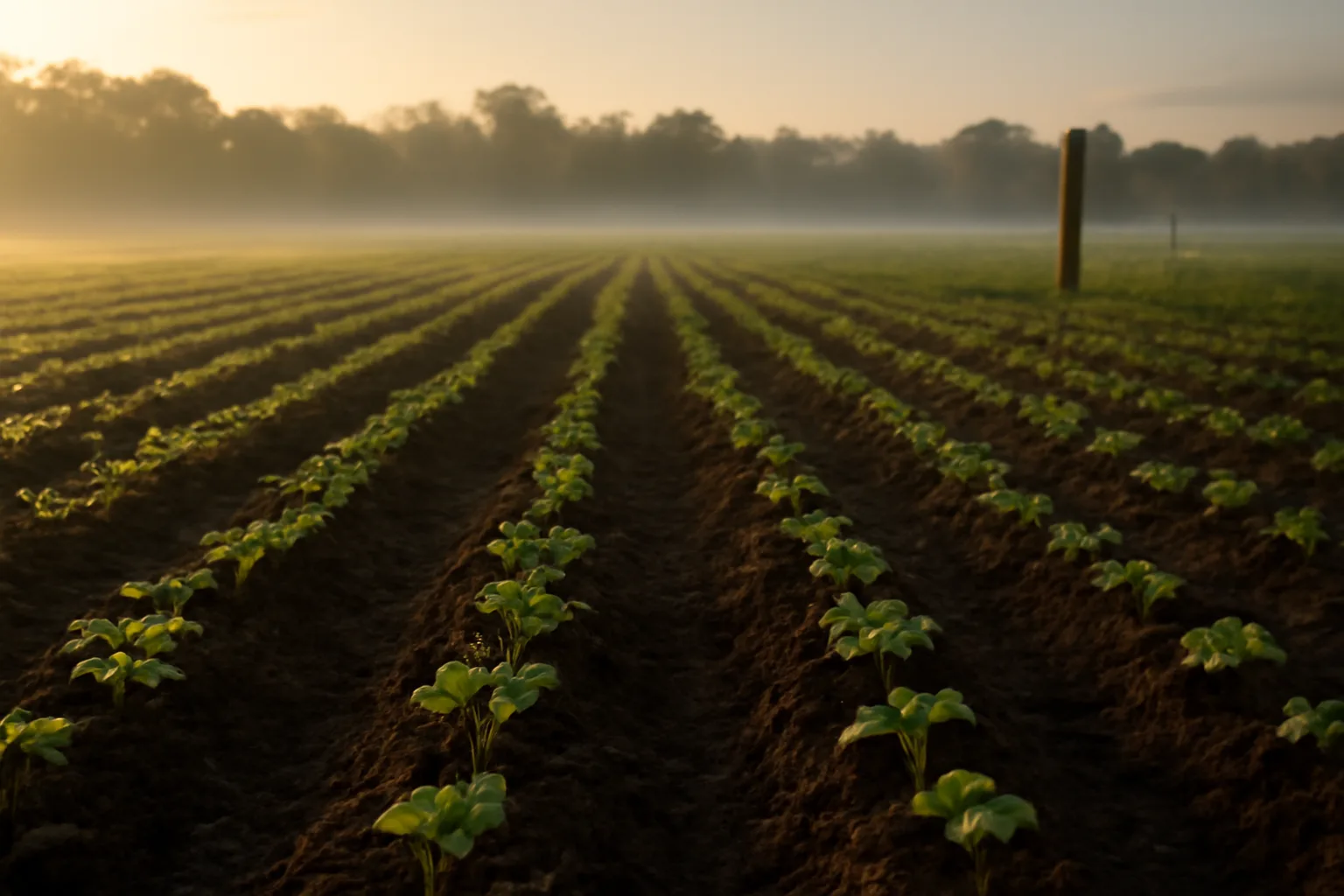
TL;DR
Food plot seeds generally need soil moisture equal to roughly 1 inch of rain within 10-14 days of planting to germinate, then about 1 inch per week through establishment. Small seeds like clover need less standing moisture but more consistency; grains and brassicas can tolerate a wider swing once rooted. Timing rain around your planting date matters more than any fixed total.
how much rain does a food plot actually need to germinate
There's no single magic number, but a workable rule of thumb is this: most food plot seed needs the equivalent of about 1 inch of rain within the first 10 to 14 days after planting to germinate and get roots down. That's not a USDA-issued figure, it's a synthesis of general seeding guidance from agronomy extension programs, because germination depends on seed size, planting depth, and soil type as much as rainfall totals. Clover and brassica seed is tiny and sits at or near the surface (1/4 inch or shallower). That seed needs frequent light moisture, even a series of quarter-inch rains a few days apart, more than it needs one big soaking event. A single 2-inch downpour right after planting can wash small seed into low spots or crust the soil surface once it dries, which is arguably worse than a slow drizzle pattern. Cereal grains (oats, wheat, rye) and larger-seeded legumes (soybeans, peas) go deeper, 1 to 1.5 inches typically, so they can pull moisture from a bit further down and tolerate a short dry spell better once planted. The USDA NRCS soil moisture guidance for seedbed prep emphasizes that adequate seed-to-soil contact plus available moisture in the top few inches drives germination timing more than total rainfall [1]. Bottom line for planning purposes: don't plant into bone-dry ground expecting rain in the extended forecast to save you. Extension agronomists consistently advise waiting for a rain event, or planting right ahead of one, rather than planting on a hope.
how much rain does an established food plot need per week
Once a plot is up and growing, most food plot species do well with something close to 1 inch of water per week, whether from rain or (rarely, for plots) irrigation. This mirrors the general guidance turf and forage agronomists give for cool-season grasses and clovers, which need roughly 1 to 1.5 inches weekly during active growth [2]. Clover is more drought-tolerant than people assume once it's established, thanks to a taproot that can reach several feet down in good soil. A first-year clover stand, though, is shallow-rooted and will show stress fast in a 2-3 week dry stretch. Brassicas like turnips and radishes want consistent moisture through the bulbing stage; a plot that dries out mid-season often produces small, woody roots and thin leaf growth instead of the big tubers you're after. Corn and soybeans, if you're running a larger acreage plot, are the most rain-hungry of common food plot species. University of Missouri Extension research on corn yield response to weather notes that corn is most sensitive to moisture stress during the two weeks around silking, when a serious deficit can cut yield sharply [3]. Most plot owners aren't tracking silking dates that closely, but it's worth knowing a dry August after a decent spring can still wreck a corn plot.
what happens to a food plot in a drought year
Small grains and brassicas survive a moderate drought better than most people expect, they just underperform. Clover, once its root system is in the ground (usually by its second growing season), can ride out several weeks without rain by pulling from deeper soil moisture, though growth slows and it may go dormant-looking in late summer heat. The bigger risk in drought years isn't total plot death, it's germination failure at planting. If you drill or broadcast seed into dry August or September soil (a common window for fall brassica and cereal plantings), and the rain doesn't come for three or four weeks, seed can sit dormant, get eaten by rodents and birds, or germinate weakly and never catch up before frost. Extension guidance from land-grant programs in drought-prone regions generally recommends delaying planting rather than planting dry, since a two-week delay into moisture beats an on-time planting into dust [4]. If you're checking a 10-day forecast and see nothing, it's usually smarter to wait than to burn seed and fertilizer money on a gamble.
when to plant food plots for deer
when to plant food plots for deer
Timing splits into two windows almost everywhere in whitetail range: a spring/summer planting for warm-season annuals and perennials, and a late-summer/fall planting for cool-season annuals. The right calendar date depends heavily on your USDA Plant Hardiness Zone and first/last frost dates, not a national date. Spring plots (clover, chicory, soybeans, corn) generally go in after your last frost date, when soil temps are reliably above 50-55°F. For a lot of the Midwest and Upper South, that's late April through May. Fall plots (brassicas, cereal grains, clover overseed) typically go in 6 to 10 weeks before your average first frost, so the plants have time to establish before growth slows. The honest answer is: check your local NOAA/NWS climate normals for first and last frost dates in your county, then count backward from there. A planting calendar built for zone 5 Wisconsin will put you weeks too early or too late if you're hunting zone 7 Tennessee ground.
when to plant oats for deer
Oats are a fall food plot staple and go in late summer to early fall, generally 6 to 8 weeks before your first expected frost. That window lets oats germinate, tiller, and put on 6-8 inches of growth before cold slows them down, and it times peak palatability to early bow season and into the rut. In much of the whitetail belt, that lands somewhere between mid-August (northern tier) and late September/early October (South). Oats germinate fast, often in 7 to 10 days with decent moisture, and they tolerate light frost well, though a hard freeze in the teens will kill the top growth. Some hunters plant a second oat window in very early spring for a quick green-up plot, but fall is by far the more common and more productive use of oats in a deer program.
when to plant turnips for deer
Turnips and other brassicas (radishes, rape, kale) go in the ground in mid to late summer, generally 80 to 100 days before your first hard frost, since turnips need that much time to bulb out and reach peak sugar content. Most fall frost pushes bulb sugars up, which is why deer often ignore turnip tops in September and hammer the bulbs after the first freeze in November. A common rule extension and seed-company agronomy guides both use: count back 90 to 100 days from your average first killing frost date to find your turnip planting window. For a lot of the Midwest that's late July through mid-August; in the Deep South it can run into early September. Turnip seed is small and shallow, planted around 1/4 to 1/2 inch deep, so it needs that early-window rain consistency covered above. A turnip plot planted into dry dirt in August with no rain in the forecast is one of the more common plot failures reported anecdotally by extension agents and seed dealers alike, mostly because growers plant by the calendar and ignore the forecast.
do deer eat clover, and do deer actually like it
Yes, clover is one of the most consistently preferred food plot forages for whitetail deer, and it's also one of the most forgiving to grow. White clover (Ladino types) and red clover both rank high in crude protein, often tested between 25 and 30 percent crude protein in vegetative growth stages according to forage quality data compiled by university agronomy programs. Clover's popularity with deer comes down to two things: it's high-protein and it's available across a long season, spring through fall, unlike a brassica or grain that has a narrow window of peak use. That's part of why clover shows up as the default recommendation in most food plot programs, it's not a novelty forage, it's a genuine nutrition source deer return to repeatedly. If you're weighing species, food plot whitetail covers how clover compares against brassicas and grain plots for season-long attraction versus short-window hunting plots.
do deer eat sorghum
Yes, deer will eat sorghum, particularly the grain heads once they mature and the plant is easier to browse, but it's not typically a first-choice forage the way clover or soybeans are. Sorghum (grain sorghum/milo) is more commonly planted as a screening or bedding cover crop, or as a late-season standing grain, than as a primary attraction plot. Some plot managers mix sorghum into a wildlife blend for structure and winter grain availability rather than relying on it alone. If your goal is maximum deer attraction on a small acreage plot, sorghum is a lower priority than clover, brassicas, or beans; if your goal is cover plus a late-winter food source, it earns a spot in the mix.
what is a food plot, exactly
A food plot is a planted area, usually somewhere between a quarter-acre and several acres, established specifically to provide supplemental forage for deer or other wildlife, on land the hunter owns or leases. It's not the same as agricultural cropland, though the planting and soil-management methods overlap heavily with row-crop farming on a smaller, wildlife-focused scale. The basic goal is nutrition and/or hunting access: some plots are built to hold deer on the property and improve herd nutrition over a season (clover, alfalfa, chicory perennials), and some are built specifically as hunting plots timed to be most attractive during a narrow hunting window (brassicas timed to peak in November, for example). Most serious plot programs run both types. Check your state wildlife agency's regulations before planting anything intended to concentrate deer for hunting purposes; several states classify certain planted-and-hunted-over scenarios under baiting or supplemental feeding rules, and those rules vary significantly by state [5]. What's legal in Wisconsin (which distinguishes hunting over a legitimate agricultural planting from bait) may not be legal the same way in a state with tighter feeding restrictions, so a quick check with your state agency before hunting a new plot type is worth the ten minutes.
what are deer's favorite foods
Deer preference shifts by season and region, but across studies and extension forage-quality data, a few categories consistently rank high: acorns (especially white oak group acorns, which are lower in tannins and more palatable than red oak group), soybeans, clover, and other legumes. A widely cited whitetail food-preference framework built by wildlife biologists ranks forages by both palatability and nutritional value, and legumes (clover, alfalfa, soybeans) and acorns consistently land near the top across regions [6]. Brassicas and cereal grains rank high seasonally, especially brassicas after a frost sweetens the bulbs and greens. In short, there's no single "favorite," it depends on season, regional forage availability, and what native browse is competing with your plot. A clover plot in an area thick with natural browse and mast might get lighter pressure than the same plot on ground with little other food.
do deer like honey (honey locust, honeysuckle, or literal honey)
If the question means honey locust trees, yes, deer readily eat the sweet pods that drop in fall, and honey locust is a known native forage tree in whitetail range. If it means honeysuckle, deer do browse Japanese honeysuckle and native honeysuckle species, particularly in winter when other browse is scarce, though honeysuckle is also a documented invasive species that some state natural resource agencies actively discourage planting . If the question literally means honey (the bee product), there's no meaningful application to food plots or deer attraction; deer aren't drawn to it as a forage, and it's not part of any legitimate food plot program. This one shows up in search mostly as a curiosity question, not a real plot-planning strategy.
how do i know if my plot got enough rain
The simplest field check: dig down 2 to 3 inches with a trowel or your fingers a few days after a rain event. If the soil is moist and holds together when squeezed, you likely have enough moisture for germination or continued growth. If it's dry and crumbly at that depth, seed sitting near the surface probably isn't getting what it needs yet. A rain gauge on the property (a five-dollar tool) beats guessing from a regional forecast, since local rainfall can vary a lot even a few miles apart, especially from summer thunderstorm cells. Tracking actual gauge totals against the rough 1-inch-per-10-to-14-days germination guide and 1-inch-per-week establishment guide above gives you a real decision point on whether to replant, wait, or move ahead. Soil type matters here too. Sandy soil drains fast and needs more frequent rain to stay in the right moisture range; heavier clay soil holds water longer but can crust and shed light rain before it soaks in. Your soil test report, if you've had one done, usually notes soil texture, and that's worth factoring in alongside your rainfall tracking. A properly built Custom Food Plot Plan factors regional rainfall patterns and your soil type into species and timing recommendations, since a plan built for one is wrong for the other.
should i irrigate a food plot instead of relying on rain
For most hunting-lease and rural landowner plots, irrigation isn't practical or worth the cost, food plots are usually rain-fed by design. Running water lines or a pump setup to a remote plot costs real money and ongoing maintenance, and most plot acreages (a quarter acre to a few acres) don't justify it economically the way a commercial farm field does. The better use of that budget is picking species and planting windows that match your regional rainfall pattern, and having a fallback plan (a later planting window, a more drought-tolerant species mix) if the forecast turns dry. If you're in a genuinely arid region, some plot managers do run drip or small sprinkler setups on very small, high-value plots, but that's the exception, not the norm, in whitetail food plot management.
Frequently asked questions
Do deer eat sorghum?
Yes, deer eat grain sorghum, especially the mature seed heads, but it's usually planted as a screening or late-season standing grain crop rather than a primary attraction forage. Clover, soybeans, and brassicas typically draw more consistent deer use than sorghum alone.
Do deer eat clover?
Yes, clover is one of deer's most preferred forages, often tested at 25-30% crude protein in vegetative growth, according to university forage quality data. Its long growing season (spring through fall) makes it a season-long draw rather than a short-window food source.
When should I plant deer food plots?
Spring plantings (clover, soybeans, corn) go in after your last frost date; fall plantings (brassicas, cereal grains) go in 6 to 10 weeks before your first frost date. Exact dates depend on your USDA hardiness zone and local NOAA frost data, not a national calendar.
Do deer like clover?
Yes, clover consistently ranks as a top-preference whitetail forage in extension and wildlife forage studies, largely due to its high protein content and long season of availability compared to brassicas or grains, which have narrower peak-use windows.
When should I plant oats for deer?
Plant oats 6 to 8 weeks before your area's average first frost date, typically mid-August in northern zones and into late September in the South. Oats germinate in about 7 to 10 days with adequate moisture and tolerate light frost well.
When should I plant turnips for deer?
Plant turnips 80 to 100 days before your first expected hard frost, since bulbs need that time to develop and sweeten. That's roughly late July through mid-August in much of the Midwest, and into early September in the Deep South.
What is a food plot?
A food plot is a planted area on hunted land, usually a quarter-acre to a few acres, established specifically to supplement deer nutrition and/or improve hunting opportunity. It differs from row-crop farming mainly in scale and its wildlife-focused purpose.
What are deer's favorite foods?
Acorns (especially white oak group), soybeans, and clover consistently rank near the top of whitetail forage preference across regional studies, though preference shifts seasonally and depends on what natural browse is available nearby.
Do deer like honey?
Deer don't seek out literal honey, but they do eat honey locust pods in fall and browse honeysuckle, especially in winter. Honeysuckle is invasive in many states, so check with your state natural resource agency before planting it intentionally.
How much rain does a newly planted food plot need?
A rough guide is about 1 inch of rain within 10 to 14 days of planting to trigger even germination, though small seed like clover prefers frequent light rain over one heavy event. Waiting for rain beats planting into dry soil and hoping.
Can a food plot survive without rain for a few weeks?
Established clover and cereal grains can survive several dry weeks by drawing on deeper soil moisture once rooted, though growth slows noticeably. Newly planted seed is far more vulnerable, since it hasn't developed roots deep enough to reach moisture reserves.
Does soil type change how much rain a plot needs?
Yes. Sandy soil drains fast and needs more frequent rainfall to stay in a usable moisture range, while clay-heavy soil holds moisture longer but can shed light rain before it soaks in. Your soil test report typically notes texture, which should factor into planting timing.
Sources
- USDA NRCS, Soil Quality for Environmental Health - Soil Moisture guidance: Seedbed moisture and seed-to-soil contact drive germination timing more than total rainfall
- University of Missouri Extension, Lawn and Turf Watering Guidelines: Cool-season grasses and clovers generally need roughly 1 to 1.5 inches of water weekly during active growth
- University of Missouri Extension, Corn Growth and Development: Corn is most sensitive to moisture stress during the two-week window around silking
- Oklahoma State University Extension, Drought Management Considerations for Forage and Livestock: Delaying planting into available soil moisture is generally preferable to planting into dry soil
- Wisconsin DNR, Baiting and Feeding Regulations: States distinguish legitimate agricultural plantings from baiting under wildlife feeding regulations, and rules vary by state
- USDA NRCS, PLANTS Database - Japanese Honeysuckle (Lonicera japonica): Japanese honeysuckle is classified as invasive in parts of its range and browsed by deer