Last updated 2026-07-25
TL;DR
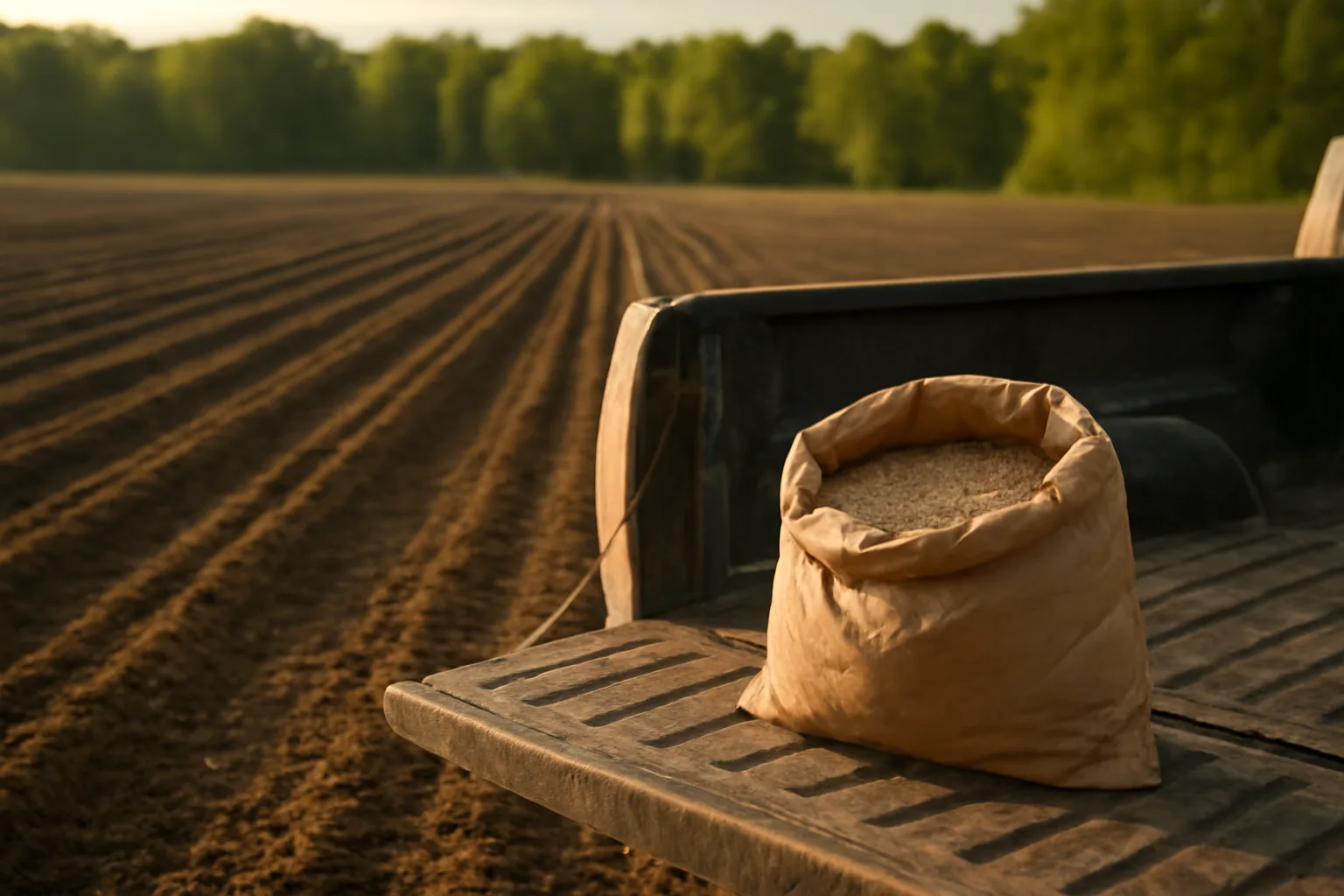
For food plots, plant winter rye (cereal rye) at 100 to 120 lbs per acre if broadcasting, or 60 to 90 lbs per acre if drilling. Cut rates by a third to half when mixing with clover or brassicas. Rye is the most forgiving, coldest-tolerant cereal grain for late-season plots, and it germinates in soil temps as low as 34 degrees.[1]
how much winter rye should I plant per acre?
| Drilled | 60-90 lbs/acre | 40-60 lbs/acre | |
|---|---|---|---|
| Broadcast | 100-120 lbs/acre | 60-90 lbs/acre | If you want a plan built around your acreage, soil test, and region instead of guessing at rates, the $99 Custom Food Plot Plan will lay out species, rates, and timing specific to your plot. |
Straight seeding rates for winter rye (Secale cereale, often just called "cereal rye") run 100 to 120 pounds per acre when you're broadcasting on a prepared seedbed, and 60 to 90 pounds per acre when you're using a drill. That's the range you'll see echoed across most land-grant extension guides for cover crop and forage rye, including Ohio State University Extension, which lists cereal rye drilled at 1 to 2 bushels per acre (56 to 112 lbs) for cover cropping, with rates pushed toward the higher end for forage or grain production. [1] Drilling is more efficient because you're placing seed at a consistent depth (3/4 inch to 1.5 inches) with good seed-to-soil contact, so you need less seed to get a solid stand. Broadcasting is less precise. Some seed sits on the surface, some gets buried too deep by your drag or cultipacker, and germination rates suffer. That's why the broadcast rate is bumped up 30 to 50 percent over the drill rate to compensate. If you're food-plotting on a budget, rye is one of the cheapest seeds per acre you can buy, often $12 to $20 for a 50-lb bag depending on the year and your region, which makes it tempting to just dump extra seed and not worry about precision. That's not a terrible strategy for rye specifically, since it tillers hard and fills in gaps on its own. But going much past 120 lbs/acre broadcast is wasted money with no real yield benefit. For a quick reference: | Method | Straight rye rate | Rye in a mix |
does the seeding rate change if I'm mixing rye with clover or brassicas?
Yes, and this is where a lot of guys overseed and end up with a rye-choked plot that shades out the clover underneath. When rye is part of a mix, cut it back to 40-60 lbs/acre drilled or 60-90 lbs/acre broadcast, and let the clover or brassica carry more of the plot's tonnage. A common whitetail mix is winter rye with a clover blend (crimson, red, or a perennial like ladino), often at something like 50 lbs/acre rye plus 8-10 lbs/acre clover seed. Rye's job in that mix is cover and a nurse crop, not the main forage. It comes up fast, holds soil, and gives young clover something to grow up through without getting swamped by weeds. Same logic with brassicas. Rye and a brassica blend (turnips, radish, rape) planted together gives you a fall plot that has tonnage early (rye) and then sweetens up after frost (brassicas). Keep rye under 60 lbs/acre in that mix or it'll out-compete the brassica seedlings for light and moisture. If you're building a rotation across your property, it's worth comparing straight food plot seed blends against a custom mix so you're not guessing which combination fits your soil and shade conditions.
when should I plant winter rye for deer?
Winter rye goes in during late summer to early fall, timed so it germinates and gets 6-8 inches of growth before your first hard freeze. In most of the whitetail range that's a window from late August in the northern tier down through mid-October in the mid-South, and rye can legally and practically go in later than almost any other food plot seed because it germinates in cold soil and keeps growing through frost. Rye's real advantage is that it will germinate in soil temperatures down to around 34 degrees Fahrenheit, and it keeps growing at temperatures other cereal grains and clovers simply shut down at. [2] That means if you're late getting a plot in, planting into October or even early November in southern states, rye is often your best (sometimes only) option that still has a shot at establishing before winter. Because it's so cold-hardy, rye is also the standard choice for late bow-season and gun-season plots that need to stay green into December and January. Wheat and oats will get you similar early growth, but rye out-lasts both once temperatures really drop.
when to plant food plots for deer overall
Planting windows split into two seasons, and picking the right one depends on whether you want summer/early-fall attraction or late-season food. Spring plots (clover, chicory, soybeans, cowpeas) go in after your last frost date, typically April through May in northern states and March through April in the South. These are built for antler growth season and early bow season. Fall plots (brassicas, cereal grains, winter peas) go in 6-8 weeks before your average first frost so they have time to establish before cold really sets in. That's late July through August in the North, and September through October in the South. State wildlife agencies and extension offices publish frost date maps you can use to back into your own local window; NOAA's National Centers for Environmental Information publishes freeze/frost occurrence data by station that's a solid starting reference for local dates. [3] Rye is unusual in that it fits both windows loosely, since it can be planted as late as early October in most of the country and still make a stand, but it doesn't have the same summer heat tolerance as soybeans or cowpeas, so it's really a fall-and-winter tool, not a summer one. For a full breakdown by month and region, see the seasonal planting calendars approach most plotters use to sequence spring and fall plantings on the same property.
when to plant oats for deer
Oats go in on the same general fall schedule as rye, roughly 6-8 weeks before first frost, but oats are less cold-hardy and usually winterkill somewhere in the 10-15 degree Fahrenheit range depending on snow cover and how established the plant is. [4] That makes oats a great early-to-mid fall attraction crop, but a poor choice if your goal is a plot that's still standing and green in January. A lot of food plotters plant oats and rye together specifically because oats are more palatable to deer early (softer leaf, sweeter) while rye takes over as the cold-hardy backbone once oats die back. If you only get one shot at a fall planting and you hunt into late December or January, lean rye. If your season wraps by late November and you're mostly hunting October-November, oats alone or an oat-heavy mix works fine and deer tend to hit oats hard early in the fall.
when to plant turnips for deer
Turnips go in 60 to 90 days before your first fall frost, which lines up almost exactly with the standard fall food plot window: late July into August in northern states, August into September through the mid-South. Most university brassica forage guidance recommends seeding turnips at roughly 4-6 lbs/acre alone, or 2-4 lbs/acre when mixed with other brassicas or a cereal grain like rye. Turnips need that 60-90 day runway because the tuber (the part deer really key on late in the season) takes time to bulb up, and the leaves need a hard frost or two to convert starches to sugars before deer find them palatable. That's why turnip plots often get ignored in October and then get hammered in December, the frost sweetens them. Mixing turnips with rye is common for exactly that reason: rye gives you tonnage and green cover early, turnips give you a sugar-loaded late-season food source once the cold really sets in.
what is a food plot?
A food plot is a planted area, usually somewhere between a quarter acre and several acres, seeded with forage crops specifically to attract and feed deer or other wildlife on hunting land. It's not the same as a farm field, though the agronomy overlaps heavily. Food plots are designed around deer nutrition and hunting strategy first, yield-per-acre economics second. Most state wildlife agencies treat food plots as a legitimate wildlife management practice distinct from baiting, though the line between the two varies by state, and some states regulate or restrict hunting over a food plot that was planted and then abandoned versus one actively maintained. Check your state wildlife agency's specific baiting and feeding regulations before you plant and hunt over anything, since rules on this differ significantly state to state and some states define a food plot by minimum size or by how recently it was planted. Michigan's Natural Resources Commission Wildlife Conservation Order distinguishes planted food plots from bait piles based on whether the crop is standing and grown in place versus harvested material placed on the ground, a distinction that keeps a planted plot legal in areas where dumped bait is restricted. [5] Functionally, food plots serve two roles: attraction plots (small, visible, placed to draw deer into bow range) and nutrition/destination plots (larger, often back in cover, meant to hold deer and support herd health through stress periods like late winter or antler growth in summer). Understanding which role a given plot is playing changes your species selection completely; see deer food plots for how plot placement and purpose interact.
do deer eat sorghum?
Yes, deer eat sorghum, particularly the seed heads (grain sorghum, also called milo) and to a lesser extent the leaves while the plant is young. It's more commonly planted as a screening or bedding cover crop and as a food source for turkey and upland birds, but whitetails will use standing sorghum, especially the grain heads in late fall and winter once other food sources thin out. Sorghum isn't a top-tier whitetail forage compared to soybeans, clover, or brassicas in terms of deer preference, and it's rarely the right choice if attraction is your only goal. Where it earns a spot in a plot rotation is as a tall screening crop planted along field edges or in strips to break sightlines and create bedding security, with the grain as a secondary benefit.
do deer eat clover, and do deer like clover?
Yes, and clover is arguably the single most reliable, highest-use forage in whitetail food plot programs. Deer graze clover heavily through spring, summer, and fall, it regrows fast after grazing pressure, and it's high in protein, typically 25-30 percent crude protein in good stands, which matters most during antler growth (May-August) and lactation. [6] Clover's biggest advantage over annuals is that a well-managed perennial stand (ladino or red clover) can produce for 3-5 years before you need to reseed, cutting your annual seed cost dramatically compared to replanting brassicas or cereal grains every single season. The tradeoff is that clover needs decent soil fertility and a pH close to 6.0-6.5 to really perform, so a current soil test matters more here than with almost any other food plot species. Your soil test lab's specific lime and fertilizer recommendation is the authority on what your particular field needs; general guidance can only get you in the right range. For species comparisons if you're deciding between clover and other perennials or annuals, deer food plot seed breaks down the main options side by side.
what are deer's favorite foods, and do deer like honey?
Deer preference shifts by season and region, but across most whitetail research and extension forage trials, the consistent top performers are: soybeans and clover (protein-rich, heavily used spring through fall), acorns (a huge natural preference in the fall when available, often pulling deer off planted plots entirely during a good mast year), and brassicas/turnips (heavily used in late fall and winter after a frost sweetens them). Deer are also opportunistic browsers on natural vegetation, agricultural crops like corn, and fruit like apples and persimmons where available. There's no single "favorite" food across all regions and seasons; it depends heavily on what's locally available and what nutritional stage the herd is in. As for honey: deer don't eat honey in any meaningful, documented way as part of natural foraging behavior, and there's no wildlife agency or extension research supporting honey as a food plot or attractant strategy. This appears to be conflated with commercial "deer candy" or molasses-based mineral and attractant products, which do use sugar sources deer are drawn to, but that's a manufactured attractant, not a food plot species or natural forage. If you're comparing real attractant crops instead of novelty products, deer for food covers what actually pulls deer onto a plot.
how do I figure out exact winter rye pounds needed for my plot size?
Take your rate per acre, multiply by your plot's acreage, and round up to the nearest full bag since you'll always want a small buffer for uneven coverage. A quarter-acre plot broadcast at 110 lbs/acre needs about 27.5 lbs of seed; a 2-acre plot drilled at 75 lbs/acre needs 150 lbs, or three 50-lb bags. A fast way to estimate acreage if you don't have a survey: pace off the length and width in yards, multiply, and divide by 4,840 (square yards per acre). Most seed dealers and extension offices also have simple acreage calculators for irregular-shaped plots. Don't eyeball this by "a bag looks about right for that field." Underseeding rye leaves gaps that weeds fill fast, and overseeding past the recommended range wastes money without adding meaningful tonnage, since rye tillers aggressively on its own and fills in thin spots once it establishes.
Frequently asked questions
How many pounds of winter rye per acre should I broadcast?
Broadcast winter rye at 100 to 120 lbs per acre for a straight stand. If it's part of a mix with clover or brassicas, drop to 60-90 lbs per acre so the rye doesn't shade out the other species.
Is winter rye the same as ryegrass?
No. Winter rye (cereal rye, Secale cereale) is a grain crop that produces tonnage, seed heads, and cold tolerance down near 34 degrees Fahrenheit germination. Annual or perennial ryegrass is a turf/forage grass species, lower growing, less cold-hardy, and not the same plant at all despite the similar name.
Do deer eat sorghum?
Yes, deer eat sorghum grain heads and some leaf material, especially late in the season, though it's not a top-preference forage compared to soybeans or clover. It's more often planted for screening cover and to feed turkey and upland birds, with deer use as a secondary benefit.
Do deer like clover?
Yes, clover is one of the most heavily used food plot forages, often running 25-30 percent crude protein in a healthy stand. Deer hit it hard spring through fall, and a well-maintained perennial clover stand can last 3-5 years before needing reseeding.
When should I plant food plots for deer?
Spring plots (clover, chicory, soybeans) go in after your last frost, typically March through May depending on region. Fall plots (brassicas, cereal grains) go in 6-8 weeks before first frost, generally late July through October depending on latitude.
When should I plant oats for deer?
Plant oats 6-8 weeks before your first fall frost, the same general window as rye. Oats winterkill around 10-15 degrees Fahrenheit, so they work best as an early-to-mid fall attraction crop rather than a late-winter food source.
When should I plant turnips for deer?
Plant turnips 60-90 days before your first expected fall frost. That runway lets the tuber bulb up and gives the leaves time to sweeten after a frost or two converts starches to sugar, which is when deer use really picks up.
What is a food plot exactly?
A food plot is a planted patch of forage, typically a quarter acre to several acres, seeded specifically to attract or feed deer and other wildlife on hunting land. It combines basic crop agronomy with hunting strategy around placement and timing.
What are deer's favorite foods?
Preference shifts by season, but soybeans, clover, acorns, and frost-sweetened brassicas consistently top the list in extension forage research. Acorns during a strong mast year will often pull deer away from planted plots entirely.
Do deer like honey?
No documented evidence supports honey as a natural deer food or effective food plot attractant. What people are usually thinking of is molasses-based commercial deer attractant products, which are a manufactured product, not a forage crop or natural food source.
Should I drill or broadcast winter rye?
Drilling is more seed-efficient (60-90 lbs/acre) because it places seed at a consistent depth with good soil contact. Broadcasting needs 100-120 lbs/acre to compensate for uneven coverage and seed sitting on the surface, but it's the more common method for smaller hunting-land plots without drill access.
Can I plant winter rye too late in the fall?
Rye is more forgiving than almost any other food plot seed since it germinates in soil as cold as 34 degrees Fahrenheit, but you still want some fall growth before hard winter locks in. Aim for 6-8 weeks before your average first freeze if possible, though rye planted later than that will often still establish, just slower.
How much rye seed do I need for a small food plot?
Multiply your rate per acre by your plot size in acres. A quarter-acre plot broadcast at 110 lbs/acre needs roughly 27-28 lbs of seed, so plan on buying a full 50-lb bag and having leftover for touch-up spots or a second small plot.
Sources
- USDA NRCS, Plant Guide: Cereal Rye: Winter rye germinates in cold soil temperatures and tolerates hard frost better than other cereal grains
- Ohio State University Extension, Agronomic Crops Team, cereal rye cover crop seeding guidance: Cereal rye seeding rates range roughly 1-2 bushels (56-112 lbs) per acre depending on drilled vs. broadcast and cover vs. forage goals
- NOAA National Centers for Environmental Information, Freeze/Frost Occurrence Data: Frost date reference used to time fall food plot planting windows
- University of Wisconsin-Madison, Team Forage: Winter Cereals for Forage: Oats winterkill at a higher temperature threshold than cereal rye, generally near 10-15 degrees Fahrenheit
- Michigan Department of Natural Resources, Wildlife Conservation Order, Baiting and Feeding Regulations (NRC Order 2.111): State baiting and feeding rules distinguish standing food plots from dumped bait, and regulations vary significantly by state
- University of Georgia Extension, Circular 860, Forage Legumes: Clover and Alternative Species: Clover crude protein content in a healthy stand runs roughly 25-30 percent