Last updated 2026-07-25
TL;DR
A good turkey food plot mixes clover for spring green-up, chufa or grain (like grain sorghum, wheat, or oats) for fall and winter, and open sunny ground turkeys can see across. Test soil first, plant clover in early spring or late summer, and plant chufa or oats once soil hits 65 degrees. Keep plots small, near roost trees, and legal under your state's baiting rules.
what is a food plot, exactly
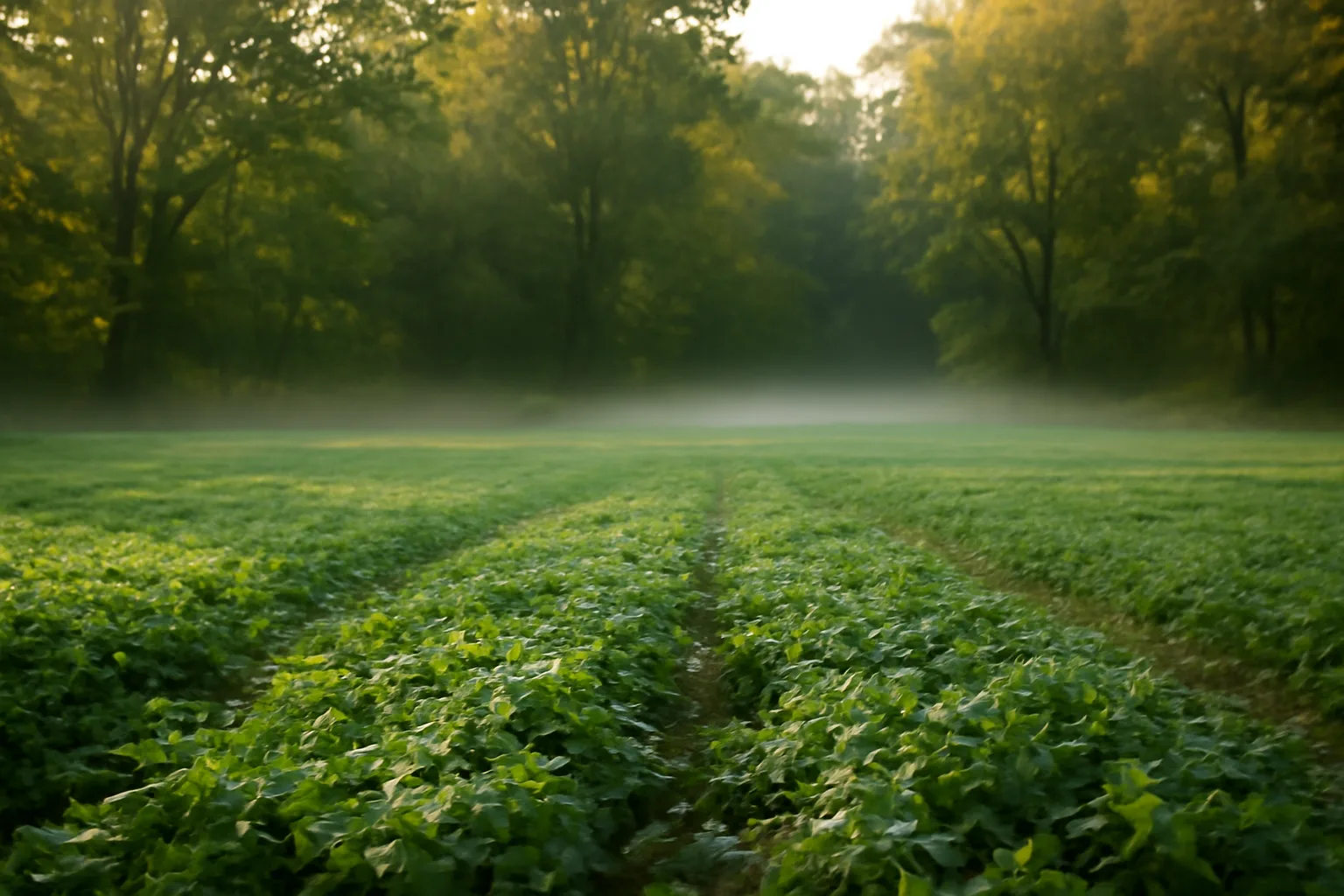
A food plot is a planted patch of ground, usually a quarter acre to a few acres, designed to grow food that wildlife will actually eat and that you can hunt near. For turkeys specifically, that means something different than a whitetail plot. Turkeys are ground feeders that scratch for insects, seeds, and green shoots, and they need open sight lines more than they need tall cover. Most turkey plots do double duty. Clover and grain plots pull in deer too, and a lot of hunters run one plot for both species with some tweaks. A turkey-specific plot usually leans on three plant types: clover for spring protein and bugs, small grains like oats or wheat for fall and winter grazing, and chufa (a nutsedge tuber) for a fall-through-spring food source turkeys will dig for even under snow. None of this is complicated, but the timing and soil work matter more than people think.
when should you plant food plots for deer and turkey
Timing depends on what you're planting and where you live, but the two big windows are early spring (March to May) and late summer (August to early September). Spring plantings target clover, chicory, and brassicas that need cool soil and steady moisture to establish before summer heat. Late summer plantings target fall annuals like oats, wheat, and brassicas that turkeys and deer will hit hard once frost hits and other food sources dry up. General extension guidance for the Southeast recommends planting warm-season food plots (like grain sorghum or chufa) once soil temperatures reach the mid-60s Fahrenheit, generally April through June depending on latitude, and cool-season plots (clover, wheat, oats) from late August through October [1]. If you're in the Deep South, you have a longer window and can push cool-season plantings into October. If you're in the Upper Midwest or Northeast, you need to get clover in by early May or push your fall plantings up to late July or August so there's enough growing season left before frost. Check your local extension office's frost date charts before you commit seed to the ground. Guessing costs you a whole season.
do turkeys like clover, and how do you plant it
Yes. Clover is arguably the single best all-around turkey plot plant, because it grows low, stays green most of the year, and draws in the insects (grasshoppers, crickets, beetles) that make up the bulk of a poult's diet in its first weeks of life. Turkeys aren't eating the clover leaf itself as much as they're hunting the bug life the clover supports, plus they'll nibble the tender shoots directly. White clover (Trifolium repens) and red clover (Trifolium pratense) are the two most planted types. White clover is shorter, more shade tolerant, and better suited to a plot turkeys will actually walk into without feeling exposed. Red clover grows taller and works better mixed with grasses for deer bedding cover, but hens with poults may avoid it if it gets too thick and tall to see predators over. Plant clover in early spring (March to April in the North, February to March in the South) or late summer (mid-August to September). Broadcast at 6 to 8 pounds per acre for white clover, lightly cover or cultipack the seed (clover needs light to germinate, so don't bury it deep), and get a soil test first. Clover wants soil pH between 6.0 and 7.0 and it is sensitive to low pH. Oklahoma State University Extension notes that legumes like clover fix nitrogen through soil bacteria that function poorly in acidic soil, and recommends liming to bring pH into the 6.0 to 6.5 range before or at seeding to get a solid stand established [2]. If your test comes back at 5.2 like a lot of raw woodland soil does, you'll need lime, and that takes months to fully react in the soil, so get it down early.
do deer eat clover too, and does that matter for turkey plots
Deer eat clover heavily, and this is actually good news if you're managing one property for both species. Clover is one of the most preferred whitetail forages available, and it's why so many food plot mixes marketed for deer are clover-based. If you plant a clover plot for turkeys, you'll get deer traffic on it too, which means more sign to pattern and more reason to hang a stand nearby. The tradeoff: heavy deer browsing can knock clover down fast, especially on smaller plots (under an acre) with high deer density. That's usually fine for turkey purposes since turkeys want it short and open anyway, but if you're trying to grow clover tall enough for pheasant or quail cover, deer pressure works against you. For a dual-purpose plot, this competition mostly sorts itself out. You just may need to overseed clover every year or two to keep stand density up. If you want a clover-heavy plot built around this dual-use idea, food plot whitetail covers deer-specific clover strategy in more depth, and deer food plot seed breaks down blends that work for both species.
do deer eat sorghum, and should you plant it for turkeys
Deer will eat grain sorghum, especially the leaves and young plants, but it's not a top preference food for them the way soybeans or clover are. Sorghum's real value in a turkey-and-deer plot is as a standing grain source through fall and winter, plus it gives turkeys a place to scratch through dropped seed heads once the plant matures and lodges over. Grain sorghum (milo) is a warm-season annual, planted after soil hits 60 to 65 degrees Fahrenheit, typically late May through June depending on your zone. It's drought tolerant, which makes it a solid choice on poor upland soil where corn would struggle. Turkeys will work a sorghum field hard in late fall and winter once the seed heads dry and drop, similar to how they work waste grain in a harvested cornfield. It's not a spring green-up plant, so don't count on sorghum to do what clover does. Think of it as your cold-weather backup food source, not your primary spring turkey draw.
when to plant oats for deer and turkey, and why it works
Oats are a cool-season annual grain, and they're one of the fastest-growing, most palatable food plot options available for both deer and turkey. Plant oats in early spring (as soon as soil is workable, generally March to April) for a quick summer forage plot, or in late summer through early fall (mid-August to September) for a fall and winter plot, which is the more common approach. Oklahoma State University Extension recommends planting oats and other cool-season wildlife food plot species in late summer to early fall so plants establish before the first hard freeze and provide grazing through late fall and into winter in milder climates [2]. Oats are less winter-hardy than wheat or rye, so in northern states expect them to die back hard after the first serious freeze, while wheat and cereal rye will keep growing. Turkeys will graze young oat shoots directly and will also work an oat field for the insects living in the thatch. Seeding rate for oats runs 2 to 3 bushels per acre (roughly 64 to 96 pounds), drilled about an inch deep or broadcast and lightly disked in. Oats are cheap, forgiving, and a good first food plot for someone new to this, which is part of why they show up in nearly every extension office's basic food plot mix recommendation.
when to plant turnips for deer, and do turkeys use them
Turnips are a brassica, planted in late summer (roughly late July through August in the North, into September in the South) so they mature by the first frost. Cold actually improves turnip palatability. Frost converts starches in the bulb and leaves to sugars, which is why deer often ignore turnips in October and then hammer the same plot in December. Turnips are primarily a deer plot plant. Turkeys don't eat the bulb and generally show limited interest in the leaves compared to clover or grain. Where turnips help a turkey plot indirectly is by keeping ground open and disturbed late into fall, which can draw insects, and a turnip plot mixed with a cereal grain (oats or wheat) gives turkeys grain to work while deer hit the brassica bulbs. If turkey use is your main goal, don't build a plot around turnips alone. Use them as one component in a mixed fall plot, with grain or clover doing the heavy lifting for the turkey side.
what is chufa, and why do so many turkey hunters swear by it
Chufa (Cyperus esculentus) is a sedge that produces small underground tubers, and it's probably the single most turkey-specific food plot plant there is. Wild turkeys, especially in the Southeast, will dig chufa tubers out of the ground with their feet for months after the tops die back, which means a chufa plot can hold birds from fall all the way into spring gobbler season. Plant chufa after soil temperatures reach about 65 degrees Fahrenheit, generally May through June, and it needs a full growing season (100 to 120 days) to produce a good tuber crop before turkeys start working it in fall. It likes sandy or well-drained soil and full sun, and it doesn't need much fertility, which makes it a good option on poor ground where other plots struggle. One catch: chufa takes a full season to pay off. You plant it in early summer and don't get real turkey use until fall, winter, and into the following spring. It's a long-game plant, not something you plant in March expecting gobbler action in April.
what plants attract turkeys the most, ranked
| White clover | Spring, summer (via insects) | Spring or late summer | Low, but needs lime/pH management | |
|---|---|---|---|---|
| Chufa | Fall through spring | Late spring/early summer | Medium, slow payoff | |
| Oats | Fall, early winter | Late summer/early fall | Low | |
| Wheat | Fall through spring | Late summer/early fall | Low | |
| Grain sorghum | Late fall, winter | Late spring | Medium | |
| Brassicas/turnips | Late fall (mostly deer) | Late summer | Low | A lot of experienced plot managers just run clover as the anchor plant and use chufa or grain as a secondary block nearby. That combination covers nearly the whole calendar year without needing five different seed bags. If you want a broader look at seed options across species, deer food plot seed and food plot seed both break down blends and coverage rates in more detail. |
There's no single perfect turkey plant, because turkey diet shifts by season more than deer diet does. Poults need insects and protein in their first weeks of life far more than they need any specific plant. Adult turkeys shift toward grain, mast, and green forage as the year goes on. Here's how the common food plot options stack up by season and effort. | Plant | Best season for turkey use | Planting window | Effort level |
do deer and turkeys have a favorite food, and does honey matter
Deer don't have one single favorite food; preference shifts by season, region, and what's locally available, but soybeans, clover, and acorns consistently rank at the top of preference studies and extension forage guides. Research on white-tailed deer forage selection published in the Journal of Wildlife Management has repeatedly found legumes and mast crops among the highest-preference food categories where they're available [3]. In late summer, standing soybeans are one of the most preferred deer forages available where they're grown; in fall, acorns (especially white oak group acorns, which are lower in tannins) often outcompete any planted food plot when there's a good mast year. Turkeys don't have a strict single favorite either, but insects dominate the diet of poults, and adults gravitate toward grain, soft mast (wild grapes, berries), acorns, and green forage depending on season. Neither species has any real dietary use for honey. Honey isn't part of a natural deer or turkey diet, and there's no research or wildlife agency guidance recommending it as an attractant; it's sticky, expensive, and mostly shows up in deer-attractant marketing rather than any food plot planning literature. If you're trying to draw in game with something sweet, a mineral or molasses-based attractant product is a different category entirely from a food plot and comes with its own state legal restrictions.
where should you put a turkey food plot
Location matters as much as seed choice. Turkeys want open sight lines, since their main defense is spotting predators from a distance, so a small plot tucked in tight timber with no visibility isn't going to get used much. A quarter-acre to half-acre clearing near a roost site, along a field edge, or in an open hardwood flat works better than a plot buried deep in thick cover. Proximity to roost trees matters a lot for spring hunting. Toms will fly down and often head straight to open feeding areas near the roost before moving on to strut zones. A plot within 100 to 300 yards of a known roost, with a clear approach a hen or tom can walk without pushing through brush, tends to get worked early and consistently. Sun exposure matters too, more for turkeys than deer. Turkeys like to dust and sun themselves in open, sparse-vegetation areas, so a plot with some bare dirt or short cover mixed in (not a solid thick stand of tall clover) tends to draw more loafing and feeding activity, more than pass-through traffic.
how do you actually build the plot, step by step
Start with a soil test. This is the one step people skip and regret. A basic soil test from your county extension office or a private ag lab runs somewhere in the $10 to $20 range in most states and tells you your pH and nutrient levels (P, K, and sometimes micronutrients). Your soil test report is the real authority here, not a generic seed bag recommendation; follow its specific lime and fertilizer numbers over any blanket rule of thumb. Clear the site (mow, spray, or disk existing vegetation), apply lime if your test calls for it (lime takes 3 to 6 months to fully adjust pH, so apply it as far ahead of planting as you can), then apply fertilizer per your soil test recommendation at or near planting. Broadcast or drill your seed at the recommended rate for whatever you've chosen, cultipack or lightly drag to get seed-to-soil contact, and water if you can, though most food plots depend on natural rainfall. If you want a written plan built around your specific soil test numbers, your acreage, and your region's planting calendar rather than piecing it together from general advice, PlotSeason's $99 one-time Custom Food Plot Plan turns your soil test and property details into a specific seed and timing recommendation instead of a generic mix.
what legal rules should you check before planting near a turkey blind
Baiting and feeding rules for turkey and deer hunting vary a lot by state, and a food plot is generally treated differently than bait (a pile of corn or an automatic feeder), but the line isn't the same everywhere. A planted, standing agricultural crop is legal to hunt over in most states even where baiting is banned, because it's considered normal agricultural practice, not an artificial attractant. But some states have specific distance or disturbance rules about hunting over food plots during certain seasons. Check your state wildlife agency's current regulations before you plant or hunt a plot, especially if you're near a state or county line, or if you're combining a plot with any supplemental feed or mineral station. Rules change year to year and season to season (spring turkey rules aren't always identical to fall deer rules on the same property), so don't assume last year's regulation booklet still applies.
Frequently asked questions
Do deer eat sorghum?
Yes, deer eat grain sorghum, mainly the young leaves and later the dropped grain, but it isn't a top-preference food like soybeans or clover. It works better as a drought-tolerant, cold-weather standing grain source in a mixed plot than as a primary spring attractant.
Do deer eat clover?
Yes, clover is one of the most preferred whitetail forages available and shows up in nearly every extension office's food plot recommendation. Deer will hit clover hard, especially in spring and early summer, and heavy browsing pressure can require overseeding every year or two on smaller plots.
When to plant deer food plots?
Spring plantings (clover, chicory, brassicas planted early) go in March through May depending on latitude. Fall plantings (oats, wheat, more brassicas) go in mid-August through October. Check your local extension office's frost dates, since a few weeks off in either direction can hurt establishment badly.
Do deer like clover?
Yes, strongly. Clover ranks among the top preferred forages in whitetail diet studies and stays palatable most of the growing season. It's also low-cost and low-maintenance once established, which is why it's the anchor plant in most food plot programs.
When to plant oats for deer?
Plant oats in early fall, generally mid-August through September in most regions, so they establish before the first hard freeze. A spring planting (March-April) also works for a quick summer forage window, but fall is the more common and more productive timing for deer and turkey use.
When to plant food plots for deer?
There are two main windows: early spring (March-May) for clover, chicory, and some brassicas, and late summer (mid-August through September) for fall annuals like oats, wheat, and turnips. Your exact dates depend on regional frost timing, so check your state's cooperative extension planting calendar.
When to plant turnips for deer?
Plant turnips in late summer, roughly late July through August in northern states and into September farther south, so bulbs mature right around first frost. Frost sweetens the bulb and leaves, which is why deer use often spikes in December rather than October.
What is a food plot?
A food plot is a planted area, from a quarter acre to several acres, grown specifically to provide food for deer, turkey, or other wildlife and to give hunters a predictable spot to hunt near. Plots are built around species-specific plants, soil testing, and regional planting windows.
What are deer's favorite foods?
Deer don't have one single favorite; preference shifts by season and region, but soybeans, clover, and acorns (especially white oak group) consistently rank as top-preferred forages in extension research and deer diet studies. Acorns during a strong mast year can outcompete any planted food plot.
Do deer like honey?
No, honey isn't part of a natural deer diet and no wildlife agency or extension source recommends it as a food plot attractant. It shows up in commercial deer-attractant marketing, not in agronomy or food plot planning guidance, and using scent or bait products has its own state legal restrictions.
What is chufa and why do turkey hunters use it?
Chufa is a sedge that produces underground tubers turkeys dig for with their feet, and it can hold birds from fall through the following spring. It needs a full 100-120 day growing season planted after soil hits about 65 degrees, so it's a slow-payoff, high-value plant for turkey-specific plots.
How big should a turkey food plot be?
A quarter acre to half acre works for most turkey plots, especially near a roost site. Turkeys want open sight lines more than large acreage, so a smaller, well-placed, sunny opening usually outperforms a bigger plot buried in thick cover with poor visibility.
Can one food plot work for both deer and turkey?
Yes, and it's common practice. Clover-based plots, and mixed plots combining clover, grain, and a brassica, draw both species well. You'll get more deer pressure on the clover, which is generally fine for turkey use since turkeys prefer it kept short anyway.
Sources
- Clemson Cooperative Extension, Wildlife Food Plots: Recommended planting windows for warm-season and cool-season wildlife food plots
- Oklahoma State University Extension, Food Plots for Wildlife: Clover growth and nitrogen fixation decline sharply below soil pH 6.0, liming recommended before seeding
- Journal of Wildlife Management, forage selection studies on white-tailed deer: Legumes and mast crops rank among top-preferred forages in whitetail deer diet research
- USDA Natural Resources Conservation Service, Plant Fact Sheet: Chufa: Chufa growth habit, soil preference, and use as a wildlife food source
- University of Georgia Extension, Wildlife Food Plots for Deer, Turkey and Quail: Species-specific food plot planning guidance covering deer and turkey forage needs