Last updated 2026-07-26
TL;DR
Growing a deer food plot means testing your soil, picking a species suited to your region and light, planting at the right calendar window (often 60-90 days before first frost for fall plots), and controlling weeds and pH. Clover, brassicas, oats, and cereal grains cover most of the country. Nothing here is a guarantee of deer activity.
What is a food plot, exactly?
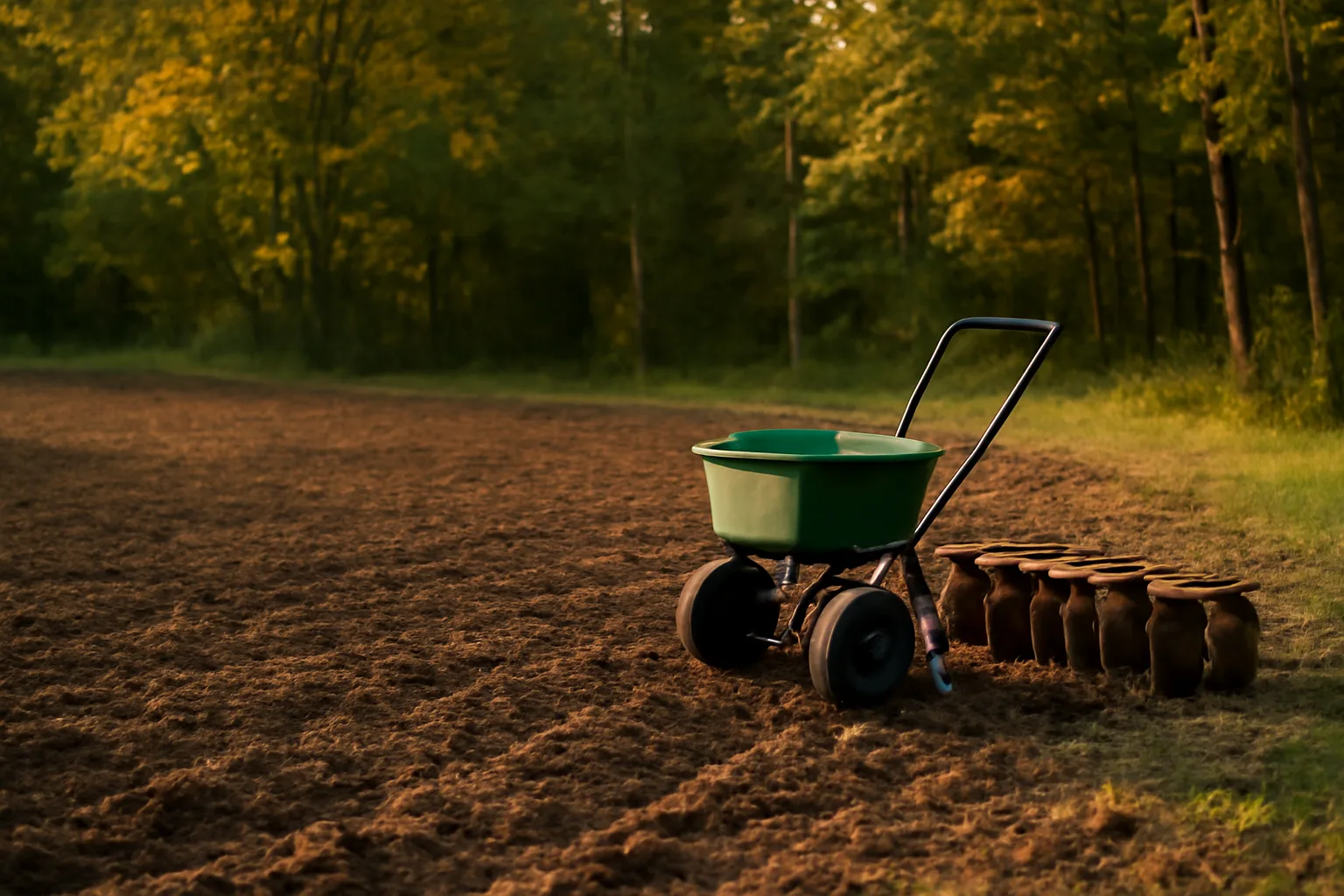
A food plot is a planted patch of forage, usually somewhere between a quarter acre and a few acres, put in specifically to feed and hold deer on a property. It's not a garden and it's not a lawn. Most plots run some mix of clover, brassicas (turnips, radishes, rape), cereal grains (oats, wheat, rye), or annual forages like soybeans and sorghum, depending on the season and the goal. The point of a plot changes depending on when you plant it. A spring or summer plot is usually about growing deer through antler development and fawning season, high protein, high tonnage. A fall plot is about drawing deer during hunting season with something sweet and available late, like brassicas that get better after a frost, or a clover field that's still green when everything else has gone brown. A food plot is not a magic bullet. State agencies are consistent on this point: plots supplement a deer's diet, they don't replace natural browse, and deer will still use timber, ag fields, and edge habitat around your plot. The USDA Natural Resources Conservation Service treats food plots as one wildlife habitat practice among several, alongside forest stand improvement and native warm-season grass plantings [1]. If you're new to this, start smaller than you think you need. A well-managed half-acre plot with the right pH and fertility beats a neglected three-acre plot every time. For a broader look at plot types and layout, see food plot whitetail.
When should you plant food plots for deer?
| Deep South (Zone 8-9) | March-April | Sept-Oct | |
|---|---|---|---|
| Mid-South / Transition (Zone 7) | April-May | Aug-Sept | |
| Midwest / Upper South (Zone 6) | May | Aug-Sept | |
| Northern tier (Zone 3-5) | May-June | July-Aug | Those ranges are approximate and meant as a starting point, not a substitute for your county extension's frost data. If you want a planting calendar broken out by zone in more depth, deer food plots covers that ground. |
Timing depends almost entirely on what you're planting and your local first and last frost dates, not a single national calendar. As a rule of thumb: spring/summer plots (soybeans, cowpeas, some clovers) go in after your last frost date, and fall plots (brassicas, cereal grains, clover) go in 60 to 90 days before your first fall frost so they have time to establish before cold shuts growth down. Your state cooperative extension office publishes frost date tables and planting windows for your specific county, and that's the most reliable source, better than a bag of seed's generic label. Purdue Extension, for example, publishes Indiana frost date ranges by region that shift by two to three weeks from the northern part of the state to the south [2]. Mississippi State University Extension recommends fall food plot brassicas and cereal grains go in from late August through October depending on latitude within the state [3]. A rough national planting-window sketch (adjust to your local extension's frost dates): | Region | Spring/summer plots | Fall plots |
When to plant oats for deer
Oats are a fall-plot staple because deer hit them hard right after germination and they tolerate cool soil better than most warm-season options. Plant oats 6 to 8 weeks before your first expected frost, which in most of the whitetail's range lands somewhere between mid-August and late September. Oats grow fast, often showing green shoots within 5 to 10 days of planting in warm, moist soil, and they're highly palatable to deer while young and tender. The catch: oats aren't very cold-hardy compared to wheat or rye. A hard freeze in the mid-teens Fahrenheit will usually kill oats outright, which is why a lot of planters mix oats with wheat or a clover to keep something green into winter after the oats die back. University of Tennessee Extension recommends planting cereal grains like oats and wheat for wildlife food plots between late August and mid-October across most of the state, seeded at roughly 100-120 lbs per acre if planted alone [4]. Seeding rate matters more than people think; too light and you get thin stands weeds can outcompete, too heavy and you're wasting seed money without a yield benefit.
When to plant turnips for deer (and do they need frost?)
Plant turnips 80 to 90 days before your first fall frost, which usually puts seeding in late July through August across most of the Midwest and Upper South, a bit later in the Deep South. Turnips need that runway because they're building a bulb, more than leaf, and deer often ignore the bulbs until after a hard freeze converts starches to sugars, making them sweeter and more attractive in December and January than they were in October. This is one of the more useful facts in food plot planning: don't judge a brassica plot a failure just because deer aren't hammering it in early fall. That's often the point. Clemson Cooperative Extension notes that brassicas like turnips and radishes become more palatable to deer after exposure to frost due to the conversion of starches to sugars in the plant tissue [5]. Seeding rate for turnips alone runs about 4-5 lbs per acre; broadcast rates that are too heavy just waste seed since turnip seed is tiny and germinates readily. Most planters blend turnips with radish, rape, or a cereal grain to get both early green growth and a late-season bulb crop in the same field.
Do deer eat sorghum?
Yes, deer eat sorghum, both the leaves and the grain heads, but it's more of a supplemental summer forage and screening crop than a primary attractant compared to soybeans or cowpeas. Sorghum tolerates heat and drought better than corn, which is part of why it shows up in food plot mixes for the Southeast and southern Plains. Whitetails will browse young sorghum leaves and later feed on the grain heads once they mature, and turkey and other wildlife use the grain too. It's commonly planted as a summer annual alongside soybeans or as a standalone drought-tolerant option where corn struggles. It also works well as visual cover, a tall block planted to break sightlines into a bedding area or to screen a plot edge from a road. If your main goal is pulling deer onto a plot in September and October, sorghum alone isn't the strongest draw; soybeans, cowpeas, and brassicas usually outperform it for pure attraction. Where it earns its place is as a cover crop, a screen, or part of a diverse summer blend rather than the headline species.
Do deer eat clover, and do deer like clover?
Yes, deer eat clover readily, and it's one of the most consistently preferred food plot forages across the whitetail's range. Clover is a perennial, meaning a well-maintained stand can produce forage for 3 to 5 years or more before you need to reseed, which makes it one of the better cost-per-year options once it's established. White clover and red clover are the two most common types in food plot mixes. White clover (including ladino types) tends to be lower growing and more shade-tolerant, good for smaller wooded plots, while red clover grows taller and handles heat and drier soil a bit better, making it a common choice for larger open fields. Clover's protein content, often cited in the 20-25% crude protein range for actively growing forage, is a big part of why it's a go-to for spring and summer nutrition during antler growth and lactation. It needs decent soil pH though; most clover species do best between pH 6.0 and 7.0, and yields drop off hard in acidic soil below that range, which is exactly why a soil test matters before you plant anything perennial. For species comparisons and mix ideas, see deer food plot seed.
What are deer's favorite foods?
There's no single universal answer because deer preference shifts by season, region, and what's locally available, but agricultural soybeans, acorns, and clover consistently rank among the most preferred whitetail foods across multiple state studies. Acorns in particular are a heavy-hitter; in mast years deer will often abandon food plots entirely in favor of white oak acorns, which are lower in tannins and sweeter than red oak acorns. During the growing season, soybeans and cowpeas rate extremely high in deer preference trials, largely because of their protein content and palatability while in the vegetative stage. In fall and winter, standing corn, brassicas after frost, and winter wheat move up the list as natural browse thins out. Georgia DNR's deer management guidance notes that natural foods like acorns and other hard and soft mast typically outcompete planted forages when available in quantity, which is part of why plot success varies so much year to year depending on mast crop. The honest answer for a landowner: there's no perfect single species. A property with a mix of clover (spring/summer), brassicas or cereal grain (fall/winter), and standing beans or corn if you have the acreage covers deer nutrition across more of the year than any single plot type.
Do deer like honey?
There's no real evidence deer specifically seek out honey, and it's not a practical food plot or attractant question in the way the others here are; deer are herbivores built to digest plant fiber through a four-chambered rumen, not concentrated sugars from honeycomb. Deer will occasionally nibble at flowering plants that bees also use, but that's coincidence of shared habitat, not a preference for honey itself. Where this question probably comes from is confusion with molasses-based mineral or attractant products, which are a different thing entirely and, depending on your state, may fall under baiting or supplemental feeding regulations rather than a standard food plot practice. If you're trying to sweeten a plot's draw, a better use of time and money is a proper brassica or clover stand than any kind of syrup or sugar product.
How do you actually plant a food plot, start to finish?
Start with a soil test, not a seed bag. A basic soil test through your county extension office or a private ag lab tells you your current pH and nutrient levels (phosphorus, potassium, sometimes organic matter), and that test result is the actual authority on how much lime and fertilizer your specific field needs. Costs for a standard extension soil test typically run somewhere in the $10-20 per sample range depending on the state lab, cheap insurance against wasting a much bigger seed and fertilizer investment. Once you have results, the general sequence looks like this: 1. Clear and kill existing vegetation, usually with a burndown herbicide or tillage, 2-3 weeks before planting. 2. Apply lime if your test calls for it. Lime takes months to fully react with soil, so fall lime applications for a spring planting (or vice versa) work better than trying to fix pH the week before seeding. 3. Work the seedbed to a fine, firm texture. Most food plot seeds, especially clover and brassicas, are small and need good seed-to-soil contact; planting too deep is one of the most common failure points. 4. Apply starter fertilizer per your soil test recommendation, broadcast or banded depending on your equipment. 5. Seed at the recommended rate for your species (broadcasting or drilling), then cultipack or drag to firm the soil if you broadcast. 6. Manage weeds and check moisture. Most plot failures trace back to poor pH, seed planted too deep, or drought stress right after germination, not the seed itself. A lot of people way overthink equipment. A UTV or small tractor with a disc, a broadcast spreader, and a cultipacker (or a drag harrow in a pinch) covers 90% of food plot needs. For deeper equipment and method breakdowns, food plot seed and domain food plot seed both go into specifics on seed selection and application.
How much does it cost to put in a food plot?
Costs vary a lot by region, seed choice, and whether you already own equipment, but a rough per-acre budget for seed and fertilizer alone usually lands somewhere between $75 and $250 depending on species. Clover and brassica seed tend to run cheaper per acre than soybean or corn seed planted at ag rates, and lime, if your soil test calls for a full 2 tons per acre application, can add another $30-60 per acre depending on local hauling and spreading costs. Equipment is the bigger variable. If you're renting or borrowing a tractor and implements, your main cost is seed, lime, and fertilizer. If you're buying a UTV disc, spreader, and cultipacker from scratch, that's an equipment investment that pays off over many seasons and many acres, not a single-plot cost. One place people waste money: buying a fancy proprietary blend without ever testing soil first. If your pH is at 5.2 and you skip lime, no seed blend on the market performs the way its bag photo suggests. That's the single most common and most fixable mistake in food plotting.
Do you need a permit, and are there feeding restrictions to check?
Food plots themselves generally don't require a permit anywhere in the U.S.; planting a field is a normal agricultural activity. But baiting and supplemental feeding of deer (piles of corn, mineral licks, feeders) is a completely separate legal category from planted forage, and rules vary sharply by state, some ban baiting outright, some allow it with restrictions, and some allow feeding but not hunting over bait. Michigan, for instance, has had periods of statewide or regional baiting bans tied to chronic wasting disease and bovine tuberculosis management, administered through the Michigan DNR . Other states like Texas allow baiting for hunting in most counties. Because these rules shift year to year with disease management concerns, the only reliable source is your state wildlife agency's current hunting regulations, not a general food plot article. Check your state DNR or game and fish department's current regulations before combining a food plot with any supplemental feed or mineral station.
What's the single biggest mistake first-time plotters make?
Skipping the soil test and planting on faith. It's the mistake extension agents mention more than any other, and it's the cheapest one to avoid. A soil test costs $10-20 through most state extension labs and tells you exactly how much lime and fertilizer your field actually needs, instead of guessing off a bag's generic recommendation. The second most common mistake is planting too deep, especially with small-seeded species like clover and brassicas, which often need only a quarter inch of soil coverage or less. The third is picking a shaded site for a sun-loving species; clover and most brassicas want at least 4-6 hours of direct sun, and a plot tucked in heavy timber shade will struggle no matter how good the soil is. If you want a starting point tailored to your soil test results, region, and goals rather than a generic national mix, that's exactly the gap a service like PlotSeason's $99 one-time Custom Food Plot Plan is built to fill, you enter your test results and location and get back a specific plan rather than a guess. Your soil lab's recommendations are still the final word on lime and fertilizer rates; a plan is general guidance layered on top of that, not a replacement for it.
What's a realistic first-year plot plan look like?
For someone planting their first plot this season, here's a straightforward path: get a soil test now, wait for results (usually 1-2 weeks), pick one fall species suited to your test results and region (clover or a brassica/cereal grain blend are both forgiving for beginners), apply lime and fertilizer per your test, and plant within your region's fall window, generally 60-90 days before first frost. Don't try to run five species across five different plots your first year. Pick one plot, one blend, and do the soil work right. A single well-managed half-acre to acre plot teaches you more about your specific ground, drainage, deer pressure, and weed pressure than three neglected plots ever will. If you want a broader look at how plot type choice interacts with your goals (attraction versus nutrition versus screening), food plot whitetail and deer for food both cover that decision in more depth.
Frequently asked questions
Do deer eat sorghum?
Yes. Deer browse sorghum leaves and eat the grain heads once mature, and it's commonly used as a summer forage or a screening/cover crop in food plot blends, especially in hot, dry regions where corn struggles. It's usually a supporting species rather than the main attractant in a plot mix.
Do deer eat clover, and do deer like it?
Yes, clover is one of the most consistently preferred whitetail forages available, with actively growing stands often running 20-25% crude protein. It supports 3-5+ years of production once established at the right soil pH (6.0-7.0), making it one of the better long-term food plot investments.
When should you plant food plots for deer?
It depends on species and your region's frost dates. Spring/summer forages like soybeans go in after your last spring frost; fall plots (clover, brassicas, cereal grains) go in 60-90 days before your first fall frost. Check your county extension office's specific frost date tables rather than a generic national calendar.
When should you plant oats for deer?
Plant oats 6-8 weeks before your area's first expected fall frost, typically mid-August through late September across most whitetail range. Oats germinate fast (5-10 days) but aren't very cold hardy, so many planters mix them with wheat or rye to keep green forage available after a hard freeze kills the oats.
When should you plant turnips for deer?
Plant turnips 80-90 days before your first fall frost, usually late July through August in most of the Midwest and Upper South. Deer often ignore the bulbs until after a hard freeze, which converts starches to sugars and makes the plant noticeably sweeter and more palatable.
What is a food plot?
A food plot is a planted area, typically a quarter acre to several acres, seeded specifically to provide deer forage and draw activity to a property. Common species include clover, brassicas, cereal grains, and soybeans. State and USDA guidance treats food plots as one wildlife habitat tool among several, not a replacement for natural browse.
What are deer's favorite foods?
It varies by season and region, but agricultural soybeans, white oak acorns, and clover consistently rank among the most preferred whitetail foods in state wildlife studies. In mast years, deer often prefer acorns over any planted food plot, which is a normal and expected shift, not a sign your plot failed.
Do deer like honey?
There's no real evidence deer seek out honey specifically; they're herbivores adapted to digest plant fiber, not concentrated sugar sources like honeycomb. This question likely stems from confusion with molasses-based mineral or attractant products, which are a separate category and may fall under state baiting regulations.
How much soil pH do most food plot species need?
Most common food plot species, especially clover, want soil pH between 6.0 and 7.0. Brassicas tolerate a slightly wider range but still perform best above pH 5.8-6.0. Below that, nutrient availability drops sharply and yields suffer regardless of how much fertilizer you apply, which is why a soil test matters before planting.
How much does a soil test for a food plot cost?
A standard soil test through most state cooperative extension labs runs roughly $10-20 per sample, depending on the state and any add-on tests like organic matter or micronutrients. It's the cheapest step in the entire food plot process and the one most likely to prevent a wasted seed and fertilizer investment.
Can you plant a food plot without a tractor?
Yes, for small plots (under an acre or two) a UTV with a disc or drag harrow, a hand or ATV broadcast spreader, and a cultipacker or drag for seed-to-soil contact will handle most of the job. Larger acreages benefit from a small tractor, but equipment size matters less than proper soil prep and timing.
Do you need a permit to plant a food plot for deer?
No, planting a food plot is treated as a normal agricultural practice and doesn't require a permit in the U.S. However, baiting or supplemental feeding (corn piles, mineral feeders) is a separate legal category with rules that vary by state, so check your state wildlife agency's current regulations before combining the two.
Sources
- USDA Natural Resources Conservation Service, Wildlife Habitat Management practices: Food plots are one wildlife habitat practice among several recognized in USDA conservation programs
- Purdue University Extension, Indiana frost date and freeze risk data: Indiana frost dates shift by two to three weeks between northern and southern regions of the state
- University of Tennessee Extension, Establishing Wildlife Food Plots: Cereal grains like oats and wheat are recommended for planting between late August and mid-October at 100-120 lbs per acre
- Clemson Cooperative Extension, Brassicas for Deer Food Plots: Brassicas like turnips become more palatable to deer after frost due to starches converting to sugars
- Michigan Department of Natural Resources, Deer baiting and feeding regulations: Michigan DNR administers baiting and feeding restrictions tied to disease management such as CWD and bovine TB