Last updated 2026-07-26
TL;DR
Plant fall food plots 60 to 90 days before your area's first hard frost for brassicas and turnips, and 6 to 8 weeks before frost for cereal grains like oats and wheat. In most of the whitetail range that means late July through early September in the north, and September into early October in the south.
When should you plant a fall food plot?
The short answer: count backward from your area's average first frost date and plant based on what species you're growing, not a calendar date that worked for your buddy three states away. Brassicas like turnips and radishes want 80 to 90 days of growing time before a hard frost sweetens them up. Cereal grains like oats and winter wheat only need 6 to 8 weeks and actually prefer cooler soil to germinate well. That means a food plot calendar for northern Minnesota (first frost often late September) looks nothing like one for central Georgia (first frost sometimes not until early November). The USDA Plant Hardiness Zone Map is a decent proxy for figuring out your general planting window, though frost date, not zone number alone, is the number that actually matters here. Most land-grant extension guides frame it the same way: work backward from frost, not forward from a specific month [1]. If you take one thing from this article, take that. A practical rule I use: get soil temperature into the mix too. Brassica seed germinates fine anywhere from 45 to 85 degrees Fahrenheit soil temp, but germination slows a lot below 50 degrees, so don't wait so long chasing a frost date that your soil has already gone cold and wet.
What is a food plot, exactly?
A food plot is a planted area, usually somewhere between a quarter acre and a few acres, seeded with forage crops specifically to attract and feed deer or other wildlife on hunting property. It's farming, just at a small scale and with a different customer. Most food plots fall into two buckets: annual plots (replanted every year, things like brassicas, oats, and soybeans) and perennial plots (clover and alfalfa, which can produce for 3 to 5 years off one planting with the right maintenance). Spring plots target summer nutrition for antler growth and lactating does. Fall plots target hunting season attraction and late-season energy when deer need calories to get through winter. State wildlife agencies generally regulate food plots differently than bait piles. In most states, a growing, rooted crop is legal to hunt over even during archery or gun season, while a pile of corn dumped on the ground is baiting and is illegal in many states. The rules genuinely vary state to state though. Michigan, for example, bans baiting statewide in the Lower Peninsula but allows food plots as a standard land management practice [2]. Check your own state wildlife agency's regulations before you plant near a stand, because "food plot" and "bait" aren't always the same legal category everywhere, and some states do put restrictions on things like mineral or supplemental feed that don't apply to a planted crop.
When should you plant deer food plots by region?
| Zone 3-4 (northern MN, WI, ND, MT) | mid-late Sept | late July to mid-Aug | late Aug to mid-Sept | |
|---|---|---|---|---|
| Zone 5 (IA, southern WI, NY, MI) | early-mid Oct | early-late Aug | early-mid Sept | |
| Zone 6 (KY, VA, MO, southern PA) | mid-late Oct | mid Aug to early Sept | mid-late Sept | |
| Zone 7 (NC, TN, AR, GA mountains) | late Oct to mid Nov | early-mid Sept | late Sept to mid Oct | |
| Zone 8 (southern GA, AL, LA, TX) | mid Nov to early Dec | mid Sept to early Oct | mid Oct to early Nov | Your county's average first frost date is public data. The NOAA National Centers for Environmental Information keeps historical frost/freeze records by station that you can look up for your specific county rather than guessing off a zone map [3]. That fifteen minutes of research is worth more than any generic planting chart, this one included. A soil test taken 2 to 3 months before planting also tells you what lime and fertilizer you actually need, which land-grant extensions consistently point to as the biggest lever on plot productivity, bigger than seed selection in a lot of cases. |
Here's a general framework. These aren't hard rules, they're starting points you should adjust against your own local frost data and soil test. | Region (USDA Zone) | Typical first frost | Brassica/turnip planting window | Cereal grain (oats/wheat) window |
When to plant turnips for deer
Plant turnips 80 to 90 days before your first expected hard frost. That's the window most extension forage guides give for brassica-family root crops to bulb out and reach peak palatability [4]. Here's the thing about turnips specifically: deer often ignore the leaves early in the season and won't touch the bulb until after a couple of hard frosts convert starches to sugars, making them sweeter. That's why a lot of hunters plant turnips in August, watch deer barely touch them in October, then watch the whole plot disappear in December and January. That's not a failure, that's the plan working. Turnips are a late-season energy plot, not necessarily an opening-day October attraction plot. Seeding rate for turnips alone typically runs 2 to 4 pounds per acre; in a blend with other brassicas it's often less. Drill depth should stay shallow, around a quarter inch, since brassica seed is small and doesn't push through much soil.
When to plant oats for deer
Oats go in the ground 6 to 8 weeks before your first frost, later than brassicas because oats germinate fast and don't need as much lead time. Oats are also one of the more forgiving fall plot options: they germinate in cool soil, tolerate a light frost once established, and deer often hit them hard in early fall when the leaves are still tender. One planting quirk with oats: they'll eventually get killed by a hard freeze (generally in the low 20s Fahrenheit or below for a sustained period), so in far northern zones oats function as an early-to-mid fall attractant, not a plot that holds all winter. Pairing oats with winter wheat or winter rye in the same blend covers that gap, since wheat and rye both survive much colder temperatures and can still be green under snow. Seeding rate for oats alone is typically 2 to 3 bushels per acre (roughly 64 to 96 pounds), broadcast and lightly disked in or drilled about an inch deep, per most agronomy extension guides for small grains [5].
Do deer eat sorghum?
Yes, deer eat grain sorghum, but it's more commonly used as a standing cover crop and late-season grain source than a primary attractant plot. Sorghum (also called milo) produces a seed head deer and turkey will feed on once it dries down, and the tall stalks double as screening cover around a plot or stand. Sorghum isn't typically a fall food plot species on its own for hunting attraction purposes; it's a summer-planted crop (after soil hits about 65 degrees Fahrenheit) that matures into fall. Where it fits a fall plot strategy is as part of a summer-planted blend that's still standing and producing seed heads when hunting season opens, giving you cover and a food source at the same time. If you're specifically after October-through-January hunting attraction, brassicas, cereal grains, and clover do that job more directly.
Do deer eat clover, and do deer like clover?
Yes, deer eat clover readily, and most whitetail managers rank it as one of the most consistently used forages across the growing season, more than in fall. Clover is a perennial though, which changes the planting calendar conversation. You generally plant clover in very late summer to early fall (for a fall-seeding approach) or in spring, not right before hunting season, because it needs time to establish a root system before frost or before summer heat stress hits it. White clover varieties like ladino and Durana are common food plot choices and, once established, can produce for 3 to 5 years with proper mowing and weed control, according to extension forage publications on clover management. That makes clover a different tool than an annual brassica or grain plot: it's a long-term investment plot, best planted in a dedicated field you're not tearing up and reseeding every single year. If you're planting clover in fall specifically (a common approach in the transition zone and south), aim for 60 to 90 days before your first hard frost so seedlings can establish a root system before winter dormancy [6].
What are deer's favorite foods?
There's no single universal answer here because it shifts by season, region, and what's available naturally, but research and extension data consistently point to a short list: acorns, soybeans, clover, and, where local ag exists, standing corn are among the highest-preference foods for whitetails across most of their range. Acorns in particular are a nutritional powerhouse and a preferred natural food; a mast crop failure or bumper year can swing deer movement and food plot use dramatically from one fall to the next, which is part of why plot success looks different year to year even with the same planting approach [7]. Soybeans are frequently cited in deer forage studies as among the most preferred agricultural forages available to whitetails during the growing season [1]. In a planted food plot context specifically, brassicas (turnips, radishes, rape) tend to be the top late-season draw once sweetened by frost, clover holds attraction from spring through fall, and cereal grains like oats and wheat are strong early-to-mid fall options. None of this is a guarantee of deer activity on your specific property; local deer density, ag availability, and mast conditions all move the needle more than any single seed bag can.
Do deer like honey?
There's no real research or wildlife agency guidance on deer and honey specifically, and it's not a forage or attractant used in food plot management. Deer are herbivores built around browsing plants, forbs, mast, and agricultural crops; honey isn't part of their natural diet or a product used in legitimate plot or mineral programs. If you're thinking of sugar-based attractants generally (some hunters use molasses-soaked corn or commercial sugar-based minerals), keep in mind two things. First, in many states, that kind of product crosses into baiting regulations that are separate from food plot rules, so check your state wildlife agency's specific definition of bait before using anything like that near a stand [2]. Second, there's no substitute in the deer-attraction world for a genuinely planted, well-fertilized food source; a growing crop offers calories and repeated visits across weeks, where a sugar attractant is at best a short-term draw.
How does soil temperature affect fall planting dates?
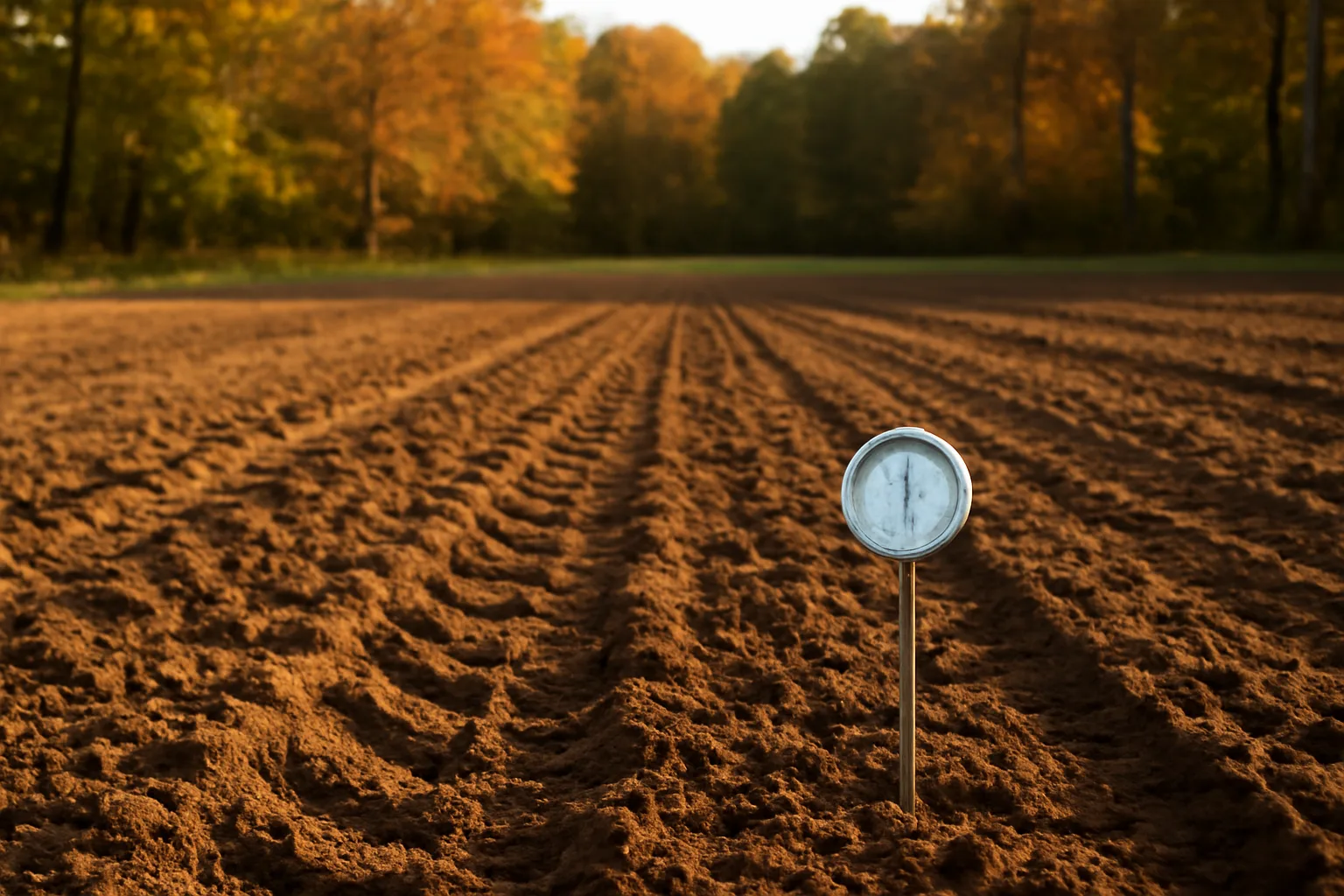
Soil temperature, more than the calendar, controls germination speed and success. Brassica and turnip seed germinates across a fairly wide range, roughly 45 to 85 degrees Fahrenheit, but slows noticeably once soil drops toward 50 and below. Cereal grains like oats and wheat germinate well in cooler soil, generally down into the mid-40s, which is part of why they're planted later in the fall window than brassicas. A cheap soil thermometer (10 to 15 dollars at most farm stores) pushed 2 to 4 inches into the ground gives you a real answer instead of a guess. If you're hitting your calendar date but soil is still running hot and dry from a late summer heat wave, it's often smarter to wait a week or two for a rain system than to plant into dust. Moisture matters as much as temperature. Extension planting guides for brassicas and small grains both stress planting ahead of an expected rain window when possible, since shallow-seeded crops like turnips and clover dry out fast if they sit ungerminated in bare, sunbaked soil [4].
How do you build a fall planting calendar for your own property?
Start with your county's average first frost date from NOAA climate records, then subtract the growing window for each species you want to plant [3]. Layer a soil test on top of that timeline, pulled at least a month or two before your planting date so you have time to get lime and fertilizer applied and reacting in the soil before seed goes in, since lime especially can take weeks to months to fully adjust pH. A simple sequence for a two-plot property: pull soil samples in July, get lime and fertilizer recommendations back and apply them by early August, plant brassicas in mid-to-late August (adjust per your zone from the table above), and plant a cereal grain or wheat/clover mix in early-to-mid September for a plot that stays green longer into winter. This is also where a lot of hunters get overwhelmed juggling species mix, seeding rates, and zone-specific timing all at once. If you'd rather hand off that planning, PlotSeason's Custom Food Plot Plan is a $99 one-time report built around your zone, soil test, and property goals. It's general planning guidance though, not site-specific agronomy, so your soil test lab's actual lime and fertilizer recommendation is still the final word on what your dirt needs. For species selection specifics, food plot whitetail and deer food plot seed go deeper on blend options for different goals.
What mistakes push people's fall planting dates off track?
The most common mistake is planting by a date on a bag of seed instead of by your actual local frost date and soil condition. A seed tag printed for a national audience can't know your county's frost history. Second most common: skipping the soil test and planting into soil with a pH of 5.5 when clover and brassicas both want something closer to 6.0 to 7.0 to use fertilizer efficiently. Extension data consistently shows lime is often the single highest-return input in a food plot budget, and it's also the input most commonly skipped. Third: planting brassicas too late out of fear of an early frost, then getting a warm fall and ending up with undersized bulbs that never sweeten properly, or planting them too early into summer heat and drought stress that kills seedlings before they establish. The 80-to-90-day window exists because it's the sweet spot between those two failure modes, not an arbitrary number. Fourth: ignoring rainfall entirely. A perfect calendar date into bone-dry soil often does worse than planting a week late into moisture.
Frequently asked questions
Do deer eat sorghum?
Yes. Deer eat grain sorghum (milo), especially the seed heads once they dry down in fall. It's more often used as summer-planted cover and late-season grain than as a primary fall attractant plot, and it pairs well with brassica or clover plots as screening cover.
Do deer eat clover?
Yes, clover is one of the most consistently used forages by whitetails across spring, summer, and fall. White clover varieties like ladino can produce for 3 to 5 years once established, according to extension forage guides, making it a strong long-term perennial plot choice.
When to plant deer food plots?
Time fall plots backward from your local first frost date: brassicas and turnips need 80 to 90 days before frost, cereal grains like oats and wheat need only 6 to 8 weeks, and clover for fall establishment needs about 60 to 90 days before frost.
Do deer like clover?
Yes, clover ranks among the top preferred forages for whitetail deer across most of their range and most of the growing season, more than fall. It's especially valuable in spring for antler growth and lactation, and it keeps producing into fall in a lot of regions.
When to plant oats for deer?
Plant oats 6 to 8 weeks before your area's first expected hard frost. Oats germinate well in cooler soil and grow fast, but a sustained hard freeze in the low 20s Fahrenheit or colder will eventually kill them, so far-north plots may need a winter wheat or rye mix to hold through winter.
When to plant food plots for deer?
Fall plots go in from late July through early October depending on your zone and species; spring/summer plots (soybeans, corn, warm-season annuals) go in after your last frost, typically April through June depending on region. Always work backward from frost dates and check soil temperature before planting.
When to plant turnips for deer?
Plant turnips 80 to 90 days before your area's first hard frost, generally mid-to-late August in northern zones and mid-September in the deep south. Deer often ignore turnips until after a couple of hard frosts sweeten the bulbs, so don't judge the plot's success in October.
What is a food plot?
A food plot is a planted patch of forage crop, usually a quarter acre to several acres, seeded on hunting property to feed and attract deer or other wildlife. It differs legally from bait piles in most states since it's a rooted, growing crop rather than dumped feed.
What are deer's favorite foods?
Acorns, soybeans, and clover consistently rank among the highest-preference foods for whitetail deer in research and extension studies. Within planted food plots, brassicas draw strong late-season use after frost, while clover and cereal grains hold attraction earlier in fall.
Do deer like honey?
There's no wildlife research or extension guidance suggesting honey is a meaningful deer food or attractant. Deer are herbivores adapted to browse, mast, and agricultural forage; honey isn't part of natural diet studies or legitimate food plot and mineral programs.
How far in advance of frost should I plant brassicas versus cereal grains?
Brassicas (turnips, radishes, rape) need 80 to 90 days before your first hard frost to bulb out properly. Cereal grains like oats and wheat need much less lead time, generally 6 to 8 weeks, since they germinate faster and tolerate cooler soil.
Can I plant a fall food plot too early?
Yes. Planting brassicas or clover too early into late-summer heat and drought stress often kills seedlings before they establish, and warm-season weeds can outcompete young plants. It's often better to wait a week or two for a real rain forecast than to hit an exact calendar date into dry soil.
Does a soil test matter for fall food plot timing?
It matters more for input timing than planting date itself. Pull soil samples 2 to 3 months before planting so lime has time to react and adjust pH, since lime can take weeks to months to fully change soil chemistry, according to extension soil fertility guidance.
Sources
- Mississippi State University Extension, Food Plots: Extension guidance to time fall food plot planting backward from frost date rather than a fixed calendar date
- Michigan Department of Natural Resources, Baiting and Feeding Regulations: Michigan bans baiting statewide in the Lower Peninsula while food plots remain a standard legal land management practice
- NOAA National Centers for Environmental Information, Freeze/Frost Data: County-level historical first frost/freeze date data used to plan planting windows
- University of Tennessee Extension, Brassicas for Deer: Brassica and turnip planting window of roughly 80-90 days before first frost and shallow seeding depth
- University of Kentucky Extension, Small Grain Production: Typical oat/cereal grain seeding rates and shallow drill depth guidance
- University of Georgia Extension, Establishing Wildlife Food Plots: Fall-seeded clover establishment window of roughly 60-90 days before first hard frost
- USDA Forest Service, Southern Research Station, Acorns and Wildlife: Acorns and mast crop variability as a major driver of deer food source use in fall