Last updated 2026-07-25
TL;DR
Most food plots work best between a quarter-acre and 2 acres, though the right size depends on your goal. Hunting plots stay small (1/4 to 1/2 acre) for close shots and easy access. Food plots meant to actually feed deer through winter need 1 to 5+ acres, and total plot acreage should run 1 to 5 percent of your property.
How big does a deer food plot need to be?
There's no single right answer, because plot size depends entirely on what job you want the plot to do. A plot meant for bow hunting over should be small, often under half an acre, so you can cover it with a rifle or bow shot and control deer movement through it. A plot meant to actually feed a deer herd through a hard winter needs to be much bigger, often 2 to 5 acres or more. Most state wildlife agencies and university extension programs that publish food plot guidance land on a similar rule of thumb: total food plot acreage should equal roughly 1 to 5 percent of your total property acreage [1]. On a 200-acre farm, that's 2 to 10 acres split across multiple smaller plots rather than one big field. Size also has to match your soil, sunlight, and equipment. A shaded quarter-acre plot in the timber won't grow the same tonnage as a quarter-acre plot in open ag ground, no matter what seed you put down. If you're not sure where to start, a soil test and a written plan (we build these for $99 as a Custom Food Plot Plan, matched to your acreage, region, and equipment) takes a lot of the guesswork out. Your soil test lab is still the final word on lime and fertilizer rates, since regional labs calibrate recommendations to local soil chemistry.
What is a food plot, exactly?
A food plot is a planted area of forage crops, grasses, legumes, or grains established specifically to attract, hold, or feed deer and other wildlife on a property. It's different from a farm field growing a cash crop for harvest and sale. Food plots exist for hunting access, herd nutrition, or both, and landowners plant them on anywhere from a tenth of an acre to dozens of acres depending on goals. State wildlife agencies generally treat food plots as a form of habitat management, distinct from baiting or supplemental feeding, which many states regulate or ban outright. The distinction usually comes down to whether the crop is rooted and growing versus placed loose on the ground. Michigan's DNR, for example, defines baiting as placing food to attract game and explicitly separates it from food plots, which remain legal statewide with no acreage cap [2]. Rules vary a lot by state, so check your state wildlife agency's baiting and feeding regulations before you plant, especially if you're near a state line or in a chronic wasting disease management zone where feeding bans are common. Food plots generally fall into two categories: hunting plots (small, tucked into cover, designed to bring a deer into range) and nutrition or destination plots (larger, often in open ground, designed to grow volume and hold deer on the property during stress periods like late summer or winter).
How big should a hunting plot be versus a food plot for nutrition?
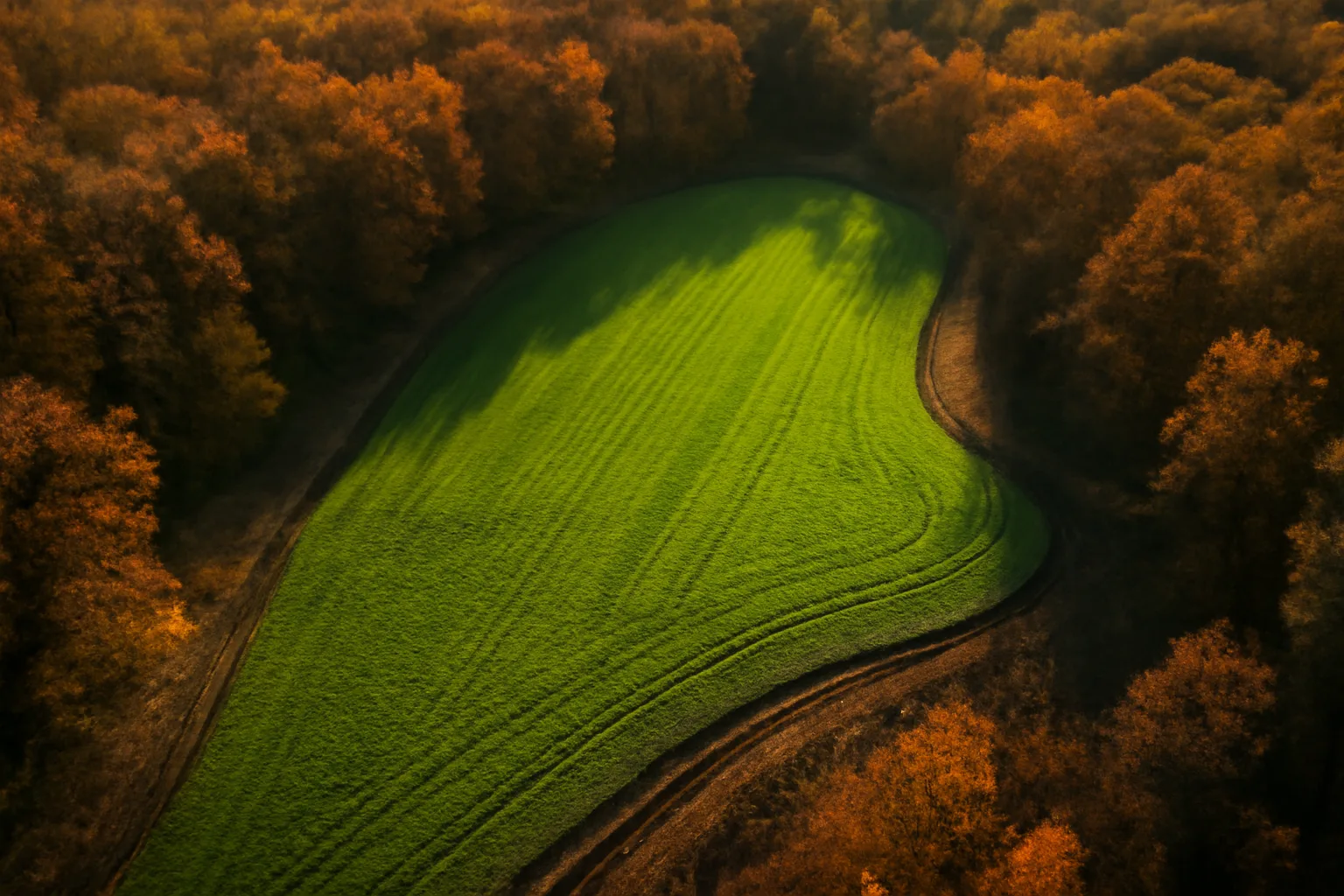
Hunting plots and nutrition plots aren't the same tool, and sizing them the same way is a common mistake. A hunting plot's job is to put a deer at a specific distance from a specific stand or blind at a specific time of day. Quarter-acre to half-acre kill plots tucked into timber, often shaped like a kidney bean or hourglass, let you shoot across the whole plot from one stand while keeping deer from just standing in the middle out of range. Bigger isn't better here. A one-acre clover plot with your stand on the edge might put deer 80 yards out at last light, which does you no good with a bow. A nutrition plot's job is calories. Whitetail Institute and most extension forage programs figure a deer eats roughly 6 to 8 pounds of forage dry matter per day, and a mature herd can strip a small plot down to dirt in a matter of weeks if it's the only food source around [3]. If your goal is actually moving the needle on body weight or antler growth across a herd, you need real acreage, generally multiple 2 to 5 acre plots or a handful of 1-acre plots spread across the property, not one small patch. Most serious plotters run both: several small hunting plots near stand sites, plus one or two larger destination plots farther back that hold deer during the day and take pressure off the hunting plots.
How much of my property should be in food plots?
| 20 acres | 0.2 acre | 1 acre | 1-2 small plots | |
|---|---|---|---|---|
| 80 acres | 0.8 acre | 4 acres | 2-4 plots | |
| 200 acres | 2 acres | 10 acres | 4-8 plots | |
| 500 acres | 5 acres | 25 acres | multiple destination plots | More plots, spread out and smaller, generally beat one giant field. Splitting acreage lets you rotate crops, stagger planting dates, and give deer more entry points without one blown spot ruining your whole plot program for the season. |
A workable starting target is 1 to 5 percent of total acreage in food plots, a range echoed across university extension and state agency food plot guides [1]. On smaller properties under 40 acres, aim toward the higher end of that range since you have less natural browse to fall back on. On larger tracts with good natural forage and mast production, 1 to 2 percent may be plenty. Here's how that shakes out in practice: | Total acreage | 1% (min) | 5% (max) | Realistic plot count |
What size food plot actually attracts and holds deer?
Even a small plot, a quarter-acre or less, can pull deer in and hold their attention if it's placed right: tucked against bedding cover, near a natural travel corridor, with good sun access and soil that isn't compacted or eroded. Size matters less than placement for pure attraction. Holding deer through a season is a different question. Research on deer forage behavior and small-plot depletion generally shows that plots under half an acre in areas with moderate to high deer density get browsed hard early and can be grazed to nothing before they mature, especially with brassicas and clover which deer favor over standing corn or sorghum [3]. If you've got more than 15-20 deer per square mile using a property, plan for bigger plots or more of them to outlast browsing pressure. Shape matters almost as much as size. Long, narrow plots (30-60 yards wide) give you more edge relative to interior, which deer generally prefer for security, and let you access more of the plot within bow range from a single stand.
When to plant food plots for deer
Planting timing depends on your region, your seed mix, and whether you're planting a spring/summer plot or a fall plot. There's no single national planting date; it runs on soil temperature and first/last frost dates specific to your zone. Spring plots (clover, chicory, soybeans, corn) generally go in after your last frost date, typically April through June depending on latitude. Fall plots (brassicas, cereal grains, annual clover blends) usually go in 6 to 10 weeks before your area's average first fall frost, which for most of the whitetail's range falls between early August in the northern tier and late September farther south [4]. Cooperative extension offices in each state publish frost date tables and planting windows specific to that state; check yours before buying seed, since a plot planted three weeks too late in brassicas or too early in cool-season grains can fail outright. A soil test 60-90 days before planting gives you time to apply lime, since lime can take months to fully adjust soil pH, unlike fertilizer which acts fast [5].
When to plant oats for deer
Oats are a cool-season annual, and most extension guidance recommends planting them in late summer to early fall, generally 6 to 8 weeks before your first expected frost, so plants establish before cold weather slows growth. In the upper Midwest and Northeast that's often mid-August to early September; in the transition zone and mid-South it can run into late September or October [6]. Oats can also go in as a spring planting in northern climates for a quick early-season forage crop, though fall plantings are far more common for deer plots since oats hit peak palatability for deer right as they're going through a sugar spike in cold weather, similar to what happens with brassicas. Oats winterkill in much of the northern whitetail range once temperatures drop into the low teens or below for extended periods, so don't expect a fall-planted oat plot to carry into late winter in cold states.
When to plant turnips for deer
Turnips, like other brassicas, are planted in late summer for fall and winter deer forage. Most extension and seed-company guidance puts the ideal window at 60-90 days before your first fall frost, so roughly late July through late August across most of the whitetail's range, with earlier planting in northern states and later planting farther south . Turnips need that lag time because the plant's real value to deer comes in two stages: deer often ignore the leafy top growth in early fall, then hit both the tops and the bulbs hard after a few hard frosts convert starches to sugars, making the plant sweeter and more palatable. Plant too late and you get small bulbs and thin tops going into winter with none of that sugar conversion benefit. A quarter-acre to half-acre turnip plot can still get hammered fast once deer key in on it, so pairing turnips with a bigger plot or blending with cereal grains buys some insurance against total depletion.
What are deer's favorite foods?
Deer are opportunistic browsers, and preference shifts by season, region, and what's available, but a few crops and natural foods come up again and again as favorites in extension forage trials and deer diet studies. Acorns rank at or near the top wherever oaks are present; white oak acorns in particular are lower in tannins and more palatable than red oak acorns, and deer will often abandon a planted food plot entirely during a heavy acorn drop. Among planted forages, clover consistently tests as one of the most preferred and most digestible options, alongside soybeans (as a growing plant, more than the bean), brassicas like turnips and radishes once frost-sweetened, and chicory. Corn and sorghum get eaten but rank lower in preference trials when better options are available, and deer favor them more as a fall/winter energy source once other green forage dies back. No single "favorite" food exists across all regions and seasons; a soybean field that deer demolish in August might sit untouched in October once acorns drop.
Do deer like clover?
Yes. Clover is one of the most consistently preferred food plot forages across whitetail range, and it shows up as a top choice in nearly every state extension and wildlife agency food plot publication [3]. White clover and red clover both test high in crude protein, often 20-25% in vegetative growth, which lines up well with antler growth and lactation demands in spring and summer [3]. Clover's other advantage is that it's a perennial (typically productive for 3-5 years per stand) so it doesn't need replanting every year like brassicas or cereal grains, which makes it a good base crop for smaller hunting plots where you don't want to disturb the ground annually. The tradeoff is that clover needs decent soil pH (extension guides generally recommend 6.0-6.5) and can get shaded out or choked by weeds if you skip mowing and don't manage it.
Do deer eat sorghum?
Yes, deer eat sorghum, mainly the grain heads in fall and winter once other green forage has died back, but it generally ranks lower in preference trials compared to clover, soybeans, and brassicas [3]. Sorghum is more commonly planted as a screening or bedding cover crop, or as a late-season energy source, than as a primary attraction crop. Some plotters use grain sorghum in blends specifically because deer don't hammer it early, letting it stand through fall so it's available when other options run out. It also tolerates poor soil and drought better than corn, which makes it a reasonable choice on marginal ground where corn would struggle.
Do deer like honey?
There's no real research or wildlife agency guidance suggesting honey has any established place in deer nutrition or food plot management, and it isn't a crop or additive covered in any extension or state agency food plot literature. Deer are occasionally reported investigating strong sweet smells, but honey isn't practical, legal in some states under baiting rules, or supported by any actual feeding trial data. If you're looking at commercial mineral or attractant products marketed with sweeteners, check your state's baiting and supplemental feeding regulations first; some states classify any placed food or scent attractant, including syrups and mineral blocks, as illegal baiting, especially in CWD zones [2].
How do I decide the right size and layout for my land?
Start with a soil test, an aerial view of your property, and an honest count of your deer density if you have trail camera data. From there, work backward from your primary goal: hunting access, herd nutrition, or both. A reasonable starting framework: put 60-70% of your plot acreage into a few larger destination plots (1-3 acres each) in open, sunny ground away from constant hunting pressure, and the remaining 30-40% into small, tucked-away kill plots (under half an acre) near stand locations. Rotate crops between plots year to year, and don't put all your acreage into one crop type; a mixed program of clover, brassicas, and cereal grains spreads risk across drought, frost, and heavy browsing better than a monoculture. If the math and mix feels like guesswork, a written plan built around your actual acreage, soil test results, and region takes most of that uncertainty out. That's the whole idea behind our $99 Custom Food Plot Plan: a one-time planning cost instead of trial-and-error seed money. For species-specific mixes and seeding rates once you've settled on plot sizes, see food plot seed and deer food plot seed. For general plot-type comparisons and layout ideas, food plot whitetail and deer food plots cover the broader planning picture.
Frequently asked questions
How big does a food plot need to be to hold deer?
A quarter-acre plot can attract deer if it's placed well, but holding them through a season usually takes at least half an acre to an acre, more in areas with high deer density. Under moderate to heavy browsing pressure, smaller plots can get grazed to bare dirt within weeks.
What percentage of my land should be food plots?
Most extension and state agency guidance suggests 1 to 5 percent of total property acreage in food plots, split across multiple smaller plots rather than one large field. Smaller properties under 40 acres should lean toward the higher end of that range.
How big should a bow hunting food plot be?
Quarter-acre to half-acre is the sweet spot for bow hunting plots. That size keeps every part of the plot within realistic bow range from one stand, while still giving deer enough room to feel comfortable entering during daylight.
Do deer eat sorghum?
Yes, deer eat grain sorghum, mostly in fall and winter once other forage dies back, but it ranks lower in preference trials than clover, soybeans, and brassicas. It's more often used as screening cover or a late-season backup food source.
Do deer like clover?
Yes, clover is one of the most preferred and most planted food plot forages in whitetail range, often testing at 20-25% crude protein in vegetative growth. It's a perennial, so a good stand can produce for 3 to 5 years with proper mowing and weed control.
When should I plant food plots for deer?
Spring plots (clover, soybeans, corn) go in after your last frost date, generally April through June. Fall plots (brassicas, oats, cereal grains) go in 6 to 10 weeks before your area's first fall frost, typically early August in the north to late September farther south.
When should I plant oats for deer?
Plant oats 6 to 8 weeks before your first fall frost, generally mid-August to September in the upper Midwest and Northeast, and into late September or October in the mid-South. Oats can also be spring-planted in northern climates but winterkill hard once temperatures drop into the low teens.
When should I plant turnips for deer?
Plant turnips 60 to 90 days before your first fall frost, roughly late July through late August across most whitetail range. That lag time matters because frost converts starches to sugars in the bulbs and tops, which is when deer really start hitting the plot hard.
What exactly is a food plot?
A food plot is a planted area of forage crops like clover, brassicas, or grains established to attract, hold, or nutritionally support deer and other wildlife. It's distinct from baiting, which involves placing loose feed rather than growing a rooted crop, and most states regulate the two differently.
What is a deer's favorite food?
Acorns, especially white oak acorns, generally top the list wherever oaks grow, and deer will often abandon planted plots during a heavy acorn drop. Among planted crops, clover, soybeans, and frost-sweetened brassicas consistently rank as top preferences in extension forage trials.
Do deer like honey?
There's no established research or wildlife agency guidance showing honey has any real role in deer nutrition or food plot management. It isn't a recognized food plot input, and sweetened attractants may fall under illegal baiting rules in some states, so check local regulations before using one.
Is a bigger food plot always better?
No. A big plot with your stand on the edge often just puts deer out of bow range at last light. Match plot size to its job: small and tucked-in for hunting access, larger (1-5 acres) for actual herd nutrition and holding power.
Sources
- University of Tennessee Extension, Establishing and Managing Wildlife Food Plots: Total food plot acreage should generally equal 1 to 5 percent of total property acreage
- Michigan DNR, Baiting and Feeding Regulations: Michigan regulates baiting/feeding separately from food plots, which remain legal statewide
- USDA National Agricultural Statistics Service / NOAA Climate.gov, average first frost date maps: First fall frost dates vary from early August in northern states to late September farther south
- University of Missouri Extension, Soil Testing and Liming Guidelines: Lime takes months to adjust soil pH, unlike fast-acting fertilizer
- North Dakota State University Extension, Oat Production Guide: Recommended fall planting windows for oats relative to first frost date
- Clemson Cooperative Extension, Brassicas for Deer Food Plots: Turnip and brassica planting window of 60-90 days before first frost, and frost-driven sugar conversion in bulbs