Last updated 2026-07-24
TL;DR
"Hot chic" isn't a real seed term, it's a mangled search for popular food plot options like clover, oats, turnips, and sorghum. Deer eat all of these readily depending on season. Clover works spring through fall, brassicas like turnips shine in late fall, and oats fill early season gaps. Plant timing depends on your zone, not a single calendar date.
what is a food plot, exactly
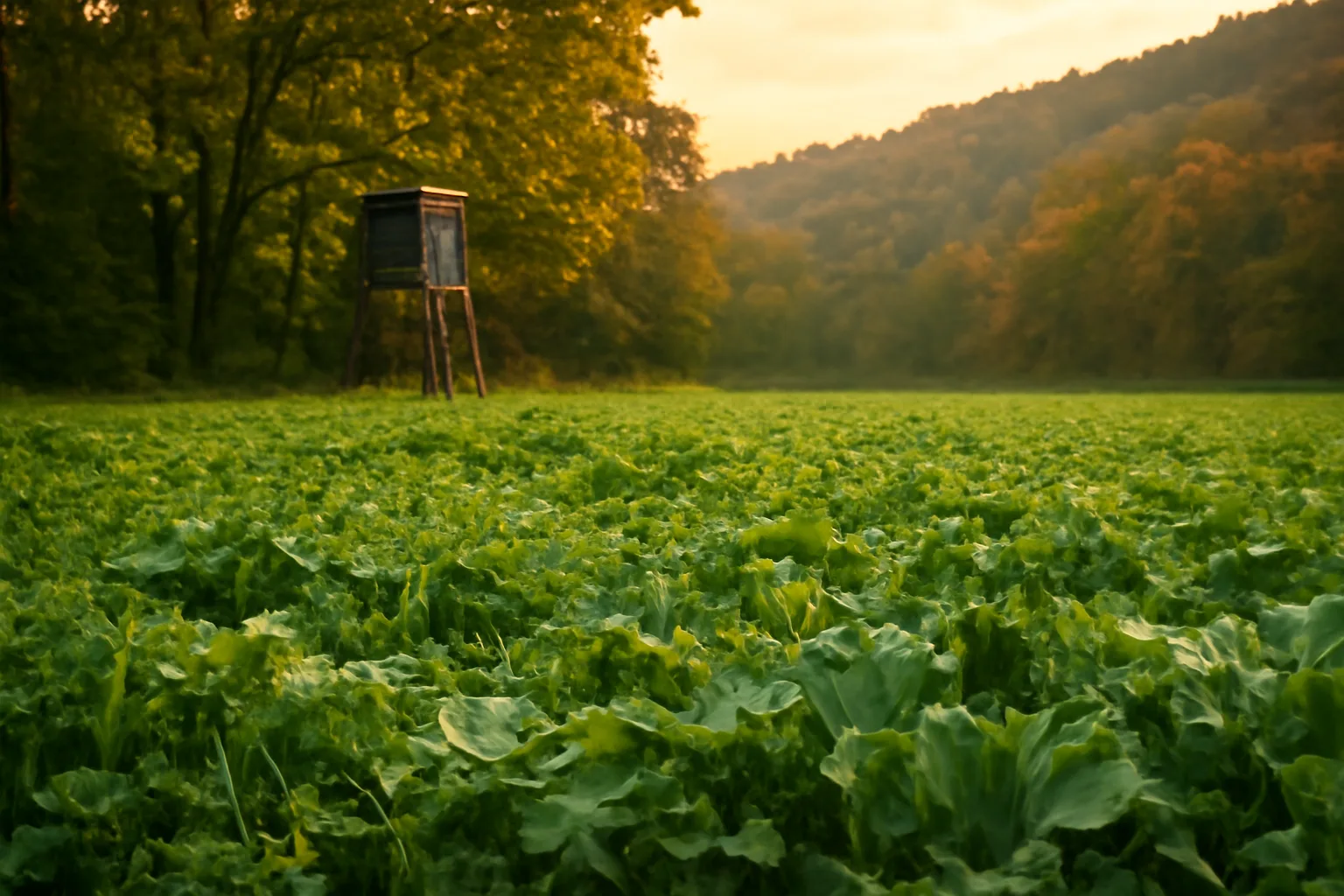
A food plot is a planted area, usually a fraction of an acre up to several acres, put in specifically to feed deer or other wildlife and to give hunters a place to observe or hunt over. It's not the same as a farm field, even though the equipment overlaps. Most food plots on hunting land run somewhere between a quarter acre and 5 acres, though plenty of guys plant smaller kill plots tucked into timber that are barely 1/4 acre. The basic idea is simple: put something deer want to eat where you want deer to be, at the time of year you want them there. That's it. The complexity comes from matching species to soil, season, and shade, and from managing weeds and fertility so the plot actually produces instead of turning into a patch of ragweed. State wildlife agencies generally treat food plots as a normal land management practice, distinct from baiting, but the line between "food plot" and "bait pile" matters legally in some states. Standing crops planted and left in the ground are almost universally legal for hunting over. Piled grain, mineral licks, or feeders are a different story and rules vary hard by state. Check your state wildlife agency's regulations before you assume anything is fine, because some states that allow food plots ban supplemental feeding or baiting outright, and enforcement definitions differ on what counts as "planted in a manner consistent with agricultural practice" versus baiting [1]. If you're new to this, start with food plot whitetail basics before buying seed, because species choice should follow soil test results and your hunting goals, not the other way around.
do deer eat sorghum
Yes, deer eat sorghum, both the grain heads and the young green forage, though it's rarely their first choice compared to soybeans, clover, or standing corn. Sorghum (grain sorghum, also called milo) is more commonly planted as a cover and screening crop or as a component in fall/winter blends than as a primary attractant. Where sorghum earns its keep is in drought-prone or sandy soils where corn struggles. It's more drought tolerant than corn and still puts on a grain head deer will hit hard once it dries down in fall. University of Tennessee Extension lists grain sorghum among viable summer forage and grain options for wildlife food plots, particularly in areas with lower rainfall or lighter soils [2]. The tall stalks (often 4 to 7 feet) also make sorghum useful purely as visual cover, breaking sightlines into a plot or bedding area. Some hunters plant a sorghum border around a clover or brassica plot for exactly that reason, not because deer prefer it to the other option. One practical note: sorghum can develop toxic levels of prussic acid (cyanide compounds) in young, stressed, or frost-damaged growth, which is a known risk in forage sorghum used for livestock grazing. It's a real agronomic consideration if you're grazing it hard or if a hard frost hits young regrowth. It's a smaller concern for grain sorghum left to mature and used mainly for its seed heads, but it's worth knowing about if you're using it as an early forage source too.
do deer eat clover, and do deer like clover
Yes, deer eat clover readily, and it's one of the most consistently preferred food plot forages across the whitetail's range. White clover and red clover both show up at or near the top of deer preference studies, and clover's appeal comes down to protein content, typically running 25 to 30 percent crude protein in vegetative growth, plus high digestibility [3]. Clover's biggest advantage isn't just preference, it's duration. A well-maintained perennial clover stand can produce forage from spring green-up through the first hard frosts of fall, sometimes longer in the Southeast. That's months of grazing pressure absorption from one planting, which is why clover anchors so many food plot programs. Compare that to a brassica plot that peaks for maybe 6 to 10 weeks in late fall. The tradeoff is that clover needs decent soil fertility and a pH close to neutral (most extension guides recommend 6.0 to 6.5) to really perform, and it can't handle standing water or heavy shade. Get the pH wrong and clover struggles no matter how much seed you throw down; this is the single most common failure point in clover plots. Mississippi State University Extension notes that soil pH below 6.0 significantly limits nitrogen fixation efficiency in clover, which cuts both yield and protein content [4]. Clover also needs mowing 2 to 3 times a season to stay in a vegetative, high-protein state and to knock back competing weeds. Skip the mowing and you'll get woody, low-protein stems and a lot more crabgrass and horseweed than you bargained for.
when to plant food plots for deer
Timing depends entirely on your USDA hardiness zone, your first and last frost dates, and whether you're planting a spring/summer annual, a fall annual, or a perennial. There's no single calendar date that works nationally. The honest answer is: check your local frost dates first, then work backward from there. As a rough framework: - Spring/summer plots (soybeans, cowpeas, corn, sorghum): plant after your last frost date, typically late April through May in northern zones, March through April in the South.
- Fall annual plots (brassicas, oats, winter wheat, cereal rye): plant roughly 60 to 90 days before your first expected fall frost, so this often lands in August in the North and September in the South.
- Perennials (clover, alfalfa, chicory): can go in spring or late summer/early fall depending on your region; fall plantings avoid competing with summer weed pressure but need enough time to establish before hard frost or winter dormancy. Your state land-grant extension office publishes frost date tables and regional planting windows specific to your county, and that's a better source than any generic online calendar. Purdue Extension, for instance, publishes Indiana-specific planting windows for wildlife food plots tied to average frost dates by region of the state [5]. A soil test result you already have in hand should also shape timing indirectly. If your test says you need lime, get it applied months before planting; lime takes time to react with soil and adjust pH, often 3 to 6 months for full effect depending on soil type and lime quality. Planting into unadjusted acidic soil and hoping for the best wastes seed money.
when to plant oats for deer
Plant oats for deer as a fall annual, generally 60 to 90 days before your first expected frost, so most of the country is looking at an August to early September planting window. Oats germinate fast, often within a week under good moisture, and provide highly palatable, high-protein forage right when deer need to build fat reserves before winter. Oats are also a favorite "quick green-up" component in fall blends alongside brassicas and winter wheat or cereal rye, because oats often get grazed hard and fast early, while the brassica bulbs and tubers mature later in the season. Whitetail research and extension trials consistently show oats rank among the most preferred fall forage options when compared side by side with wheat, rye, and brassicas, though preference shifts as plots mature and other options like turnip bulbs become available [6]. One limitation: oats winterkill in most northern climates once temperatures drop into the mid-teens or lower for sustained periods, so they're generally not a plant-once-graze-all-winter option north of the transition zone. In the Deep South, oats can survive milder winters and provide grazing into late winter or even early spring.
when to plant turnips for deer, and what about other brassicas
Plant turnips for deer in late summer, generally 80 to 100 days before your first expected fall frost, which puts most of the country somewhere in late July through August. Turnips need that full runway to bulb properly and reach peak palatability, which typically happens after the first couple of frosts convert starches to sugars in the bulb and leaves. This frost-triggered sweetening is the reason turnip plots often get ignored in October and hammered in December. Deer will walk past a turnip plot at first, focus on the leaves once cold weather kicks in, then start digging up and eating the actual bulbs once repeated frosts have sweetened them further. Iowa State University Extension and Outreach notes that brassica forage quality and palatability for deer generally improves after several hard frosts convert starches into sugars, which is why standing brassica plots often see their heaviest use in December and January rather than at planting . That late-season timing makes turnips and other brassicas (forage rape, radish, kale) one of the better options for filling the January nutritional gap in northern states, right when natural browse is scarce and deer are under the most stress. It's also why turnip-only plots often look untouched for two months and then get destroyed almost overnight once a hard freeze hits. Soil prep matters a lot here too. Brassicas want a fine, firm seedbed and shallow planting depth, usually just 1/4 to 1/2 inch, because the seed is tiny. Broadcasting onto a rough seedbed and skipping cultipacking is one of the most common reasons brassica plots come in thin.
what are deer's favorite foods, overall
| Clover (white/red) | Spring through fall | 25-30% | Perennial base plot | |
|---|---|---|---|---|
| Soybeans | Summer | 20%+ forage | High deer density areas, needs acreage | |
| Oats | Early-mid fall | 15-20% | Quick fall green-up | |
| Turnips/brassicas | Late fall/winter | Leaves 15-20%, bulbs lower | Post-frost late season | |
| Grain sorghum | Fall (grain), some summer forage | Lower than legumes | Screening, drought-prone soil | |
| Corn | Fall/winter | Low protein, high energy | Winter carb source, needs acreage | For a broader rundown of species options and how to build a rotation across the season, deer food plot seed covers the tradeoffs in more depth. |
There's no single universal "favorite," because preference shifts by season, region, and what's naturally available, but research consistently puts a handful of foods at the top: acorns (especially white oak group acorns, which are lower in tannins than red oak acorns), soybeans, clover, and native forbs during the growing season. Acorns deserve special mention because in years with a strong mast crop, deer will often abandon food plots entirely in favor of acorns, particularly white oak acorns, which studies have shown deer prefer over red oak acorns due to lower tannin content and higher palatability . That's a real management headache for hunters who plant a great fall plot only to watch deer ignore it during a heavy acorn drop. Among planted crops, soybeans rank extremely high in preference studies and provide excellent protein (soybean forage often runs 20+ percent crude protein), but they're also highly vulnerable to overgrazing pressure while seedlings are small, especially on smaller plots or in areas with high deer density. Clover and alfalfa follow closely. Corn is more of an energy/carbohydrate source used heavily in late fall and winter but isn't a top preference food in terms of protein value. Here's a rough side-by-side of common options: | Species | Season of peak use | Crude protein (approx.) | Best fit |
do deer like honey (and does it belong in a food plot conversation)
Deer are not drawn to honey itself in any meaningful nutritional sense, and it isn't a food plot input at all; it doesn't grow, and it's not something you'd plant or spread on a plot. This question usually comes from confusion with commercial deer attractant products, some of which include sweet, syrupy scents or molasses-based minerals marketed with names that reference sweetness, or from mixing up honey with honeysuckle, which deer do browse. Japanese honeysuckle and native honeysuckle species are legitimate deer browse, especially in winter when other green forage is scarce, and this is likely the actual source of the honey/honeysuckle mix-up in a lot of casual searches. Deer will strip honeysuckle leaves and twigs readily, and it's actually considered a somewhat resilient winter browse source in the Southeast. As for sugar or syrup-based attractants generally: deer do have a documented preference for sweet tastes, which is part of why molasses-based mineral licks and sweet feed products work as attractants in states where supplemental feeding and baiting are legal. But that's a different category from food plots entirely, and it's worth remembering that baiting and supplemental feeding rules vary widely by state, with some states banning it outright over disease transmission concerns, particularly chronic wasting disease. Check your state wildlife agency's current regulations before using any bait or attractant product, planted or otherwise.
how do you pick the right food plot species for your land
Start with a soil test, not a seed catalog. Your county extension office or a private ag lab can run a standard soil test for somewhere between $10 and $20 in most states, and it'll tell you your pH, phosphorus, potassium, and organic matter, which drives lime and fertilizer recommendations specific to your dirt [4][5]. Your soil test lab is the authority on exactly how much lime and fertilizer your specific field needs; a generic online guide can only give you ranges. Once you know your soil chemistry, match species to what you're trying to accomplish: - Need spring and summer coverage plus a perennial base? Clover or clover/chicory blends.
- Need a late-season draw during the rut and into winter? Brassicas, especially turnips and radish, timed to peak after frost.
- Need quick, cheap tonnage and screening? Grain sorghum or a corn/sorghum mix, understanding it's more filler than top preference food.
- Hunting pressure high and you want a fast fall green-up? Oats, often blended with brassicas or cereal rye.
- Working small acreage (under an acre) with high deer density? Lean toward clover or brassicas over soybeans, which get hammered too hard as seedlings on small plots. Sun exposure matters as much as soil. Most food plot species, clover included, want at least 4 to 6 hours of direct sun; anything shadier and you're better off with a shade-tolerant option or accepting lower yields. Equipment matters too, but less than people think. A disc, a cultipacker, and a way to spread seed and fertilizer covers 90 percent of food plot situations. You don't need a tractor with a 60-inch tiller to grow good clover on a half-acre plot.
building a season-long food plot plan
The strongest programs don't rely on one plot type. They stack a perennial clover plot for spring through fall coverage with a fall annual plot (brassicas, oats, or a blend) timed to peak during the rut and into late season. That combination covers the growing season and the hunting season without leaving a long gap where nothing's palatable. A reasonable annual sequence for a lot of the Midwest and Upper South looks something like this: soil test in early spring, apply lime if needed, plant a clover/chicory perennial plot in April or May, mow it 2 to 3 times over summer, then plant a separate fall annual plot (oats plus brassica blend) in August, timed 60 to 90 days ahead of first frost. That fall plot peaks right as bow season opens and carries through the late season once frost sweetens the brassicas. If you're working with limited acreage or a single plot, a fall-focused annual blend timed for the rut generally gives the most direct return for a hunting-focused property, since that's when most hunters are actually sitting stands. Spring/summer plots matter more for herd health and antler development than for direct encounters, since most states' bow and gun seasons run fall through winter, not summer. This is exactly the kind of decision where a general framework only gets you partway there. A $99 one-time Custom Food Plot Plan from PlotSeason takes your zone, your soil test numbers, your plot size and sun exposure, and your target season, and builds an actual planting sequence around it, rather than you guessing at which blend fits your specific dirt and deer pressure.
common mistakes that sink a food plot before it starts
Skipping the soil test is the single biggest one. Planting clover into soil at pH 5.2 without lime is close to guaranteed disappointment; clover just won't fix nitrogen efficiently or compete with weeds in acidic soil, no matter how good the seed is [4]. Planting too small for the deer density on the property is another common failure, especially with soybeans, which get grazed to nubs as seedlings if the plot's under an acre and deer density is high. If you've got a small plot and heavy deer pressure, brassicas and cereal grains tolerate early grazing pressure better than a soybean seedling does. Ignoring seed depth kills a lot of brassica and clover plots specifically. Both have tiny seed and want to be planted shallow, often 1/4 inch or less, and broadcast-and-walk-away without any cultipacking or light harrowing leaves too much seed exposed on the surface where it dries out or gets eaten by birds. Last one: planting on the calendar date a friend three states away used. Frost dates, rainfall patterns, and growing seasons shift enough state to state and even county to county that a planting date that works in central Missouri can be two to three weeks off for someone in northern Wisconsin or southern Alabama. Use your own zone and your own local extension office's frost date data, not someone else's calendar [5]. For a full library of species-specific breakdowns, deer food plots and food plot seed go deeper on individual crop options and blend combinations.
Frequently asked questions
Do deer eat sorghum in food plots?
Yes. Deer eat both the grain heads and young forage, though sorghum is usually a secondary choice compared to soybeans or clover. It's mostly planted for drought tolerance on sandy or dry soils and for screening cover, with the grain becoming a fall/winter draw once it matures and dries down.
Do deer like clover more than other food plot options?
Clover consistently ranks near the top of deer forage preference studies thanks to 25-30% crude protein and high digestibility. It's not always the single top choice in every study, but its combination of preference, protein, and season-long availability (spring through fall) makes it the most common food plot anchor species nationally.
When should I plant food plots for deer?
Timing depends on your zone and species. Spring/summer annuals go in after last frost (often late April to May in the North, March to April in the South). Fall annuals go in 60-90 days before first frost. Perennials like clover can be planted spring or late summer. Check your local extension office's frost date tables.
When is the best time to plant oats for deer?
Plant oats 60-90 days before your first expected fall frost, generally August to early September across most of the country. Oats germinate fast, provide high-protein early fall forage, and pair well in blends with brassicas, but they typically winterkill in northern climates once sustained temperatures drop into the mid-teens or lower.
When should I plant turnips for deer?
Plant turnips 80-100 days before first fall frost, generally late July through August depending on region. Turnips need that time to bulb up properly, and palatability actually improves after a couple of hard frosts convert starches to sugars, which is why turnip plots often get hit hardest in December and January.
What is a food plot, technically?
A food plot is a planted area, typically 1/4 acre to several acres, established specifically to provide deer or other wildlife forage and give hunters an observation or hunting location. It differs from a standard ag field mainly in intent, scale, and species selection tailored to wildlife preference rather than commercial yield.
What are deer's favorite foods overall?
There's no single universal favorite since preference shifts by season and availability, but acorns (especially white oak group, due to lower tannins), soybeans, and clover consistently rank highest in research and field observation. In heavy mast years, deer often prefer acorns over any planted food plot crop.
Do deer like honey?
Not in any meaningful way; honey isn't a natural deer food and isn't planted or used as a food plot input. The question usually confuses honey with honeysuckle, which deer do browse readily, especially in winter, or with sweet, molasses-based mineral attractant products used where legal.
Is a 'hot chic food plot' a real seed blend?
No. There's no established seed product or species by that name in agricultural or wildlife extension literature. It's most likely a misheard or misspelled search for common food plot topics like clover, chicory, or brassica blends. This article covers the actual species and timing questions behind that kind of search.
How big should a food plot be for deer?
There's no single right size; it depends on land available, deer density, and goals. Kill plots tucked in timber can run as small as 1/4 to 1/2 acre. Larger destination or feeding plots often run 1 to 5+ acres. Smaller plots with high deer density need hardier species like brassicas over vulnerable seedlings like soybeans.
How do I know what pH my food plot soil needs?
Get a soil test through your county extension office or a private ag lab, typically $10-20. Most food plot species, especially clover, want pH between 6.0 and 6.5. Your test results and lab recommendations are the specific authority on how much lime your field needs; generic ranges are a starting point, not a substitute.
Should I plant a perennial or annual food plot first?
If you can only manage one plot, a fall annual blend (oats plus brassicas) timed for hunting season usually gives the most direct return, since most hunting seasons run fall through winter. A perennial clover plot adds spring/summer coverage and herd health value but doesn't line up as tightly with when most hunters are in the stand.
Sources
- example state wildlife agency food plot and baiting guidance: Baiting and feeding rules vary by state and are distinct from planted food plot regulations
- University of Tennessee Extension, Wildlife Food Plots: Grain sorghum is a viable summer forage/grain option for wildlife food plots, particularly on drier or sandier soils
- USDA NRCS Plant Guide, White Clover: White clover is a high quality, high protein forage widely used in wildlife plantings
- Purdue University Extension, Wildlife Food Plots: Indiana-specific planting windows for wildlife food plots are tied to regional frost dates
- Iowa State University Extension and Outreach, Brassicas for Deer Food Plots: Brassica forage palatability improves after hard frosts convert starches to sugars, driving late-season use
- USDA Forest Service, Southern Research Station, Wildlife Habitat and Oak Mast: Deer show greater preference for white oak group acorns over red oak acorns due to lower tannin content